Adhyaya 5
Manasa Progenitors, Pitṛ Orders, Dakṣa’s Alliances, and the Dakṣa-Yajña Rupture
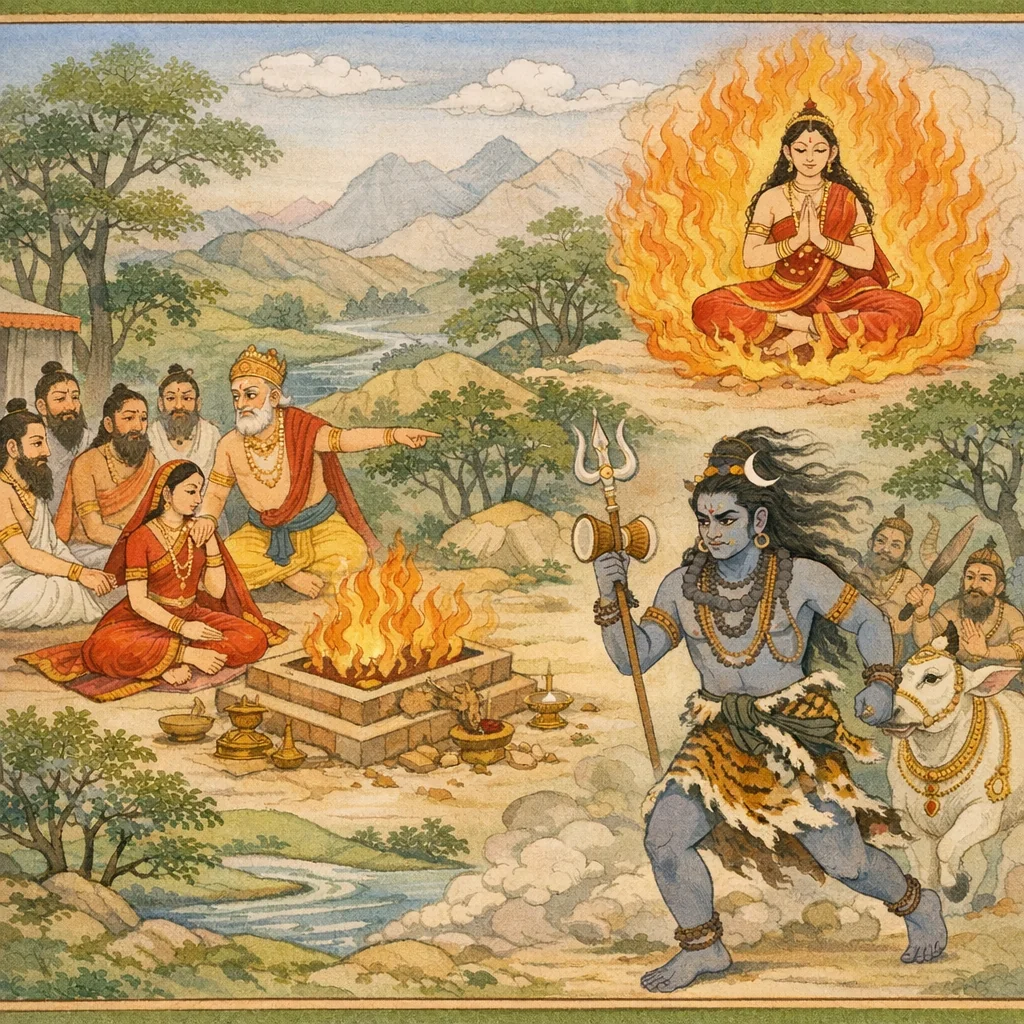
After cosmic order is set, the Lord brings forth creation by mind, manifesting mind-born progenitors who spread beings and uphold dharma. The chapter lists major sages and Prajāpatis, and defines Pitṛ lineages—Barhiṣads, Agniṣvāttas, Kavyādas and related classes—laying the basis for later śrāddha reasoning and the hierarchy of offering-recipients. Dakṣa is born and weds Vāmā; their daughters are purposefully given to Dharma, sages, Agni, and the Pitṛs, generating divine lines and personified ethical powers. It then traces notable descendants (Mārkaṇḍeya; Soma–Durvāsas–Dattātreya; the Bālakhilyas; and Agni’s sons Pāvaka, Pavamāna, Śuci) and culminates in Dakṣa’s Aśvamedha, where Satī is insulted, dies, and is reborn—preparing Rudra’s destruction of the sacrifice and Dakṣa’s curse. The ending bridges to subsequent chapters on the consequences of ritual transgression and the re-stabilizing of cosmic and social order.
Shlokas
Verse 1
चतुर्थो ऽध्यायः इरिरुवाच / कृत्वेहामुत्रसंस्थानं प्रजासर्गं तु मानसम् / अथामृजत्प्रजाकर्तॄन्भानसांस्तनयान्प्रभुः
Irīru spoke: Having set in order the conditions of existence here and hereafter, and having mentally projected the creation of beings, the Lord then brought forth the Prajākartṛs, the progenitors—sons born of His mind—who would become the makers of creatures.
Verse 2
धर्मं रुद्रं मनुं चैव सनकं च सनातनम् / भृगुं सनत्कुमारं च रुचिं श्रद्धां तथैव च
Dharma, Rudra, and Manu; also Sanaka and Sanātana; Bhṛgu and Sanatkumāra; and likewise Ruci and Śraddhā too—all are to be remembered and invoked.
Verse 3
मरीचिमत्र्यङ्गिरसौ पुलस्त्यं पुलहं क्रतुम् / वसिष्ठं नारदं चैव पितॄन्बर्हिषदस्तथा
Marīci, Atri, and Aṅgiras; Pulastya, Pulaha, and Kratu; Vasiṣṭha and Nārada as well—and also the Pitṛs known as the Barhiṣads.
Verse 4
अग्निष्वात्तांश्च कव्यादानाज्यपांश्च सुकालिनः / उपहूतांस्तथा दीप्यां (प्रा) स्त्रींश्च मूर्तिविवर्जितान्
And there are the Agniṣvātta Pitṛs, the Kavyāda Pitṛs, those who partake of ghee, and those who receive offerings in due season; likewise the Upahūta and the Dīpya classes, and also the (Prā-)Strī—those who are without embodied form.
Verse 5
चतुरो मूर्तियुक्तांश्च अङ्गुष्ठाद्दक्षमीश्वरम् / वामां गुष्ठात्तस्य भार्यामसृजत्पद्मसम्भवः
Padmasambhava (Brahmā), from his thumb, created Dakṣa—the lord endowed with four forms; and from the left thumb he created Vāmā as his wife.
Verse 6
तस्यां तु जनयामास दक्षो दुहितरः शुभाः / ददौ ता ब्रह्मपुत्रेभ्यः सतीं रुद्राय दत्तवान्
From her, Dakṣa begot auspicious daughters. He gave those daughters in marriage to the sons of Brahmā, and he gave Satī to Rudra.
Verse 7
रुद्र पुत्रा बभूवुर्हि असंख्याता महाबलाः / भृगवे च ददौ ख्यातिं रूपेणाप्रतिमां शुभाम्
Indeed, Rudra’s sons came into being—countless and mighty. And to Bhṛgu he granted renown, along with an auspicious, incomparable form.
Verse 8
भृगोर्धाताविधातारौ जनयामास सा शुभा / श्रियं च जनयामास पत्नी नारायणस्य या
That auspicious one gave birth to Dhātā and Vidhātā through Bhṛgu; and she also gave birth to Śrī (Lakṣmī), who became the consort of Nārāyaṇa.
Verse 9
तस्यां वै जनयामास बलोन्मादौ हरिः स्वयम् / आयतिर्नियतिश्चैव मनोः कन्ये महात्मनः
In her, Hari Himself indeed begot Bala and Unmāda; and likewise Āyati and Niyati—the two daughters of the great-souled Manu.
Verse 10
धाताविधात्रोस्ते भार्ये तयोर्जातौ सुतावुभौ / प्राणश्चैव मृकण्डुश्च मार्कण्डेयो मृकण्डुतः
Dhātā and Vidhātā had wives; from them were born two sons—Prāṇa and Mṛkaṇḍu. And from Mṛkaṇḍu was born Mārkaṇḍeya.
Verse 11
पत्नि मरीचेः सम्भूतिः पौर्णमासमसूयत / विरजाः सर्वगश्चैव तस्य पुत्रौ महात्मनः
Sambhūti, the wife of Marīci, gave birth to Paurṇamāsa; and Virajā and Sarvaga were also the two sons of that great-souled one.
Verse 12
स्मृतेश्चांङ्गिरसः पुत्राः प्रसूताः कन्यकास्तथा / सिनीवाली कुहूश्चैव राका चानुमतिस्तथा
From Smṛti and the sage Aṅgiras were born daughters: Sinīvālī, Kuhū, Rākā, and Anumati.
Verse 13
अनसूया तथैवात्रेर्जज्ञे पुत्रानकल्मषान् / सोमं दुर्वाससं चैव दत्तात्रेयं च योगिनम्
Likewise, Anasūyā bore to Atri three stainless sons—Soma, Durvāsas, and Dattātreya, the yogin.
Verse 14
प्रीत्यां पुलस्त्यभार्यायां दत्तोलिस्तत्सुतो ऽभवत् / कर्ंमशश्चार्थवीरश्च सहिष्णुश्च सुतत्रयम्
From Prīti, the wife of Pulastya, was born Dattoli as her son; and Dattoli had three sons—Karmaśa, Arthavīra, and Sahiṣṇu.
Verse 15
क्षमा तु सुषुवे भार्या पुलहस्य प्रिजापतेः / क्रतोश्च सुमतिर्भार्या बालखिल्यानसूयत
Kṣamā, the wife of the Prajāpati Pulaha, brought forth offspring; and Sumati, the wife of Kratu, gave birth to the Bālakhilya sages.
Verse 16
षष्टिर्यानि सहस्राणि ऋषीणामूर्धरेतसाम् / अङ्गुष्ठपर्वमात्राणां ज्वलद्भास्करवर्चसाम्
There are sixty thousand sages who retain their vital essence upward; each is but the measure of a thumb‑joint, yet radiant with the splendor of a blazing sun.
Verse 17
ऊर्जायां तु वसिष्टस्य सप्ताजायन्त वै सुताः / रजोगात्रोर्धबाहुश्च शरणश्चानघस्तथा
From Ūrjā, indeed, Vasiṣṭha begot seven sons—Rajogātra, Urdhabāhu, Śaraṇa, and also Anagha, among them.
Verse 18
सुतपाः शुक्र इत्येते सर्वे सप्तर्षयो ऽमलाः / स्वाहां प्रादात्स दक्षो ऽपि शशरीराय वह्नये
Sutapā and Śukra—so named—together with all the seven stainless sages; and Dakṣa too bestowed Svāhā as wife upon Agni, the Fire‑god, for him who assumes a body.
Verse 19
तस्मात्स्वाहा सुतांल्लेभे त्रीनुदारौजसो हर ! / फावकं पवमानं च शुचिं चापि जलाशिनः
Therefore, O Hara, Svāhā obtained from the Fire three sons of splendid vitality—Pāvaka, Pavamāna, and Śuci—devourers of the sacrificial oblations.
Verse 20
पितृभ्यश्च स्वधा जज्ञे मेनां वैतरणीं तथा / ते उभे ब्रह्मवादिन्यौ मेनायां तु हिमाचलः
From the Pitṛs was born Svadhā, and likewise Menā and Vaitaraṇī. Both were knowers and expounders of Brahman; and from Menā was born Himācala, the Himalaya.
Verse 21
मैनाकं जनयामास गौरीं पूर्वं तु या सती / ततो ब्रह्मात्मसम्भूतं पूर्वं स्वायंभुवं प्रभुः
She—Gaurī, who formerly had been Satī—gave birth to Maināka. Thereafter, the Lord Svāyambhuva Manu, born from Brahmā’s own essence, came forth first.
Verse 22
आत्मानमेव कृतवान्प्रजापाल्यं मनुं हर ! / शतरूपां च तां नारीं तपोनिहतकल्मषाम्
O Hari! From Your own Self You fashioned Manu, fit to protect and govern the people; and You also created the woman Śatarūpā, whose impurities were burnt away by austerity (tapas).
Verse 23
स्वायम्भुवो मनुर्देवः पत्नित्वे जगृहे विभुः / तस्माच्च पुरुषाद्देवी शतरूपा व्यजायत
The divine Svāyambhuva Manu, the mighty one, accepted her as his wife; and from that Puruṣa the goddess Śatarūpā was born.
Verse 24
प्रियव्रतोत्तानपादौ प्रसूत्याकूतिसंज्ञेते / देवहूतिं मनुस्तासु आकूतिं रुचये ददौ
From Prasūti were born two sons—Priyavrata and Uttānapāda—and a daughter named Ākūti. Among them, Manu gave Devahūti in marriage, and he gave Ākūti to Ruci.
Verse 25
प्रसूतिं चैव दक्षाय दवहूतिं च कर्दमे / रुचेर्यज्ञो दक्षिणाभूद्दक्षिणायां च यज्ञतः
Prasūti became the wife of Dakṣa, and Devahūti became the wife of Kardama. From Ruci was born Yajña, and from Dakṣiṇā, in turn, Yajña was born.
Verse 26
अभवन्द्वादश सुता यामा नाम महाबलाः / चतुर्वोशतिकन्याश्च सृष्टवान्दक्ष उत्तमाः
There were twelve mighty sons known as the Yāmas; and Dakṣa, the excellent one, also created twenty-four noble daughters.
Verse 27
श्रद्धा चला धृतिस्तुष्टिः पुष्टिर्मेधा क्रिया तथा / बुद्धिर्लज्जा वपुः शान्तिरृद्धिः कीर्तिस्त्नयोदशी
Faith (Śraddhā), Calā, steadfastness (Dhṛti), contentment (Tuṣṭi), nourishment (Puṣṭi), intelligence (Medhā), and right action (Kriyā); also discernment (Buddhi), modesty (Lajjā), beauty of form (Vapuḥ), peace (Śānti), prosperity (Ṛddhi), and fame (Kīrti)—these are the thirteen powers.
Verse 28
पत्न्यर्थं प्रतिजग्राह धर्मो दाक्षायणीप्रभुः / ख्यतिः सत्यथ सम्भूतिः स्मृतिः प्रीतिः क्षमा तथा
For the sake of wives, Dharma—the lord among Dakṣa’s daughters—accepted in marriage Khyāti, Satyā, Sambhūti, Smṛti, Prīti, and also Kṣamā.
Verse 29
सन्नतिश्चानसूया च ऊर्जा स्वाहा स्वधा तथा / भृघुर्भवो मरीचिश्च तथा चैवाङ्गिरा मुनिः
Sannati and Anasūyā, and also Ūrjā, Svāhā, and Svadhā; likewise Bhṛgu, Bhava, Marīci, and the sage Aṅgiras.
Verse 30
पुलस्त्यः पुलहश्चैव क्रतुश्चर्षिवरस्तथा / आत्रिर्वसिष्ठो वह्निश्च पितरश्च यथाक्रमम्
Pulastya, Pulaha, and Kratu—the foremost among seers—together with Atri, Vasiṣṭha, Agni, and the Pitṛs, in due order.
Verse 31
ख्यात्याद्या जगृहुः कन्या मुनयो मुनिसत्तमाः / श्रद्धा कामं चला दर्पं नियमं धृतिरात्मजम्
The best of sages took maidens such as Khyāti and others as wives. Śraddhā bore Kāma; Calā bore Darpa; and Dhṛti bore Niyama as her son.
Verse 32
सन्तोषं च तथा तुष्टिर्लोभं पुष्टिरसूयत / मेधा श्रुतं क्रिया दण्डं लयं विनयमेव च
Contentment and satisfaction; greed and nourishment; freedom from envy; intelligence, learning, disciplined action, just punishment, dissolution (restraint), and humility as well.
Verse 33
बोधं बुद्धिस्तथा लज्जा विनयं वपुरात्मजम् / व्यवसायं प्रजज्ञे वै क्षेमं शान्तिरसूयत
From Buddhi (Intellect) were born bodha (understanding) and lajjā (modesty); from vapus (the body) was born vinaya (humble discipline). And indeed, from vyavasāya (resolute effort) arose kṣema (welfare and security); from śānti (peace) was born asūyā, freedom from envy.
Verse 34
सुखमृद्धिर्यशः कीर्तिरित्येते धर्मसूनवः / कामस्य च रतिर्भार्या तत्पुत्रो हर्ष उच्यते
Happiness, prosperity, fame, and renown—these are said to be the sons of Dharma. And Rati is declared to be the wife of Kāma; their son is called Harṣa (joy).
Verse 35
ईजे कदाचिद्यज्ञेन हयमेधेन दक्षकः / तस्य जामातरः सर्वे यज्ञं जग्मुर्निमन्त्रिताः
Once, Dakṣa performed a sacrifice—the Aśvamedha. All his sons-in-law, having been invited, went to that sacrificial rite.
Verse 36
भार्यभिः सहिताः सर्वे रुद्रं देवीं सतीं विना / अनाहूता सती प्राप्ता दक्षेणैवावमानिता
All of them, accompanied by their wives, went there—except Rudra and the goddess Satī. Though uninvited, Satī arrived, and Dakṣa himself insulted her.
Verse 37
त्यक्ता देहं पुनर्जाता मेनायां तु हिमालयात् / शम्भोर्भार्याभवद्रौरी तस्यां जज्ञे विनायकः
After giving up her body, she was born again from Menā as the daughter of Himālaya. As Raurī she became the wife of Śambhu (Śiva), and from her Vināyaka (Gaṇeśa) was born.
Verse 38
कुमारश्चैव भृङ्गीशः क्रुद्धो रुद्रः प्रतापवान् / विध्वंस्य यज्ञं दक्षं तु तं शशाप पिनाकधृक् / ध्रुवस्यान्वयसम्भूतो मनुष्यस्त्वं भविष्यसि
Then Kumāra and Bhṛṅgīśa, and mighty, wrathful Rudra—after destroying Dakṣa’s sacrifice—Pināka-bearing Śiva cursed him: “Born in the lineage of Dhruva, you shall become a human being.”
Frequently Asked Questions
They are manasa-putras—progenitors manifested through the Lord’s mental projection—presented as the first organizing intelligences of creation who seed further lineages of beings and ritual offices.
The marriages distribute creative capacity across Dharma, sages, Agni, and Pitṛs, effectively installing ethics, yajña, and ancestor-rites into the household-and-cosmos network; lineage becomes a vehicle for dharma-pravṛtti (the spread of right order).
Svāhā personifies the offering-call that carries oblations to Fire; their sons (Pāvaka, Pavamāna, Śuci) symbolize differentiated sacrificial fires/energies—linking cosmology to the mechanics of yajña and oblation-consumption.
It frames ritual efficacy as inseparable from right conduct: disrespect and exclusion (aparādha) corrupt yajña, triggering destructive reaction and karmic fallout (curse/rebirth), after which order must be reconstituted.