Adhyaya 232
Kula-amṛta: Śiva’s Teaching to Nārada on Viṣṇu-Dhyāna and Mokṣa
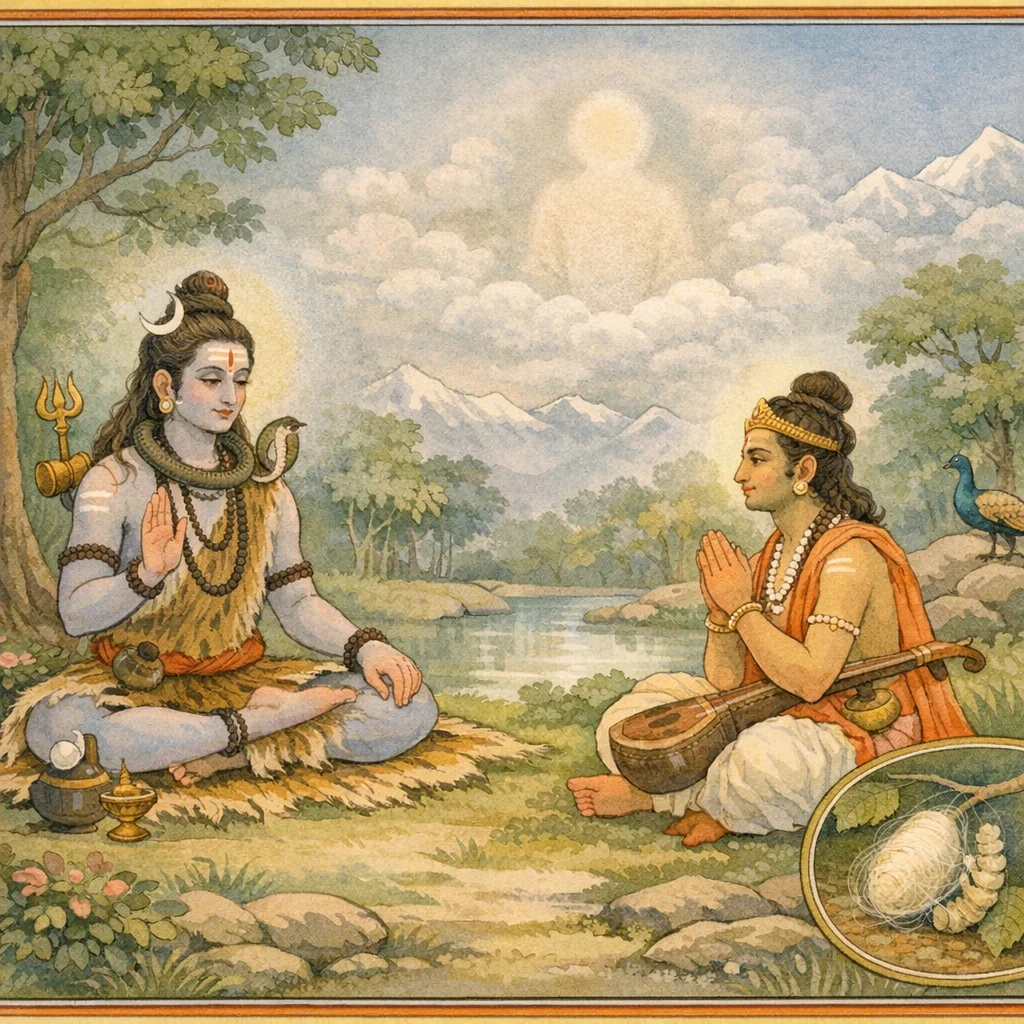
Sūta introduces a confidential hymn called “Kula-amṛta,” first spoken by Śiva in reply to Nārada’s question. Nārada grieves that the soul is trapped in dvandvas (desire/anger; pleasure/pain) and in sense-objects, and asks for the means to cross the ocean of death and rebirth. Śiva answers calmly that all beings, from grass to Brahmā, lie as if asleep under māyā, and that awakening comes only by the Lord’s grace. He warns that worldly intoxication—power, pleasures, and attachment to wife, sons, and family—brings ruin, like a silkworm binding itself in a cocoon. He then repeatedly proclaims the central path: constant meditation on Viṣṇu/Vāsudeva—unborn, all-pervading, beyond speech and concepts, witness of all worlds—bestows mokṣa, surpassing even great sacrifices. Sūta concludes by restating the teaching and its phalaśruti: hearing or reciting this hymn destroys vast sin and culminates in the highest, unchanging state, preparing the listener for further Purāṇic instruction grounded in bhakti as the power of release.
Shlokas
Verse 1
ऽध्यायः सूत उवाच / कुलामृतं प्रवक्ष्यामि स्तोत्रं यत्तु हरो ऽब्रवीत् / पृष्टः श्रीनारदेनैव नारदाय तथा शृणु
Sūta said: “I shall proclaim the ‘Kula-amṛta’—the hymn that Hara (Śiva) spoke. Questioned by the venerable Nārada himself, he spoke it to Nārada; therefore, listen.”
Verse 2
नारद उवाच / यः संकारे सदा द्वन्द्वैः कामक्रोधैः शुभाशुभैः / शब्दादिविषयैर्बद्धः पीड्यमानः स दुर्मतिः
Nārada said: One who, in the cycle of saṁsāra, is ever caught in pairs of opposites—desire and anger, the auspicious and the inauspicious—and is bound by sense-objects such as sound, being continually afflicted, is of misguided understanding.
Verse 3
क्षणं विमुच्यते जन्तुर्मृत्युसंसारसागरात् / भगवञ्छ्रोतुमिच्छामि त्वत्तो हि त्रिपुरान्तक
For a moment the living being is released from the ocean of death and transmigration. O Bhagavān, I wish to hear it from you alone—O Tripurāntaka, Destroyer of the three cities.
Verse 4
तस्य तद्वचनं श्रुत्वा नारदस्य त्रिलोचनः / उवाच तमृषिं शम्भुः प्रसन्नवदनो हरः
Hearing those words of Nārada, the three-eyed Lord (Śiva)—Śambhu, Hara—spoke to that sage with a serene and pleased countenance.
Verse 5
महेश्वर उवाच / ज्ञानामृतं परं गुह्यं रहस्यमृषिसत्तम / वक्ष्यामि शृणु दुः खघ्नं भवबन्धभयामहम्
Maheshvara said: “O best of sages, I shall proclaim the nectar of knowledge—supremely secret and deeply hidden. Listen to it; it destroys sorrow and removes the fear born of bondage to saṃsāra.”
Verse 6
तृणादि चतुरास्यान्तं भूतग्रामं चतुर्विधम् / चराचरं जगत्सर्वं प्रसुप्तं यस्य मायया
From a blade of grass up to four-faced Brahmā, the entire fourfold host of beings—everything moving and unmoving in the universe—lies as though asleep under the power of His māyā.
Verse 7
तस्य विष्णो प्रिसादेन यदि कश्चित्प्रबुध्यते / स निस्तरति संसारं देवानामपि दुस्तरम्
By the grace of that Lord Viṣṇu, if someone awakens to true knowledge, he crosses beyond saṃsāra—the cycle of existence difficult to transcend even for the devas.
Verse 8
भोगैश्वर्यमदोन्मत्तस्ततत्त्वज्ञानपराङ्मुखः / पुत्रदारकुटुम्बेषु मत्ताः सीदन्तिजन्तवः
Intoxicated by pleasures and the pride of worldly power, and turned away from knowledge of reality, living beings—deluded by attachment to sons, wife, and family—sink into ruin and suffering.
Verse 9
सर्व एकार्णवे मग्ना जीर्णा वनगजा इव / यस्त्वाननं निबध्नाति दुर्मतिः कोशकारवत्
All are plunged into the single ocean (of saṃsāra), worn down like old elephants of the forest. He who, through misguided understanding, binds his own mouth is like a silkworm that spins a cocoon around itself.
Verse 10
तस्य मुक्तिं न पश्यामि जन्मकोटिशतैरपि / तस्मान्नारद सर्वेषां देवानां देवमव्ययम् / आराधयेत्सदा सम्यगध्यायेद्विष्णुं मुदान्वितः
I see no liberation for him, even through hundreds of crores of births. Therefore, O Nārada, one should always properly worship the imperishable God of all the gods, and, filled with joy, study and contemplate Viṣṇu.
Verse 11
यस्तु विश्वमनाद्यन्तमजमात्मनि संस्थितम् / सर्वज्ञमचलं विष्णुं सदा ध्यायेत्समुच्यते
But the one who constantly meditates on Viṣṇu—who is the universe itself, beginningless and endless, unborn, established in the Self, all-knowing and unmoving—such a person is liberated.
Verse 12
देवं गर्भोचितं विष्णुं सदा ध्यायन्विमुच्यते / अशिरीरं विधातारं सर्वज्ञानमनोरतिम् / अचलं सर्वगं विष्णुं सदा ध्यायन्विमुच्यते
By constantly meditating on Viṣṇu—the divine Lord fit to be contemplated even while in the womb—one is liberated. By meditating on the bodiless Ordainer, whose delight is in omniscience, one is liberated. By meditating always on Viṣṇu, the unmoving and all-pervading One, one is liberated.
Verse 13
निर्विकल्पं निराभासं निष्प्रपञ्चं निरामयम् / वासुदेवं गुरुं विष्णुं सदा ध्यायन्विमुच्यते
By constantly meditating on Vāsudeva—Viṣṇu, the Guru—who is free from mental constructs, beyond all appearance, beyond worldly proliferation, and free from affliction, one is liberated.
Verse 14
सर्वात्मकञ्च वै यावदात्मचैतन्यरूपकम् / शुभमेकाक्षरं विष्णुं सदा ध्यायन्विमुच्यते
So long as one meditates constantly on the auspicious, one-syllabled Viṣṇu—who is all-pervading and whose very nature is the soul’s consciousness—one becomes liberated.
Verse 15
वाक्यातीतं त्रिकालज्ञं विश्वेशं लोकसाक्षिणम् / सर्वस्मादुत्तमं विष्णुं सदा ध्यायन्विमुच्यते
By ever meditating on Viṣṇu—beyond the reach of words, knower of the three times, Lord of the universe and witness of all worlds, supreme above all—one is liberated.
Verse 16
ब्रह्मादिदेवगन्धर्वैर्मुनिभिः सिद्धचारणैः / योगिभिः सेवितं विष्णुं सदा ध्यायन्विमुच्यते
By ever meditating on Viṣṇu—worshipped and served by Brahmā and the other gods, by Gandharvas, sages, Siddhas and Cāraṇas, and by Yogins—one is liberated.
Verse 17
संसारबन्धनामुक्तिमिच्छंल्लोको ह्यशेषतः / स्तुत्वैवं वरदं विष्णुं सदा ध्यायन्विमुच्यते
Indeed, whoever longs for release from the bondage of saṃsāra—having thus praised Viṣṇu, the giver of boons—becomes free by constantly meditating on Him.
Verse 18
संसारबन्धनात्को ऽपि मुक्तिमिच्छन्समाहितः / अनन्तमव्ययं देवं विष्णं विश्वप्रतिष्ठितम् / विश्वेश्वरमजं विष्णुं संदा ध्यायन्विमुच्यते
Anyone who, with a collected mind, longs to be freed from the bondage of saṃsāra—by constantly meditating on Viṣṇu, the endless and imperishable Lord, the deity in whom the universe is established, ruler of all, the unborn—becomes liberated.
Verse 19
सूत उवाच / नारदेन पुरा पृष्ट एवं स वृषभध्वजः / येत्तेन तस्मै व्याख्यातं तन्मया कथितं तव
Sūta said: Thus, when Nārada once questioned Vṛṣabhadhvaja (Śiva), whatever he explained to Nārada—that very teaching I have now narrated to you.
Verse 20
तमेव सततन्ध्यायन्निर्व्ययं ब्रह्म निष्कलम् / अवाप्स्यसि ध्रुवं तात ! शाश्वतं पदमव्ययम्
By constantly meditating on Him alone—the imperishable, partless Brahman—you will surely attain, dear one, the eternal and unchanging state.
Verse 21
अश्वमेधसहस्राणि वाजपेयशतानि च / क्षणमेकाग्रचित्तस्य कलां नार्हन्ति षोडशीम्
Even a thousand Aśvamedha sacrifices and a hundred Vājapeya rites are not worth even one-sixteenth of a single moment of a mind made one-pointed (in concentrated devotion/meditation).
Verse 22
श्रुत्वा सुरऋषिर्विष्णोः प्राधान्यमिदमीश्वरात् / स विष्णुं सम्यगाराध्य सिद्धः पदमवाप्तवान्
Having heard from the Lord about this supreme pre-eminence of Viṣṇu, the divine sage duly worshipped Viṣṇu; becoming perfected, he attained the highest state.
Verse 23
यः पठेच्छृणुयाद्वा पि नित्यमेव स्तवोत्तमम् / कोटिजन्मकृतं पापमपि तस्य प्रणश्यति
Whoever regularly recites—or even listens to—this excellent hymn, even the sins accumulated over tens of millions of births are destroyed for that person.
Verse 24
विष्णोः स्तवमिदं दिव्यं महादेवेन कीर्तितम् / प्रयत्नाद्यः पठेन्नित्य ममृतत्वं स गच्छति
This divine hymn of Lord Viṣṇu, proclaimed by Mahādeva (Śiva)—whoever recites it daily with earnest effort, attains immortality (liberation).
Frequently Asked Questions
Viṣṇu (Vāsudeva) is emphasized as the direct object of constant meditation; He is described as the all-pervading witness, unborn and beyond conceptual construction, and thus the stable refuge through which one awakens from māyā and attains mokṣa.
It indicates spiritual non-recognition (avidyā): consciousness is absorbed in appearances, dualities, and sense-objects. Awakening is the shift to reality-knowledge supported by divine grace and sustained Viṣṇu-centered contemplation.