Adhyaya 128
Vrata-Niyama: Fasting Purity, Brahmakūrcha, Naktāhāra, and Kāla-Nirṇaya (Ritual Timing)
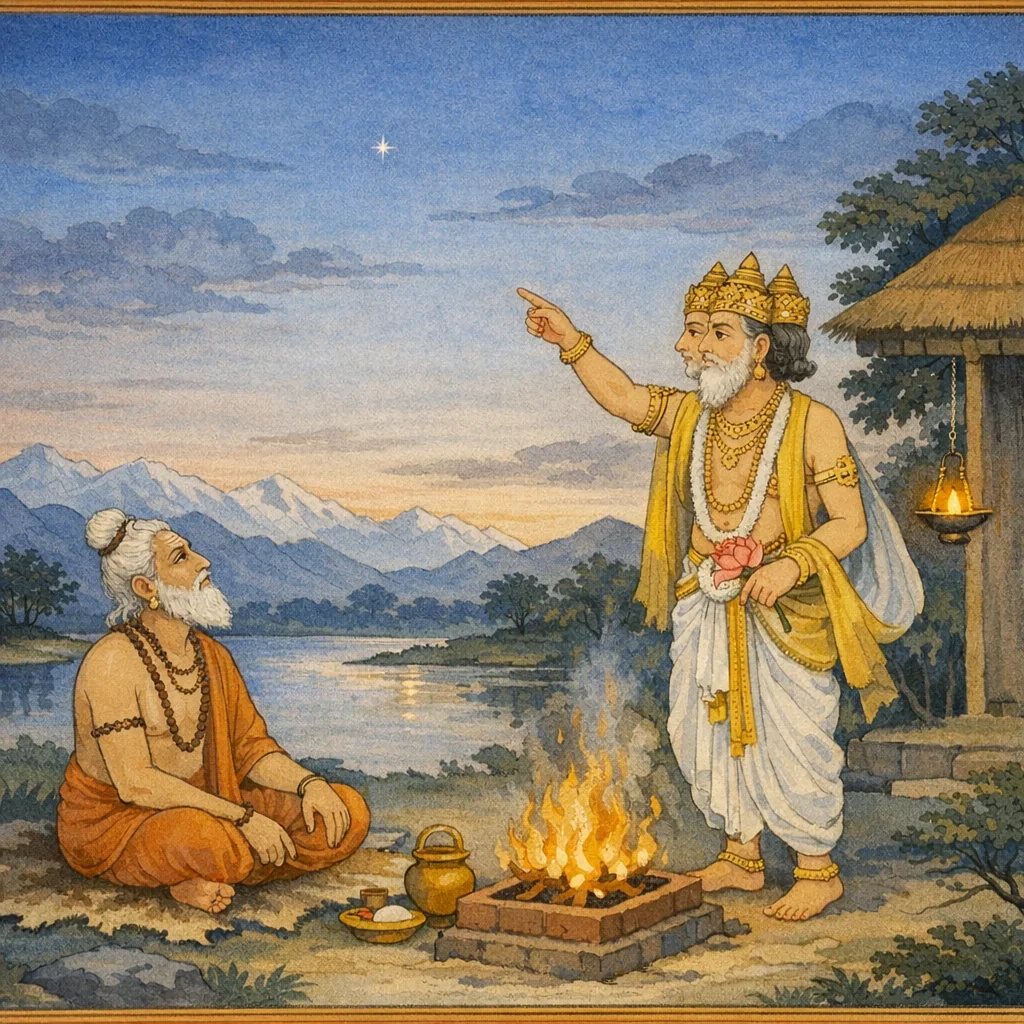
Continuing the ācāra-based instruction, Brahmā teaches Vyāsa that vows (vrata) are tapas that please Hari, and lists the disciplines that keep a vow ritually whole: bathing at the three sandhyās, sleeping on the ground, conquering the senses, guarded company, and pañca-śodhana offerings into fire. He details fasting restrictions regarding food, vessels, adornment, and grooming, along with the morning regimen involving pañcagavya-related practice and purification. The chapter defines proper naktāhāra (eating only after sighting the stars) and prescribes expiation for improper night-eating, then gives measures and mantras for the Brahmakūrcha vow. It expands to the dharma of rites—establishing agni, dīkṣā, yajña, dāna, vrata, vṛṣotsarga, cūḍā, and upanayana—and insists on correct calendrical conduct: avoiding auspicious rites in malamāsa, distinguishing lunar/solar/sāvana months, and mapping tithi associations. It closes with practical contingencies—menstruation interrupting vows, penance for breach, and proxy performance when incapacitated—preparing for later chapters that further systematize observances and their fruits.
Shlokas
Verse 1
सप्तविंशत्युत्तरशततमो ऽध्यायः ब्रह्मोवाच / व्रतानि व्यास वक्ष्यामि यैस्तुष्टः सर्वदो हरिः / शास्त्रोदितो हि नियमो व्रतं तच्च तपो मतम्
Chapter One Hundred Twenty-Eight. Brahmā said: “O Vyāsa, I shall declare the sacred vows by which Hari—the bestower of all—becomes pleased. A vow is indeed a discipline enjoined by the śāstras; and that very vow is regarded as tapas (austerity).”
Verse 2
नियमास्तु विशेषाः स्युः व्रतस्यास्य दमादयः / नित्यं त्रिषवणं स्नायादधः शयी जितेन्द्रियः
The special disciplines for this vow are self-restraint and the like. One should bathe daily at the three sandhyā-times, sleep on the ground, and remain a conqueror of the senses.
Verse 3
स्त्रीशूद्रपतितानां तु वर्जयेदभिभाषणम् / पवित्राणि च पञ्चैव जुहुयाच्चैव शक्तितः
In the course of ritual observance, one should avoid conversing with women, Śūdras, and the fallen; and, according to one’s capacity, one should duly offer into the sacred fire the five purifying oblations.
Verse 4
कृच्छ्राण्येतानि सर्वाणि चरेत्सुकृतवान्नरः / केशानां रक्षणार्थं तु द्विगुणं व्रतमाचरेत्
A man endowed with merit should observe all these rigorous expiatory disciplines; and for the protection and well-being of his hair, he should undertake the vow in a doubled measure.
Verse 5
कांस्यं माषं मसूरं चचणकं कोरदूषकम् / शाकं मधु परान्नं च वर्जयेदुपवासवान्
One observing the fast (upavāsa) should avoid: eating from bronze vessels, black gram (māṣa), lentils (masūra), chickpeas (caṇaka), kodrava grain, leafy vegetables, honey, and cooked or seasoned prepared foods.
Verse 6
पुष्पालङ्कारवस्त्राणि धूपगन्धानुलेपनम् / उपवासेन दुष्येत्तु दन्तधावनमञ्जनम्
During the fast (upavāsa), flowers, ornaments, garments, incense, fragrances, and unguents are regarded as tainted by the act of fasting; likewise, tooth-cleaning and the application of añjana (collyrium) are considered improper.
Verse 7
दन्तकाष्ठं पञ्चगव्यं कृत्वा प्रातर्व्रतं चरेत् / असकृज्जलपानाच्च ताम्बूलस्य च भक्षणात्
Using a tooth-stick (dantakāṣṭha) for cleansing, preparing and taking pañcagavya, and observing the morning discipline of the vow—together with repeatedly drinking water for purification and chewing tāmbūla—one should perform the prescribed morning vow.
Verse 8
उपवासः प्रदुष्येत दिवास्वप्ना क्षमैथुनात् / क्षमा सत्यं दया दानं शौचमिन्द्रियनिग्रहः
Fasting is tainted by sleeping in the daytime and by indulgence in sex. True observance rests on forbearance, truthfulness, compassion, charity, purity, and restraint of the senses.
Verse 9
देवपूजाग्निहवने सन्तोषोस्तेयमेव च / सर्वव्रतेष्वयं धर्मः सामान्यो दशधास्मृतः
Worship of the gods and offerings into the sacred fire, contentment, and non-stealing—this dharma is remembered as the common tenfold code that applies to all religious vows.
Verse 10
नक्षत्रदर्शनान्नक्तमनक्तं निशि भोजनम् / गोमूत्रं च पल दद्यादर्धाङ्गुष्ठं तु गोमयम्
If one has observed the vow of eating only after sighting the stars, that is deemed ‘nakta’ (the night‑meal); but eating at night otherwise is improper. As expiation, one should give one pala of cow’s urine, and cow‑dung in a measure of half a thumb (ardhāṅguṣṭha).
Verse 11
क्षीरं सप्तपलं दद्याद्दध्नश्चैव पलत्रयम् / घृतमेकफलं दद्यात्पलमेकं कुशोदकम्
One should offer seven palas of milk, three palas of curd, one pala of ghee, and one pala of water sanctified with kuśa grass.
Verse 12
गायत्त्र्या चैव गन्धेति आप्यायस्व दृ दधिग्रहः / तेजो ऽसीति च देवस्य ब्रह्मकूर्चव्रतं चरेत्
Reciting the Gāyatrī and the mantra beginning with “gandheti,” then uttering “āpyāyasva” while taking curd, and also “tejo ’si” in worship of the deity—thus one should observe the Brahmakūrcha vow.
Verse 13
अग्न्याधानं प्रतिष्ठां तु यज्ञदानव्रतानि च / वेदव्रतवृषोत्सर्गचूडाकरणमेखलाः
The rites of establishing the sacred fires (agnyādhāna), consecratory installations, sacrifices (yajña), charitable gifts (dāna), and religious vows (vrata)—as well as Vedic observances such as the gifting or release of a bull (vṛṣotsarga), the tonsure (cūḍākaraṇa), and the investiture with the sacred girdle (mekhalā)—should be duly performed and are reckoned as meritorious acts.
Verse 14
माङ्गल्यमभिषेकं च मलमासे विवर्जयत् / दर्शाद्दर्शस्य चान्द्रः स्यात्त्रिंशाहोभिस्तु सावनः
In the intercalary month (malamāsa), one should refrain from auspicious rites and from consecratory bathing (abhiṣeka). The lunar month (cāndra) is reckoned from new moon to new moon, whereas the sāvana month consists of thirty day-and-night units.
Verse 15
रविसंक्रमणात्सौरो नाक्षत्रः सप्तविंशतिः / सौरो मासो विवाहाय यज्ञादौ सावनस्थितिः
From the Sun’s passage (saṅkramaṇa) the solar month (saura) is determined; the nakṣatra-based count is twenty-seven. For marriage one should use the solar month, whereas for sacrifices (yajña) and the like the reckoning is to follow the sāvana measure, based on civil days.
Verse 16
युग्माग्नियुगभूतानि षण्मुन्योर्वसुरन्ध्रयोः / रुद्रेण द्वादशी युक्ता चतुर्दश्याथ पूर्णिमा
The even-numbered tithi are associated with the twin Aśvins; with the three sacred fires; with the four yugas; and with the five great elements. The sixth is linked with the sages (muni), the eighth with the Vasus, and the ninth with the openings of the body. The twelfth is joined with Rudra; then come the fourteenth and the full-moon day (pūrṇimā).
Verse 17
प्रतिपद्यप्यमावास्या तिथ्योर्मस्यं महाफलम् / एतद्व्यस्तं महाघोरं हन्ति पुण्यं पुरा कृतम्
Pratipad (the first tithi) and Amāvāsyā (the new-moon day) each bestow great merit when duly observed. But when they are performed in a confused or inverted manner, the act becomes exceedingly dreadful and destroys the merit earned in former times.
Verse 18
प्रारब्धतपसा स्त्रीणां रजो हन्याद्व्रतं न हि / अन्यैर्दानादिकं कुर्यात्कायिकं स्वयमेव च
For women, the onset of menstruation nullifies the vowed observance (vrata); it should not be continued then. In that period, acts such as charity are to be done through others, while bodily duties are to be performed by oneself alone.
Verse 19
क्रोधात्प्रमादाल्लोभाद्वा व्रतभङ्गो भवेद्यदि / दिनत्रयं न भुञ्जीत शिरसो मुण्डनं भवेत्
If a vow (vrata) is broken through anger, negligence, or greed, one should abstain from food for three days, and the head should be shaved.
Verse 20
असामर्थ्ये शरीरस्य पुत्रादीन्कारयेद्व्रतम् / व्रतस्थं मूर्छितं विप्रं जलादीन्यनुपाययेत्
When the body is incapable, one should have the vrata carried out through one’s sons and other dependents. And if a brāhmaṇa observing a vow faints, he should be gently given water and other restorative necessities.
Frequently Asked Questions
Nakta is defined as taking the meal only after observing the stars (i.e., after nightfall confirmed by star-sighting). Eating at night without following this observance is called improper in the chapter, and it prescribes an expiatory remedy involving specified measures of gomūtra and gomaya.
The chapter states that fasting is tainted by daytime sleep and sexual indulgence, and it also treats adornment-related items—flowers, ornaments, garments, incense, fragrances, and unguents—as improper during the fast; tooth-cleaning and collyrium application are likewise discouraged in that context.
The text prescribes abstaining from food for three days and shaving the head as corrective discipline when the vow is broken through such faults, indicating a prāyaścitta meant to restore vrata-śuddhi.
It states that for women, menstruation nullifies/interrupts the vowed observance during that period; charitable acts may be performed through others while personal bodily duties are done by oneself. If the practitioner is physically incapable, the vow may be carried out through sons or dependents, and if a brāhmaṇa observing a vow faints, he should be gently revived with water and necessities.