Adhyaya 35
व्यासशिष्योत्पत्तिवर्णन (Origins/Enumeration of Vyāsa’s Disciplic Succession) — Chapter on Vedic Transmission Lineages
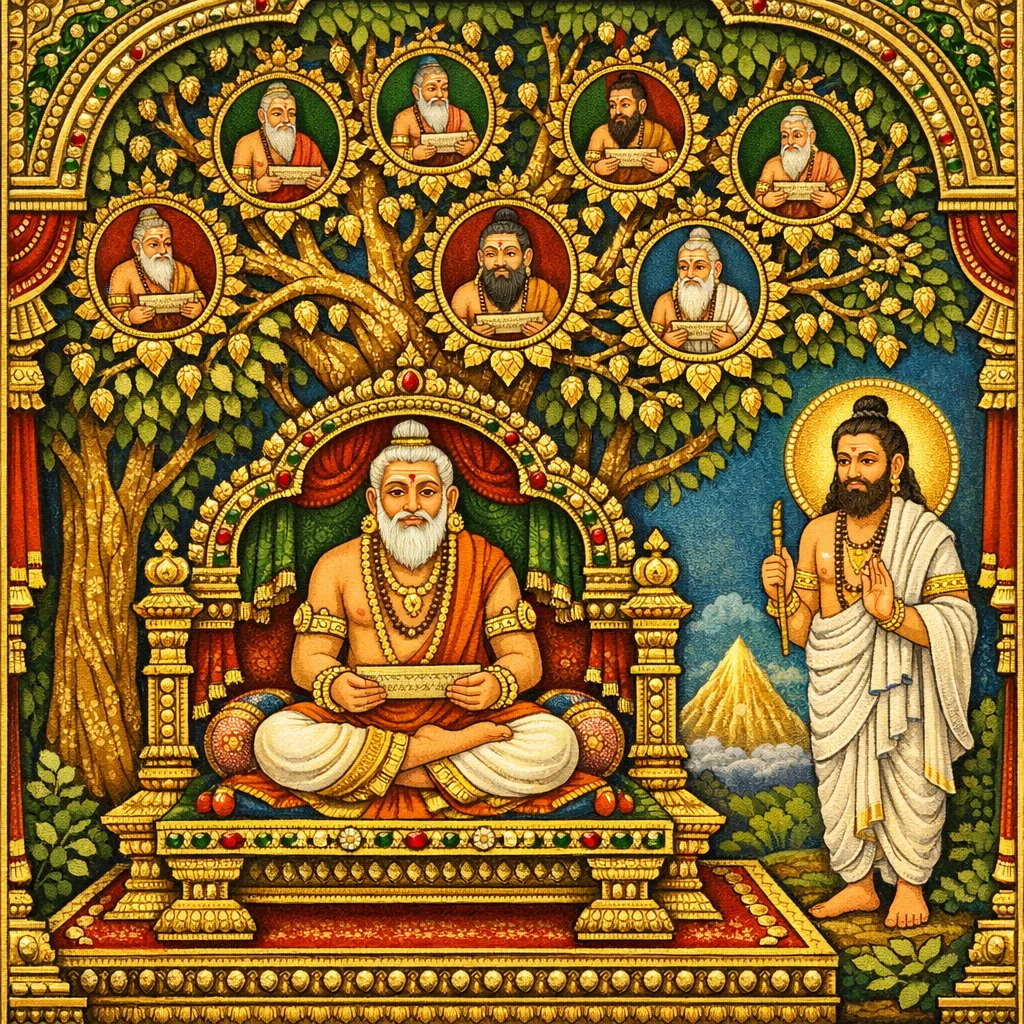
Framed as Sūta’s narration, this adhyāya is a dense catalogue of Vedic transmission (paramparā) and the formation of recensions and saṃhitās. It highlights learned Brahmins who compose or pass on multiple saṃhitās, lists their disciples, and traces the branching of teacher→disciple lines. Its core is an intellectual genealogy: how Vedic corpora—especially Yajurvedic materials—are systematized into many saṃhitā-forms and associated with regional groupings such as Udīcya, Madhyadeśya, and Prācya. A notable strand classifies Yajus traditions and mentions Yājñavalkya in a context of separation/exception, suggesting a remembered rupture or reconfiguration in transmission. The ṛṣis’ question about “Caraka Adhvaryus” elicits an origin-explanation for why certain ritualists became caraka (wandering) and under what circumstances, linking geography (e.g., the Meru region) with ritual-scholarly identity. Overall, the chapter serves as a knowledge-map of who held which saṃhitā, how many variants existed, and how Vedic schools were socially and regionally situated.
Shlokas
Verse 1
इति श्रीब्रह्माण्डे महापुराणे वायुप्रोक्ते पूर्वभागे द्वितीये ऽनुषङ्गपादे व्यासशिष्योत्पत्तिवर्णनं नाम चतुस्त्रिंशत्तमो ऽध्यायः सूत उवाच देवमित्रश्च शाकल्यो महात्मा द्विजपुङ्गवः / चकार संहिताः पञ्च बुद्धिमान्वेदवित्तमः
Thus, in the Śrī Brahmāṇḍa Mahāpurāṇa, in the former section spoken by Vāyu, in the second Anuṣaṅgapāda, is the thirty-fourth chapter called “The Account of the Origin of Vyāsa’s Disciples.” Sūta said: Devamitra and Śākalya, a great-souled best of the twice-born, wise and foremost among knowers of the Vedas, composed five Saṃhitās.
Verse 2
पञ्च तस्याभवञ्छिष्या मुद्गलो गोखलस्तथा / खलीयान्सुतपा वत्सः शैशिरेयश्च पञ्चमः
He had five disciples: Mudgala, Gokhala, Khalīyān, Sutapā, Vatsa, and as the fifth, Śaiśireya.
Verse 3
प्रोवाच संहितास्तिस्रः शाको वैणो रथीतरः / निरुक्तं च पुनश्चक्रे चतुर्थं द्विजसत्तमः
The foremost of the twice-born, Śāka Vaina Rathītara, proclaimed three Saṃhitās; and again he composed the Nirukta as the fourth.
Verse 4
तस्य शिष्यास्तु चत्वारः पैलश्चेक्षलकस्तथा / धीमाञ्छ तबलाकश्च गजश्चैव द्विजोत्तमाः
He had four disciples—Paila, Ikṣalaka, the wise Tabalāka, and Gaja—each a foremost among the twice-born.
Verse 5
बाष्कलिस्तु भरद्वाजस्तिस्रः प्रोवाच संहिताः / त्रयस्तस्याभवञ्च्छिष्या महात्मानो गुणान्विताः
Bāṣkali of the Bhāradvāja line proclaimed three Saṃhitās; he had three disciples, great-souled and endowed with virtues.
Verse 6
धीमांश्च त्वापनापश्च पान्नगारिश्च बुद्धिमान् / तृतीयश्चार्जवस्ते च तपसा शंसितव्रताः
Dhīmān, Āpanāpa, the wise Pānna-gāri, and the third, Ārjava—these were vow-keepers, praised for their austerities.
Verse 7
वीतरागा महातेजाः संहिताज्ञानपारगाः / इत्येते बहूवृचाः प्रोक्ताः संहिता यैः प्रवर्तिताः
Free from attachment, radiant with great splendor, and perfected in Saṃhitā-knowledge—thus were they called Bahūvṛcas, by whom the Saṃhitās were set in motion and preserved.
Verse 8
वैशंपायनशिष्यो ऽसौ यजुर्वेदमकल्पयत् / षडशीतिस्तु तेनोक्ताः संहिता यजुषां शुभाः
That disciple of Vaiśaṃpāyana duly arranged the Yajurveda; by him were taught eighty-six auspicious Saṃhitās of the Yajus.
Verse 9
शिष्येभ्यः प्रददौ ताश्च जगूहुस्ते विधानतः / एकस्तत्र परित्यक्तो या५वल्क्यो महातपाः
He bestowed those Saṃhitās upon his disciples, and they received them according to due ordinance; but there, the great ascetic Yājñavalkya alone was cast aside.
Verse 10
षडशीतिस्तथा शिष्याः संहितानां विकल्पकाः / सर्वेषामेव तेषां वै त्रिधा भेदाः प्रकीर्त्तिताः
Likewise, eighty-six disciples became arrangers of variant recensions of the Saṃhitās; for all of them, threefold divisions are indeed declared.
Verse 11
त्रिधा भेदास्तु ते वेदभेदे ऽस्मिन्नवमे शुभे / उदीच्या मध्यदेश्याश्च प्राच्यश्चैव पृथग्विधाः
In this auspicious ninth division of Vedic tradition, those distinctions are threefold: Udīcya, Madhyadeśya, and Prācya—each of a separate kind.
Verse 12
श्यामायनिरुदीच्यानां प्रधानः संबभूव ह / मध्यदेशप्रतिष्ठाता चासुरिः प्रथमः स्मृतः
Among the Udīcya, Śyāmāyani became the foremost; and Āsuri, who established the tradition in Madhyadeśa, is remembered as the first.
Verse 13
आलंबिरादिः प्राच्यानां त्रयोदेश्यादयस्तु ते / इत्येते चरकाः प्रोक्ताः संहिता वादिनो द्विजाः
Among the easterners were Ālaṃbira and others, and likewise Trayodeśya and others; these were called Carakas—twice-born sages who recite and expound the Saṃhitā.
Verse 14
ऋषय ऊचुः चरकाध्वर्यवः केन कारणं ब्रूहि तत्त्वतः / किं चीर्णं कस्य वा हेतोश्चरकत्वं हि भेजिरे
The seers said: “O Sūta, tell us truly for what reason the adhvaryu priests became Carakas. What observance did they undertake, or for what cause did they assume the state of Caraka?”
Verse 15
सूत उवाच कार्यमासीदृषीणां च किञ्चिद्ब्राह्मणसत्तमाः / मेरुपृष्ठं समासाद्य तैस्तदा त्विति मन्त्रितम्
Sūta said: “O best of brahmins, the seers had a certain task to accomplish. Having reached the back of Mount Meru, they then conferred together, saying ‘tv’—thus.”
Verse 16
यो वात्र सप्तरात्रेण नागच्छेद्द्विजसत्तमः / स कुर्याद्ब्रह्महत्यां वै समयो नः प्रकीर्तितः
Whoever, though a foremost twice-born, does not arrive here within seven nights, shall indeed incur the sin of brahmahatyā; this is the time-limit we have proclaimed.
Verse 17
ततस्ते सगणाः सर्वे वैशंपायनवर्जिताः / प्रययुः सप्तरात्रेण यत्र संधिः कृतो ऽभवत्
Then all of them, together with their companies—excluding Vaiśaṃpāyana—set out within seven nights for the place where the pact had been made.
Verse 18
ब्रह्मणानां तु वचनाद्ब्रह्महत्यां चकार सः / शिष्यानथ समानीय स वैशंपायनो ऽब्रवीत्
At the word of the Brahmanas, he accepted the expiation for the sin of brahmahatyā. Then, gathering the disciples, Vaiśampāyana spoke.
Verse 19
ब्रह्महत्यां चरध्वं वै मत्कृते द्विजसत्तमाः / सर्वे यूयं समागम्य ब्रूत कामं हितं वचः
O best of the twice-born, for my sake undertake the expiation for brahmahatyā. Assemble all of you and speak, as you wish, words that are for the good.
Verse 20
याज्ञवल्क्य उवाच अहमेकश्चरिष्यामि तिष्ठन्तु मुनयस्त्विमे / बलेनोत्थापयिष्यामि तपसा स्वेन भावितः
Yājñavalkya said: “I alone shall undertake this expiation; let these sages remain here. Empowered and refined by my own tapas, I will bear it by strength.”
Verse 21
एव मुक्तस्ततः क्रुद्धो या५वल्क्यम थात्यजत् / उवाच यत्त्वयाधीतं सर्वं प्रत्यर्पयस्व मे
Thus addressed, he grew wrathful, cast off Yājñavalkya, and said: “Return to me all that you have learned.”
Verse 22
एवमुक्तः सरूपाणि यजूंषि गुरवे ददौ / रुधिरेण तथाक्तानि च्छर्दित्वा ब्रह्मवित्तमाः
Thus commanded, he returned to his guru the Yajus formulas in their very form; and the disciples, foremost knowers of Brahman, cast them out—vomiting them forth mingled with blood—and gave them back.
Verse 23
ततः स ध्यानमास्थाय सर्यमाराधयद्द्विजः / सूर्ये ब्रह्म यदुत्पन्नं तं गत्वा प्रतितिष्ठति
Then the twice-born sage, entering meditation, worshiped Lord Sūrya. Reaching the Brahman that arose within the Sun, he became firmly established there.
Verse 24
ततो यानि गतान्यूर्ध्वं यजूष्यादित्यमडलम् / तानि तस्मै ददौ तुष्टः सूर्यो वै ब्रह्मरातये
Then the Yajus hymns that had risen above the solar orb of Āditya—those Lord Sūrya, well pleased, bestowed upon Brahmarāti.
Verse 25
अश्वरूपाय मार्त्तण्डो याज्ञवक्ल्याय धीमते / यजूंष्यधीयते तानि ब्राह्मणा येन केनचित्
Mārtaṇḍa, the Sun, assuming the form of a horse, bestowed those Yajus hymns upon the wise Yājñavalkya—hymns recited by the Brahmins.
Verse 26
अश्वरूपाय दत्तानि ततस्ते वाजिनो ऽमवन् / ब्रह्महत्या तु यैश्चीर्णा चरणाच्चरकाः स्मृताः
Since they were given to the horse-formed one, those Vājin branches of recitation were preserved. And those who performed expiation for the sin of brahmahatyā are remembered, by their caraṇa, as Carakas.
Verse 27
वैशंपायनशिष्यास्ते चरकाः समुदाहृताः / इत्येते चरकाः प्रोक्ता वाजिनस्तु निबोधत
Those Carakas are declared to be disciples of Vaiśampāyana. Thus the Carakas have been described; now understand also the Vājin.
Verse 28
या५वल्क्यस्य शिष्यास्ते कण्वो बौधेय एव च / मध्यन्दिनस्तु सापत्यो वैधेयश्चाद्धबौद्धकौ
The disciples of Yājñavalkya were Kaṇva and Baudheya; also Madhyandina, Sāpatya, Vaidheya, and the Adhabauddhakas.
Verse 29
तापनीयश्च वत्साश्च तथा जाबालकेवलौ / आवटी च तथा पुण्ड्रो वैणोयः सपराशरः
Tāpanīya and the Vatsas; likewise the two Jābālakas; and also Āvaṭī, Puṇḍra, Vaiṇoya, together with Parāśara.
Verse 30
इत्येते वाजिनः प्रोक्ता दशपञ्च च सत्तमाः / शतमेकाधिकं ज्ञेयं यजुषां ये विकल्पकाः
Thus these Vājinas (branches) are declared—fifteen and seven, making twenty-two; and the variant recensions of the Yajus are to be known as one hundred and one.
Verse 31
पुत्रमध्यापयामास सुमन्तुमथ जैमिनिः / सुमन्तुश्चापि सुत्वानं पुत्रमध्यापयत्पुनः
Jaimini taught his son Sumantu; and Sumantu, in turn, taught again his son Sutvān.
Verse 32
सुकर्माणं ततः सुन्वान्पुत्रमध्यापयत्पुनः / स सहस्रमधीत्याशु सुकर्माप्यथ संहिताः
Then Sunvān taught his son Sukarmā; and Sukarmā swiftly studied a thousand (lessons) and also mastered the Saṃhitās.
Verse 33
प्रोवाचाथ सहस्रस्य सुकर्मा सूर्यवर्चसः / अनध्यायेष्वधीयानांस्तञ्जघान शतक्रतुः
Then Sukarmā, radiant as the sun among the thousand, spoke; and those who studied even during anadhyāya were slain by Śatakratu (Indra).
Verse 34
प्रायोपवेशमकरोत्ततो ऽसौ शिष्यकारमात् / क्रुद्धं दृष्ट्वा ततः शक्रोवरं सो ऽथ पुनर्ददौ
Then, for the sake of his disciple, he undertook prāyopaveśa; seeing him enraged, Śakra (Indra) again granted a boon.
Verse 35
भविष्यतो महावीर्यौं शिष्यौ ते ऽतुलवर्चसौ / अधीयातां महाप्राज्ञौ सहस्रं संहिता उभौ
In time to come you will have two disciples, mighty in power and of incomparable radiance; both, great in wisdom, will study a thousand saṃhitās.
Verse 36
एते सुरा महाभागाः संक्रुद्धा द्विजसत्तम / इत्युक्त्वा वासवः श्रीमान्सुकर्माणं यशस्विनम्
“O best of the twice-born, these fortunate gods are greatly enraged.” So spoke the glorious Vāsava (Indra) to the renowned Sukarmā.
Verse 37
शान्तक्रोधं द्विजं दृष्ट्वा क्षिप्रमन्तर धात्प्रभुः / तस्य शिष्यो ऽभवद्धीमान् पौष्यञ्जिर्द्विजसत्तमाः
Seeing the twice-born with his anger calmed, the Lord swiftly vanished; and his disciple became the wise Pauṣyañji, O best of the twice-born.
Verse 38
हिरण्यनाभः कौशल्यो द्वितीयो ऽभून्नराधिपः / अध्यापयत पौष्याञ्जिः सहस्रार्द्धं तुसंहिताः
Hiraṇyanābha of Kosala became the second king. Pausyāñji taught his disciples five hundred (half of a thousand) sacred compilations of the Tu-saṃhitā.
Verse 39
ते नाम्नोदीच्यसामानः शिष्याः पौष्यञ्जिनः शुभाः / सत्त्वानि पञ्च कौशिल्यः संहिताना मधीतवान्
They were the blessed disciples of Pausyāñji, known by the name Udīcyasāmāna. Kauśilya studied the five ‘sattva’—the core divisions—of the saṃhitā.
Verse 40
शिष्या हिरण्यनाभस्य स्मृतास्तु प्राच्यसामगाः / लौगाक्षिः कुशुमिश्चैव कुशीदिर्लाङ्गलिस्तथा / पौष्यञ्जि शिष्याश्चत्वारस्तेषां भेदान्निबोधत
The disciples of Hiraṇyanābha are remembered as the Prācyasāmaga: Laugākṣi, Kuśumi, Kuśīdi, and Lāṅgali. Pausyāñji too had four disciples; learn the distinctions of their branches.
Verse 41
नाडायनीयः सहतण्डिपुत्रस्तस्मादनोवैननामा सुविद्वान् / सकोतिपुत्रः सुसहाः सुनामा चैतान्भेदान्वित्तलौगाक्षिणस्तु
The branches of Laugākṣi’s lineage are these: Nāḍāyanīya, the son of Sahataṇḍi; from him came the learned Anovaina; then the son of Sakoti; and also Susahā and Sunāmā. Know these divisions of Laugākṣi.
Verse 42
त्रयस्तु कुशुमेः शिष्या औरसः स पराशरः
Kuśumi had three disciples; among them, Parāśara was his own son (aurasa).
Verse 43
नाभिर्वित्तस्तु तेजस्वी त्रिविधा कौशुमाः स्मृताः / शौरिषुः शृङ्गिपुत्रश्च द्वावेतौ तु चिरव्रतौ
Nabhirvitta was a radiant sage; the Kauśuma tradition is remembered as threefold. Śauriṣu and Śṛṅgiputra—these two were ascetics of long-held vows.
Verse 44
राणायनीयिः सौमित्रिः सामवेदविशारदौ / प्रोवाच संहितास्ति स्रः शृङ्गिपुत्रौ महात्पाः
Rāṇāyanīyi and Saumitri—both were masters of the Sāmaveda. Those great-souled Śṛṅgiputras expounded the Saṃhitās.
Verse 45
वैनः प्राजीनयोगश्च सुरालश्च द्विजौत्तमः / प्रोवाच संहिताः षट्तु पाराशर्यस्तु कौथुमः
Vaina, Prājīnayoga, and Surāla were foremost among the twice-born. Pārāśarya Kauthuma expounded six Saṃhitās.
Verse 46
आसुरायणवैशाख्यौ वेदवृद्धपरायणौ / प्राचीनयोगपुत्रश्च बुद्धिमांश्च पतञ्जलिः
Āsurāyaṇa and Vaiśākhya were devoted to the venerable elders of the Veda. And there was wise Patañjali, son of Prācīnayoga.
Verse 47
कौथुमस्य तु भेदाश्च पाराशर्यस्य पट् समृताः / लाङ्गलः शालिहोत्रश्च षडुवाचाथ संहिताः
The divisions of Kauthuma, and likewise six of Pārāśarya, are remembered. Then Lāṅgala and Śālihotra expounded six Saṃhitās.
Verse 48
हालिनिर्ज्यामहानिश्च जैमिनिर्लोमगायनिः / कण्डुश्च कोहलश्चैव षडे ते लाङ्गलाः स्मृताः
Hālinirjyā, Mahāniśca, Jaimini, Lomagāyani, Kaṇḍu, and Kohala—these six are remembered as the Lāṅgalas.
Verse 49
एते लाङ्गलिनः शिष्याः संहिता यैः प्रवर्त्तिताः / एको हिरण्यनाभस्य कृतः शिष्यो नृपात्मजः
These were the disciples of Lāṅgali, by whom the Saṃhitās were set in motion; among them, one— a prince—was made a disciple of Hiraṇyanābha.
Verse 50
सो ऽकरोत्तु चतुर्विशसंहिता द्विपदां वरः / प्रोवाच चैव शिष्येभ्यो येभ्यस्ताश्च निबोधत
That excellent man composed twenty-four Saṃhitās, and taught them to his disciples—learn also to whom he imparted them.
Verse 51
राडिश्च राडवीयश्च पञ्जमौ वाहनस्तथा / तलको माण्डुकश्चैव कालिको राजिकंस्तथा
Rāḍi, Rāḍavīya, Pañjama, Vāhana, Talaka, Māṇḍuka, Kālika, and Rājika—these names too are enumerated (among the disciples).
Verse 52
गौतमश्चाजबस्तश्च सोमराजायनस्ततः / पुष्टिश्च परिकृष्टश्च उलूखलक एव च
Then also are named Gautama, Ājabasta, Somarājāyana, Puṣṭi, Parikṛṣṭa, and Ulūkhalaka (among the disciples).
Verse 53
यवीयसस्तु वै शालीरङ्गुलीयश्च कौशिकः / शालिमञ्जरिपाकश्च शधीयः कानिनिश्च यः
Yavīyasa, Śālīrāṅgulīya Kauśika, Śālimañjaripāka, Śadhīya, and Kāninī—these are the names spoken of among the sāmagas.
Verse 54
पाराशर्यस्तु धर्मात्मा इति क्रान्तास्तु सामगाः / सामगानां तु सर्वेषां श्रेष्ठौ द्वौ परिकीर्त्तितौ
“Pārāśarya is righteous in soul”—thus the sāmagas came to be renowned; among all the sāmagas, two are declared the foremost.
Verse 55
पौष्यञ्जिश्च कृतश्चैव संहितानां विकल्पकौ / अथर्वाणं द्विधा कृत्वा सुमन्तुरददाद्द्विजाः
Pauṣyañji and Kṛta were the arrangers of the Saṃhitā divisions; O dvijas, Sumantu split the Atharvaveda in two and bestowed it.
Verse 56
कबन्धाय पुनः कृष्णं स च विद्वान्यथाश्रुतम् / कबन्धस्तु द्विधा कृत्वा पथ्यायैकं पुनर्ददौ
Then again the Kṛṣṇa (Atharva tradition) was given to Kabandha; learned, he preserved it as he had heard. Kabandha divided it in two and once more gave one portion to Pathya.
Verse 57
द्वितीयं देवदर्शायस चतुर्धाकरोत्प्रभुः / मोदो ब्रह्मबलश्चैव पिप्पलादस्तथैव च
The second portion (went) to Devadarśa; the lord divided it into four—Modo, Brahmabala, and likewise Pippalāda.
Verse 58
शौल्कायनिश्च धर्मज्ञश्चतुर्थस्तपसि स्थितः / देवदर्शस्य चत्वारः शिष्या ह्येते दृढव्रताः
Śaulkāyani, knower of dharma, was the fourth, established in austerity. These are the four disciples of Devadarśa, steadfast in their vows.
Verse 59
पुनश्च त्रिविधं विद्धि पथ्यानां भेदमुत्तमम् / जाजलिः कुमुदादिश्च तृतीयः शौनकः स्मृतः
Know again the excellent threefold division of the Pathya tradition: Jājali, Kumudādi, and the third is remembered as Śaunaka.
Verse 60
शौनकस्तु द्विधा कृत्वा ददावेकान्तु बभ्रवे / द्द्वितीयां संहितां धीमान्सैन्धवायनसंज्ञि ते
Śaunaka divided it into two and gave one part to Babhrū; the second saṃhitā, the wise one, he bestowed upon the one known as Saindhavāyana.
Verse 61
सैन्धवो मुञ्जकेश्यश्च भिन्नामाधाद्द्विधा पुनः / नक्षत्रकल्पो वैतानस्तृतीयः संहिताविधिः
Saindhava and Muñjakeśya again arranged that separated tradition into two; Nakṣatrakalpa and Vaitāna—this is the third ordering of the saṃhitā.
Verse 62
चतुर्थोंऽगिरसः कल्पः शान्तिकल्पश्च पञ्चमः / श्रेष्ठास्त्वथर्वणामेते संहितानां विकल्पकाः
The fourth is the Āṅgirasa Kalpa, and the fifth the Śānti Kalpa. These are esteemed as the finest arrangers of the variant recensions of the Atharvaṇa saṃhitās.
Verse 63
खड्गः कृत्वा मया युक्तं पुराणमृषिसत्तमाः / आत्रेयः सुमतिर्धीमान्काश्यपो ह्यकृतव्रणः
O best of sages! I have arranged and joined this Purana, keen as a sword: Atreya, the wise Sumati, and Kashyapa called Akṛtavraṇa [are its bearers].
Verse 64
भारद्वाजो ऽग्निवर्चाश्च वासिष्ठा मित्रयुश्च यः / सावर्णिः सोमदत्तिश्च सुशर्मा शांशपायनः
Bharadvaja, Agnivarca, Vasistha, and Mitrayu; and also Savarni, Somadatta, Susharma, and Shamsapayana.
Verse 65
एते शिष्या मम प्रोक्ताः पुराणेषु धृतव्रताः / त्रिभिस्तत्र कृतास्तिस्रः संहिताः पुनरेव हि
These are declared to be my disciples, steadfast in their vows within the Puranas; there, those three again composed three Saṃhitās.
Verse 66
काश्यपः संहिता कर्त्ता सावर्णिः शांशपायनः / मामिका तु चतुर्थी स्याच्चतस्रो मूलसंहिताः
Kashyapa is the composer of a Saṃhitā; Savarni and Shamsapayana [are composers as well]. Mine, called Māmikā, is the fourth—thus there are four root Saṃhitās.
Verse 67
सर्वास्ता हि चतुष्पादाः सर्वाश्चैकार्थवाचिकाः / पाठान्तरे वृथाभूता वेदशाखा यथा तथा
All of them are four-footed in form, and all convey a single meaning; yet in variant readings they become vain differences, just as with the branches of the Veda.
Verse 68
चतुः साहस्रिकाः सर्वाः शांशपायनिकामृते / लौमहर्षणिका मूला ततः काश्यपिका परा
In the Śāṃśapāyanika recension, nectar-like, all these are counted as “four-thousand” collections. The root tradition is Laumaharṣaṇika; after it comes the exalted Kāśyapika.
Verse 69
सावर्णिका तृतीयासावृजुवाक्यार्थमण्डिता / शांशपायनिका चान्या नोदनार्थविभूषिता
The third, the Sāvarṇika tradition, is adorned with the meaning of plain and straightforward speech. Another, the Śāṃśapāyanika tradition, is embellished with meanings that exhort and inspire.
Verse 70
सहस्राणि ऋचां चाष्टौ षट्शतानि तथैव च / एताः पञ्चदशान्याश्च दशान्या दशभिस्तथा
The ṛc-verses are eight thousand in number, and likewise six hundred besides. Beyond these are said to be fifteen more, and ten more, and again in tens with tens.
Verse 71
सवालखिल्याः सप्तैताः ससुपर्णाः प्रकीर्त्तिताः / अष्टौ सामसहस्राणि सामानि च चतुर्द्दश
These seven, together with the Vālakhilya and the Suparṇa, are proclaimed as renowned. The sāman are eight thousand in number, and fourteen sāman-chants besides.
Verse 72
सारण्यकं सहोहं च एतद्गायन्ति सामगाः / द्वादशैव सहस्राणि च्छन्द आध्वर्यवं स्मृतम्
The sāmagā singers chant the Sāraṇyaka and the Sahoha. The Adhvaryava metre is remembered in the smṛti as numbering twelve thousand.
Verse 73
यजुषां ब्राह्मणानां च तथा व्यासो व्यकल्पयत् / सग्राम्यारण्यकं तस्मात्समन्त्रकरणं तथा
So too Vyāsa duly arranged the Brāhmaṇas of the Yajurveda; and from them he fashioned the Grāmya and the Āraṇyaka portions, together with the sacred mantras.
Verse 74
अतः परं कथानं तु पूर्वा इति विशेषणम् / ग्राम्यारण्यं समन्त्रं तदृग्ब्राह्मणयजुः स्मृतम्
Thereafter the account is marked by the epithet “Pūrvā”; and that Grāmya-Āraṇyaka, together with its mantras, is remembered as Ṛk, Brāhmaṇa, and Yajus.
Verse 75
तथा हारिद्रवीर्याणां खिलान्युपखिलानितु / तथैव तैत्तिरीयाणां परक्षुद्रा इति स्मृतम्
Likewise, in the Hāridravīrya tradition there are Khilas and Upakhilas; and in the Taittirīya tradition these are remembered as “Parakṣudrā”.
Verse 76
द्वे सहस्रे शतन्यूने वेदे वाजसनेयके / ऋग्गमः परिसंख्यातो ब्राह्मणं तु चतुर्गुणम्
In the Vājasaneya Veda, two thousand less a hundred (that is, 1900) ṛg-gamas are reckoned; and the Brāhmaṇa portion is said to be fourfold that.
Verse 77
अष्टौ सहस्राणि शतानि वाष्टावशीतिरन्यान्यधिकानि वा च / एतत्प्रमाणं यजुषामृचां च सशुक्रियं सखिलं याज्ञवल्क्यम्
Eight thousand and a hundred—or even eighty-eight more: such is the measure of the Yajus and the Ṛc; together with the Śukrīya and all the Khilas, this is held to be the Yājñavalkya tradition.
Verse 78
तथा चारणविद्यानां प्रमाणसहितं शृणु / षट्सहस्रमृचामुक्तमृचः षड्विंशतिं पुनः
Likewise, hear with due measure the reckoning of the Cāraṇa sciences: the ṛc-verses are said to be six thousand, and again a further twenty-six ṛc.
Verse 79
एतावदधिकं तेषां यजुः कि मपि वक्ष्यते / एकादशसहस्राणि ऋचश्चान्या दशोत्तराः
Beyond this, something will also be said of their Yajus: the ṛc are eleven thousand, and there are other ṛc exceeding ten.
Verse 80
ऋचां दशसहस्राणि ह्यशीतिस्त्रिंशदेव तु / सहस्रमेकं मन्त्राणामृचामुक्तं प्रमाणतः
The ṛc are ten thousand, and indeed there are also eighty and thirty besides. By the accepted measure, the ṛc of the mantras are said to be one thousand and one.
Verse 81
एतावानृचि विस्तारो ह्यन्यच्चाथर्विकं बहु / ऋचामथर्वणां पञ्चसहस्राणीति निश्चयः
Such is the extent of the Ṛc portion; and the Atharvanic portion is also abundant. The ṛc of Atharvan are निश्चितly five thousand.
Verse 82
सहस्रमन्यद्विज्ञेयमृषि भिर्विशतिं विना / एतदङ्गिरसां प्रोक्तं तेषामारण्यकं पुनः
One more thousand is to be known, excluding the twenty ascribed to the ṛṣis. This is declared as taught by the Aṅgirasa, and again, their Āraṇyaka as well.
Verse 83
इति संख्या प्रसंख्याता शाखाभेदास्तथैव तु / कर्तारशचैव शाखानां भेदहेतूंस्तथैव च
Thus the number of the śākhā-divisions was duly reckoned; and likewise the makers of those śākhās and the causes of their differentiation were declared.
Verse 84
सर्वमन्वन्तरेष्वेवं शाखाभेदाः समाश्रिताः / प्राजापत्या श्रुतिर्नित्या तद्विकल्पास्त्विमे स्मृताः
In every manvantara, the śākhā-divisions abide in this very manner. The prājāpatya Śruti is eternal; these are remembered as its variations.
Verse 85
अनित्यभावाद्देवानां मन्त्रोत्पत्तिः पुनः पुनः / द्वापरेषु पुनर्भेदाः श्रुतीनां परिकीर्त्तिताः
Because the gods are of impermanent condition, the arising of mantras occurs again and again; and in the Dvāpara ages, the differences among the Śrutis are repeatedly proclaimed.
Verse 86
एवं वेदं तदाप्यस्य भगवानृषिसत्तमः / शिष्चेब्यश्च प्रदत्त्वा तु तपस्तप्तु वन गतः
Thus, at that time, the Blessed Sage, foremost among ṛṣis, having bestowed the Veda (duly arranged) upon his disciples, went to the forest to perform tapas.
Verse 87
तस्य शिष्यप्रशिष्यैस्तु शाखाभेदास्त्विमे कृताः / अङ्गानि वेदाश्चत्वारो मीमांसा न्यायविस्तरः
By his disciples and grand-disciples these śākhā-divisions were made; and there were also set forth the Vedāṅgas, the four Vedas, Mīmāṃsā, and the broad expanse of Nyāya.
Verse 88
धर्मशास्त्रं पुराणं च विद्याश्चेमाश्चतुर्दश / आयुर्वेदो धनुर्वेदो गान्धर्वश्चेति ते त्रयः
Dharmaśāstra and the Purāṇa are spoken of, and these fourteen sacred sciences; and Āyurveda, Dhanurveda, and Gāndharva—those three as well.
Verse 89
अर्थशास्त्रं चतुर्थं तु विद्या ह्यष्टादशैव हि / ज्ञेया ब्रह्मर्षयः पूर्वं तेभ्यो देवर्षयः पुनः
Arthaśāstra is the fourth; thus the sacred sciences are indeed eighteen. First are to be known the Brahmarṣis, and after them again the Devarṣis.
Verse 90
राजर्षयः पुनस्तेभ्य ऋषिप्रकृतयस्त्रिधा / काश्यपेषु वसिष्ठेषु तथा भृग्वङ्गिरो ऽत्रिषु
From them again arise the Rājarṣis; and the natures of the Ṛṣis are threefold—among the lines of Kāśyapa, of Vasiṣṭha, and likewise of Bhṛgu, Aṅgiras, and Atri.
Verse 91
पञ्चस्वेतेषु जायन्ते गोत्रेषु ब्रह्मवादिनः / यस्मादृषन्ति ब्रह्माणं ततो ब्रह्मर्षयः स्मृताः
In these five gotras are born the Brahmavādins, the proclaimers of Brahman. Because they ‘behold’ Brahmā/Brahman, they are remembered as Brahmarṣis.
Verse 92
धर्मस्याथ पुलस्त्यस्य क्रतोश्च पुलहस्य च / प्रत्यूषस्य च देवस्य कश्यपस्य तथा पुनः
And likewise Dharma, Pulastya, Kratu, and Pulaha; and the deva Pratyūṣa, and again Kaśyapa—these too are spoken of (in the sacred lineage).
Verse 93
देवर्षयः सुतास्तेषां नामतस्तान्निबोधत / देवार्षी धर्मपुत्रौ तु नरनारायणवुभौ
They are the sons of the divine seers; learn their names. The two devarṣis, sons of Dharma, are Nara and Nārāyaṇa.
Verse 94
वालखिल्याः क्रतोः पुत्राः कर्दमः पुलहस्य तु / कुबेरश्चैव पौलस्त्यः प्रत्यूषस्य दलः सुत
The Vālakhilyas are sons of Kratu; Kardama is the son of Pulaha. Kubera is of Paulastya’s line, and Dala is the son of Pratyūṣa.
Verse 95
नारदः पर्वतश्चैव कश्यपस्यात्मजावुभौ / ऋषन्ति वेदान्यस्मात्ते तस्माद्देवर्षयः स्मृताः
Nārada and Parvata are both sons of Kaśyapa. Since they proclaim the Vedas as seers, they are remembered as devarṣis.
Verse 96
मानवे चैव ये वंशे ऐलवंशे च ये नृपाः / ये च ऐक्ष्वाकनाभागा ज्ञेया राजर्षयस्तु ते
The kings of Manu’s line and of Aila’s line, and the rulers of the Ikṣvāku and Nābhāga lines—these are to be known as rājarṣis.
Verse 97
ऋषन्ति रञ्जनाद्यस्मात्प्रजा राजर्षयस्ततः / ब्रह्मलोकप्रतिष्ठास्तु समृता ब्रह्मर्षयो ऽमलाः
Those who guide and gladden the people, living with a seer’s spirit, are called rājarṣis. Those established in Brahmaloka are remembered as the stainless brahmarṣis.
Verse 98
देवलोकप्रतिष्ठास्तु ज्ञेया देवर्षयः शुभाः / इन्द्रलोकप्रतिष्ठास्तु सर्वे राजर्षयो मताः
Know that the auspicious Devarṣis are established in Devaloka; and all the Rājarṣis are held to be established in Indraloka.
Verse 99
अभिजात्याथ तपसा मन्त्रव्याहरणैस्तथा / ये च ब्रह्मर्षयः प्रोक्ता दिव्या देवर्षयश्च ये
Those endowed with noble birth, austerity, and the utterance of mantras are declared to be Brahmarṣis; and those who are divine are called Devarṣis.
Verse 100
राजर्षयस्तथा चैव तेषां वक्ष्यामि लक्षणम् / भूतं भव्यं भवज्ज्ञानं सत्याभि व्यात्दृतं तथा
Now I shall speak of the marks of the Rājarṣis: knowledge of past, future, and present, and the clear utterance of truth.
Verse 101
संतुष्टाश्च स्वयं ये तु संबुद्धा ये च वै स्वयम् / तपसेह प्रसिद्धा ये गर्भे यैश्च प्रवेदितम्
Those who are content within themselves and awakened by themselves; those famed here for austerity, and those to whom knowledge was revealed even in the womb.
Verse 102
मन्त्रव्याहारिणो ये च ऐश्वर्यात्सर्वगाश्च ये / एते राजर्षयो युक्ता देवाद्विजनृपाश्च ये
Those who utter mantras and, through sovereign splendor, can move everywhere—such are the fitting Rājarṣis: dvija-kings who are like the devas.
Verse 103
एतान्भावानधिगता ये वै त ऋषयो मताः / सप्तैते सप्तभिश्चैव गुणैः सप्तर्षयः स्मृताः
Those sages who have realized these states are indeed regarded as Ṛṣis. These seven, endowed with seven qualities, are remembered as the Saptarṣis.
Verse 104
दीर्घायुषो मन्त्रकृत ईश्वराद्दिव्यचक्षुषः / बुद्धाः प्रत्यक्ष धर्माणो गोत्रप्रावर्त्तकाश्च ते
They were long-lived, perfected through the power of mantras, and endowed with divine sight by the Lord. Enlightened, they directly perceived dharma and also established the lineages of gotra.
Verse 105
षट्कर्मनिरता नित्यं शालीना गृहमेधिनः / तुल्यैर्व्यवहरन्ति स्म ह्यदुष्टैः कर्महेतुभिः
Ever devoted to the six sacred duties, they were modest householders. They dealt only with their equals, guided by motives of action free from malice.
Verse 106
अग्राम्यैर्वर्त्तयन्ति स्म रसैश्चैव स्वयङ्कृतैः / कुटुंबिनो बुद्धिमन्तो वनान्तरनिवासिनः
They lived free from rustic indulgences, sustaining themselves on simple essences prepared by their own hands. Though householders, they were wise and dwelt in the depths of the forest.
Verse 107
कृतादिषु युगाख्यासु सर्वैरेव पुनः पुनः / वर्णाश्रमव्यवस्थानं क्रियते प्रथमं तु वै
In the yugas known as Kṛta and the rest, again and again, all first establish the ordering of varṇa and āśrama.
Verse 108
प्राप्ते त्रेतायुगमुखे पुनः सप्तर्षयस्त्विह / प्रवर्त्तयन्ति ये वर्णानाश्रमांश्चैव सर्वशः
At the dawn of the Tretā Yuga, the Seven Ṛṣis here once more set in motion, in every way, the order of varṇas and āśramas.
Verse 109
तेषामेवान्वये वीरा उत्पद्यन्ते पुनः पुनः / जायमाने पितापुत्रे पुत्रः पितरि चैव हि
In their very lineage, heroes are born again and again; when father and son are born, the son indeed is the father (returned through rebirth).
Verse 110
एवं संतत्य विच्छेदाद्वर्तयन्त्यायुगक्षयात् / अष्टाशीतिसहस्राणि प्रोक्तानि गृहमेधिनाम्
Thus, from breaks in succession until the waning of the Yuga, the course continues; for the gṛhamedhins, eighty-eight thousand are declared.
Verse 111
अर्यम्णो दक्षिणं ये तु पितृयानं समाश्रिताः / दाराग्निहोत्रिणस्ते वै यै प्रजाहेतवः स्मृताः
Those who resort to Aryaman’s southern path, the Pitṛyāna, are the householders who, with wife, maintain the Agnihotra; they are remembered as the cause of progeny.
Verse 112
गृहमेधिनस्त्वसंख्येयाः श्मशानान्याश्रयन्ति ते / अष्टाशीतिसहस्राणि निहिता उत्तरापथे
Countless gṛhamedhins resort to the cremation grounds; eighty-eight thousand are said to be laid upon the Uttarāpatha, the northern path.
Verse 113
ये श्रूयन्ते दिवं प्राप्ता ऋषयो ह्यूर्ध्वरेतसः / मन्त्रब्राह्मणकर्त्तारो जायन्ते च युगक्षयात्
Those ṛṣis of upward-flowing continence, said to have attained the heavenly realm, are born again at the close of a yuga, becoming the makers of mantras and Brāhmaṇa texts.
Verse 114
एवमावर्त्तमानास्तेद्वापरेषु पुनः पुनः / कल्पानामार्षविद्यानां नानाशास्त्रकृतश्च ये
Thus they return again and again in the Dvāpara ages—composers of the ṛṣi-born sciences of the kalpas, and authors of many śāstras.
Verse 115
क्रियते यैर्व्यवत्दृतिर्वैदिकानां च कर्मणाम् / वैवस्वते ऽन्तरे तस्मिन्द्वापरेषु पुनः पुनः
By them the order and proper divisions of Vedic rites are established; within this Vaivasvata Manvantara they appear again and again in the Dvāpara ages.
Verse 116
अष्टाविंशतिकृत्वो वै वेदा व्यस्ता महर्षिभिः / सप्तमे द्वापरे व्यमताः स्वयं वेदाः स्वयंभुवा
Twenty-eight times indeed the Vedas were arranged and divided by the great ṛṣis; in the seventh Dvāpara, Svayambhū himself apportioned the Vedas.
Verse 117
द्वितीये द्वापरे चैव वेदव्यासः प्रजापतिः / तृतीये चोशना व्यासश्चतुर्थे च बृहस्पतिः
In the second Dvāpara, Prajāpati was Vedavyāsa; in the third, Uśanā was Vyāsa; and in the fourth, Bṛhaspati.
Verse 118
सविता पञ्चमे व्यासो मृत्युः षष्ठे स्मृतः प्रभुः / सप्तमे च तथैवेन्द्रो वसिष्ठश्चाष्टमे स्मृतः
In the fifth is Savitā, known as Vyāsa; in the sixth, Mṛtyu, the Lord, is remembered. In the seventh likewise is Indra, and in the eighth Vasiṣṭha is declared.
Verse 119
सारस्वतस्तु नवमे त्रिधामा दशमे स्मृतः / एकादशे तु त्रिवर्षा सनद्वाजस्ततः परम्
In the ninth is Sārasvata; in the tenth Tridhāmā is remembered. In the eleventh is Trivarṣā, and after him comes Sanadvāja.
Verse 120
त्रयोदशे चान्तरिक्षो धर्मश्चापि चतुर्दशे / त्रैय्यारुणिः पञ्चदशे षोडशे तु धनञ्जयः
In the thirteenth is Antarikṣa; in the fourteenth Dharma too is remembered. In the fifteenth is Traiyyāruṇi, and in the sixteenth Dhanañjaya.
Verse 121
कृतञ्जयः सप्तदशे ऋजीषो ऽष्टादशे स्मृतः / ऋजीषात्तु भरद्वाजो भरद्वाजात्तु गौतमः
In the seventeenth is Kṛtañjaya; in the eighteenth Ṛjīṣa is remembered. From Ṛjīṣa came Bharadvāja, and from Bharadvāja came Gautama.
Verse 122
गौतमादुत्तमश्चैव ततो हर्यवनः स्मृतः / हर्यवनात्परो वेनः स्मृतो वाजश्रवास्ततः
From Gautama came Uttama, and then Haryavana is remembered. After Haryavana comes Vena, and thereafter Vājaśravā is spoken of.
Verse 123
अर्वाक्च वाजश्रवसः सोममुख्यायनस्ततः / तृणबिन्दुस्ततस्तस्मात्ततजस्तृणबिन्दुतः
From Arvāk was born Vājaśravasa, and from him Somamukhyāyana; then came Tṛṇabindu, from whom Tātaja arose, and from Tātaja again was born Tṛṇabindu.
Verse 124
ततजाच्च स्मृतः शक्तिः शक्तेश्चापि पराशरः / जातूकर्णो भवत्तस्मात्त स्माद्द्वैपायनः स्मृतः
From Tātaja is remembered Śakti, and from Śakti, Parāśara; from him arose Jātūkarṇa, and from Jātūkarṇa is remembered Dvaipāyana (Vyāsa).
Verse 125
अष्टाविंशतिरित्येते वेदव्यासाः पुरातनाः / भविष्ये द्वापरे चैव द्वोणिर्द्वैपायने ऽपि च
These ancient Vedavyāsas are said to be twenty-eight in number; and in the future Dvāpara age, Dvoṇi and Dvaipāyana too will appear as Vyāsa.
Verse 126
वेदव्यासे ह्यतीते ऽस्मिन्भविता सुमहातपाः / भविष्यन्ति भविष्येषु शाखाप्रमयनानि तु
When this Vedavyāsa has passed away, great ascetics will arise; and in times to come, the establishing and handing down of the Vedic branches will continue.
Verse 127
तस्यैव ब्रह्मणो ब्रह्म तपसः प्राप्तमव्ययम् / तपसा कर्म च प्राप्तं कर्मणा चापि ते यशः
The imperishable Brahman of that very Brahman is attained through tapas (holy austerity); through tapas one gains the fulfillment of sacred action, and through action as well is your renown obtained.
Verse 128
पुनश्च तेजसा सत्यं सत्येनानन्दमव्ययम् / व्याप्तं ब्रह्मामृतं शुक्रं ब्रह्मैवामृतमुच्यते
Again, by tejas the Truth is revealed, and by Truth arises imperishable Ananda. The all-pervading, pure Brahman—Brahman itself—is spoken of as Amṛta.
Verse 129
ध्रुवमेकाक्षरमिदमोमित्येव व्यवस्थितम् / बृहत्वाद्बृंहणाच्चैव तद्ब्रह्मेत्यभिधीयते
This steadfast single syllable is established as “Om”. By its vastness and its power to expand, it is called Brahman.
Verse 130
प्रमवा वस्थितं भूयो भूर्भुवः स्वरिति स्मृतम् / अथर्वऋग्यजुः साम्नि यत्तस्मै ब्रह्मणे नमः
Pranava is again remembered as “bhūḥ bhuvaḥ svaḥ”. Salutations to that Brahman enshrined in the Atharva, Ṛg, Yajur, and Sāma Vedas.
Verse 131
जगतः प्रलयोत्पत्तौ यत्तत्कारणसंज्ञितम् / महतः परमं गुह्यं तस्मै सुब्रह्मणे नमः
That which is known as the Cause in the world’s arising and dissolution, the supreme secret beyond even Mahat—to that auspicious Subrahman, salutations.
Verse 132
अगाधापारमक्षय्यं जगत्संबोहसंभवम् / संप्रकाशप्रवृत्तिभ्यां पुरुषार्थप्रयोजनम्
It is unfathomable, boundless, and imperishable—the source of the whole assemblage of the worlds. Through illumination and through active unfolding, it fulfills the purpose of puruṣārtha.
Verse 133
सांख्यज्ञानवतां निष्ठा गतिः शमदमात्मनाम् / यत्तदव्यक्तमतं प्रकृतिर्ब्रह्म शाश्वतम्
The steadfastness of those endowed with Sāṃkhya-knowledge, and the supreme goal of souls established in śama and dama, is that which is held to be the Unmanifest—Prakṛti, the eternal Brahman.
Verse 134
प्रधानमात्मयोनिश्च गृह्यं सत्त्वं च शस्यते / अविभागस्तथा शुक्रमक्षरं बहुधात्मकम्
It is praised as Pradhāna, as ātma-yoni, as that which is graspable (grāhya), and as sattva; it is undivided, pure, imperishable (akṣara), and of manifold nature.
Verse 135
परमब्रह्मणे तस्मै नित्यमेव नमोनमः / कृते पुनः क्रिया नास्ति कुत एवाकृतक्रियाः
To that Supreme Brahman, eternal salutations again and again. When it is accomplished (kṛta), no action remains; how much more so for those whose action is yet unaccomplished (akṛta-kriyā).
Verse 136
सकृदेव कृतं सर्वं यद्वै लोके कृताकृतम् / श्रोतव्यं वा श्रुतं वापि तथैवासाधु साधु वा
All that in the world is called done or undone is, as it were, accomplished but once; what is to be heard or has been heard, whether unwholesome or wholesome, is just so.
Verse 137
ज्ञातव्यं वाप्यमन्तव्यं सप्रष्टव्यं भोज्यमेव च / द्रष्टव्यं वाथ श्रोतव्यं घ्रातव्यं वा कथञ्चन
What is to be known, accepted, asked about, and even enjoyed; what is to be seen, heard, or in any manner smelled—everything is just so.
Verse 138
दर्शितं यदनेनैव ज्ञातं तद्वै सुरर्षिभिः / यन्न दर्शितवानेष कस्तदन्वेष्टुमर्हति
What he himself has shown, that indeed the divine seers have known; what he has not shown—who is fit to seek it?
Verse 139
सर्वाणि सर्वं सर्वांश्च भगवानेव सो ऽब्रवीत् / यदा यत्क्रियते येन तदा तस्मो ऽभिमन्यते
“All things, the whole, and all beings,” thus spoke the Bhagavan; whatever is done by someone, then that one is deemed the doer.
Verse 140
यत्रेदं क्रियते पूर्वं न तदन्येन भाषितम् / यदा च क्रियते किञ्चित्केनचिद्वा कथं क्वचित्
Where this is first brought about, none other has spoken of it; and whenever anything is done by anyone, somehow, somewhere.
Verse 141
तनैव तत्कृतं कृत्यं कर्त्तॄणां प्रतिभाति वै / विरिक्तं चातिरिक्तं च ज्ञानाज्ञानेप्रियाप्रिये
The deed done by him alone appears to the doers as though done by themselves; so too deficiency and excess—in knowledge and ignorance, in the dear and the undesired.
Verse 142
धर्माधर्मौं सुशं दुःखं मृत्युश्चामृतमेव च / ऊर्द्ध्वं तिर्य्यगधोभावस्तस्यैवादृष्टकारिणः
Dharma and adharma, joy and sorrow, death and immortality; and the states of above, across, and below—all belong to that unseen doer.
Verse 143
स्वयंभुवो ऽथ ज्येष्ठस्य ब्रह्मणः परमेष्ठिनः / प्रत्येकवेद्यंभवति त्रेतास्विह पुनः पुनः
Concerning Svayambhū, the eldest Brahmā, the supreme Parameṣṭhin: in the Tretā ages, here again and again, each Veda becomes knowable in its own right.
Verse 144
व्यस्यते ह्येकवेद्यं तु द्वापरेषु पुनः पुनः / ब्रह्मा चैतानुवाचादौ तस्मिन्वैवस्वते ऽन्तरे
In the Dvāpara ages, that single Veda is again and again divided; and at the beginning of that Vaivasvata Manvantara, Brahmā proclaimed these teachings.
Verse 145
आवर्त्तमाना ऋषयो युगाख्यासु पुनः पुनः / कुर्वन्ति संहिता ह्येते जायमानाः परस्परम्
The ṛṣis, returning again and again through the named yugas, are born in succession; and they themselves compose these Saṃhitās.
Verse 146
अष्टाशीतिसहस्राणि श्रुतर्षीणां समृतानि वै / अतीतेषु व्यतीतानि वर्त्तन्ते पुनः पुनः
Surely remembered are the eighty-eight thousand śruti-ṛṣis; though they have passed away in ages gone by, they continue to arise again and again.
Verse 147
श्रिता दक्षिणपन्थानं ये श्मशानानि भेजिरे / युगे युगे तु ताः शाखा व्यस्यन्ते तै पुनः पुनः
Those who took refuge in the southern path and resorted to the śmaśānas (cremation grounds)—by them, in every age, those śākhās are divided again and again.
Verse 148
द्वापरेष्विह सर्वेषु संहितास्तु श्रुतर्षिभिः / तेषां गोत्रेष्विमाः शाखा भवन्ति हि पुनः पुनः
In every Dvāpara age here, the seers of Śruti compile the Saṃhitās; and within their gotras these śākhās arise again and again.
Verse 149
ताः शाखास्ते च कर्त्तारो भवं तीहायुगक्षयात् / एवमेव तु विज्ञेया अतीतानागतेष्वपि
Those śākhās and their compilers arise here at the close of a yuga; the same is to be understood for what is past and what is yet to come.
Verse 150
मन्वन्तरेषु सर्वेषु शाखाप्रणयनानि वै / अतीतेषु व्यतीतानि वर्त्तन्ते सांप्रते ऽन्तरे
In every manvantara there is indeed the establishment of śākhās; in the manvantaras that have passed it has passed, and in the present interval it continues.
Verse 151
भविष्यन्ति च यानि स्युर्वर्त्स्यन्ते ऽनागतेष्वपि / पूर्वेण पश्चिमं ज्ञेयं वर्तमानेन चोभयम्
What is yet to be will also come to pass in ages yet unborn; by the former know the latter, and by the present comprehend them both.
Verse 152
एतेन क्रमयोगेन मन्वन्तरविनिश्चयः / एवं देवाः सपितर ऋषयो मनवश्च वै
By this ordered sequence the manvantaras are ascertained; likewise the Devas with the Pitṛs, the Ṛṣis, and the Manus are known in due order.
Verse 153
मन्त्रैः सहोर्ध्वं गच्छन्ति ह्यावर्त्तन्ते च तैः सह / जनलोकात्सुराः सर्वे दशकल्पान्पुनः पुनः
With the mantras, all the Devas ascend from Janaloka; and with those very mantras they return again and again, through ten kalpas.
Verse 154
पर्यायकाले संप्राप्ते संभूता निधनस्य ते / अवश्यभाविनार्ऽथेन संभध्यन्ते तदा तु ते
When the appointed cycle arrives, they arise bound for death; by the force of what must inevitably be, at that time they are joined to it.
Verse 155
ततस्ते दोषवज्जन्म पश्यन्तो रोगपूर्वकम् / निवर्त्तते तदा वृत्तिः सा तेषां दोषदर्शनात्
Then they behold birth tainted with fault, preceded by disease; through seeing the fault, that tendency of theirs turns back and ceases.
Verse 156
एवं देवयुगानीह दशकृत्वो विवर्त्य वै / जनलोकात्तपोलोकं गच्छन्तीहानिवर्त्तकम्
Thus, having here revolved the divine ages ten times, they go from Janaloka to Tapoloka, the realm from which there is no return.
Verse 157
एवं देवयुगानीह व्यती तानि सहस्रशः / निधनं ब्रह्मलोके वै गतानि ऋषिभिः सह
Thus, thousands upon thousands of divine ages pass here; and together with the Rishis they reach their end in Brahmaloka.
Verse 158
न शक्य आनुपूर्व्येण तेषां वक्तुं सुविस्तरः / अनादित्वाच्च कालस्य संख्यानां चैव सर्वशः
Time is without beginning, and the numbers are boundless in every way; therefore their vast account cannot be told in due order.
Verse 159
मन्वन्तराण्यतीतानि यानि कल्पैः पुरा सह / पितृभिर्मुनिभिर्देवैः सार्द्धं च ऋषिभिः सह
The Manvantaras that have passed away along with the ancient Kalpas—together with the Pitṛs, the Munis, the Devas, and the Ṛṣis—have all gone into the past.
Verse 160
कालेन प्रतिसृष्टानि युगानां च विवर्त्तनम् / एतेन क्रमयोगेन कल्पमन्वन्तराणि च
By Time the yugas are created anew, and the turning of the yugas comes to pass; by this ordered sequence the Kalpas and the Manvantaras proceed as well.
Verse 161
सप्रजानि व्यतीतानि शतशो ऽथ सहस्रशः / मन्वन्तरान्ते संहारः संहारान्ते च संभवः
With their creatures, hundreds and thousands of cycles have passed; at the end of a Manvantara comes dissolution, and at the end of dissolution there is arising again.
Verse 162
देवतानामृषीणां च मनोः पितृगणस्य च / न शक्य आनुपूर्व्येण वक्तुं वर्षशतैरपि
To recount in due order the Devas and the Ṛṣis, Manu and the hosts of the Pitṛs is not possible—even over hundreds of years.
Verse 163
विस्तरस्तु निसर्गस्य संहारस्य च सर्वशः / मन्वन्तरस्य संख्या तु मानुषेण निबोधत
Know, by human reckoning, the full expanse of creation and dissolution, and the number of the Manvantaras.
Verse 164
मन्वन्तरास्तु संख्याताः संख्यानार्थविशारदैः / त्रिंशत्कोट्यस्तु संपूर्णा संख्याताः संख्याया द्विजैः
Those skilled in the meaning of numbers have reckoned the Manvantaras; the twice-born have counted the complete total as thirty koṭis.
Verse 165
सप्तषष्टिस्तन्थान्यानि नियुतानि च संख्याया / विंशतिश्च सहस्रामि कालो ऽयं साधिकं विना
In the reckoning are sixty-seven niyutas and other units, and also twenty thousand; this span of time is stated without any excess.
Verse 166
मन्वन्तरस्य संख्येयं मानुषेण प्रकीर्त्तिता / वर्षाग्रेणापि दिव्येन प्रवक्ष्याम्युत्तरं मनोः
This count of the Manvantara has been declared by human reckoning; now I shall speak of Manu’s further measure even by the divine year-scale.
Verse 167
अष्टौ शतसहस्राणि दिव्यया संख्यया स्मृतम् / द्विपञ्चाशत्तथान्यानि सहस्राण्यधिकानि तु
By the divine reckoning it is remembered as eight hundred thousand, with an additional fifty-two thousand besides.
Verse 168
चतुर्दशगुणो ह्येष कालो ह्याभूतसंप्लवम् / पूर्णं युगसहस्रं स्यात्तदहर्ब्रह्मणः स्मृतम्
This span of time is fourteenfold, extending up to the dissolution of beings. The full measure of a thousand yugas is remembered as one day of Brahmā.
Verse 169
ततः सर्वाणि भूतानि दग्धान्यादित्यरश्मिभिः / ब्रह्माणामग्रतः कृत्वा सह देवर्षिदानवैः
Then all beings are scorched by the rays of Āditya; and, placing Brahmā at the fore, together with the devarṣis and the dānavas, they proceed.
Verse 170
प्रविशन्ति सुरश्रेष्ठं देवं नारायणं प्रभुम् / स स्रष्टा सर्व भूतानां कल्पादिषु पुनः पुनः
They enter into the Lord Nārāyaṇa, the foremost among the gods. He, again and again at the beginnings of the kalpas, is the creator of all beings.
Verse 171
इत्येष स्थितिकालो वै मतो देवर्षिभिः सह / सर्वमन्वन्तराणां हि प्रतिसंधिं निबोधत
Thus is this period of preservation affirmed together with the devarṣis. Now understand the pratisandhi—the junctions of all the manvantaras.
Verse 172
युगख्या या समुद्दिष्टा प्रागेतस्मिन्मयानघाः / कृतत्रेतादिसंयुक्तं चतुर्युगमिति स्मृतम्
O blameless ones, the yuga-designation I stated earlier—joined with Kṛta, Tretā, and the rest—is remembered as the caturyuga, the cycle of four ages.
Verse 173
तच्चैकसप्ततिगुणं परिवृत्तं तु साधिकम् / मनोरेतमधीकारं प्रोवाच भगवान्प्रभुः
He declared that it had expanded to more than seventy-onefold; and the Bhagavān, the Lord, proclaimed this authority of Manu.
Verse 174
एवं मन्वन्तराणां च सर्वेषामेव लक्षणम् / अतीतानागतानां वै वर्त्तिमानेन कीर्त्तितम्
Thus the marks of all the Manvantaras—past and yet to come—have been recounted with reference to the present one.
Verse 175
इत्येष कीत्तितः सर्गो मनोः स्वायंभुवस्य ते / प्रतिसंधिं तु वक्ष्यामि तस्य चैवापरस्य च
Thus has the creation in the time of Svāyambhuva Manu been recounted to you; now I shall speak of the junction (sandhi), the transition between that and the next.
Verse 176
मन्वन्तरं यथा पूर्वमृषिभिर्दैवतैः सह / अवश्यभाविनार्थेन यथावद्विनिवर्त्तते
As before, a Manvantara proceeds together with the ṛṣis and the deities; by the force of inevitable necessity, it duly comes to an end and withdraws.
Verse 177
एतस्मिन्नन्तरे पूर्वं त्रैलाक्यस्ये श्वरास्तु ये / सप्तर्षयश्च देवाश्च पितरो मनवस्तथा
In this interval, those who formerly were the lords of the three worlds—the Saptarṣis, the gods, the Pitṛs, and the Manus as well—were present.
Verse 178
मन्वन्तरस्य काले तु संपूर्णे साधिके तदा / क्षीणे ऽधिकारे संविग्ना बुद्ध्वा पर्ययमात्मनः
When the time of the Manvantara was fully completed, and their authority had waned, they grew anxious, realizing the change that had come upon themselves.
Verse 179
महर्लोकाय ते सर्वे उन्मुखा दधिरे मतिम् / ततो मन्वन्तरे तस्मिन्प्रक्षीणे देवतास्तु ताः
All of them turned their minds toward Maharloka; and when that Manvantara began to wane, those deities too (did likewise).
Verse 180
संपूर्णेस्थितिकाले तु तिष्ठेदेकं कृतं युगम् / उत्पद्यन्ते भविष्यन्तो ये वै मन्वन्तरेश्वराः
In the fully completed time of stability, one Kṛta Yuga endures; and those who shall be the future lords of the Manvantaras are born.
Verse 181
देवताः पितरश्चैव ऋषयो मनुरेव च / मन्वन्तरे तु संपूर्णे तद्वदन्ते कलौ युगे
The deities, the Pitṛs, the ṛṣis, and Manu himself—when the Manvantara is completed—speak thus in the Yuga of Kali.
Verse 182
संपद्यते कृतं तेषु कलिशिष्टेषु वै तदा / यथा कृतस्य संतानः कलिपूर्वः स्मृतो बुधैः
Then, within those remnants of Kali, the character of the Kṛta Yuga comes to be fulfilled; for the lineage of Kṛta is remembered by the wise as ‘preceding Kali’.
Verse 183
तथा मन्वन्तरान्तेषु आदिर्मन्वन्तरस्य च / क्षीणे मन्वन्तरे पूर्वे प्रवृत्ते चापरे पुनः
So too, at the ends of the Manvantaras and at the very beginning of a Manvantara: when the former Manvantara is spent and the next again comes into course.
Verse 184
मुखे कृतयुगस्याथ तेषां शिष्टास्तु ये तदा / सप्तर्षयो मनुश्चैव कालापेक्षास्तु ये स्थिताः
Then, at the very opening of the Kṛtayuga, those who remain as the righteous— the Seven Ṛṣis and Manu as well—abide, awaiting the appointed time.
Verse 185
मन्वन्तरप्रतीक्षास्ते क्षीयमाणास्तपस्विनः / मन्वन्तरोत्सवस्यार्थे संतत्यर्थे च सर्वदा
Those ascetics wait for the Manvantara, waning as the former age is worn away—ever for the sacred celebration of the Manvantara and for the unbroken continuance of the line.
Verse 186
पूर्ववत्संप्रवर्त्तन्ते प्रवृत्ते वृष्टिसर्जने / द्वन्द्वेषु संप्रवृत्तेषु उत्पन्नास्वौषधीषु च
When the sending forth of rains begins, they proceed as before; the pairs of opposites—cold and heat—set in, and medicinal herbs spring forth.
Verse 187
प्रजासु चानिकेतासु संस्थितासु क्वचित्क्वचित् / वार्त्तायां संप्रवृत्तायां धर्मे चैवोपसंस्थिते
And the peoples, in places here and there, remain without settled homes; when vārttā—husbandry and trade—comes into motion, and Dharma too draws near and is established.
Verse 188
निरानन्दे चापि लोके नष्टे स्थावरजङ्गमे / अग्रामनगरे चैव वर्णाश्रमविवर्जिते
When the world becomes joyless, when all the immobile and the moving are destroyed, when there are no villages or cities, and when the dharma of varṇa and āśrama is absent.
Verse 189
पूर्वमन्वन्तरे शिष्टा ये भवन्तीह धार्मिकाः / सप्तर्षयो मनुश्चैव संतानार्थं व्यवस्थिताः
In the former manvantara, those righteous and exemplary ones who are here are appointed as the Seven Ṛṣis and as Manu, for the sake of continuing progeny.
Verse 190
प्रजार्थं तपतां तेषां तपः परमदुश्चरम् / उत्पद्यन्ते हि पूर्वेषां निधनेष्विह पूर्ववत्
For the sake of beings, their austerity is supremely hard to perform; and when the former ones perish, they arise here again, just as before.
Verse 191
देवासुराः पितृगणा ऋषयो मानुषास्तथा / सर्पा भूतपिशाचाश्च गन्धर्वा यक्षराक्षसाः
Devas and Asuras, the hosts of the Pitṛs, Ṛṣis and humans as well; serpents, bhūtas and piśācas, gandharvas, yakṣas, and rākṣasas.
Verse 192
ततस्तेषां तु ये शिष्टाः शिष्टाचारान्प्रजक्षते / सप्तर्षयो मनुश्चव ह्यादौ मन्वन्तरस्य हि
Then the exemplary among them proclaim the conduct of the righteous; for at the very beginning of a manvantara, the Seven Ṛṣis and Manu are the first guides.
Verse 193
प्रारभन्ते च कर्माणि मनुष्यो दैवतैः सह / ऋषीणां ब्रह्मचर्येण गत्वानृण्यं तु व तदा
Men begin their sacred works together with the Devas; through the Rishis’ brahmacarya, then they become free from all debt.
Verse 194
पितॄणां प्रजाया चैव देवानामिज्यया तथा / शतंवर्षसहस्राणां धर्मे वर्णात्मके स्थिताः
By honoring the Pitris, sustaining progeny, and worshipping the Devas, they remained established in the varna-formed Dharma for thousands of centuries.
Verse 195
त्रयी वार्त्ता दण्डनीतिर्धर्मान्वर्णाश्रमांस्तथा / स्थापयित्वाश्रमांश्चैव स्वर्गाय देधिरे मनः
They established the Three Vedas, vārttā, daṇḍanīti, and the dharmas of varṇāśrama; setting the āśramas in order, they fixed their minds upon Svarga.
Verse 196
पूर्वदेवेषु तेष्वेवं स्वर्गाया भिमुखेषु वै / पूर्वदेवास्ततस्ते वै स्थिता धर्मेण कृत्स्नशः
When those ancient Devas thus turned toward Svarga, then they stood wholly established in Dharma.
Verse 197
मन्वन्तरे पुरावृत्ते स्थानान्युत्सृज्य सर्वशः / मन्त्रैः सहोर्ध्वं गच्छन्ति महर्लोकमनामयम्
When the manvantara has passed, they abandon all their stations; together with the mantras they ascend to the untroubled Maharloka.
Verse 198
विनिवृत्ताधिकारास्ते मानसीं सिद्धिमास्थिताः / अवेक्षमाणा वशिनस्तिष्ठन्त्या भूतसंप्लवात्
Having withdrawn from all authority, they attained the perfection of the mind; self-controlled, they stood firm, beholding the deluge of dissolution of beings.
Verse 199
ततस्तेषु व्यतीतेषु पूर्वदेवेषु वै तदा / शून्येषु देवस्थानेषु त्रैलोक्ये तेषु सर्वशः
Then, when those former gods had passed away, the divine seats throughout the three worlds became empty everywhere.
Verse 200
उपस्थिता इहान्ये वै ये देवाः स्वर्गवासिनः / ततस्ते तपसा युक्ताः स्थानान्यापूरयन्ति च
Then other gods, dwellers of heaven, appeared here; thereafter, endowed with the power of austerity, they filled and occupied those stations.
Frequently Asked Questions
Primarily a sage/teacher lineage: the chapter catalogs Vedic transmitters (ācāryas) and their disciples, presenting an intellectual vaṃśa that explains how saṃhitās and schools multiply and persist.
It explicitly remembers large-scale diversification (e.g., ‘86’ Yajus saṃhitās in the sample) and depicts distribution to disciples, with subsequent variant-making and regional differentiation into multiple branches.
They are a class of Yajurvedic ritual specialists associated with a distinctive identity explained etiologically; the Ṛṣis ask for the cause and circumstances of their ‘caraka’ status, which Sūta answers as a tradition-history tied to place and communal ritual purpose.