Adhyaya 66
Somavaṃśa-prasavaḥ (Birth of the Lunar Line: Budha–Purūravas and the Urvaśī Episode)
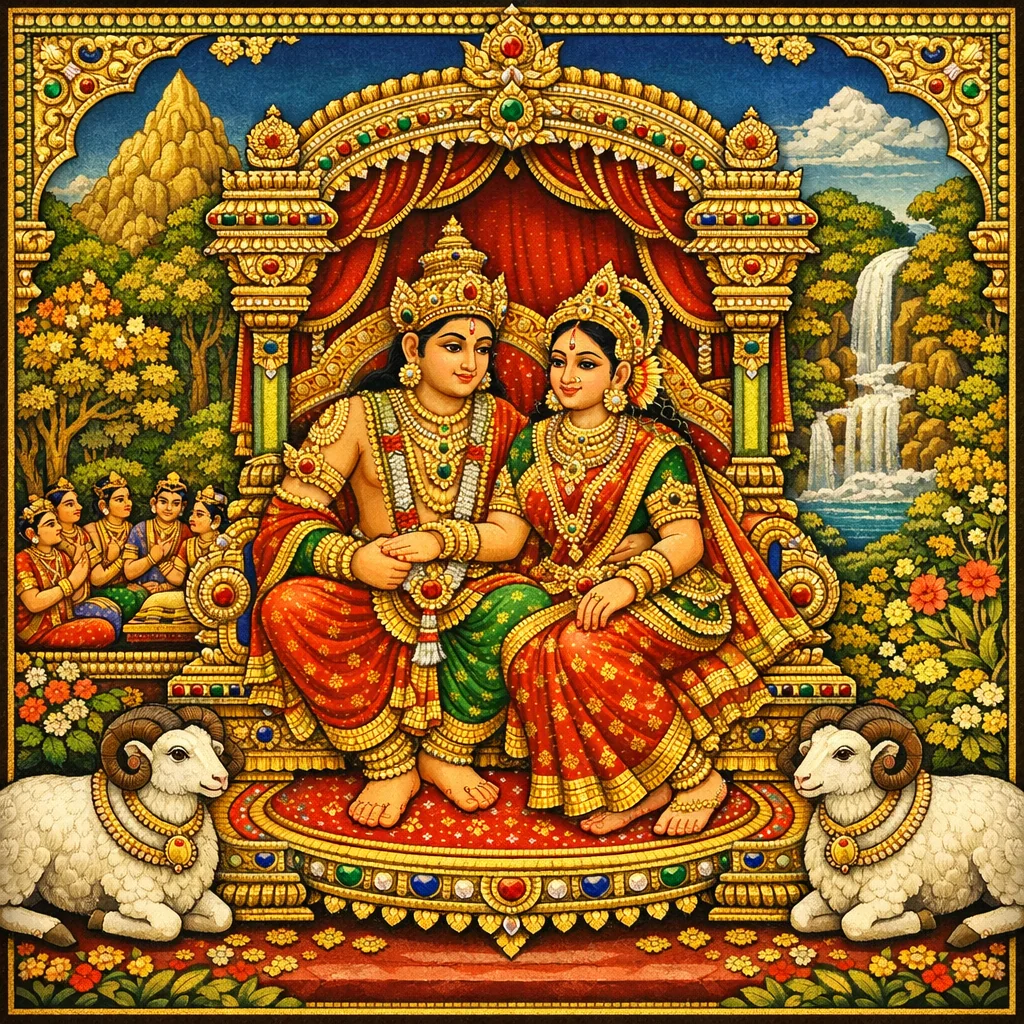
This chapter continues the Somavaṃśa (Lunar) genealogy: Soma begets Budha, and Budha begets the famed king Purūravas. Sūta, answering the Ṛṣis, portrays Purūravas as an ideal ruler—endowed with tejas (splendor), dāna (generosity), faithful yajña performance, truthfulness, brahmavāda (harmony with sacred speech), and beauty nearly unmatched in the three worlds. The narrative then turns to Urvaśī, an apsaras/gandharvī, who chooses Purūravas and dwells with him in celebrated trans-cosmic pleasure-lands (Caitraratha, the banks of Mandākinī, Alakā, Nandana, Gandhamādana, Meru, Uttarakuru, Kalāpa-grāma). When the Ṛṣis ask why she leaves a human king, Sūta explains that a Brahmā-curse compels her, and she seeks release through a strict pact (niyama): she must avoid certain sights, especially fire, intimacy is regulated, two rams must stand near the bed, and she lives on only a little ghee. Purūravas keeps the agreement for the appointed time, yet the Gandharvas, uneasy at her long stay among humans, plot to disrupt the arrangement, making the human–divine union unstable. Thus the chapter blends dynastic cataloging with aetiology, showing how celestial law (curse/boon), ritual discipline, and desire shape lineage history.
Shlokas
Verse 1
इति श्रीब्रह्माण्डे महापुराणे वायुप्रोक्ते मध्यमभागे तृतीय उपोद्धातपादे सोमसौम्ययोर्जन्मकथनं नाम पञ्चषष्टितमो ऽध्यायः // ६५// सूत उवाच सोमस्य तु बुधः पुत्रो बुधस्य तु पुरूरवाः / तेजस्वी दानशीलश्च यज्वा विपुलदक्षिणः
Thus, in the Śrī Brahmāṇḍa Mahāpurāṇa, in the middle section proclaimed by Vāyu, in the third upoddhāta-pāda, is the sixty-fifth chapter called “The Account of the Birth of Soma and Saumya.” Sūta said: Soma’s son was Budha, and Budha’s son was Purūrava—radiant, charitable, a performer of yajñas, and a giver of abundant dakṣiṇā.
Verse 2
ब्रह्मवादी पराक्रान्तः शत्रुभिर्युधि दुर्जयः / आहर्त्ता जाग्निहोत्रस्य यज्ञानां च महीपतिः
He was a brahmavādī, mighty in valor, and in battle hard for enemies to overcome. He upheld the agnihotra, presided over yajñas, and ruled as lord of the earth.
Verse 3
सत्यवाग्धर्मबुद्धिश्च कान्तः संवृत्तमैथुनः / अतीव त्रिषु लोकेषु रूपेणाप्रतिमो ऽभवत्
He was truthful in speech, guided by dharmic understanding, charming, and self-restrained (having turned away from maithuna). In beauty he became truly without equal in the three worlds.
Verse 4
तं ब्रह्मवादिनं दान्तं धर्मज्ञं सत्यवादिनम् / उर्वशी वरयामास हित्वा मानं यशस्विनी
Urvāśī, renowned in glory, cast aside her pride and chose him as her husband—him, the brahmavādī, self-controlled, knower of dharma, and speaker of truth.
Verse 5
तया सहावसद्राजा दश वर्षाणि चाष्ट च / सप्त षट्सप्त चाष्टौ च दश चाष्टौ च वीर्यवान्
With her the valorous king dwelt for ten and eight years (eighteen); thereafter for seven, six, seven, eight, and again for ten and eight years as well (in due succession) he lived together with her.
Verse 6
वने चैत्ररथे रम्ये तथा मन्दाकिनीतटे / अलकायां विशालायां नन्दने च वनोत्तमे
In the lovely forest of Caitraratha, and upon the bank of the Mandakini; in spacious Alaka, and in Nandana, the finest of groves.
Verse 7
गन्धमादनपादेषु मेरुशृङ्गे नगोत्तमे / उत्तरांश्च कुरून्प्राप्य कलापग्राममेव च
At the feet of Gandhamadana, upon Meru’s peak, best of mountains; reaching the northern Kurus, and also the village of Kalapa.
Verse 8
एतेषु वनमुख्येषु सुरैराचरितेषु च / उर्वश्या महितो राजा रेमे परमया मुदा
In these foremost forests, where the gods themselves roam, the king—honored by Urvashi—sporting, rejoiced with supreme delight.
Verse 9
ऋषय ऊचुः गन्धर्वी चोर्वशी देवी राजानं मानुषं कथम् / उत्सृज्य तं च संप्राप्ता तन्नो ब्रूहि च दुष्कृतम्
The sages said: “How did the goddess Urvashi, the gandharvi, abandon that human king and come here? Tell us what fault was done.”
Verse 10
सूत उवाच ब्रह्मशापाभिभूता सा मानुषं समुपस्थिता / आत्मनः शापमोक्षार्थं नियमं सा चकार तु
Suta said: “Overpowered by Brahma’s curse, she (Urvashi) approached a mortal; seeking release from her own curse, she undertook a sacred observance (niyama).”
Verse 11
अनग्नदर्शनं चैव अकामात्सह मैथुनम् / द्वौ मेषौ शयनाभ्याशे सा तावद्ध्यवतिष्ठते
Not beholding the sacred fire, and engaging in union even without desire—near the bed she remains thus for two months.
Verse 12
घृतमात्रं तथाऽहारः कालमेकं तु पार्थिव / यद्येष समयो राजन्यावत्कालश्च ते दृढः
O king of the earth, let her food be only ghee, and the term be but one fixed period—O ruler, so long as this covenant of time stands firm for you.
Verse 13
तावत्कालं तु वत्स्यामि एष नः समयः कृतः / तस्यास्तं समयं सर्वं स राजा पर्यपालयत्
“I shall dwell for just that long—this is the covenant we have made.” And the king faithfully upheld her entire appointed term.
Verse 14
एवं सा चावसत्तेन सहेलेना भिगामिनी / वर्षाण्यथ चतुःषष्टिं तद्भक्त्या शापमोहिता
Thus she drew near to him in a spirit of playful ease; and, deluded by the curse through her devotion to him, she remained so for sixty-four years.
Verse 15
उर्वशी मानुषं प्राप्ता गन्धर्वाश्चिन्तयान्विताः / गन्धर्वा ऊचुः चिन्तयध्वं महाभागा यथा सा तु वराङ्गना
Urvashī came to the realm of mortals, and the Gandharvas were filled with anxious thought. The Gandharvas said: “O greatly blessed ones, consider how that peerless maiden may (be set free).”
Verse 16
आगच्छेत्तु पुनर्देवानुर्वशी स्वर्गभूषणम् / ततो विश्वापसुर्नाम गन्धर्वः सुमहामतिः
Then Urvaśī, the very ornament of Svarga, returned again to the gods. Thereupon appeared the gandharva named Viśvāpasu, of exceedingly great wisdom.
Verse 17
जहारोरणकौ तस्यास्तत्पश्चात्सा दिवं गता / तस्यास्तु विरहेणासौ भ्रममाणस्त्वथोर्वशीम्
He took away her two uraṇakas; thereafter she went up to heaven. In the anguish of separation from her, he wandered about, seeking Urvaśī once more.
Verse 18
ददर्श च कुरुक्षेत्रे तया संभाषितो ऽप्ययम् / गन्धर्वानुपधावेति स तच्चक्रे ऽथ ते ददुः
He saw her at Kurukṣetra and even spoke with her. When told, “Hasten to the gandharvas,” he did so; then they granted him that.
Verse 19
अग्निस्थालीं तया राजा गतः स्वर्गं महारथः / एको ऽग्निः पूर्वमासीद्वै ऐलस्तं त्रीनकल्पयत्
Through her (Urvaśī), the king—mighty charioteer—went to Svarga bearing the agnisthālī. Formerly there was but one sacred fire; Aila arranged it as three.
Verse 20
एवंप्रभावो राजासीदैलस्तु द्विजसत्तमाः / देशे पुण्यतमे चैव महर्षिभिरलङ्कृते
O best of the twice-born, such was the majesty of King Aila; he dwelt in a most holy land, adorned by the great maharṣis.
Verse 21
राज्यं स कारयामास प्रयागे पृथिवीपतिः / उत्तरे यामुने तीरे प्रतिष्ठाने महायशाः
That greatly renowned lord of the earth ruled his kingdom at Prayāga, dwelling at Pratiṣṭhāna on the northern bank of the Yamunā.
Verse 22
तस्य पुत्रा बभूवुर्हि षडिन्द्रोपमतेजसः / गन्धर्वलोके विदिता आयुर्द्धीमानमावसुः
He had six sons, radiant with power like Indra, renowned in the Gandharva realm—Āyu, Dhīmān, and Amāvasu.
Verse 23
विश्वावसुः श्रतायुश्च घृतायुश्चोवर्शीसुताः / अमाव सोस्तु वै जाते भीमो राजाथ विश्वचित्
Viśvāvasu, Śratāyu, and Ghṛtāyu were sons of Varśī; from Amāvasu was born King Bhīma, and thereafter Viśvacit.
Verse 24
श्रीमान्भीमस्य दायादो राजासीत्काञ्चनप्रभः / विद्वांस्तु काञ्चनस्यापि सुहोत्रो ऽभून्महाबल
Bhīma’s splendid heir was King Kāñcanaprabha; and to Kāñcana was born Suhotra, wise and of great might.
Verse 25
सुहोत्रस्याभवज्जह्नुः केशिनीगर्भसंभवः / प्रतिगत्य ततो गङ्गा वितते य५कर्मणि
To Suhotra was born Jahnu, sprung from Keśinī’s womb; and then Gaṅgā returned, as the sacred rites of yajña were carried out in fullness.
Verse 26
सादयामास तं देशं भाविनोर्ऽथस्य दर्शनात् / गङ्गया प्लावितं दृष्ट्वा यज्ञवाटं समन्ततः
Seeing the sign of what was to come, he calmed that land; and he beheld the sacrificial enclosure, flooded on every side by the Gaṅgā.
Verse 27
सौहोत्रिरपि संक्रुद्धो गङ्गां राजा द्विजोत्तमाः / तदाराजर्षिणा पीतां गङ्गां दृष्ट्वा सुरर्षयः
O King, even Sauhotri, foremost among the brahmins, grew wrathful toward the Gaṅgā; and the divine seers, beholding the Gaṅgā drunk up by the royal sage, were astonished.
Verse 28
उपनिन्युर्महाभागा दुहितृत्वेन जाह्नवीम् / यौवनाश्वस्य पौत्रीं तु कावेरीं जह्नुरावहत्
The greatly blessed received Jāhnavī (the Gaṅgā) as a daughter; and Jahnu brought forth Kaverī, the granddaughter of Yauvanāśva.
Verse 29
युवनाश्वस्य शापेन गङ्गार्द्धेन विनिर्ममे / कावेरीं सरितां श्रेष्ठ जह्नुभार्यामनिन्दिताम्
By Yauvanāśva’s curse, from half of the Gaṅgā was fashioned Kaverī—foremost among rivers, the blameless wife of Jahnu.
Verse 30
जह्नुस्तु दयितं पुत्रं सुनहं नाम धार्मिकम् / कावेर्यां जनयामास अजकस्तस्य चात्मजः
Jahnu begot upon Kaverī a beloved son, righteous Sunaha by name; and Sunaha’s own son was Ajaka.
Verse 31
अजकस्य तु दायादो बलाकाश्वो महायशाः / बभूव मृग शीलः सुशस्तस्यात्मजः स्मृतः
Ajaka’s heir was the greatly renowned Balākāśva. Gentle as a deer in nature, he is remembered as the son of Suśasta.
Verse 32
कुशपुत्रा बभूवुश्च चत्वारो देववर्चसः / कुशांबः कुशानाभश्च अमूर्तरयमो वसुः
Kuśa had four sons, radiant with a godlike splendor: Kuśāṃba, Kuśānābha, Amūrtarayama, and Vasu.
Verse 33
कुशिकस्तु तपस्तेपे पुत्रार्थी राजसत्तमः / पूर्णे वर्षसहस्रे वै शतक्रतुरपश्यत
Kuśika, the foremost of kings, performed austerities longing for a son. When a thousand years were completed, he beheld Śatakratu (Indra).
Verse 34
तमुग्रतपसं दृष्ट्वा सहस्राक्षः पुरन्दरः / समर्थः पुत्रजनने स्वयमेवास्य शाश्वतः
Beholding that fierce austerity, Sahasrākṣa Purandara (Indra) resolved that he himself—the Eternal—was able to be born as his son.
Verse 35
पुत्रत्वं कल्पयामास स्वयमेव पुरन्दरः / गाधिर्नामाभवत्पुत्रः कौशिकः पाकशासनः
Purandara (Indra) himself ordained his own sonship. Thus, in the Kauśika line a son was born named Gādhi—he was Pākaśāsana (Indra) himself.
Verse 36
पौरुकुत्स्यभवद्भार्या गाधेस्तस्यामजायत / पूर्वं कन्या महाभागा नाम्ना सत्यवती शुभा
Paurukutsya’s wife became the consort of Gādhi; from her was first born a most fortunate and auspicious maiden named Satyavatī.
Verse 37
तां गाधिः पुत्रकामाय ऋचीकाय ददौ प्रभुः / तस्याः प्रीतस्तु वै भर्त्ता भार्गवो भृगुनन्दनः
Longing for a son, Lord Gādhi gave her to Ṛcīka; and her husband, Ṛcīka the Bhārgava, scion of Bhṛgu, was greatly pleased.
Verse 38
पुत्रार्थे साधयामास चरुं गाधेस्तथैव च / अथावोचत्प्रियां तत्र ऋचीको भार्गवस्तदा
Seeking sons, he prepared the sacred caru, and likewise one for Gādhi; then there Ṛcīka the Bhārgava spoke to his beloved.
Verse 39
उपभोज्यश्चरुरयं त्वया मात्रा च ते शुभा / तस्या जनिष्यते पुत्रो दीप्तिमान्क्षत्त्रियर्षभः
This caru is to be eaten by you and by your auspicious mother; from it will be born a radiant son, a bull among kṣatriyas.
Verse 40
अजेयः क्षत्त्रियैर्युद्धे क्षत्रियर्षभसूदनः / तवापि पुत्रं कल्याणि धृतिमन्तं तपोधनम्
In battle he will be unconquerable by kṣatriyas, a slayer of the foremost among them; and you too, O blessed one, will have a son steadfast and rich in the treasure of austerity.
Verse 41
शमात्मकं द्विजश्रेष्ठं चरुरेष विधास्यति / एवमुक्त्वा तु तां भार्यामृचीको भृगुनन्दनः
Ṛcīka, Bhṛgu’s descendant, said to his wife: “This caru will bring forth the foremost of the twice-born, of tranquil nature.” Thus he spoke to her.
Verse 42
तपस्यभिरतो नित्यमरण्यं प्रविशेश ह / गाधिः सदारस्तु तदा ऋचीकाश्रममभ्यगात्
Ever devoted to austerities, he entered the forest. Then King Gādhi, together with his queen, came to Ṛcīka’s hermitage.
Verse 43
तीर्थयात्राप्रसंगेन सुतां द्रष्टुं नरेश्वरः / चरुद्वयं गृहीत्वा तु ऋषेः स्त्यवती तदा
On the occasion of a pilgrimage to sacred fords, the king came to see his daughter. Then Satyavatī took the two portions of caru given by the sage.
Verse 44
भर्तुर्वचनमव्यग्रा हृष्टा मात्रे न्यवेदयत् / माता तु तस्यै दैवैन दुहित्रे स्वचरुं ददौ
Hearing her husband’s words, she joyfully and without agitation told her mother. But by the turn of fate, the mother gave her daughter her own portion of caru.
Verse 45
तस्याश्चरुमथाज्ञानादात्मनः सा चकार ह / अथ सत्यवती गर्भं क्षत्रियान्तकरं शुभम्
Through ignorance she used that caru for herself. Then Satyavatī conceived an auspicious womb—one destined to bring the end of the kṣatriyas.
Verse 46
धारयामास दीप्तेन वपुषा घोरदर्शना / तामृचीकस्ततो दृष्ट्वा योगेनाप्यवमृश्य च
The fearsome-looking woman bore a radiant, blazing form. Seeing her, Ṛcīka also reflected deeply, employing the power of yoga.
Verse 47
तदाब्रवीद्द्विजश्रेष्ठः स्वां भार्यां वरवर्णिनीम् / मात्रासि वञ्चिता भद्रे चरुव्यत्यासहेतुना
Then the foremost of the twice-born spoke to his fair-complexioned wife: “O gentle one, because the sacrificial caru was exchanged, you have been deceived by your mother.”
Verse 48
जनिष्यति हि पुत्रस्ते क्रूरकर्मातिदारुमः / माता जनिष्यते चापि तथा भूतं तपोधनम्
Surely your son will be born fierce in deeds, exceedingly dreadful; and your mother too will give birth to a son who is a treasure of austerity, rich in tapas.
Verse 49
विश्वं हि ब्रह्मतपसा मया तत्र समर्पितम् / एवमुक्ता महाभागा भर्त्रा सत्यवती तदा
For by brahmanical austerity I have offered up the whole world there. Thus addressed by her husband, the greatly fortunate Satyavatī then…
Verse 50
प्रसादयामास पतिं सुतो मे नेदृशो भवेत् / ब्राह्मणापसदस्त्वत्त इत्युक्तो मुनिमब्रवीत्
She sought to appease her husband: “May my son not become such as this; because of you he will be called a disgrace among brahmins.” Saying so, she pleaded with the sage.
Verse 51
नैव संकल्पितः कामो मया भद्रे तथा त्वया / उग्रकर्मा भवेत्पुत्रः पितुर्मातुश्च कारणात्
O Bhadrā, neither I nor you had conceived such a desire; yet by the cause of father and mother, a son may become fierce in deeds.
Verse 52
पुनः सत्यवती वाक्यमेवमुक्ताब्रवीदिदम् / इच्छंल्लोकानपि मुने सृजेथाः किं पुनः सुतम्
Then Satyavatī spoke again: “O sage, if you so desire, you can create even the worlds—how much more, then, a son?”
Verse 53
शमात्मकमृजुं भर्त्तः पुत्रं मे दातुमर्हसि / काममेवंविधः पौत्रो मम स्यात्तव सुव्रत
O husband, you are worthy to grant me a son gentle and rooted in peace; O keeper of noble vows, I desire that such a grandson may come to me through you.
Verse 54
यद्यन्यथा न सक्यं वै कर्तुंमेवं द्विजोत्तम / ततः प्रसादमकरोत्स तस्यास्तपसो बलात्
O best of the twice-born, if it cannot be done otherwise, then he bestowed his favor, moved by the power of her austerities.
Verse 55
पुत्रे नास्ति विशेषो मे पौत्रे वा वरवर्णिनि / त्वया यथोक्तं वचनं तथा भद्रेभविष्यति
O fair lady, to me there is no distinction between son and grandson; O Bhadrā, as you have spoken, so it shall be.
Verse 56
तस्मात्सत्यवती पुत्रं जनयामास भार्गवम् / तपस्यभिरतं दान्तं जमदग्निं शमात्मकम्
Therefore Satyavatī bore a Bhārgava son—Jamadagni—devoted to austerity, self-restrained, disciplined, and of a tranquil nature.
Verse 57
भृगोश्चरुविपर्यासे रौद्रवैष्णवयोः पुरा / जमनाद्वैष्णवस्याग्नेर्जमदग्निरजायत
In ancient times, in Bhṛgu’s rite when the caru offering was reversed—amid the Raudra and Vaiṣṇava sacred fires—Jamadagni was born from the kindling of the Vaiṣṇava fire.
Verse 59
विश्वामित्रं तु दायादं गाधिः कुशिकनन्दनः / प्राप्य ब्रह्मर्षिसमतां जगाम ब्रह्मणा वृतः ६६।५८// सा हि सत्यवती पुण्या सत्यव्रतपरायणा / कौशिकी तु समाख्याता प्रवृत्तेयं महानदी
Gādhi, son of Kuśika, having obtained Viśvāmitra as his heir, attained the rank of a Brahmarṣi and, encompassed by Brahmā’s grace, went to the supreme state. That holy Satyavatī, steadfast in the vow of truth, became known as Kauśikī, and from her this great river came forth.
Verse 60
परिस्रुता महाभागा कौशिकी सरितां वरा / इक्ष्वाकुवंशप्रभवो रेणुको नाम पार्थिवः
The blessed Kauśikī, flowing onward, is the finest among rivers. From the Ikṣvāku lineage there arose a king named Reṇuka.
Verse 61
तस्य कन्या महाभागा कमली नाम रेणुका / रेणुकायां कमल्यां तु तपोधृतिसमाधिना
His greatly blessed daughter was Reṇukā, also named Kamalī. In that Reṇukā-Kamalī, through austerity, steadfastness, and samādhi, (lofty virtues) were firmly established.
Verse 62
आर्चीको जनयामाम जमदग्निः सुदारुणम् / सर्वविद्यान्तगं श्रेष्ठं धनुर्वेदस्य पारगम्
Ārcīka begot Jamadagni, fierce in splendor, the foremost—perfected in all branches of knowledge and having crossed to the far shore of the Dhanurveda.
Verse 63
रामं क्षत्त्रियहन्तारं प्रदीप्तमिव पावकम् / और्वस्यैवमृचीकस्य सत्यवत्यां महामनाः
From Satyavatī, wife of Ṛcīka of Aurva’s line, was born great-souled Rāma—slayer of kṣatriyas, blazing like a kindled fire.
Verse 64
जमदग्निस्तपोवीर्याज्जज्ञे ब्रह्मविदां वरः / मध्यमश्च शुनःशेफः शुनः पुच्छः कनिष्ठकः
By the potency of austerity was born Jamadagni, the best among knowers of Brahman. The middle son was Śunaḥśepha; the youngest, Śunaḥpuccha.
Verse 65
विश्वामित्रस्तु धर्मात्मा नाम्ना विश्वरथः स्मृतः / जज्ञे भृगुप्रसादेन कौशिकान्वयवर्द्धनः
Viśvāmitra, righteous-souled, is also remembered by the name Viśvaratha. By Bhṛgu’s grace he was born, an increaser of the Kauśika lineage.
Verse 66
विश्वामित्रस्य पुत्रस्तु शुनःशेफो ऽभवन्मुनिः / हरिश्चन्द्रस्य यज्ञे तु पशुत्वे नियतः स वै
Śunaḥśepha, the son of Viśvāmitra, became a muni. Yet in King Hariścandra’s sacrifice he was indeed appointed to the state of a sacrificial victim.
Verse 67
देवैर्दत्तः शुनःशेफो विश्वामित्राय वै पुनः / देवैर्दत्तः स वै यस्माद्देवरातस्ततो ऽभवत्
Śunaḥśepha, bestowed by the gods, was again given to Viśvāmitra. Since he was truly a gift of the devas, he therefore came to be called Devarāta.
Verse 68
विश्वामित्रस्य पुत्राणां शुनःशेफो ऽग्रजः स्मृतः / मधुच्छन्दादयश्चैव कृतदेवौ ध्रुवाष्टकौ
Among Viśvāmitra’s sons, Śunaḥśepha is remembered as the eldest. Madhucchanda and the others are named as well, along with Kṛtadeva, Dhruva, and Aṣṭaka.
Verse 69
कच्छपः पूरणश्चैव विश्वामित्रसुतास्तु वै / तेषाङ्गोत्राणि बहुधा कौशिकानां महात्मनाम्
Kacchapa and Pūraṇa too were sons of Viśvāmitra. The gotras of those great-souled Kauśikas spread forth in many branches.
Verse 70
पार्थिवा देवराताश्च जाज्ञवल्क्याः समर्पणाः / उदुंबराश्च वातड्यास्तलकायनचान्द्रवाः
Parthiva, Devarāta, Jājñavalkya, Samarpaṇa, Udumbara, Vātaḍya, Talakāyana, and Cāndrava—these are spoken of as the branches (of the lineage).
Verse 71
लोहिण्यो रेणवस्छैव तथा कारिषवः स्मृताः / बभ्रवः पणिनस्छैव ध्यानजप्यास्तथैव च
Lohiṇya, Reṇava, and Kāriṣava are likewise remembered; and so too Babhrava, Paṇina, and Dhyānajapya are spoken of as further branches.
Verse 72
श्यामायना हिरण्याक्षाः सांकृता गालवाः स्मृताः / देवला यामदूताश्च शालङ्कायनबाष्कलाः
Śyāmāyana, Hiraṇyākṣa, Sāṃkṛta, and Gālava are remembered as renowned lineages; so too are Devala, the messengers of Yama, and Śālaṅkāyana-Bāṣkala.
Verse 74
लालाढ्या बादराश्चान्ये विश्वामित्रस्य धीमतः / ऋष्यन्तरविवाह्यास्ते बहबः कौशिकाः स्मृताः // ६५।७३// कौशिकाः सौश्रुताश्चैव तथान्ये सैन्धवायनाः / योगेश्वरस्य पुण्यस्य बह्मर्षेः कौशिकस्य वै / विश्वामित्रस्य पुत्राणां शुनःशेफो ऽग्रजः स्मृतः
Other sons of the wise Viśvāmitra were Lālāḍhya and Bādara; fit for marriage within the Ṛṣyantara line, many were remembered under the name “Kauśika”. There were also Kauśikas, Sauśrutas, and others called Saindhavāyana. Among the sons of Viśvāmitra—Kauśika the holy brahmarṣi, lord of yoga—Śunaḥśepha is remembered as the eldest.
Verse 75
दृषद्वती सुतश्चापि विश्वामित्रात्तथाष्टकः / अष्टकस्य सुतो लौहिः प्रोक्तो जह्नुगणो मया
From Viśvāmitra there was also born Aṣṭaka, the son of Dṛṣadvatī. Aṣṭaka’s son was Lauhi—him I have declared to be of the Jahnu line.
Verse 76
ऋषय ऊचुः किंलक्षणेन धर्मेण तपसेह श्रुतेन वा
The ṛṣis said: “By what marks of dharma, by what austerity (tapas), or by what śruti-born knowledge is this attained here?”
Verse 77
ब्राह्मण्यं समनुप्राप्तं विश्वामित्रादिभिर्नृपैः / येनयेनाभिधानेन ब्राह्मण्यं क्षत्रिया गताः
Kings such as Viśvāmitra fully attained brāhmaṇya. By what titles and by what means did kṣatriyas come to that brahminhood?
Verse 78
विशेषं ज्ञातुमिच्छामि तपसो दानतस्तथा / एवमुक्तस्ततो वाक्यमब्रवीदिदमर्थवत्
I wish to know the special distinction between austerity and charity. Thus addressed, he then spoke these meaningful words.
Verse 79
अन्यायोपगतैर्द्रव्यैराहूय द्विजसत्तमान् / धर्माभिकाङ्क्षी यजते न धर्मफलमश्नुते
He who, with wealth gained by injustice, summons the best of the twice-born and performs sacrifice longing for dharma, does not attain the fruit of dharma.
Verse 80
जपं कृत्वा तथा तीव्रं धनलोभान्निरङ्कुशः / रागमोहान्वितो ह्यन्ते पावनार्थं ददाति यः
He who, unrestrained by greed for wealth, performs intense japa, and, filled with attachment and delusion, gives at the end only for the sake of purification—
Verse 81
तेन दत्तानि दानानि ह्यफलानि भवन्त्युत / तस्य धर्मप्रवृत्तस्य हिंसकस्य दुरात्मनः
The gifts given by such a wicked-souled, violent man who merely poses as devoted to dharma are indeed without fruit.
Verse 82
एवं लब्ध्वा धने मोहाद्ददतो यजतश्च ह / संक्लिष्टं कर्मणा दानं न तिष्ठति दुरात्मनः
Thus, even after gaining wealth, if one gives and sacrifices out of delusion, the charity tainted by such karma does not endure for the wicked man.
Verse 83
न्यायागतानां द्रव्याणां तीर्थं संप्रतिपादनम् / कामाननभि संधाय यजते च ददाति च
Wealth gained by righteous means should be duly offered at the sacred tīrthas. Unbound by desire, one performs sacrifice and also gives in charity.
Verse 84
स दानफलमाप्नोति तच्च दानं सुखोदयम् / दानेन भोगानाप्नोति स्वर्गं सत्येन गच्छति
He attains the fruit of charity, and that gift brings forth happiness. By giving he gains enjoyments; by truthfulness he reaches heaven.
Verse 85
तपसा तु सुतप्तेन लोकान्विष्टभ्य तिष्ठति / सत्यं तु तपसः श्रेयस्तस्माज्ज्ञानं गुरु स्मृतम्
By well-performed austerity he stands firm, upholding the worlds. Yet truth is higher than austerity; therefore wisdom is remembered as the true guru.
Verse 86
श्रूयते हि तपस्सिद्धाः क्षत्त्रोपेता द्विजातयः / विश्वामित्रो नरपतिर्मान्धाता संकृतिः कपिः
It is heard that there were twice-born ones, linked with the kṣatriya line, who attained perfection through austerity—Viśvāmitra, King Māndhātā, Saṃkṛti, and Kapi.
Verse 87
काश्यश्च पुरुकुत्सश्च शलो गृत्समदः प्रभुः / आर्ष्टिषेणो ऽजमीढश्च भार्गव्योमस्तथैव च
So too are Kāśya, Purukutsa, Śala, the noble Gṛtsamada, Ārṣṭiṣeṇa, Ajamīḍha, and Bhārgavyoma spoken of as perfected through austerity.
Verse 88
कक्षीवांश्चैवौशिजश्च नृपश्च शिशिरस्तथा / रथान्तरः शौनकश्च विष्णुवृद्धादयो नृपाः
Kakṣīvān, Auśija, King Śiśira, Rathāntara, Śaunaka, and Viṣṇuvṛddha and others were kings.
Verse 89
क्षत्रोपेताः स्मृता ह्येते तपसा ऋषितां गताः / एते राजर्षयः सर्वे सिद्धिं तु महतीं गताः
They are remembered as endowed with kṣatriya might; through austerity they attained the state of ṛṣis. All these royal seers reached great spiritual perfection.
Verse 90
अत ज्ञर्ध्वं प्रवक्ष्यामि आयोर्वंशं महात्मनः
Now I shall proclaim the lineage of the great-souled Āyu.
Frequently Asked Questions
A core Lunar (Somavaṃśa) sequence: Soma → Budha → Purūravas, using Purūravas as a dynastic anchor-figure for subsequent royal descent mapping.
She is driven by a Brahmā-related curse and seeks śāpa-mokṣa through a niyama (pact) with Purūravas—rule-bound cohabitation involving restricted sights (notably fire), regulated intimacy, and stipulated symbols (two rams near the bed), maintained for a fixed term.
Caitraratha, Mandākinī’s banks, Alakā, Nandana, Gandhamādana, Meru, Uttarakuru, and Kalāpa-grāma appear as “divine topography” indices, situating the human–apsaras episode within Purāṇic cosmic geography rather than a purely terrestrial setting.