Adhyaya 51
सगरस्यौर्वाश्रमगमनम् (Sagara’s Journey to Aurva’s Hermitage)
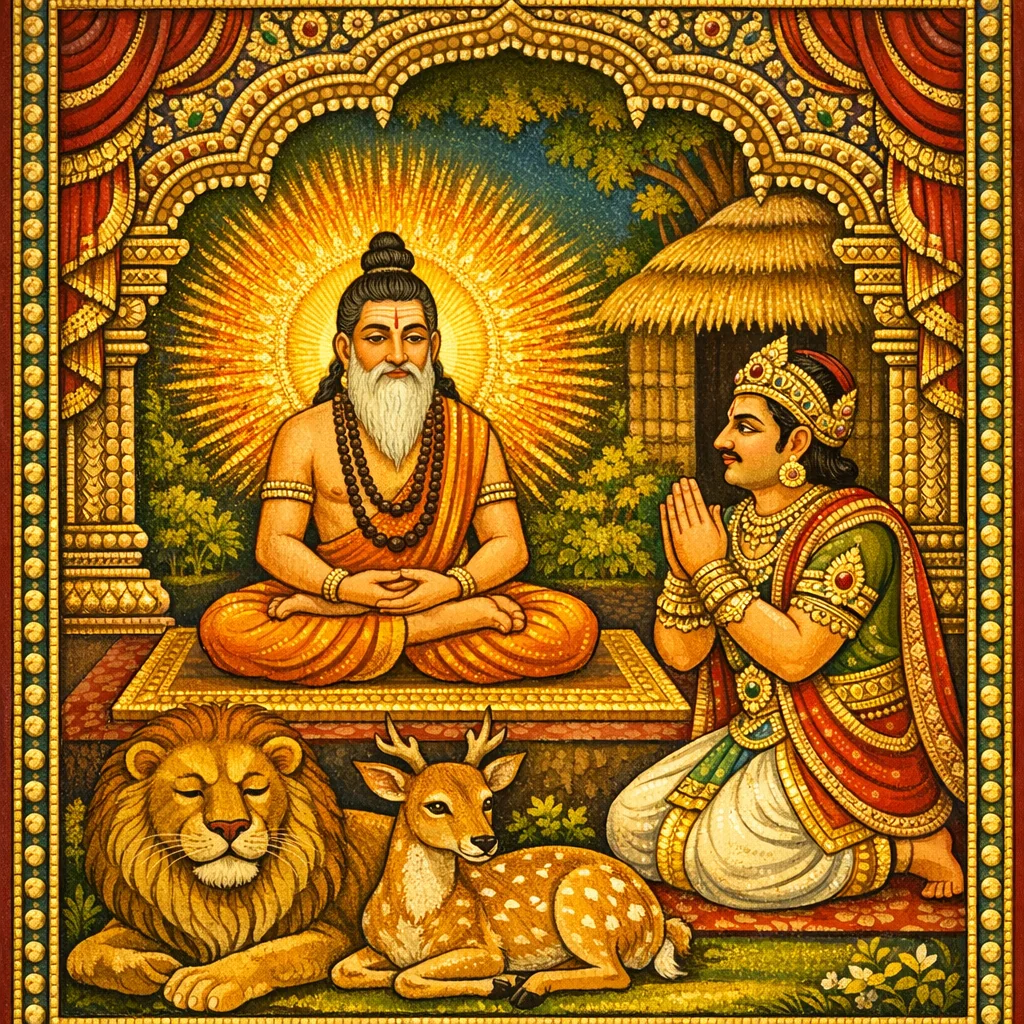
This chapter unfolds as a royal–ascetic dialogue between King Sagara and the Bhārgava sage Aurva. Sagara speaks in self-report, affirming the stability of his realm and his martial skill gained through prior training in astras and śastras, and he praises Aurva as his guru, benefactor, and sole refuge. The narrative then demonstrates the power of tapas: the hermitage’s moral and energetic field pacifies natural hostilities—predator and prey dwell together without fear, and violent impulses are stilled. This “ecology of ascetic power” shows that concentrated tapas can reorder the local world, implying that rightful kingship and successful conquest flow from rishi-sanctioned potency rather than brute force. In the logic of lineage, Sagara’s approach to Aurva secures dynastic continuity through ascetic endorsement, aligning political history with the Purāṇic principle that order is upheld by disciplined spiritual power.
Shlokas
Verse 1
इति श्रीब्रह्माण्डे महापुराणे वायुप्रोक्ते मध्यमभागे तृतीय उपोद्धातपादे सगरस्यौर्वाश्रमगमनं नाम पञ्चशत्तमो ऽध्यायः // ५०// सगर उवाच कुशलं मम सर्वत्र महर्षे नात्र संशयः / यस्य मे त्वमनुध्याता शमं भार्गवसत्तमः
Thus, in the holy Brahmāṇḍa Mahāpurāṇa, in the middle section spoken by Vāyu, within the third introductory division, is the fiftieth chapter called “Sagara’s Journey to Aurva’s Āśrama.” Sagara said: “O great seer, I am well in every way—of this there is no doubt; for you, best of the Bhārgavas, ever contemplate my welfare and bestow peace.”
Verse 2
यस्तथा शिक्षितः पूर्वमस्त्रे शस्त्रे च सांप्रतम् / सो ऽहं कथमशक्तः स्यां सकलारिविनिग्रहे
Having been trained before in astra and śastra in such a way, how could I now be powerless in subduing all foes?
Verse 3
त्वं मे गुरुः सुहृद्दैवं बन्धुर्मित्रं च केवलम् / न ह्यन्यमभिजानामि त्वामृते पितरं च मे
You are my guru, my divine-hearted friend, my kinsman, and my only companion. Apart from you and my father, I know no other.
Verse 4
त्वयोपदिष्टेनास्त्रेण सकला भूभृतो मया / विजिता यदनुस्मृत्या शक्तिः सा तपसस्तव
With the weapon you instructed me in, I have conquered all the kings. The power that arises by merely remembering it is the might of your austerity.
Verse 5
तपसा त्वं जगत्सर्वं पुनासि परिपासि च / स्रष्टुं संहर्त्तुमपि च शक्नोष्येव न संशयः
By your austerity you purify and protect the whole world. You are able even to create and to dissolve it—of this there is no doubt.
Verse 6
महाननन्यसामान्यप्रभावस्तपसश्च ते / इह तस्यैकदेशो ऽपि दृश्यते विस्मयप्रदः
Great and without equal is the power of your austerity. Here even a small portion of it is seen, and it brings wonder.
Verse 7
पश्यसिंहासने बाल्यादुपेत्य मृगपोतकः / पिबत्यंभः शनैर्ब्रह्मन्निःशङ्कं ते तपोवने
O Brahman, behold—in your grove of austerity, a fawn from its very youth comes up to the throne and slowly drinks water, unafraid.
Verse 8
धयत्यत्रातिविस्रंभात् कृशापि हरिणी स्तनम् / करोति मृगशृङ्गाग्रे गण्डकण्डूयनं रुरुः
Here, through great trust, even a lean doe suckles; and the ruru-deer scratches its cheek upon the tip of a stag’s horn.
Verse 9
नवप्रसूतां हरिणीं हत्वा वृत्त्यै वनान्तरे / व्याघ्री त्वत्तपसावासे सैव पुष्णाति तच्छिशून्
Though, to survive in the forest, she slays a doe that has newly calved, within the dwelling of your austerity that very tigress nourishes her fawns.
Verse 10
गजं द्रुतमनुद्रुत्य सिंहो यस्मादिदं वनम् / प्रविष्टो ऽनुसरन्तौ त्वद्भयादेकत्र तिष्ठतः
The lion entered this forest in swift pursuit of the fleeing elephant; yet, out of fear of you, both pursuer and pursued stand together in one place.
Verse 11
नकुलस्त्वाशुमार्जारमयूरशशपन्नगाः / वृकसूकरशार्दूलशरभर्क्षप्लवङ्गमाः
Here are mongooses and cats, peacocks, hares, and serpents; wolves and boars, tigers, śarabhas, bears, and monkeys as well.
Verse 12
सृगाला गवयागावो हरिणा महिषास्तथा / वने ऽत्र सहजं वैरं हित्वा मैत्रीमुपागताः
In this forest, jackals, gavayas, cattle, deer, and buffaloes have cast aside their natural enmity and come to friendship.
Verse 13
एवंविधा तपःशक्तिर्लोकविस्मयदायिनी / न क्वापि दृश्यते ब्रह्मंस्त्वामृते भुवि दुर्लभा
Such power of austerity, wondrous to all the worlds—O Brahman, without you it is rare upon the earth and is seen nowhere.
Verse 14
अहं तु त्वत्प्रसादेन विजित्य वसुधामि माम् / रिपुभिः सह विप्रर्षे स्वराज्यं समुपागतः
O brahman-seer, by your grace I conquered the earth and, with my foes subdued, attained my own sovereign realm.
Verse 15
वश्यामात्यस्त्रिवर्गे ऽपि यथायोग्यकृतादरः / त्वयोपदिष्टमार्गेण सम्यग्राज्यमपालयम्
My ministers were obedient; in the three aims—dharma, artha, and kama—I showed fitting regard; and by the path you taught, I governed the kingdom rightly.
Verse 16
एवं प्रवर्त्तमानस्य मम राज्ये ऽवतिष्ठतः / भवद्दिदृक्षा संजाता सापेक्षा भृगुपुङ्गव
O foremost of the Bhṛgus, as I thus remained and labored in my kingdom, a longing to behold you arose within me—still filled with yearning.
Verse 17
किं त्वद्य मयि पर्याप्तमनपत्यतयैव मे / पितृपिण्डप्रदानेन सह संरक्षणं भुवः
Yet what is sufficient in me today? For I have no offspring—how shall I both offer piṇḍa to the ancestors and also safeguard the earth?
Verse 18
तदिदं दुःशमत्यर्थमनिवार्यं मनोगतम् / नानयो ऽपहर्त्तां लोकंऽस्मिन् ममेति त्वामुपागतः
This is a resolve arisen in my heart—most grievous and impossible to restrain. In this world none can take away my claim, ‘This is mine’; therefore I have come to you for refuge.
Verse 19
इत्युक्तः सगरेणाथ स्थित्वा सो ऽतर्मनाः क्षणम् / उवाच भगवानौर्वः सनिदेशमिदं वचः
Thus addressed by Sagara, he paused for a moment, inwardly reflective. Then the blessed Aurva spoke these words as a guiding instruction.
Verse 20
नियम्य सह भार्याभ्यां किञ्चित्कालमिहावस / अवाप्स्यति ततो ऽभीष्टं भवान्नात्र विचारमा
Restrain yourself, together with your two queens, and dwell here for some time. Then you shall obtain what you desire; have no doubt of it.
Verse 21
स च तत्रावसत्प्रीतस्तच्छुश्रूषापरायमः / पत्नीभ्यां सह धर्मात्मा भक्तियुक्तश्चिरं तदा
He dwelt there gladly, devoted to serving that sage. The righteous king, together with his two queens, remained there a long time, filled with devotion.
Verse 22
राजपत्न्यौ च ते तस्य सर्वकालमतन्द्रिते / मुनेरतनुतां प्रीतिं विनयाचारभक्तिभिः
And those two queens, ever tireless, increased the sage’s delight through humility, noble conduct, and devotion.
Verse 23
भक्त्या शुश्रूषया चैव तयोस्तुष्टो महामुनिः / राजपत्न्यौ समाहूय इदं वचनम ब्रवीत्
Pleased by their devotion and attentive service, the great sage summoned the two queens and spoke these words.
Verse 24
भवत्यौ वरमस्मत्तो व्रियतां काममीप्सितम् / दास्यामि तं न संदेहो यद्यपि स्यात्सुदुर्ल्लभम्
You both may choose from me the boon you desire; even if it is exceedingly rare, I shall grant it without doubt.
Verse 25
ततः प्रणम्यशिरसा ते ऽप्युभे तं महामुनिम् / ऊचतुर्भगवान्पुत्रान्कामयावेति सादरम्
Then both bowed their heads in reverence to the great sage and said respectfully, “O Bhagavan, we long for sons.”
Verse 26
ततस्ते भगवानाह भवतीभ्यां मया पुनः / राज्ञश्चप्रियकामेन वरो दत्तो ऽयमीप्सितः
Then the sage, revered as Bhagavan, said, “To you both—according to the king’s cherished wish—this desired boon has been granted by me.”
Verse 27
पुत्रवत्यौ महाभागे भवत्यौ मत्प्रसादतः / भवेतां ध्रुवमन्यच्च श्रूयतां वचनं मम
O greatly fortunate ones, by my grace you shall surely become mothers of sons; and there is more—listen to my words.
Verse 28
पुत्रो भविष्यत्येकस्यामेकः सो ऽनतिधार्मिकः / तथापि तस्य कल्पान्तं संभूतिश्च भविष्यति
From one queen a single son will be born; he will not be exceedingly righteous in dharma. Yet at the end of the kalpa, a blessed manifestation will come to him as well.
Verse 29
षष्टिः पुत्रसहस्राणामपरस्यां च जायते / अकृतार्थाश्च ते सर्वे विनङ्क्ष्यन्त्यचिरादिव
From the other queen, sixty thousand sons will be born. All of them, unfulfilled in purpose, will perish before long.
Verse 30
एवंविधगुणेपेतो वरौ दत्तौ मया युवाम् / अभीप्सितं तु यद्यस्याः स्वेच्छया तत्प्रकीर्त्यताम्
Thus have I granted you both boons in the form of bridegrooms endowed with such qualities. Now, whatever she desires, let her declare it freely by her own will.
Verse 31
एवमुक्ते तु मुनिना वैदर्भ्यान्वयवर्द्धनम् / वरयामास तनयं पुत्रानन्यास्तथा परा
When the sage had spoken thus, the princess of Vidarbha chose the son who would increase her lineage; the other woman likewise chose the remaining sons.
Verse 32
इति दत्त्वा वरं राज्ञे सगराय महामुनिः / सभार्यामनुमान्यैनं विससर्ज पुरीं प्रति
Thus the great sage granted a boon to King Sagara; giving his assent to him together with his queens, he dismissed him to return to the city.
Verse 33
मुनिना समनुज्ञातः कृत कृत्यो महीपतिः / रथमारुह्य वेगेन सप्रियः प्रययौ पुरीम्
Granted leave by the sage, the king—his duty fulfilled—mounted his chariot with his beloved companions and sped toward his city.
Verse 34
स प्रविश्य पुरीं रम्यां त्दृष्टपुष्टजनावृताम् / आनन्दितः पौरजनै रेमे परमया मुदा
He entered the lovely city, thronged with prosperous and sturdy folk; gladdened by the townspeople, he rejoiced in supreme delight.
Verse 35
एतस्मिन्नेव काले तु राजपत्न्यावुभे नृप / राज्ञे प्रावोचतां गर्भं मुदा परमया युते
At that very time, O king, both queens, filled with highest joy, told the monarch that they had conceived.
Verse 36
ववृधे च तयोर्गर्भः शुक्लपक्षे यथोडुराट् / सह संतोषसंपत्त्या पित्रोः पौरजनस्य च
The wombs of the two grew like the moon in the bright fortnight; and with it rose the wealth of contentment for the parents and the townsfolk alike.
Verse 37
संपूर्णे तु ततः काले मुहूर्ते केशिनीशुभे / असूयताग्निगर्भाभं कुमारममितद्युतिम्
When the term was complete, in the auspicious muhurta of Keśinī, she bore a prince radiant as a womb of fire, of immeasurable splendor.
Verse 38
जातकर्मादिकं तस्य कृत्वा चैव यथाविधि / असमञ्चस इत्येव नाम तस्या करोन्नृपः
Having duly performed his birth-rites such as the jātakarma according to rule, the king bestowed on him the name “Asamañcasa”.
Verse 39
सुमतिश्चापि तत्काले गर्भालाबमसूयत / संप्रसूतं तु तं त्यक्तं दृष्ट्वा राजाकरोन्मनः
At that time Sumati too bore malice toward Garbhālāba; seeing the newborn cast away, the king’s heart was shaken.
Verse 40
तज्ज्ञात्वा भगवानौर्वस्तत्रागच्छद्यदृच्छया / सम्यक् संभावितो राज्ञा तमुवाच त्वरान्वितः
Knowing this, the blessed Aurva came there as if by chance; duly honored by the king, he spoke to him in haste.
Verse 41
गर्भालाबुरयं राजन्न त्यक्तुं भवतार्हति / पुत्राणां षष्टिसाहस्रबीजभूतो यतस्तव
O King, you must not abandon this Garbhālāba, for he is the seed-source of your sixty thousand sons.
Verse 42
तस्मात्तत्सकलीकृत्य घृतकुंभेषु यत्नतः / निःक्षिप्य सपिधानेषु रक्षणीयं पृथक्पृथक्
Therefore, divide him into portions and carefully place them into jars of ghee; seal them with lids and preserve each one separately.
Verse 43
सम्यगेवं कृते राजन्भवतो मत्प्रसादतः / यथोक्तसंख्या पत्राणां भविष्यति न संशयः
O King, if this is done rightly, then by my grace the number of leaves will be exactly as stated; there is no doubt.
Verse 44
काले पूर्णे ततः कुम्भान्भित्त्वा निर्यान्ति ते पृथक् / एवं ते षष्टिसाहस्रं पुत्राणां जायते नृप
When the appointed time is complete, they will break open the jars and emerge separately; thus, O ruler, sixty thousand sons will be born to you.
Verse 45
इत्युक्त्वा भगवानौर्वस्तत्रैवान्तरधाद्विभुः / राजा च तत्तथा चक्रे यथौर्वेण समीरितम्
Having spoken thus, the blessed Aurva vanished there itself; and the king did exactly as Aurva had instructed.
Verse 46
ततः संवत्सरे पूर्णे घृतकुंभात्क्रमेण ते / भित्त्वाभित्त्वा पुनर्जज्ञुः सहसैवानुवासरम्
Then, when a full year had passed, they broke open the ghee-filled jars in due order; day after day, they were suddenly born again.
Verse 47
एवं क्रमेण संजातास्तनयास्ते महीपते / ववृधुः संघशो राजन्षष्टिसाहस्रसंख्याया
Thus, O lord of the earth, those sons were born in due succession; O King, they grew in companies, numbering sixty thousand.
Verse 48
अपृथग्धर्मचरणा महाबलपराक्रमाः / बभूवुस्ते दुराधर्षाः क्रूरात्मानो विशेषतः
Undivided in their observance of dharma, they were mighty in strength and valor; and above all they became hard to assail, cruel of heart.
Verse 49
स नातिप्रीतिमांस्तेषु राजा मतिमतां वरः / केशिनीतनयं त्वेकं बहुमान सुतं प्रियम्
That king, foremost among the wise, was not greatly pleased with them; yet he honored one alone—the son of Keśinī—as his beloved child.
Verse 50
विवाहं विधिवत्तस्मै कारयामास पार्थिवः / सचाप्यानन्दयामास स्वगुणैः सुहृदो ऽखिलान्
The earthly king had his marriage performed in due rite; and he, by his own virtues, gladdened all his friends.
Verse 51
एवं प्रवर्त मानस्य केशिनीतनयस्य तु / अजायत सुतः श्रीमानंशुमानिति विश्रुतः
Thus, as the son of Keśinī went on in his course, a splendid son was born to him, famed by the name Aṃśumān.
Verse 52
स बाल्य एव मतिमानुदारैः स्वगुणैर्भृशम् / प्रीणयामास सुत्दृदः स्वपितामहमेव च
Even in childhood he was wise; by his noble virtues he greatly delighted his father, and his grandsire as well.
Verse 53
एतस्मिन्नन्तरे राज्ञस्तस्य पुत्रो ऽसमञ्जसः / आविष्टो नष्टचेष्टो ऽभूत्स पिशाचेन केन चित्
Meanwhile, the king’s son Asamañjasa was seized by some piśāca, and he became bereft of sense and all power of action.
Verse 54
स तु कश्चिदभूद्वैश्यः पूर्वजन्मनि धर्मवित् / कस्याचिद्विषये राज्ञः प्रभूतधनधान्यवान्
In a former birth he had been a vaiśya, a knower of dharma, and in the realm of a certain king he possessed abundant wealth and grain.
Verse 55
स कदाचिदरण्येषु विचरन्निधिमुत्तमम् / दृष्ट्वा ग्रहीतुमारेभे वणिग्लोभवरिप्लुतः
Once, while roaming in the forests, he beheld an excellent treasure; overwhelmed by a merchant’s greed, he set about to seize it.
Verse 56
ततस्तद्रक्षको ऽभ्येत्य पिशाचः प्राह तं तदा / क्षुधितो ऽहं चिरादस्मिन्निवसन्निधिपालकः
Then the piśāca who guarded that treasure came near and said to him: “Long have I dwelt here as the keeper of this hoard, and I am hungry.”
Verse 57
तस्मात्तत्परिहाराय मम दत्त्वा गवामिषम् / कामतः प्रतिगृह्णीष्व निधिमेनं ममाज्ञया
Therefore, to avert that peril, give me the flesh of a cow; then, by my command, take this treasure as you desire.
Verse 58
सतस्मै तत्परिश्रुत्य दास्यामीति गवामिषम् / आदत्त च निधिं तं तु पिशाचेनानुमोदितः
Hearing him, he vowed, “I shall give you the flesh of a cow”; and, approved by the piśāca, he took up that hidden treasure.
Verse 59
न प्रादाच्च ततो मौढ्यात्तस्मै यत्तत्प्रतिश्रुतम् / प्रतिश्रुताप्रदानोत्थरोषं न श्रद्दधे नृप
Yet out of folly he gave not what he had promised; O king, he put no faith in the wrath that arises from a vow left unfulfilled.
Verse 60
तमेवं सुचिरं कालं प्रतीक्ष्याशनकाङ्क्षया / अपनीतधनः सो ऽपि ममार व्यथितः क्षुधा
Thus for a long time he waited, yearning for food; robbed of his wealth, he too died, tormented by hunger.
Verse 61
वैश्यो ऽपि बालो मरणं संप्राप्य सगरस्य तु / बभूव काले केशिन्यां तनयो ऽन्वयवर्द्धनः
That vaiśya boy too met with death; and in due time he was born of Keśinī as Sagara’s son, the increaser of the lineage.
Verse 62
अशरीरः पिशाचे ऽपि पूर्ववैरमनुस्मरन् / वायुभूतो ऽविशद्देहं राजपुत्रस्य भूपते
O lord of the earth, the bodiless piśāca too, recalling an ancient enmity, became as wind and entered the body of the prince.
Verse 63
तेनाविष्टस्ततः सो ऽपि क्रूरचित्तो ऽभवत्तदा / मतिविभ्रंशमासाद्य मुहुस्तेन बलात्कृतः
Possessed by that influence, he then became cruel-minded. Having lost his judgment, he was repeatedly overpowered by it.
Verse 64
असमञ्जसत्वं नगरे चक्रे सो ऽपि नृशंसवत् / बालांश्च यूनः स्थविरान्योषितश्च सदा खलः
He committed chaotic acts in the city like a tyrant. That wicked one constantly targeted children, youth, elders, and women.
Verse 65
हत्वाहत्वा प्रचिक्षेप सरय्वामतिनिर्दयः / ततः पौरजनाः सर्वे दृष्ट्वा तस्य कदर्यताम्
Killing them repeatedly, the extremely merciless one threw them into the Sarayu river. Then all the citizens, witnessing his wickedness...
Verse 66
बहुशो निकृतास्तेन गत्वा राज्ञे व्यजिज्ञापन् / राजा च तदुपश्रुत्य तमाहूय प्रयत्नतः
Having been tormented by him repeatedly, they went and informed the King. The King, upon hearing this, summoned him with great effort.
Verse 67
वारयामास बहुधा दुःखेन महतान्वितः / बहुशः प्रतिषिद्धो ऽपि पित्रा तेन महात्मना
And restrained him in many ways, filled with great sorrow. Although repeatedly forbidden by that noble father...
Verse 68
जले तप्ते च संतप्ताः संबभूवुर्यथा यवाः / नाशकत्तं यदा पापाद्विनिवर्त्तयितुं नृपः
As barley is scorched in boiling water, so were they seared with anguish. For the king could not turn him back from sin.
Verse 69
लोकापवादभीरुत्वाद्विषयानत्यजत्तदा
Fearing the reproach of the world, he did not then renounce the objects of sense.
Frequently Asked Questions
The core event is King Sagara’s engagement with Sage Aurva at his hermitage; Sagara foregrounds Aurva’s role as guru and source of power, while the hermitage itself becomes evidence of Aurva’s tapas through the pacification of natural hostilities.
It signifies a localized suspension of ordinary dharmic-physical behavior caused by tapas-shakti—an ascetic “field effect” that reorders prakritic impulses, serving as a cosmological proof that spiritual discipline can stabilize and harmonize the manifested world.
Vamsha/Vamshanucharita is the strongest alignment: the chapter encodes dynastic legitimacy and royal success as dependent on rishi-authorization and tapas-derived power, even though it implicitly rests on the cosmological assumption that tapas can modulate creation’s operational laws.