Adhyaya 38
Bhārgava Rāma at Māhiṣmatī: Narmadā-stuti and the Challenge to Kārttavīryārjuna
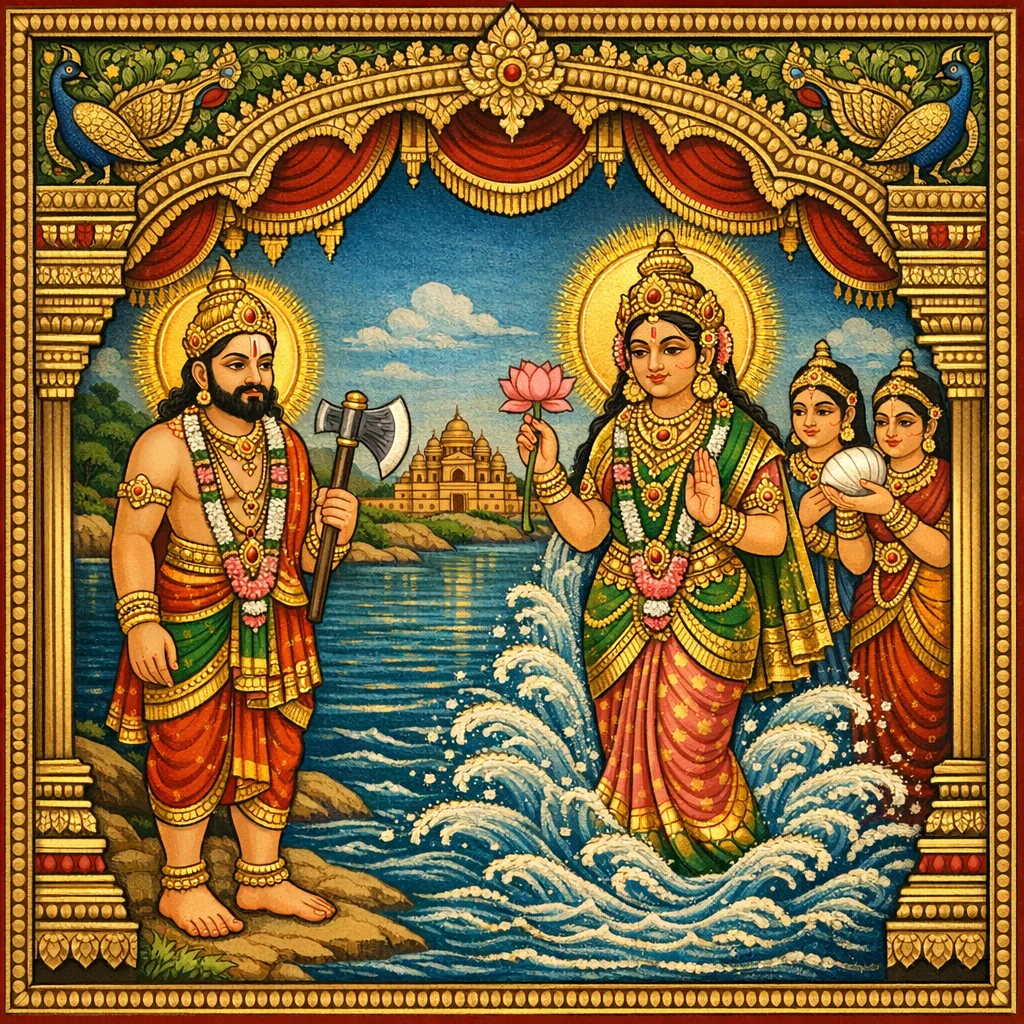
In this chapter, narrated under Vasiṣṭha’s guidance, Bhārgava Rāma (Paraśurāma) is shown after Kṛṣṇa’s disappearance/withdrawal, his confidence heightened through Kṛṣṇa’s influence. He advances like blazing fire toward Māhiṣmatī, the Haihaya stronghold linked with Kārttavīryārjuna. The Narmadā is praised as the supreme purifier (mere sight destroys sin), and Rāma offers reverent homage, invoking her as “born from Hara’s body,” praying for swift destruction of enemies and for boons—showing tīrtha-power supporting dharmic warfare. Rāma then sends a messenger to Kārttavīryārjuna with a formal challenge, stressing the inviolability of envoys under dūta-dharma. In the royal assembly the ultimatum is delivered; the Haihaya king, mighty and proud of conquest, responds in anger, boasts of subduing other kings by sheer arm-strength, and agrees to battle. Thus the chapter binds sacred geography (Narmadā), lineage conflict (Bhārgava vs. Haihaya), and ritual protocol of diplomacy to propel the dynastic narrative.
Shlokas
Verse 1
इति श्रीब्रहामाण्डे महापुराणे वायुप्रोक्ते मध्यभागे तृतीय उपोद्धातपादे भर्गवचरिते सप्तत्रिंशत्तमो ऽध्यायः // ३७// वसिष्ठ उवाच अन्तर्द्धानं गते कृष्णे रामस्तु सुमहायशाः / समुद्रिक्तमथात्मानं मेने कृष्णानुभावतः
Thus, in the Śrī Brahmāṇḍa Mahāpurāṇa, proclaimed by Vāyu, in the middle section, in the third Upoddhāta-pāda, within the Bhārgava narrative, ends Chapter Thirty-Seven. Vasiṣṭha said: When Kṛṣṇa had vanished, the greatly renowned Rāma deemed himself powerfully stirred by Kṛṣṇa’s influence.
Verse 2
अकृतव्रणसंयुक्तः प्रदीप्ताग्निरिव ज्वलन् / समायातो भार्गवो ऽसीपुरीं महिष्मतीं प्रति
Unwounded in body, blazing like a kindled fire, the Bhārgava came, drawing near to Asipurī—Mahīṣmatī.
Verse 3
यत्र पापहरा पुण्या नर्मदा सरितां वरा / पुनाति दर्शनादेव प्राणिनः पापिनो ह्यपि
There flows the holy Narmadā, best of rivers, the remover of sin; by her mere sight, even sinful beings are purified.
Verse 4
पुरा त्रय हरेणापि निविष्टेन महात्मना / त्रिपुरस्य विनाशाय कृतो यत्नो महीपते
O lord of the earth, in ancient times even Hari, the great-souled one, firmly resolved and strove for the destruction of Tripura.
Verse 5
तत्र किं वर्ण्यते पुण्यं नृणां देवस्वरूपिणाम् / सदृष्ट्वा नर्मदां भूप भर्गवः कुलनन्दनः
O king, how can one describe the holy merit of those men who bear a divine nature there? Beholding the Narmadā, Bhārgava, the delight of his lineage, rejoiced.
Verse 6
नमश्चकार सुप्रीतः शत्रुसाधनतत्परः / नमो ऽस्तु नर्मदे तुभ्यं हरदेहसमुद्भवे
Rejoicing greatly and intent on subduing his foes, he bowed and said: “Homage to you, O Narmadā, born from the body of Hari.”
Verse 7
क्षिप्रं नाशय शत्रून्मे वरदा भव शोभने / इत्येवं स नमस्कृत्य नर्मदां पापनाशिनीम्
“O radiant one, swiftly destroy my enemies; become a bestower of boons.” Saying so, he bowed to Narmadā, the destroyer of sins.
Verse 8
दूतं प्रस्थापयामास कार्त्तवीर्यार्जुनं प्रति / दूत राजात्वया वाच्यो यदहं वच्मि ते ऽनघ
Then he dispatched a messenger to Kārttavīrya Arjuna, saying: “O blameless envoy, tell the king exactly what I say to you.”
Verse 9
न संदेहस्त्वया कार्यो दूतः क्वापि न बध्यते / यद्बलं तु समाश्रित्य जमदग्निमुनिं नृपः
Harbor no doubt; a messenger is not bound anywhere. Relying upon that very strength, the king approached the sage Jamadagni.
Verse 10
तिरस्त्वं कृतवान्मूढ तत्पुत्रो योद्धुमागतः / शीघ्रं निर्गच्छ मन्दात्मन्युद्धं रामाय देहि तत्
Fool! You have insulted him; his son has come to fight. Base-minded one, go out at once and yield that battle to Rama.
Verse 11
भार्गवं त्वं समासाद्य गच्छ लोकान्तरं त्वरा / इत्येवमुक्त्वा राजानं श्रुत्वा तस्य वचस्तथा
“Confront Rama the Bhargava, and swiftly depart to another world.” Having spoken thus, the king heard those words just so.
Verse 12
शीघ्रमागच्छ भद्रं ते विलंबो नेह शस्यते / तेनैवमुक्तो दूतस्तु गतो हैहयभूपतिम्
Come quickly—may good be yours; delay is not praised here. Thus instructed, the messenger went to the Haihaya king.
Verse 13
रामोदितं तत्सकलं श्रावयामास संसदि / स राजात्रेयभक्तस्तु महाबलपराक्रमः
In the royal assembly he recited in full all that Rama had spoken. That king was devoted to Atreya, mighty in strength and valor.
Verse 14
चुक्रोध श्रुत्वा वाच्यं तद्दूतमुत्तरमावहत् / कार्त्तवीर्य उवाच मया भुजबलेनैव दत्तदत्तेन मेदिनी
Hearing those words, he grew wrathful and sent the envoy back with his reply. Kārttavīrya said: “By the strength of my own arms alone, in accordance with Datta’s decree, I have obtained this earth.”
Verse 15
जिता प्रसह्य भूपालान्बद्ध्वानीय निजं पुरम् / तद्बलं मयि वर्त्तेत युद्धं दास्ये तवाधुना
I have forcibly conquered the kings, bound them, and brought them to my own city. Let that might rest in me; now I shall give you battle.
Verse 16
इत्युत्क्वा विससर्ज्जाशु दूतं हैहयभूपतिः / सेनाध्यक्षं समाहूय प्रोवाच वदतां वरः
Having spoken thus, the Haihaya king swiftly dismissed the envoy. Then he summoned the commander of the army and, foremost among speakers, addressed him.
Verse 17
सज्जं कुरु महाभाग सैन्यं मे वीरसंमतः / योत्स्ये रामेण भृगुणा विलंबो मा भवत्विति
O fortunate one, approved by the heroes—make my army ready. I shall fight Rāma of the Bhṛgu line; let there be no delay.
Verse 18
एवमुक्तो महावीरः सेनाध्यक्षः प्रतापनः / सैन्यं सज्जं विधायाशु चतुरङ्ग न्यवेदयत्
Thus commanded, the mighty and valorous commander swiftly readied the fourfold army and reported it to the king.
Verse 19
सैन्यं सज्जं समाकर्ण्य कार्त्तवीर्यो नृपो मुदा / सूतोपनीतं स्वरथमारुरोह विशांपते
Hearing that the army was fully arrayed, King Kārttavīrya rejoiced; and, mounting his own chariot brought by the charioteer, he set forth as lord of the people.
Verse 20
तस्य राज्ञः समन्तात्तु सामन्ता मण्डलेश्वराः / अनेकाक्षौहिणीयुक्ताः परिवार्योपतस्थिरे
All around that king, his vassals and regional lords, attended by many akṣauhiṇī armies, gathered and stood encircling him in service.
Verse 21
नागास्तु कोटिशस्तत्र हयस्यन्दनपत्तयः / असंख्याता महाराज सैन्ये सागरसन्निभे
O Mahārāja! In that ocean-like host, elephants were in countless millions; and horses, chariots, and foot-soldiers were beyond all reckoning.
Verse 22
दृश्यन्ते तत्र भूपाला नानावंशसमुद्भवाः / महावीरा महाकाया नानायुद्धविशारदाः
There were seen kings sprung from many lineages—great heroes of mighty frame, well-versed in the arts of many kinds of battle.
Verse 23
नानाशस्त्रास्त्रकुशला नानावाहगता नृपाः / नानालङ्कारसंयुक्ता मत्ता दानविभूषिताः
Those kings were skilled in many weapons and sacred missiles, mounted upon diverse conveyances; adorned with varied ornaments, exultant in martial ardor, and made splendid by the virtue of generous giving.
Verse 24
महामात्रकृतेद्देशा भान्ति नागा ह्यनेकशः / नानाज्ञातिसमुत्पन्ना हयाः पवनरंहसः
The lands arranged by the great ministers shone forth; elephants gleamed in countless ranks. Horses too were there—born of many lineages, swift as the rushing wind.
Verse 25
प्लवन्तो भान्ति भूपाल सादिभिः कृतशिक्षणाः / स्यन्दनानि सुदीर्घाणि जवनाश्वयुतानि च
O king, the horses—trained by riders and charioteers—looked splendid as they leapt and surged. And there were very long chariots as well, yoked with Yavana steeds.
Verse 26
चक्रनिर्घोषयुक्तानि प्रावृण्मेघोपमानि च / पदातयस्तु राजन्ते खड्गचर्मधरा नृप
The chariots, roaring with the thunder of wheels, looked like monsoon clouds. And, O king, the foot-soldiers shone as well, bearing sword and shield.
Verse 27
अहंपूर्वमहंपूर्वमित्यहंपूर्वकान्विताः / यदा प्रचलितं सैन्यं कार्त्तवीर्यार्जुनस्य वै
Crying within themselves, “I first—yes, I first!”, filled with the urge to lead, when the army of Kārttavīrya Arjuna truly began to move.
Verse 28
तदा प्राच्छादितं व्योम रजसा च दिशो दश / नानावादित्रनिर्घोषैर्हयानां ह्रेषितैस्तथा
Then the sky and all ten directions were veiled in dust, resounding with the roar of many instruments and the neighing of horses.
Verse 29
गजानां बृंहितै राजन्व्याप्तं गगनमण्डलम् / मार्गे ददर्श राजेन्द्रो विपरीतानि भूपते
O King, the vault of heaven was filled with the trumpeting of elephants; upon the road the king of kings, O lord of the earth, beheld ominous signs turned contrary.
Verse 30
शकुनानि रणे तस्य मृत्युदौत्यकराणि च / मुक्तकेशां छिन्ननासां रुदतीं च दिगंबराम्
In his battle there appeared portents that served as heralds of death; and there was seen a digambara woman—hair unbound, nose cut away—wailing in grief.
Verse 31
कृष्णवस्त्रपरीधानां वनितां स ददर्श ह / कुचैलं पतितं भग्नं नग्नं काषायवाससम्
He beheld a woman clad in black garments; and he saw as well a foul cloth fallen and torn, a naked man, and one wearing the ochre robe of renunciation.
Verse 32
अङ्गहीनं ददर्शासौ नरं दुःशितमानसम् / गोधां च शशकं शल्यं रिक्तकुम्भं सरीमृपम्
He saw a man bereft of limbs, his mind defiled; and he saw a monitor-lizard, a hare, a shalya (thorn or arrow), an empty jar, and a creature of the waters.
Verse 33
कार्पासं कच्छपं तैलं लवणं चास्थिखण्डकम् / स्वदक्षिणे शृगालं च कुर्वन्तं भैर्वं रवम्
He saw cotton, a tortoise, oil, salt, and a fragment of bone; and on his right he beheld a jackal raising a dreadful cry, like Bhairava’s own roar.
Verse 34
रोगिणं पुंल्कसं चैव वृषं च श्येनभल्लुकौ / दृष्ट्वापि प्रययौ योद्धुं कालपाशावृतो हझात्
Though he saw the sick man, the puṃlkasa, the bull, and even the hawk and the bear, he still went forth to fight, as if ensnared in the noose of Kāla and rendered helpless.
Verse 35
नर्मदोत्तरतीरस्थो ह्यकृतव्रणसंयुतः / वटच्छायासमासीनो रामो ऽपश्यदुपागतम्
On the northern bank of the Narmadā, unscarred, Rāma sat beneath the shade of the banyan and beheld the one who approached.
Verse 36
कार्त्तवीर्यं नृपवरं शतकोटिनृपान्वितम् / सहस्राक्षौहिणीयुक्तं दृष्ट्वा बभूव ह
Seeing Kārttavīrya, the foremost of kings, surrounded by countless rulers and attended by a thousand akṣauhiṇī armies, he was struck with awe.
Verse 37
अद्य मे सिद्धिमायातं कार्यं चिरसमीहितम् / यद्दृष्टिगोचरो जातः कार्तवीर्यो नृपाधमः
Today the deed I long desired has reached fulfillment, for Kārttavīrya, that base king, has come within the range of my sight.
Verse 38
इत्येवमुक्त्वा चोत्थाय धृत्वा परशुमायुधम् / व्यञ्जृभतारिनाशायसिंहः क्रुद्धो यथा तथा
So saying, he rose and took up the paraśu as his weapon; intent on the foe’s destruction, he roared like an enraged lion.
Verse 39
दृष्ट्वा समुद्यतं रामं सैनिकानां वधाय च / चकंपिरे भृशं सर्वे मृत्योरिव शरीरिणः
Seeing Rama rise, ready to slay the soldiers, all embodied beings trembled violently, as if Death itself stood before them.
Verse 40
स यत्र यत्रानिलरंहसं भृगुश्चिक्षेप रोषेण युतः परश्वधम् / ततस्ततश्छिन्नभुजोरुकङ्घरा नागा हयाः शूरनरा निपेतुः
Wherever the Bhṛgu-born warrior, aflame with wrath, hurled his axe with the speed of wind, there fell elephants, horses, and valiant men, their arms, thighs, and shoulders hewn away.
Verse 41
यथा गजेन्द्रो मदयुक्समन्ततो नालं वनं भर्द्दयति प्रधावन् / तथैव रामो ऽपि मनोनिलौजा विमर्द्दयामास नृपस्य सेनाम्
As a mighty elephant, maddened with rut, runs and tramples the reed-forest on every side, so Rama too—swift as the wind of will—crushed the king’s army.
Verse 42
दृष्ट्वा तमित्थं प्रहरन्तमोजसा रामं रणे शस्त्रभृतां वरिष्ठम् / उद्यम्य चापं महदास्थितो रथं सृज्यं च कृत्वा किलमन्स्यराजः
Seeing Rama, foremost among weapon-bearers, striking with such might in battle, King Mānasya lifted his great bow, mounted his chariot, and made ready to loose his arrows.
Verse 43
आकृष्य वाणाननलोग्रतेजसः समाकिरन्भार्गवमाससाद / दृष्ट्वा तमायान्तमथो महात्मा रामो गृहीत्वा धनुषं महोग्रम्
Drawing arrows blazing with fierce, fire-like splendor, he showered Bhārgava with a rain of shafts and closed in; seeing him advance, the great-souled Rama seized his exceedingly formidable bow.
Verse 44
वायव्यमस्त्रं विदधे रुषाप्लुतो निवारयन्मङ्गलबाणवर्षम् / स चापि राजातिबलो मनस्वी ससर्ज रामाय तु पर्वतास्त्रम्
Surging with wrath, he deployed the Vāyavya Astra, checking the shower of auspicious arrows. Then that king, exceedingly mighty and steadfast of mind, hurled the Parvata Astra at Rāma.
Verse 45
तस्तंभ तेनातिबलं तदस्त्रं वायव्यमिष्वस्त्रविधानदक्षः / रामो ऽपि तत्रातिबलं विदित्वा तं मत्स्यराजं विविधास्त्रपूगैः
Rāma, skilled in the rites of the Vāyavya and the astras of arrows, checked that exceedingly powerful weapon. Knowing its fierce might, he assailed the Matsya king with volleys of many astras.
Verse 46
किरन्तमाजौ प्रसभं सुमोच नारायणास्त्रं विधिमन्त्रयुक्तम् / नारायणास्त्रे भृगुणा प्रयुक्ते रामेण राजन्नृपतेर्वधाय
On the battlefield, against him who fiercely scattered arrows, Rāma released the Nārāyaṇa Astra, empowered with rite and mantra. O king, that Nārāyaṇa Astra—bestowed by Bhṛgu—Rāma employed to slay that ruler.
Verse 47
दिशस्तु सर्वाः सुभृशं हि तेजसा प्रजज्वलुर्मत्स्यपतिश्चकंपे / रामस्तु तस्याथ विलक्ष्य कम्पं बाणैश्चतुर्भिर्निजघान वाहान्
By that blazing power all the quarters flared up, and the lord of the Matsyas trembled. Rāma, discerning his shaking, struck down his mounts with four arrows.
Verse 48
शरेण चैकेन ध्वजं महात्मा चिच्छेद चापं च शरद्वयेन / बाणेन चैकेन प्रसह्य सारथिं निपात्य भूमौ रथमार्द्दयत्त्रिभिः
The great-souled one severed the banner with a single arrow, and with two arrows he split the bow. Then, with one arrow he forcibly cast the charioteer to the ground, and with three he shattered the chariot.
Verse 49
त्यक्त्वा रथं भूमिगतं च मङ्गलं परश्वधेनाशु जघान मूर्द्धनि / स भिन्नशीर्षो रुधिरं वमन्मुहुर्मर्च्छामवाप्याथ ममार च क्षणात्
Abandoning his chariot and standing on the ground, he quickly struck Mangala on the head with his axe. With his head split open, vomiting blood repeatedly, he fainted and died in an instant.
Verse 50
तत्सैन्यमस्त्रेण च संप्रदग्धं विनाशमायादथ भस्मसात्क्षणात् / तस्मिन्निपतिते राज्ञि चन्द्रवंशसमुद्भवे
His army, completely scorched by the weapon, met with destruction and turned to ashes in a moment. When that king, born of the Lunar Dynasty, fell...
Verse 51
मङ्गले नृपतिश्रेष्ठे रामो हर्षमुपागतः
When Mangala, the best of kings, had fallen, Rama became filled with joy.
Frequently Asked Questions
The episode centers on the Bhārgava (Paraśurāma/Jamadagni line) in confrontation with the Haihaya king Kārttavīryārjuna, a classic dynastic rivalry framed as both political contest and dharmic reckoning.
Narmadā is presented as intrinsically purifying—capable of removing sin by mere sight—and as a boon-bestowing power invoked by Rāma; her epithet ‘Haradeha-samudbhavā’ embeds the river in Śaiva cosmology while legitimizing the hero’s mission through sacred geography.
The text highlights dūta-dharma: an envoy should not be bound or harmed (‘dūtaḥ kvāpi na badhyate’), underscoring that even imminent warfare is preceded by protocol and moral constraint.