Adhyaya 3
Prajāpati-vaṃśānukīrtana — Genealogical Enumeration of Progenitors (Dharma’s Line and the Sādhyas)
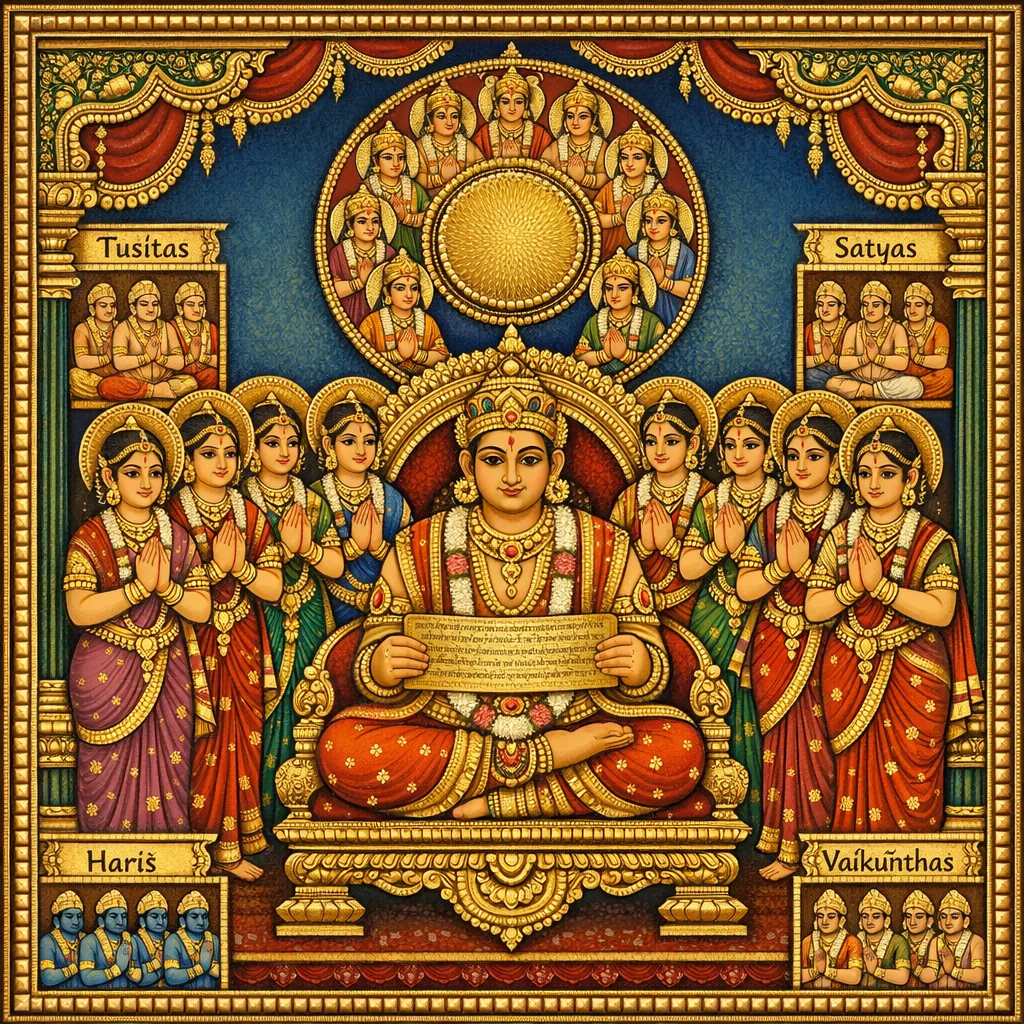
The chapter begins with the sages asking for a fuller account of the origins of devas, dānavas, and daityas in the Vaivasvata manvantara. Sūta replies with an ordered genealogical narration centered on Dharma: he names Dharma’s wives (the ten daughters given by Dakṣa Prācetasa) and their descendants, highlighting the Sādhyas as a twelvefold divine class described by experts as “beyond the devas.” The account then traces how divine groups recur and are renamed across successive manvantaras (such as Tuṣitas, Satyas, Haris, and Vaikuṇṭhas), stressing the role of Brahmā’s curse and cyclical re-manifestation in shaping their status. In the sampled portion it culminates by linking these cycles to notable births like Nara–Nārāyaṇa, and by noting earlier placements of figures such as Vipaścit, Indra, Satya, and Hari in prior manvantara settings. Overall, the adhyāya serves as a genealogical index keyed to manvantara chronology rather than a single linear account of “first creation.”
Shlokas
Verse 1
इति श्रीब्रह्माण्डे महापुराणे वायुप्रोक्ते मध्यभागे तृतीय उपोद्धातपादे प्रजापतिवंशानुकीर्त्तनं नाम द्वितीयो ऽध्यायः ऋषय ऊचु / देवानां दानवानां च दैत्यानां चैव सर्वशः / उत्पत्तिं विस्तरेणैव ग्रूहि वैवस्वतेंऽतरे
Thus, in the Śrī Brahmāṇḍa Mahāpurāṇa, in the middle section spoken by Vāyu, in the third introductory pāda, begins the second chapter called “The Recital of the Lineage of Prajāpati.” The ṛṣis said: “Tell us in full detail the origin of the Devas, the Dānavas, and the Daityas in the Vaivasvata Manvantara.”
Verse 2
सूत उवाच धर्म्मस्यैव प्रवक्ष्यामि निसर्गन्तं निबोधत / अरुन्धतीवसुर्जामालंबा भानुर्मरुत्वती
Sūta said: “I shall declare the lineage of Dharma; listen well: Arundhatī, Vasu, Jāmā, Ālambā, Bhānu, and Marutvatī.”
Verse 3
संकल्पा च मुहूर्त्ता च साध्या विश्वा तथैव च / धर्मस्य पत्न्यो दश ता दक्षः प्राचेतसो ददौ
Saṃkalpā, Muhūrttā, Sādhyā, Viśvā, and likewise others—thus were the ten wives of Dharma, bestowed by Dakṣa Prācetasa.
Verse 4
साध्यापुत्रास्तु धर्मस्य साध्या द्वादशजज्ञिरे / देवेभ्यस्तान्परान्देवान्दैवज्ञाः परिचक्षते
From Sādhyā, the wife of Dharma, were born twelve sons called the Sādhyas; the knowers of divine lore proclaim them as gods surpassing even the Devas.
Verse 5
ब्राह्मणा वै मुखात्सृष्टा जया देवाः प्रजेप्सया / सर्वे मन्त्रशरीरस्ते समृता मन्वन्तरेष्विह
The Brāhmaṇas were created from the mouth; and, yearning for the begetting of creatures, the Devas called Jayā arose. All of them are mantra-bodied, remembered throughout the Manvantaras.
Verse 6
दर्शश्च पौर्णमासश्च बृहद्यच्च रथन्तरम् / वित्तिश्चैव विवित्तिश्च आकूतिः कूतिरेव च
Darśa and Paurṇamāsa, and also Bṛhad and Rathantara; likewise Vitti and Vivitti, Ākūti and Kūti—these too are renowned names of the sacred yajñas.
Verse 7
विज्ञाता चैव विज्ञातो मनो यज्ञस्तथैव च / नामान्येतानि तेषां वै यज्ञानां प्रथितानि च
Vijñātā and Vijñāta, and likewise the Mano-yajña; these are indeed the well-known names of those yajñas.
Verse 8
ब्रह्मशापेन तेजाताः पुनः स्वायंभुवे जिताः / स्वारोचिषे वै तुषिताः सत्यश्चैवोत्तमे पुनः
By Brahmā’s curse they were shorn of their radiance; and again, in the Svāyaṃbhuva Manvantara, they were subdued. In the Svārociṣa Manvantara they were called Tuṣitas, and in the Uttama Manvantara once more they were known as Satyas.
Verse 9
तामसे हरयो नाम वैकुण्ठा रेवतान्तरे / ते साध्याश्चाक्षुषे नाम्ना छन्दजा जज्ञिरे सुराः
In the Tāmāsa Manvantara they were called Harayas, and in the Revata Manvantara, Vaikuṇṭhas. In the Cākṣuṣa Manvantara they appeared as the Sādhyas—devas born of Chandas, the sacred metres.
Verse 10
धर्मपुत्रा महाभागाः साध्या ये द्वादशामराः / पूर्वं समनुसूयन्ते चाक्षुषस्यान्तरे मनोः
Those twelve Sādhyas—most fortunate, the sons of Dharma—are reckoned from of old within the Manvantara of Cākṣuṣa Manu.
Verse 11
स्वारोचिषेंऽतरे ऽतीता देवा ये वै महौजसः / तुषिता नाम ते ऽन्योन्यमूचुर्वै चाक्षुषेंऽतरे
In the Svārociṣa Manvantara, the mighty, radiant Devas had already passed; those called the Tuṣitas spoke among themselves in the Cākṣuṣa Manvantara.
Verse 12
किञ्चिच्छिष्टे तदा तस्मिन्देवा वै तुषिताब्रुवन् / एतामेव महाभागां वयं साध्यां प्रविश्य वै
When a little still remained, the Tuṣita Devas said: “O greatly blessed one, we shall enter into this very state as the Sādhyas.”
Verse 13
मन्वन्तरे भविष्यामस्तन्नः श्रेयो भविष्यति / एवमुक्त्वा तु ते सर्वे चाक्षुषस्यान्तरे मनोः
“We shall come to be in the Manvantara; that will be our highest good.” Having spoken thus, they all remained within the era of Manu Cākṣuṣa.
Verse 14
तस्यां द्वादश संभूता धर्मात्स्वायंभुवात्पुनः / नरनारायणो तत्र जज्ञाते पुनरेव हि
There, twelve were born again from Dharma Svāyaṃbhuva; and there indeed Nara and Nārāyaṇa were born once more.
Verse 15
विपश्चिदिन्द्रो यश्चाभूत्तथा सत्यो हरिश्च तौ / स्वारोचिषेंऽतरे पूर्वमास्तां तौ तुषितासुतौ
Vipaścit and Indra, and likewise Satya and Hari—those two were formerly, in the Svārociṣa Manvantara, sons of the Tuṣitas.
Verse 16
तुषितानां तु साध्यात्वे नामान्येतानि चक्षते / मनो ऽनुमन्ता प्राणश्च नरो ऽपानश्च वीर्यवान्
In the Sādhya state of the Tuṣitas, these names are declared: Manas, Anumantā, Prāṇa, Nara, and the mighty Apāna.
Verse 17
वितिर्नयो हयश्चैव हंसो नारायणस्तथा / विभुश्चापि प्रभुश्चापि साध्या द्वादश जज्ञिरे
Viti, Naya, Haya, Haṃsa, Nārāyaṇa, and also Vibhu and Prabhu—thus were the twelve Sādhyas born.
Verse 18
स्वायंभुवैंऽतरे पूर्वं ततः स्वारो चिषे पुनः / नामान्यासन्पुनस्तानि तुषितानां निबोधत
Formerly in the Svāyaṃbhuva Manvantara, and again in the Svārociṣa Manvantara, those same names belonged to the Tuṣitas—know this well.
Verse 19
प्राणापानावुदानश्च समानो व्यान एव च / चक्षुः श्रोत्रं रसो घ्राणं स्पर्शो बुद्धिर्मनस्तथा
Prāṇa and Apāna, Udāna, Samāna and Vyāna; and the eye, the ear, taste, smell, touch, the intellect (buddhi), and the mind (manas).
Verse 20
नामान्येतानि वै पूर्वं तुषितानां स्मृतानि च / वसोस्तु वसवः पुत्राः साध्यानामनुजाः स्मृताः
These names were formerly remembered as those of the Tuṣitas; and the Vasus, sons of Vasu, are remembered as the younger brothers of the Sādhyas.
Verse 21
धरो ध्रुवश्च सोमश्च आयुश्चैवानलो ऽनिलः / प्रत्यूषश्च प्रभासश्च वसवो ऽष्टौ प्रकीर्तिताः
Dhara, Dhruva, Soma, Ayu, Anala, Anila, Pratyusha, and Prabhasa—these are proclaimed as the eight Vasus.
Verse 22
धरस्य पुत्रो द्रविणो हुतहव्यो रजस् तथा / ध्रुवपुत्रो ऽभवत्तात कालो लोकाप्रकालनः
Dhara’s sons were Dravina, Hutahavya, and Rajas; and Dhruva’s son, dear one, was Kala, the regulator of the worlds.
Verse 23
सोमस्य भगवान्वर्चा बुधश्च ग्रहबौधनः / धरोर्मी कलिलश्चैव पञ्च चन्द्रमसः सुताः
Soma’s sons were Bhagavanvarcha, Budha who awakens knowledge of the grahas, and also Dharormi and Kalila—five sons of Chandra.
Verse 24
आयस्य पुत्रो वैतण्ड्यः शमः शान्तस्तथैव च / स्कन्दः सनत्कुमारश्च जज्ञे पादेन तेजसः
Ayu’s sons were Vaitandya, Shama, and Shanta; and from a portion of radiant tejas were born Skanda and Sanatkumara.
Verse 25
अग्नेः पुत्रं कुमारं तु स्वाहा जज्ञे श्रिया षृतम् / तस्य शाखो विशाखश्च नैगमेयश्च प्रष्टजाः
Svaha bore Kumara, the son of Agni, endowed with the splendor of Shri; his sons were Shaka, Vishakha, and Naigameya (Prashtaja).
Verse 26
अनिलस्य शिवा भार्या तस्याः पुत्रो मनोजवः / अविज्ञान गतिश्चैव द्वौ पुत्रावनिलस्य च
Anila’s wife was Śivā; from her was born the son Manojava. And Anila had two other sons as well—Avijñāna and Gati.
Verse 27
प्रत्यूषस्य विदुः पुत्रमृषिं नाम्नाथ देवलम् / द्वौ पुत्रौ देवलस्यापि क्षमावन्तौ मनीषिणौ
Pratyūṣa’s son is known as the sage Ṛṣi named Devala. Devala too had two sons, both patient and wise.
Verse 28
बृहस्पतेश्तु भगिनी भुवना ब्रह्मवादिनी / योगसिद्धा जगत्कृत्स्नमशक्ता चरति स्म ह
Bṛhaspati’s sister was Bhuvanā, a proclaimer of Brahman. Perfected in yoga, she roamed unhindered through the entire world.
Verse 29
प्रभासस्य तु भार्या सा वसूनामष्टमस्य ह / विश्वकर्मा सुतस्तस्याः प्रजापतिपतिर्विभुः
She was the wife of Prabhāsa, the eighth of the Vasus. From her was born Viśvakarmā, the mighty lord of the Prajāpatis.
Verse 30
विश्वेदेवास्तु विश्वाया जज्ञिरे दश विश्रुताः / क्रतुर्दक्षः श्रवः सत्यः कालः मुनिस्तथा
From Viśvā were born the ten renowned Viśvedevas: Kratu, Dakṣa, Śrava, Satya, Kāla, and Muni, among them.
Verse 31
पुरूरवो मार्द्रवसो रोचमानश्च ते दश / धर्मपुत्राः सुरा एते विश्वायां जज्ञिरे शुभाः
Purūrava, Mārdravasa, and Rocamāna—those ten radiant and auspicious Devas, sons of Dharma, were born of Viśvā in the world.
Verse 32
मरुत्वत्यां मरुत्वन्तो भानवो भानुजाः स्मृताः / मुहूर्ताश्च मुहूर्ताया घोषलंबा ह्यजायत
From Marutvatī were born the Marutvants; from Bhānujā are remembered the Bhānavas; and from Muhūrtā were born the Muhūrtas, and also Ghoṣalambā.
Verse 33
संकल्पायां तु संजज्ञे विद्वान्संकल्प एव तु / नव वीथ्यस्तु जामायाः पथत्रयमुपाश्रिताः
In Saṃkalpā was born the wise one, Saṃkalpa himself; and Jāmā’s nine vīthis took refuge in the threefold path.
Verse 34
पृथिवी विषयं सर्वमरुन्धत्यामजायत / एष सर्गः समाख्यातो विद्वान्धर्मस्य शाश्वतः
From Arundhatī arose the entire domain of the earth; thus is this creation (sarga) declared by the wise who know Dharma everlasting.
Verse 35
मुहूर्ताश्चैव तिथ्याश्च प्रतिभिः सह सुव्रताः / नामतः संप्रवक्ष्यामि ब्रुवतो मे निबोधत
O you of noble vows! The muhūrtas and the tithis, together with the pratibhis—I shall now declare their names; heed my words as I speak.
Verse 36
अहोरात्रविभागश्च नक्षत्राणि समाश्रितः / मुहुर्त्ताः सर्वनक्षत्रा अहोरात्रभिदस्तथा
The division of day and night rests upon the Nakṣatras; and in every Nakṣatra the Muhūrtas likewise mark the distinctions of day and night.
Verse 37
अहोरात्रकलानां तु षडशीत्यधिकाः स्मृताः / रवेर्गति विशेषेण सर्वर्त्तुषु च नित्यशः
The kalās of a day and night are remembered as more than eighty-six; by the particular course of the Sun, this holds ever the same through all the seasons.
Verse 38
ततो वेदविदश्चैतां गतिमिच्छन्ति पर्वसु / अविशेषेषु कालेषु ज्ञेयः सवितृमानतः
Therefore the knowers of the Vedas seek this course on the sacred parva days; in times without special marks, it is to be known by the measure of Savitṛ, the Sun.
Verse 39
रौद्रः सार्पस्तथा मैत्रः पित्र्यो वासव एव च / आप्यो ऽथ वैश्वदेवश्च ब्राह्मो मध्याह्नसंश्रितः
Raudra, Sārpa, Maitra, Pitrya, Vāsava, Āpya, Vaiśvadeva, and Brāhma—these Muhūrtas are assigned to the midday.
Verse 40
प्राजापत्यस्तथैवेन्द्र इन्द्राग्नी निरृतिस्तथा / वारुणश्च यथार्यम्णो भगश्चापि दिनश्रिताः
Prājāpatya, Aindra, Indrāgnī, Nairṛti, Vāruṇa, Aryaman, and Bhaga—these too are Muhūrtas abiding in the portions of the day.
Verse 41
एते दिनमुहूर्ताश्च दिवाकरविनिर्मिताः / शङ्कुच्छाया विशेषेण वेदितव्याः प्रमाणतः
These are the daytime muhūrtas, established by the Sun-god; they are to be known accurately by the distinct measures of the śaṅku’s shadow.
Verse 42
अजैकपादहिर्बुध्न्यः पूषाश्वियमदेवताः / आग्नेयश्चापि विज्ञेयः प्राजापत्यस्तथैव च
Ajaikapād and Ahirbudhnya, Pūṣā, the Aśvins, and Yama are the deities; likewise, the Āgneya and the Prājāpatya are also to be understood.
Verse 43
सौम्यश्चापि तथादित्यो बार्हस्पत्यश्च वैष्मवः / सावित्रश्च तथा त्वाष्ट्रो वायव्यश्चेति संग्रहः
Saumya and Āditya, Bārhaspatya and Vaiṣṇava; likewise Sāvitra, Tvāṣṭra, and Vāyavya—this is the collected summary.
Verse 44
एते रात्रेर्मुहूर्त्ताः स्युः क्रमोक्ता दश पञ्च च / इन्दोर्गत्युदया ज्ञेया नाडिका आदितस्तथा
These are the muhūrtas of the night, set forth in order—fifteen in all. They are to be known from the Moon’s course and rising, and the nāḍikā is likewise to be determined at the outset.
Verse 45
कालावस्थास्त्विमास्त्वेते मुहूर्त्ता देवताः स्मृताः / सर्वग्रहाणां त्रीण्येव स्थानानि विहितानि च
These very phases of time are remembered as the deities of the muhūrtas; and for all the grahas (planets), only three positions have been ordained.
Verse 46
दक्षिणोत्तरमध्यानि तानि विद्याद्यथाक्रमम् / स्थानं जारद्गवं सध्ये तथैरावतमुत्तरम्
These are to be known in due order as lying to the south, the north, and the middle. In the middle is the station called Jāradgava, and to the north is Airāvata (the vīthī).
Verse 47
वैश्वानरं दक्षिणतो निर्दिष्टमिह तत्त्वतः / अश्विनी कृत्तिका याम्यं नागवीथीति विश्रुता
Here, in truth, Vaiśvānara is indicated to the south. Aśvinī and Kṛttikā are in the yāmya (southern) quarter, renowned as the Nāgavīthī.
Verse 48
ब्राह्मं सौम्यं तथार्द्रा च गजवीथीति शब्दिता / पुष्याश्लेषे तथादित्यं वीथी चैरावती मता
Brāhma, Saumya, and Ārdrā are spoken of as the Gajavīthī. And Āditya together with Puṣya and Āśleṣā is held to be the vīthī called Airāvatī.
Verse 49
तिस्रस्तु विथयो ह्येता उत्तरो मार्ग उच्यते / पूर्वोत्तरे च फल्गुन्यौ मघा चैवार्षभी स्मृता
These three vīthīs are called the Uttaro Mārga, the northern path. And in the northeast (pūrvottara), the two Phalgunīs and Maghā are remembered as the Ārṣabhī (vīthī).
Verse 50
हस्तश्चित्रा तथा स्वाती गोवीथीति तु शब्दिता / ज्येष्ठा विशाखानुराधा वीथी जारद्गवी मता
Hasta, Citrā, and Svātī are spoken of as the Govīthī. And Jyeṣṭhā, Viśākhā, and Anurādhā are held to be the vīthī called Jāradgavī.
Verse 51
एतास्तु वीथयस्तिस्रो मध्यमो मार्ग उच्यते / मूलं पूर्वोत्तराषाढे अजवीथ्याभिशब्दिते
These are the three vīthis; this is called the Middle Path. In Pūrvottarāṣāḍhā, the nakṣatra Mūla is renowned as Ajavīthī.
Verse 52
श्रवणं च धनिष्ठा च मार्गी शतभिषक्तथा / वैश्वानरी भाद्रपदे रेवती चैव कीर्त्तिता
Śravaṇa and Dhaniṣṭhā, and likewise Śatabhiṣak, are known as mārgī. In Bhādrapada, Vaiśvānarī and Revatī too are celebrated.
Verse 53
एतास्तु वीथयस्तिस्रो दक्षिणे मार्ग उच्यते / अष्टाविशति याः कन्या दक्षः सोमाय ता ददौ
These three vīthis are called the Southern Path. The twenty-eight maidens were given by Dakṣa to Soma (the Moon).
Verse 54
सर्वा नक्षत्रनाम्न्यस्ता ज्यौतिषे परिकीर्त्तिताः / तासामपत्यान्यभवन्दीप्तयो ऽमिततेजसः
All these, bearing the names of nakṣatras, are recounted in the lore of jyotiṣa. Their offspring were born radiant, blazing with immeasurable splendor.
Verse 55
यास्तु शेषास्तदा कन्याः प्रतिजग्राह कश्यपः / चतुर्दशा महाभागाः सर्वास्ता लोकमातरः
The maidens who then remained were received by Kaśyapa. Those fourteen, greatly blessed, are all Mothers of the Worlds (Lokamātā).
Verse 56
अदितिर्दितिर्दनुः काष्ठारिष्टानायुः खशा तथा / सुरभिर्विनता ताम्रा मुनिः क्रोधवशा तथा
Aditi, Diti, Danu, Kastha, Arishta, Anayu, and Khasha; likewise Surabhi, Vinata, Tamra, Muni, and Krodhavasha—these too were consorts of Prajapati.
Verse 57
कद्रूर्माता च नागानां प्रजास्तासां निबोधत / स्वायंभुवे ऽन्तरे तात ये द्वादश सुरोत्तमाः
Kadru was the mother of the Nagas; know well their progeny. O dear one, in the Svayambhuva Manvantara there were twelve most excellent gods.
Verse 58
वैकुण्ठा नाम ते साध्या बभूवुश्चाक्षुषेंऽतरे / उपस्थितेंऽतरे ह्यस्मिन्पुनर्वैवस्वतस्य ह
The Sadhyas known as “Vaikunthas” arose in the Caksusa Manvantara; and when this interval comes to pass, the Vaivasvata Manvantara follows again.
Verse 59
आराधिता आदित्या ते समेत्योचुः परस्परम् / एतामेव महाभागामदितिं संप्रविश्य वै
Pleased by worship, the Adityas gathered and said to one another: “Let us indeed enter this most fortunate Aditi (and be born from her).”
Verse 60
वैवस्वतेंऽतरे ह्यस्मिन्योगादर्द्धेन तेजसा / गच्छेम पुत्रतामस्यास्तन्नः श्रेयो भविष्यति
In this Vaivasvata Manvantara, by the power of yoga and with half our radiance, let us attain birth as her sons; that will be for our highest good.
Verse 61
एवमुक्त्वा तु ते सर्वे वर्त्तमानेंऽतरे तदा / जज्ञिरे द्वादशादित्या मारीयात्कश्यपात्पुनः
Thus having spoken, in that intervening age, all of them—through Marīci’s daughter and by Kaśyapa—were born again as the Twelve Ādityas.
Verse 62
शतक्रतुश्च विष्णुश्च जज्ञाते पुनरेव हि / वैवस्वतेंऽतरे ह्यस्मिन्नरनारायणौ तदा
Śatakratu (Indra) and Viṣṇu too were indeed born again; in this Vaivasvata Manvantara, they then manifested as Nara and Nārāyaṇa.
Verse 63
तेषामपि हि देवानां निधनोत्पत्तिरुच्यते / यथा सूर्यस्य लोके ऽस्मिन्नुदयास्तमयावुभौ
Even of those gods, birth and dissolution are spoken of—just as in this world the sun has both rising and setting.
Verse 64
दृष्टानुश्रविके यस्मात्सक्ताः शब्दादिलक्षणे / अष्टात्मके ऽणिमाद्ये च तस्मात्ते जज्ञिरे सुराः
Because they were attached to what is seen and heard, to the marks beginning with sound, and to the eightfold powers such as aṇimā, therefore they were born as suras, the gods.
Verse 65
इत्येष विषये रागः संभूत्याः कारणं स्मृतम् / ब्रह्मशापेन संभूता जयाः स्वायंभुवे जिताः
Thus, attachment to objects is remembered as the cause of arising; the Jaya, brought forth by Brahmā’s curse, were overcome in the Svāyambhuva Manvantara.
Verse 66
स्वारोचिषे वै तुषिताः सत्यश्चैवोत्तमे पुनः / तामसे हरयो देवा जाताश्चा रिष्टवे तु वै
In the Svārociṣa Manvantara arose the Tuṣitas and the Satyas; and in the Uttama Manvantara they are spoken of again. In the Tāmasa Manvantara were born the gods called Harayas, and for Ariṣṭa’s sake too the gods manifested.
Verse 67
वैकुण्ठाश्चाश्रुषे साध्या आदित्याः सप्तमे पुनः / धातार्यमा च मित्रश्च वरुणोंऽशो भगस्तथा
In the Āśruṣa Manvantara were the Vaikuṇṭhas and the Sādhyas; and in the seventh Manvantara appeared the Ādityas—Dhātā, Aryamā, Mitra, Varuṇa, Aṃśa, and Bhaga.
Verse 68
इन्द्रो विवस्वान्पूषा च पर्जन्यो दशमः स्मृतः / ततस्त्वष्टा ततो विष्णुरजघन्यो जघन्यजः
Indra, Vivasvān, Pūṣā, and Parjanya are remembered as the tenth (Āditya). Thereafter come Tvaṣṭā, then Viṣṇu; and Ajaghanya and Jaghanyaja are also named.
Verse 69
इत्येते द्वादशादित्याः कश्यपस्य सुता विभोः / सुरभ्यां कश्यपाद्रुद्रा एकादश विजज्ञिरे
Thus these twelve Ādityas are the sons of the mighty Kaśyapa. And from Surabhī, by Kaśyapa, eleven Rudras were born.
Verse 70
महादेवप्रसादेन तपसा भाविता सती / अङ्गारकं तथा सर्पं निरृतिं सदसत्पतिम्
By Mahādeva’s grace, matured and empowered through austerity, that Satī (Surabhī) brought forth Aṅgāraka, Sarpa, Nirṛti, and Sadasatpati.
Verse 71
अचैकपादहिर्बुध्न्यौ द्वावेकं च ज्वरं तथा / भुवनं चेश्वरं मृत्युं कपालीति च विशुतम्
Acaikapāda and Ahirbudhnya—these two; and also one called Jvara. The names Bhuvana, Īśvara, Mṛtyu, and Kapālī too are renowned.
Verse 72
देवानेकादशैतांस्तु रुद्रांस्त्रिभुवनेश्वरान् / तपसोग्रेण महाता सुरभिस्तानजीजनत्
By the mighty force of intense austerity, Surabhi brought forth those eleven Rudras, lords of the three worlds.
Verse 73
ततो दुहितरावन्ये सुरभिर्देव्यजायत / रोहिणी चैव सुभगां गान्धवी च यशस्विनीम्
Then from the goddess Surabhi were born two more daughters: Rohiṇī, the auspicious and fortunate, and Gāndhavī, radiant with fame.
Verse 74
रोहिण्या जज्ञिरे कन्याश्चतस्रो लोकविश्रुताः / सुरूपा हंसकाली च भद्रा कामदुघा तथा
From Rohiṇī were born four daughters famed throughout the worlds: Surūpā, Haṃsakālī, Bhadrā, and Kāmadughā.
Verse 75
सुषुवे गाः कामदुघा सुरूपा तनयद्वयम् / हंसकाली तु महिषान्भद्रायस्त्वविजातयः
Kāmadughā bore the cows; Surūpā bore two sons. Haṃsakālī bore the buffaloes; and from Bhadrā arose another progeny called Avijāta.
Verse 76
विश्रुतास्तु महाभागा गान्धर्व्या वाजिनः सुताः / उच्चैःश्रवादयो जाताः खेचरास्ते मनोजवाः
The illustrious and most fortunate sons of Vājina, born of Gandharvī, became renowned; Uccaiḥśravā and the rest were born as sky-ranging beings, swift as the mind.
Verse 77
श्वेताः शोणाः पिशङ्गास्च सारङ्गा हरि तार्जुनाः / उक्ता देवोपवाह्यास्ते गान्धर्वियोनयो हयाः
They are said to be white, red, tawny, dappled, golden-green, and tārjuna-hued; these horses, born of Gandharvī’s line, were declared fit to bear the gods.
Verse 78
भूयो जज्ञे सुरभ्यास्तु श्रीमांश्चन्द्रप्रभो वृषः / स्रग्वी ककुद्मान्द्युतिमा नमृतालयसंभवः
Again from Surabhī was born a splendid bull, radiant as moonlight; garlanded, hump-backed, and luminous—yet not sprung from the abode of amṛta.
Verse 79
सुरभ्यनुमते दत्तो ध्वजो माहेश्वरस्तु सः / इत्येते कश्यपसुता रुद्रादित्याः प्रकीर्त्तिताः
With Surabhī’s consent, he was bestowed as the banner of Maheśvara; thus these sons of Kaśyapa are proclaimed as the Rudrādityas.
Verse 80
धर्मपु पुत्राः स्मृताः साध्या विश्वे च वसवस्तथा / यथेन्धनवशाद्वह्निरेकस्तु बहुधा भवेत्
The Sādhyas, the Viśves, and the Vasus are remembered as sons of Dharma; just as one fire, by the nature of its fuel, appears in many forms.
Verse 81
भवत्येकस्तथा तद्वन्मूर्त्तीनां स पिता महः / एको ब्रह्मान्तकश्चैव पुरुषश्चैति तत्र यः
He is the One alone; He is the great Father of all manifested forms. There, that One is spoken of as Brahmā, Antaka, and Puruṣa.
Verse 82
एकस्यैताः स्मृतास्तिस्रस्तनवस्तु स्वयंभुवः / ब्राह्मी च पौरुषी चैव कालाख्या चेति ताः स्मृताः
Of the one Svayambhū, these three bodies are remembered: the Brāhmī, the Pauruṣī, and that called Kālākhyā.
Verse 83
या तत्र राजसी तस्य तनुः सा वै प्रजाकरी / मता सा या तु कालाख्या प्रजाक्षयकरी तु सा
Among these, his rājasic body is held to be the begetter of creatures; but the body called Kālākhyā is the bringer of their decline.
Verse 84
सात्त्विकी पौरुषी या तु सा तनुः पालिका स्मृता / राजसी ब्रह्मणो या तु मारीचः कश्यपो ऽभवत्
The sāttvic Pauruṣī body is remembered as the protector. And from Brahmā’s rājasic body arose Marīci and Kaśyapa.
Verse 85
तामसी चान्तकृद्या तु तदंशो विष्णुरुच्यते
And the tāmasic body that brings about the end—its portion is said to be Viṣṇu.
Verse 86
त्रैलोक्ये ताः स्मृतास्तिस्रस्तनवो वै प्रजाकरी / मता सा या तु कालाख्या प्रजाक्षयकरी तु सा
In the three worlds, three embodiments are remembered as bringers forth of beings; but the one called Kāla, Time, is held to be the bringer of beings’ destruction.
Verse 87
सृजत्यथानुगृह्णाति तथा संहरति प्रजाः / एवमेताः स्मृतास्तिस्रस्तनवो हि स्वयंभुवः
He creates beings, then shows them grace, and likewise withdraws them in dissolution; thus are remembered the three embodiments of Svayambhū, the Self-born.
Verse 88
प्राजापत्या च रौद्रा च वैष्णवी चेति तास्त्रिधा / एतास्तन्वः स्मृता देवा धर्मशास्त्रे पुरातने
They are threefold: Prājāpatya, Raudrā, and Vaiṣṇavī; in the ancient Dharmaśāstra these embodiments are remembered as divine in nature.
Verse 89
सांख्ययोगरतैर्धीरैः पृथगेकार्थदर्शिभिः / अभिजातिप्रभावज्ञैर्मुनिभिस्तत्त्वदर्शिभिः
Thus speak the steadfast sages, devoted to Sāṃkhya and Yoga—though distinguishing, they behold a single meaning—knowers of the power of birth and seers of truth.
Verse 90
एकत्वेन पृथक्त्वेन तासु भिन्नाः प्रजास्त्विमाः / इदं परमिदं नेति ब्रुवते भिन्नदर्शिनः
Seen as one or as separate, these beings are diverse within those embodiments; those of differing vision declare, “This is supreme; this is not.”
Verse 91
ब्रह्माणां कारणं के चित्केचिदाहुः प्रजापतिम् / केचिद्भवं परत्वेन प्राहुर्विष्णुं तथापरे
Some declare Prajāpati to be the cause of the cosmos; some proclaim Bhava (Śiva) as the Supreme, and others likewise speak of Viṣṇu.
Verse 92
अभिज्ञानेन संभूताः सक्तारिष्टविचेतसः / सत्त्वं कालं च देशं च कार्यं चावेक्ष्य कर्म च
Though born of discernment, their minds are bound by attachment and fear; they weigh sattva, time, place, the task at hand, and the deed (karma).
Verse 93
कारणं तु स्मृता ह्येते नानार्थेष्विह देवताः / एकं प्रशंसमानस्तु सर्वानेवप्रशसति
Here these deities are remembered as the cause in diverse senses; yet one who praises a single one truly praises them all.
Verse 94
एकं निन्दति यस्त्वेषां सर्वानेव स निन्दति / न प्रद्वेषस्ततः कार्यो देवतासु विजानता
Whoever reviles one of them reviles them all; therefore, one who understands should not foster hatred toward the deities.
Verse 95
न शक्या ईश्वराज्ञातुमैश्वर्येण व्यवस्थिताः / एकत्वात्स त्रिधा भूत्वा संप्रमोहयति प्रजाः
The Lord’s ordinance cannot be easily known, for He abides in sovereign power; though One, He becomes threefold and thus bewilders the beings.
Verse 96
एतेषां वै त्रयाणां तु विचिन्वन्त्यन्तरं जनाः / जिज्ञासवः परीहन्ते सक्ता दुष्टा विचेतसः
People seek a difference among these three. Even the inquisitive go astray; the attached, the wicked, and the unsettled in mind are deluded.
Verse 97
इदं परमिदं नेति संरंभाद्भिन्नदर्शिनः / यातुधाना विशेषा ये पिशाचाश्चैव नान्तरम्
From the insistence, “this is supreme, this is not,” they become divided in vision. Even among special kinds—yātudhānas and piśācas—there is truly no difference.
Verse 98
एकः स तु पृथक्त्वेन स्वयं भूत्वा च तिष्ठति / गुणमात्रात्मिकाभिस्तु तनुभिर्मोहयन्प्रजाः
He is the One; yet, appearing as separate, he becomes of himself and abides. With bodies made only of the guṇas, he deludes the creatures.
Verse 99
तेष्वेकं यजते यो वै स तदा यजते त्रयम् / तस्माद्देवास्त्रयो ह्येते नैरन्तर्येणधिष्टताः
Whoever worships one among them, then worships all three. Therefore these three deities are established, without break, upon one and the same ground.
Verse 100
तस्मात्पृथक्त्वमेकत्वं संख्या संख्ये गतागतम् / अल्पत्वं वा बहुत्वं वा तेषु को ज्ञातुमर्हति
Therefore, whether among them there is separateness or oneness, the coming and going of number and counting, littleness or greatness—who can truly know it?
Verse 101
तस्मात्सृष्ट्वानुगृह्णति ग्रसते चैव सर्वशः / गुणात्मकत्ववै कल्पये तस्मादेकः स उच्यते
Therefore, having created, He bestows grace, and in every way He also consumes all. He is conceived as the very essence of the guṇas; hence He is called the One.
Verse 102
रुद्रं ब्रह्माणमिन्द्रं च लोकपालानृषीन्मनून् / देवं तमेकं बहुधा प्राहुर्नारायणं द्विजाः
Rudra, Brahmā, Indra, the guardians of the worlds, the ṛṣis, and the Manus—of that one Deity the twice-born speak in many ways, calling Him Nārāyaṇa.
Verse 103
प्राजापत्या च रौद्री च तनुर्या चैव वैष्णवी / मन्वन्तरेषु वै तिस्र आवर्त्तन्ते पुनः पुनः
The prājāpatya, the raudrī, and the vaiṣṇavī forms—these three bodies return again and again through the manvantaras.
Verse 104
क्षेत्रज्ञा अपि चान्ये ऽस्य विभोर्जायन्त्यनुग्रहात् / तेजसा यशसा बुद्ध्या श्रुतेन च बलेन च
By the grace of this all-pervading Lord, other kṣetrajñas too are born—endowed with radiance, renown, wisdom, sacred learning, and strength.
Verse 105
जायन्ते तत्समाश्चैव तानपीमान्निबोधत / राजस्या ब्रह्मणोंऽशेन मारीचः कश्यपो ऽभवत्
Others equal to Him are also born—know them as well. From the rājasic portion of Brahmā, Marīci became Kaśyapa.
Verse 106
तामस्यास्तस्य चांशेन कालो रुद्रः स उच्यते / सात्त्विक्याश्च तथांशेन यज्ञो विष्णुरजा यत
From His tamasic portion, Time is spoken of as Rudra; and from His sattvic portion, Vishnu manifests as the very form of Yajña.
Verse 107
त्रिषु कालेषु तस्यैता ब्रह्ममस्तनवो द्विजाः / मन्वन्तरेष्विह स्रष्टुमावर्त्तन्ते पुनः पुनः
In the three divisions of time, these are the great forms of Brahma, O twice-born; and in the Manvantaras they return again and again to create.
Verse 108
मन्वन्तरेषु सर्वेषु प्रजाः स्थावरजङ्गमाः / युगादौ सकृदुत्पन्नास्तिष्ठन्तीहाप्रसंयमात्
In all the Manvantaras, beings both unmoving and moving are born once at the beginning of a Yuga, and they abide here, for the restraint of dissolution has not yet come.
Verse 109
प्राप्ते प्राप्ते तु कल्पान्ते रुद्रः संहरति प्रजाः / कालो भूत्वा युगात्मासौ रुद्रः संहरते पुनः
Whenever the end of a Kalpa arrives, Rudra withdraws and destroys the beings; becoming Time, the very soul of the Yuga, that Rudra destroys again.
Verse 110
संप्राप्ते चैव कल्पान्ते सप्तरशिमर्दिवाकरः / भूत्वा संवर्त्तकादित्यस्त्रींल्लोकांश्च दहत्युत
When the end of the Kalpa is reached, the seven-rayed Sun, assuming the form of Samvartaka Aditya, burns up even the three worlds.
Verse 111
विष्णुः प्रजानुग्रहकृत्सदा पालयति प्रजाः / तस्यां तस्यामवस्थायां तत उत्पाद्य कारणम्
Vishnu, ever gracious to beings, continually protects the creatures. In each and every condition, He Himself becomes the cause of that arising.
Verse 112
सत्त्वोद्रिक्ता तु या प्रोक्ता ब्रह्मणः पौरुषी तनुः / तस्याशेन च विज्ञेयो मनोः स्वायंभुवेन्तरे
That masculine form of Brahma, said to be rich in sattva—by its very portion this is to be understood in the Manvantara of Svayambhuva Manu.
Verse 113
आकृत्यां मनसा देव उत्पन्नः प्रथमं विभुः / ततः पुनः स वै देवः प्राप्ते स्वारोचिषे ऽन्तरे
The all-pervading Deva first arose in a form fashioned by the mind. Then again, when the Manvantara of Svarocisa arrived, that very Deva manifested once more.
Verse 114
तुषितायां समुत्पन्नो ह्यजितस्तुषितैः सह / औत्तमे ह्यन्तरे वापि ह्यजितस्तु पुनः प्रभुः
Among the Tusita gods, Ajita arose together with the Tusitas. And in the Manvantara of Uttama as well, that Lord Ajita manifested again.
Verse 115
सत्यायामभवत्सत्यः सह सत्यैः सुरोत्तमैः / तामसस्यातरे चापि स देवः पुनरेव हि
Among the Satya gods, Satya appeared together with the most excellent devas called the Satyas. And in the Manvantara of Tamasa too, that same Deva indeed manifested again.
Verse 116
हरिण्यां हरिभिः सार्द्धं हरिरेव बभूव ह / वैवस्वतेन्तरे चापि हरिर्देवेः पुनस्तु सः
With Hariṇyā, together with the hosts of Hari, Hari himself indeed manifested. And in the Vaivasvata Manvantara as well, that same Hari was born again from the Goddess.
Verse 117
वैकुण्ठो नामतो जज्ञे विधूतरजसैः सह / मरीचात्कश्यपाद्विष्णुरदित्यां संबभूव ह
He was born by the name “Vaikuṇṭha,” together with the gods cleansed of rajas. From Kaśyapa of Marīci’s line, Viṣṇu manifested in Aditi’s womb.
Verse 118
त्रिभिः क्रमैरिमांल्लोकञ्जित्वा विष्णुस्त्रिविक्रमः / प्रत्यपादयदिन्द्राय दैवतैश्चैव स प्रभुः
With three strides Viṣṇu, the Trivikrama, conquered these worlds. That Lord, together with the gods, restored Indra to his sovereignty.
Verse 119
इत्येतास्तनवो जाता व्यतीताः सप्तसप्तसु / मन्वन्तरेष्वतीतेषु याभिः संरक्षिताः प्रजाः
Thus these embodied manifestations were born and passed away through the bygone Manvantaras, in sevens upon sevens; by them the creatures were protected.
Verse 120
यस्माद्विश्वमिदं सर्वं जायते लीयते पुनः / यस्यांशेनामराः सर्वे जायन्ते त्रिदिवेश्वराः
From Him this entire universe is born and into Him it dissolves again; from a portion of Him are born all the Immortals, the lords of the heavenly realms.
Verse 121
वर्द्धन्ते तेजसा बुद्ध्या श्रुतेन च बलेन च / यद्यद्विभूतिमत्सत्त्वं श्रीमदूर्जितमेव वा
They prosper through tejas, through wisdom, through sacred learning heard, and through strength; whatever being is endowed with vibhūti—radiant with śrī and mighty—shines forth accordingly.
Verse 122
तत्तदेवावगच्छध्वं विष्णोस्तेजोंऽशसंभवम् / स एव जायतेंऽशेन केचिदिच्छन्ति मानवाः
Know this well: it arises from a portion of Viṣṇu’s tejas; He Himself is born as an aṃśa, as some among men desire.
Verse 123
एके विवदमानास्तु दृष्टान्ताच्च ब्रुवन्ति हि / एषां न विद्यते भेदस्त्रयाणां द्युसदामिह
Some, engaged in dispute, speak by citing examples: here, among these three dwellers in heaven, no distinction is found.
Verse 124
जायन्ते पोहयन्त्यं शैरीश्वरा योगमायया
Those Śairīśvaras are born through Yogamāyā, and by that same power they also bewilder (the world).
Verse 125
तस्मात्तेषां प्रचारे तु युक्तायुक्तं न विद्यते / भूतानुवादिना माद्या मध्यस्था भूतवादिनाम्
Therefore, in their activity no measure of proper or improper is found; they echo talk of bhūtas, are given to intoxicating drink, and stand as intermediaries among the bhūtavādins.
Verse 126
भूतानुवादिनः सक्तस्त्रयश्चैव प्रवादिनाम् / परीक्ष्य चानुगृह्णन्ति निगृह्णन्ति खलान्स्वयम्
Among the expounders there are three kinds, devoted to recounting the tales of beings; having examined, they show favor to the good and themselves restrain the wicked.
Verse 127
मत्तः पूर्व्वे च ते तस्मात्प्रभवश्च ततो ऽधिकाः / तथाधिकरणैरतैर्यथा तत्त्वनिदर्शकाः
They exist even before me; therefore their manifestation arises from me, and yet they are spoken of as still more exalted—abiding in those bases that reveal the truth of tattva.
Verse 128
देवानां देवभूताश्च ते वै सर्वप्रवर्त्तकाः / कर्म्मणां महतां ते हि कर्त्तारो जगदीश्वराः
They are divine even among the gods, the true instigators of all; the doers of mighty deeds are they—the Lords of the world.
Verse 129
श्रुतिज्ञैः कारणैरेतैश्चतुर्भिः परिकीर्त्तिताः / बालिशास्ते न जानन्ति दैवतानि प्रभागशः
The seers who know the Śruti have proclaimed these four causes; but the foolish do not discern the deities according to their proper divisions.
Verse 130
इमं चोदाहरन्त्यत्र श्लोकं योगेश्वरान्प्रति / कुर्याद्योगबलं प्राप्य तैश्च सर्वैर्महांश्चरेत्
Here this śloka is cited with regard to the Yogēśvaras: having attained the power of yoga, let one act thus and move in greatness together with them all.
Verse 131
प्राप्नुयाद्विषयांश्चैव पुनश्चोर्द्ध्व तपश्चरेत् / संहरेत पुनः सर्व्वान्सूर्य्यो ज्योतिर्गणानिव
He may attain the objects of sense, and then again rise upward to practice tapas. Thereafter he gathers all back into himself once more, as the Sun draws in its hosts of light.
Frequently Asked Questions
The chapter foregrounds Dharma’s familial line: Dharma’s ten wives (given by Dakṣa Prācetasa) and the emergence of the twelve Sādhyas as a key divine class, framed within manvantara-based recurrence.
It treats deity-classes as cyclical offices: groups such as the Tuṣitas, Satyas, Haris, and Vaikuṇṭhas appear in different manvantaras, sometimes due to conditions like Brahmā’s curse, and are re-identified according to the governing manvantara context.
In the sampled material it is primarily lineage-and-time: it uses genealogical enumeration (vaṃśa) to situate divine classes within successive manvantaras, rather than presenting bhūvana-kośa measurements or planetary distances.