Adhyaya 23
Genealogies from Yayāti’s Sons to the Yadu Dynasty; Romapāda–Ṛṣyaśṛṅga; Kārtavīryārjuna; and the Rise of Yādava Branches
This chapter continues the dynastic genealogy from Yayāti’s descendants: it traces Anu’s line through Uśīnara and Śibi to Bali, whose sons (Aṅga, Vaṅga, Kaliṅga, Suhma, Puṇḍra, Oḍra) become eponymous rulers of eastern lands, linking lineage with sacred geography. From Aṅga comes Romapāda; his childlessness is relieved through his connection with Daśaratha and the sage Ṛṣyaśṛṅga—drought ends when Ṛṣyaśṛṅga is brought to perform sacrifice, Daśaratha’s putreṣṭi is enabled, and Romapāda gains a son, Caturaṅga. The account then notes Adhiratha’s adoption of Karṇa, tying Bhāgavata genealogy to Mahābhārata remembrance. Next it summarizes Druhyu’s northern line and Turvasu’s succession, including Maruta’s adoption of Duṣmanta and Duṣmanta’s return to Pūru for kingship, closing those branches. The narrative then turns to Yadu—the dynasty in which Lord Kṛṣṇa descends—detailing key Yādava streams: Sahasrajit’s Haihaya line culminating in Kārtavīryārjuna (granted aṣṭa-siddhi by Dattātreya), the destruction of the Tālajaṅgha, and the Madhu–Vṛṣṇi origins of Yādava/Mādhava/Vṛṣṇi identities. It concludes with Kroṣṭā’s line to Śaśabindu and the striking Jyāmagha–Śaibyā episode, where divine favor overcomes barrenness, preparing Vidarbha’s birth and the continuation of Yadu-linked expansions in the next chapter.
Shlokas
Verse 1
श्रीशुक उवाच अनो: सभानरश्चक्षु: परेष्णुश्च त्रय: सुता: । सभानरात् कालनर: सृञ्जयस्तत्सुतस्तत: ॥ १ ॥
Śukadeva Gosvāmī said: Anu, the fourth son of Yayāti, had three sons—Sabhānara, Cakṣu, and Pareṣṇu. O King, from Sabhānara came a son named Kālanara, and from Kālanara came a son named Sṛñjaya.
Verse 2
जनमेजयस्तस्य पुत्रो महाशालो महामना: । उशीनरस्तितिक्षुश्च महामनस आत्मजौ ॥ २ ॥
From Sṛñjaya came a son named Janamejaya. From Janamejaya came Mahāśāla; from Mahāśāla, Mahāmanā; and from Mahāmanā came two sons—Uśīnara and Titikṣu.
Verse 3
शिबिर्वर: कृमिर्दक्षश्चत्वारोशीनरात्मजा: । वृषादर्भ: सुधीरश्च मद्र: केकय आत्मवान् ॥ ३ ॥ शिबेश्चत्वार एवासंस्तितिक्षोश्च रुषद्रथ: । ततो होमोऽथ सुतपा बलि: सुतपसोऽभवत् ॥ ४ ॥
Uśīnara had four sons—Śibi, Vara, Kṛmi, and Dakṣa. From Śibi were born four more—Vṛṣādarbha, Sudhīra, Madra, and Kekaya, knower of the truth of the ātman. Titikṣu’s son was Ruṣadratha; from Ruṣadratha came Homa, from Homa Sutapā, and from Sutapā came Bali.
Verse 4
शिबिर्वर: कृमिर्दक्षश्चत्वारोशीनरात्मजा: । वृषादर्भ: सुधीरश्च मद्र: केकय आत्मवान् ॥ ३ ॥ शिबेश्चत्वार एवासंस्तितिक्षोश्च रुषद्रथ: । ततो होमोऽथ सुतपा बलि: सुतपसोऽभवत् ॥ ४ ॥
The four sons of Uśīnara were Śibi, Vara, Kṛmi, and Dakṣa. Śibi had four sons—Vṛṣādarbha, Sudhīra, Madra, and Kekaya, knower of the ātman’s truth. Titikṣu’s son was Ruṣadratha; from him came Homa, then Sutapā, and from Sutapā came Bali.
Verse 5
अङ्गवङ्गकलिङ्गाद्या: सुह्मपुण्ड्रौड्रसंज्ञिता: । जज्ञिरे दीर्घतमसो बले: क्षेत्रे महीक्षित: ॥ ५ ॥
By the seed of the sage Dīrghatamā, in the womb of Bali’s queen—the emperor of the world—six sons were born: Aṅga, Vaṅga, Kaliṅga, Suhma, Puṇḍra, and Oḍra.
Verse 6
चक्रु: स्वनाम्ना विषयान् षडिमान् प्राच्यकांश्च ते । खलपानोऽङ्गतो जज्ञे तस्माद् दिविरथस्तत: ॥ ६ ॥
These six sons, headed by Aṅga, founded six eastern realms, each known by the name of its ruler. From Aṅga was born Khalapāna, and from Khalapāna came Diviratha.
Verse 7
सुतो धर्मरथो यस्य जज्ञे चित्ररथोऽप्रजा: । रोमपाद इति ख्यातस्तस्मै दशरथ: सखा ॥ ७ ॥ शान्तां स्वकन्यां प्रायच्छदृष्यशृङ्ग उवाह याम् । देवेऽवर्षति यं रामा आनिन्युर्हरिणीसुतम् ॥ ८ ॥ नाट्यसङ्गीतवादित्रैर्विभ्रमालिङ्गनार्हणै: । स तु राज्ञोऽनपत्यस्य निरूप्येष्टिं मरुत्वते ॥ ९ ॥ प्रजामदाद् दशरथो येन लेभेऽप्रजा: प्रजा: । चतुरङ्गो रोमपादात् पृथुलाक्षस्तु तत्सुत: ॥ १० ॥
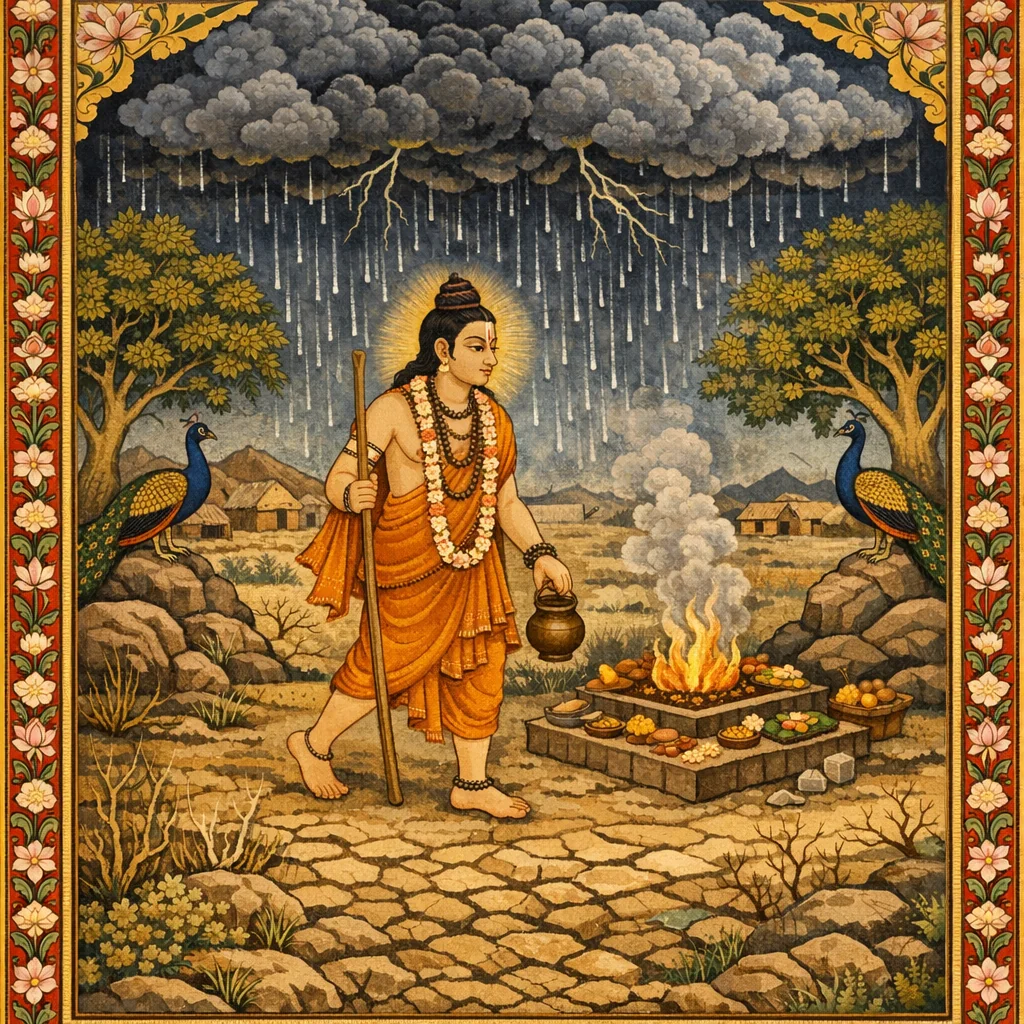
From Diviratha was born Dharmaratha, and from Dharmaratha came Citraratha, famed as Romapāda. Romapāda was without offspring, so his friend Mahārāja Daśaratha gave him his own daughter Śāntā; Śāntā later married Ṛṣyaśṛṅga. When the devas withheld the rains, Ṛṣyaśṛṅga was enticed from the forest by women with dance, drama, song and instruments, along with embraces and honors, and was appointed priest to perform a sacrifice for Marutvān; upon his arrival, rain fell. Thereafter Ṛṣyaśṛṅga performed the Putreṣṭi sacrifice for the childless Daśaratha, and the king obtained sons. By Ṛṣyaśṛṅga’s mercy Romapāda also begot Caturaṅga, and from Caturaṅga was born Pṛthulākṣa.
Verse 8
सुतो धर्मरथो यस्य जज्ञे चित्ररथोऽप्रजा: । रोमपाद इति ख्यातस्तस्मै दशरथ: सखा ॥ ७ ॥ शान्तां स्वकन्यां प्रायच्छदृष्यशृङ्ग उवाह याम् । देवेऽवर्षति यं रामा आनिन्युर्हरिणीसुतम् ॥ ८ ॥ नाट्यसङ्गीतवादित्रैर्विभ्रमालिङ्गनार्हणै: । स तु राज्ञोऽनपत्यस्य निरूप्येष्टिं मरुत्वते ॥ ९ ॥ प्रजामदाद् दशरथो येन लेभेऽप्रजा: प्रजा: । चतुरङ्गो रोमपादात् पृथुलाक्षस्तु तत्सुत: ॥ १० ॥
From Diviratha was born Dharmaratha, and from him Citraratha, renowned as Romapāda. Romapāda was without offspring, and thus his friend Mahārāja Daśaratha gave him his own daughter Śāntā; later Śāntā was married to Ṛṣyaśṛṅga. When the devas withheld the rains, Ṛṣyaśṛṅga was enticed from the forest by dancers with drama, song and instruments, and with embraces and honors; upon his arrival the rains fell. Thereafter he performed for the childless Daśaratha the putreṣṭi sacrifice that grants sons, and Daśaratha obtained sons; and to Romapāda, by Ṛṣyaśṛṅga’s grace, Caturaṅga was born, and from him came Pṛthulākṣa.
Verse 9
सुतो धर्मरथो यस्य जज्ञे चित्ररथोऽप्रजा: । रोमपाद इति ख्यातस्तस्मै दशरथ: सखा ॥ ७ ॥ शान्तां स्वकन्यां प्रायच्छदृष्यशृङ्ग उवाह याम् । देवेऽवर्षति यं रामा आनिन्युर्हरिणीसुतम् ॥ ८ ॥ नाट्यसङ्गीतवादित्रैर्विभ्रमालिङ्गनार्हणै: । स तु राज्ञोऽनपत्यस्य निरूप्येष्टिं मरुत्वते ॥ ९ ॥ प्रजामदाद् दशरथो येन लेभेऽप्रजा: प्रजा: । चतुरङ्गो रोमपादात् पृथुलाक्षस्तु तत्सुत: ॥ १० ॥
From Diviratha was born Dharmaratha, and from him Citraratha, renowned as Romapāda. Romapāda was without offspring, and thus his friend Mahārāja Daśaratha gave him his own daughter Śāntā; later Śāntā was married to Ṛṣyaśṛṅga. When the devas withheld the rains, Ṛṣyaśṛṅga was enticed from the forest by dancers with drama, song and instruments, and with embraces and honors; upon his arrival the rains fell. Thereafter he performed for the childless Daśaratha the putreṣṭi sacrifice that grants sons, and Daśaratha obtained sons; and to Romapāda, by Ṛṣyaśṛṅga’s grace, Caturaṅga was born, and from him came Pṛthulākṣa.
Verse 10
सुतो धर्मरथो यस्य जज्ञे चित्ररथोऽप्रजा: । रोमपाद इति ख्यातस्तस्मै दशरथ: सखा ॥ ७ ॥ शान्तां स्वकन्यां प्रायच्छदृष्यशृङ्ग उवाह याम् । देवेऽवर्षति यं रामा आनिन्युर्हरिणीसुतम् ॥ ८ ॥ नाट्यसङ्गीतवादित्रैर्विभ्रमालिङ्गनार्हणै: । स तु राज्ञोऽनपत्यस्य निरूप्येष्टिं मरुत्वते ॥ ९ ॥ प्रजामदाद् दशरथो येन लेभेऽप्रजा: प्रजा: । चतुरङ्गो रोमपादात् पृथुलाक्षस्तु तत्सुत: ॥ १० ॥
From Diviratha was born Dharmaratha, and from him Citraratha, renowned as Romapāda. Romapāda was without offspring, and thus his friend Mahārāja Daśaratha gave him his own daughter Śāntā; later Śāntā was married to Ṛṣyaśṛṅga. When the devas withheld the rains, Ṛṣyaśṛṅga was enticed from the forest by dancers with drama, song and instruments, and with embraces and honors; upon his arrival the rains fell. Thereafter he performed for the childless Daśaratha the putreṣṭi sacrifice that grants sons, and Daśaratha obtained sons; and to Romapāda, by Ṛṣyaśṛṅga’s grace, Caturaṅga was born, and from him came Pṛthulākṣa.
Verse 11
बृहद्रथो बृहत्कर्मा बृहद्भानुश्च तत्सुता: । आद्याद् बृहन्मनास्तस्माज्जयद्रथ उदाहृत: ॥ ११ ॥
The sons of Pṛthulākṣa were Bṛhadratha, Bṛhatkarmā, and Bṛhadbhānu. From the eldest, Bṛhadratha, was born a son named Bṛhanmanā, and from Bṛhanmanā was born a son named Jayadratha.
Verse 12
विजयस्तस्य सम्भूत्यां ततो धृतिरजायत । ततो धृतव्रतस्तस्य सत्कर्माधिरथस्तत: ॥ १२ ॥
Jayadratha’s son, born from the womb of his wife Sambhūti, was Vijaya. From Vijaya was born Dhṛti; from Dhṛti, Dhṛtavrata; from Dhṛtavrata, Satkarmā; and from Satkarmā, Adhiratha.
Verse 13
योऽसौ गङ्गातटे क्रीडन् मञ्जूषान्तर्गतं शिशुम् । कुन्त्यापविद्धं कानीनमनपत्योऽकरोत् सुतम् ॥ १३ ॥
While playing on the bank of the Gaṅgā, Adhiratha found a baby hidden in a basket, abandoned by Kuntī because he was born before her marriage. Having no sons, Adhiratha raised him as his own child.
Verse 14
वृषसेन: सुतस्तस्य कर्णस्य जगतीपते । द्रुह्योश्च तनयो बभ्रु: सेतुस्तस्यात्मजस्तत: ॥ १४ ॥
O King, Karṇa’s son was Vṛṣasena. Druhyu, the third son of Yayāti, had a son named Babhru, and Babhru’s son was known as Setu.
Verse 15
आरब्धस्तस्य गान्धारस्तस्य धर्मस्ततो धृत: । धृतस्य दुर्मदस्तस्मात् प्रचेता: प्राचेतस: शतम् ॥ १५ ॥
Setu’s son was Ārabdha; Ārabdha’s son, Gāndhāra; Gāndhāra’s son, Dharma; and Dharma’s son, Dhṛta. Dhṛta’s son was Durmada, and Durmada’s son was Pracetā, who had one hundred sons called the Prācetasas.
Verse 16
म्लेच्छाधिपतयोऽभूवन्नुदीचीं दिशमाश्रिता: । तुर्वसोश्च सुतो वह्निर्वह्नेर्भर्गोऽथ भानुमान् ॥ १६ ॥
Pracetā’s hundred sons settled in the northern region, bereft of Vedic culture, and became rulers there. Yayāti’s second son was Turvasu; Turvasu’s son was Vahni; Vahni’s son, Bharga; and Bharga’s son, Bhānumān.
Verse 17
त्रिभानुस्तत्सुतोऽस्यापि करन्धम उदारधी: । मरुतस्तत्सुतोऽपुत्र: पुत्रं पौरवमन्वभूत् ॥ १७ ॥
Bhānumān’s son was Tribhānu, and Tribhānu’s son was the noble-minded Karandhama. Karandhama’s son was Maruta; having no sons, he adopted a son of the Pūru dynasty (Duṣmanta) as his own.
Verse 18
दुष्मन्त: स पुनर्भेजे स्ववंशं राज्यकामुक: । ययातेर्ज्येष्ठपुत्रस्य यदोर्वंशं नरर्षभ ॥ १८ ॥ वर्णयामि महापुण्यं सर्वपापहरं नृणाम् । यदोर्वंशं नर: श्रुत्वा सर्वपापै: प्रमुच्यते ॥ १९ ॥
Mahārāja Duṣmanta, eager for the throne, returned to his original line, the Pūru dynasty, although he had accepted Maruta as his father. O Parīkṣit, best of men, I shall now describe the dynasty of Yadu, the eldest son of Mahārāja Yayāti; this narration is supremely holy, destroys the reactions of sin, and by hearing it alone one is freed from all sinful reactions.
Verse 19
दुष्मन्त: स पुनर्भेजे स्ववंशं राज्यकामुक: । ययातेर्ज्येष्ठपुत्रस्य यदोर्वंशं नरर्षभ ॥ १८ ॥ वर्णयामि महापुण्यं सर्वपापहरं नृणाम् । यदोर्वंशं नर: श्रुत्वा सर्वपापै: प्रमुच्यते ॥ १९ ॥
This account of the Yadu dynasty is supremely sacred and removes all sins of mankind. Whoever hears it with faith is freed from every sinful reaction.
Verse 20
यत्रावतीर्णो भगवान् परमात्मा नराकृति: । यदो: सहस्रजित्क्रोष्टा नलो रिपुरिति श्रुता: ॥ २० ॥ चत्वार: सूनवस्तत्र शतजित् प्रथमात्मज: । महाहयो रेणुहयो हैहयश्चेति तत्सुता: ॥ २१ ॥
In the Yadu dynasty the Lord Bhagavān Śrī Kṛṣṇa, the Paramātmā dwelling in the hearts of all beings, personally descended in human form. Yadu had four sons—Sahasrajit, Kroṣṭā, Nala, and Ripu.
Verse 21
यत्रावतीर्णो भगवान् परमात्मा नराकृति: । यदो: सहस्रजित्क्रोष्टा नलो रिपुरिति श्रुता: ॥ २० ॥ चत्वार: सूनवस्तत्र शतजित् प्रथमात्मज: । महाहयो रेणुहयो हैहयश्चेति तत्सुता: ॥ २१ ॥
Of the four, Sahasrajit was the eldest; his son was Śatajit. Śatajit had three sons—Mahāhaya, Reṇuhaya, and Haihaya.
Verse 22
धर्मस्तु हैहयसुतो नेत्र: कुन्ते: पिता तत: । सोहञ्जिरभवत् कुन्तेर्महिष्मान् भद्रसेनक: ॥ २२ ॥
The son of Haihaya was Dharma, and the son of Dharma was Netra, the father of Kunti. From Kunti came Sohañji, from Sohañji came Mahiṣmān, and from Mahiṣmān came Bhadrasenaka.
Verse 23
दुर्मदो भद्रसेनस्य धनक: कृतवीर्यसू: । कृताग्नि: कृतवर्मा च कृतौजा धनकात्मजा: ॥ २३ ॥
Bhadrasena’s sons were known as Durmada and Dhanaka. Dhanaka became the father of Kṛtavīrya, and also of Kṛtāgni, Kṛtavarmā, and Kṛtaujā.
Verse 24
अर्जुन: कृतवीर्यस्य सप्तद्वीपेश्वरोऽभवत् । दत्तात्रेयाद्धरेरंशात् प्राप्तयोगमहागुण: ॥ २४ ॥
Kṛtavīrya’s son was Arjuna. He became the emperor of the whole world of seven islands and, from Dattātreya—an expansion of Śrī Hari—received yogic power and exalted qualities.
Verse 25
न नूनं कार्तवीर्यस्य गतिं यास्यन्ति पार्थिवा: । यज्ञदानतपोयोगै: श्रुतवीर्यदयादिभि: ॥ २५ ॥
In sacrifice, charity, austerity, mystic power, learning, strength, and mercy, no king in this world could equal Kārtavīryārjuna.
Verse 26
पञ्चाशीतिसहस्राणि ह्यव्याहतबल: समा: । अनष्टवित्तस्मरणो बुभुजेऽक्षय्यषड्वसु ॥ २६ ॥
For eighty-five thousand years, with unbroken strength and unimpaired memory, he continually enjoyed material opulences—indeed, inexhaustible pleasures through his six senses.
Verse 27
तस्य पुत्रसहस्रेषु पञ्चैवोर्वरिता मृधे । जयध्वज: शूरसेनो वृषभो मधुरूर्जित: ॥ २७ ॥
Of Kārtavīryārjuna’s one thousand sons, only five survived after the battle with Paraśurāma: Jayadhvaja, Śūrasena, Vṛṣabha, Madhu, and Ūrjita.
Verse 28
जयध्वजात् तालजङ्घस्तस्य पुत्रशतं त्वभूत् । क्षत्रं यत् तालजङ्घाख्यमौर्वतेजोपसंहृतम् ॥ २८ ॥
Jayadhvaja had a son named Tālajaṅgha, and Tālajaṅgha had one hundred sons. The kṣatriya line known as the Tālajaṅghas was wholly destroyed by Mahārāja Sagara through the mighty power he received from Ṛṣi Aurva.
Verse 29
तेषां ज्येष्ठो वीतिहोत्रो वृष्णि: पुत्रो मधो: स्मृत: । तस्य पुत्रशतं त्वासीद् वृष्णिज्येष्ठं यत: कुलम् ॥ २९ ॥
Among Tālajaṅgha’s sons, Vītihotra was the eldest. Vītihotra’s son was Madhu, and Madhu’s celebrated son was Vṛṣṇi. Madhu too had one hundred sons, of whom Vṛṣṇi was the firstborn; thus the Vṛṣṇi line arose.
Verse 30
माधवा वृष्णयो राजन् यादवाश्चेति संज्ञिता: । यदुपुत्रस्य च क्रोष्टो: पुत्रो वृजिनवांस्तत: । स्वाहितोऽतो विषद्गुर्वै तस्य चित्ररथस्तत: ॥ ३० ॥ शशबिन्दुर्महायोगी महाभागो महानभूत् । चतुर्दशमहारत्नश्चक्रवर्त्यपराजित: ॥ ३१ ॥
O King Parīkṣit, because Yadu, Madhu, and Vṛṣṇi each founded a dynasty, their lines are known as the Yādavas, Mādhavas, and Vṛṣṇis. Yadu’s son Kroṣṭā begot Vṛjinavān; from him came Svāhita; from Svāhita, Viṣadgu; from Viṣadgu, Citraratha; and from Citraratha, Śaśabindu.
Verse 31
माधवा वृष्णयो राजन् यादवाश्चेति संज्ञिता: । यदुपुत्रस्य च क्रोष्टो: पुत्रो वृजिनवांस्तत: । स्वाहितोऽतो विषद्गुर्वै तस्य चित्ररथस्तत: ॥ ३० ॥ शशबिन्दुर्महायोगी महाभागो महानभूत् । चतुर्दशमहारत्नश्चक्रवर्त्यपराजित: ॥ ३१ ॥
Śaśabindu was a great mystic yogī—most fortunate and truly eminent. Endowed with fourteen opulences and possessing fourteen great jewels, he became an unconquered cakravartin, the emperor of the world.
Verse 32
तस्य पत्नीसहस्राणां दशानां सुमहायशा: । दशलक्षसहस्राणि पुत्राणां तास्वजीजनत् ॥ ३२ ॥
The renowned Śaśabindu had ten thousand wives. From each wife he begot one hundred thousand sons; thus the number of his sons amounted to ten thousand lakṣas.
Verse 33
तेषां तु षट्प्रधानानां पृथुश्रवस आत्मज: । धर्मो नामोशना तस्य हयमेधशतस्य याट् ॥ ३३ ॥
Among their many sons, six were foremost; among them Pṛthuśravā was prominent. Pṛthuśravā’s son was named Dharma, and Dharma’s son was Uśanā; Uśanā performed one hundred Aśvamedha horse sacrifices.
Verse 34
तत्सुतो रुचकस्तस्य पञ्चासन्नात्मजा: शृणु । पूरुजिद्रुक्मरुक्मेषुपृथुज्यामघसंज्ञिता: ॥ ३४ ॥
Uśanā’s son was Rucaka. Rucaka had five sons—Purujit, Rukma, Rukmeṣu, Pṛthu, and Jyāmagha. Hear of them from me.
Verse 35
ज्यामघस्त्वप्रजोऽप्यन्यां भार्यां शैब्यापतिर्भयात् । नाविन्दच्छत्रुभवनाद् भोज्यां कन्यामहारषीत् । रथस्थां तां निरीक्ष्याह शैब्या पतिममर्षिता ॥ ३५ ॥ केयं कुहक मत्स्थानं रथमारोपितेति वै । स्नुषा तवेत्यभिहिते स्मयन्ती पतिमब्रवीत् ॥ ३६ ॥
Jyāmagha had no sons; yet, fearing his wife Śaibyā, he did not take another wife. Once he brought from the house of a royal enemy a girl kept for pleasure. Seeing her seated upon the chariot, Śaibyā flared in anger and said to her husband, “O deceiver! Who is this girl sitting in my place on the chariot?”
Verse 36
ज्यामघस्त्वप्रजोऽप्यन्यां भार्यां शैब्यापतिर्भयात् । नाविन्दच्छत्रुभवनाद् भोज्यां कन्यामहारषीत् । रथस्थां तां निरीक्ष्याह शैब्या पतिममर्षिता ॥ ३५ ॥ केयं कुहक मत्स्थानं रथमारोपितेति वै । स्नुषा तवेत्यभिहिते स्मयन्ती पतिमब्रवीत् ॥ ३६ ॥
To her challenge Jyāmagha replied, “She is your daughter-in-law.” Hearing these words spoken in jest, Śaibyā smiled and addressed her husband.
Verse 37
अहं बन्ध्यासपत्नी च स्नुषा मे युज्यते कथम् । जनयिष्यसि यं राज्ञि तस्येयमुपयुज्यते ॥ ३७ ॥
Śaibyā said, “I am barren, and I have no co-wife; how, then, can this girl be my daughter-in-law?” Jyāmagha replied, “O Queen, you shall indeed bear a son, and this girl will be meant for him.”
Verse 38
अन्वमोदन्त तद्विश्वेदेवा: पितर एव च । शैब्या गर्भमधात् काले कुमारं सुषुवे शुभम् । स विदर्भ इति प्रोक्त उपयेमे स्नुषां सतीम् ॥ ३८ ॥
The Viśvedevas and the Pitṛs were pleased, and by their mercy Jyāmagha’s words came to pass. Though Śaibyā had been barren, by the devas’ grace she conceived and in due time bore an auspicious son named Vidarbha. Since the girl had already been accepted as a daughter-in-law before the child’s birth, Vidarbha, when grown, married her.
Frequently Asked Questions
They show how Bhāgavata vaṁśānucarita links persons to regions: these sons become eponymous founders of eastern polities, turning genealogy into a map of sacred geography. The emphasis also illustrates how royal expansion is framed as a consequence of lineage, merit, and divine arrangement rather than mere conquest.
The text presents drought relief through yajña performed by Ṛṣyaśṛṅga, indicating that cosmic order (rain, fertility, prosperity) responds to dharma and sacrificial alignment. Its inclusion prevents the genealogy from becoming a bare list: it demonstrates poṣaṇa—divine protection mediated through a sage—and shows that kingship depends on brahminical sanctity and righteous ritual.
Adhiratha found the infant Karṇa in a basket by the Gaṅgā and raised him as his own. The Bhāgavata references Karṇa to anchor dynastic lines in widely known Itihāsa memory and to show how providence operates through unconventional lineage events (abandonment, adoption), while still weaving outcomes into the broader moral fabric of karma and destiny.
This is āśraya-oriented framing: the genealogies ultimately serve the revelation of Bhagavān as the Supreme Shelter. By explicitly stating Kṛṣṇa’s appearance in Yadu’s line, the text signals that the “purpose” of dynastic history is to lead the listener toward Kṛṣṇa-kathā and to interpret worldly succession as a pathway to divine descent.
He received mystic power (including aṣṭa-siddhi) from Dattātreya, described as an incarnation of the Supreme Personality of Godhead. Theologically, this shows that even unparalleled royal might is derivative—granted by divine agency—and therefore accountable to dharma; the later reduction of his lineage underscores that power without alignment to higher order is not ultimately secure.
It illustrates divine overruling of biological limitation and social predicament: despite Śaibyā’s barrenness and Jyāmagha’s constrained household situation, blessings from devas and pitṛs fulfill a seemingly impossible promise, resulting in Vidarbha’s birth. In vaṁśānucarita terms, it shows continuity of lineage as dependent on higher sanction, not merely human planning.