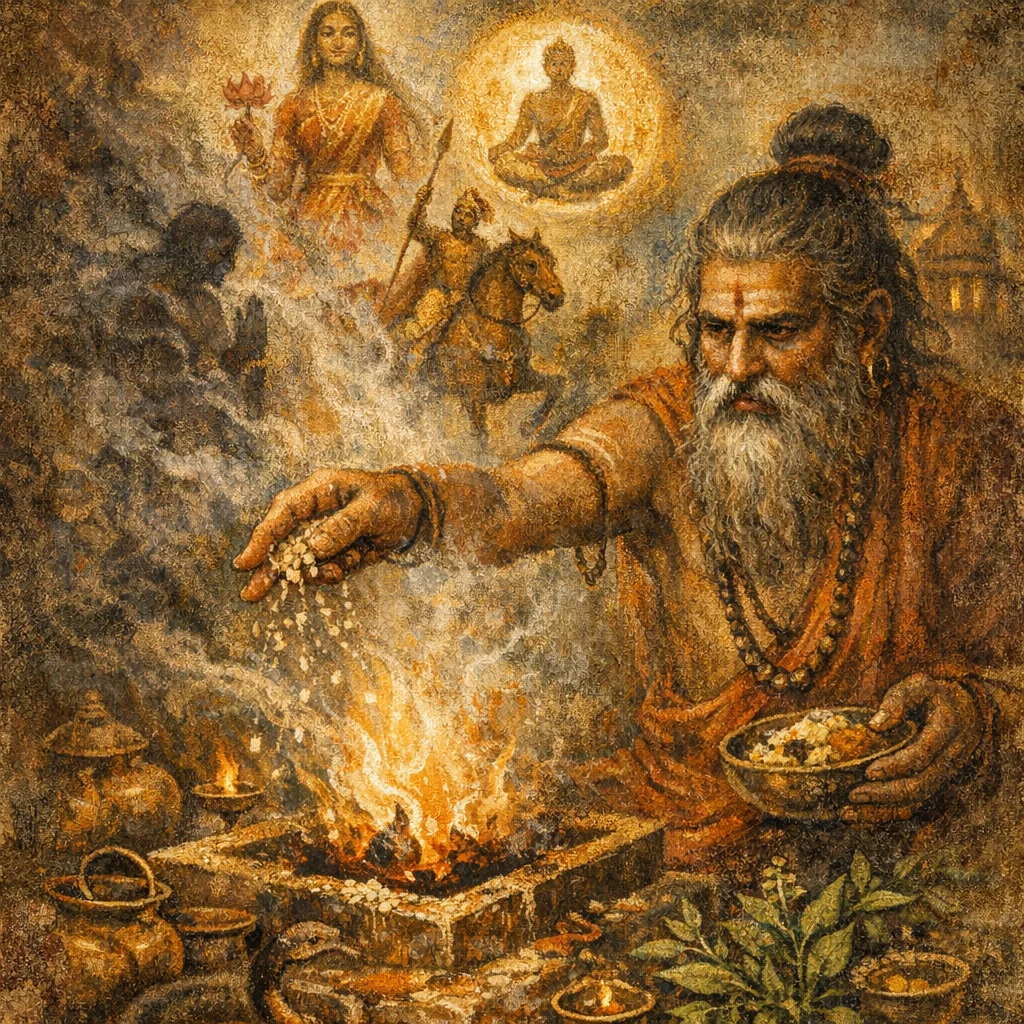
Sukta 7
Rishi: Traditionally Atharvanic seers (Ucchiṣṭa-hymn complex; r̥ṣi attribution varies in ancillary lists)
Devata: Ucchiṣṭa (personified Remnant/Residue as cosmic principle)
Chandas: Triṣṭubh-like cadence (mixed/irregular in this hymn section; often treated as triṣṭubh in practice)
Mantras
Mantra 1
उच्छिष्टे नाम रूपं चोच्छिष्टे लोक आहितः । उच्छिष्ट इन्द्रश्चाग्निश्च विश्वमन्तः समाहितम्
In the Remnant are name and form; in the Remnant is the world established. In the Remnant are Indra and Agni; all is within it gathered and comprised.
Mantra 2
उच्छिष्टे द्यावापृथिवी विश्वं भूतं समाहितम्। आपः समुद्र उच्छिष्टे चन्द्रमा वात आहितः ॥ सन्नुच्छिष्टे असंश्चोभौ मृत्युर्वाजः प्रजापतिः । लैक्या उच्छिष्ट आयत्ता व्रश्च द्रश्चापि श्रीर्मयि
In the Remnant are Heaven and Earth; all that hath become is therein gathered. The Waters and the Ocean are in the Remnant; the Moon and Wind are therein established. Being, yea, in the Remnant am I, and both (orders); Death, Strength, and Prajāpati. The folk of men depend upon the Remnant; and (all) conditions—yea, Fortune also—(rest), in me.
Mantra 3
दृढो दृंहस्थिरो न्यो ब्रह्म विश्वसृजो दश । नाभिमिव सर्वतश्चक्रमुच्छिष्टे देवताः श्रिताः
Firm, strengthening, stable, well-grounded is the Brahman—(with) the ten world-creators. Like a wheel on every side about its navel, in the Remnant the deities rest supported.
Mantra 4
ऋक् साम यजुरुच्छिष्ट उद्गीथः प्रस्तुतं स्तुतम्। हिङ्कार उच्छिष्टे स्वरः साम्नो मेडिश्च तन्मयि
The Ṛc, the Sāman, the Yajus—within the Ucchiṣṭa are they; the Udgītha, the prelude that is chanted, the chant that is praised. The Hiṅkāra, within the Ucchiṣṭa, the tone of the Sāman, and its central stay—let that be in me.
Mantra 5
ऐन्द्राग्नं पावमानं महानाम्नीर्महाव्रतम्। उच्छिष्टे यज्ञस्याङ्गान्यन्तर्गर्भ इव मातरि
The Aindrāgna, the Pāvamāna, the Mahānāmnī verses, the Great-Vow rite—within the Ucchiṣṭa are the limbs of sacrifice, as an embryo within the mother.
Mantra 6
राजसूयं वाजपेयमग्निष्टोमस्तदध्वरः । अर्काश्वमेधावुच्छिष्टे जीवबर्हिर्मदिन्तमः
The Rājasūya, the Vājapeya, the Agniṣṭoma—this is the sacrifice; the Arka and the Aśvamedha, within the Ucchiṣṭa—having living barhis, most exhilarating.
Mantra 7
अग्न्याधेयमथो दीक्षा कामप्रश्छन्दसा सह। उत्सन्ना यज्ञाः सत्राण्युच्छिष्टेऽधि समाहिताः
The Agnyādheya, and also the Dīkṣā, together with desire-impelling measure: lapsed sacrifices and sattra-sessions are, upon the Ucchiṣṭa, gathered and laid up.
Mantra 8
अग्निहोत्रं च श्रद्धा च वषट्कारो व्रतं तपः । दक्षिणेष्टं पूर्तं चोच्छिष्टेऽधि समाहिताः
The Agnihotra and Faith, the Vaṣaṭ-call, vow and austerity; the fee-offering and the pūrta-merit likewise—upon the Ucchiṣṭa are they gathered and laid up.
Mantra 9
एकरात्रो द्विरात्रः सद्यःक्रीः प्रक्रीरुक्थ्यः । ओतं निहितमुच्छिष्टे यज्ञस्याणूनि विद्यया
The One-night, the Two-night, the Sadyaskrī, the Prakrī, the Ukthya—these are interwoven and laid away in Ucchiṣṭa; by sacred knowledge are known the sacrifice’s subtle particles.
Mantra 10
चतूरात्रः पञ्चरात्रः षड्रात्रश्चोभयः सह। षोडशी सप्तरात्रश्चोच्छिष्टाज्जज्ञिरे सर्वे ये यज्ञा अमृते हिताः
The Four-night, the Five-night, the Six-night, and both together; the Ṣoḍaśī and the Seven-night—out of Ucchiṣṭa were they born, all those sacrifices that are set fast in immortality.
Mantra 11
प्रतीहारो निधनं विश्वजिच्चाभिजिच्च यः । साह्नातिरात्रावुच्छिष्टे द्वादशाहोऽपि तन्मयि
The Pratīhāra, the Nidhana, the Viśvajit and the Abhijit, and the Sāhnātirātra—within Ucchiṣṭa; yea, the Twelve-day also is of that very substance.
Mantra 12
सूनृता संनतिः क्षेमः स्वधोर्जामृतं सहः । उच्छिष्टे सर्वे प्रत्यञ्चः कामाः कामेन ततृपुः
Truth-speaking, concord, welfare, svadhā-born immortality, and might—within Ucchiṣṭa; all desires, turned hitherward, are satisfied by desire itself.
Mantra 13
नव भूमीः समुद्रा उच्छिष्टेऽअधि श्रिता दिवः । आ सूर्यो भात्युच्छिष्टेऽहोरात्रे अपि तन्मयि
Nine earths and oceans, of heaven, rest thereon in Ucchiṣṭa; the Sun shines forth in Ucchiṣṭa—day and night also are of that very substance.
Mantra 14
उपहव्यं विषूवन्तं ये च यज्ञा गुहा हिताः । बिभर्ति भर्ता विश्वस्योच्छिष्टो जनितुः पिता
The subsidiary invocation, the Vishūvant rite, and whatsoever sacrifices are laid away in secret—Ucchiṣṭa, the Upholder of the All, beareth them: he is the Father of the Begetter.
Mantra 15
पिता जनितुरुच्छिष्टोऽसोः पौत्रः पितामहः । स क्षियति विश्वस्येशानो वृषा भूम्यामतिघ्न्यः
Ucchiṣṭa is Father of the Begetter; of Asu he is Grandson and Grandsire. He dwelleth, Lord of all, a Bull upon the earth, inviolable.
Mantra 16
ऋतं सत्यं तपो रास्ट्रं श्रमो धर्मश्च कर्म च । भूतं भविष्यदुच्छिष्टे वीर्यं लक्ष्मीर्बलं बले
Order and Truth, Fervor, Realm, and Toil, and Law and Act besides—past and to-be are in Ucchiṣṭa; therein are prowess, Fortune, strength in Strength.
Mantra 17
समृद्धिरोज आकूतिः क्षत्रं राष्ट्रं षडुर्व्यः । संवत्सरोऽध्युच्छिष्ट इडा प्रैषा ग्रहा हविः
Prosperity, energy, purpose, dominion, the realm, the six broad regions—the Year is set upon Ucchiṣṭa; Iḍā, the priestly impulse, the Grahas, the oblation.
Mantra 18
चतुर्होतार आप्रियश्चातुर्मास्यानि नीविदः । उच्छिष्टे यज्ञाः होत्राः पशुबन्धास्तदिष्टयः
The four Hotṛs, the Āprī verses, the Cāturmāsya rites, the Nivid formulas—in Ucchiṣṭa are the sacrifices, the Hotṛ-offerings, the Paśubandhas, those Iṣṭis.
Mantra 19
अर्धमासाश्च मासाश्चार्तवा ऋतुभिः सह। उच्छिष्टे घोषिणीरापः स्तनयित्नुः श्रुतिर्मही
Fortnights and months, and the seasonal times together with the seasons—within Ucchiṣṭa: the loud-resounding Waters, the Thunder, and mighty Śruti.
Mantra 20
शर्कराः सिकता अश्मान ओषधयो वीरुधस्तृणा । अभ्राणि विद्युतो वर्षमुच्छिष्टे संश्रिता श्रिता
Gravels, sands, and stones; the healing herbs, the creeping plants, the grasses; the clouds, the lightnings, the rain—on Ucchiṣṭa are they stayed, on it established.
Mantra 21
राद्धिः प्राप्तिः समाप्तिर्व्याऽप्तिर्मह एधतुः । अत्याप्तिरुच्छिष्टे भूतिश्चाहिता निहिता हिता
Success, attainment, completion, pervasion—greatness: these wax. Surpassing gain, and thriving too, in Ucchiṣṭa are set, deposited, established.
Mantra 22
यच्च प्राणति प्राणेन यच्च पश्यति चक्षुषा । उच्छिष्टाज्जज्ञिरे सर्वे दिवि देवा दिविश्रितः
Whatsoever breathes with breath, and whatsoever sees with eye—all these were born from Ucchiṣṭa: the Gods in heaven, heaven-established.
Mantra 23
ऋचः सामानि च्छन्दांसि पुराणं यजुषा सह। उच्छिष्टाज्जज्ञिरे सर्वे दिवि देवा दिविश्रितः
The Ṛcs, the Sāmans, the metres, the ancient lore, together with the Yajus—all were born from Ucchiṣṭa: the Gods in heaven, heaven-established.
Mantra 24
प्राणापानौ चक्षुः श्रोत्रमक्षितिश्च क्षितिश्च या। उच्छिष्टाज्जज्ञिरे सर्वे दिवि देवा दिविश्रितः
In-breath and out-breath, sight and hearing, imperishableness and firm standing—whatsoever these be: from the Leftover were they all brought forth, the Gods who in the heaven abide, heaven-established.
Mantra 25
आनन्दा मोदाः प्रमुदोऽभिमोदमुदश्च ये। उच्छिष्टाज्जज्ञिरे सर्वे दिवि देवा दिविश्रितः
Blisses and delights, gladness and exultation, and the joys that are—these all were born from the Leftover: the Gods who in the heaven abide, heaven-established.
Mantra 26
देवाः पितरो मनुष्याऽ गन्धर्वाप्सरसश्च ये। उच्छिष्टाज्जज्ञिरे सर्वे दिवि देवा दिविश्रितः
The Gods, the Fathers, men, and Gandharvas with Apsarases—whoever these be: from the Leftover were they all brought forth, the Gods who in the heaven abide, heaven-established.
Frequently Asked Questions
Not merely. The hymn treats “leftover/remnant” as a sacred principle: what remains becomes the hidden support of creation and sacrifice, the ground from which powers and gods arise.
Atharvanic theology often sacralizes liminal things. Here, the remnant symbolizes what persists beyond consumption and change—therefore it is framed as the stable substrate of order, time, and ritual continuity.
It is recited for brahmavarcasa and steadiness—especially to strengthen prāṇa, senses, and the sense that one’s ritual (outer or inner) is upheld even when not visibly active, with Ucchiṣṭa as the sustaining base.