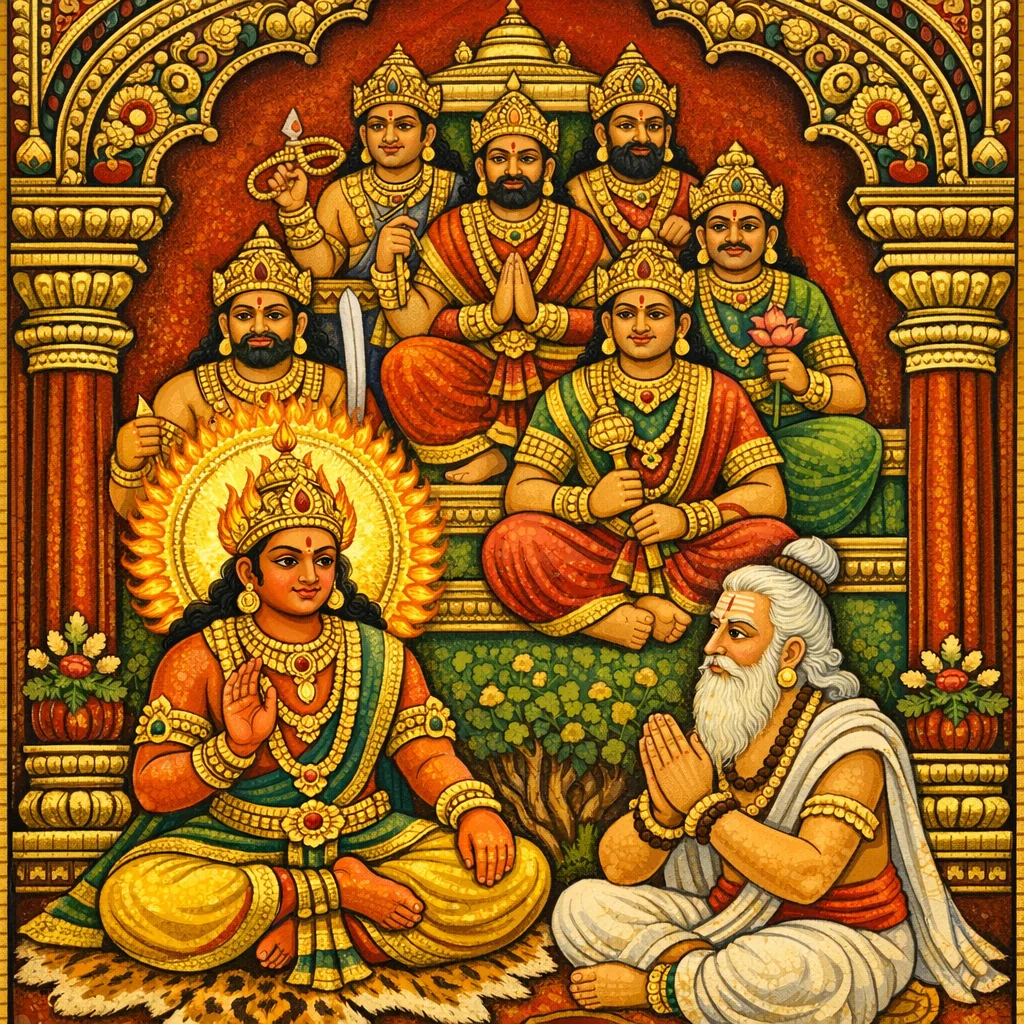
Adhyaya 274
Somavaṃśa-saṃkṣepaḥ (Conclusion of the Lunar Dynasty Description)
This closing verse formally concludes the Somavaṃśa (Lunar Dynasty) account within the Agni Purāṇa’s vaṃśa framework. The editorial colophon serves as a structural hinge, sealing the prior lineage as a complete unit of dharmic memory and readying the listener for the next dynastic stream. In the Agni–Vasiṣṭha pedagogical mode, genealogy is affirmed as a śāstric instrument that orders sacred history into intelligible successions supporting rājadharma, ritual authority, and recognition of avatāra contexts. The closure also reflects the Purāṇa’s encyclopedic method: even in dynastic material, the underlying aim is instruction in dharma through exemplars, continuity, and consequence.
Shlokas
Verse 1
इत्य् आग्नेये महापुराणे सोमवंशवर्णनं नम त्रिसप्तत्यधिकद्विशततमो ऽध्यायः अथ चतुःसप्तत्यधिकद्विशततमो ऽध्यायः यदुवंशवर्णनं अग्निर् उवाच यदोरासन्पञ्च पुत्रा ज्येष्ठस्तेषु सहस्रजित्
Thus, in the Agni Mahāpurāṇa, the chapter entitled “Description of the Lunar Dynasty (Somavaṃśa)”—the 274th chapter—concludes. Now begins the 275th chapter, entitled “Description of the Yadu Dynasty (Yaduvaṃśa).” Agni said: Yadu had five sons; the eldest among them was Sahasrajit.
Verse 2
धर्मनेत्रो हैहयस्य धर्मनेत्रस्य संहनः
Of Haihaya was Dharmanetra; and of Dharmanetra was Saṃhana (born).
Verse 3
महिमा संहनस्यासीन्महिम्नओ भद्रसेनकः भद्रसेनाद् दुर्गमो ऽभूद्दुर्गमात्कनको ऽभवत्
Mahimā was the son of Saṃhana; from Mahimā was born Bhadrasenaka. From Bhadrasenaka arose Durgama, and from Durgama was born Kanaka.
Verse 4
कनकात् कृतवीर्यस्तु कृताग्निः करवीरकः कृतौजाश् च चतुर्थो ऽभूत् कृतवीर्यात्तु सो ऽर्जुनः
From Kanaka was born Kṛtavīrya; (his sons were) Kṛtāgni, Karavīraka, and Kṛtaujā—the fourth was Arjuna, born of Kṛtavīrya.
Verse 5
दत्तो ऽर्जुनाय तपते सप्तद्वीपमहीशताम् ददौ बाहुसहस्रञ्च अजेयत्वं रणे ऽरिणा
To the ascetic Arjuna he granted sovereignty over the earth with its seven continents; he also bestowed a thousand arms and invincibility in battle against enemies.
Verse 6
अधर्मे वर्तमानस्य विष्णुहस्तान्मृतिर्ध्रुवा दश यज्ञसहस्राणि सो ऽर्जुनः कृतवान्नृपाः
For one who persists in unrighteousness, death at the hands of Viṣṇu is certain. That Arjuna, O kings, performed ten thousand sacrifices.
Verse 7
अनष्टद्रव्यता राष्ट्रे तस्य संस्मरणादभूत् न नूनं कार्त्तवीर्यस्य गतिं यास्यन्ति वै नृपः
In the kingdom, the condition of “no loss of wealth” arose from remembering him. Indeed, those kings will surely not attain the destiny of Kārttavīrya.
Verse 8
यज्ञैर् दानैस्तपोभिश् च विक्रमेण श्रुतेन च कर्तवीर्यस्य च शतं पुत्राणां पञ्च वै पराः
Through sacrifices (yajñas), gifts (dāna), and austerities (tapas)—and through valor and the learning of śruti—Kartavīrya had a hundred sons; among them, five were indeed pre-eminent.
Verse 9
सूरसेनश् च सूरश् च धृष्टोक्तः कृष्ण एव च जयध्वजश् च नामासीदावन्त्यो नृपतिर्महान्
There were kings named Sūrasena and Sūra, Dhṛṣṭokta, and also Kṛṣṇa; and one called Jayadhvaja—thus the great king of Avanti stood in that lineage.
Verse 10
जयध्वजात्तालजङ्घस्तालजङ्घात्ततः सुताः हैहयानां कुलाः पञ्च भोजाश्चावन्तयस् तथा
From Jayadhvaja was born Tālajaṅgha; and from Tālajaṅgha, in due course, sons were born—forming the five clans of the Haihayas; likewise arose the Bhojas and the Avantis.
Verse 11
वीतिहोत्राः स्वयं जाताः शौण्डिकेयास्तथैव च वीतिहोत्रादनन्तो ऽभुदनन्ताद्दुर्जयो नृपः
From Vītihotra were born the Vītihotras themselves, and likewise the Śauṇḍikeyas. From Vītihotra arose Ananta; and from Ananta came King Durjaya.
Verse 12
क्रोष्टोर्वंशं प्रवक्ष्यामि यत्र जातो हरिः स्वयम् क्रोष्टोस्तु वृजिनीवांश् च स्वाहाभूद्वृजिनीवतः
I shall now proclaim the lineage of Kroṣṭu, in which Hari (Viṣṇu) Himself was born. From Kroṣṭu came Vṛjinīvān; and from Vṛjinīvān was born Svāhā.
Verse 13
स्वाहापुत्रओ रुषद्गुश् च तस्य चित्ररथः सुतः शशविन्दुश्चित्ररथाच्चक्रवर्ती हरौ रतः
Ruṣadgu was the son of Svāhā. His son was Citraratha. From Citraratha was born Śaśavindu— a cakravartin, an emperor of universal sovereignty—devoted to Hari (Viṣṇu).
Verse 14
शशविन्दोश् च पुत्त्राणां शतानामभवच्छतम् धीमतां चारुरूपाणां भूरिद्रविणतेजसाम्
And of Śaśavindu’s sons—though they were in the hundreds—there was reckoned a full hundred, all intelligent, handsome in form, and endowed with abundant wealth and splendor.
Verse 15
पृथुश्रवाः प्रधानो ऽभूत्तस्य पुत्रः सुयज्ञकः सुयज्ञस्योशनाः पुत्रस्तितिक्षुरुशनःसुतः
Pṛthuśravā became the chief. His son was Suyajñaka. Suyajña’s son was Uśanā; and Titikṣu was the son of Uśanā.
Verse 16
तितिक्षोस्तु मरुत्तो ऽभूत्तस्मात्कम्बलवर्हिषः पञ्चाशद्रुक्मकवचाद्रुक्मेषुः पृथुरुक्मकः
From Titikṣu was born Marutta; from him, Kambalavarhiṣ. From Pañcāśad was born Rukmakavaca; from Rukmakavaca, Rukmeṣu; and from him, Pṛthurukmaka.
Verse 17
विषांशुश्चेति ज हविर्ज्यामघः पापघ्नो ज्यामघः स्त्रीजितो ऽभवत् सेव्यायां ज्यामघादासीद्विदर्भस्तस्य कौशिकः
There was (a king) Viṣāṁśu; then came Ja, and Havir, and Jyāmagha, the destroyer of sin. That Jyāmagha became one overcome by his wife. From Jyāmagha, through Sevyā, was born Vidarbha; his descendant was Kauśika.
Verse 18
लोमपादः क्रथः श्रेष्ठात् कृतिः स्याल्लोमपदतः कौशिकस्य चिदिः पुत्रस्तस्माच्चैद्या नृपाः स्मृताः
From Śreṣṭha was born Kratha; from Kratha, Lomapāda; from Lomapāda, Kṛti. And Cidi was the son of Kauśika; from him are remembered the kings known as the Caidyas as having descended.
Verse 19
क्रथाद्विदर्भपुत्राश् च कुन्तिः कुन्तेस्तु धृष्टकः धृष्टस्य निधृतिस्तस्य उदर्काख्यो विदूरथः
From Kratha were born the sons of Vidarbha, and (among them) Kuntī. From Kuntī was Dhṛṣṭaka; from Dhṛṣṭaka, Nidhṛti; and his son was Vidūratha, also called Udarka.
Verse 20
दशार्हपुत्रो व्योमस्तु व्योमाज्जीमूत उच्यते जीमूतपुत्रो विकलस्तस्य भीमरथः सुतः
Vyoma was the son of Daśārha; from Vyoma was born one called Jīmūta. Jīmūta’s son was Vikala, and his son was Bhīmaratha.
Verse 21
भीमरथान्नवरथस्ततो दृढरथो ऽभवत् शकुन्तिश् च दृढरथात् शकुन्तेश् च करम्भकः
From Bhīmaratha was born Navaratha; thereafter Dṛḍharatha came into being. And Śakunti was born from Dṛḍharatha; and from Śakunti, Karambhaka was born.
Verse 22
करम्भाद्देवलातो ऽभूत् देवक्षेत्रश् च तत्सुतः देवक्षेत्रान्मधुर्नाम मधोर्द्रवरसो ऽभवत्
From Karambha was born Devalāta; and his son was Devakṣetra. From Devakṣetra was born one named Madhu; and from Madhu, Dravarasa was born.
Verse 23
द्रवरसात् पुरुहूतो ऽभूज्जन्तुरासीत्तु तत्सुतः गुणी तु यादवो राजा जन्तुपुत्रस्तु सात्त्वतः
From Dravarasa was born Puruhūta. His son was Jantu. From Jantu arose the virtuous Yādava king, Sāttvata.
Verse 24
सात्त्वताद्भजमानस्तु वृष्णिरन्धक एव च देवावृधश् च चत्वारस्तेषां वंशास्तु विश्रुताः
From Sāttvata arose Bhajamāna; likewise arose Vṛṣṇi, Andhaka, and Devāvṛdha—these four founders, and their lineages are widely renowned.
Verse 25
भजमानस्य वाह्यो ऽभूद्वृष्टिः कृमिर्निमिस् तथा देवावृधाद्वभ्रुरासीत्तस्य श्लोको ऽत्र गीयते
For one engaged in devoted worship, the affliction passed outward; then came a rain of relief; likewise the worm and the “nimis” (a minute parasite) were removed. By the rite of Devāvṛdha there arose a brownish mark; of that, a śloka is sung here.
Verse 26
यथैव शृणुमो दूरात् गुणांस्तद्वत्समन्तिकात् वभ्रुः श्रेष्ठो मनुष्याणां देवैर् देवावृधःसमः
Just as we hear of his virtues from afar, so too when close at hand. Vabhru is the foremost among men—equal, in the estimation of the gods, to Devāvṛdha.
Verse 27
चत्वारश् च सुता वभ्रोर्वासुदेवपरा नृपाः धृतिरिति ञ देवरातो ऽभुदिति ख , ग , घ , ज , ञ , ट , च विस्तृता इति क , छ , च कुहुरो भजमानस्तु शिनिः कम्बलवर्हिषः
And Vabhru had four sons—kings devoted to Vāsudeva. (In some recensions the name is read as) Dhṛti; in others it is Devarāta; and (in yet others) it is read as Vistṛtā. (Thereafter are mentioned) Kuhura, Bhajamāna, Śini, and Kambalavarhiṣ.
Verse 28
कुहुरस्य सुतो धृष्णुधृष्णोस्तु तनयो धृतिः धृतेः कपोतरोमाभूत्तस्य पुत्रस्तु तित्तिरिः
Kuhura’s son was Dhṛṣṇu. Dhṛṣṇu’s son was Dhṛti. From Dhṛti was born Kapotaromā, and his son, in turn, was Tittiri.
Verse 29
तित्तिरेस्तु नरः पुत्रस्तस्य चन्दनदुन्दुभिः पुनर्वसुस्तस्य पुत्र आहुकश्चाहुकीसुतः
Now, Tittiri had a son named Nara. Nara’s son was Candana-dundubhi. Candana-dundubhi’s son was Punarvasu, and Punarvasu’s son was Āhuka, born of Āhukī.
Verse 30
आहुकाद्देवको जज्ञे उग्रसेनस्ततो ऽभवत् देववानुपदेवश् च देवकस्य सुताः स्मृताः
From Āhuka was born Devaka; and from him arose Ugrasena. Devavān and Upadeva are remembered as the sons of Devaka.
Verse 31
तेषां स्वसारः सप्तासन् वसुदेवाय ता ददौ देवकी श्रुतदेवी च मित्रदेवी यथोधरा
Among them there were seven sisters; those sisters were given in marriage to Vasudeva—Devakī, Śrutadevī, Mitradevī, and likewise Yathodharā.
Verse 32
श्रीदेवी सत्यदेवी च सुरापी चेति सप्तमी नवोग्रसेनस्य सुताः कंसस्तेषाञ्च पूर्वजः
Śrīdevī, Satyadevī, and Surāpī—these are named as (among) the seventh (set). They are the daughters of Navograsena; and Kaṃsa is their elder, born before them.
Verse 33
न्यग्रोधश् च सुनामा च कङ्कः शङ्कुश् च भूमिपः सुतनूराष्ट्रपालश् च युद्धमुष्टिः सुमुष्टिकः
And (there were) Nyagrodha, Sunāmā, Kaṅka, and Śaṅku; also the king Bhūmipa; and Sutanū, Rāṣṭrapāla; and Yuddhamuṣṭi and Sumuṣṭika.
Verse 34
भजमानस्य पुत्रो ऽथ रथमुख्यो विदूरथः राजाधिदेवः शूरश् च विदूरथसुतो ऽभवत्
Then Bhajamāna’s son was Vidūratha, foremost among chariot-warriors. And Vidūratha’s son was Śūra, also known as Rājādhideva.
Verse 35
राजाधिदेवपुत्रौ द्वौ शोणाश् चः श्वेतवाहनः शोणाश्वस्य सुताः पञ्च शमी शत्रुजिदादयः
Rājādhideva had two sons—Śoṇāśca and Śvetavāhana. Of Śoṇāśva there were five sons, beginning with Śamī and Śatrujit.
Verse 36
शमीपुत्रः प्रतिक्षेत्रः प्रतिक्षेत्रस्य भोजकः भोजस्य हृदिकः पुत्रो ह्य् अदिकस्य दशात्मजाः
From Śamī was born Pratikṣetra; from Pratikṣetra, Bhojaka; from Bhojaka, Hṛdika; and Hṛdika’s son was Adika, who had ten sons.
Verse 37
कृतवर्मा शतधन्वा देवार्हो भीषणादयः कुकुरो भजमानस्त्विति क सुन्दरो भजमानस्त्विति ज कुकुरस्येति क शक्रजिदादय इति ख देवार्हात् कम्बलवर्हिरसमौजास्ततो ऽभवत्
Kṛtavarmā, Śatadhanvā, Devārha, and Bhīṣaṇa and the others (were born in that line). From Kukura came Bhajamāna (as one reading has it); another reading states that Sundara was Bhajamāna. (Some recensions read) “of Kukura”; (others read) “Śakrajit and the others.” From Devārha, then, Kambala, Varhi, and Asamaujas were born.
Verse 38
सुदंष्ट्रश् च सुवासश् च धृष्टो ऽभूदसमौजसः गान्धारी चैव माद्री च धृष्टभार्ये बभूवतुः
And there were Sudaṃṣṭra and Suvāsa; Dhṛṣṭa was born from Asamaujasa. And Gāndhārī and Mādrī became the two wives of Dhṛṣṭa.
Verse 39
सुमित्रो ऽभूच्च गान्धार्यां माद्री जज्ञे युधाजितम् अनमित्रः शिनिर्धृष्टात्ततो वै देवमीढुषः
From Gāndhārī, Sumitra was born; from Mādrī, Yudhājit was born. From Anamitra came Śini; and from Dhṛṣṭa indeed was born Devamīḍhuṣa.
Verse 40
अनमित्रसुतो निघ्नो निघ्नस्यापि प्रसेनकः सत्राजितः प्रसेनो ऽथ मणिं सूर्यात्स्यमन्तकम्
Nighna was the son of Anamitra; and Prasenaka was the son of Nighna. Then came Satrājit and Prasena; and (Prasena) obtained from the Sun the jewel called Syamantaka.
Verse 41
प्राप्यारण्ये चरन्तन्तु सिंहो हत्वाग्रहीन्मणिं हतो जाम्बवता सिंहो जाम्बवान् हरिणा जितः
Having reached the forest and roaming there, a lion killed (the bearer) and seized the jewel. The lion was then slain by Jāmbavān; and Jāmbavān, in turn, was overcome by Hari (Viṣṇu/Śrī Rāma).
Verse 42
तस्मान्मणिं जाम्बवतीं प्राप्यागाद्दारकां पुरीम् सत्राजिताय प्रददौ शतधन्वा जघान तम्
Therefore, having obtained the jewel along with Jāmbavatī, he went to the city of Dvārakā; he handed it over to Satrājit, and later Śatadhanvā killed him.
Verse 43
हत्वा शतधनुं कृष्णो मणिमादाय कीर्तिभाक् बलयादवमुख्याग्रे अक्रूरान्मणिमर्पयेत्
Having slain Śatadhanvā, Kṛṣṇa—winner of fame—took up the jewel and, in the presence of Balarāma and the foremost of the Yādavas, handed the jewel over to Akrūra.
Verse 44
मिथ्याभिशस्तिं कृष्णस्य त्यक्त्वा स्वर्गी च सम्पठन् सत्राजितो भङ्गकारः सत्यभामा हरेः प्रिया
Abandoning the false accusation against Kṛṣṇa, one who recites this becomes heaven-bound. Satrājit was the maker of the (gold) fragments, and Satyabhāmā was the beloved of Hari.
Verse 45
अनमित्राच्छिनिर्जज्ञे सत्यकस्तु शिनेः सुतः सत्यकात्सात्यकिर्जज्ञे युयुधानाद्धुनिर्ह्यभूत्
From Anamitra was born Śini; and Satyaka was the son of Śini. From Satyaka was born Sātyaki, and from Yuyudhāna indeed was Dhuni born.
Verse 46
धुनेर्युगन्धरः पुत्रः स्वाह्यो ऽभुत् स युधाजितः ऋषभक्षेत्रकौ तस्य ह्य् ऋषभाच्च स्वफल्ककः
Yugandhara was the son of Dhuni. His son was Svāhya, who became known as Yudhājit. From him were born Ṛṣabha and Kṣetraka; and from Ṛṣabha was born Svaphalkaka.
Verse 47
स्वफल्कपुत्रो ह्य् अक्रूरो अकूराच्च सुधन्वकः शूरात्तु वसुदेवाद्याः पृथा पाण्डोः प्रियाभवत्
Akrūra was indeed the son of Svaphalka; and from Akūra was born Sudhanvaka. From Śūra were born Vasudeva and the others; and Pṛthā became the beloved wife of Pāṇḍu.
Verse 48
सुधाजितमिति ख , छ च स्वान्धोभूदिति ख , छ च साक्षो ऽभूदिति ज धर्माद्युधिष्ठिरः पाण्डोर्वायोः कुन्त्यां वृकोदरः इन्द्राद्धनञ्जयो माद्र्यां नकुलः सहदेवकः
“Sudhājita”—so read the Kha and Cha manuscripts; “Svāndhobhū”—so read Kha and Cha; “Sākṣaḥ”—so reads the Ja manuscript. From Dharma was born Yudhiṣṭhira; from Vāyu, to Kuntī, Vṛkodara (Bhīma); from Indra, Dhanañjaya (Arjuna); and to Mādrī were born Nakula and Sahadeva.
Verse 49
वसुदेवाच्च रोहिण्यां रामः सारणदुर्गमौ वसुदेवाच्च देवक्यामादौ जातः सुसेनकः
From Vasudeva and Rohiṇī was born Rāma; and also Sāraṇa and Durgama. And from Vasudeva and Devakī, first of all, Susenaka was born.
Verse 50
कीर्तिमान् भद्रसेनश् च जारुख्यो विष्णुदासकः भद्रदेहः कंश एतान् षड्गर्भान्निजघान ह
Kīrtimān, Bhadrasena, Jārukhya, Viṣṇudāsaka, and Bhadradeha—Kamsa indeed slew these, the six embryos.
Verse 51
ततो बलस्ततः कृष्णः सुभद्रा भद्रभाषिणी चारुदेष्णश् च शाम्बाद्याः कृष्णाज्जाम्बवतीसुताः
Thereafter came Bala (Balarāma); thereafter, Kṛṣṇa. (Then) Subhadrā, the auspiciously speaking one, and Cārudeṣṇa; and Śāmba and the others—sons of Jāmbavatī born of Kṛṣṇa.
Frequently Asked Questions
It marks textual completion, preserves chapter identity, and signals a shift to the next instructional unit—here, from Somavaṃśa to Yaduvaṃśa—within the vaṃśa curriculum.
By treating lineage as an ordered archive of exemplars and outcomes, the text enables readers to compare reigns, virtues, and failures as guidance for rājadharma and personal discipline.