Adhyaya 64
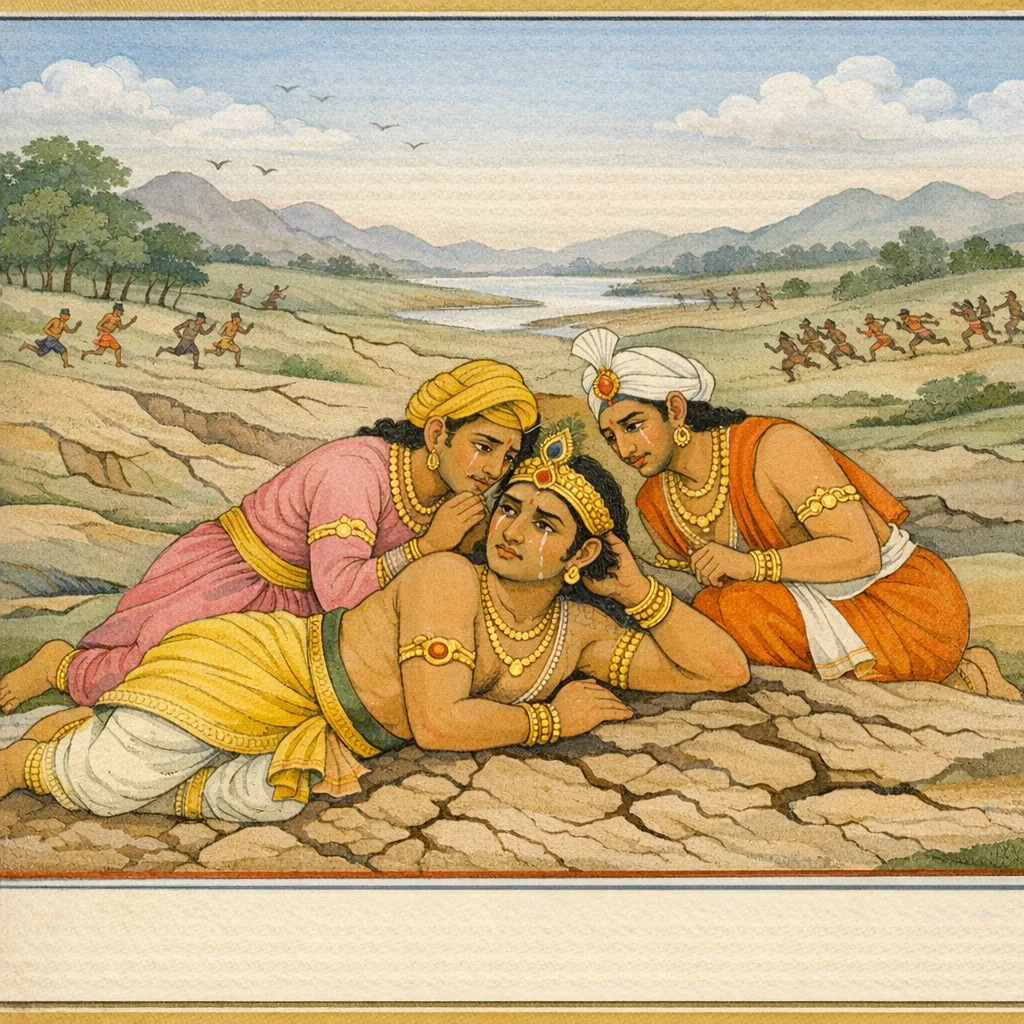
Chapter Arc: धृतराष्ट्र, पुत्र के जंघा-भंग से पृथ्वी पर गिरने का समाचार सुनकर, संजय से पूछते हैं—परमाहव में उस टूटे हुए, क्रोधाग्नि से दग्ध दुर्योधन ने क्या कहा? → संजय ‘यथावृत्त’ वर्णन आरम्भ करते हैं: रणभूमि में पराजित-देह, पर अडिग-अहंकार वाला दुर्योधन अपने सारथियों/वाहकों और आसपास के जनों को संबोधित कर विलाप करता है, अपने प्रियजनों—दुःशासन, लक्ष्मण और असंख्य कौरवों—का स्मरण कर संदेश भेजने की व्यवस्था करता है; माता-पिता के शोक की कल्पना उसे भीतर से मथती है, पर वह अपने ‘क्षत्रिय-धर्म’ की ढाल भी उठाए रहता है। → दुर्योधन अपने अंत को ‘इष्ट’ क्षत्रिय-मृत्यु घोषित करता है—समन्तपञ्चक क्षेत्र में मृत्यु पाकर सनातन लोकों की प्राप्ति का दावा करता है; उसके प्रलाप/घोषणा से जनसमूह अश्रुपूर्ण हो उठता है और भय-व्याकुल होकर दसों दिशाओं में भागता है। → विलाप के बाद दृश्य का निष्कर्ष भयावह संकेतों में उतरता है—धरती समुद्र-वन-चराचर सहित काँपती है, दिशाएँ व्याकुल होती हैं, वज्र-गर्जना-सा नाद फैलता है; दुर्योधन का अंत निकट और अपरिहार्य प्रतीत होता है। → प्रकृति के इन अपशकुनों के बीच, टूटे हुए राजा के अंतिम क्षणों में आगे कौन-सा संदेश पहुँचेगा और किसके हाथों अंतिम परिणति घटेगी—यह प्रश्न अगले अध्याय पर छोड़ दिया जाता है।
Shlokas
Verse 1
अत्-#-#क+ चतु:षष्टितमो<5 ध्याय: दुर्योधनका संजयके सम्मुख विलाप और वाहकोंद्वारा अपने साथियोको संदेश भेजना धृतराष्ट्र रवाच अधिष्ित: पदा मूर्थ्नि भग्नसक्थो महीं गत: । शौटीर्यमानी पुत्रो मे किमभाषत संजय
Dhṛtarāṣṭra said: “Sañjaya, when my son—his thighs shattered—fell upon the earth, and his foe set a foot upon his head, what did he say? He was proud of his prowess. On that battlefield, caught in a grievous calamity, what words did Duryodhana speak?”
Verse 2
अत्यर्थ कोपनो राजा जातवैरश्न पाण्डुषु व्यसन परमं प्राप्त: किमाह परमाहवे
Vaiśampāyana said: King Duryodhana, exceedingly wrathful and born into enmity toward the Pāṇḍavas, had fallen into the utmost calamity in that supreme battle. What did he say then? (This is asked in the context that, after his thighs were broken, he fell to the ground and Bhīmasena set his foot upon Duryodhana’s head—an act that sharpens the ethical tension between righteous victory and the excesses of vengeance.)
Verse 3
संजय उवाच शृणु राजन प्रवक्ष्यामि यथावृत्तं नराधिप । राज्ञा यदुक्त भग्नेन तस्मिन् व्यसन आगते
Sañjaya said: “Listen, O King; I shall relate exactly what occurred, O lord of men—what was spoken by that king when he had been broken and calamity had come upon him.”
Verse 4
संजयने कहा--राजन्! सुनिये। नरेश्वर! उस भारी संकटमें पड़ जानेपर टूटी जाँघवाले राजा दुर्योधनने जो कुछ कहा था, वह सब वृत्तान्त यथार्थरूपसे बता रहा हूँ ।।
Sañjaya said: “O King, listen. O lord of men, having fallen into that grievous calamity, King Duryodhana—his thighs shattered—spoke certain words; I shall relate that entire account truthfully. With his thighs broken, the king lay on the ground, smeared and covered with dust. Gathering up his dishevelled hair, he looked about in all ten directions. Then, censuring the eldest of the Pāṇḍavas, he heaved a bitter sigh and began to speak—his breath harsh, his mind inflamed by rage and humiliation.”
Verse 5
केशान् नियम्य यत्नेन नि:श्वसन्नुरगो यथा । संरम्भाश्रुपरीताभ्यां नेत्राभ्यामभिवीक्ष्य माम्
Sañjaya said: “With effort he restrained his hair, and, breathing hard like a serpent, he looked at me with eyes flooded by tears born of fierce agitation.”
Verse 6
बाहू धरण्यां निष्पिष्य सुदुर्मत्त इव द्विप: । प्रकीर्णान् मूर्थजान् धुन्वन् दन्तैर्दन्तानुपस्पृशन्
Sañjaya said: “Crushing his arms upon the earth like a wildly maddened elephant, he shook his dishevelled hair and ground his teeth against his teeth—an outward storm of grief and fury that shows how war drives even the mighty into helpless, self-consuming anguish.”
Verse 7
भीष्मे शान्तनवे नाथे कर्णे शस्त्रभृतां वरे
Sañjaya said: “When Bhīṣma, son of Śāntanu and the lordly protector, and when Karṇa, the foremost among weapon-bearers, (were present/held as leaders)…”
Verse 8
गौतमे शकुनौ चापि द्रोणे चास्त्रभृतां वरे । अश्वत्थाम्नि तथा शल्ये शूरे च कृतवर्मणि
Sañjaya said: “In Gautama, in Śakuni as well, in Droṇa—the foremost among weapon-bearers—likewise in Aśvatthāmā, in Śalya, and in the heroic Kṛtavarman…”
Verse 9
इमामवस्थां प्राप्तोडस्मि कालो हि दुरतिक्रम: । 'शान्तनुनन्दन भीष्म, अस्त्रधारियोंमें श्रेष्ठ कर्ण, कृपाचार्य, शकुनि, अस्त्रधारियोंमें सर्वश्रेष्ठ द्रोणाचार्य, अश्वत्थामा, शूरवीर शल्य तथा कृतवर्मा मेरे रक्षक थे तो भी मैं इस दशाको आ पहुँचा। निश्चय ही कालका उल्लंघन करना किसीके लिये भी अत्यन्त कठिन है।।
Sañjaya said: “I have come to this condition, for Time is indeed hard to overstep. Even though my protectors were Bhīṣma, the son of Śāntanu; Karṇa, foremost among wielders of weapons; Kṛpa the preceptor; Śakuni; Droṇa, the very best of all weapon-bearers; Aśvatthāmā; the heroic Śalya; and Kṛtavarmā—still I have fallen into this plight. Truly, to transgress the decree of Time is exceedingly difficult for anyone. I, who was the commander of eleven divisions, have come to this state.”
Verse 10
आखूयातव्यं मदीयानां ये5स्मिन् जीवन्ति संयुगे
Sañjaya said: “It must be reported to my own side—those who are still alive in this battle.”
Verse 11
बहूनि सुनृशंसानि कृतानि खलु पाण्डवै:
Sañjaya said: “Indeed, many cruel and pitiless deeds have been done by the Pāṇḍavas.”
Verse 12
इदं चाकीर्तिजं कर्म नृशंसै: पाण्डवै: कृतम्
Sañjaya said: “This too is a deed that brings disgrace—an act of ruthless cruelty—committed by the Pāṇḍavas.”
Verse 13
का प्रीति: सत्त्वयुक्तस्य कृत्वोपधिकृतं जयम्
Sañjaya said: “What satisfaction can there be for one grounded in true virtue, if victory is achieved only by resorting to contrived conditions and ulterior devices?”
Verse 14
अधर्मेण जयं लब्ध्वा को नु हृष्येत पण्डित:
Sañjaya said: Having gained victory through unrighteous means, what wise person would truly rejoice? Such a triumph, born of adharma, cannot be a cause for genuine satisfaction to one who understands right conduct and its consequences.
Verse 15
किन्नु चित्रमितस्त्वद्य भग्नसक्थस्य यन्मम
Sanjaya said: “What, indeed, is so surprising in this today—that I, whose thigh has been shattered, should now be in this condition?”
Verse 16
प्रतपन्तं श्रिया जुष्टं वर्तमानं च बन्धुषु
Sañjaya said: “(He was) blazing with prowess, favored by fortune, and moving among his kinsmen (in the midst of his own people).”
Verse 17
अभिशनज्ञौ युद्धधर्मस्य मम माता पिता च मे
Sañjaya said: “My mother and father are well-versed in the dharma of war. When they hear the news of my death, they will be overwhelmed with grief. Convey to them, at my request, this message: that I performed sacrifices, protected those who deserved support, and ruled the earth well up to the ocean’s bounds.”
Verse 18
तौ हि संजय दुःखार्तो विज्ञाप्यौ वचनाद्धि मे । इष्टं भृत्या भृता: सम्यग् भू: प्रशास्ता ससागरा
Sanjaya said: “Those two—my parents—will surely be overwhelmed with grief when they hear of my death. Therefore, at my request, you must convey this message to them: that I have duly performed the sacrifices enjoined, that I have properly maintained those who depended on me, and that I have governed the earth well, even to the encircling ocean.”
Verse 19
मूर्थ्नि स्थितममित्राणां जीवतामेव संजय । दत्ता दाया यथाशक्ति मित्राणां च प्रियं कृतम्
Sañjaya said: “O Sañjaya, while the enemies still lived, I stood over them in mastery; I distributed shares and gifts according to my ability, and I also did what was pleasing to my friends.”
Verse 20
मानिता बान्धवा: सर्वे वश्य: सम्पूजितो जन:
Sañjaya said: “All the kinsmen were duly honored, and the people were brought under control—fully respected and properly received.”
Verse 21
त्रितयं सेवितं सर्व को नु स्वन्ततरो मया । “मैंने सभी बन्धु-बान्धवोंको सम्मान दिया। अपनी आज्ञाके अधीन रहनेवाले लोगोंका सत्कार किया और धर्म, अर्थ एवं काम सबका सेवन कर लिया। मेरे समान सुन्दर अन्त किसका हुआ होगा? ।।
“I honored all my kinsmen and kindred. I welcomed and esteemed the people who lived under my command, and I fulfilled the three—dharma, artha, and kāma. Who could have an end as fair as mine? And among the foremost of kings, a dignity hard to attain came to me by decree.”
Verse 22
यातानि परराष्ट्राणि नूपा भुक्ताश्च दासवत्
Sañjaya said: “They have gone into other kingdoms, and there they have been made to live as dependents—used and exploited like slaves.”
Verse 23
अधीतं विधिवदू दत्तं प्राप्तमायुर्निरामयम्
Sañjaya said: “I have studied as prescribed, given gifts in due form, and attained a long life free from illness. By good fortune, great royal prosperity was mine, and only after my death did it pass into another’s hands, O mighty one.”
Verse 24
स्वर्मेण जिता लोका: को नु स्वन्ततरो मया । दिष्ट्या नाहं जित: संख्ये परान् प्रेष्यवदाश्रित:
Sañjaya said: “By my own conduct I have won the worlds of heaven—who could be more self-possessed than I? By good fortune, I have not been defeated in battle, nor have I been reduced to living in dependence on others like a mere servant.”
Verse 25
यदि क्षत्रबन्धूनां स्वधर्ममनुतिष्ठताम्
Sañjaya said: “If those who are merely ‘kinsmen of kṣatriyas’ yet claim the warrior’s station were to truly follow their own duty…”
Verse 26
दिष्ट्या नाहं परावृत्तो वैरात् प्राकृतवज्जित:
Sañjaya said: “By good fortune, I have not turned back out of enmity, nor have I behaved in a base, ordinary manner.”
Verse 27
सुप्तं वाथ प्रमत्तं वा यथा हन्याद् विषेण वा
Sañjaya said: “Just as one might strike down a man who is asleep or heedless—or even destroy him by poison—so too is such a mode of killing spoken of,” implying a censurable, stealthy act that violates the warrior’s code of open combat.
Verse 28
अश्वत्थामा महाभाग: कृतवर्मा च सात्वत:
Sañjaya said: Aśvatthāmā, the illustrious one, and Kṛtavarmā of the Sātvata line were there—named as prominent actors in the unfolding aftermath of the war, where personal loyalty and the residue of violence continue to shape choices and consequences.
Verse 29
अधर्मेण प्रवृत्तानां पाण्डवानामनेकश:
Sañjaya said: “In many ways, the Pāṇḍavas—having set themselves in motion through unrighteous means—…”
Verse 30
वार्तिकांश्षाब्रवीद् राजा पुत्रस्ते सत्यविक्रम:
Sañjaya said: Then the king—your son, steadfast in true valor—spoke these words: “I shall follow after them, like a traveler left behind after losing his caravan.” In context, Duryodhana frames his impending death as a solitary journey after the fall of his comrades, implying a grim moral reckoning after a war he regards as having ended through adharma.
Verse 31
अधर्माद् भीमसेनेन निहतो<हं यथा रणे । सोऊ हं द्रोणं स्वर्गगतं कर्णशल्यावुभौ तथा
Sañjaya said: “In battle I was slain by Bhīmasena through an unrighteous act. Thus I have come to behold Droṇa who has gone to heaven, and likewise both Karṇa and Śalya.”
Verse 32
वृषसेनं महावीर्य शकुनिं चापि सौबलम् । जलसन्ध॑ महावीर्य भगदत्तं च पार्थिवम्
Sañjaya said: “(There were) Vṛṣasena, a warrior of great might; and Śakuni also, the Saubala; Jalasandha, of great prowess; and King Bhagadatta as well.” In the ethical frame of the war narrative, the verse functions as a sober roll-call of notable combatants—emphasizing how many powerful rulers and champions are drawn into the catastrophe of Kurukṣetra, where personal loyalties and political ambition collide with dharma.
Verse 33
सोमदत्तं महेष्वासं सैन्धवं च जयद्रथम् । दुःशासनपुरोगांश्न भ्रातृनात्मसमांस्तथा
Sañjaya said: “(He beheld/encountered) Somadatta, that great archer, and the Sindhu prince Jayadratha; and also his brothers, led by Duḥśāsana—men equal to himself in resolve.” The line underscores how the battle has drawn forward renowned warriors and close kin alike, intensifying the moral weight of fighting those bound by blood and allegiance.
Verse 34
दौ:शासनिं च विक्रान्तं लक्ष्मणं चात्मजावुभौ । एतांश्वान्यांश्व सुबहून् मदीयांश्व सहस्रश:
Sañjaya said: “(I saw) the valiant son of Duḥśāsana, and Lakṣmaṇa, and both those sons (of yours); and besides these, many others too—thousands upon thousands of my own side’s warriors.”
Verse 35
कर्थ॑ भ्रातृन् हतान् श्र॒त्वा भर्तारं च स््वसा मम
Sañjaya said: “How did my sister respond when she heard that her brothers had been slain and that her husband too had fallen?”
Verse 36
स््नुषाभि: प्रस्नुषाभिश् वृद्धो राजा पिता मम
Sañjaya said: “My aged father, the king, was surrounded by his daughters-in-law and granddaughters-in-law.”
Verse 37
नूनं लक्ष्मणमातापि हतपुत्रा हतेश्वरा
Sañjaya said: “Surely Lakṣmaṇa’s mother too—bereft of her son and with her lord slain—has been struck down by grief.”
Verse 38
यदि जानाति चार्वाक: परिव्राड् वाग्विशारद:
Sañjaya said: “If Cārvāka—an eloquent wandering ascetic, skilled in speech—truly knows (the matter)….”
Verse 39
समन्तपज्चके पुण्ये त्रिषु लोकेषु विश्वरुते
Sañjaya said: In the holy Samantapañcaka—renowned throughout the three worlds—
Verse 40
ततो जनसहस्राणि बाष्पपूर्णानि मारिष
Then, O venerable one, thousands of people were filled with tears.
Verse 41
ससागरवना घोरा पृथिवी सचराचरा
Sañjaya said: The terrible earth—together with its oceans and forests, with all that moves and all that is unmoving—seemed to tremble in dread.
Verse 42
ते द्रोणपुत्रमासाद्य यथावृत्तं नयवेदयन्
Sañjaya said: Those messengers approached Droṇa’s son (Aśvatthāmā) and reported to him, exactly as it had occurred, the full account—how Bhīmasena conducted himself in the mace-fight and how the king was struck down. Grief-stricken by what they had conveyed, they remained for a long while sunk in anxious thought; then, their minds overwhelmed by sorrow and distress, they departed as they had come.
Verse 43
व्यवहारं गदायुद्धे पार्थिवस्थ च पातनम् | तदाख्याय तत: सर्वे द्रोणपुत्रस्य भारत ।।
Sañjaya said: “O Bhārata, after reporting to Droṇa’s son everything—how the mace-duel was conducted and how the king was brought down—those messengers, scorched by grief and with minds struck by sorrow, remained long absorbed in thought. Then, distressed and overwhelmed by lamentation, they departed just as they had come.”
Verse 63
गर्हयन् पाण्डवं ज्येष्ठं नि:श्वस्पेदमथाब्रवीत् । राजन्! जब कौरव-नरेशकी जाँघें टूट गयीं तब वह धरतीपर गिरकर धूलमें सन गया। फिर बिखरे हुए बालोंको समेटता हुआ वहाँ दसों दिशाओंकी ओर देखने लगा। बड़े प्रयत्नसे अपने बालोंको बाँधकर सर्पके समान फुफकारते हुए उसने रोष और आँसुओंसे भरे हुए नेत्रोंद्वारा मेरी ओर देखा। इसके बाद दोनों भुजाओंको पृथ्वीपर रगड़कर मदोन्मत्त गजराजके समान अपने बिखरे केशोंको हिलाता
Sañjaya said: Condemning the eldest of the Pāṇḍavas, he heaved deep sighs and then spoke. When the Kaurava king’s thighs were shattered and he fell into the dust, he gathered his dishevelled hair, looked about in all ten directions, and—binding his hair with effort—hissed like a serpent. With eyes swollen with rage and tears he glanced toward me; then, rubbing both arms on the earth like an intoxicated lordly elephant, shaking his loose locks, grinding his teeth, and censuring Yudhiṣṭhira, the eldest Pāṇḍava, he drew breath and spoke as follows.
Verse 64
इति श्रीमहा भारते शल्यपर्वणि गदापर्वणि दुर्योधनविलापे चतु:षष्टितमो<5ध्याय: ।। धड ।। इस प्रकार श्रीमहाभारत शल्यपर्वके अन्तर्गत गदापर्वमें दुर्योधनका विलापविषयक चौसठवाँ अध्याय पूरा हुआ
Sañjaya said: “Thus, in the sacred Mahābhārata, within the Śalya Parva—specifically in the Gadā Parva—ends the sixty-fourth chapter, concerning Duryodhana’s lament.” This closing colophon marks the completion of a section that frames the moral and emotional collapse of a defeated ruler: Duryodhana’s grief becomes a narrative mirror for the consequences of pride, adharma, and the devastation wrought by war.
Verse 93
काल प्राप्प महाबाहो न कश्िदतिवर्तते । “महाबाहो! मैं एक दिन ग्यारह अक्षौहिणी सेनाका स्वामी था; परंतु आज इस दशामें आ पड़ा हूँ। वास्तवमें कालको पाकर कोई उसका उल्लंघन नहीं कर सकता
Sañjaya said: “O mighty-armed one, when Time has arrived, no one can pass beyond it. Even one who once commanded eleven akṣauhiṇīs can be brought to this condition; for truly, none can transgress the decree of Time.”
Verse 106
यथाहं भीमसेनेन व्युत्क्रम्य समयं हतः । “मेरे पक्षके वीरोंमेंसे जो लोग इस युद्धमें जीवित बच गये हों, उन्हें यह बताना कि भीमसेनने किस तरह गदायुद्धके नियमका उल्लंघन करके मुझे मारा
Sañjaya said: “How I was slain by Bhīmasena after he transgressed the agreed rule (of the mace-fight).” The line frames the killing as ethically tainted: the speaker presents his death not merely as defeat in combat, but as the result of a breach of the mutually accepted code governing the duel.
Verse 116
भूरिश्रवसि कर्णे च भीष्मे द्रोणे च श्रीमति । 'पाण्डवोंने भूरिश्रवा, कर्ण, भीष्म तथा श्रीमान् द्रोणाचार्यके प्रति बहुत-से नृशंस कार्य किये हैं
Sañjaya said: “Against Bhūriśravas, Karṇa, Bhīṣma, and the illustrious Droṇa, the Pāṇḍavas have committed many ruthless acts.” The line frames the war’s moral tension: even celebrated warriors become occasions for accusations of cruelty, and victory is portrayed as ethically burdened rather than purely heroic.
Verse 126
येन ते सत्सु निर्वेद॑ गमिष्यन्ति हि मे मतिः । 'उन क्रूरकर्मा पाण्डवोंने यह भी अपनी अकीर्ति फैलानेवाला कर्म ही किया है, जिससे वे साधु पुरुषोंकी सभामें पश्चात्ताप करेंगे; ऐसा मेरा विश्वास है
Sañjaya said: “My conviction is this: by the deed they have done, those Pāṇḍavas of cruel conduct will incur a stain on their fame, and in the assembly of the virtuous they will be driven to remorse.”
Verse 136
को वा समयके त्तारं बुध: सम्मन्तुमर्हति । “छलसे विजय पाकर किसी सत्त्वगुणी या शक्तिशाली पुरुषको क्या प्रसन्नता होगी? अथवा जो युद्धके नियमको भंग कर देता है, उसका सम्मान कौन विद्वान् कर सकता है?
Sañjaya said: “Who, indeed, would a wise man deem worthy of honor—one who violates the agreed rules of combat? Having gained victory through deceit, what satisfaction could any truly virtuous or powerful man feel? And if someone breaks the laws of war, what learned person could rightly respect him?”
Verse 143
यथा संहृष्यते पाप: पाण्डुपुत्रो वृकोदर: | “अधर्मसे विजय प्राप्त करके किस बुद्धिमान् पुरुषको हर्ष होगा? जैसा कि पापी पाण्डुपुत्र भीमसेनको हो रहा है
Sañjaya said: “How can any wise man feel joy after gaining victory through unrighteousness? Yet the sinful Vṛkodara—Bhīmasena, the son of Pāṇḍu—rejoices in just that way.”
Verse 153
क्रुद्धेन भीमसेनेन पादेन मृदितं शिर: । “आज जब मेरी जाँघें टूट गयी हैं; ऐसी दशामें कुपित हुए भीमसेनने मेरे मस्तकको जो पैरसे ठुकराया है, इससे बढ़कर आश्वर्यकी बात और क्या हो सकती है?
Sañjaya said: In his anger, Bhīmasena struck down the head with his foot. “Today, when my thighs have been broken; in such a state, that the enraged Bhīmasena should kick my head with his foot—what could be more astonishing than this?”
Verse 163
एवं कुर्यान्नरो यो हि स वै संजय पूजित: । “संजय! जो अपने तेजसे तप रहा हो
Sañjaya said: “O Sanjaya, the man who behaves in this manner is truly worthy of honor. For when an enemy is blazing with prowess, attended by royal fortune, and standing amid his supporting kinsmen and allies, it is only the truly valiant who can deal with him as prescribed. What greatness is there in striking one who is already slain?”
Verse 193
अमित्रा बाधिता: सर्वे को नु स्वन्ततरो मया । “संजय! मैंने जीवित शत्रुओंके ही मस्तकपर पैर रखा। यथाशक्ति धनका दान और मित्रोंका प्रिय किया। साथ ही सम्पूर्ण शत्रुओंको सदा ही क्लेश पहुँचाया। संसारमें कौन ऐसा पुरुष है
Sañjaya said: “All my foes have been crushed—who, indeed, has met an end more fortunate than mine? I set my foot upon the heads of enemies still alive; to the best of my power I gave wealth in charity and did what was pleasing to my friends; and I continually inflicted distress upon all my adversaries. In this world, what man has attained a conclusion as fair as mine?”
Verse 213
आजानेयैस्तथा यात॑ को नु स्वन्ततरो मया । “बड़े-बड़े राजाओंपर हुक्म चलाया, अत्यन्त दुर्लभ सम्मान प्राप्त किया तथा आजानेय (अरबी) घोड़ोंपर सवारी की, मुझसे अच्छा अन्त और किसका हुआ होगा?
Sañjaya said: “Having ridden fine ājāneya horses and having exercised command over great kings, winning honors that are hard to obtain—who, indeed, could have met a better end than I?”
Verse 223
प्रियेभ्य: प्रकृतं साधु को नु स्वन्ततरो मया । “दूसरे राष्ट्रोपर आक्रमण किया और कितने ही राजाओंसे दासकी भाँति सेवाएँ लीं। जो अपने प्रिय व्यक्ति थे
Sañjaya said: “I have acted well toward those who were dear to me; who, indeed, could have met a better end than I? Having attacked other kingdoms and compelled many kings to render service like slaves, I still ensured the welfare of my own beloved ones—so what end could be considered superior to mine?”
Verse 243
दिष्ट्या मे विपुला लक्ष्मीमृते त्वन्यगता विभो । “विधिवत् वेदोंका स्वाध्याय किया
Sañjaya said: “By good fortune, the vast royal prosperity that was mine has passed to another only after my death, O mighty one. I performed Vedic study in due rite, gave gifts of many kinds, and attained a life free from disease. Beyond this, by my dharma I won victory over the worlds of merit. Who could have had an end better than mine? By good fortune I was never defeated in battle, nor did I ever seek refuge with enemies like a slave. By good fortune, great sovereignty and royal fortune remained under my authority, departing to others only when I was gone.”
Verse 253
निधन तन्मया प्राप्तं को नु स्वन्ततरो मया । “अपने धर्मका पालन करनेवाले क्षत्रिय-बन्धुओंको जो अभीष्ट है, वैसी ही मृत्यु मुझे प्राप्त हुई है; अतः मुझसे अच्छा अन्त और किसका हुआ होगा?
Sañjaya said: “I have attained such a death as is desired by kinsmen who uphold the dharma of the kṣatriya. Therefore, who could have met a better end than I?”
Verse 266
दिष्टया न विमतिं कांचिद् भजित्वा तु पराजित: । /हर्षकी बात है कि मैं युद्धमें पीठ दिखाकर भागा नहीं। निम्नश्रेणीके मनुष्यकी भाँति हार मानकर वैरसे कभी पीछे नहीं हटा तथा कभी किसी दुर्विचारका आश्रय लेकर पराजित नहीं हुआ--यह भी मेरे लिये गौरवकी ही बात है
Sañjaya said: “It is a blessing that, though defeated, I did not resort to any misguided resolve. Even in loss, I did not take shelter in ignoble surrender or a crooked, blameworthy thought—this, too, is a matter of honor.”
Verse 273
एवं व्युत्क्रान्तधर्मेण व्युत्क्रम्य समयं हत: । “जैसे कोई सोये अथवा पागल हुए मनुष्यको मार दे या धोखेसे जहर देकर किसीकी हत्या कर डाले
Sañjaya said: “Thus, by one who has fallen away from dharma—having transgressed the agreed rule of combat—I have been struck down.” The line frames the killing as not merely a battlefield defeat but an ethical breach: the speaker presents the blow as violating the accepted code (samaya) of the mace-duel, thereby casting the act as adharma rather than legitimate victory.
Verse 286
कृप: शारद्वतश्वैव वक्तव्या वचनान्मम | “महाभाग अअश्वत्थामा, सात्वतवंशी कृतवर्मा तथा शरद्वानके पुत्र कृपाचार्य--इन सबको मेरी यह बात सुना देना
Sañjaya said: “Kṛpa, the son of Śaradvan, must be told my words. And likewise the noble Aśvatthāmā, and Kṛtavarmā of the Sātvata line. Convey this message of mine to them all.”
Verse 296
विश्वासं समयघ्नानां न यूय॑ गन्तुमर्ह थ । 'पाण्डवोंने अधर्ममें प्रवृत्त होकर अनेकों बार युद्धकी मर्यादा तोड़ी है; अतः आपलोग कभी उनका विश्वास न करें"
Sañjaya said: “You should not place trust in those who break their pledged agreements. The Pāṇḍavas, having turned toward unrighteous conduct, have repeatedly violated the accepted restraints of war; therefore, do not ever rely on them.”
Verse 343
पृष्ठतोडनुगमिष्यामि सार्थहीनो यथाध्वग: । इसके बाद आपके सत्यपराक्रमी पुत्र राजा दुर्योधनने संदेशवाहक दूतोंसे इस प्रकार कहा-- 'भीमसेनने रणभूमिमें अधर्मसे मेरा वध किया है। अब मैं स्वर्गमें गये हुए द्रोणाचार्य
Sañjaya said: “I shall follow behind—like a traveler who has been left without his caravan.” In context, the line conveys the moral and emotional desolation of one who, after the ruin of his companions through war and wrongdoing, can only trail after them toward the same end, bereft of support and direction.
Verse 356
रोखूयमाणा दु:खार्ता दुःशला सा भविष्यति | “हाय! अपने भाइयों और पतिकी मृत्युका समाचार सुनकर दुःखसे आतुर हो अत्यन्त रोदन करती हुई मेरी बहिन दुःशलाकी क्या दशा होगी?
Sanjaya said: “Overwhelmed by grief and breaking into incessant lamentation, my sister Duḥśalā will be undone. Alas—when she hears the news of the deaths of her brothers and of her husband, what state will she be reduced to?”
Verse 363
गान्धारीसहितकश्नैव कां गतिं प्रतिपत्स्यति । “पुत्रों और पौत्रोंकी बिलखती हुई बहुओंके साथ मेरे बूढ़े पिता राजा धृतराष्ट्र माता गान्धारीसहित किस अवस्थाको पहुँच जायँगे?
Sañjaya said: “And together with Gāndhārī, to what state or end will he attain?” In the wake of the Kurukṣetra catastrophe, the question points to the moral and existential aftermath of war: what becomes of the aged Dhṛtarāṣṭra and his queen when their lineage has been shattered and the household is left in grief.
Verse 373
विनाशं यास्यति क्षिप्रं कल्याणी पृथुलोचना । “निश्चय ही जिसके पति और पुत्र मारे गये हैं, वह कल्याणमयी विशाललोचना लक्ष्मणकी माता भी सारा समाचार सुनकर तुरंत ही प्राण दे देगी
Sañjaya said: “That auspicious, large-eyed lady will swiftly meet her end. Indeed, when she hears the full report that her husband and her son have been slain, Lakṣmaṇa’s mother will at once give up her life.”
Verse 386
करिष्यति महाभागो श्रुवं चापचितिं मम । 'संन्यासीके वेषमें सब ओर घूमनेवाले प्रवचनकुशल चार्वाकको- यदि मेरी दशा ज्ञात हो जायगी तो वे महाभाग निश्चय ही मेरे वैरका बदला लेंगे
Sañjaya said: “That noble one will surely render me due satisfaction and recompense. If the eloquent Cārvāka—who roams everywhere in the guise of a renunciant—comes to know my condition, then that great man will certainly exact vengeance for my enmity.”
Verse 393
अहं निधनमासाद्य लोकानू प्राप्स्यामि शाश्वतान् | “तीनों लोकोंमें विख्यात पुण्यमय समन्त-पंचवकक्षेत्रमें मृत्युको प्राप्त होकर अब मैं सनातन लोकोंमें जाऊँगा'
Sañjaya said: “Having met with death, I shall attain the eternal worlds. Dying in the supremely meritorious Samanta-pañcaka—renowned throughout the three worlds—I will go to the everlasting realms.”
Verse 403
प्रलापं नृपते: श्र॒त्वा व्यद्रवन्त दिशो दश । मान्यवर! राजा दुर्योधनका यह विलाप सुनकर हजारों मनुष्योंकी आँखोंमें आँसू भर आये और वे दसों दिशाओंमें भाग चले
Sañjaya said: Hearing the king’s lament, they were seized with fear and confusion and fled in all ten directions—an image of how grief and despair, when voiced by a ruler, can shake the morale of those around him and unravel the order of an army.
Verse 413
चचालाथ सनिर्लहादा दिशश्वैवाविलाभवन् । उस समय समुद्र, वन और चराचर प्राणियोंसहित यह पृथ्वी भयानक रूपसे हिलने लगी। सब ओर वज्रकी-सी गर्जना होने लगी और सारी दिशाएँ मलिन हो गयीं
Sañjaya said: Then the earth began to quake in a dreadful manner—together with the oceans, the forests, and all moving and unmoving beings. A thunderclap like a vajra resounded on every side, and all the quarters grew dim and sullied, as if nature itself recoiled at the violence unfolding on the battlefield.
Read Mahabharata in the Vedapath app
Scan the QR code to open this directly in the app, with audio, word-by-word meanings, and more.