Prapathaka 9
Pavamana
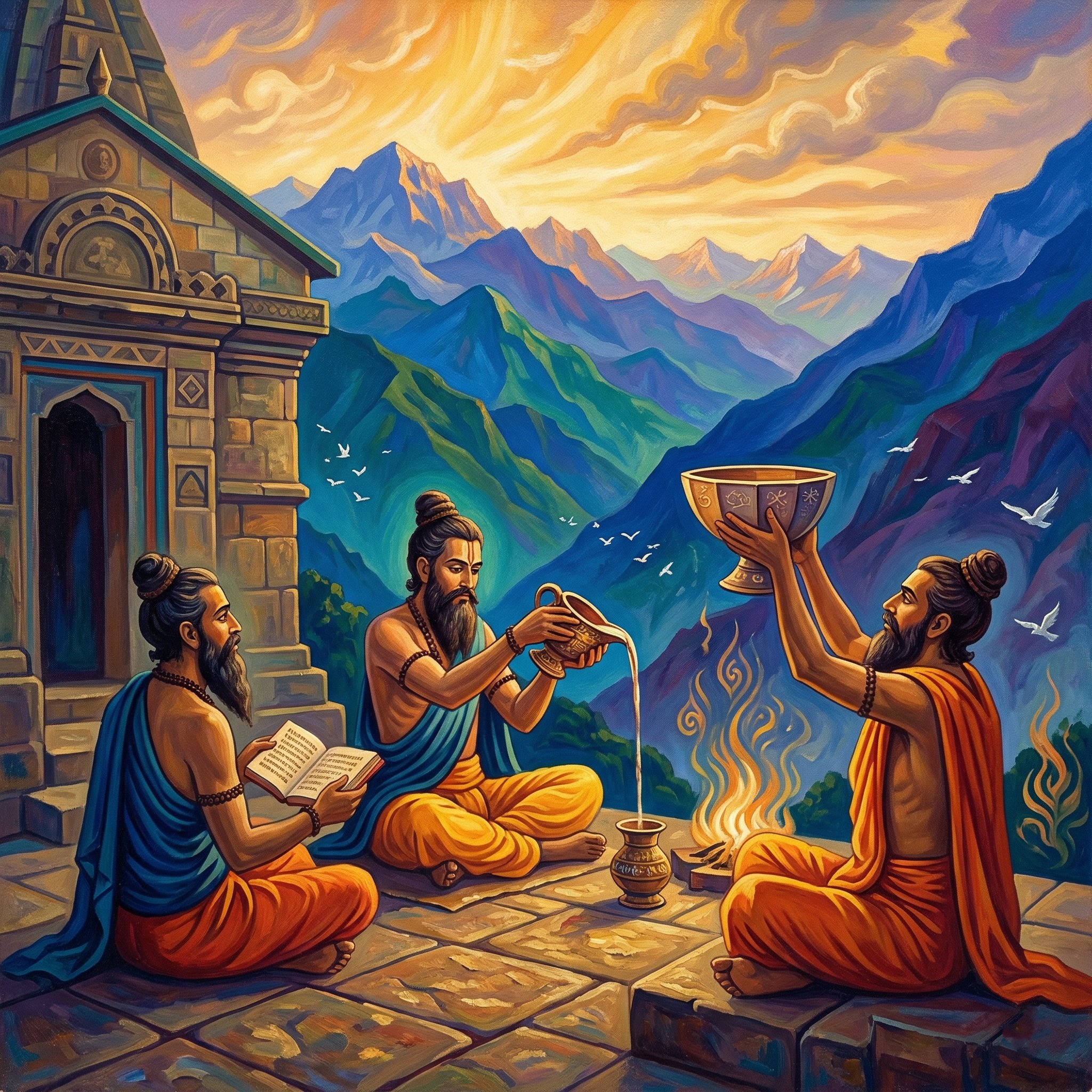
Flowing processional Pavamāna-style chant designed to mirror Soma’s streaming movement—phrases often feel ‘carried forward’ with sustained notes and cadential settling at daśati boundaries.
Indra Agni Soma (Pavamāna) Āpaḥ (Waters)
To secure the efficacy of Soma through purification (Pavamāna) then to obtain Indra’s strength and victory for the pressing/offering while Agni stabilizes the rite as protector and conduit; the Waters complete the purificatory auspice.
อารจิกา 4 ประปาฐกะ 9 แห่งหมวดปวมานะ รวบรวมบทสรรเสริญโสมะ-ปวมานะอย่างต่อเนื่อง พรรณนาโสมะที่คั้นแล้วดุจกระแสมีชีวิตซึ่งชำระให้บริสุทธิ์ ไหลผ่านตะแกรงกรองเพื่อเสริมพลังแก่ยัญญะ บทสวดเชื่อมการชำระของโสมะเข้ากับการเพิ่มกำลังให้อินทราเพื่อชัยชนะและการคุ้มครอง พร้อมทั้งอัญเชิญอัคนีผู้ส่องสว่างให้พิทักษ์รักษาพิธีกรรมให้มั่นคงรอบด้าน ตลอด 18 ทศติ บทนี้เน้นความบริสุทธิ์ทั้งภายในและภายนอกของพิธี—โสมะเป็นผู้ทำให้วาจา เครื่องบูชา และผู้ประกอบยัญญะศักดิ์สิทธิ์บริสุทธิ์—ลงท้ายด้วยหัวข้อการคุ้มครองอันมั่นคง การมีชัยเหนืออุปสรรค และการพิทักษ์รักษาด้วยรัศมีเรืองรอง
Dashatis in Prapathaka 9
Dashati 1
Pavamāna Soma’s flowing power that energizes and perfects the sacrifice
โสมปวะมานะผู้ถูกชำระให้ไหลบ่าเป็นพลังแห่งเครื่องบูชากลางพิธี ทำให้ยัญญะมีกำลังและสำเร็จผล; กระแสโสมหลังการคั้นนำความศักดิ์สิทธิ์และประสิทธิผลแห่งฤทธิ์พิธี. เชิญอินทรผู้ดื่มโสมโดยชอบ ผู้เป็นผู้นำผู้มีชัยพร้อมหมู่บริวาร/มรุต เพื่อชัยชนะและความคุ้มครอง. และให้อัคนีผู้รุ่งเรืองแผ่รัศมีมาสถิต เพื่อทำให้กรตุ (พิธี) สมบูรณ์—ก่อให้เกิดโอชะ ความงามน่าชม และการจัดระเบียบยัญญะให้สำเร็จ.
Dashati 2
Aindra praise: Indra as the pre-eminent ritual power and victorious protector invoked for strength and success
สรรเสริญแบบไอन्द्र: อัญเชิญพระอินทร์ในฐานะพลังพิธีกรรมสูงสุดและผู้พิทักษ์ผู้มีชัย เพื่อประทานกำลังและความสำเร็จ พระอินทร์ทรงเป็นพรหมัน/ฤตวิยะ คือเจ้าแห่งฤทธิ์ศักดิ์สิทธิ์และระเบียบแห่งยัญพิธี; มีมุขชัยชนะ เช่น โคตรภิด—ผู้เปิดคอกปล่อยโค การพิชิต และการรวบรวมสหายร่วมรบ. อัคนีผู้ถูกจุดตามฤดูกาลและระเบียบ (ฤตุ) เป็นแรงพิธีกรรมที่นำเครื่องบูชาไป; อุษาสเป็นนิมิตแห่งการเริ่มใหม่และความเป็นมงคล. ด้วยยัญพิธีที่ถูกต้อง จึงเข้าถึงเดช (โอชัส) และอธิปไตยของพระอินทร์ เพื่อชัยชนะ ความมั่งคั่ง/แสงสว่าง และการขจัดสิ่งกีดขวาง พร้อมการปลุกใจหมู่ผู้ร่วมบูชา (สหชาติ/สหาย).
Dashati 3
Aindra victory-invocation: summoning Indra’s power to remove obstacles and secure success for the rite
ธีมแห่งชัยชนะในสายอัยนทระ: อัญเชิญฤทธิ์เดชของพระอินทร์ให้ขจัดอุปสรรคและประทานความสำเร็จแก่พิธีกรรม—ด้วยบทสรรเสริญเป็นดั่งการเชื้อเชิญให้ราชรถทิพย์เสด็จมา คุ้มครองยัญพิธีและทำลายสิ่งกีดขวาง พร้อมย้ำพลังค้ำจุนจักรวาลผ่านอัคนีผู้บังเกิดเร้นในพืชและสายน้ำ แล้วปิดท้ายด้วยเสียงโห่ร้องประกาศชัยร่วมกันของเหล่าเทพทั้งปวง
Dashati 4
Agni’s radiant ignition and protective power within the sacrifice
อัคนีถูกปลุกให้ลุกโพลงและสถาปนาเป็นปุโรหิตผู้สว่างไสวในพิธีบูชา—กวีผู้รู้ฤตะ ผู้รวดเร็วในการนำเครื่องบูชาไปถึงเทพทั้งหลาย. เปลวไฟของท่านชำระให้ผ่องใสและทอประกาย (pavate, śukra, vi rājati) แล้วประสานพลังกับส่วนแห่งพิธีของอินทระในเครื่องบูชา. ด้วยแรงหนุนของมรุต ขอให้อัคนีแผ่ ‘ตมัส’ คือความมืดแห่งความหลงให้ปกคลุมศัตรู ทำให้ฝ่ายอธรรมสับสนและคุ้มครองผู้ประกอบยัญให้พ้นภัย.
Dashati 5
Agni as the heart-delighting, ever-wakeful power who impels and protects the sacrifice
อัคนีคือพลังผู้ทำให้ใจยินดีและตื่นรู้อยู่เสมอ ผู้ขับเคลื่อนและคุ้มครองยัญพิธี บทสรรเสริญ (สโตมะ) ถูกเปล่งเพื่อเร้าอัคนีดุจเร้าม้าให้แล่น พร้อมย้ำถ้อยคำแห่งความตื่นเฝ้า (ชาคระ) ที่รวบรวมฤกและสามันเข้าหาเทพ โสมะประกาศการมอบตนในพิธีและความเป็นมิตรกับภาวะตื่นรู้นั้น แล้วลงท้ายด้วยถ้อยคำเชิงปัดเป่าให้ “อัปวา” ทำหน้าที่คุ้มกัน ขับไล่ศัตรูและความมืด เผาผลาญความทุกข์โศก เพื่อความรุ่งเรืองและความปลอดภัยของพิธีกรรม
Dashati 6
Agni as dawn-invoker and protector, turning ritual fire into safe passage through danger
อัคนีถูกอัญเชิญยามรุ่งอรุณให้พาเหล่าเทพมาสู่พิธี เป็นผู้นำเครื่องบูชาและเปิดทางปลอดภัยท่ามกลางอันตราย จากนั้นเรียกอินทราให้ทำลายศัตรู ขจัดและพัดพาความชั่วร้ายออกไป พร้อมภาพการไล่ล่าและศรที่แปรเป็นการคุ้มครองเชิงพิธี สุดท้ายวอนพรหมณัสปติและอทิติประทานศรมะ—ที่พึ่งคุ้มกันรายวันและความปลอดภัยไม่ขาดสาย ภายใต้หลักฤตะ: เมื่อก่อไฟและสวดถูกกาล เทวานุภาพย่อมแปรภัยให้เป็นสวัสดิภาพและความครบถ้วนสมบูรณ์
Dashati 7
Aindra praise: awakening and yoking Indra’s power through expertly metered chant for victory and effective sacrifice
สรรเสริญพระอินทร์แบบไอन्द्र: ปลุกและผูกเทียมพลังของพระอินทร์ด้วยบทสวดที่มีฉันทลักษณ์ชำนาญ เพื่อชัยชนะและพิธีบูชาที่สัมฤทธิ์ผล—ปลุกเทพในที่ชุมนุมพิธี ยกย่องกวีนิพนธ์อันเป็นการกระทำอัศจรรย์ที่มีฤทธิ์ทางพิธี ตระหนักฉันท์คายตรี–ตรีษฏุภ–ชคตีเป็นพาหะแห่งคำสรรเสริญ กล่าวถึงแขนและเดชานุภาพที่ต้านทานมิได้ของพระอินทร์ปราบฝ่ายอสูร และย้ำว่าพระองค์ทรงกระทำ “วันนี้ดังแต่ก่อน” โดยวาจาและฉันท์ที่ถูก “ผูกเทียม” และขับร้องอย่างถูกต้องเป็นพลังศักดิ์สิทธิ์ปลุกพระอินทร์ให้นำชัยและฟื้นฟูระเบียบสู่พิธีกรรม
Dashati 8
Aindra protection and victory: divine light as inner armor and the defeat of hostile forces
หัวข้อทศตีนี้ว่าด้วยการคุ้มครองและชัยชนะในอำนาจแห่งอินทระ: แสงทิพย์ (jyotis) เป็นเกราะภายใน โดยยืนยันว่าอัคนี–อินทระ–สูรยะเป็นแสงเดียวกัน แล้วทวีความเข้มเป็นคำอธิษฐานปัดเป่าอันตรายทั้งภายในและภายนอก ให้อัคนีชำระและขับไล่ความเป็นศัตรู และให้อินทระทำลายปฏิปักษ์ประทานชัยชนะ พร้อมวอนเทพทั้งปวงให้ทำให้ผู้คิดปลงชีวิตสับสน มนตร์ถูกถือเป็นพลังคุ้มกัน (พรหม-วรมัน) เป็นทั้งเกราะ (varman) และที่พึ่ง (śarman) ปิดท้ายด้วยความมั่นคงแห่งการเป็นที่ลี้ภัยและความปลอดภัยในแสงนั้น
Dashati 9
Aindra victory-invocation: Indra summoned as the fierce, far-ranging protector who smites foes and grants Soma-born prosperity
ธีมทศตีนี้เป็นการอัญเชิญอินทราเพื่อชัยชนะ: เรียกอินทราผู้ดุดันให้มาจากแดนไกลโดยเร็ว ให้ทรงสวมคมอาวุธ/พลังตัดเฉือน (วัชระ–คมพวิ) เพื่อผ่าและทำลายศัตรู คุ้มครองพิธีและผู้บูชา (ยชามานะ ผู้คั้นโสม) พร้อมแปรพลังแห่งโสมและบทสรรเสริญให้เป็นความมั่งคั่ง—โค ม้า และผลกำไรแห่งยัญ. แทรกการยกย่องสุริยะ/อาทิตยะว่าเป็นแสงอันยิ่งใหญ่ เป็นใหญ่และไม่อาจต้านทานได้ ทำให้ระเบียบและสิริมงคลมั่นคงรอบพิธี; และย้ำว่าบทสโตตรา/ถ้อยคำสรรเสริญอันมีฤทธิ์เป็นหนทาง “รีด” ของกำนัลจากเทพ.
Dashati 10
Aindra invitation to Indra for Soma, paired with the auspicious power of the Waters for purification and well-being
ทศตีนี้เชื้อเชิญพระอินทร์อย่างเร่งเร้าให้เสด็จมาพร้อมม้าฮริ เพื่อเสวยโสมที่คั้นแล้วในฐานะ “เจ้าแห่งความเริงฤทธิ์ (มท)” จากนั้นบทสรรเสริญผ่อนคลายสู่กระแสน้ำอันเป็นมงคล โดยอัญเชิญอาปะห์ (สายน้ำ) ผู้เป็นผู้ประทานความชำระให้บริสุทธิ์ ความหล่อเลี้ยง ความปีติ กำลังแห่งประสาทสัมผัสโดยเฉพาะสายตาและสุขภาพ และความมั่นคงรุ่งเรืองแห่งเรือนชาน (กษยะ) แสดงว่าพิธีบูชาสำเร็จด้วยการเข้าถึงที่ถูกต้อง: โสมดึงดูดอินทร์ ส่วนสายน้ำทำให้ศักดิ์สิทธิ์ หล่อเลี้ยง และค้ำจุนสวัสดิภาพ เชื่อมความเริงฤทธิ์กับความบริสุทธิ์และการธำรงชีวิต
Dashati 11
Aindra praise seeking Indra’s favor and communal advance, with allied Vāta petitions for healing and life-breath
บทสรรเสริญแบบไอन्द्रยะเพื่อแสวงหาพระกรุณาของอินทราและความก้าวหน้าร่วมกันของหมู่ชน พร้อมคำวิงวอนต่อวาตะให้เป็นพลังเยียวยาและลมหายใจแห่งชีวิต: การบูชาและถ้อยคำสรรเสริญเป็นหนทางให้ได้ “สุมติ” (ความเอื้อเฟื้อ/ความคิดที่เป็นมงคล) และพละกำลังแก่ชุมชน การคุ้มครอง อายุยืน และการข้ามพ้นภัยอาศัยปราณอันสำคัญ และขอ “อมฤต” ที่ซ่อนเร้น—แก่นสารหล่อเลี้ยง—เพื่อการดำรงชีวิตของผู้คนทั้งหลาย (วิศะห์).
Dashati 12
Aindra stuti: Indra’s empowerment of the singer and the yajña’s solar splendor as the vehicle of prosperity and ṛta
สรรเสริญแบบไอन्द्र: พระอินทร์ผู้ประทานทรัพย์และพลังแก่ผู้ขับสโตตรา ทรงแต่งตั้ง/เกื้อหนุนสโตตฤให้สรรเสริญได้อย่างถูกต้อง ผู้ประกอบพิธีตั้งมั่นในความบริสุทธิ์และงดเว้นบาป จึงทำให้คำสรรเสริญสัมฤทธิ์ผล กลางบทเน้นภาพสุริยะ–สุปรรณะ ความสว่างดุจทอง (ภานุ/หิรัณยาตกะ) อันสอดคล้องฤดูและฤตะ ยัญญะถูกบุคลาธิษฐานเป็นผู้ทรงค้ำจุนจักรวาลและเป็นเจ้าแห่งหมู่ชน ก่อให้เกิดเมธา—ปัญญาที่ทำให้พิธีสมบูรณ์—และนำความอุดมมั่งคั่งมาให้
Dashati 13
Aindra stotra as a plea to Indra to hear the Soma-pressing call and unite with perfected praise, framed by cosmic messenger imagery (suparṇa/drapsa) that upholds ṛta.
สโตตระแด่อินทระ (Aindra) เป็นคำวิงวอนเร่งเร้าให้อินทระได้ยินเสียงเรียกจากการคั้นโสม (ศิลา/ครกคั้น) และมาร่วมกับบทสรรเสริญที่ถูกทำให้ประณีตสมบูรณ์ของปุโรหิต ภายใต้ภาพจักรวาลของสุปัรณะ/หยดรัศมี (drapsa) ผู้เป็นสารและแสงที่เคลื่อนผ่านวงโคจร นำระเบียบแห่งฤตะและบัญญัติของวรุณะข้ามแดนไปถึงยมะ เพื่อให้พิธีกรรมตั้งมั่นในความเป็นระเบียบ และบันดาลสิ่งพึงปรารถนาแก่ผู้บูชา
Dashati 14
Indra as liberator and battle-protector who secures wealth and disables hostile forces
อินทราในฐานะผู้ปลดปล่อยและผู้พิทักษ์ในศึก ผู้สังหารวฤตระ/อหิให้สายน้ำเป็นอิสระ ฟื้นฟูระเบียบจักรวาลและพิธีกรรม ทรงคุ้มครองคำภาวนาและยัญพิธีมิให้ถูกขัดขวาง ประทานทรัพย์และผลแห่งการบูชา และทำให้ศัตรูผู้มุ่งร้ายไร้กำลัง—ถึงกับให้สายธนูของฝ่ายอื่นขาดหรือหย่อน—เพื่อให้ผู้ประกอบพิธีมีชัยและปลอดภัย
Dashati 15
Indra’s reciprocity: faultless praise and song draw wealth, protection, and aid at the Soma
หัวข้อทศตีนี้กล่าวถึงความตอบแทนของพระอินทร์: เมื่อสรรเสริญและขับร้องอย่างไร้โทษในพิธี พระอินทร์ผู้มีม้าศึกจะถูกเชื้อเชิญให้มาสู่โสมที่คั้นแล้ว และประทานทรัพย์ ความผาสุก การคุ้มครอง และความช่วยเหลือแก่ผู้บูชา–ผู้ขับสรรเสริญ ขอให้พลังอันได้ผล (ศจี) ของพระอินทร์ปกป้องจากความคับขันและหมู่ศัตรู พร้อมทั้งชี้นำและเสริมกำลังในการประกอบพิธีและดำเนินชีวิต.
Dashati 16
Āvāhana and rapid approach of Indra to the Kaṇva-stotra, culminating in the boon of svarga (heaven) for the duly directing worshipper
ธีมทศติชุดนี้ว่าด้วยการอัญเชิญพระอินทร์ให้เสด็จมาอย่างรวดเร็วสู่การคั้นโสมและบทสรรเสริญของกัณวะ เพื่อทรงรับเครื่องบูชา เสริมพลังแก่พิธีกรรม และประทาน “สวรรค์/ทิวาม” เป็นผลแห่งยัญญะแก่ผู้ประกอบพิธีหรือเจ้าภาพผู้ปฏิบัติตามระเบียบอย่างถูกต้อง ภาพพจน์เด่นคือม้าฮริและราชรถที่พุ่งทะยาน ตลอดจนเสียงหินคั้น (คราวา) และเสียงก้องแห่งการคั้น/สวดที่ทำหน้าที่เป็นเสียงเรียกให้เทพเสด็จมา
Dashati 17
Pavamāna Soma’s purified flow as the energizing offering that draws the gods to the rite
โสมปวมาṇaถูกอัญเชิญให้ไหลผ่านปวิตระจนบริสุทธิ์ ส่องสว่าง และหวานชื่นเร้าใจ เป็นเครื่องบูชาที่มุ่งตรงตามลำดับพิธีไปยังอินทราและวายุ พร้อมกรอบเดววีติ/อัคนิที่เร่งเร้าเสียงสวดและการถวายให้ “นำพา” เทพทั้งหลายมาสู่ยัญพิธี เพื่อให้ผู้บูชาได้รับวาชะ—พลังและรางวัลแห่งชัยชนะ
Dashati 18
Agni as Hotṛ and guardian of the sacrifice
อัคนีในฐานะโหตฤและผู้พิทักษ์ยัญพิธี—ชาตเวทัสผู้รู้กำเนิดทั้งปวง เป็นปัญญาพิธีกรรมของฤๅษี รับเนยบูชาให้เปลวไฟพุ่งสูงนำยัญขึ้นสู่เบื้องบน เป็นผู้เลิศในหมู่อังคิรสและโหตฤของชนทั้งหลาย แผ่ซ่านทั่วพิธี และทำลายอุปสรรคกับพลังศัตรู เพื่อให้ยัญได้รับความเกื้อหนุนและความสำเร็จ
Frequently Asked Questions
Because its verses center on Soma as pavamāna—“the self-purifying one”—describing the pressed juice flowing through the filter and sanctifying the sacrifice through cleansing and empowerment.
Soma’s purified essence is repeatedly presented as the power that strengthens Indra for victory and protection, while Agni appears as the luminous guardian who secures the rite and wards off harm or ritual defect.
That purity is not merely external: Soma’s purification symbolizes and effects an inner and ritual cleansing that yields strength, clarity, protection, and successful completion of the yajña.