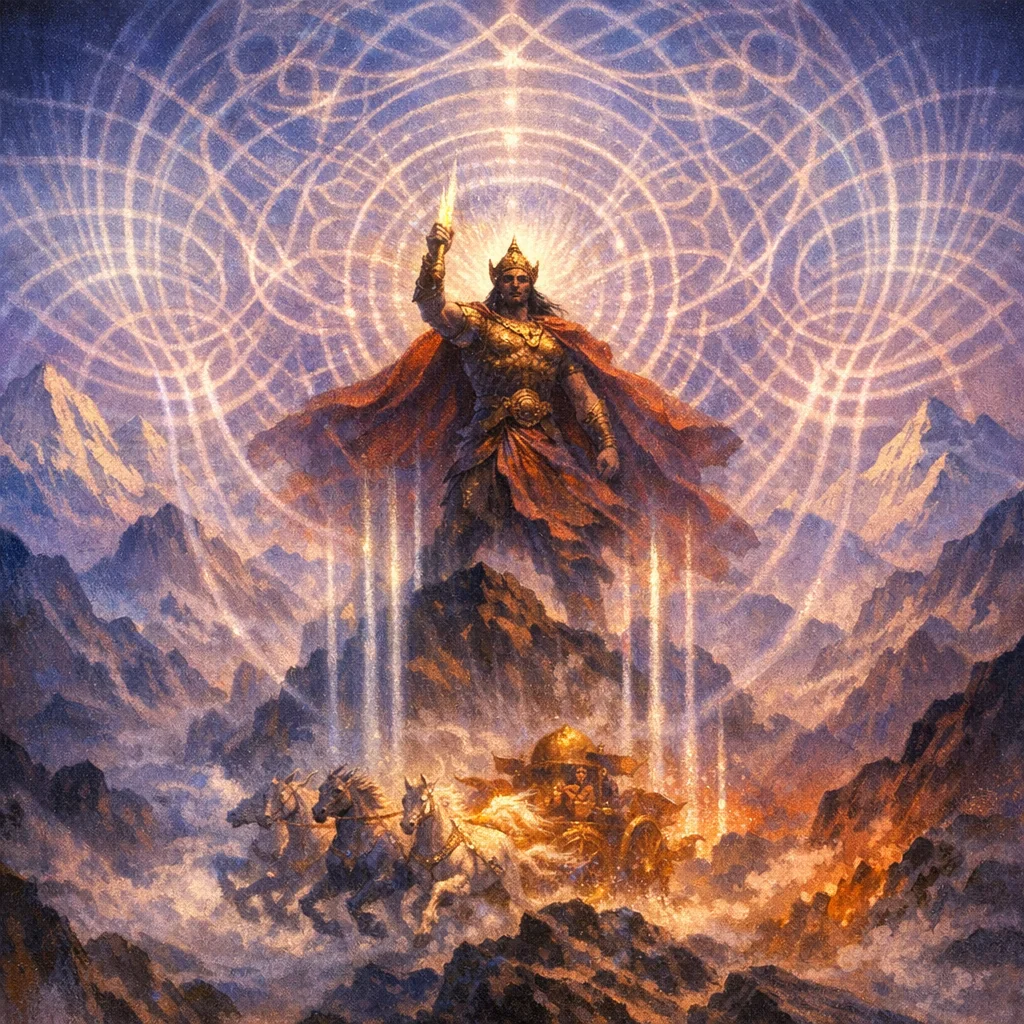
Dashati 7
Aindra praise: awakening and yoking Indra’s power through expertly metered chant for victory and effective sacrifice
Indra
Heroic and energizing (āindra-utsāha) with a crafted technical liturgical tone
Ṛṣi attribution is not recoverable from the supplied excerpt alone; it requires Rigvedic source-hymn concordance for these mantras.
สรรเสริญพระอินทร์แบบไอन्द्र: ปลุกและผูกเทียมพลังของพระอินทร์ด้วยบทสวดที่มีฉันทลักษณ์ชำนาญ เพื่อชัยชนะและพิธีบูชาที่สัมฤทธิ์ผล—ปลุกเทพในที่ชุมนุมพิธี ยกย่องกวีนิพนธ์อันเป็นการกระทำอัศจรรย์ที่มีฤทธิ์ทางพิธี ตระหนักฉันท์คายตรี–ตรีษฏุภ–ชคตีเป็นพาหะแห่งคำสรรเสริญ กล่าวถึงแขนและเดชานุภาพที่ต้านทานมิได้ของพระอินทร์ปราบฝ่ายอสูร และย้ำว่าพระองค์ทรงกระทำ “วันนี้ดังแต่ก่อน” โดยวาจาและฉันท์ที่ถูก “ผูกเทียม” และขับร้องอย่างถูกต้องเป็นพลังศักดิ์สิทธิ์ปลุกพระอินทร์ให้นำชัยและฟื้นฟูระเบียบสู่พิธีกรรม
Mantras
Mantra 1
विधुं दद्राणं समने बहूनां युवानं सन्तं पलितो जगार देवस्य पश्य काव्यं महित्वाद्या ममार स ह्यः समान
ผู้เร่งรุดพลันแล่นไป ในชุมนุมแห่งหมู่มาก (samana) แม้เยาว์วัยแต่ดำรงมั่น ปุโรหิตผู้ผมหงอกปลุกขึ้นด้วยบทขับ. จงดูเถิด อัศจรรย์กวีนิพนธ์ของเทพ (kāvya) ด้วยความยิ่งใหญ่ของท่าน; วันนี้ท่านบรรลุกิจ—ท่านผู้เดิมทีเป็นเช่นเดิมมาแต่ก่อน.
Mantra 2
शाक्मना शाको अरुणः सुपर्ण आ यो महः शूरः सनादनीडः यच्चिकेत सत्यमित्तन्न मोघं वसु स्पार्हमुत जेतोत दाता
ด้วยแรงหนุนอันทรงฤทธิ์ วีรบุรุษผู้เรืองรอง ปีกงาม ผู้มีที่นั่งดึกดำบรรพ์ (sanādanīḍa) ย่อมมา; สิ่งใดที่ท่านหยั่งรู้ สิ่งนั้นแลเป็นความจริง มิใช่เปล่าประโยชน์: ท่านคือผู้ชนะ ผู้มอบทรัพย์อันน่าปรารถนา.
Mantra 3
इन्द्रस्य बाहू स्थविरौ युवानावनाधृष्यौ सुप्रतीकावसह्यौ तौ युञ्जीत प्रथमौ योग आगते याभ्यां जितमसुराणां सहो महत्
แขนทั้งสองของอินทรา (Indra) มั่นคงแต่ยังเยาว์วัย มิอาจถูกล่วงละเมิด งามสง่า และต้านทานมิได้ เมื่อศึกประชิดเข้ามา ขอให้พระองค์เทียม—ควบคุมแขนคู่นั้น อันเป็นคู่แรกและยอดยิ่ง; ด้วยสิ่งนี้เอง จึงได้มาซึ่งมหาอำนาจในการพิชิตอสูร (Asura) ทั้งหลาย.
Frequently Asked Questions
It presents Indra as the power awakened in the ritual assembly by skilled song, and it stresses that properly formed speech and meter make the praise effective and victory-giving.
It highlights chandas-conscious chanting: the singer ‘yokes’ the voice through recognized meters, signaling that correct metrical form is itself part of the hymn’s ritual power.
They belong to the Sāma performance domain and would be sung by the Sāmavedic chanters—especially the Udgātṛ, supported by the Prastotṛ and Pratihartṛ—within an Indra-focused stotra sequence.