Adhyaya 243
Ritual Acclamation at Hastināpura and Karṇa’s Vow Concerning Arjuna (राजकीय स्तुति-प्रसङ्गः कर्णप्रतिज्ञा च)
Upa-parva: Dvāitavana-vihāra / Dvāitavana Episodes (contextual unit around Dvāitavana)
Vaiśaṃpāyana describes a public reception in which the king is praised upon entering the city after the successful completion of a major rite (mahākratu). Crowds scatter auspicious substances and congratulate him on an obstacle-free performance, while some voices introduce competitive comparison with Yudhiṣṭhira’s yajña, minimizing the present rite; allies counter with affirming praise and invoke exemplary royal precedents (Yayāti, Nahuṣa, Māndhātṛ, Bharata) associated with ritual merit. The king pays respects to elders (including Bhīṣma, Droṇa, Kṛpa, Vidura), sits surrounded by brothers, and receives congratulation from the sūta’s son (Karṇa). The conversation turns to future ambition—another rājasūya—framed as contingent on eliminating the Pāṇḍavas; Karṇa states he will not undertake certain acts of service until Arjuna is slain, prompting celebratory confidence among Dhṛtarāṣṭra’s sons. Subsequent reports reach the Pāṇḍavas; Yudhiṣṭhira becomes unsettled by Karṇa’s reputed armor and prowess, and his deliberation leads toward leaving the dangerous Dvāitavana forest, while Duryodhana continues governance and patronage through lavish sacrificial gifts.
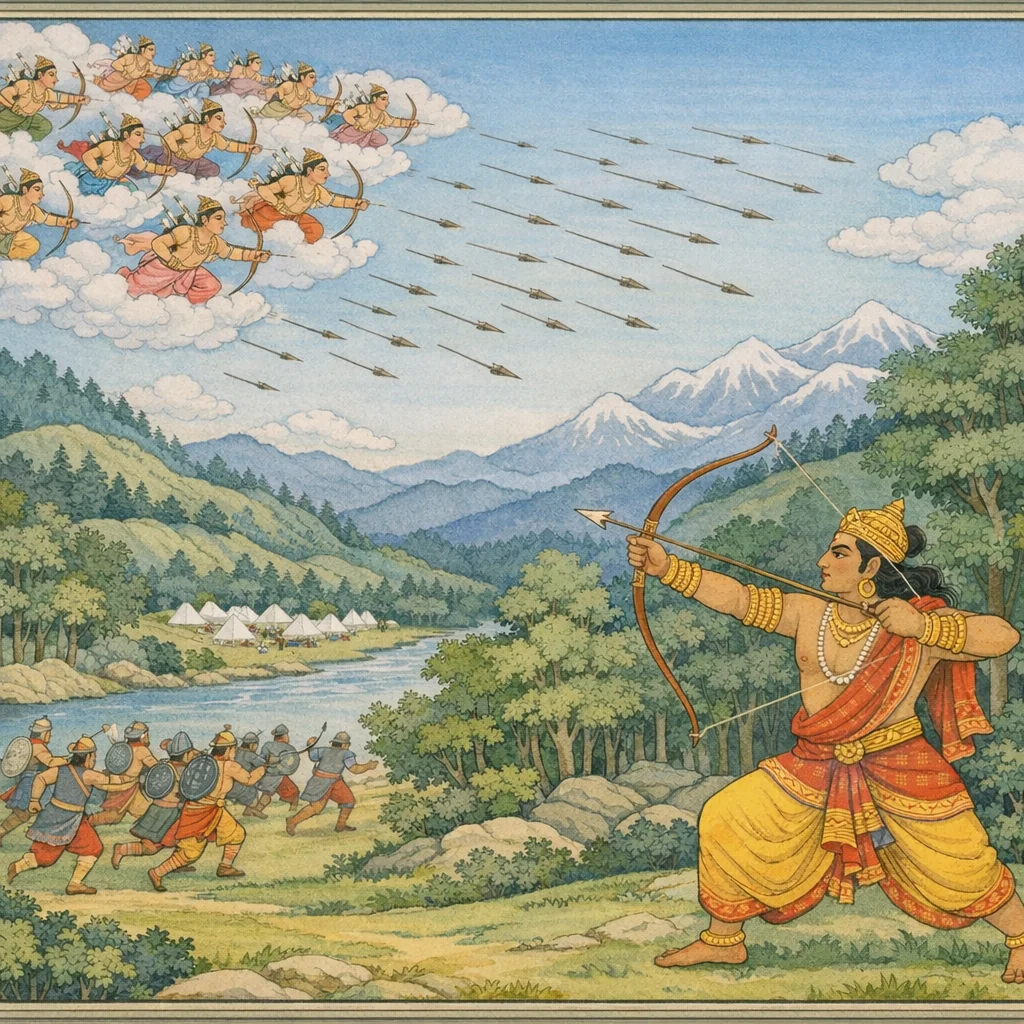
Chapter Arc: गन्धर्वों की महाचमू को अपनी ओर उमड़ते देख कौरव-सेना में भगदड़ मचती है; पर सबके पीठ फेरते समय भी दुर्योधन अकेला अडिग दिखता है। → दुर्योधन शरवर्षा से गन्धर्वों को रोकने का यत्न करता है, पर उसकी सेना पहले ही टूट चुकी होती है। भयभीत धार्तराष्ट्र-सैनिक पाण्डवों की ओर भागते हैं—शत्रु से सहायता माँगने की विवशता कौरव-गौरव को चीर देती है। भीमसेन कटु उपहास करता है, और युधिष्ठिर उसे समयोचित मर्यादा में बाँधते हैं। → कौरव-सैनिक प्रत्यक्ष देखते हैं कि यह संघर्ष ‘अतिमानुष’ है—गन्धर्वों का प्रचण्ड आक्रमण और कौरवों की पराजय; दुर्योधन का हठ और सेना का पलायन एक साथ दृश्य को चरम पर ले जाते हैं। → युधिष्ठिर क्रोध-उपहास को रोककर नीति का मार्ग चुनते हैं—विपत्ति में पड़े शत्रु पर अनावश्यक परुषता नहीं; पाण्डवों के सामने अब निर्णय है कि वे इस संकट में क्या भूमिका लें। → कौरव-सेना पाण्डवों की शरण में आ पहुँची है—क्या पाण्डव गन्धर्वों के विरुद्ध हस्तक्षेप करेंगे, और दुर्योधन की प्रतिष्ठा/स्वतंत्रता का क्या होगा?
Shlokas
Verse 1
हि मय ० () है 7 - लोहेकी चद्दर या सीकड़ोंका बना हुआ आवरण वरूथ कहलाता है। पहले यह शत्रुके आघातसे रथको रक्षित रखनेके लिये उसके ऊपर डाला जाता था। द्विचत्वारिशर्दाधिकद्विशततमो< ध्याय: गन्धर्वोद्वारा दुर्योधन आदिकी पराजय और उनका अपहरण वैशम्पायन उवाच गन्धर्वैस्तु महाराज भग्ने कर्णे महारथे । सम्प्राद्रवच्चमू: सर्वा धार्तराष्ट्रस्य पश्यत:,वैशम्पायनजी कहते हैं--महाराज! गन्धर्वोने जब महारथी कर्णको भगा दिया, तब दुर्योधनके देखते-देखते उसकी सारी सेना भी भाग चली
Vaiśampāyana said: O great king, when the Gandharvas routed Karṇa, that mighty chariot-warrior, the entire army of Dhṛtarāṣṭra—before Duryodhana’s very eyes—broke into flight. The scene underscores how pride and aggression, when unsupported by righteousness and clear judgment, can collapse suddenly into panic and disgrace.
Verse 2
तान् दृष्टवा द्रवतः सर्वान् धार्तराष्ट्रानू पराड्मुखान् । दुर्योधनो महाराजो नासीत् तत्र पराड्मुख:,धृतराष्ट्रके सभी पुत्रोंको युद्धसे पीठ दिखाकर भागते देखकर भी राजा दुर्योधन स्वयं वहीं डटा रहा। उसने पीठ नहीं दिखायी
Vaiśampāyana said: Seeing all the sons of Dhṛtarāṣṭra fleeing with their backs turned, King Duryodhana alone did not turn away there. Even as his own side broke and ran, he stood his ground, refusing to show his back in battle—an image of steadfast courage, though placed in the service of an unrighteous cause.
Verse 3
तामापतन्तीं सम्प्रेक्ष्य गन्धर्वाणां महाचमूम् । महता शरवर्षेण सो< भ्यवर्षदरिंदम:,गन्धरवोकी उस विशाल सेनाको अपनी ओर आती देख शत्रुओंका दमन करनेवाले वीर दुर्योधनने उसपर बाणोंकी बड़ी भारी वर्षा प्रारम्भ कर दी
Vaiśampāyana said: Seeing that great host of the Gandharvas rushing toward him, the enemy-subduing hero Duryodhana began to shower it with a mighty rain of arrows. The scene underscores how pride and the urge to dominate can drive one to meet overwhelming force with escalation rather than restraint.
Verse 4
अचिन्त्य शरवर्ष तु गन्धर्वास्तस्य तं रथम् । दुर्योधनं जिघांसन्त: समन््तात् पर्यवारयन्,परंतु गन्धवॉने उस बाणवर्षाकी कुछ भी परवाह नहीं की। उन्होंने दुर्योधनको मार डालनेकी इच्छासे उसके रथको चारों ओरसे घेर लिया
Vaiśampāyana said: Though an inconceivable shower of arrows was being poured forth, the Gandharvas paid it no heed. Intent on killing Duryodhana, they surrounded his chariot on every side—showing how reckless aggression and pride can draw one into peril when confronted by a superior force.
Verse 5
युगमीषां वरूथं च तथैव ध्वजसारथी । अश्वांस्त्रिवेणुं तल्पं च तिलशो व्यधमउछ्छरै:,और उसके युग, ईषादण्ड, वरूथ, ध्वजा, सारथि, घोड़ों, तीन वेणुदण्डवाले छत्र और तल्प (बैठनेके स्थान)-को बाणोंद्वारा तिल-तिल करके काट डाला
Vaiśampāyana said: With swift, piercing arrows he cut to pieces—bit by bit—the chariot’s yoke and pole, its protective frame, the banner and the charioteer, the horses, the triple-bamboo parasol, and even the seat. The scene underscores the ruthless precision of martial skill: in war, mastery can dismantle not only weapons but also the very supports—symbols of status and command—that uphold an opponent’s power.
Verse 6
दुर्योधन चित्रसेनो विरथं पतितं भुवि । अभिद्र॒त्य महाबाहुर्जीवग्राहमथाग्रहीत्,उस समय दुर्योधन रथहीन होकर धरतीपर गिर पड़ा। यह देख महाबाहु चित्रसेनने झटपट जाकर उसे जीते-जी ही बंदी बना लिया
Vaiśaṃpāyana said: When Duryodhana, deprived of his chariot, fell to the ground, the mighty-armed Citrasena rushed upon him and seized him alive, taking him captive. The episode underscores a restraint amid conflict: the victor chooses capture over killing, turning battlefield dominance into a lesson in measured power and the consequences of arrogance.
Verse 7
तस्मिन् गृहीते राजेन्द्र स्थितं दुःशासन रथे | पर्यगृह्नन्त गन्धर्वा: परिवार्य समन््तत:,राजेन्द्र! दुर्योधनके कैद हो जानेपर गन्धर्वोंने रथपर बैठे हुए दुःशासनको भी सब ओरसे घेरकर पकड़ लिया
Vaiśampāyana said: “O king, when Duryodhana had been seized, the Gandharvas, having surrounded him on every side, also closed in upon Duḥśāsana as he remained seated in the chariot and took him captive.” The episode underscores how arrogance and unrighteous aggression can lead to sudden reversal, where power and retinue fail to protect those who persist in adharma.
Verse 8
विविंशतिं चित्रसेनमादायान्ये विदुद्रुवु: । विन्दानुविन्दावपरे राजदारांश्व सर्वश:,अन्य कितने ही गन्धर्व धृतराष्ट्रके पुत्र चित्रसेन और विविंशतिको बंदी बनाकर ले चले। कुछ अन्य गन्धर्वोने विन्दर और अनुविन्दको तथा राजकुलकी समस्त महिलाओंको भी अपने अधिकारमें ले लिया
Vaiśampāyana said: Some of the Gandharvas seized Viviṁśati and Citrasena and hurried away. Others took Vindā and Anuvindā, and likewise brought all the royal women under their control. The episode underscores how, amid conflict, the vulnerable—especially women and noncombatants—become targets of coercion, raising a sharp ethical contrast between mere victory and conduct aligned with dharma.
Verse 9
सैन्यं तद् धार्तराष्ट्रस्य गन्धर्वै: समभिद्रुतम् । पूर्व प्रभग्ना: सहिता: पाण्डवानभ्ययुस्तदा,गन्धवॉने दुर्योधनकी सारी सेनाको मार भगाया था। वह सेना तथा उसके वे सैनिक, जो पहलेसे ही मैदान छोड़कर भाग गये थे, सब एक साथ पाण्डवोंकी शरणमें गये
Vaiśampāyana said: The army of Dhṛtarāṣṭra’s sons was fiercely assailed by the Gandharvas. Then those troops—already broken and scattered earlier—gathered together and went to the Pāṇḍavas for refuge. The episode underscores how arrogance and unrighteous aggression can end in humiliation, and how even enemies may be compelled to seek protection when overpowered.
Verse 10
शकटापणवेशाश्व यानयुग्यं च सर्वश: । शरणं पाण्डवान् जम्मुर्हियमाणे महीपतौ,गन्धर्व जब राजा दुर्योधनको बंदी बनाकर ले जाने लगे, उस समय छकड़े, रसदकी दूकान, वेष-भूषा, सवारी ढोने तथा कंधोंपर जुआ रखकर चलनेमें समर्थ बैल आदि सब उपकरणोंको साथ ले कौरव-सैनिक पाण्डवोंकी शरणमें गये
Vaiśampāyana said: When the king was being carried off (as a captive), the Kaurava soldiers—taking along everything in confusion, such as carts, provisions and market-stores, garments and equipment, horses and other conveyances, and beasts fit for the yoke—went to the Pāṇḍavas for refuge. In the face of sudden calamity, they sought protection from those whom they had formerly opposed, revealing how dharma and strength become a shelter even for enemies when arrogance collapses.
Verse 11
सैनिक बोले--कुन्तीकुमारो! हमारे प्रियदर्शी महाबाहु महाबली धूृतराष्ट्रकुमार राजा दुर्योधनको गन्धर्व (बाँधकर) लिये जाते हैं। आपलोग उनकी रक्षाके लिये दौड़िये। वे दुःशासन, दुर्विषह, दुर्मुख, दुर्जय तथा कुरुकुलकी सब स्त्रियोंको भी कैद करके लिये जा रहे हैं
The soldiers cried out: “O son of Kuntī! Our handsome, mighty-armed, and powerful prince of Dhṛtarāṣṭra—King Duryodhana—is being carried off by the Gandharvas, bound captive. Run quickly to protect him! They are also taking away Duḥśāsana, Durviṣaha, Durmukha, and Durjaya, and even the women of the Kuru house, seized and led off as prisoners.”
Verse 12
दुःशासनो दुर्विषहो दुर्मुखो दुर्जयस्तथा । बद्ध्वा हियन्ते गन्धर्व राजदाराश्न सर्वश:,सैनिक बोले--कुन्तीकुमारो! हमारे प्रियदर्शी महाबाहु महाबली धूृतराष्ट्रकुमार राजा दुर्योधनको गन्धर्व (बाँधकर) लिये जाते हैं। आपलोग उनकी रक्षाके लिये दौड़िये। वे दुःशासन, दुर्विषह, दुर्मुख, दुर्जय तथा कुरुकुलकी सब स्त्रियोंको भी कैद करके लिये जा रहे हैं
Vaiśampāyana said: “Duḥśāsana, Durviṣaha, Durmukha, and Durjaya as well are being seized and carried off in bonds; and along with them, all the women of the Kuru royal household are being taken away by the Gandharvas.” The report underscores a sudden reversal of power: those who had relied on force and pride are now helpless, and the crisis tests whether the opposing side will act from kṣatriya duty and compassion rather than vengeance.
Verse 13
इति दुर्योधनामात्या: क्रोशन्तो राजगृद्धिन: । आर्ता दीनास्तत: सर्वे युधिष्ठिरमुपागमन्,राजाको हृदयसे चाहनेवाले दुर्योधनके सब मन्त्री आर्त एवं दीन होकर उपर्युक्त बातें जोर-जोरसे कहते हुए युधिष्ठिरके समीप गये
Vaiśampāyana said: Thus, Duryodhana’s ministers—crying out loudly, greedy for royal power—came to Yudhiṣṭhira. Distressed and humbled, they approached him while proclaiming those words, revealing how political craving and fear can drive even high officials to seek refuge from the very person they have opposed.
Verse 14
तांस्तथा व्यथितान् दीनान् भिक्षमाणान् युधिष्ठटिरम् वृद्धान् दुर्योधनामात्यान् भीमसेनो 5 भ्यभाषत,दुर्योधनके उन बूढ़े मन्त्रियोंको इस प्रकार दीन एवं दुःखी होकर युधिष्ठिरसे सहायताकी भीख माँगते देख भीमसेनने कहा--
Vaiśampāyana said: Seeing Duryodhana’s aged ministers—distressed and humbled—approach Yudhiṣṭhira to beg for help, Bhīmasena addressed them. The scene underscores the reversal of fortune: those once aligned with arrogance and injustice are now compelled to seek refuge from the very side they opposed, raising questions of compassion, duty, and the ethics of aiding former adversaries.
Verse 15
महता हि प्रयत्नेन संनह् गजवाजिभि: | अस्माभिर्यदनुष्ेयं गन्धर्वैस्तदनुछितम्,“हमें हाथी-घोड़ों आदिके द्वारा बहुत प्रयत्न करके कमर कसकर जो काम करना चाहिये था, उसे गन्धर्वोंने ही पूरा कर दिया
Vaiśaṃpāyana said: 'With great effort, fully prepared with elephants and horses, the task that ought to have been carried out by us has instead been accomplished by the Gandharvas.' The line underscores a moral sting: human plans and martial readiness can be rendered futile when a more capable or divinely aided force fulfills what one failed to do.
Verse 16
अन्यथा वर्तमानानामर्थों जातो5यमन्यथा । दुर्मन्त्रितमिदं तावदू राज्ञो दुर्दृतदेविन:,'ये कौरव कुछ और ही करना चाहते थे; परंतु इन्हें उलटा परिणाम देखना पड़ा। कपट्द्यूत खेलनेवाले राजा दुर्योधनका यह दुर्मन्त्रणापूर्ण षड्यन्त्र था, जो सफल न हो सका
The outcome turned out contrary to what those men were pursuing; the meaning of their actions became the very opposite of what they intended. This, indeed, was a badly conceived scheme of the king Duryodhana—devised with crooked counsel—yet it failed to achieve its aim.
Verse 17
द्वेष्टारमन्ये क्लीबस्य पातयन्तीति नः श्रुतम् इदं कृत॑ नः प्रत्यक्ष॑ं गन्धर्वैरतिमानुषम्,“हमने सुना है, जो लोग असमर्थ पुरुषोंसे द्वेष करते हैं, उन्हें दूसरे ही लोग नीचा दिखा देते हैं। गन्धरवोने आज अलौकिक पराक्रम करके हमारी इस सुनी हुई बातको प्रत्यक्ष कर दिखाया
Verse 18
दिष्ट्या लोके पुमानस्ति कश्रिदस्मत्प्रिये स्थित: । येनास्माकं हृतो भार आसीनानां सुखावह:,'सौभाग्यकी बात है कि संसारमें कोई ऐसा भी पुरुष है, जो हमलोगोंके प्रिय एवं हितसाधनमें लगा हुआ है। उसने हमलोगोंका भार उतार दिया और हमें बैठे-ही-बैठे सुख पहुँचाया है
Verse 19
शीतवातातपसहांस्तपसा चैव कर्शितान् | समस्थो विषमस्थान हि द्रष्टमिच्छति दुर्मति:,“हम सर्दी, गर्मी और हवाका कष्ट सहते हैं, तपस्यासे दुर्बल हो गये हैं और विषम परिस्थितिमें पड़े हैं, तो भी वह दुर्बुद्धि दुर्योधन, जो इस समय राजगद्दीपर बैठकर मौज उड़ा रहा है, हमें इस दुर्दशामें देखनेकी इच्छा रखता है
Vaiśampāyana said: “Though we endure cold, wind, and scorching heat, though we have been worn down by austerities and are living in harsh and uneven circumstances, that wicked-minded Duryodhana—secure on the royal throne and indulging in comfort—still desires to come and look upon us in this wretched state.”
Verse 20
अधर्मचारिणस्तस्य कौरव्यस्य दुरात्मन: । ये शीलमनुवर्तन्ते ते पश्यन्ति पराभवम्,“उस पापाचारी दुरात्मा कौरवके स्वभावका जो लोग अनुसरण करते हैं, वे भी अपनी पराजय देखते हैं
Vaiśaṃpāyana said: “Those who follow the conduct and disposition of that wicked Kaurava—who lives by adharma—come to witness their own downfall.”
Verse 21
अधर्मो हि कृतस्तेन येनैतदुपशिक्षितम् | अनृशंसास्तु कौन्तेयास्तत् प्रत्यक्ष ब्रवीमि व:,“जिसने दुर्योधनको यह सलाह दी है कि वह वनमें पाण्डवोंसे मिलकर उनकी हँसी उड़ावे, उसने बड़ा भारी पाप किया है। कुन्तीके पुत्र कभी क्रूरतापूर्ण बर्ताव नहीं करते, मैं यह बात आपलोगोंके सामने कह रहा हूँ!
Vaishampayana said: “A grave wrong has been committed by the one who instructed this—whoever advised that Duryodhana should go to the forest, meet the Pāṇḍavas, and mock them. The sons of Kuntī are not cruel by nature; I declare this plainly before you all.”
Verse 22
एवं ब्रुवाणं कौन्तेयं भीमसेनमपस्वरम् । न काल: परुषस्यायमिति राजाभ्यभाषत,कुन्तीनन्दन भीमसेनको इस प्रकार विकृत स्वरमें बात करते देख राजा युधिष्ठिरने कहा --'भैया! यह कड़वी बातें कहनेका समय नहीं है”
Seeing Kunti’s son Bhīmasena speaking in a strained, harsh tone, the king (Yudhiṣṭhira) addressed him: “This is not the time for bitter and cutting words.”
Verse 131
सैनिका ऊचु: प्रियदर्शी महाबाहुर्धातराष्ट्री महाबल: । गन्धर्वर्हियते राजा पार्थास्तमनुधावत
The soldiers said: “The handsome, mighty-armed, and very powerful Dhārtarāṣṭra prince—our king—is being carried off by the Gandharvas. O sons of Pṛthā, pursue them!”
Verse 241
इस प्रकार श्रीमहाभारत वनपर्वके अन्तर्गत घोषयात्रापर्वमें कर्णपराजयविषयक दो सौ इकतालीसवाँ अध्याय पूरा हुआ ॥/
Thus ends the two-hundred and forty-first chapter of the Karṇa’s defeat episode, within the Ghoṣayātrā section of the Vana Parva of the Śrī Mahābhārata. The narrator marks the close of this unit, signaling a completed narrative movement in which pride and aggression meet reversal, and the moral arc of consequence is reaffirmed.
Verse 242
इति श्रीमहाभारते वनपर्वणि घोषयात्रापर्वणि दुर्योधनादिहरणे द्विचत्वारिंशदधिकद्विशततमो 5 ध्याय:,इस प्रकार श्रीमह्याभारत वनपव्वके अन्तर्गत घोषयात्रापर्वमें दुर्योधन आदिका अपहरणविषयक दो सौ बयालीसवाँ अध्याय पूरा हुआ
Thus, in the Śrī Mahābhārata, within the Vana Parva, in the section concerning the cattle-march (Ghoṣa-yātrā), the chapter dealing with the abduction of Duryodhana and his party comes to an end—this being the two-hundred-and-forty-second chapter. The colophon marks the completion of the episode, framing it as a moral turning-point where pride and aggression meet humiliation and restraint becomes the implied lesson.
Frequently Asked Questions
The chapter highlights the ethical instability of prestige politics: ritual merit and public praise are leveraged toward hostile intent, raising the dilemma of whether royal legitimacy can remain dharmic when yoked to envy-driven objectives.
Public acclaim and ritual success do not, by themselves, certify moral excellence; vows and reputational narratives function as instruments of power, and prudent judgment requires separating ceremonial achievement from ethical intent.
No explicit phalaśruti is stated here; the meta-function is narrative and ethical—showing how reports, vows, and ritual discourse reshape decisions, especially Yudhiṣṭhira’s loss of calm and the move toward leaving Dvāitavana.