Adhyaya 229
द्वैतवन-सरः प्रवेशविघ्नः (Dvaītavana Lake: Obstructed Entry)
Upa-parva: Dvaītavana (Gandharva-Encounter) Episode
Vaiśaṃpāyana describes Duryodhana’s movement through forest settlements and the establishment of an encampment in a well-watered, verdant region. The Kaurava party organizes separate quarters for key figures (including Karṇa and Śakuni), surveys and marks large cattle herds and calves, and engages in recreation with townsfolk, soldiers, herdsmen, and ornamented maidens; gifts and provisions are distributed in festive mode. The group then ranges outward in hunting and capture activities and proceeds toward the auspicious Dvaītavana lake, portrayed as richly adorned by flowering woods and wildlife. In parallel, Yudhiṣṭhira is noted as performing a forest-based rājarṣi sacrifice by a ‘divine’ woodland procedure, with Draupadī present, establishing a contrasting ritual-ethical register. Duryodhana orders rapid preparation of play-residences near the lake; when the vanguard attempts entry, Gandharvas—already occupying the area with their king, attendants, and apsarases for recreation—block access. Messengers report back; Duryodhana responds by dispatching aggressive troops to expel them. The Gandharvas answer with derision and a harsh rebuke, rejecting subordination and ordering the envoys to depart, after which the Kaurava vanguard retreats in alarm, setting the stage for ensuing confrontation.
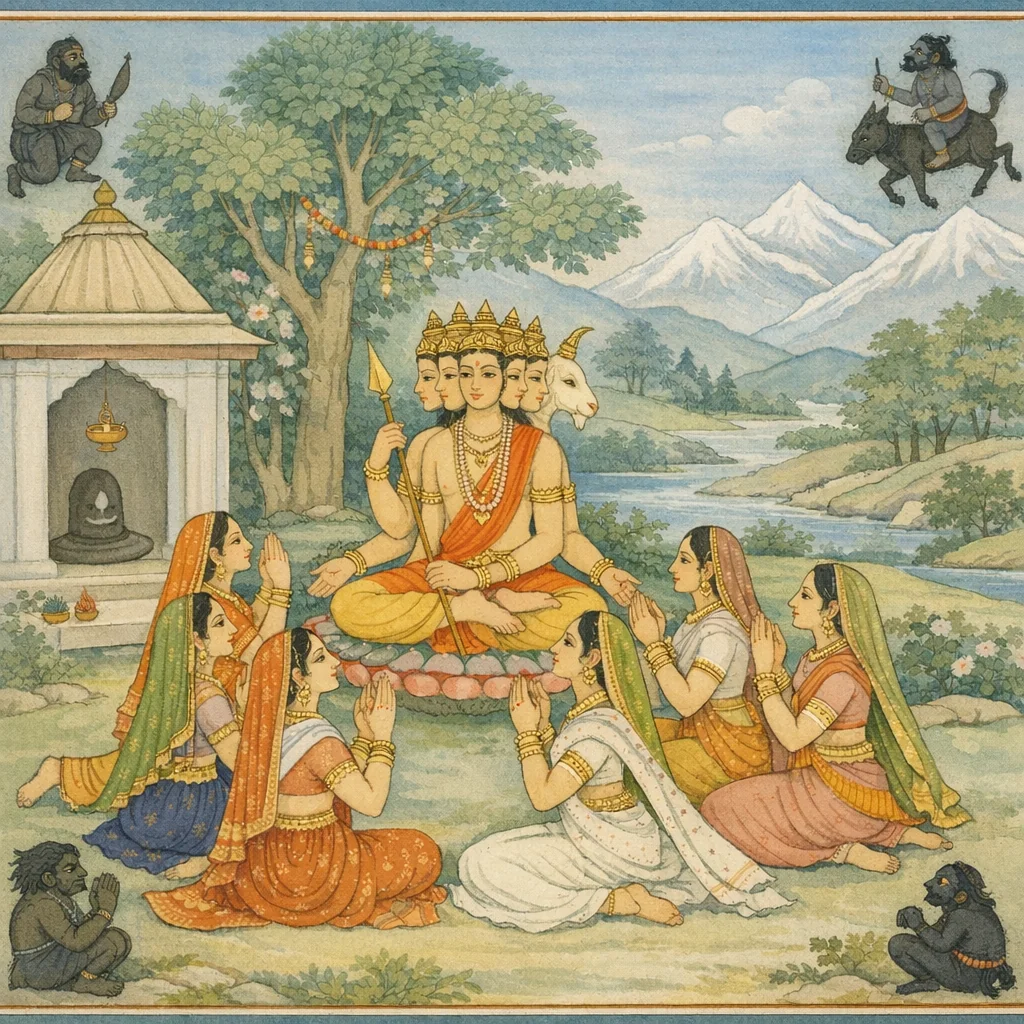
Chapter Arc: Markandeya begins a dread-laced catalogue of Skanda’s ghastly attendants—beings of astonishing forms whose very mention chills the listener. → The narration turns to the Kumaragrahas: cruel, powerful entities said to seize newborns and even harm those in the womb; their origins and temperaments are unfolded, and their connection to Skanda’s sphere of protection-and-terror is made explicit. → Skanda is approached by the newly arisen maidens/ मातृगण, who ask, “What shall we do?” and then plead for a boon: to be revered as foremost Mothers of the world by his grace—Skanda grants and ordains their distinct modes of worship and identity. → Markandeya clarifies Skanda’s multi-faced nature—especially the sixth, goat-faced aspect—and names the pre-eminence of one head (Bhadrashakha) linked with the creation of divine Shakti; the account is anchored to ritual time (notably Shukla Panchami and the fierce events associated with Shashthi), explaining why these forms are remembered and propitiated.
Shlokas
Verse 1
कह. “+ (9) #25:.# #2५.7 अष्टाविशर्त्याधिकद्विशततमो< ध्याय: स्कन्दके पार्षदोंका वर्णन मार्कण्डेय उवाच स्कन्दपारिषदान् घोराज्शूणुष्वाद्भुतदर्शनान् | वज्प्रहारात् स्कन्दस्य जज्ञुस्तत्र कुमारका:,मार्कण्डेयजी कहते हैं--राजन्! अब तुम स्कन्दके भयंकर पार्षदोंका वर्णन सुनो, जो देखनेमें बड़े अद्भुत हैं। वज़का प्रहार होनेपर स्कन्दके शरीरसे वहाँ बहुत-से कुमार ग्रह उत्पन्न हुए
Mārkaṇḍeya said: “O King, now listen to the account of Skanda’s fearsome attendants—beings of astonishing appearance. When the thunderbolt struck, many youthful spirits (Kumāra-grāhas) were born there from Skanda’s own body.”
Verse 2
ये हरन्ति शिशूज्जातान् गर्भस्थांश्वैव दारुणा: । वज्प्रहारात् कन्याश्व जज्ञिरेडस्य महाबला:,वे क्रूर स्वभाववाले कुमारग्रह नवजात तथा गर्भस्थ शिशुओंको भी हर ले जाते हैं। इन्द्रके वज़--प्रहारसे स्कन्दके शरीरसे वहाँ अत्यन्त बलशालिनी कन्याएँ भी उत्पन्न हुई थीं
Verse 3
कुमारास्ते विशाखं च पितृत्वे समकल्पयन् | स भूत्वा भगवान् संख्ये रक्ष॑श्छागमुखस्तदा
Markandeya said: Those youths also appointed Viśākha to the role of their father. Then that revered being, taking form in the midst of battle as a rākṣasa with a goat’s face, acted accordingly. The episode underscores how roles and authority can be ritually or socially conferred, and how formidable power may assume fearsome forms to protect or to test the moral resolve of others.
Verse 4
वृतः कन्यागणै: सर्वैरात्मीयै: सह पुत्रकै: । मात्णां प्रेक्षमाणानां भद्रशाखश्च॒ कौसल:
Markandeya said: Surrounded by all the maidens of his own household, along with their children, and watched by the mothers, the prince of Kosala—Bhadraśākha—stood amidst them.
Verse 5
पूर्वोक्त कुमार-ग्रहोंने विशाख (स्कन्द)-को अपना पिता माना। भगवान् स्कन्द बकरेके समान मुख धारण करके समस्त कन्यागणों और अपने पुत्रोंसे घिरकर मातृकाओंके देखते- देखते युद्धमें अपने पक्षकी रक्षा करते हैं। वे ही “भद्रशाख” तथा “कौसल' नामसे प्रसिद्ध हुए हैं ।। ततः कुमारपितरं स्कन्दमाहुर्जना भुवि । रुद्रमग्निमुमां स्वाहां प्रदेशेषु महाबलाम्
Then people on earth proclaimed Skanda to be the ‘father of the Kumāras’. In various regions they also revered the mighty divine powers—Rudra, Agni, Umā, and Svāhā—recognizing their roles in the origin, protection, and ordering of these fierce child-seizing forces. The narrative frames how communities explain and ritually manage dangerous, liminal beings by locating them within a divine genealogy and sphere of worship.
Verse 6
यास्तास्त्वजनयत् कन्यास्तपो नाम हुताशन:
Mārkaṇḍeya said: “Those very maidens were brought forth by the Fire-god, who was known by the name ‘Tapa’.”
Verse 7
कुमार्य ऊचु. भवेम सर्वलोकस्य मातरो वयमुत्तमा:
The maidens said: “May we become the exalted mothers of all the worlds.” In this aspiration lies a vision of universal beneficence—seeking not private gain but a role that nurtures and protects all beings, aligning personal desire with a wider moral responsibility.
Verse 8
सो<ब्रवीद् बाढमित्येवं भविष्यध्वं पृथग्विधा:,तब उदारबुद्धि स्कन्दने बार-बार कहा--“बहुत अच्छा, तुम सब लोग पृथक्-पृथक् पूजनीया माता मानी जाओगी। तुम्हारे दो भेद होंगे--शिवा और अशिवा।' तदनन्तर स्कन्दको अपना पुत्र मानकर मातृकाएँ वहाँसे विदा हो गयीं
Mārkaṇḍeya said: “So he replied, ‘Very well.’ ‘You shall each become distinct in form and function, and you will be regarded separately as venerable Mothers. You will have two broad divisions—auspicious and inauspicious.’ After this, accepting Skanda as their son, the Mothers departed from that place. The passage frames a moral ordering of divine powers: even fearsome forces are brought under a recognized, worship-worthy structure, distinguishing what protects from what harms.
Verse 9
शिवाश्रैवाशिवाश्वैव पुन: पुनरुदारधी: । ततः संकल्प्य पुत्रत्वे स्कन्दं मातृगणो5गमत्,तब उदारबुद्धि स्कन्दने बार-बार कहा--“बहुत अच्छा, तुम सब लोग पृथक्-पृथक् पूजनीया माता मानी जाओगी। तुम्हारे दो भेद होंगे--शिवा और अशिवा।' तदनन्तर स्कन्दको अपना पुत्र मानकर मातृकाएँ वहाँसे विदा हो गयीं
Mārkaṇḍeya said: With generous understanding, Skanda again and again declared, “You shall be revered as mothers, each in your own right—of two kinds, auspicious (Śivā) and inauspicious (Aśivā).” Having thus resolved to accept Skanda in the relation of a son, the host of Mother-goddesses then departed from that place. The episode frames a moral ordering of powerful forces: even fearsome energies are given a rightful place through recognition, classification, and disciplined reverence.
Verse 10
काकी च हलिमा चैव मालिनी बृंहता तथा । आर्या पलाला वैमित्रा सप्तैता: शिशुमातर:,काकी, हलिमा, मालिनी, बृंहता, आर्या, पलाला और वैमित्रा--ये सातों शिशुकी माताएँ हैं
Mārkaṇḍeya said: “Kākī, Halimā, Mālinī, and likewise Bṛṃhatā; also Āryā, Palālā, and Vaimitrā—these seven are the mothers (nurturing guardians) of the child.”
Verse 11
एतासां वीर्यसम्पन्न: शिशर्नामातिदारुण: । स्कन्दप्रसादज: पुत्रो लोहिताक्षो भयंकर:,भगवान् स्कन्दकी कृपासे इन्हें शिशु नामक एक अत्यन्त पराक्रमी पुत्र प्राप्त हुआ, जो अत्यन्त दारुण और भयंकर था। उसकी आँखें रक्तवर्णकी थीं
Mārkaṇḍeya said: “From these women there was born, by the grace of Skanda, a son named Śiśu—endowed with great prowess, exceedingly fierce and terrifying, with eyes red as blood.”
Verse 12
एष वीराष्टक: प्रोक्त: स्कन्दमातृगणोद्धव: । छागवकक््त्रेण सहितो नवक: परिकीर्त्यते,शिशु और मातृगणोंको लेकर जो आठ व्यक्ति होते हैं, उन्हें “वीराष्टक” कहा गया है। बकरेके-से मुखसे युक्त स्कन्दको सम्मिलित करनेसे यह समुदाय वीर-नवक कहा जाता है
Mārkaṇḍeya said: “This group is declared to be the ‘Vīrāṣṭaka’—the eight heroic beings that arise in connection with Skanda and the host of Mother-goddesses. When Skanda, distinguished by a goat-like face, is included with them, the collective is then spoken of as a ‘Vīra-navaka’, the ninefold heroic group.”
Verse 13
षष्ठं छागमयं वक्त्रं स्कन्दस्यैवेति विद्धि तत् । षट्शिरो< भ्यन्तरं राजन् नित्यं मातृगणार्चितम्,युधिष्ठिर! स्कन्दका ही छठा मुख छागमय है, यह जान लो। राजन! वह छ: सिरोंके बीचमें स्थित है और मातृकाएँ सदा उसकी पूजा करती हैं
Mārkaṇḍeya said: “Know this: Skanda has a sixth face that is goat-formed. O king, it abides within the circle of his six heads, and the host of Mother-goddesses continually worships it.”
Verse 14
षण्णां तु प्रवरं तस्य शीर्षाणामिह शब्द्यते । शक्ति येनासृजद् दिव्यां भद्रशाख इति सम ह,स्कन्दके छहों मस्तकोंमें वही सर्वश्रेष्ठ बताया जाता है। उन्होंने दिव्यशक्तिका प्रयोग किया था; इसलिये उनका नाम भद्रशाख हुआ
Mārkaṇḍeya said: “Among his six heads, one is here spoken of as the foremost. Because he brought forth (or employed) a divine power, he came to be known by the name ‘Bhadraśākha.’”
Verse 15
इत्येतद् विविधाकाररं वृत्तं शुक्लस्य पठचमीम् | तत्र युद्ध महाघोरें वृत्तं षष्ठ्यां जनाधिप,नरेश्वर! इस प्रकार शुक्लपक्षकी पंचमी तिथिको विविध आकारवाले पार्षदोंकी सृष्टि हुई और षष्ठीको वहाँ अत्यन्त भयंकर युद्ध हुआ
Markandeya said: “Thus, on the fifth lunar day of the bright fortnight, this manifold, many-formed manifestation came to be. Then, O king, O lord of men, on the sixth day there occurred there a supremely dreadful battle.”
Verse 53
यजन्ति पुत्रकामाश्च पुत्रिणश्व सदा जना: । इसीलिये भूतलके मनुष्य स्कन्दको कुमार-ग्रहोंका पिता कहते हैं। भिन्न-भिन्न स्थानोंमें पुत्रवान् तथा पुत्रकी इच्छा रखनेवाले मनुष्य अग्निस्वरूप रुद्र और स्वाहास्वरूपा महाबलवती उमाकी सदा आराधना करते हैं
Mārkaṇḍeya said: People—both those who long for sons and those already blessed with sons—continually perform worship and sacrifice. Hence, among humans on earth, Skanda is spoken of as the father of the Kumāra-grahas; and in many places men, whether seeking offspring or possessing it, ever revere Rudra in the form of fire and the mighty Umā in the form of Svāhā, seeing in their divine union the source of progeny and protection.
Verse 66
कि करोमीति ता: स्कन्दं सम्प्राप्ता:समभाषयन् | तप नामक अग्निने जिन कन्याओंको जन्म दिया, वे सब स्कन्दके पास आयीं और पूछने लगीं--“हम कया करें?”
Mārkaṇḍeya said: Having come into Skanda’s presence, those maidens addressed him, asking, “What should we do?” The moment frames a moral turning point: beings born through ascetic power and divine fire seek rightful direction from a worthy authority, implying that action should be guided by dharma rather than impulse or fear.
Verse 73
प्रसादात् तव पूज्याश्व प्रियमेतत् कुरुष्व न: । कुमारियाँ बोलीं--हम सब लोग सम्पूर्ण जगतकी श्रेष्ठ माताएँ हों और आपकी कृपासे हम सदा पूजनीय मानी जायाँ, यही हमारा प्रिय मनोरथ है, आप इसे पूर्ण कीजिये
Mārkaṇḍeya said: “O revered one, by your gracious favor, accomplish this dear wish of ours: may we become mothers of the highest excellence in the whole world, and by your blessing may we always be regarded as worthy of honor.”
Verse 228
इति श्रीमहाभारते वनपर्वणि मार्कण्डेयसमास्यापर्वणि आड्िरसे कुमारोत्पत्तौ अष्टाविंशत्यधिकद्धिशततमो<ध्याय:
Thus, in the Śrī Mahābhārata, within the Vana Parva, in the section summarizing Mārkaṇḍeya’s narration, in the episode concerning the birth of the Kumāra (Skanda), ends the two-hundred-and-twenty-eighth chapter. The colophon formally closes the chapter, situating the teaching within Mārkaṇḍeya’s authoritative discourse and the sacred narrative of divine origins.
Frequently Asked Questions
The tension lies between asserted royal entitlement to space and resources versus recognition of a guarded domain with its own authority; the episode problematizes coercive orders when legitimacy and jurisdiction are uncertain.
It models how unexamined pride and impulsive enforcement can convert leisure into conflict; measured assessment of context, stakeholders, and proportionality is portrayed as strategically and ethically superior.
No explicit phalaśruti is stated in the provided passage; the chapter functions as narrative causation—establishing conditions and moral contrasts that contextualize subsequent events rather than concluding with a reward formula.