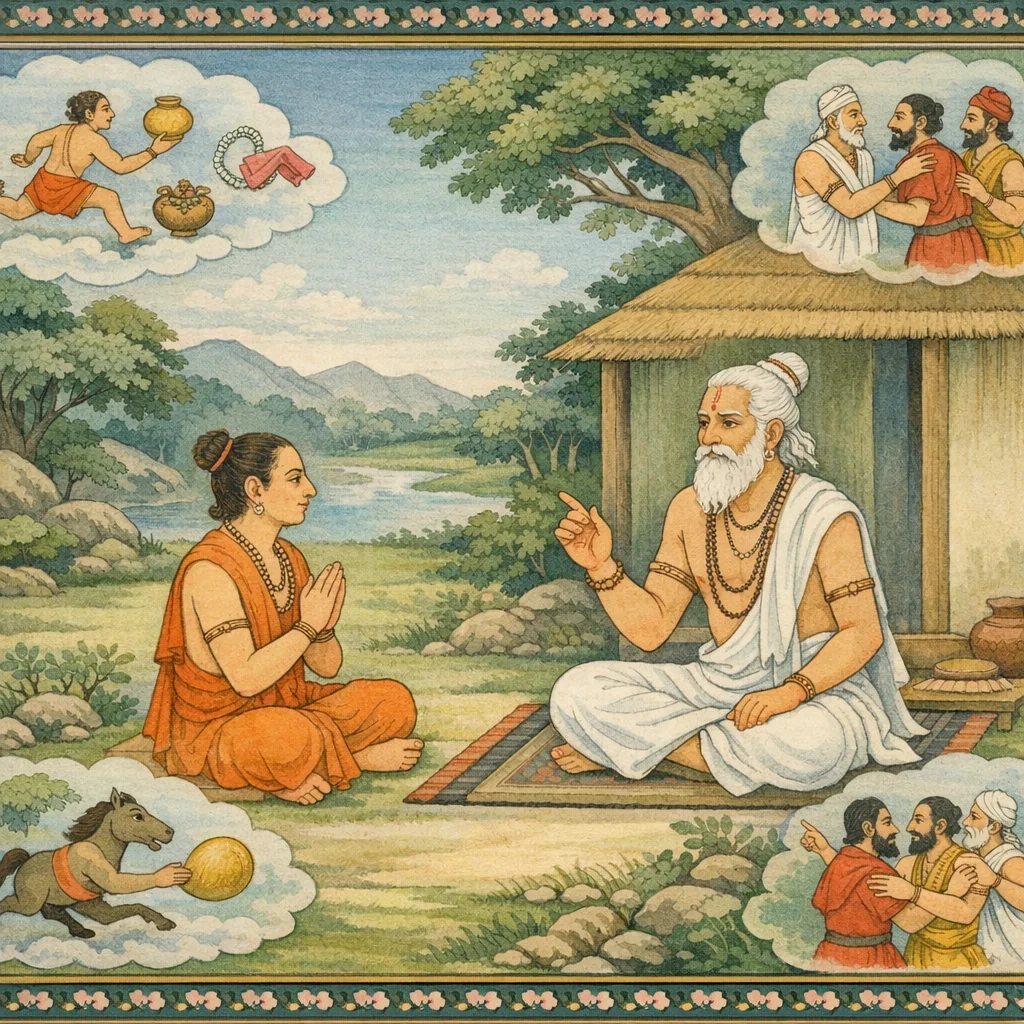
Adhyaya 211
अग्निनाम-प्रादुर्भावः प्रायश्चित्त-विधानं च (Agni’s Epithets, Manifestations, and Expiation Procedures)
Upa-parva: Mārkaṇḍeya-saṃvāda (Discourse of Sage Mārkaṇḍeya) — Agni-nāmāni and Prāyaścitta Instructions
Mārkaṇḍeya outlines a doctrinal-ritual catalogue of Agni. The chapter first explains how specific forms of fire are named and praised according to their functions—nourishing and sustaining beings (e.g., Bharata/Puṣṭimān), granting auspiciousness and relief to the afflicted (Śiva), and appearing through intensified tapas with cosmogonic implications (including the emergence of Purandara/Indra in relation to ascetic power). It then describes Agni’s generative and classificatory roles: heat (ūṣmā) as a perceivable principle in beings; Agni’s association with Prajāpati/Manu; and the enumeration of multiple Agni-forms, including those connected with ritual occasions (darśa-paurṇamāsa, āgrayaṇa, cāturmāsya) and household governance (Vaiśvānara, Viśvapati, Sviṣṭakṛt). The discourse extends to genealogical pairings (Bhānu and Somaja lineage motifs; progeny lists) and specialized identifications (e.g., Kapila as a fire-form linked with sāṃkhya-yoga provenance in this narrative register). The latter portion becomes prescriptive: it specifies prāyaścitta iṣṭis (notably with an eight-pot offering structure) for various contingencies affecting ritual fires—accidental contact between fires, intrusion by wildfire, contact by persons in restricted states, and lapses in prescribed offerings—thereby converting cosmological naming into a practical compliance framework for restoring ritual order.
Chapter Arc: धर्मव्याध द्विजश्रेष्ठ को स्मरण कराते हैं कि मन पहले विषयों की ओर दौड़ता है; वहीं से काम, क्रोध और लोभ का चक्र आरम्भ होता है—और धर्म का मुखौटा भी उसी चक्र में बन सकता है। → वे मनोविज्ञान की सूक्ष्म शृंखला खोलते हैं: राग होने पर मनुष्य विषय पाने हेतु बड़े कर्म आरम्भ करता है, इष्ट रूप-गन्ध आदि का अभ्यास करता है; फिर लोभ और राग-द्वेष से बुद्धि धर्म में नहीं टिकती, और ‘व्याज’ से धर्माचरण करने लगता है। हितैषी मित्र और पण्डित रोकते हैं, तो वह अशास्त्रीय तर्कों से अपने पाप को भी ‘धर्म’ सिद्ध करने लगता है। → धर्मव्याध का निर्णायक प्रहार: जो धर्म की आड़ लेकर धन/लाभ चाहता है, उसकी बुद्धि वहीं रमती है और वह पाप करने को उद्यत होता है—यह ‘धर्म’ नहीं, धर्म का छल है; और जब रोकने पर भी वह श्रुति-संगत उत्तर छोड़ अश्रुति-योजित समर्थन गढ़ता है, तब उसका पतन स्पष्ट हो जाता है। → इसके प्रतिपक्ष में वे बताते हैं कि कुशल पुरुष सुख-दुःख में सम रहता है, साधुओं का उपसेवन करता है; सत्संग से बुद्धि धर्म में प्रकाशित होती है। साथ ही वे इन्द्रिय-मन-बुद्धि के विषयों और तत्त्व-गणना (चौबीस तत्त्व) की ओर संकेत कर बताते हैं कि आत्मनिरीक्षण और तत्त्वबोध से ही वृत्तियों का शोधन सम्भव है। → तत्त्वों की गणना और ‘बुद्धिरूपी गुहा’ में छिपे विषयों का संकेत आगे के अधिक विस्तृत सांख्य/आध्यात्मिक विवेचन की भूमिका बाँध देता है।
Shlokas
Verse 1
हि >> मय >> (_) है 7 - कर्णपर्वके उनहत्तरवें अध्यायमें छियालीसवेंसे तिरपनवें श्लोकोंमें एक कथा आती है। कौशिक नामका एक तपस्वी ब्राह्मण था। उसने यह व्रत ले लिया कि “मैं सदा सत्य बोलूँगा।/ एक दिन कुछ लोग लुटेरोंके भयसे छिपनेके लिये उसके आश्रमके पासके वनमें घुस गये। खोज करते हुए लुटेरोंने सत्यवादी कौशिकसे पूछा। उनके पूछनेपर कौशिकने सच्ची बात कह दी। पता लग जानेपर उन निर्दयी डाकुओंने उन लोगोंको पकड़कर मार डाला। इस प्रकार सत्य बोलनेके कारण लोगोंकी हिंसा हो जानेसे उस पापके फलस्वरूप कौशिकको नरक जाना पड़ा। - धर्मकी गति सूक्ष्म होनेके कारण देखनेमें विपरीतता दीखती है; किंतु वास्तवमें वह पूर्वकृत कर्मोंका फल है। दशाधिकद्विशततमो< ध्याय: विषयसेवनसे हानि, 0 और ब्राद्दी विद्याका व मार्कण्डेय उवाच एवमुक्तस्तु विप्रेण धर्मव्याधो युधिष्ठिर । प्रत्युवाच यथा विप्र॑ तच्छूणुष्व नराधिप,मार्कण्डेयजी कहते हैं--राजा युधिष्ठिर! ब्राह्मणके इस प्रकार पूछनेपर धर्मव्याधने उसे जैसा उत्तर दिया था, वह सब सुनाता हूँ, सुनो
Mārkaṇḍeya said: “O Yudhiṣṭhira, when the brāhmaṇa had spoken in this way, the righteous hunter (Dharmavyādha) replied to him. O king, listen as I recount, in full, what that brāhmaṇa was told.”
Verse 2
व्याध उवाच विज्ञानार्थ मनुष्याणां मन: पूर्व प्रवर्तते । तत् प्राप्य काम॑ भजते क्रोधं च द्विजसत्तम,धर्मव्याधने कहा--द्विजश्रेष्ठ! इन्द्रियोंद्रारा किसी विषयका ज्ञान प्राप्त करनेके लिये सबसे पहले मनुष्योंका मन प्रवृत्त होता है। उस विषयको प्राप्त कर लेनेपर मनका उसके प्रति राग या द्वेष हो जाता है
The hunter said: “O best of the twice-born, when people seek to know an object through the senses, the mind is the first to move toward it. Having obtained that object, the mind then takes on desire for it—or anger as well.”
Verse 3
ततस्तदर्थ यतते कर्म चारभते महत् । इष्टानां रूपगन्धानामभ्यासं च निषेवते,जब किसी विषयमें राग होता है, तब मनुष्य उसे पानेके लिये प्रयत्नशील होता है और उसके लिये बड़े-बड़े कार्योका आरम्भ करता है। जब वे अभीष्ट रूप, गन्ध आदि विषय प्राप्त हो जाते हैं, तब वह उनका बारंबार सेवन करता है
“Then, driven by that attachment, a person strives to obtain the desired object and even undertakes great efforts and enterprises for it. And when the wished-for objects of sense—such as pleasing forms and fragrances—are obtained, he repeatedly indulges in them.”
Verse 4
ततो राग: प्रभवति द्वेषश्चन तदनन्तरम् | ततो लोभ: प्रभवति मोहश्न॒ तदनन्तरम्,उनके सेवनसे विषयोंके प्रति उत्कट राग प्रकट होता है। फिर उसकी प्रतिकूलतामें द्वेष होता है; द्वेषके अनन्तर अभीष्ट वस्तुके प्रति लोभका प्रादुर्भाव होता है। तत्पश्चात् बुद्धिपर मोह छा जाता है
“From that arises intense attachment; and immediately after it, aversion. From that arises greed; and immediately after it, delusion that clouds the intellect.”
Verse 5
ततो लोभाभिभूतस्य रागद्वेषहतस्य च । न धर्मे जायते बुद्धिर्व्याजाद् धर्म करोति च,इस प्रकार लोभसे आक्रान्त और राग-द्वेषसे पीड़ित मनुष्यकी बुद्धि धर्ममें नहीं लगती। यदि वह धर्म करता भी है तो कोई बहाना लेकर
Therefore, in a person overpowered by greed and wounded by attachment and aversion, the mind does not give rise to discernment in matters of dharma. And even if such a person performs a righteous act, it is done under the cover of some pretext—more as a convenient excuse than as genuine virtue.
Verse 6
व्याजेन चरते धर्ममर्थ व्याजेन रोचते । व्याजेन सिध्यमानेषु धनेषु द्विजसत्तम
The hunter said: “O best of Brahmins, he practices dharma only as a pretext; even his pursuit of wealth is made attractive by pretext. And when riches are being secured through such contrivances, the outward show of righteousness becomes merely a cover.”
Verse 7
सुहृद्धिवार्यमाणश्न पण्डितैश्व द्विजोत्तम
“O best of the twice-born, even when restrained and advised by well-wishing friends and by learned men…” (The hunter continues his instruction, implying that a person may still persist in a course of action despite counsel, and thus bears responsibility to choose dharma over stubborn impulse.)
Verse 8
अधर्मस्त्रिविधस्तस्य वर्तते रागदोषज:,रागरूपी दोषके कारण उसके द्वारा तीन प्रकारके अधर्म होने लगते हैं--१. वह मनसे पापका चिन्तन करता है, २. वाणीसे पापकी ही बात बोलता है और 3३. क्रियाद्वारा भी पापका ही आचरण करता है। इस प्रकार अधर्ममें लग जानेपर उसके सभी अच्छे गुण नष्ट हो जाते हैं
The hunter said: “Born of the fault of attachment, unrighteousness in him takes three forms. First, he dwells on sin in his mind; second, he speaks sinful words; and third, he commits sinful acts. Once a person becomes engaged in such adharma, all his good qualities are destroyed.”
Verse 9
पापं चिन्तयते चैव ब्रवीति च करोति च । तस्याधर्मप्रवृत्तस्य गुणा नश्यन्ति साधव:,रागरूपी दोषके कारण उसके द्वारा तीन प्रकारके अधर्म होने लगते हैं--१. वह मनसे पापका चिन्तन करता है, २. वाणीसे पापकी ही बात बोलता है और 3३. क्रियाद्वारा भी पापका ही आचरण करता है। इस प्रकार अधर्ममें लग जानेपर उसके सभी अच्छे गुण नष्ट हो जाते हैं
He thinks of sin, speaks of it, and acts it out. When a person thus turns toward adharma, his good qualities—those that make one truly decent—are destroyed.
Verse 10
एकशीलिैश्व॒ मित्रत्वं भजन्ते पापकर्मिण: । स तेन दुःखमाप्रोति परत्र च विपद्यते,वह अपने ही-जैसे स्वभाववाले पापपरायण मनुष्योंसे मित्रता स्थापित कर लेता है। उस पापसे इस लोकमें तो दुःख होता ही है, परलोकमें भी उसे बड़ी विपत्ति भोगनी पड़ती है
The sinful, drawn to those of the same temperament, form friendships with people like themselves. From that association he reaps suffering in this very world, and after death as well he falls into grave misfortune.
Verse 11
पापात्मा भवति होवं धर्मलाभं तु मे शृणु । यस्त्वेतान् प्रज्ञया दोषान् पूर्वमेवानुपश्यति,इस प्रकार मनुष्य पापात्मा हो जाता है। अब धर्मकी प्राप्ति कैसे होती है, इसको मुझसे सुनो। जो दुःख और सुखके विवेचनमें कुशल है वह अपनी बुद्धि इन विषयसम्बन्धी दोषोंको पहले ही समझ लेता है। अतः उनसे दूर हटकर श्रेष्ठ पुरुषोंका संग करता है और उस श्रेष्ठसंगसे उसकी बुद्धि धर्ममें लग जाती है
“Thus a man becomes sinful at heart. Now listen to me about how one gains dharma. The person who, through discernment, foresees these faults beforehand—faults bound up with the pursuit and analysis of pleasure and pain—withdraws from them, seeks the company of the noble, and through that elevating association his understanding becomes established in dharma.”
Verse 12
कुशल: सुखदु:खेषु साधूंश्नाप्युपसेवते । तस्य साधुसमारम्भाद् बुद्धिर्धमेषु राजते,इस प्रकार मनुष्य पापात्मा हो जाता है। अब धर्मकी प्राप्ति कैसे होती है, इसको मुझसे सुनो। जो दुःख और सुखके विवेचनमें कुशल है वह अपनी बुद्धि इन विषयसम्बन्धी दोषोंको पहले ही समझ लेता है। अतः उनसे दूर हटकर श्रेष्ठ पुरुषोंका संग करता है और उस श्रेष्ठसंगसे उसकी बुद्धि धर्ममें लग जाती है
The hunter said: “One who is discerning in matters of pleasure and pain seeks the company of the virtuous. From the very beginning of such association with good people, his understanding comes to shine in dharma.”
Verse 13
ब्राह्मण उवाच ब्रवीषि सूनृतं धर्म्य यस्य वक्ता न विद्यते | दिव्यप्रभाव: सुमहानूषिरेव मतो5सि मे,ब्राह्मण बोला--धर्मव्याध! तुम धर्मके विषयमें बड़ी मधुर और प्रिय बातें कह रहे हो। इन बातोंको बतानेवाला दूसरा कोई नहीं है। मुझे तो ऐसा जान पड़ता है कि तुम कोई दिव्य प्रभावसे सम्पन्न महान् ऋषि ही हो
The Brahmin said: “You speak truthful and righteous words—so pleasing and fitting to dharma—that no other teacher of such speech is to be found. To me, O Dharma-vyādha, you seem to be none other than a great sage endowed with a divine power.”
Verse 14
व्याध उवाच ब्राह्मणा वै महाभागा: पितरोडग्रभुज: सदा । तेषां सर्वात्मना कार्य प्रियं लोके मनीषिणा,धर्मव्याधने कहा--ब्रह्मन! महाभाग ब्राह्मण और पितर ये सदा प्रथम भोजनके अधिकारी माने गये हैं। अतः बुद्धिमान् पुरुषको इस लोकमें सब प्रकारसे उनका प्रिय करना चाहिये
Verse 15
यत् तेषां च प्रियं तत् ते वक्ष्यामि द्विजसत्तम । नमस्कृत्वा ब्राद्माणे भ्यो बाद्यीं विद्यां निबोध मे,विप्रवर! उन ब्राह्मणोंको नमस्कार करके उनके लिये जो प्रिय वस्तु है, उसका वर्णन करता हूँ। तुम मुझसे ब्राह्मी विद्या श्रवण करो
O best of the twice-born, I shall tell you what is dear and pleasing to those Brahmins. Having bowed in reverence to the Brahmins, listen from me to the sacred Brahmī wisdom—teaching that upholds dharma through humility, right conduct, and due honor to the worthy.
Verse 16
इदं विश्व जगत् सर्वमजय्यं चापि सर्वश: । महाभूतात्मकं ब्रह्म नात: परतरं भवेत्,पजञ्चमहाभूतोंसे बना हुआ यह सम्पूर्ण चराचर जगत् सब प्रकारसे अजेय ब्रह्मस्वरूप है। ब्रह्मसे उत्कृष्ट दूसरी कोई वस्तु नहीं है
This entire universe—everything moving and unmoving—is in every way unconquerable, for it is Brahman itself, constituted of the great elements. Beyond this there is nothing higher. In the hunter’s instruction, the point is ethical as well as metaphysical: reverence for all beings and restraint in conduct arise from seeing the whole world as the inviolable form of Brahman.
Verse 17
महाभूतानि खं वायुरग्निरापस्तथा च भू: । शब्द: स्पर्शश्न॒ रूपं च रसो गन्धश्न तदगुणा:,आकाश, वायु अग्नि, जल तथा पृथिवी--ये पाँच महाभूत हैं तथा शब्द, स्पर्श, रूप, रस और गन्ध--ये क्रमश: उनके विशेष गुण हैं
The hunter said: “The great elements are space, wind, fire, water, and earth. Their distinctive qualities, in due order, are sound, touch, form, taste, and smell.” In this teaching, he grounds ethical reflection in a clear understanding of the body and world as constituted by elements and their properties, preparing the listener to see duty and conduct as aligned with the nature of reality rather than with mere impulse.
Verse 18
तेषामपि गुणा: सर्वे गुणवृत्ति: परस्परम् | पूर्वपूर्वगुणा: सर्वे क्रमशो गुणिषु त्रिषु,उन शब्द आदि गुणोंके भी अनेक गुण-भेद हैं, क्योंकि इन गुणोंका परस्पर संक्रमण भी देखा जाता है। पहले-पहलेके सभी गुण क्रमश: बादवाले तीन गुणवान् भूतों (अग्नि, जल और पृथ्वी)-में उपलब्ध होते हैं, अर्थात् अग्निमें शब्द, स्पर्श और रूप; जलमें शब्द, स्पर्श, रूप और रस तथा पृथ्वीमें शब्द, स्पर्श, रूप, रस और गन्ध पाये जाते हैं
“Even among those sense-qualities, there are many distinctions, for their functions are seen to pass into one another. And all the earlier qualities are found, in due order, within the three later ‘qualified’ elements—fire, water, and earth: in fire are sound, touch, and form; in water are sound, touch, form, and taste; and in earth are sound, touch, form, taste, and smell.”
Verse 19
षष्ठस्तु चेतना नाम मन इत्यभिधीयते । सप्तमी तु भवेद् बुद्धिरहंकारस्तत: परम्,इन पाँच भूतोंके अतिरिक्त छठा तत्त्व है चित्त; इसीको मन कहते हैं। सातवाँ तत्त्व बुद्धि है और उसके बाद आठवाँ अहंकार है
The hunter said: “Beyond the five great elements, the sixth principle is called cetanā—this is what is known as the mind. The seventh principle is the intellect (buddhi), and beyond that comes the ego-sense (ahaṃkāra).” In this teaching he maps the inner instruments of experience, urging discernment: ethical life depends on recognizing how mind, intellect, and ego shape perception and action.
Verse 20
इन्द्रियाणि च पञ्चात्मा रज: सत्त्वं तमस्तथा । इत्येष सप्तदशको राशिरव्यक्तसंज्ञक:,इनके सिवा पाँच ज्ञानेन्द्रियाँ, प्राण और सत्त्व, रज, तम--इन सत्रह तत्त्वोंका समूह अव्यक्त कहलाता है
The hunter-sage explains that, together with the five sense-faculties and the inner self (as the principle that experiences), and with the three qualities—sattva, rajas, and tamas—this makes a collection of seventeen principles. This aggregate is designated as the ‘Unmanifest’ (avyakta), indicating the subtle ground from which manifest experience and conduct arise.
Verse 21
सर्वरिहेन्द्रियार्थस्तु व्यक्ताव्यक्तै: सुसंवृतैः । चतुर्विशक इत्येष व्यक्ताव्यक्तमयो गुण: । एतत् ते सर्वमाख्यातं कि भूय: श्रोतुमिच्छसि
The hunter said: “All the objects of the senses are well encompassed within the manifest and the unmanifest. This principle is spoken of as the ‘twenty-fourfold’—a quality constituted of both the manifest and the unmanifest. I have explained all this to you; what more do you wish to hear?”
Verse 63
तत्रैव रमते बुद्धिस्ततः पापं चिकीर्षति । जो किसी बहानेसे धर्माचरण करता है, वह वास्तवमें धर्मकी आड़ लेकर धन चाहता है। द्विजश्रेष्ठ। जब धर्मके बहानेसे धनकी प्राप्ति होने लगती है, तब उसकी बुद्धि उसीमें रम जाती है और उसके मनमें पापकी इच्छा जाग उठती है
The hunter says: When a person begins to practice dharma only as a pretext, seeking wealth under its cover, his mind becomes attached to that very gain. Once profit starts coming through the guise of righteousness, his intellect delights in it, and the desire to commit wrongdoing awakens—because dharma has been reduced from a principle to a strategy.
Verse 76
उत्तरं श्रुतिसम्बद्ध ब्रवीत्यश्रुतियोजितम् । विप्रवर! जब उसे हितैषी मित्र तथा विद्वान् पुरुष ऐसा करनेसे रोकते हैं, तब वह उसके समर्थनमें अशास्त्रीय उत्तर देते हुए भी उसे वेद-प्रतिपादित बताता है
The hunter says: “He frames his reply as if it were grounded in sacred revelation, even though it is not truly connected to the Veda. O best of Brahmins, when a well-wishing friend or a learned man tries to restrain him from such conduct, he still defends himself with an unscriptural argument—yet insists that it is sanctioned by the Veda.”
Verse 230
पाँच ज्ञानेन्द्रियों तथा मन और बुद्धिके जो व्यक्त और अव्यक्त विषय हैं, जो बुद्धिरूपी गुहामें छिपे रहते हैं, उन्हें सम्मिलित करनेसे चौबीस तत्त्व होते हैं। इन तत्त्वोंका समुदाय ही व्यक्त और अव्यक्तरूप गुण है। (यह सब-का-सब ब्रह्मस्वरूप है।) ब्राह्मण! इस प्रकार ये सब बातें मैंने तुम्हें बतायी हैं, अब और क्या सुनना चाहते हो? ।। इति श्रीमहाभारते वनपर्वणि मार्कण्डेयसमास्यापर्वणि ब्राह्मणमाहात्म्ये दशाधिकद्वधिशततमो<ध्याय:
The Hunter said: “When the five senses of knowledge, together with the mind and the intellect, are gathered along with their objects—both manifest and unmanifest—hidden within the cave-like depth of the intellect, they amount to the twenty-four principles. This whole collection of principles is the ‘quality’ (guṇa) that appears as both manifest and unmanifest. Indeed, all of this is of the nature of Brahman. O Brahmin, I have explained all this to you; what more do you wish to hear now?”
Frequently Asked Questions
How to interpret and maintain the integrity of Vedic fire-practice when disruptions occur: the chapter pairs Agni’s many functional identities with explicit prāyaścitta measures to restore ritual order after contamination, contact, or lapse.
Multiplicity of names signals functional plurality rather than contradiction: Agni is framed as a single sacred principle manifesting across nourishment, auspicious protection, cosmic heat, and distinct ritual stations—each requiring correspondingly precise forms of address and action.
Yes in procedural intent: the repeated specification of standardized iṣṭis for defined scenarios implies that restoration is a rule-governed duty within dharma, ensuring continuity of rite and community order rather than leaving remediation to personal preference.