Adhyaya 153
Portents, Pursuit to the Nalinī, and Yudhiṣṭhira’s Restraint Toward Bhīma (Saugandhika-padma Continuation)
Upa-parva: Saugandhika-padma (Nalini) Episode — Bhīma’s Yakṣa Encounter Context
Vaiśaṃpāyana describes a sequence of atmospheric and cosmic portents—harsh winds, a blazing meteor with thunder, dimming of the sun, trembling earth, dust-rain, and disoriented fauna—suggesting imminent confrontation. Yudhiṣṭhira interprets the signs as risk to the group and urges readiness, then realizes Bhīma is absent and questions Draupadī. Draupadī explains she asked Bhīma to bring additional Saugandhika lotuses for her pleasure; Bhīma has gone northward to obtain them. Yudhiṣṭhira orders the party to follow quickly, arranging transport assistance by rākṣasas and instructing Ghaṭotkaca to carry Draupadī. They reach Kubera’s beautiful lotus-lake (nalinī) and find Bhīma stationed at the bank, with yakṣa guardians slain, holding his mace like a punitive agent. Yudhiṣṭhira embraces Bhīma yet reproves the rashness as displeasing even to the gods, accepts the lotuses, and the party recreates briefly at the lake. Guardians of the garden appear armed with stones; upon seeing Yudhiṣṭhira and the ṛṣi Lomāśa, they bow with deference, are pacified, and peaceably acknowledge Kubera’s connection, allowing the Pāṇḍavas to remain for a short time.
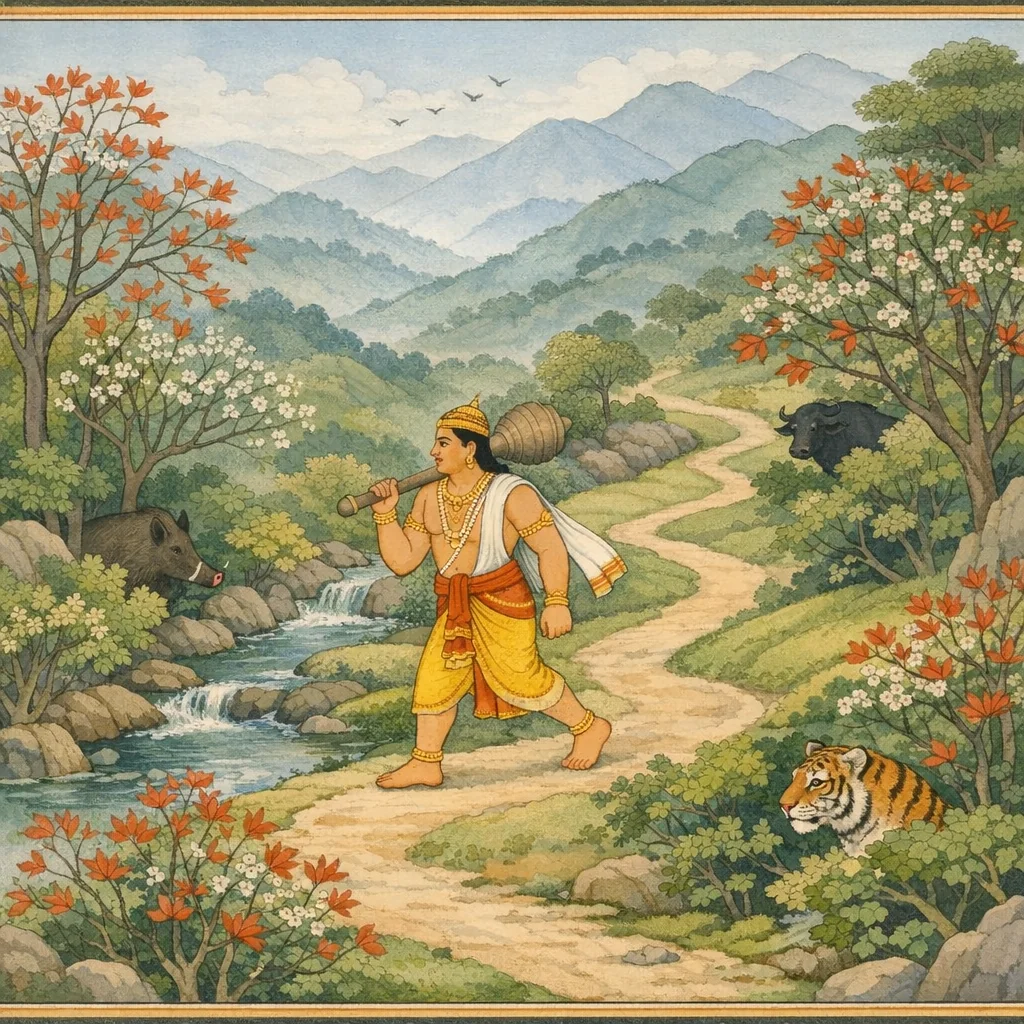
Chapter Arc: हनुमान के अद्भुत विराट रूप और अनुपम तेज का स्मरण करते हुए बलवान भीमसेन उसी मार्ग से आगे बढ़ते हैं—द्रौपदी के वचन उनके लिए पाथेय बन जाते हैं। → सौगन्धिक वन की चाह में भीम रमणीय वनों, उपवनों, सरोवरों और पुष्पित शिखरों को निहारते हुए आगे बढ़ते हैं; मार्ग वन्य पशुओं (महिष, वराह, शार्दूल) से भरा है, पर वे शौर्य से निर्भय होकर पर्वतीय अरण्य में प्रवेश करते हैं। → फूलों की अनन्त सुगन्ध और लाल-लाल कोमल पल्लवों से मानो ‘याचना’ करते वृक्षों के बीच, भीम का मन-नेत्र पुष्पित गिरिशिखरों में डूब जाता है—लक्ष्य (सौगन्धिक) और प्रेरणा (द्रौपदी) एक साथ तीव्र हो उठते हैं। → सौगन्धिक वन को देखकर भीम मन ही मन ‘लब्धकाम’ अनुभव करते हैं और वनवास से क्लिष्ट अपनी प्रिया द्रौपदी को स्मरण कर, शीघ्रतर गति से आगे बढ़ते हैं। → सौगन्धिक-हरण की यात्रा अब निर्णायक मोड़ पर है—आगे वन की रक्षा करने वाली शक्तियों/अवरोधों से सामना होने का संकेत।
Shlokas
Verse 1
हि आय न [हुक है द्विपज्चाशर्दाधिकशततमो< ध्याय: भीमसेनका सौगन्धिक वनमें पहुँचना वैशम्पायन उवाच गते तस्मिन् हरिवरे भीमो5पि बलिनां वर: । तेन मार्गेण विपुलं व्यचरद् गन्धमादनम्,वैशम्पायनजी कहते हैं-जनमेजय! उन कपिप्रवर हनुमानजीके चले जानेपर बलवानोंमें श्रेष्ठ भीमसेन भी उनके बताये हुए मार्गसे विशाल गन्धमादन पर्वतपर विचरने लगे
Vaiśampāyana said: When that foremost of monkeys had departed, Bhīma too—best among the strong—set out along the very path shown by him and ranged across the vast Gandhamādana mountain. The episode underscores disciplined reliance on wise guidance and the righteous use of strength in pursuit of a higher aim rather than mere display of power.
Verse 2
अनुस्मरन् वपुस्तस्य श्रियं चाप्रतिमां भुवि । माहात्म्यमनुभावं च स्मरन् दाशरथेर्यया,मार्गमें वे हनुमानजीके उस अद्भुत विशाल विग्रह और अनुपम शोभाका तथा दशरथनन्दन श्रीरामचन्द्रजीके अलौकिक माहात्म्य एवं प्रभावका बारंबार स्मरण करते जाते थे
As he proceeded along the path, Hanumān repeatedly called to mind that hero’s majestic form and matchless splendor upon the earth, and he kept remembering as well the wondrous greatness and manifest power of Daśaratha’s son, Rāma—by which all deeds become possible.
Verse 3
स तानि रमणीयानि वनान्युपवनानि च । विलोकयामास तदा सौगन्धिकवनेप्सया,सौगन्धिक वनको प्राप्त करनेकी इच्छासे उन्होंने उस समय वहाँके सभी रमणीय वनों और उपवनोंका अवलोकन किया। विकसित वृक्षोंके कारण विचित्र शोभा धारण करनेवाले कितने ही सरोवर और सरिताओंपर दृष्टिपात किया तथा अनेक प्रकारके कुसुमोंसे अद्भुत प्रतीत होनेवाले खिले फूलोंसे युक्त काननोंका भी निरीक्षण किया
Vaiśaṃpāyana said: Desiring to reach the fragrant Saugaṇdhika grove, he then surveyed all those delightful forests and pleasure-groves, casting his gaze over the many lakes and rivers made wondrous by flourishing trees, and inspecting woodlands adorned with blossoming flowers of many kinds—marvelous in their beauty.
Verse 4
फुल्लद्रुमविचित्राणि सरांसि सरितस्तथा । नानाकुसुमचित्राणि पुष्पितानि वनानि च,सौगन्धिक वनको प्राप्त करनेकी इच्छासे उन्होंने उस समय वहाँके सभी रमणीय वनों और उपवनोंका अवलोकन किया। विकसित वृक्षोंके कारण विचित्र शोभा धारण करनेवाले कितने ही सरोवर और सरिताओंपर दृष्टिपात किया तथा अनेक प्रकारके कुसुमोंसे अद्भुत प्रतीत होनेवाले खिले फूलोंसे युक्त काननोंका भी निरीक्षण किया
Vaiśampāyana said: Seeking to reach the Saugaṇdhika forest, they surveyed the delightful woods and groves there. They looked upon many lakes and flowing rivers made splendid by trees in full bloom, and they also observed forests bright with a variety of flowers, richly blossoming and fragrant—an image of nature’s abundance that frames their purposeful journey.
Verse 5
मत्तवारणयूथानि पड़कक्लिन्नानि भारत । वर्षतामिव मेघानां वृन्दानि ददृशे तदा,भारत! उस समय बहते हुए मदके पंकसे भीगे मतवाले गजराजोंके अनेकानेक यूथ वर्षा करनेवाले मेघोंके समूहके समान दिखलायी देते थे
Vaiśampāyana said: “O Bhārata, at that time there appeared many herds of rut-maddened elephants, their bodies smeared and soaked with mud, looking like clustered masses of rain-bearing clouds.”
Verse 6
हरिणैश्वपलापाड्लैहरिणीसहितैरवनम् । सशष्पकवलै: श्रीमान् पथि दृष्ट्वा द्रुतं ययौ,शोभाशाली भीमसेन मुहमें हटी घासका कौर लिये हुए चंचल नेत्रोंवाले हरिणों और हरिणियोंसे युक्त उस वनकी शोभा देखते हुए बड़े वेगसे चले जा रहे थे
Vaiśampāyana said: Seeing on the path a forest adorned with deer—restless-eyed and accompanied by does—some holding mouthfuls of tender grass, the illustrious Bhīmasena moved on swiftly. The scene underscores how, even amid hardship and exile, the natural world’s calm beauty can appear—yet Bhīma’s urgent pace reflects steadfast resolve and duty rather than indulgence in comfort.
Verse 7
महिषैश्न वराहैश्न शार्टूलैश्न निषेवितम् । व्यपेतभीर्गिरिं शौर्याद् भीमसेनो व्यगाहत,उन्होंने अपनी अद्भुत शूरतासे निर्भय होकर भेंसों, वराहों और सिंहोंसे सेवित गहन वनमें प्रवेश किया
Vaiśampāyana said: Fearless through his own valor, Bhīmasena plunged into the dense forest—haunted and frequented by buffaloes, boars, and tigers—showing the steadfast courage expected of a protector even amid peril.
Verse 8
कुसुमानन्तगन्धैश्व ताम्रपललवकोमलै: । याच्यमान इवारण्ये ट्रुमैमारुतकम्पितै:,फ़ूलोंकी अनन्त सुगन्धसे वासित तथा लाल-लाल पल्लवोंके कारण कोमल प्रतीत होनेवाले वृक्ष हवाके वेगसे हिल-हिलकर मानो उस वनमें भीमसेनसे याचना कर रहे थे
Vaiśampāyana said: In that forest, the trees—fragrant with blossoms of seemingly endless perfume and appearing tender with their copper-red new shoots—swayed under the wind’s force, as though they were themselves petitioning Bhīmasena. The scene heightens the sense that nature participates in the heroes’ ordeal, mirroring need, supplication, and the moral pressure of exile.
Verse 9
कृतपद्माज्जलिपुटा मत्तषट्पदसेविता: । प्रियतीर्थवना मार्गे प्शेनी: समतिक्रमन्,मार्गमें उन्हें अनेक ऐसी पुष्करिणियोंको लाँधचना पड़ा, जिनके घाट और वन देखनेमें बहुत प्रिय लगते थे। मतवाले भ्रमर उनका सेवन करते थे तथा वे सम्पुटित कमलकोषोंसे अलंकृत हो ऐसी जान पड़ती थीं, मानो उन्होंने कमलोंकी अंजलि बाँध रखी थी
Vaiśampāyana said: As they journeyed along the road, they passed by many lovely clusters of ponds and sacred bathing-places, whose banks and surrounding groves were delightful to behold. Intoxicated bees frequented them, and the waters seemed adorned with folded lotus-buds, as though the ponds themselves were holding an offering of lotuses in cupped hands—suggesting the auspiciousness and purity that accompany righteous travel and pilgrimage.
Verse 10
मज्जमानमनोटदृष्टि: फुल्लेषु गिरिसानुषु । द्रौोपदीवाक्यपाथेयो भीम: शीघ्रतरं ययौ,भीमसेनका मन और उनके नेत्र कुसुमोंसे अलंकृत पर्वतीय शिखरोंपर लगे थे। द्रौपदीका अनुरोधपूर्ण वचन ही उनके लिये पाथेय था और इस अवस्थामें वे अत्यन्त शीघ्रतापूर्वक चले जा रहे थे
Verse 11
परिवृत्तेडहनि ततः प्रकीर्णहरिणे वने । काज्चनैर्विमलै: पद्मैर्ददर्श विपुलां नदीम्,दिन बीतते-बीतते भीमसेनने एक वनमें जहाँ चारों ओर बहुत-से हरिण विचर रहे थे, सुन्दर सुवर्णमय कमलोंसे सुशोभित विशाल नदी देखी
Vaiśampāyana said: Then, as the days passed, in a forest where deer roamed in scattered herds, Bhīmasena beheld a broad river, beautified by spotless lotus-flowers of golden hue. The scene underscores the Pandavas’ life of endurance in exile, where nature offers both respite and a reminder of disciplined wandering in accordance with dharma.
Verse 12
हंसकारण्डवयुतां चक्रवाकोपशोभिताम् | रचितामिव तस्याद्रेमालां विमलपड्कजाम्,उसमें हंस और कारण्डव आदि जलपक्षी निवास करते थे। चक्रवाक उसकी शोभा बढ़ाते थे। वह नदी क्या थी उस पर्वतके लिये स्वच्छ सुन्दर कमलोंकी माला-सी रची गयी थी
Vaiśaṃpāyana said: The river was filled with haṃsas and kāraṇḍavas, and its beauty was heightened by cakravāka birds. It seemed as though a garland of spotless lotuses had been fashioned for that mountain—nature’s adornment, suggesting a landscape made auspicious and serene rather than hostile.
Verse 13
तस्यां नद्यां महासत्त्वः सौगन्धिकवनं महत् | अपश्यत् प्रीतिजननं बालार्कसदृशद्युति,महान् धैर्य और उत्साहसे सम्पन्न वीरवर भीमसेनने उसी नदीमें विशाल सौगन्धिक वन देखा, जो उनकी प्रसन्नताको बढ़ानेवाला था। उस वनमें प्रभातकालीन सूर्यकी भाँति प्रभा फैल रही थी
Verse 14
तद् दृष्टवा लब्धकाम: स मनसा पाण्डुनन्दन: । वनवासपरिक्लिष्टां जगाम मनसा प्रियाम्,उस वनको देखकर पाण्डुनन्दन भीमने मन-ही-मन यह अनुभव किया कि मेरा मनोरथ पूर्ण हो गया। फिर उन्हें वनवासके क्लेशोंसे पीड़ित अपनी प्रियतमा द्रौपदीकी याद आ गयी
Seeing that, the son of Pāṇḍu felt within himself that his purpose had been fulfilled. Then his mind turned to his beloved Draupadī, worn down by the hardships of exile in the forest—an inward shift from immediate success to compassionate remembrance of shared suffering and duty.
Verse 151
इस प्रकार श्रीमह्याभारत वनपर्वके अन्तर्गत तीर्थयात्रापर्वमें लोगशती र्थयात्राके प्रसंगमें गन्धमादन पर्वतपर हनुमानजी और भीमसेनका संवादविषयक एक सौ इक्यावनवाँ अध्याय पूरा हुआ
Vaiśaṃpāyana said: Thus, within the Vana Parva of the sacred Mahābhārata—specifically in the Tīrtha-yātrā Parva, in the context of the pilgrimage episode—on Mount Gandhamādana, the chapter concerning the dialogue between Hanumān and Bhīmasena comes to its close as the one-hundred-and-fifty-first chapter. The narrative frames their encounter as a moral and spiritual instruction: strength is to be governed by humility, and heroic power finds its highest purpose when aligned with dharma and reverence for elders and exemplars.
Verse 152
इति श्रीमहाभारते वनपर्वणि तीर्थयात्रापर्वणि लोमशतीर्थयात्रायां सौगन्धिकाहरणे द्विपज्चाशदधिकशततमो<्ध्याय:
Thus ends, in the Śrī Mahābhārata, within the Vana Parva, in the section on pilgrimage (Tīrthayātrā Parva), in the account of Lomāśa’s pilgrimage, in the episode of fetching the fragrant saugandhika flowers, the one-hundred-and-fifty-second chapter.
Frequently Asked Questions
The tension lies between personal devotion and heroic initiative (securing desired lotuses) versus respecting jurisdictional boundaries and minimizing escalation in a protected divine domain under responsible leadership.
Effective leadership prioritizes restraint, consultation, and legitimacy of means; even successful outcomes can be ethically compromised if achieved through unauthorized or disproportionate force.
No explicit phalaśruti is stated here; the chapter’s meta-function is narrative-ethical, using omens and admonition to frame disciplined conduct as integral to dharma and long-term stability.