Adhyaya 72
Aśvamedha-dīkṣā, Vyāsa’s horse-release, and Arjuna’s departure with Gāṇḍīva (आश्वमेधिक-दीक्षा तथा हय-उत्सर्गः)
Upa-parva: Aśvamedha-dīkṣā and Horse-Release Episode (Aśvamedhika Parva, ritual commencement arc)
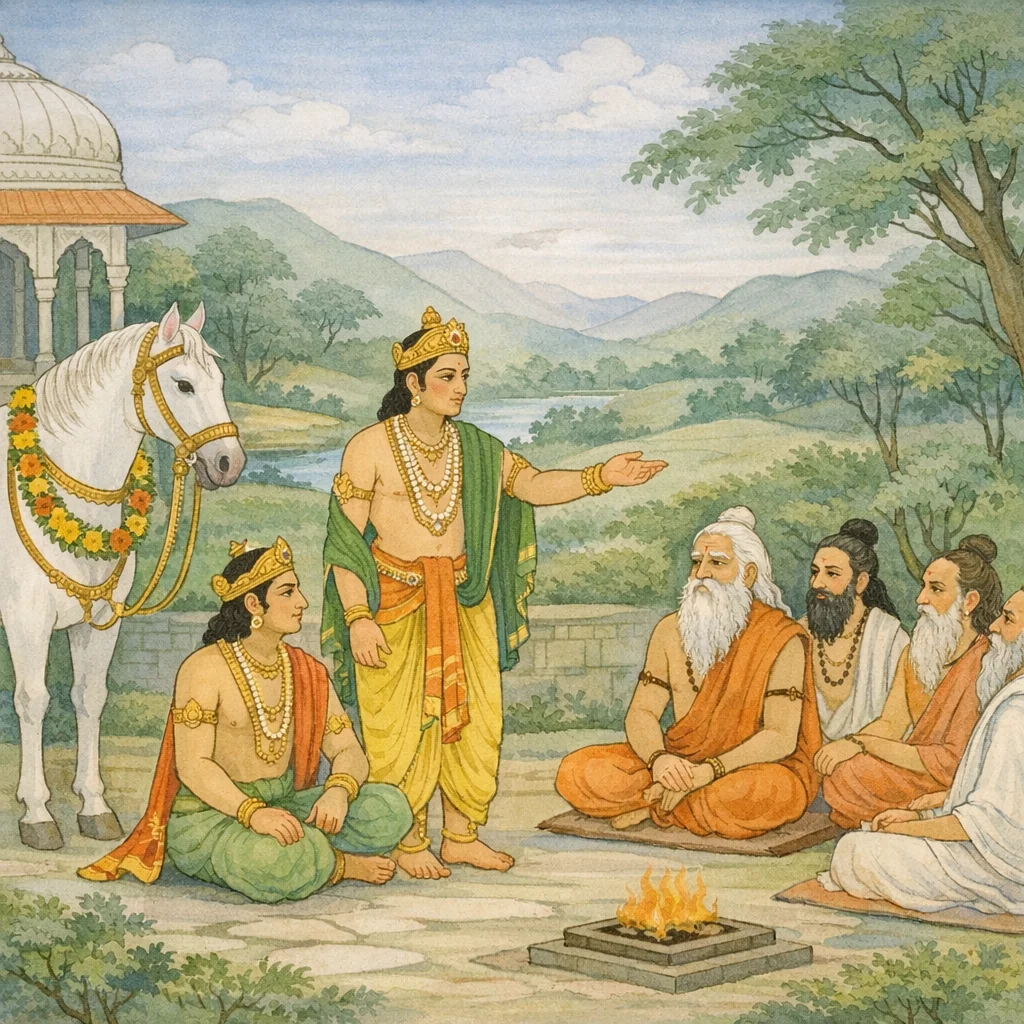
Vaiśaṃpāyana reports that, when the initiation time arrived, eminent ṛtvijas duly initiated the Pāṇḍava king for the Aśvamedha. Yudhiṣṭhira, having completed prescribed bindings/arrangements for sacrificial animals, appears in the consecrated state, described with ritual attire and ascetic markers, shining in the rite like a paradigmatic cosmic ruler. Vyāsa, characterized as a brahmavādin and of great tejas, releases the horse in accordance with śāstric procedure for the purpose of the horse-sacrifice. The officiants adopt matching vestments; Arjuna likewise is portrayed as radiant and then proceeds—under Yudhiṣṭhira’s command—to escort the horse, bearing Gāṇḍīva with its distinctive sound recognized by onlookers. The city population gathers, generating noise and acclamations; some can identify Arjuna by the bow’s famed resonance even amid crowding. A Vedic-competent disciple of Yājñavalkya accompanies Arjuna for pacificatory/ritual support, and many Brahmins, Kṣatriyas, and others follow. The horse then traverses regions in a clockwise/prodakṣiṇa movement, compressing political geography into a ritual itinerary. The narrator signals that numerous engagements with rulers of varied lands will be described subsequently, framing the chapter as the formal launch of a long sequence of sovereignty-testing encounters.
Chapter Arc: कुरु-राज्य युद्ध की राख से उठकर अब यज्ञ की सुवर्ण-दीप्ति की ओर बढ़ता है—व्यास की आज्ञा आती है कि अश्वमेध के लिए भूमिकाएँ बाँटी जाएँ और सुरक्षा-व्यवस्था दृढ़ हो। → श्रीकृष्ण युधिष्ठिर को स्मरण कराते हैं कि यज्ञ का ‘तत्त्व’ और समय-निश्चय महत्त्वपूर्ण है—और यह क्रतु युधिष्ठिर पर ही आश्रित है। व्यास, पैल, याज्ञवल्क्य आदि ऋत्विजों की व्यवस्था बताते हैं; नगर-राज्य की रक्षा, कुटुम्ब-पालन, और अश्व-रक्षा के दायित्व बाँटने लगते हैं। → युधिष्ठिर स्वयं घोषणा करते हैं—‘यह अश्व पृथ्वी पर यथाकाम विचरे; तदनुसार व्यवस्था हो।’ फिर निर्णायक आदेश: अर्जुन को अश्व की रक्षा और अनुगमन का भार सौंपते हैं—‘तुम्हारे सिवा इसे कोई नहीं रक्षित कर सकता।’ → व्यास के निर्देशानुसार युधिष्ठिर सब तैयारी ‘यथान्याय’ आरम्भ कर देते हैं; ऋत्विज दीक्षा के लिए ‘यथाकालं यथायोगं’ सज्ज होने का वचन देते हैं। यज्ञ-सामग्री का संकलन और स्वर्ण-उपकरण (जैसे स्फ्य, कूर्च आदि) बनवाने की व्यवस्था निश्चित होती है। → अश्व का उत्सर्ग हो चुका—अब वह जहाँ-जहाँ जाएगा, वहाँ- वहाँ राजाओं की परीक्षा होगी; अर्जुन के आगे अज्ञात प्रदेशों और संभावित विरोध का द्वार खुलता है।
Shlokas
Verse 1
व बछ। डिश द्विसप्ततितमो< ध्याय: व्यासजीकी आज्ञासे अश्वकी रक्षाके लिये अर्जुनकी, राज्य और नगरकी रक्षाके लिये भीमसेन और नकुलकी तथा कुटुम्ब-पालनके लिये सहदेवकी नियुक्ति वैशम्पायन उवाच एवमुक्तस्तु कृष्णेन धर्मपुत्रो युधिष्ठिर: । व्यासमामन्त्रय मेधावी ततो वचनमत्रवीत्,वैशम्पायनजी कहते हैं--जनमेजय! भगवान् श्रीकृष्णके ऐसा कहनेपर मेधावी धर्मपुत्र युधिष्ठिरने व्यासजीको सम्बोधित करके कहा--“भगवन्! जब आपको अअश्वमेध यज्ञ आरम्भ करनेका ठीक समय जान पड़े तभी आकर मुझे उसकी दीक्षा दें; क्योंकि मेरा यज्ञ आपके ही अधीन है”
Vaiśampāyana said: When Kṛṣṇa had spoken thus, the wise Yudhiṣṭhira—the son of Dharma—addressed Vyāsa and then said: “Revered sir, when you judge the proper time to begin the Aśvamedha sacrifice, please come and confer the consecration upon me; for this sacrifice of mine depends entirely upon you.”
Verse 2
यदा कालं भवान् वेत्ति हयमेधस्य तत्त्वतः । दीक्षयस्व तदा मां त्व॑ त्वय्यायत्तो हि मे क्रतुः,वैशम्पायनजी कहते हैं--जनमेजय! भगवान् श्रीकृष्णके ऐसा कहनेपर मेधावी धर्मपुत्र युधिष्ठिरने व्यासजीको सम्बोधित करके कहा--“भगवन्! जब आपको अअश्वमेध यज्ञ आरम्भ करनेका ठीक समय जान पड़े तभी आकर मुझे उसकी दीक्षा दें; क्योंकि मेरा यज्ञ आपके ही अधीन है”
Yudhiṣṭhira, the righteous son of Dharma, addressing Vyāsa after Kṛṣṇa’s counsel, says: “Revered sir, when you truly discern the proper time for the Aśvamedha, then initiate me for it. For this sacrifice of mine depends entirely upon you.” The line underscores Yudhiṣṭhira’s ethical restraint: even for a royal rite meant to restore order and legitimacy after war, he submits the act to wise guidance and correct timing rather than personal impulse.
Verse 3
व्यास उवाच अहं पैलो5थ कौन्तेय याज्ञवल्क्यस्तथैव च । विधानं यद् यथाकालं तत् कर्तारो न संशय:,व्यासजीने कहा--कुन्तीनन्दन! जब यज्ञका समय आयेगा, उस समय मैं, पैल और याज्ञवल्क्य--ये सब आकर तुम्हारे यज्ञका सारा विधि-विधान सम्पन्न करेंगे; इसमें संशय नहीं है
Vyāsa said: “O son of Kuntī, when the proper time for the sacrifice arrives, I—together with Paila and Yājñavalkya—will come and carry out the entire prescribed procedure in due order. Of this there is no doubt.”
Verse 4
चैत्रयां हि पौर्णमास्यां तु तव दीक्षा भविष्यति । सम्भारा: सम्ध्रियन्तां च यज्ञार्थ पुरुषर्षभ,पुरुषप्रवर! आगामी चैत्रकी पूर्णिमाको तुम्हें यज्ञकी दीक्षा दी जायगी, तबतक तुम उसके लिये सामग्री संचित करो
Vyāsa said: “On the full-moon day of the month of Caitra, your consecration for the sacrifice will take place. Therefore, O bull among men, O foremost of persons, let the requisite materials be gathered and kept ready for the rite.”
Verse 5
अश्वविद्याविदश्वैव सूता विप्राश्न तद्विद: । मेध्यमश्चं परीक्षन्तां तव यज्ञार्थसिद्धये,अश्वविद्याके ज्ञाता सूत और ब्राह्मण यज्ञार्थकी सिद्धिके लिये पवित्र अश्वकी परीक्षा करें
Vyāsa said: “Let the charioteers and the Brahmins who are skilled in the science of horses—those who truly know it—examine the consecrated, ritually pure horse, so that your sacrifice may be properly accomplished.”
Verse 6
तमुत्सूज यथाशास्त्रं पृथिवीं सागराम्बराम् | स पर्येतु यशो दीप्तं तव पार्थिव दर्शयन्,पृथ्वीनाथ! जो अश्व चुना जाय, उसे शास्त्रीय विधिके अनुसार छोड़ो और वह तुम्हारे दीप्तिमान् यशका विस्तार करता हुआ समुद्रपर्यन्त समस्त पृथ्वीपर भ्रमण करे
“Release that horse in accordance with the scriptural injunctions. Let it roam over the whole earth, girdled by the ocean, proclaiming and making manifest your radiant fame, O king.”
Verse 7
वैशम्पायन उवाच इत्युक्त: स तथेत्युक्त्वा पाण्डव: पृथिवीपति: । चकार सर्व राजेन्द्र यथोक्तं ब्रह्मवादिना,वैशम्पायनजी कहते हैं--राजेन्द्र! यह सुनकर पाण्डुपुत्र राजा युधिष्ठिरने “बहुत अच्छा” कहकर ब्रह्मवादी व्यासजीके कथनानुसार सारा कार्य सम्पन्न किया
Verse 8
सम्भाराश्रैव राजेन्द्र सर्वे संकल्पिता5भवन् | स सम्भारान् समाहृत्य नृपो धर्मसुतस्तदा
Vaiśampāyana said: “O best of kings, all the required preparations were duly resolved upon and arranged. Then that king, Dharma’s son (Yudhiṣṭhira), having gathered the necessary materials, proceeded accordingly.”
Verse 9
न्यवेदयदमेयात्मा कृष्णद्वैपायनाय वै | राजेन्द्र! उन्होंने मनमें जिन-जिन सामानोंको एकत्र करनेका संकल्प किया था, उन सबको जुटाकर धर्मपुत्र अमेयात्मा राजा युधिष्ठिरने श्रीकृष्णद्वैपायन व्यासजीको सूचना दी ८६ || ततो<ब्रवीन्महातेजा व्यासो धर्मात्मजं नूपम्
Vaiśampāyana said: O best of kings, the high-souled Yudhiṣṭhira—Dharma’s son—having gathered all the requisites he had resolved in his mind to assemble, informed Śrī Kṛṣṇa-Dvaipāyana Vyāsa. Thereupon the mighty, radiant Vyāsa addressed that righteous prince.
Verse 10
स्फ्यश्व कूर्चश्ष सौवर्णो यच्चान्यदपि कौरव
Vaiśampāyana said: “(There were) the golden horse-ornament called the sphyāśva, the kūrcha, and whatever other (golden fittings) besides, O Kaurava.”
Verse 11
अश्वश्लोत्सृज्यतामद्य पृथ्व्यामथ यथाक्रमम् । सुगुप्तं चरतां चापि यथाशास्त्रं यथाविधि,“आज शास्त्रीय विधिके अनुसार यज्ञ-सम्बन्धी अश्वको क्रमशः सारी पृथ्वीपर घूमनेके लिये छोड़ना चाहिये तथा ऐसी व्यवस्था करनी चाहिये, जिससे वह सुरक्षितरूपसे सब ओर विचर सके”
Verse 12
युधिछिर उवाच अयमश्वो यथा ब्रद्वान्नुत्सृष्ट: पृथिवीमिमाम् । चरिष्यति यथाकामं तत्र वै संविधीयताम्,युधिष्ठिरने कहा--ब्रह्मन! यह घोड़ा उपस्थित है। इसे किस प्रकार छोड़ा जाय, जिससे यह समूची पृथ्वीपर इच्छानुसार घूम आवे। इसकी व्यवस्था आप ही कीजिये तथा मुने! यह भी बताइये कि भूमण्डलमें इच्छानुसार घूमनेवाले इस घोड़ेकी रक्षा कौन करे?
Yudhiṣṭhira said: “O Brāhmaṇa, here is the horse. Please arrange how it should be released so that it may roam over this entire earth according to its will. You yourself should make the proper provisions for this. And, O sage, also tell us: who should protect this horse as it wanders freely across the world?”
Verse 13
पृथिवीं पर्यटन्तं हि तुरगं कामचारिणम् । कः पालयेदिति मुने तद् भवान् वक्तुमहति,युधिष्ठिरने कहा--ब्रह्मन! यह घोड़ा उपस्थित है। इसे किस प्रकार छोड़ा जाय, जिससे यह समूची पृथ्वीपर इच्छानुसार घूम आवे। इसकी व्यवस्था आप ही कीजिये तथा मुने! यह भी बताइये कि भूमण्डलमें इच्छानुसार घूमनेवाले इस घोड़ेकी रक्षा कौन करे?
Yudhiṣṭhira said: “O sage, this horse is to roam over the earth at will. Please tell me—who should guard it, and how should it be released so that it may wander freely across the whole world according to its own course?”
Verse 14
वैशम्पायन उवाच इत्युक्त: स तु राजेन्द्र कृष्णद्वैपायनो5ब्रवीत् । भीमसेनादवरज: श्रेष्ठ: सर्वधनुष्मताम्,वैशम्पायनजी कहते हैं--राजेन्द्र! युधिष्ठिरके इस तरह पूछनेपर श्रीकृष्णद्वैपायन व्यासने कहा--'राजन्! अर्जुन सब धनुर्धारियोंमें श्रेष्ठ हैं। वे विजयमें उत्साह रखनेवाले, सहनशील और धीर्यवान् हैं; अतः वे ही इस घोड़ेकी रक्षा करेंगे। उन्होंने निवातकवचोंका नाश किया था। वे सम्पूर्ण भूमण्डलको जीतनेकी शक्ति रखते हैं
Vaiśampāyana said: When this had been spoken, O best of kings, Kṛṣṇa Dvaipāyana (Vyāsa) replied: “O king, the younger brother of Bhīmasena—Arjuna—is the foremost among all wielders of the bow.” In context, Vyāsa’s statement affirms that the protection of the sacrificial horse should be entrusted to the most capable and self-controlled warrior, so that royal duty (dharma) is upheld without negligence or disorder.
Verse 15
जिष्णु: सहिष्णुर्धुष्णुश्न स एनं पालयिष्यति । शक्तः स हि महीं जेतुं निवातकवचान्तकः,वैशम्पायनजी कहते हैं--राजेन्द्र! युधिष्ठिरके इस तरह पूछनेपर श्रीकृष्णद्वैपायन व्यासने कहा--'राजन्! अर्जुन सब धनुर्धारियोंमें श्रेष्ठ हैं। वे विजयमें उत्साह रखनेवाले, सहनशील और धीर्यवान् हैं; अतः वे ही इस घोड़ेकी रक्षा करेंगे। उन्होंने निवातकवचोंका नाश किया था। वे सम्पूर्ण भूमण्डलको जीतनेकी शक्ति रखते हैं
Vaiśampāyana said: “That Jishnu—enduring, steadfast, and resolute—will protect this (horse). For he is indeed capable of conquering the earth, being the slayer of the Nivātakavacas.”
Verse 16
तस्मिन् हा॒स्त्राणि दिव्यानि दिव्यं संहननं तथा । दिव्यं धनुश्वेषुधी च स एनमनुयास्यति,“उनके पास दिव्य अस्त्र, दिव्य कवच, दिव्य धनुष और दिव्य तरकस हैं; अतः वे ही इस घोड़ेके पीछे-पीछे जायँगे
Vaiśampāyana said: “He possesses celestial weapons, and likewise a celestial armor; he has a celestial bow and quivers as well. Therefore, he is the one who will follow behind this sacrificial horse.”
Verse 17
स हि धर्मार्थकुशल: सर्वविद्याविशारद: | यथाशास्त्र॑ नृपश्रेष्ठ चारयिष्यति ते हयम्,“नृपश्रेष्ठ! वे धर्म और अर्थमें कुशल तथा सम्पूर्ण विद्याओंमें प्रवीण हैं, इसलिये आपके यज्ञ-सम्बन्धी अश्वका शास्त्रीय विधिके अनुसार संचालन करेंगे
Vaiśampāyana said: “For he is skilled in dharma and artha, and thoroughly accomplished in all branches of knowledge. Therefore, O best of kings, he will conduct your sacrificial horse in strict accordance with the prescriptions of the śāstras.”
Verse 18
राजपुत्रो महाबाहु: श्यामो राजीवलोचन: । अभिमन्यो: पिता वीर: स एन पालयिष्यति,“जिनकी बड़ी-बड़ी भुजाएँ हैं, श्याम वर्ण है, कमल-जैसे नेत्र हैं, वे अभिमन्युके वीर पिता राजपुत्र अर्जुन इस घोड़ेकी रक्षा करेंगे
Vaiśampāyana said: “That prince—mighty-armed, dark-hued, lotus-eyed—Arjuna, the heroic father of Abhimanyu, will protect this horse.” The statement underscores entrusted guardianship: the sacrificial horse, a symbol of royal authority and dharma, is placed under the care of a proven warrior whose duty is to safeguard the rite and the kingdom’s honor without compromising righteousness.
Verse 19
भीमसेनो5पि तेजस्वी कौन्तेयो5मितविक्रम: । समर्थों रक्षितु राष्ट्र नकुलश्व विशाम्पते,'प्रजानाथ! कुन्तीकुमार भीमसेन भी अत्यन्त तेजस्वी और अमितपराक्रमी हैं। नकुलमें भी वे ही गुण हैं। ये दोनों ही राज्यकी रक्षा करनेमें पूर्ण समर्थ हैं (अत: वे ही राज्यके कार्य देखें)
Vaiśampāyana said: “Bhīmasena too—the son of Kuntī—is radiant with prowess and of immeasurable valor. Nakula as well, O lord of the people, possesses these very qualities. Both are fully capable of protecting the kingdom; therefore they should attend to the affairs of the realm.”
Verse 20
सहदेवस्तु कौरव्य समाधास्यति बुद्धिमान । कुट॒म्बतन्त्रं विधिवत् सर्वमेव महायशा:,“कुरुनन्दन! महायशस्वी बुद्धिमान् सहदेव कुटुम्ब-पालनसम्बन्धी समस्त कार्योंकी देखभाल करेंगे”
Vaiśampāyana said: “O scion of the Kuru line, the wise and highly renowned Sahadeva will duly set in order and oversee the entire management of the household and its affairs.” The verse highlights responsible governance at the domestic level—order, propriety, and competence as expressions of dharma after the upheavals of war.
Verse 21
तत् तु सर्व यथान्यायमुक्त: कुरुकुलोदह: । चकार फाल्गुनं चापि संदिदेश हयं प्रति,व्यासजीके इस प्रकार बतलानेपर कुरुकुलतिलक युधिष्ठिरने सारा कार्य उसी प्रकार यथोचित रीतिसे सम्पन्न किया और अर्जुनको बुलाकर घोड़ेकी रक्षाके लिये इस प्रकार आदेश दिया
Vaiśampāyana said: Having been instructed in full according to what was proper, Yudhiṣṭhira—the foremost of the Kuru line—carried out everything in due and fitting manner. He then summoned Phālguna (Arjuna) and issued him instructions concerning the horse, appointing him to its protection as required for the Aśvamedha rite.
Verse 22
युधिछिर उवाच एहरार्जुन त्वया वीर हयो5यं परिपाल्यताम् | त्वमहों रक्षितुं होनं नान््य: कश्चनन मानव:,युधिष्ठिर बोले--वीर अर्जुन! यहाँ आओ, तुम इस घोड़ेकी रक्षा करो; क्योंकि तुम्हीं इसकी रक्षा करनेके योग्य हो। दूसरा कोई मनुष्य इसके योग्य नहीं है
Yudhiṣṭhira said: “Come here, heroic Arjuna. Let this horse be guarded by you. You alone are fit and capable to protect it; no other man is equal to this charge.”
Verse 23
ये चापि त्वां महाबाहो प्रत्युद्यान्ति नराधिपा: । तैर्विग्रहो यथा न स्यात् तथा कार्य त्वयानघ,महाबाहो! निष्पाप अर्जुन! अश्वकी रक्षाके समय जो राजा तुम्हारे सामने आवें, उनके साथ भरसक युद्ध न करना पड़े, ऐसी चेष्टा तुम्हें करनी चाहिये
Yudhiṣṭhira said: “O mighty-armed one, even those kings who come forth to oppose you—see to it, O blameless one, that no conflict arises with them. Strive, as far as possible, to accomplish your task in such a way that battle need not occur.”
Verse 24
आखूयातव्यश्व भवता यज्ञो5यं मम सर्वश: । पार्थिवे भ्यो महाबाहो समये गम्यतामिति,महाबाहो! मेरे इस यज्ञका समाचार तुम्हें समस्त राजाओंको बताना चाहिये और उनसे यह कहना चाहिये कि आपलोग यथासमय यज्ञमें पधारें
Yudhiṣṭhira said: “Mighty-armed one, you must fully announce this sacrifice of mine to all the kings, and tell them: ‘Come to the sacrifice at the appointed time.’” In the ethical frame of the Aśvamedha, the command underscores royal duty: a public rite must be conducted transparently, with due notice and proper invitation, so that allied and subordinate rulers may participate in an orderly, dharma-governed manner.
Verse 25
वैशम्पायन उवाच एवमुक्त्वा स धर्मात्मा भ्रातरं सव्यसाचिनम् | भीमं च नकुलं॑ चैव पुरगुप्ती समादधत्,वैशम्पायनजी कहते हैं--राजन! अपने भाई सव्यसाची अर्जुनसे ऐसा कहकर धर्मात्मा राजा युधिष्ठिरने भीमसेन और नकुलको नगरकी रक्षाका भार सौंप दिया
Vaiśampāyana said: Having spoken thus to his brother Arjuna, the ambidextrous archer, that righteous-souled king (Yudhiṣṭhira) then entrusted Bhīma and Nakula with the responsibility of guarding the city—an act of orderly governance aligned with dharma after the upheavals of war.
Verse 26
कुटुम्बतन्त्रे च तदा सहदेवं॑ युधां पतिम् । अनुमान्य महीपाल धृतराष्ट्र युधिष्ठिर:,फिर महाराज धुृतराष्ट्रकी सम्मति लेकर युधिष्ठिरने योद्धाओंके स्वामी सहदेवको कुटुम्ब-पालन-सम्बन्धी कार्यमें नियुक्त कर दिया
Vaiśampāyana said: Then, having obtained the assent of King Dhṛtarāṣṭra, Yudhiṣṭhira appointed Sahadeva—lord among warriors—to the administration of household and family affairs, ensuring that the realm’s domestic order and dependents were properly maintained in accordance with duty.
Verse 71
इस प्रकार श्रीमह्याभारत आश्वमेधिकपर्वके अन्तर्गत अनुगीतापर्वमें श्रीकृष्ण और व्यासकी युधिष्ठिरको यज्ञ करनेके लिये आज्ञाविषयक इकह्ठत्तरवाँ अध्याय पूरा हुआ
Thus ends the seventy-first chapter of the Anugītā section within the Aśvamedhika Parva of the Śrī Mahābhārata, in which Śrī Kṛṣṇa and Vyāsa instruct Yudhiṣṭhira with an authoritative injunction to undertake a sacrificial rite. The closing formula frames the episode as a transition from counsel to action, emphasizing the ethical duty of a king to restore order through properly sanctioned ritual.
Verse 72
इति श्रीमहाभारते आश्वमेधिके पर्वणि अनुगीतापर्वणि यज्ञसामग्रीसम्पादने द्विसप्ततितमो<ध्याय:
Thus, in the Śrī Mahābhārata, within the Aśvamedhika Parva—specifically in the Anugītā section—ends the seventy-second chapter, which concerns the procurement and preparation of the materials required for a sacrificial rite. The colophon signals an orderly, dharma-governed transition from instruction to action: sacred duties are not merely taught but are to be carried out with proper means, discipline, and reverence.
Verse 96
यथाकालं यथायोगं सज्जा: सम तव दीक्षणे । तब महातेजस्वी व्यासने धर्मपुत्र राजा युधिष्ठिससे कहा--'राजन्! हमलोग यथासमय उत्तम योग आनेपर तुम्हें दीक्षा देनेको तैयार हैं
Vaiśampāyana said: “At the proper time and in the proper manner, we are prepared for your consecration.” Then the great-splendored Vyāsa addressed King Yudhiṣṭhira, the son of Dharma: “O King, when the auspicious and fitting moment arrives, we stand ready to initiate you.” The passage underscores that sacred rites must be undertaken with due timing, correct procedure, and disciplined readiness—an ethical insistence on order (dharma) even in royal action.
Verse 106
तत्र योग्यं भवेत् किंचिद् रौक््मं तत् क्रियतामिति । “कुरुनन्दन! इस बीचमें तुम सोनेके 'स्फ्य” और “कूर्चः बनवा लो तथा और भी जो सुवर्णमय सामान आवश्यक हों, उन्हें तैयार करा डालो
Vaiśampāyana said: “There, whatever golden article is appropriate should be made.” The instruction emphasizes timely preparation of ritually suitable, pure materials—especially gold—for the forthcoming sacred proceedings, underscoring orderliness and propriety in dharmic action.
Frequently Asked Questions
The chapter foregrounds a governance dilemma rather than a private ethical dispute: how post-war authority is asserted without uncontrolled coercion—by channeling power into a ritual framework that is publicly witnessed and procedurally constrained.
Dharma is operationalized through disciplined form: legitimacy arises from adherence to śāstra, role-appropriate conduct (king, priest, protector), and transparent public procedure that binds political action to normative order.
No explicit phalaśruti is stated here; the meta-commentary is structural—Vaiśaṃpāyana signals an upcoming catalogue of encounters and engagements, positioning this chapter as the formal commencement of the horse’s circuit and its consequential narratives.