Adhyaya 147
Ādi Parva, Adhyāya 147 — Kanyā-paridevita (The daughter’s lament on lineage and protection)
Upa-parva: Kuntī-Upākhyāna (Kuntī’s intervention during the Hiḍimba/Hiḍimbā episode)
Vaiśaṃpāyana reports a scene of acute distress: a daughter addresses her sorrowing parents, interpreting the crisis through dharma and lineage logic. She argues that she is, by norm, ‘relinquishable’ (parityājyā) compared to the father’s role as sustainer and the brother’s role as future continuity. She frames offspring as salvific—capable of ‘saving’ in this life or beyond—and links the father’s survival to the preservation of ancestral rites (piṇḍa continuity). She anticipates social degradation if the father dies (dependents forced into begging), and she proposes that her own abandonment or sacrifice could protect mother, brother, and the family line. The household weeps; the young son, with childlike bravado, claims he will defeat the threatening rākṣasa with a mere blade of grass, creating a brief emotional reversal. At this juncture, Kuntī arrives, recognizing the decisive moment (‘ayaṃ kālaḥ’) and preparing to intervene, shifting the episode from lamentation to planned response.
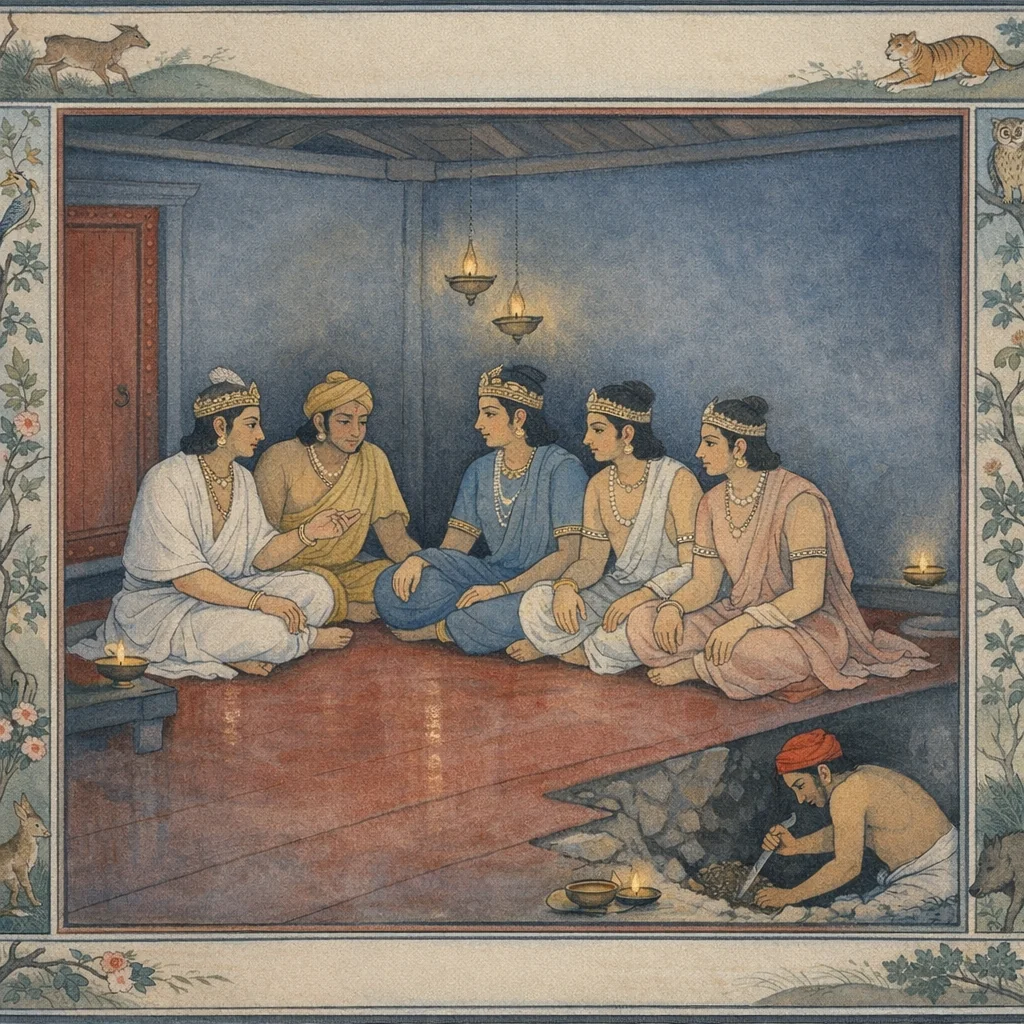
Chapter Arc: लाक्षागृह के भीतर, जहाँ बाहर से उत्सव-सा विश्वास रचा गया है, विदुर का भेजा हुआ एक कुशल खनक गुप्त रूप से उपस्थित होता है—उसके मन में एक ही संकल्प: पाण्डवों को बचाने का मार्ग धरती के भीतर बनाना। → खनक अपने परिचय और उद्देश्य को संकेत-भाषा में प्रकट करता है—‘मैं विदुर द्वारा भेजा गया हूँ; सुरंग-कार्य में निपुण हूँ; पाण्डवों का प्रिय कार्य करना चाहता हूँ।’ उधर दुर्योधन की दुष्ट योजना स्पष्ट होती जाती है: माता सहित पाण्डवों को लाक्षागृह में जला देना। पाण्डव दिन में शिकार के बहाने वन-वन घूमते हैं, भीतर-भीतर पुरोचन को तुष्ट दिखाकर छलते हैं, और नगरवासी अनजान बने रहते हैं—केवल विदुर का मंत्री और वही खनक सत्य जानते हैं। → पाण्डवों को लाक्षागृह की ‘समृद्ध आयुधागार’ जैसी बनावट और उसकी असुरक्षित, फँसाने वाली रचना देखकर षड्यंत्र का पूरा आकार दिखता है—वे समझते हैं कि यह ‘अशुभ कर्म’ पहले से विदुर ने जान लिया था और इसलिए चेताया। इसी बोध के साथ सुरंग-निर्माण का गुप्त अभियान निर्णायक रूप लेता है: बचाव का एकमात्र द्वार अब पृथ्वी के भीतर है। → पाण्डव पुरोचन के प्रति ‘विश्वस्तवत् अविश्वस्ता’ रहकर दिनचर्या सामान्य रखते हैं, ताकि शत्रु को संदेह न हो; खनक सुरंग को छिपाकर आगे बढ़ाता है। विदुर की दूरदर्शिता और गुप्त सहायता से पलायन-योजना स्थिर हो जाती है—लाक्षागृह में रहते हुए भी वे भीतर से मुक्त होने का मार्ग बना लेते हैं। → पुरोचन और दुर्योधन की अग्नि-योजना कब सक्रिय होगी, और क्या सुरंग समय पर पूर्ण होकर पाण्डवों को माता सहित बाहर निकाल पाएगी?
Shlokas
Verse 1
अपना बा अर: षट्चत्वारिशर्दाधेिकशततमो< ध्याय: विदुरके भेजे हुए खनकद्दारा लाक्षागृहमें सुरंगका निर्माण वैशम्पायन उवाच विदुरस्य सुहृत् कश्चित् खनकः कुशलो नर: । विविक्ते पाण्डवान् राजन्निदं वचनमब्रवीत्,वैशम्पायनजी कहते हैं--जनमेजय! एक सुरंग खोदनेवाला मनुष्य विदुरजीका हितैषी एवं विश्वास-पात्र था। वह अपने काममें बड़ा चतुर था। एक दिन वह एकान्तमें पाण्डवोंसे मिला और इस प्रकार कहने लगा--
Vaiśampāyana said: O King (Janamejaya), there was a certain miner—an able man—who was a well-wisher and trusted associate of Vidura. Meeting the Pāṇḍavas in private, he spoke these words to them. The scene underscores discreet counsel and protective strategy in the face of impending treachery.
Verse 2
प्रहितो विदुरेणास्मि खनक: कुशलो हाहम् | पाण्डवानां प्रियं कार्यमिति कि करवाणि व:,“मुझे विदुरजीने भेजा है। मैं सुरंग खोदनेके काममें बड़ा निपुण हूँ। मुझे आप पाण्डवोंका प्रिय कार्य करना है, अतः आपलोग बतायें, मैं आपकी क्या सेवा करूँ? विदुरने गुप्तरूपसे मुझसे यह कहा है कि तुम वारणावतमें जाकर विश्वासपूर्वक पाण्डवोंका हित सम्पादन करो। अत: आप आज्ञा कीजिये कि मैं क्या करूँ?
The digger said: “I have been sent by Vidura. I am skilled in the work of tunneling. I am to carry out what is dear and beneficial to the Pāṇḍavas—so tell me, what service shall I do for you?”
Verse 3
प्रच्छन्नं विदुरेणोक्त: श्रेयस्त्वमिति पाण्डवान् | प्रतिपादय विश्वासादिति कि करवाणि व:,“मुझे विदुरजीने भेजा है। मैं सुरंग खोदनेके काममें बड़ा निपुण हूँ। मुझे आप पाण्डवोंका प्रिय कार्य करना है, अतः आपलोग बतायें, मैं आपकी क्या सेवा करूँ? विदुरने गुप्तरूपसे मुझसे यह कहा है कि तुम वारणावतमें जाकर विश्वासपूर्वक पाण्डवोंका हित सम्पादन करो। अत: आप आज्ञा कीजिये कि मैं क्या करूँ?
Vaiśampāyana said: “Vidura has spoken to me in secret: ‘You are to work for the welfare of the Pāṇḍavas.’ He instructed me to go to Vāraṇāvata and, by winning their trust, to secure their good. Therefore tell me—what shall I do for you?”
Verse 4
! कृष्णपक्षे चतुर्दश्यां रात्रावस्यां पुरोचन: । भवनस्य तव द्वारि प्रदास्यति हुताशनम्,“इसी कृष्णपक्षकी चतुर्दशीकी रातको पुरोचन आपके घरके दरवाजेपर आग लगा देगा
Vaiśampāyana said: “On this very night of the fourteenth lunar day in the dark fortnight, Purocana will set fire at the door of your dwelling.” The line signals a deliberate, premeditated act of arson—an unethical stratagem aimed at destroying the intended victims under cover of night, highlighting the collapse of righteous conduct in political intrigue.
Verse 5
मात्रा सह प्रदग्धव्या: पाण्डवा: पुरुषर्षभा: । इति व्यवसितं तस्य धार्तराष्ट्रस्य दुर्मते:,दुर्बद्धि दुर्योधनकी यह चेष्टा है कि नरश्रेष्ठ पाण्डव अपनी माताके साथ जला दिये जायूँ
Vaiśampāyana said: “That evil-minded son of Dhṛtarāṣṭra had resolved: ‘Let the Pāṇḍavas—those best of men—be burned to death together with their mother.’” The verse highlights a deliberate, premeditated violation of dharma: the intent to destroy righteous kinsmen through deceitful violence rather than open, honorable conduct.
Verse 6
किंचिच्च विदुरेणोक्तो म्लेच्छवाचासि पाण्डव | त्वया च तत् तथेत्युक्तमेतद् विश्वासकारणम्,'पाण्डुनन्दन! विदुरजीने म्लेच्छभाषामें आपको कुछ संकेत किया था और आपने 'तथास्तुग कहकर उसे स्वीकार किया था। यह बात मैं विश्वास दिलानेके लिये कहता हूँ!
Vaiśampāyana said: “O Pāṇḍava, Vidura had conveyed to you certain hints in a coded, foreign-sounding speech, and you accepted them by replying, ‘So be it.’ I mention this only to establish the grounds for trust—so that you may be assured that the message was truly understood and agreed upon.”
Verse 7
उवाच त॑ सत्यधृति: कुन्तीपुत्रो युधिष्ठिर: । अभिजानामि सौम्य त्वां सुहृदं विदुरस्य वै,तब सत्यवादी कुन्तीकुमार युधिष्ठिरने उससे कहा--'सौम्य! मैं तुम्हें पहचानता हूँ। तुम विदुरजीके हितैषी, ईमानदार, विश्वसनीय, प्रिय तथा उनके प्रति सदा अविचल भक्ति रखनेवाले हो। हमारा कोई भी ऐसा प्रयोजन नहीं है, जो परम ज्ञानी विदुरजीको ज्ञात न हो
Vaiśampāyana said: Then Yudhiṣṭhira, the steadfast upholder of truth and son of Kuntī, spoke to him: “Gentle one, I recognize you as a true well-wisher of Vidura—truthful, trustworthy, dear to him, and unwavering in your devotion. There is no purpose of ours that the supremely wise Vidura does not already know.”
Verse 8
शुचिमाप्तं प्रियं चैव सदा च दृढभक्तिकम् । न विद्यते कवे: किंचिदविज्ञातं प्रयोजनम्,तब सत्यवादी कुन्तीकुमार युधिष्ठिरने उससे कहा--'सौम्य! मैं तुम्हें पहचानता हूँ। तुम विदुरजीके हितैषी, ईमानदार, विश्वसनीय, प्रिय तथा उनके प्रति सदा अविचल भक्ति रखनेवाले हो। हमारा कोई भी ऐसा प्रयोजन नहीं है, जो परम ज्ञानी विदुरजीको ज्ञात न हो
Vaiśaṃpāyana said: “He is pure in conduct, trustworthy, and dear; and he is ever steadfast in devotion. For the wise one (Vidura), there is no purpose or matter of ours that remains unknown.” The line underscores an ethical ideal: integrity joined with unwavering loyalty, and the confidence that true wisdom perceives the real aims behind actions.
Verse 9
यथा तस्य तथा नस्त्व॑ं निर्विशेषा वयं त्वयि | भवतश्च यथा तस्य पालयास्मान् यथा कवि:,“तुम विदुरजीके लिये जैसे आदरणीय और विश्वसनीय हो, वैसे ही हमारे लिये भी हो। तुमसे हमारा कोई अन्तर नहीं है। हमलोग जिस प्रकार विदुरजीके पालनीय हैं, वैसे ही तुम्हारे भी हैं। जैसे वे हमारी रक्षा करते हैं, वैसे ही तुम भी करो
Vaiśampāyana said: “As you are to him, so be to us as well. For us there is no distinction in you; we rely on you without difference. And just as he protects and guides us, so do you protect us too—like a wise and discerning guardian.”
Verse 10
इदं शरणमाग्नेयं मदर्थमिति मे मति: । पुरोचनेन विहितं धार्तराष्ट्स्य शासनात्,“यह घर आग भड़कानेवाले पदार्थोंसे बना है। हमारा विश्वास है कि दुर्योधनके आदेशसे पुरोचनने हमारे लिये ही इसे बनवाया है
Vaiśampāyana said: “In my judgment, this refuge is made of fire-kindling materials, intended for our destruction. I believe Purocana constructed it specifically for us, acting under the command of the son of Dhṛtarāṣṭra (Duryodhana).”
Verse 11
स पाप: कोषवांश्वैव ससहायश्च दुर्मति: । अस्मानपि च पापात्मा नित्यकालं प्रबाधते,“पापी दुर्योधनके पास खजाना है और उसके बहुत-से सहायक भी हैं; इसीलिये वह दुर्बुद्धि पापात्मा सदा हमें सताया करता है
Vaiśampāyana said: “That sinful man possesses wealth and a treasury, and he has many allies as well. Therefore, that wicked-minded, sinful-souled one continually harasses us.”
Verse 12
स भवान् मोक्षयत्वस्मान् यत्नेनास्माद् हुताशनात् । अस्मास्विह हि दग्धेषु सकाम: स्यात् सुयोधन:,“तुम यत्न करके हमलोगोंको इस आगसे बचा लो; अन्यथा हमलोगोंके यहाँ दग्ध हो जानेपर दुर्योधनका मनोरथ सफल हो जायगा
“May you, sir, strive to rescue us from this consuming fire. For if we are burned here, Suyodhana’s desire will be fulfilled.”
Verse 13
समृद्धमायुधागारमिदं तस्य दुरात्मन: । वप्रान्तं निष्प्रतीकारमाश्रित्येदं कृतं महत्,“यह उस दुरात्माका अस्त्र-शस्त्रोंसे भरा हुआ आयुधागार है। इसीके सहारे इस महान् गृहका निर्माण किया गया है। इसमें चहारदीवारीके निकटतक कहीं कोई बाहर निकलनेका मार्ग नहीं है। अवश्य ही दुर्योधनका यह अशुभ कर्म, जिसे वह पूर्ण करना चाहता है, पहले ही विदुरजीको मालूम हो गया था। इसीलिये उन्होंने हमें इसकी जानकारी करा दी
Vaiśampāyana said: “This is that wicked man’s well-stocked armoury, filled with weapons. Relying on it, this great structure has been built. Near the surrounding rampart there is no outlet—no means of escape. Thus the sinister deed Duryodhana intends to carry out must have already been known to Vidura; that is why he informed us beforehand.”
Verse 14
इदं तदशुभं॑ नूनं तस्य कर्म चिकीर्षितम् । प्रागेव विदुरो वेद तेनास्मानन्वबोधयत्,“यह उस दुरात्माका अस्त्र-शस्त्रोंसे भरा हुआ आयुधागार है। इसीके सहारे इस महान् गृहका निर्माण किया गया है। इसमें चहारदीवारीके निकटतक कहीं कोई बाहर निकलनेका मार्ग नहीं है। अवश्य ही दुर्योधनका यह अशुभ कर्म, जिसे वह पूर्ण करना चाहता है, पहले ही विदुरजीको मालूम हो गया था। इसीलिये उन्होंने हमें इसकी जानकारी करा दी
Vaiśampāyana said: “This, surely, is that inauspicious deed he intends to carry out. Vidura had already understood it beforehand; therefore he warned and informed us.”
Verse 15
सेयमापदनुप्राप्ता क्षत्ता यां दृष्टवान् पुरा । पुरोचनस्याविदितानस्मांस्त्वं प्रतिमोचय,“विदुरजीकी दृष्टिमें जो बहुत पहले आ चुकी थी, वही यह विपत्ति आज हमलोगोंपर आयी-की-आयी है। तुम हमें इस संकटसे इस तरह मुक्त करो, जिससे पुरोचनको हमारे विषयमें कुछ भी पता न चले”
Verse 16
स तथेति प्रतिश्रुत्य खनको यत्नमास्थित: । परिखामुत्किरन्नाम चकार च महाबिलम्,तब उस सुरंग खोदनेवालेने “बहुत अच्छा, ऐसा ही होगा”, यह प्रतिज्ञा की और कार्यसिद्धिके प्रयत्नमें लग गया। खाईकी सफाई करनेके व्याजसे उसने एक बहुत बड़ी सुरंग तैयार कर दी
Vaiśampāyana said: The digger, having pledged, “So be it,” set himself earnestly to accomplish the task. Under the pretext of clearing out the trench, he secretly fashioned a very large underground tunnel—showing how a stated duty can be used as a cover for a hidden design.
Verse 17
चक्रे च वेश्मनस्तस्य मध्येनातिमहद् बिलम् । कपाटसयुक्तमज्ञातं सम॑ भूम्याश्व भारत,भारत! उसने उस भवनके ठीक बीचसे वह महान् सुरंग निकाली। उसके मुहानेपर किवाड़ लगे थे। वह भूमिके समान सतहमें ही बनी थी; अत: किसीको ज्ञात नहीं हो पाती थी
Vaiśampāyana said: In the very middle of that house he had a very large underground passage made. Its entrance was fitted with doors, and it remained unknown, being level with the ground—so that, O Bhārata, it could not be detected. The episode underscores the use of concealed engineering and vigilance as a means of protection amid hostile designs.
Verse 18
पुरोचनभयादेव व्यदधात् संवृतं मुखम् । स तस्य तु गृहद्वारि वसत्यशुभधी: सदा । तत्र ते सायुधा: सर्वे वसन्ति सम क्षपां नूप,पुरोचनके भयसे उस सुरंग खोदनेवालेने उसके मुखको बंद कर दिया था। दुष्टबुद्धि पुरोचन सर्वदा मकानके द्वारपर ही निवास करता था और पाण्डवगण भी रात्रिके समय शस्त्र सँभाले सावधानीके साथ उस द्वारपर ही रहा करते थे। (इसलिये पुरोचनको आग लगानेका अवसर नहीं मिलता था।) वे दिनमें हिंस़र पशुओंके मारनेके बहाने एक वनसे दूसरे वनमें विचरते रहते थे। पाण्डव भीतरसे तो विश्वास न करनेके कारण सदा चौकजन्ने रहते थे, परंतु ऊपरसे पुरोचनको ठगनेके लिये विश्वस्तकी भाँति व्यवहार करते थे। राजन! वे संतुष्ट न होते हुए भी संतुष्टकी भाँति निवास करते और अत्यन्त विस्मययुक्त रहते थे
Vaiśaṃpāyana said: ‘Out of fear of Purocana, the tunnel-digger sealed up its opening. That wicked-minded Purocana kept his constant post at the doorway of the house; and there, O king, all the Pāṇḍavas would spend the night armed and vigilant at that very door.’ The passage underscores a moral tension: when faced with treachery, the righteous may adopt cautious, strategic restraint—maintaining outward composure while guarding against harm—without abandoning dharma.
Verse 19
दिवा चरन्ति मृगयां पाण्डवेया वनाद् वनम् | विश्वस्तवदविश्वस्ता वज्चयन्त: पुरोचनम् । अतुष्टा तुष्टवद् राजन्नूषु: परमविस्मिता:,पुरोचनके भयसे उस सुरंग खोदनेवालेने उसके मुखको बंद कर दिया था। दुष्टबुद्धि पुरोचन सर्वदा मकानके द्वारपर ही निवास करता था और पाण्डवगण भी रात्रिके समय शस्त्र सँभाले सावधानीके साथ उस द्वारपर ही रहा करते थे। (इसलिये पुरोचनको आग लगानेका अवसर नहीं मिलता था।) वे दिनमें हिंस़र पशुओंके मारनेके बहाने एक वनसे दूसरे वनमें विचरते रहते थे। पाण्डव भीतरसे तो विश्वास न करनेके कारण सदा चौकजन्ने रहते थे, परंतु ऊपरसे पुरोचनको ठगनेके लिये विश्वस्तकी भाँति व्यवहार करते थे। राजन! वे संतुष्ट न होते हुए भी संतुष्टकी भाँति निवास करते और अत्यन्त विस्मययुक्त रहते थे
Vaiśampāyana said: By day the sons of Pāṇḍu roamed from forest to forest on the pretext of hunting. Though inwardly distrustful and ever on guard, they behaved outwardly as if trusting, thereby deceiving Purocana. O King, though not truly content, they stayed on as if content, remaining in a state of intense alert wonder—carefully masking fear and suspicion with controlled conduct. The episode highlights prudent self-restraint and strategic dissimulation used to protect life when faced with treachery.
Verse 20
न चैनानन्वबुध्यन्त नरा नगरवासिन: । अन्यत्र विदुरामात्यात् तस्मात् खनकसत्तमात्,विदुरके मन्त्री और खोदाईके काममें श्रेष्ठ उस खनकको छोड़कर नगरके निवासी भी पाण्डवोंके विषयमें कुछ नहीं जान पाते थे
And the men dwelling in the city did not come to know about them (the Pāṇḍavas) at all—except for Vidura’s minister, that foremost of miners. Thus, apart from that expert digger engaged in the excavation, the townspeople remained unaware of the Pāṇḍavas’ situation, highlighting how secrecy and loyal service can protect the righteous in times of peril.
Verse 145
इस प्रकार श्रीमह्याभारत आदिपव॑के अन्तर्गत जदुगृहपर्वमें भीमसेन-युधिष्ठिर-संवादविषयक एक सौ पैतालीसवाँ अध्याय पूरा हुआ
Thus ends the one hundred and forty-fifth chapter of the Ādi Parva of the Śrī Mahābhārata, within the Jātugṛha Parva, dealing with the dialogue between Bhīmasena and Yudhiṣṭhira. The colophon marks the completion of this section, framing the exchange as a moral and strategic deliberation within the larger narrative of the Pāṇḍavas’ peril and their commitment to righteous conduct under threat.
Verse 146
इति श्रीमहाभारते आदिपर्वणि जतुगृहपर्वणि जतुगृहवासे षट्चत्वारिंशदधिकशततमो< ध्याय:,इस प्रकार श्रीमहाभारत आदिपर्वके अन्तर्गत जतुयृहपर्वमें जतुग॒ह्ववासविषयक एक सौ छियालीसवाँ अध्याय पूरा हुआ
Thus ends the one hundred and forty-sixth chapter of the Ādi Parva of the Śrī Mahābhārata, within the section on the House of Lac—concluding the account of the Pāṇḍavas’ residence in the lac palace. The colophon signals a completed narrative unit and underscores the ethical tension of the episode: deceit and attempted murder opposed by vigilance, counsel, and the protection of dharma.
Frequently Asked Questions
The chapter presents a crisis-choice between preserving the father (as protector and guarantor of household stability) and relinquishing the daughter, justified through lineage continuity and the maintenance of ancestral obligations.
Dharma is shown as situational deliberation: the text models how people argue from social roles, dependency, and long-term communal consequences when immediate options are constrained.
No explicit phalaśruti appears here; the meta-level function is structural—intensifying ethical stakes before Kuntī’s intervention and signaling a transition from grief-based discourse to decisive action.