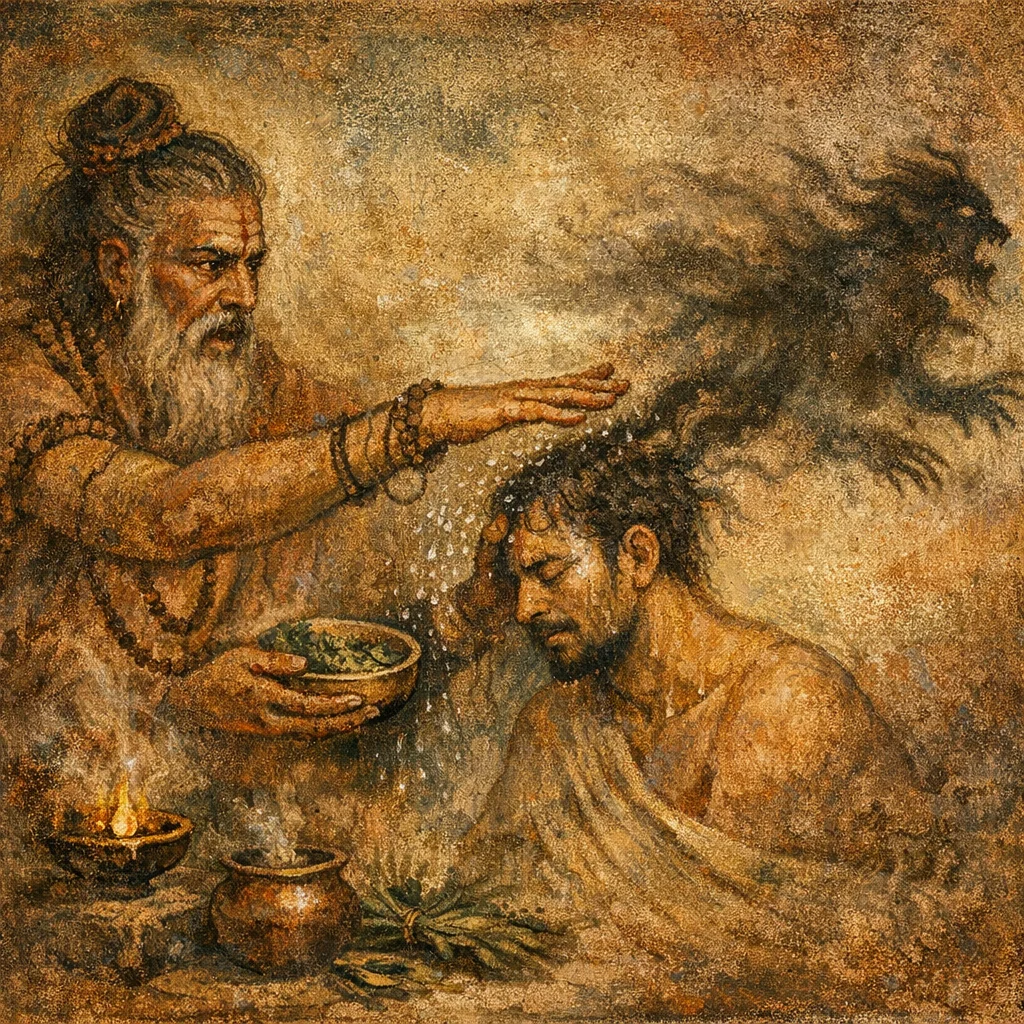
Sukta 22
Rishi: Atharvanic tradition (often attributed to Atharvan/Angiras line for takman hymns; specific r̥ṣi not stated in the provided excerpt)
Devata: Takmán (Fever personified)
Chandas: Anuṣṭubh (probable; common in AV healing verses)
Mantras
Mantra 1
तक्मनाशनम्। अग्निस्तक्मानमप बाधतामितः सोमो ग्रावा वरुणः पूतदक्षाः । वेदिर्बर्हिः समिधः शोशुचाना अप द्वेषांस्यमुया भवन्तु
A fever-devourer. Let Agni from hence repel the Fever away: Soma, the pressing-stone, and Varuṇa of purified powers. Let altar, sacred grass, and blazing kindlings—let the hatreds go away by yonder path.
Mantra 2
अयं यो विश्वान् हरितान् कृणोष्युच्छोचयन्नग्निरिवाभिदुन्वन्। अधा हि तक्मन्नरसो हि भूया अधा न्यऽङ्ङधराङ् वा परेहि
Thou who makest all men pallid, kindling up and smiting like unto Agni—then, O Fever, be thou verily sapless; then go away downward, to the lower region, or depart afar!
Mantra 3
यः परुषः पारुषेयोऽवध्वंस इवारुणः । तक्मानं विश्वधावीर्याधराञ्चं परा सुवा
That Fever which is harsh, of harsh breed, overthrowing as it were, and ruddy—O thou that runnest everywhere, drive the Fever away, downward, and send it forth!
Mantra 4
अधराञ्चं प्र हिणोमि नमः कृत्वा तक्मने । शकम्भरस्य मुष्टिहा पुनरेतु महावृषान्
Downward and forth I drive him, having made obeisance unto Takmán. Let the fist-smiting one of Śakambhara return again unto the Mahāvṛṣas.
Mantra 5
ओको अस्य मूजवन्त ओको अस्य महावृषाः । यावज्जातस्तक्मंस्तावानसि बल्हिकेषु न्योचरः
The Mujavants are his home, the Mahāvṛṣas are his home. As far as thou wast born, O Takmán, so far art thou—a prowler lodged among the Bālhikas.
Mantra 6
तक्मन् व्याऽल वि गद व्यऽङ्ग भूरि यावय । दासीं निष्टक्वरीमिछ तां वज्रेण समर्पय
O Takmán, go apart; away with disease, away with limb-affliction—drive it off in full measure. Seek thou the wasting slave-woman; to her consign it with the thunderbolt.
Mantra 7
तक्मन् मूजवतो गच्छ बल्हिकान् वा परस्तराम्। शूद्रामिच्छ प्रफर्व्यं१ तां तक्मन् वीऽव धूनुहि
O Takmán, go to the Mujavants, or to the Bālhikas yet farther beyond. Seek thou the Śūdra woman, swollen of limb; her, O Takmán, shake upon—away from us.
Mantra 8
महावृषान् मूजवतो बन्ध्वद्धि परेत्य । प्रैतानि तक्मने ब्रूमो अन्यक्षेत्राणि वा इमा
The Mahāvṛṣas, the Mujavants—thy kinsmen—devour (receive thee), when thou hast gone forth and away. These do we proclaim unto Takmán, or else these are other territories (for him).
Mantra 9
अन्यक्षेत्रे न रमसे वशी सन्मृडयासि नः । अभूदु प्रार्थस्तक्मा स गमिष्यति बल्हिकान्
In another region take thy pleasure, being self-ruled; be gracious unto us. Now hath the sending-forth been wrought: Takman, he shall depart unto the Bālhikas.
Mantra 10
यत् त्वं शीतोऽथो रूरः सह कासावेपयः । भीमास्ते तक्मन् हेतयस्ताभिः स्म परि वृङ्ग्धि नः
Since thou art chill, and again art burning, with cough and with shivering: dreadful, O Takman, are thy missiles—therewith, forsooth, turn them away on every side from us.
Mantra 11
मा स्मैतान्त्सखीन् कुरुथा बलासं कासमुद्युगम्। मास्मातोऽर्वाङैः पुनस्तत् त्वा तक्मन्नुप ब्रुवे
Make not these thy comrades—balāsa, cough, and the heaving fit. Come not hitherward again from us: thus, O Takman, do I further adjure thee.
Mantra 12
तक्मन् भ्रात्रा बलासेन स्वस्रा कासिकया सह। पाप्मा भ्रातृव्येण सह गछामुमरणं जनम्
O Takman, with thy brother Balāsa, with thy sister Cough together; with evil, with the rival together—go thou unto yonder alien folk.
Mantra 13
तृतीयकं वितृतीयं सदन्दिमुत शारदम्। तक्मानं शीतं रूरं ग्रैष्मं नाशय वार्षिकम्
The tertian, the varied-tertian, the settled and the autumnal—fever, the chill and the burning, the summer and the rainy—destroy thou.
Mantra 14
गन्धारिभ्यो मूजवद्भ्योऽङ्गेभ्यो मगधेभ्यः । प्रैष्यन् जनमिव शेवधिं तक्मानं परि दद्मसि
Unto the Gandhāris, unto the Mujavants, unto the Aṅgas, unto the Magadhas—sending him forth as one a man, as (one) a treasure-deposit—we deliver over the Fever round about (and away).
Frequently Asked Questions
Takmán is fever personified as a roaming affliction that can strike, depart, and return. The hymn treats it as an agent that can be commanded and redirected away from the patient.
Directional language is used as a ritual command: the fever is pushed out of the patient’s body and sphere of life, symbolically sent to a distant place so it no longer has access to the sufferer.
It aims to prevent complications and relapse. By forbidding alliances with cough (kāsa) and balāsa (a phlegmatic/respiratory disorder), the mantra seeks a cleaner recovery rather than fever returning with secondary illness.