Sukta 136
Rishi: Uncertain/late compilation layer (AV 20 is largely Rigvedic/khila-associated; specific ṛṣi attribution not stable here)
Devata: Vanaspati/ritual agency; also the personified Mahānagnī as operative figure
Chandas: Mixed/late; approximates Anuṣṭubh-like cadence but not securely determinable from the transmitted text alone
Mantras
Mantra 1
खिलानि । यदस्या अंहुभेद्याः कृधु स्थूलमुपातसत्। मुष्काविदस्या एजतो गोशफे शकुलाविव
Khila-verse. When, cleaving the strait, make thou the gross thing press near; her testicles indeed, as she quivers, are like little birds in a cow’s hoof-print.
Mantra 2
यदा स्थूलेन पससाणौ मुष्का उपावधीत्। विष्वञ्चा वस्या वर्धतः सिकतास्वेव गर्दभौ
When with the gross thing the swelling testicles are pressed upon, they spread apart and grow—like two asses in the sands.
Mantra 3
यदल्पिकास्वऽल्पिका कर्कधूकेवषद्यते । वासन्तिकमिव तेजनं यन्त्यवाताय वित्पति
When, in the little places, the little one settles like a karkadhūka; like a vernal goad the motions go on toward the windless calm, O lord of wealth.
Mantra 4
यद्देवासो ललामगुं प्रविष्टीमिनमाविषुः । सकुला देदिश्यते नारी सत्यस्याक्षिभुवो यथा
When the Gods made manifest the crested, marked one, entered within; the woman, with her household, shines forth—like the true one’s region of the eye.
Mantra 5
महानग्न्यतृप्नद्वि मोक्रददस्थानासरन्। शक्तिकानना स्वचमशकं सक्तु पद्यम
Mahānagnī was not appeased: she loosed them apart; she devoured, and their stations ran away. Amid the thicket of pointed stakes, sound-skinned, I was able—(with) parched meal, by measured step.
Mantra 6
महानग्न्युलूखलमतिक्रामन्त्यब्रवीत्। यथा तव वनस्पते निरघ्नन्ति तथैवति
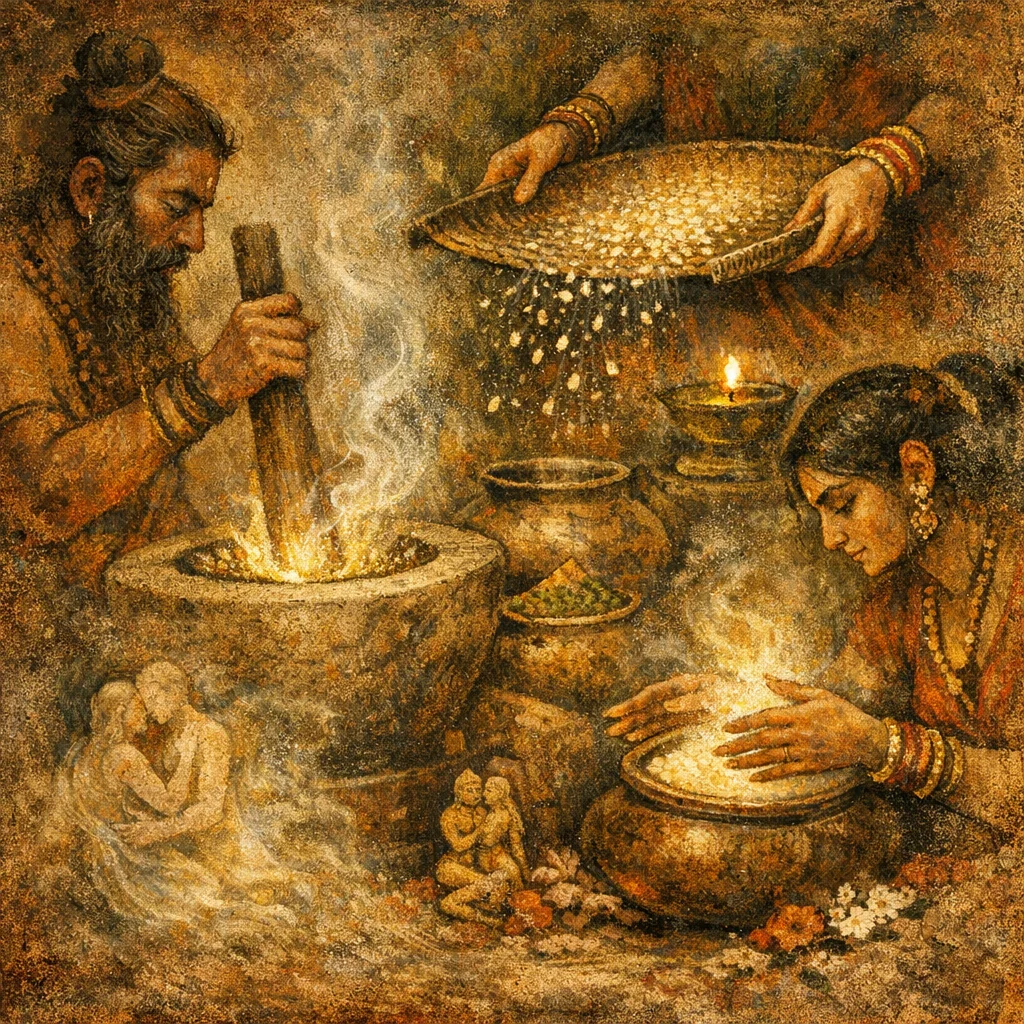
Mahānagnī, stepping over the mortar, spake: ‘As, O Vanaspati, they beat (it) forth, even so (be it).’
Mantra 7
महानग्न्युप ब्रूते भ्रष्टोथाप्यभूभुवः । यथैव ते वनस्पते पिप्पति तथैवति
Mahānagnī, drawing near, pronounceth: ‘Fallen away—yea, become (so)! As, O Vanaspati, thou dost swell and thrive, even so (be it).’
Mantra 8
महानग्न्युप ब्रूते भ्रष्टोथाप्यभूभुवः । यथा वयो विदाह्य स्वर्गे नमवदह्यते
Mahānagnī, drawing near, pronounceth: ‘Fallen away—yea, become (so)! As a bird, O burning one, in heaven is borne along, stooping (in its course)—’
Mantra 9
महानग्न्युप ब्रूते स्वसावेशितं पसः । इत्थं फलस्य वृक्षस्य शूर्पे शूर्पं भजेमहि
Mahānagnī, drawing near, pronounceth: ‘A sister—into the grain-mass entered (the power). Thus of the fruit of the tree, upon the winnowing-fan, may we take fan upon fan for our portion.’
Mantra 10
महानग्नी कृकवाकं शम्यया परि धावति । अयं न विद्म यो मृगः शीर्ष्णा हरति धाणिकाम्
Mahānagnī with the śamyā-staff runs round about the kṛkavāka. We know not what wild creature this is that with its head bears off Dhāṇikā.
Mantra 11
महानग्नी महानग्नं धावन्तमनु धावति । इमास्तदस्य गा रक्ष यभ मामद्ध्यौदनम्
Mahānagnī runs after Mahānagna as he runs. Do thou protect these cows from that of his; O Yabha, eat the boiled rice for me.
Mantra 12
सुदेवस्त्वा महानग्नीर्बबाधते महतः साधु खोदनम्। कुसं पीवरो नवत्
The Mahānagnīs oppress thee, O Sudeva, with mighty, well-wrought piercing; (as) kuśa, a swelling, ever anew.
Mantra 13
वशा दग्धामिमाङ्गुरिं प्रसृजतोग्रतं परे । महान्वै भद्रो यभ मामद्ध्यौदनम्
A vaśā-cow—this burnt finger—let it be released; the fiercest (harm) be sent away yonder. Great indeed and gracious (be thou), O Yabha: eat the boiled rice for me.
Mantra 14
विदेवस्त्वा महानग्नीर्विबाधते महतः साधु खोदनम्। कुमारीका पिङ्गलिका कार्द भस्मा कु धावति
The Mahānagnīs sorely harass thee, O Videva, with mighty, well-wrought piercing. The little maiden, the tawny one, Kārda—(with) ash—whither runs she?
Mantra 15
महान्वै भद्रो बिल्वो महान्भद्र उदुम्बरः । महां अभिक्त बाधते महतः साधु खोदनम्
Great verily is the auspicious Bilva; great-auspicious is the Udumbara. Great, when duly anointed, it repelleth the Great (foe): well is the digging made.
Mantra 16
यः कुमारी पिङ्गलिका वसन्तं पीवरी लभेत्। तैलकुण्डमिमाङ्गुष्ठं रोदन्तं शुदमुद्धरेत्
Whoso, in springtide, findeth the tawny maiden, full and thriving—let him with this oil-bowl, with this thumb, lift out the weeping one, in purity.
Frequently Asked Questions
It is used in a household setting to break and drive away entrenched obstruction or harmful presence, while also supporting minor healing and purification through food offerings and oil-unction.
They function as propitiatory foods: by offering edible nourishment to the invoked agency (notably Yabha), the rite redirects or pacifies fierce harm and restores order to the domestic space.
It indicates a practical purification/healing act: clean oil from a vessel is applied with the thumb to ‘lift out’ the afflicted, crying person from distress, emphasizing śuci (ritual cleanliness) and soothing restoration.