Adhyaya 6
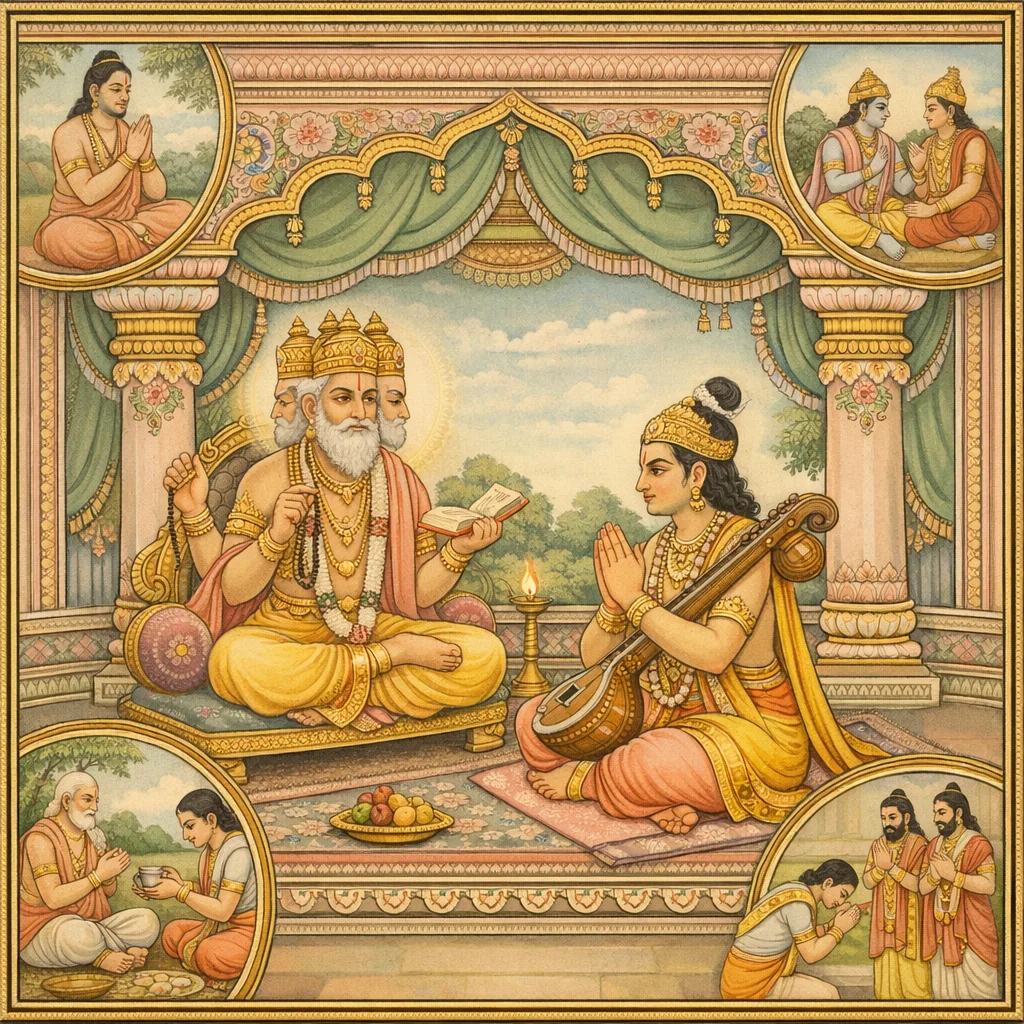
Adhyāya 6 unfolds a multi-nodal tīrtha map through dialogue and phala-centered instruction. Agastya points out Sītākuṇḍa on Ayodhyā’s western bank and praises its purifying power. Śrī Rāma explains the site’s merit: bathing, gifting, japa, homa, and tapas performed “according to rule” become imperishable, with special emphasis on Mārgaśīrṣa kṛṣṇa-caturdaśī and Mārgaśīrṣa bathing to avert adverse rebirth outcomes. Nearby sacred nodes are then named—Cakrahari, linked with the Sudarśana, and Harismṛti, a Viṣṇu-āyatana whose mere darśana dissolves sin. A cosmological backstory follows: the gods, defeated in a deva–asura conflict, take refuge in Kṣīrodaśāyī Viṣṇu; Śiva’s Īśvara-stuti extols Viṣṇu as the transcendent principle and saving power. Viṣṇu sends the gods to Ayodhyā, where he performs hidden tapas, gaining the epithet Guptahari; the shrine becomes a public center for worship, qualified gifting—especially the carefully described cow-gift to a worthy brāhmaṇa—and regulated pilgrimage. The chapter expands into the saṅgama māhātmya of Sarayū–Ghargharā and the nearby Gopratāra tīrtha, claiming merit surpassing many sacrifices and prescribing lamps, night-vigils, offerings, and annual observances (notably in Kārtika and Pauṣa), with salvific reach for men and women alike. It then transitions to Rāma’s “final journey”: his mahāprasthāna, the city’s collective following, arrival at the Sarayū, and the theological framing of ascent, culminating in Gopratāra as a paradigmatic liberation-site within Ayodhyā’s ritual geography.
Shlokas
Verse 1
अगस्त्य उवाच । तस्मात्संगमतो विप्र पश्चिमे दिक्तटे स्थितम् । सीताकुण्डमितिख्यातं सर्वकामफलप्रदम्
Agastya said: Therefore, O brāhmaṇa, from that confluence, on the western bank, there lies a place famed as Sītākuṇḍa, bestowing the fruits of all rightful desires.
Verse 2
यत्र स्नात्वा नरो विप्र सर्वपापैः प्रमुच्यते । सीतया किल तत्कुण्डं स्वयमेव विनिर्मितम् । रामेण वरदानाच्च महाफलनिधीकृतम्
There, O brāhmaṇa, a man who bathes is freed from all sins. That pond, it is said, was fashioned by Sītā herself; and by Rāma’s granting of a boon it was made a treasury of great fruits.
Verse 3
श्रीराम उवाच । शृणु सीते प्रवक्ष्यामि माहात्म्यं भुवि यादृशम् । त्वत्कुण्डस्यास्य सुभगे त्वत्प्रीत्या कथयाम्यहम्
Śrī Rāma said: Listen, Sītā; I shall declare the greatness of this pond of yours as it is upon the earth. O auspicious one, for your delight I will tell it.
Verse 4
अत्र स्नानं च दानं च जपो होमस्तपोऽथवा । सर्वमक्षयतां याति विधानेन शुचिस्मिते
Here, bathing and charity, japa-recitation, homa-offerings, or austerity—everything, when performed according to proper rite, becomes imperishable, O you of pure smile.
Verse 5
मार्गकृष्णचतुर्दश्यां तत्र स्नानं विशेषतः । सर्वपापहरं देवि सर्वदा स्नायिनां नृणाम्
On the fourteenth lunar day (caturdaśī) of the dark fortnight in Mārgaśīrṣa, bathing there is especially efficacious. O goddess, for those who bathe, it always removes all sins.
Verse 6
इति रामो वरं प्रादात्सीतायै च प्रजाप्रियः । तदाप्रभृति सर्वत्र तत्तीर्थं भुवि वर्त्तते
Thus did Rāma, beloved of the people, grant a boon to Sītā. From that time onward, that tīrtha has been established upon the earth and renowned everywhere.
Verse 7
सीताकुण्डमिति ख्यातं जनानां परमाद्भुतम् । तस्मिंस्तीर्थे नरः स्नात्वा नूनं राममवाप्नुयात्
Famed as Sītākuṇḍa, it is a supreme wonder for people. Having bathed at that tīrtha, a person surely attains Rāma.
Verse 8
तत्र स्नानेन दानेन तपसा च विशेषतः । गन्धैर्माल्यैर्धूपदीपैर्न्नानाविभवविस्तरैः । रामं संपूज्य सीतां च मुक्तः स्यान्नात्र संशयः
There, by holy bathing, by charity, and especially by austerity—and by worshipping Rāma and Sītā with perfumes, garlands, incense, lamps, and many kinds of offerings—one becomes liberated; of this there is no doubt.
Verse 9
मार्गे मासि च स्नातव्यं गर्भवासो न जायते । अन्यदापि नरः स्नात्वा विष्णुलोकं स गच्छति
One should bathe (here) in the month of Mārgaśīrṣa; then rebirth in the womb does not arise. Even at other times, a man who bathes (here) goes to Viṣṇu’s world.
Verse 10
विभोर्विष्णुहरेर्विप्र रम्ये पश्चिमदिक्तटे । देवश्चक्रहरिर्नाम सर्वाभीष्टफलप्रदः
O brāhmaṇa, on the beautiful western bank (of this sacred region) is the Lord Viṣṇu-Hari’s deity named Cakrahari, who bestows the fruits of all desired aims.
Verse 11
तस्य चक्रहरेर्विप्र महिमा न हि मानवैः । शक्यो वर्णयितुं धीरैरपि बुद्धिमतां वरैः
O brāhmaṇa, the greatness of that Cakrahari cannot be adequately described by humans—even by the steadfast and the best among the wise.
Verse 12
ततः पश्चिमदिग्भागे नाम्ना पुण्यं हरिस्मृति । विष्णोरायतनं ख्यातं परमार्थफलप्रदम् । यस्य दर्शनमात्रेण सर्वपापैः प्रमुच्यते
Then, in the western quarter, there is a holy place called Harismṛti, famed as a sanctuary of Viṣṇu that grants the highest good; by its mere sight one is released from all sins.
Verse 13
तयोर्दर्शनतो यांति तेषां पापानि देहिनाम् । तानि पापानि यावंति कुर्वते भुवि ये नराः
By the darśana (sacred sight) of those two holy manifestations, the sins of embodied beings depart—whatever sins people commit upon the earth.
Verse 14
पुरा देवासुरे जाते संग्रामे भृशदारुणे । दैत्यैर्वरमदोत्सिक्तैर्देवा युधि पराजिताः
In ancient times, when a dreadfully fierce war arose between the gods and the asuras, the gods were defeated on the battlefield by the daityas, arrogant with the intoxication of boons.
Verse 15
तेषां पलायमानानां देवानामग्रणीर्हरः । संस्तभ्य चैव तान्सर्वान्पुरस्कृत्यांबुजासनम्
As those gods fled, Hari, their leader, steadied them all and, placing the Lotus-seated one (Brahmā) at the fore, proceeded onward.
Verse 16
क्षीरोदशायिनं विष्णुं शेषपर्य्यंकशायिनम् । लक्ष्म्योपविष्टं पार्श्वे च चरणांबुजहस्तया
They beheld Viṣṇu reclining upon the Ocean of Milk, resting on the couch of Śeṣa, with Lakṣmī seated at his side, her hand upon his lotus-feet.
Verse 17
नारदाद्यैर्मुनिवरैरुद्गीतगुगौरवम् । गरुडेन पुरःस्थेनानिशमंजलिना स्तुतम्
He was praised with hymns proclaiming his glory by the foremost sages beginning with Nārada, and continually worshipped by Garuḍa standing before him with folded hands.
Verse 18
क्षीराब्धिजलकल्लोलमदबिन्द्वंकिताम्बरम् । तारकोत्करविस्फारतारहारविराजितम्
They beheld Him whose garment was speckled as though with the playful spray of the Milk-Ocean’s rolling waves, and who shone resplendent with a starry necklace, spread wide like a cluster of constellations.
Verse 19
पीतांबरमतिस्मेरविकाशद्भावभावितम् । बिभ्रतं कुण्डलं स्थूलं कर्णाभ्यां मौक्तिकोज्ज्वलम्
He beheld Him clad in yellow raiment, suffused with a radiant splendor and a gentle smile, bearing large earrings upon both ears, bright with pearls.
Verse 20
रत्नवल्लीमिव स्वच्छां श्वेतद्वीपनिवासिनीम् । किरीटं पद्मरागाणां वलयं दधतं परम्
Pure and luminous like a jeweled creeper—like a goddess dwelling in Śvetadvīpa—He wore a supreme crown, a circlet fashioned of rubies (padmarāgas).
Verse 21
मित्रस्य राहुवित्रासनिवर्त्तनमिवापरम् । सकौस्तुभप्रभाचक्रं बिभ्राणं प्रवलारुणम्
Like the sun’s power that dispels the terror of Rāhu, He bore the radiant circle of the Kaustubha’s splendor, coral-red in hue.
Verse 22
परां चतुर्मुखोत्पत्तिकल्पसंकल्पनामिव । शरणं स जगामाशु विनीतात्मा स्तुवन्निति
Then, with a humbled heart, he swiftly sought refuge—lofty as the creative resolve that brings forth the four-faced Brahmā—and began to praise Him thus.
Verse 23
तस्मिन्नवसरे शंभुः सर्वदेवगणैः सह । तुष्टाव प्रयतो भूत्वा विष्णुं जिष्णुं सुरद्विषाम्
At that moment, Śambhu (Śiva), together with all the hosts of the devas, became intent and, with devotion, praised Viṣṇu—the unconquered conqueror of the enemies of the gods.
Verse 24
ईश्वर उवाच । संसारार्णवसंतारसुपर्णसुखदायिने । मोह तीव्रतमो हारि चन्द्राय हरये नमः
Īśvara said: Salutations to Hari—cool and gracious as the moon—who bestows the blissful “wing” that bears one across the ocean of saṃsāra, and who dispels delusion, the densest darkness.
Verse 25
स्फुरत्संविन्मणिशिखां चित्तसंगतिचंद्रिकाम् । प्रपद्ये भगवद्भक्तिमानसोद्यानवाहिनीम्
I take refuge in devotion to the Blessed Lord: its crest is a flashing jewel-flame of awakened consciousness, its moonlight the mind’s holy communion—flowing like a life-giving stream through the garden of the heart.
Verse 26
हेलोल्लसत्समुत्साहशक्तिं व्याप्तजगत्त्रयाम् । या पूर्वकोटिर्भावानां सत्त्वानां वैष्णवीति वा
That power—sportively radiant with rising enthusiasm—pervades the three worlds; she is the primordial source of beings and their dispositions, and is known as Vaiṣṇavī, the power of Viṣṇu.
Verse 27
पवनांदोलितांभोजदलपर्वांतवर्त्तिनाम् । पततामिव जन्तूनां स्थैर्यमेका हरिस्मृतिः
For beings poised on the fragile tips of lotus petals shaken by the wind—like creatures about to fall—there is only one steadiness: remembrance of Hari.
Verse 28
नमः सूर्य्यात्मने तुभ्यं संवित्किरणमालिने । हृत्कुशेशयकोषश्रीसमुन्मेषविधायिने
Salutations to You, whose very Self is the Sun, garlanded with the rays of pure consciousness; You cause the lotus-bud of the heart to blossom into its full splendor.
Verse 29
नमस्तस्मै यमवते योगिनां गतये सदा । परमेशाय वै पारे महसां तमसां तथा
Salutations to That Lord, the restrainer and ruler, just as Yama in judgment; ever the final refuge of yogins—the Supreme Lord, Parameśvara, who stands beyond both light and darkness.
Verse 30
यज्ञाय भुक्तहविष ऋग्यजुःसामरूपिणे । नमः सरस्वतीगीतदिव्यसद्गणशालिने
Salutations to You who are Yajña itself, who partakes of the offered oblations, who assumes the forms of Ṛg, Yajus, and Sāman; salutations to You who abide amid the divine assembly of the virtuous, praised in Sarasvatī’s sacred song.
Verse 31
शांताय धर्मनिधये क्षेत्रज्ञायामृतात्मने । शिष्ययोगप्रतिष्ठाय नमो जीवैकहेतवे । घोराय मायाविधये सहस्रशिरसे नमः
Salutations to the Peaceful One, the treasure-house of dharma; to the Knower of the field (Kṣetrajña), whose Self is deathless; to Him who establishes the disciple in yoga. Salutations to the single primal cause of all living beings; salutations to the awe-inspiring Lord who wields māyā, the Thousand-headed One.
Verse 32
योगनिद्रात्मने नाभिपद्मोद्भूतजगत्सृजे । नमः सलिलरूपाय कारणाय जगत्स्थितेः
Salutations to You whose nature is yogic sleep; the creator of the worlds that arise from the lotus of the navel. Salutations to You who appear as the cosmic waters, the very cause of the world’s continuance.
Verse 33
कार्यमेयाय बलिने जीवाय परमात्मने । गोप्त्रे प्राणाय भूतानां नमो विश्वाय वेधसे
Salutations to the Mighty One, knowable through the effects of His works; to the Living Presence, the Supreme Self (Paramātman); to the Protector and very life-breath of beings—salutations to the All-pervading Creator, Viśva-Vedhas.
Verse 34
दृप्ताय सिंहवपुषे दैत्यसंहारकारिणे । वीर्यायानंतमनसे जगद्भावभृते नमः
Salutations to the proud and mighty One in lion-form, the slayer of the Daityas; salutations to boundless valor and infinite mind, the bearer and sustainer of the world’s becoming.
Verse 35
संसारकारणाज्ञानमहासंतमसच्छिदे । अचिन्त्यधाम्ने गुह्याय रुद्रायात्युद्विजे नमः
Salutations to Him who cleaves the vast darkness of ignorance, the cause of saṃsāra; salutations to the One whose abode is inconceivable, the Secret One; salutations to Rudra, before whom all tremble.
Verse 36
शान्ताय शान्तकल्लोलकैवल्यपददायिने । सर्वभावातिरिक्ताय नमः सर्वमयात्मने
Salutations to the Peaceful One who grants the state of kaivalya, whose waves are tranquility; salutations to Him who transcends all conditions of existence, yet whose Self pervades all as everything.
Verse 37
इन्दीवरदलश्यामं स्फूर्जत्किंजल्कविभ्रमम् । बिभ्राणं कौस्तुभं विष्णुं नौमि नेत्ररसायनम्
I bow to Viṣṇu—dark as the petal of a blue lotus, radiant with the play of shining filaments—bearing the Kaustubha jewel, the very elixir for the eyes.
Verse 38
अगस्त्य उवाच । इति स्तुतः प्रसन्नात्मा वरदो गरुडध्वजः । ववर्ष दृष्टिसुधया सर्वान्देवान्कृपान्वितः । उवाच मधुरं वाक्यं प्रश्रयावनतान्सुरान्
Agastya said: Thus praised, the boon-giving Lord whose banner bears Garuḍa became serene. Filled with compassion, he showered all the gods with the nectar of his glance, and then spoke sweet words to the devas who stood bowed in humility.
Verse 39
श्रीभगवानुवाच । जानामि विबुधाः सर्वमभिप्रायं समाधितः । दैतेयैर्विक्रमाक्रान्तं पदं समरदर्पितैः
The Blessed Lord said: O gods, abiding in steady samādhi, I know your whole intent. Your station has been overrun by the Daityas, swollen with the pride of battle and prowess.
Verse 40
सबलैर्बलहीनानां प्रतापो विजितः परैः । सांप्रतं तु विधास्यामि तपो युष्मद्बलाय वै
When the strong confront the weakened, the splendor of the powerless is overcome by others. Therefore now I shall undertake tapas, austerity indeed for the strengthening of your power.
Verse 41
अयोध्यानगरे गत्वा करिष्ये तप उत्तमम् । गुप्तो भूत्वा भवत्तेजोविवृद्ध्यै दैत्यशान्तये
Going to the city of Ayodhyā, I shall perform the highest austerity. Remaining concealed, I will do so to increase your divine radiance and to bring the Daityas to peace—that is, to subdue them.
Verse 42
भवन्तोऽपि तपस्तीव्रं कुर्वंत्वमलमानसाः । अयोध्यां प्राप्यतां देवा दैत्यनाशाय सत्वरम्
You too, with minds purified and stainless, should perform intense austerity. Let the gods swiftly reach Ayodhyā, for the destruction of the Daityas.
Verse 43
अगस्त्य उवाच । इत्युक्त्वांतर्दधे देवान्देवो गरुडवाहनः । अयोध्यामागतः क्षिप्रं चकार तप उत्तमम्
Agastya said: Having spoken thus, the divine Lord, the Rider of Garuḍa, vanished from the sight of the gods. Swiftly reaching Ayodhyā, he performed the supreme austerity.
Verse 44
गुप्तो भूत्वा यदा विद्वन्सुरतेजोभिवृद्धये । तेन गुप्तहरिर्नाम देवो विख्यातिमागतः
O wise one, because Hari remained concealed to increase the splendor of the gods, that Lord became renowned by the name “Gupta-Hari” (Hari in concealment).
Verse 45
आगतस्य हरेः पूर्वं यत्र हस्ततलाच्च्युतम् । सुदर्शनाख्यं तच्चक्रं तेन चक्रहरिः स्मृतः
At the place where, before his settling, Hari’s discus named Sudarśana fell from the palm of his hand, he is remembered by that event as “Cakra-Hari” (Hari of the Discus).
Verse 46
तयोर्दर्शनमात्रेण सर्वपापैः प्रमुच्यते । हरस्तेन प्रभावेण देवाः प्रबलतेजसः
By the mere sight of those two holy manifestations, one is freed from all sins. By that very power, the gods became possessed of mighty radiance.
Verse 47
जित्वा दैत्यान्रणैः सर्वान्संप्राप्य स्वपदान्यथ । रेजिरे विपुलानंदैरसुरानार्दयंस्ततः
Having defeated all the Daityas in battle and regained their own abodes, the gods then shone with vast joy, crushing the Asuras thereafter.
Verse 48
ततः सर्वे समेत्याशु बृहस्पतिपुरस्सराः । देवाः सर्वेऽनमन्मौलिमालार्च्चित पदाम्बुजम् । हरिं द्रष्टुमथागच्छन्नयोध्यायां समुत्सुकाः
Then all the gods, quickly assembling with Bṛhaspati at their head, bowed to Hari—whose lotus-feet were worshipped with garlands placed upon their crowns—and, eager to behold him, they came to Ayodhyā.
Verse 49
आगत्य च ततः श्रुत्वा नानाविधगुणादरम् । भावैः पुण्यैः समभ्यर्च्य नत्वा प्रांजलयस्तदा । हरिमेकाग्रमनसा ध्यायन्तो ध्याननिष्ठिताः
Having arrived and hearing of his reverence for manifold virtues, they worshipped with pure and meritorious feelings; then, bowing with hands folded, they meditated on Hari with one-pointed minds, steadfast in contemplation.
Verse 50
तानागतान्समालोक्य पदभक्त्या कृतानतीन् । प्रसन्नः प्राह विश्वात्मा पीतवासा जनार्दनः
Seeing them arrived and bowing in devotion at his feet, the Universal Self—Janārdana, clad in yellow garments—spoke with gracious pleasure.
Verse 51
श्रीभगवानुवाच । भोभो देवा भवन्तश्च चिराद्दिष्टयाद्यसंगताः । अधुना भवतामिच्छां कां करोमि सुरा अहम् । तद्ब्रूत त्वरिता मह्यं किं विलंबेन निर्भयाः
The Blessed Lord said: “O gods! After a long time, by good fortune, you have met me today. Now what desire of yours shall I fulfill? Tell me quickly—why delay, being without fear?”
Verse 52
देवा ऊचुः । भगवन्देवदेवेश त्वया संप्रति सर्वशः । सर्वं समभवत्कार्यं निष्पन्नं वै जगत्पते
The gods said: “O Lord, God of gods! Through you, in every way, all that had to be done has now come about—everything is indeed accomplished, O Master of the world.”
Verse 53
तथापि सर्वदा भाव्यं नित्यं देव त्वया विभो । अस्मद्रक्षार्थमत्रैव विजितेन्द्रियवर्त्मना
“Even so, O mighty Lord, you should ever remain here always for our protection—treading the path of mastery over the senses.”
Verse 54
एवमेव सदा कार्यं शत्रुपक्षविनाशनम्
Thus indeed, the destruction of the enemy’s faction should always be carried out.
Verse 55
श्रीभगवानुवाच । एवमेतत्करिष्यामि भवतामरिसंजयम् । श्रीमतां तेजसो वृद्धिं करिष्यामि सदासुराः । कथेयं च सदा ख्यातिं लोके यास्यति चोत्तमाम्
The Blessed Lord said: “So be it—I shall accomplish this: victory over your foes. I shall ever increase the splendor of the illustrious; and this sacred account, too, shall always attain the highest renown in the world.”
Verse 56
अयं नाम्ना गुप्तहरिर्देवो भुवनविश्रुतः । मदीयं परमं गुह्यं स्थानं ख्यातिं समेष्यति
This deity, known by the name “Gupta-Hari” and famed throughout the worlds, shall become renowned as my supremely secret abode.
Verse 57
अत्र यः प्राणिनां श्रेष्ठः पूजायज्ञजपादिकम् । करोति परया भक्त्या स याति परमां गतिम्
Here, whoever among living beings performs worship, sacrifice, japa, and the like with supreme devotion—he attains the highest state.
Verse 58
अत्र यः कुरुते दानं यथाशक्त्या जितेन्द्रियः । स स्वर्गमतुलं प्राप्य न शोचति कदाचन
Whoever, here in this sacred place, performs charity according to one’s capacity, with the senses restrained—having attained incomparable heaven, such a person never grieves at any time.
Verse 59
अत्र मत्प्रीतये देवाः प्राणिभिर्धर्मकांक्षिभिः । दातव्या गौः प्रयत्नेन सवत्सा विधिपूर्वकम्
Here, O gods, for my satisfaction, beings who long for dharma should earnestly give in charity a cow together with her calf, duly and according to the proper rite.
Verse 60
स्वर्णशृंगी रौप्यखुरी वस्त्रद्वयसमावृता । कांस्योपदोहना ताम्रपृष्ठी बहुगुणान्विता
With horns adorned in gold, hooves in silver, covered with two cloths; with a bronze milking vessel and a back adorned with copper—endowed with many fine qualities.
Verse 61
रत्नपुच्छा दुग्धवती घंटाभरणभूषिता । अर्चिता गंधपुष्पाद्यैः सुप्रसन्नाऽमृतप्रजा
With a tail adorned with jewels, rich in milk, decorated with bells and ornaments; worshipfully honored with fragrances, flowers, and the like—very serene, and with excellent offspring.
Verse 62
द्विजाय वेदविज्ञाय गुणिने निर्मलात्मने । विष्णुभक्ताय विदुषे आनृशंस्यरताय च
The gift should be made to a twice-born who knows the Veda, who is virtuous and pure-souled; to a learned devotee of Viṣṇu, and to one devoted to compassion.
Verse 63
ब्राह्मणाय च गौर्देया सर्वत्रसुखमश्नुते । न देया द्विजमात्राय दातारं सोऽवपातयेत्
A cow should indeed be given to a true Brāhmaṇa; the giver enjoys happiness everywhere. But it should not be given to one who is ‘twice-born’ in name alone—such a recipient brings the donor to downfall.
Verse 64
मत्प्रीतयेऽत्र दातव्या निर्मलेनांतरात्मना
Here one should give in charity for my satisfaction, with the inward heart made pure.
Verse 65
स्नातं यैश्च विशुद्ध्यर्थमत्र मद्भक्तितत्परैः । तेषां स्वर्गतयो नित्यं मुक्तिः करतले स्थिता
Those who bathe here for purification, devoted to my bhakti—of them, heavenly attainment is assured, and liberation ever rests in the palm of their hand.
Verse 66
तथा चक्रहरेः पीठे मत्प्रीत्यै दानमुत्तमम् । जपहोमादिकं चापि कर्त्तव्यं यत्नतो नरैः
Likewise, at the shrine-seat of Cakrahari, charity offered for my satisfaction is supreme; and people should diligently perform japa, homa, and the other rites.
Verse 67
भवन्तोऽपि विधानेन यात्रां कुर्वंतु सत्तमाः । अस्माद्गुप्तहरेः स्थानान्निकटे संगमे शुभे
You too, O best of the virtuous, should undertake the pilgrimage in the prescribed manner—near the auspicious confluence, not far from this hidden Hari’s sacred abode.
Verse 68
प्रत्यग्भागे गोप्रताराद्योजनत्रयसंमिते । घर्घरांबुतरंगिण्या सरयूः संगता यतः
To the west, three yojanas from Gopratāra, lies the place where the Sarayū meets the Ghargharā, whose waters surge in rolling waves.
Verse 69
अत्र स्नात्वा विधानेन द्रष्टव्योऽत्र प्रयत्नतः । देवो गुप्तहरिर्नाम सर्वकामार्थसिद्धिदः
Having bathed here according to the proper rite, one should earnestly strive to behold here the deity named Guptahari, who grants the fulfillment of every desired aim.
Verse 70
अगस्त्य उवाच । इत्युक्त्वांतर्दधे देवः पीताम्बरधरोऽच्युतः । देवा अपि विधानेन कृत्वा यात्रां प्रयत्नतः । अयोध्यायां स्थिता नित्यं हरेर्गुणविमोहिताः
Agastya said: Having spoken thus, the Lord Acyuta, clad in yellow garments, disappeared. The gods too, performing the pilgrimage with due rites and earnest effort, have ever since remained in Ayodhyā—spellbound by the virtues of Hari.
Verse 71
तदाप्रभृति विप्रेंद्र तत्स्थानं भुवि पप्रथे । कार्तिक्यां तु विशेषेण यात्रा सांवत्सरी भवेत्
From that time onward, O best of brāhmaṇas, that holy place became renowned on earth. In the month of Kārtika especially, the pilgrimage there becomes an annual observance.
Verse 72
विभोर्गुप्तहरेस्तत्र संगमस्नानपूर्विका । गोप्रतारे च तीर्थेऽस्मिन्सरयूघर्घराश्रिते । स्नात्वा देवोऽर्चनीयोऽयं सर्वकामफलप्रदः
There, for the mighty Lord Guptahari, the rite begins with bathing at the confluence. At this Gopratāra tīrtha, situated by the Sarayū and Ghargharā, after bathing one should worship this deity, for he bestows the fruits of every desire.
Verse 73
तथा चक्रहरेर्यात्रा कर्त्तव्या सुप्रयत्नतः । मार्गशार्षस्य विशदे पक्षे हरितिथौ नरैः
Likewise, the pilgrimage of Cakrahari should be undertaken with great diligence by men, on the bright fortnight of Mārgaśīrṣa, on the day sacred to Hari.
Verse 74
एवं यः कुरुते यात्रां विष्णुलोके स मोदते
Whoever performs the pilgrimage in this manner rejoices in the world of Viṣṇu.
Verse 75
श्रीसूत उवाच । एवमुक्त्वा तु विरते मुनौ कलशजन्मनि । कृष्णद्वैपायनो व्यासः पुनराह सविस्मयः
Śrī Sūta said: When the sage born of the jar had thus spoken and fallen silent, Kṛṣṇa Dvaipāyana Vyāsa spoke again, filled with wonder.
Verse 76
व्यास उवाच । अत्याश्चर्य्यमयीं ब्रह्मन्कथामेतां तपोधन । उक्तवानसि येनैतत्साश्चर्य्यं मम मानसम्
Vyāsa said: O Brāhman, O treasure of austerity, you have spoken this exceedingly wondrous account—by which my mind has become filled with amazement.
Verse 77
विस्तरेण मम ब्रूहि माहात्म्यं परमाद्भुतम्
Tell me in detail this supremely marvelous greatness (māhātmya).
Verse 78
शृणु संगममाहात्म्यं विप्रेंद्र परमाद्भुतम् । स्कन्ददेवाच्छ्रुतं सम्यक्कथयामि तथा तव
O best of brāhmaṇas, listen to the supremely wondrous greatness of the sacred confluence. Having heard it from Lord Skanda, I shall now relate it to you accurately.
Verse 79
दशकोटिसहस्राणि दशकोटिशतानि च । तीर्थानि सरयूनद्या घर्घरोदकसंगमे । निवसंति सदा विप्र स्कन्दादवगतं मया
O brāhmaṇa, at the confluence where the Sarayū meets the waters of Gharghara, holy fords (tīrthas)—tens of crores of thousands and tens of crores of hundreds—abide there eternally; thus have I understood from Skanda.
Verse 80
देवतानां सुराणां च सिद्धानां योगिनां तथा । ब्रह्मविष्णुशिवानां च सान्निध्यं सर्वदा स्थितम्
There, the constant presence of the gods and celestials, of siddhas and yogins, and even of Brahmā, Viṣṇu, and Śiva is ever established.
Verse 81
तस्मिन्संगमसलिले नरः स्नात्वा समाहितः । संतर्प्य पितृदेवांश्च दत्त्वा दानं स्वशक्तितः
Having bathed in the waters of that confluence with a collected mind, a person should satisfy the ancestors and the gods, and give charity according to one’s capacity.
Verse 82
हुत्वा वैष्णवमंत्रेण शुचिर्यत्फलमाप्नुयात् । तदिहैकमना विप्र शृणु यत्कथयामि ते
Whatever fruit a purified person would obtain by offering oblations with a Vaiṣṇava mantra—hear from me, O brāhmaṇa, with one-pointed mind—that very result is attained here.
Verse 83
अश्वमेधसहस्रस्य वाजपेयशतस्य च । कुरुक्षेत्रे महाक्षेत्रे राहुग्रस्ते दिवाकरे
The merit spoken of here is that of a thousand Aśvamedha sacrifices and a hundred Vājapeya rites—even at Kurukṣetra, that great sacred field, when the sun is eclipsed by Rāhu.
Verse 84
सुवर्णदाने यत्पुण्यमहन्यहनि तद्भवेत्
That merit which arises day after day from the gift of gold—such merit indeed is obtained there.
Verse 85
अमावास्यां पौर्णमास्यां द्वादश्योरुभयोरपि । अयने च व्यतीपाते स्नानं वैष्णवलोकदम्
Bathing there on the new-moon day, the full-moon day, on either of the two Dvādaśīs, and also at the solstices and the Vyatīpāta conjunction—grants attainment of the world of Viṣṇu.
Verse 86
तिष्ठेद्युगसहस्रं तु पादेनैकेन यः पुमान् । विधिवत्संगमे स्नायात्पौष्यां तदविशेषतः
Even if a man were to stand for a thousand yugas on one foot, the fruit would be no different from that obtained by duly bathing at the confluence on the day of Puṣya.
Verse 87
लंबतेऽवाक्छिरा यस्तु युगानामयुतं पुमान् । स्नातानां शुचिभिस्तोयैः संगमे प्रयतात्मनाम्
Even if a man were to hang upside down for ten thousand yugas, he would not surpass the merit connected with the pure waters of those disciplined souls who have bathed at the confluence.
Verse 88
व्युष्टिर्भवति या पुंसां न सा क्रतुशतैरपि
That sacred, dawn-like awakening and upliftment that arises for people through this holy observance cannot be attained even by performing a hundred Vedic sacrifices.
Verse 89
पौषे मासि विशेषेण स्नानं बहुफलप्रदम्
Bathing—especially in the month of Pauṣa—bestows abundant spiritual fruits.
Verse 90
पौषे मासि विशेषेण यः कुर्यात्स्नानमादृतः । ब्राह्मणः क्षत्रियो वैश्यः शूद्रो वा वर्णसंकरः । स याति ब्रह्मणः स्थानं पुनरावृत्तिवर्जितम्
Whoever, with reverence, performs the ritual bath especially in the month of Pauṣa—whether a brāhmaṇa, kṣatriya, vaiśya, śūdra, or one of mixed social origin—attains the abode of Brahmā, free from return, beyond rebirth.
Verse 91
पौषे मासे तु यो दद्याद्घृताढ्यं दीपमुत्तमम् । विधिवच्छ्रद्धया विप्र शृणु तस्यापि यत्फलम्
But in the month of Pauṣa, whoever offers an excellent lamp rich with ghee—according to rule and with faith—O brāhmaṇa, hear also the fruit that comes from that.
Verse 92
नानाजन्मार्जितं पापं स्वल्पं बह्वपि वा भवेत् । तत्सर्वं नश्यति क्षिप्रं तोयस्थं लवणं यथा
Sin accumulated over many births—whether little or much—quickly perishes entirely, like salt dissolved in water.
Verse 93
आयुरारोग्यमैश्वर्यं संततीः सौख्यमुत्तमम् । प्राप्नोति फलदं नित्यं दीपदः पुण्यभाङ्नरः
The giver of lamps—one who partakes of merit—constantly attains fruitful blessings: long life, health, prosperity, offspring, and excellent happiness.
Verse 94
यस्तु शुक्लत्रयोदश्यां पौषेऽत्र प्रयतो व्रती । जागरं कुरुते धीरः स गच्छेद्भवनं हरेः
But the steadfast votary who, here in Pauṣa, on the thirteenth day of the bright fortnight, keeps the night‑vigil with firm resolve—such a one goes to the abode of Hari.
Verse 95
जागरं विदधद्रात्रौ दीपं दत्त्वा तु सर्वशः । होमं च कारयेद्विप्रो नियतात्मा शुचिव्रतः
Keeping vigil through the night and offering lamps on every side, the disciplined brāhmaṇa—pure in his vow—should also have the homa (fire-offering) performed.
Verse 96
वैष्णवो विष्णुपूजां च कुर्वञ्छृण्वन्हरेः कथाम् । गीतवादित्रनृत्यैश्च विष्णुतोषणकारकैः । कथाभिः पुण्ययुक्ताभिर्जागृयाच्छर्वरीं नरः
A Vaiṣṇava should keep awake through the night, worshipping Viṣṇu, listening to Hari’s sacred narratives, and engaging in song, instrumental music, and dance that delight Viṣṇu—keeping vigil with holy, merit-filled recitations and discourses.
Verse 97
ततः प्रभाते विमले स्नात्वा विधिवदादरात् । विष्णुं संपूज्य विप्रांश्च देयं स्वर्णादि शक्तितः
Then, in the pure morning, having bathed with due rite and reverence, one should worship Viṣṇu fully; and one should give to brāhmaṇas—gold and other gifts—according to one’s capacity.
Verse 98
स्वर्णं चान्नं च वासांसि यो दद्याच्छ्रद्धयाऽन्वितः । संगमे विधिवद्विद्वान्स याति परमां गतिम्
Whoever, endowed with faith, gives gold, food, and garments at the sacred confluence, and does so according to proper rite with understanding, attains the supreme destination.
Verse 99
वर्षेवर्षे तु कर्तव्यो जागरः पुण्यतत्परैः
Year after year, those devoted to merit should keep the night-vigil (jāgara).
Verse 100
हरिः पूज्यो द्विजाः सम्यक्संतोष्याः शक्तितो नरैः । तेन विष्णोः परा तुष्टिः पापानि विफलानि च । भवंति निर्विषाः सर्पा यथा तार्क्ष्यस्य दर्शनात्
Hari should be worshipped, and people should, according to their means, properly satisfy the twice-born (dvija). Thereby Viṣṇu is supremely pleased and sins become fruitless. As serpents lose their venom at the sight of Tārkṣya (Garuḍa), so too do sins lose their power.
Verse 101
तत्र स्नातो दिवं याति अत्र स्नातः सुखी भवेत
Bathing there, one goes to heaven; bathing here, one becomes happy even in this life.
Verse 102
त्रिषु लोकेषु ये केचित्प्राणिनः सर्व एव ते । तर्प्यमाणाः परां तृप्तिं यांति संगमजैर्जलैः
All living beings in the three worlds—when offered satisfaction (tarpana)—attain supreme contentment through the waters born of the sacred confluence (Saṅgama).
Verse 103
भूतानामिह सर्वेषां दुःखोपहतचेतसाम् । गतिमन्वेषमाणानां न संगमसमा गतिः
For all beings here whose minds are struck by sorrow and who seek a true refuge and course, there is no destination equal to the Saṅgama.
Verse 104
सप्तावरान्सप्तपरान्पुरुषश्चात्मनासह । पुंसस्तारयते सर्वान्संगमे स्नानमाचरन्
A man who performs the sacred bath at the Saṅgama delivers all—seven generations before and seven generations after—together with himself.
Verse 105
जात्यंधैरिह ते तुल्यास्तथा पंगुभिरेव च । समेत्यात्र च न स्नान्ति सरयूघर्घरसंगमे
Here, those people are deemed like the congenitally blind, and likewise like the lame—who, even after coming here, do not bathe at the confluence of the Sarayū and the Ghargharā.
Verse 106
वर्णानां ब्राह्मणो यद्वत्तथा तीर्थेषु संगमः । सरयूघर्घरायोगे वैष्णवस्थो नरः सदा
Just as the Brāhmaṇa is foremost among the social orders, so the Saṅgama is foremost among sacred fords. At the meeting of the Sarayū and the Ghargharā, a man abides always in a Vaiṣṇava state, aligned in devotion to Viṣṇu.
Verse 107
अत्र स्नानेन दानेन यथा शक्त्या जितेंद्रियः । होमेन विधिपुक्तेन नरः स्वर्गमवाप्नुयात्
Here, by bathing and giving charity according to one’s capacity, with senses restrained, and by performing oblations (homa) as enjoined by rule, a man attains heaven.
Verse 108
नरो वा यदि वा नारी विधिवत्स्नानमाचरेत् । स्वर्गलोकनिवासो हि भवेत्तस्य न संशयः
Whether man or woman, if one performs the ritual bath according to proper rule, that person surely attains residence in the heavenly worlds—of this there is no doubt.
Verse 109
यथा वह्निर्दहेत्सर्वं शुष्कमार्द्रमथापि वा । भस्मीभवंति पापानि तत्समागममज्जनात्
Just as fire burns up everything—dry or even wet—so sins are reduced to ashes by bathing at that sacred confluence.
Verse 110
एकतः सर्वतीर्थानि नानाविधिफलानि वै । सरयूघर्घरोत्पन्नसंगमस्त्वधिको भवेत्
On one side are all the sacred ford-places with their many ritual fruits; yet the confluence arising from the Sarayū’s Ghargharā is even superior.
Verse 111
सर्वतीर्थावगाहस्य फलं यादृक्स्मृतं श्रुतौ । तादृक्फलं नृणां सम्यग्भवेत्संगममज्जनात्
Whatever fruit is remembered in sacred tradition for bathing in all tīrthas, that very fruit is fully obtained by people through immersion at this confluence.
Verse 112
गोप्रताराभिधं तीर्थमपरं वर्ततेऽनघ । सन्निधौ संगमस्यैव महापातकनाशनम्
O sinless one, there is another tīrtha named Gopratārā; situated near the confluence itself, it destroys even the great sins.
Verse 113
यत्र स्नानेन दानेन न शोचति नरः क्वचित् । गोप्रतारसमं तीर्थं न भूतं न भविष्यति
Where, by bathing and by giving, a person never falls into sorrow—no tīrtha equal to Gopratārā has existed, nor will it ever exist.
Verse 114
वाराणस्यां यथा विद्वन्वर्त्तते मणिकर्णिका । उज्जयिन्यां यथा विप्र महाकालनिकेतनम्
Just as, O learned one, Maṇikarṇikā is renowned in Vārāṇasī, and just as, O brāhmaṇa, the abode of Mahākāla is famed in Ujjayinī—
Verse 115
नैमिषे चक्रवापी तु यथा तीर्थतमा स्मृता । अयोध्यायां तथा विप्र गोप्रताराभिधं महत्
Just as Cakravāpī at Naimiṣa is remembered as the most excellent of tīrthas, so too in Ayodhyā, O brāhmaṇa, the great tīrtha called Gopratārā holds that place of eminence.
Verse 116
यत्र रामाज्ञया विद्वन्साकेतनगरीजनाः । अवापुः स्वर्गमतुलं निमज्ज्य परमांभसि
There, O learned one, by Rāma’s command, the people of the city of Sāketa attained incomparable heaven after immersing themselves in those supreme waters.
Verse 117
व्यास उवाच । अवापुस्ते कथं स्वर्गं साकेतनगरीजनाः । कथं च राघवो विद्वन्नेतत्कथय सुव्रत
Vyāsa said: “How did those people of the city of Sāketa attain heaven? And how did Rāghava bring this about? O learned one of noble vows, tell me this.”
Verse 118
अगस्त्य उवाच । सावधानः शृणु मुने कथामेतां सुविस्तरात् । यथाजगाम रामोऽसौ स्वर्गं स च पुरीजनः
Agastya said: “Listen attentively, O sage, to this account in full detail—how Rāma went to heaven, and how the people of the city went with him.”
Verse 119
पुरा रामो विधायैव देवकार्य्यमतंद्रितः । स्वर्गं गंतुं मनश्चक्रे भ्रातृभ्यां सह वीरधीः
Formerly, Rāma—unwearied in accomplishing the gods’ work—having completed it, resolved in his mind to depart for heaven together with his brothers, that heroic and steadfast one.
Verse 120
ततो निशम्य चारेण वानराः कामरूपिणः । ऋक्षगोपुच्छरक्षांसि समुत्पेतुरनेकशः
Then, hearing it through their scouts, the shape-shifting Vānara hosts—along with bears and the Gopuccha-rākṣasas—rose up and set forth in great numbers.
Verse 121
देवगंधर्वपुत्राश्च ऋषिपुत्राश्च वानराः । रामक्षयं विदित्वा तु सर्व एव समागताः
And the Vānaras—sons of gods and Gandharvas, and sons of sages—knowing that Rāma’s end-time (departure) had come, all assembled together.
Verse 122
ते राममनुगत्योचुः सर्वे वानरयूथपाः । तवानुगमने राजन्संप्राप्ताः स्म इहानघ
Following after Rāma, all the leaders of the Vānara troops said: “O King, we have come here to accompany you; O sinless one.”
Verse 123
यदि राम विनास्माभिर्गच्छेस्त्वं पुरुषर्षभ । सर्वे खलु हताः स्याम दण्डेन महता नृप
“If you go without us, O Rāma—best of men—then we would all indeed be as though slain by a great punishment, O King.”
Verse 125
यावत्प्रजा धरिष्यंति तावदेव विभीषण । कारयस्व महद्राज्यं लंकां त्वं पालयिष्यसि
So long as the people endure, for just so long, O Vibhīṣaṇa—administer this great kingdom; you shall rule and protect Laṅkā.
Verse 126
शाधि राज्यं च खल्वेतन्नान्यथा मे वचः कुरु । प्रजास्त्वं रक्ष धर्मेण नोत्तरं वक्तुमर्हसि
Rule this kingdom indeed—do not act otherwise than my command. Protect the subjects according to dharma; you are not fit to offer any further objection.
Verse 127
एवमुक्त्वा तु काकुत्स्थो हनुमंतमथाब्रवीत् । वायुपुत्र चिरं जीव मा प्रतिज्ञां वृथा कृथाः
Having spoken thus, Kakutstha (Rāma) then said to Hanumān: “O son of Vāyu, live long—do not let your vow become vain.”
Verse 128
यावल्लोका वदिष्यंति मत्कथां वानरर्षभ । तावत्त्वं धारय प्राणान्प्रतिज्ञां प्रतिपालयन्
So long as people in the worlds shall speak my story, O best of Vānaras, for that long you must sustain your life—faithfully maintaining your vow.
Verse 129
मैन्दश्च द्विविदश्चैव अमृतप्राशनावुभौ । यावल्लोका धरिष्यंति तावदेतौ धरिष्यतः
Mainda and Dvivida—both drinkers of ambrosia—shall endure for as long as the worlds endure; so long indeed shall these two remain.
Verse 130
पुत्रपौत्राश्च येऽस्माकं तान्रक्षन्त्विह वानराः । एवमुक्त्वा तु काकुत्स्थः सर्वानथ च वानरान् । मया सार्धं प्रयातेति तदा तान्राघवोऽब्रवीत्
“Let the vānaras here protect our sons and grandsons.” Having spoken thus, Kakutstha (Rāma) then addressed all the vānaras: “Come forth together with me,” said Rāghava to them.
Verse 131
प्रभातायां तु शर्वर्य्यां पृथुवक्षा महाभुजः । रामः कमलपत्राक्षः पुरोधसमथाब्रवीत्
When the night had dawned into morning, broad-chested, mighty-armed Rāma—lotus-petaled-eyed—then spoke to his family priest.
Verse 132
अग्निहोत्राणि यांत्वग्रे दीप्यमानानि सर्वशः । वाजपेयातिरात्राणि निर्यातु च ममाग्रतः
“Let the Agnihotra fires go before me, blazing on every side; and let the Vājapeya and Atirātra sacrifices also proceed in front of me.”
Verse 133
ततो वसिष्ठस्तेजस्वी सर्वं निश्चित्य चेतसा । चकार विधिवत्कर्म महाप्रास्थानिकं विधिम्
Then the radiant Vasiṣṭha, having resolved everything in his mind, duly performed the rite—the great ceremonial procedure of departure.
Verse 134
ततः क्षौमाम्बरधरो ब्रह्मचर्यसमन्वितः । कुशानादाय पाणिभ्यां महाप्रस्थानमुद्यतः
Then, wearing linen garments and established in brahmacarya, taking kuśa grass in both hands, he prepared for the great departure.
Verse 135
न व्याहरच्छुभं किंचिदशुभं वा नरेश्वरः । निष्क्रम्य नगरात्तस्मात्सागरादिव चंद्रमाः
The lord of men uttered nothing—neither auspicious nor inauspicious. Departing from that city, he shone forth like the moon rising from the ocean.
Verse 136
रामस्य सव्यपार्श्वे तु सपद्मा श्रीः समाश्रिता । दक्षिणे ह्रीर्विशालाक्षी व्यवसायस्तथाग्रतः
On Rāma’s left stood Śrī (Lakṣmī) with the lotus; on his right was wide-eyed Hrī, modesty itself; and before him went Vyavasāya, resolute endeavor.
Verse 137
नानाविधायुधान्यत्र धनुर्ज्याप्रभृतीनि च । अनुव्रजंति काकुत्स्थं सर्वे पुरुष विग्रहाः
There, weapons of many kinds—beginning with bows and bowstrings—followed Kakutstha; all of them, embodied as persons, accompanied him.
Verse 138
वेदो ब्राह्मणरूपेण सावित्री सव्यदक्षिणे । ओंकारोऽथ वषङ्कारः सर्वे रामं तदाऽव्रजन्
The Veda came in the form of a brāhmaṇa, with Sāvitrī at left and right; and Oṃkāra and Vaṣaṭkāra as well—all of them then accompanied Rāma.
Verse 139
ऋषयश्च महात्मानः सर्वे चैव महीधराः । अनुगच्छन्ति काकुत्स्थं स्वर्गद्वारमुपस्थितम्
All the great-souled sages—steadfast as mountains—followed Kakutstha, as the very gate of heaven stood present before him.
Verse 140
तथानुयांति काकुत्स्थमंतःपुरगताः स्त्रियः । सवृद्धाबालदासीकाः सपर्षद्द्वाररक्षकाः
So too the women of the inner palace followed Kakutstha—together with the elderly, the children, the maidservants, the court attendants, and even the gate-guards.
Verse 141
सान्तःपुरश्च भरतः शत्रुघ्नसहितो ययौ । रामं व्रजंतमागम्य रघुवंशमनुव्रताः
Bharata too set forth, with the women of his household and accompanied by Śatrughna. Reaching Rāma as he was departing, they followed him, faithful to the righteous vow of the Raghu lineage.
Verse 142
ततो विप्रा महात्मानः साग्निहोत्राः समंततः । सपुत्रदाराः काकुत्स्थमनुगच्छति सर्वशः
Then, from every side, the great-souled brāhmaṇas—maintainers of the Agnihotra—followed Kakutstha, along with their sons and wives, in every way and in full measure.
Verse 143
मंत्रिणो भृत्ययुक्ताश्च सपुत्राः सहबांधवाः । सर्वे ते सानुगाश्चैव ह्यनु गच्छंति राघवम्
The ministers too—together with their servants—along with their sons and kinsmen: all of them, with their entire retinues, followed Rāghava.
Verse 144
ततः सर्वाः प्रकृतयो हृष्टपुष्टजनावृताः । गच्छंतमनुगच्छंतिराघवं गुणरंजिताः
Then all the subjects—surrounded by cheerful and thriving multitudes—followed Rāghava as he went, their hearts captivated by his virtues.
Verse 145
तथा प्रजाश्च सकलाः सपुत्राश्च सवबांधवाः । राघवस्यानुगाश्चासन्दृष्ट्वा विगतकल्मषम्
Likewise, all the people—together with their sons and kinsmen—became followers of Rāghava, having beheld him free from every stain of sin.
Verse 146
स्नाताः शुक्लाम्बरधराः सर्वे प्रयतमानसाः । कृत्वा किलकिलाशब्दमनुयाताश्च राघवम्
All of them, having bathed and wearing white garments, with disciplined minds, followed Rāghava—raising loud cries of joy.
Verse 147
न कश्चित्तत्र दीनोऽभून्न भीतो नातिदुःखितः । प्रहृष्टा मुदिताः सर्वे वभूवुः परमाद्भुताः
There, none was wretched, none fearful, none overwhelmed by sorrow. All were delighted and joyful—an altogether wondrous sight.
Verse 148
द्रष्टुकामाश्च निर्वाणं राज्ञो जनपदास्तथा । संप्राप्तास्तेऽपि दृष्ट्वैव नभोमार्गेण चक्रिणम्
And the people of the surrounding provinces as well, desiring to witness the king’s liberation, arrived there; and merely upon seeing the sovereign—moving along the path of the sky—they too attained fulfillment of their aim.
Verse 149
ऋक्षवानररक्षांसि जनाश्च पुरवासिनः । आगत्य परया भक्त्या पृष्ठतः समुपाययुः
Bears, monkeys, and rākṣasas—along with the people dwelling in the city—came forth, and with supreme devotion they followed close behind (Rāma).
Verse 150
तानि भूतानि नगरे ह्यन्तर्धानगतान्यपि । राघवं तेऽप्यनुययुः स्वर्गद्वारमुपस्थितम्
Those beings in the city—even those who had become invisible—also followed Rāghava, as the gate of heaven stood before him.
Verse 151
यानि पश्यंति काकुत्स्थं स्थावराणि चराणि च । सत्त्वानि स्वर्गगमने मतिं कुर्वंति तान्यपि
Whatever beings—immobile or moving—that beheld Kākutstha, even they turned their intention toward going to heaven.
Verse 152
नासीत्सत्त्वमयोध्यायां सुसूक्ष्ममपि किंचन । यद्राघवं नानुयाति स्वर्गद्वारमुपस्थितम्
In Ayodhyā there was not any living being—however subtle—who did not follow Rāghava when the gate of heaven was at hand.
Verse 153
अथार्द्धयोजनं गत्वा नदीं पश्चान्मुखो ययौ । सरयूं पुण्यसलिलां ददर्श रघुनंदनः
Then, having gone half a yojana, he turned back toward the river; and Raghunandana beheld the Sarayū, whose waters are holy.
Verse 154
अथ तस्मिन्मुहूर्ते तु ब्रह्मा लोकपितामहः । सर्वैः परिवृतो देवैरृषिभिश्च महात्मभिः । आययौ तत्र काकुत्स्थं स्वर्गद्वारमुपस्थितम्
At that very moment Brahmā, the Grandsire of the worlds, arrived there—surrounded by all the gods and great-souled sages—when Kākutstha stood at the gate of heaven.
Verse 155
विमानशतकोटीभिर्दिव्याभिः सर्वतो वृतः । दीपयन्सर्वतो व्योम ज्योतिर्भूतमनुत्तमम्
Encircled on all sides by hundreds of crores of divine aerial chariots, he illumined the sky everywhere, becoming an unsurpassed mass of radiance.
Verse 156
स्वयंप्रभैश्च तेजोभिर्महद्भिः पुण्यकर्मभिः । पुण्या वाता ववुस्तत्र गन्धवंतः सुखप्रदाः
There, great and self-luminous splendors born of meritorious deeds shone forth; and holy winds blew, fragrant and bestowing delight.
Verse 157
सपुण्यपुष्पवर्षं च वायुयुक्तं महाजवम् । गन्धर्वैरप्सरोभिश्च तस्मिन्सूर्यौपस्थितः
There arose a shower of sacred flowers, driven by swift winds; and there too appeared the Gandharvas and Apsarases to honor the event.
Verse 158
शरयूसलिलं रामः पद्भ्यां स समुपास्पृशत् । ततो ब्रह्मा सुरैर्युक्तः स्तोतुं समुपचक्रमे
Rāma then touched the waters of the Sarayū with his feet; thereafter Brahmā, accompanied by the gods, began to hymn his praise.
Verse 159
त्वं हि लोकपतिर्देव न त्वां जानाति कश्चन । अहं ते वै विशालाक्ष भूतपूर्वपरिग्रहः
O Deva, you are indeed the Lord of the worlds; no one truly knows your full nature. O wide-eyed One, I am yours—your attendant, accepted from of old.
Verse 160
त्वमचिंत्यं महद्भूतमक्षयं लोकसंग्रहे । यामिच्छसि महावीर्य तां तनुं प्रविश स्वकाम्
You are inconceivable—an immense, imperishable principle that upholds the order of the worlds. O mighty in valor, enter that very body you desire, according to your own will.
Verse 161
पितामहस्य वचनादिदमेवाविशत्स्वयम् । सुदिव्यं वैष्णवं तेजः संसारं स सहानुजः । ततो विष्णुतनुन्देवाः पूजयन्तः सुरोत्तमम्
At the word of the Pitāmaha, that supremely divine Vaiṣṇava splendor entered the world of saṃsāra of its own accord, together with its younger portion as companion. Thereupon the gods, worshipping the Supreme among the devas, honored the very form of Viṣṇu.
Verse 162
साध्या मरुद्गणाश्चैव सेन्द्राः साग्निपुरोगमाः । ये च दिव्या ऋषिगणा गन्धर्वाप्सरसस्तथा । सुपर्णा नागयक्षाश्च दैत्यदानवराक्षसाः
The Sādhyas and hosts of Maruts; Indra’s company with Agni at their fore; the divine assemblies of Ṛṣis; Gandharvas and Apsarases as well; Suparṇas, Nāgas, and Yakṣas; and even Daityas, Dānavas, and Rākṣasas—
Verse 163
देवाः प्रहृष्टा मुदिताः सर्वे पूर्णमनोरथाः । साधुसाध्विति ते सर्वे त्रिदिवस्था बभाषिरे
All the gods, delighted and joyful, their wishes fulfilled, spoke from their heavenly stations, crying, “Well done! Well done!”
Verse 164
अथ विष्णुर्महातेजाः पितामहमुवाच ह । एषां लोकं जनौघानां दातुमर्हसि सुव्रत
Then Viṣṇu, radiant with great splendor, spoke to the Pitāmaha: “O you of noble vows, you should grant a blessed world to these multitudes of people.”
Verse 165
इमे तु सर्वे मत्स्नेहादायाताः सर्वमानवाः । भक्ताश्च भक्तिमन्तश्च त्यक्तात्मानोऽपि सर्वशः
All these people have come here out of love for me—devotees, steadfast in bhakti, and wholly self-surrendered in every way.
Verse 166
तच्छ्रुत्वा विष्णुकथितं सर्वलोकेश्वरोऽब्रवीत् । लोकं सन्तानिकं नाम संस्थास्यंति हि मानवाः
Hearing what Viṣṇu had spoken, the Lord of all worlds replied: “Humans shall indeed attain a realm named Santānika.”
Verse 167
स्वर्गद्वारेऽत्र वै तीर्थे राममेवानुचिन्तयन् । प्राणांस्त्यजति भक्त्या वै स संतानं परं लभेत्
At this Tīrtha called Svargadvāra, if one gives up life while devoutly meditating only on Rāma, one attains the supreme Santānika.
Verse 168
सर्वे संतानिकंनाम ब्रह्मलोकादनन्तरम् । वानराश्च स्वकां योनिं राक्षसाश्चापि राक्षसीम्
All such beings attain the realm called Santānika, next only to Brahmaloka. The Vānaras reach their desired birth-state, and the Rākṣasas too attain the Rākṣasa condition.
Verse 169
यस्या विनिःसृता ये वै सुरासुरतनूद्भवाः । आदित्यतनयश्चैव सुग्रीवः सूर्यमण्डलम्
From that place there arose beings whose bodies were born among gods and asuras; and also Sugrīva, the son of Āditya (the Sun), together with the solar orb, the Sūryamaṇḍala.
Verse 170
ऋषयो नागयक्षाश्च प्रयास्यन्ति स्वकारणम् । तथा ब्रुवति देवेशे गोप्रतारमुपस्थितम्
“The sages, the Nāgas, and the Yakṣas shall depart, each to his own abode.” As the Lord of the gods spoke thus, they came to the place called Gopratāra, standing before them.
Verse 171
तज्जलं सरयूं भेजे परिपूर्णं ततो जलम् । अवगाह्य जलं सर्वे प्राणांस्त्यक्त्वा प्रहृष्टवत्
That water merged into the Sarayū, and the waters became wholly full. Entering that water, they all—rejoicing—cast off their life-breaths (leaving the body).
Verse 172
मानुषं देहमुत्सृज्य ते विमानान्यथारुहन् । तिर्यग्योनिगता ये च प्रविश्य सरयूं तदा
Casting off their human bodies, they then mounted celestial vimānas. And those too who were born in animal wombs, entering the Sarayū at that time, shared the same uplift.
Verse 173
देहत्यागं च ते तत्र कृत्वा दिव्यवपुर्द्धराः । तथान्यान्यपि सत्त्वानि स्थावराणि चराणि च
There, having relinquished their bodies, they assumed divine forms. Likewise, other beings too—both the immobile and the mobile—were touched by that sacred act and place.
Verse 174
प्राप्य चोत्तमदेहं वै देवलोकमुपागमन् । तस्मिंस्तत्र समापन्ने वानरा ऋक्षराक्षसाः । तेऽपि प्रविविशुः सर्वे देहान्निक्षिप्य वै तदा
Attaining excellent bodies, they indeed went to the world of the gods. When this had occurred, the Vānaras, the bears, and the Rākṣasas also—all of them—entered there, casting off their bodies at that time.
Verse 175
तदा स्वर्गं गताः सर्वे स्मृत्वा लोकगुरुं विभुम् । जगाम त्रिदशैः सार्द्धं रामो हृष्टो महामतिः
Then all went to heaven, remembering the mighty Lord, the Guru of the worlds. Rāma, great-souled and wise, departed in joy together with the thirty-three gods.
Verse 176
अतस्तद्गोप्रताराख्यं तीर्थं विख्यातिमागतम् । गोप्रतारे परो मोक्षो नान्यतीर्थेषु विद्यते
Therefore the sacred ford known as Gopratāra became renowned. At Gopratāra there is supreme liberation (mokṣa); such direct mokṣa is not found at other tīrthas.
Verse 177
जन्मान्तरशतैर्विप्र योगोऽयं यदि लभ्यते । मुक्तिर्भवति तत्त्वेकजन्मना लभ्यते न वा
O brāhmaṇa, if this yogic attainment is gained only after hundreds of births, then liberation indeed comes. Yet is the one true state attained in a single birth, or not?
Verse 178
गोप्रतारे न सन्देहो हरिर्भक्त्या सुनिष्ठितः । एकेन जन्मनान्योऽपि योगमोक्षं च विन्दति
At Gopratāra there is no doubt: Hari is firmly established there through devotion (bhakti). In a single birth, even another person attains both yogic fulfillment and liberation.
Verse 179
गोप्रतारे नरो विद्वान्योऽपि स्नाति सुनिश्चितः । विशत्यसौ परं स्थानं योगिनामपि दुर्लभम्
Whoever—be he a learned man—bathes at Gopratāra with firm conviction certainly enters the supreme abode, difficult to attain even for yogins.
Verse 180
कार्तिक्यां च विशेषेण स्नातव्यं विजितेन्द्रियैः । कार्तिके मासि विप्रर्षे सर्वे देवाः सवासवाः । स्नातुमायान्त्ययोध्यायां गोप्रतारे विशेषतः
And especially in Kārtikā, those who have conquered their senses should bathe. O best of brāhmaṇas, in the month of Kārtika all the gods—together with Indra—come to Ayodhyā to bathe, most particularly at Gopratāra.
Verse 181
गोप्रतारसमं तीर्थं न भूतं न भविष्यति । यत्र प्रयागराजोऽपि स्नातुमायाति कार्तिके
No sacred ford equal to Gopratāra has existed, nor will one exist—where even the king of tīrthas, Prayāga, comes in Kārtika to bathe.
Verse 182
निष्पापः कलुषं त्यक्त्वा शुक्लांगः सितकंचुकः । शुद्ध्यर्थं साधुकामोऽसौ प्रयागे मुनिसत्तमः
That best of sages—free from sin—having cast off impurity, white-limbed and clad in white, comes to Prayāga seeking purification and the good.
Verse 183
यानि कानि च तीर्थानि भूमौ दिव्यानि सुव्रत । कार्तिक्यां तानि सर्वाणि गोप्रतारे वसन्ति वै
O you of excellent vows, whatever divine tīrthas exist upon the earth—all of them, in Kārtikā, truly dwell at Gopratāra.
Verse 184
गोप्रतारे जपो होमः स्नानं दानं च शक्तितः । सर्वमक्षयतां याति श्रद्धया नियमव्रतम्
At Gopratāra, japa, homa, bathing, and charity—performed according to one’s capacity—everything becomes inexhaustible in merit when done with faith and disciplined vows.
Verse 185
कार्तिके प्राप्य तद्यन्ति तीर्थानि सकलान्यपि । गोप्रतारं गमिष्यामः पापं त्यक्तुमितीच्छया
When Kārtika arrives, all the tīrthas too set out thither. “Let us go to Gopratāra,” they resolve, with the wish to cast away sin.
Verse 186
गोप्रतारे कृतं स्नानं सर्वपापप्रणाशनम् । गोप्रतारे नरः स्नात्वा दृष्ट्वा गुप्तहरिं विभुम् । सर्वपापैः प्रमुच्येत नात्र कार्या विचारणा
Bathing at Gopratāra destroys all sins. One who bathes there and beholds the majestic Gupta-Hari is freed from every sin—here there is no need for doubt or deliberation.
Verse 187
विष्णुमुद्दिश्य विप्राणां पूजनं च विशेषतः । कर्त्तव्यं श्रद्धया युक्तैः स्नानपूर्वं यतव्रतैः
Keeping Viṣṇu in mind, one should especially perform the worship and honoring of brāhmaṇas; those endowed with faith and disciplined vows should do so after first bathing.
Verse 189
अन्नं बहुविधं हेम वासांसि विविधानि च । दातव्यानि हरेः प्राप्त्यै भक्त्या परमया युतैः
Many kinds of food, gold, and various garments should be given in charity—by those endowed with supreme devotion—for the attainment of Hari.
Verse 190
सूर्यग्रहे कुरुक्षेत्रे नर्मदायां शशिग्रहे । तुलादानस्य यत्पुण्यं तदत्र दीपदानतः
The merit gained by performing the great tulā-dāna at Kurukṣetra during a solar eclipse, or at the Narmadā during a lunar eclipse—here, that very merit arises from the simple gift of a lamp.
Verse 191
घृतेन दीपको यस्य तिलतैले न वा पुनः । ज्वलते मुनिशार्दूल हयमेधेन तस्य किम्
O tiger among sages, for one whose lamp burns—whether with ghee or again with sesame oil—what need has he of the Aśvamedha sacrifice?
Verse 192
तेनेष्टं क्रतुभिः सर्वैः कृतं तीर्थावगाहनम् । दीपदानं कृतं येन कार्त्तिके केशवाग्रतः
He who offers the gift of a lamp in Kārttika before Keśava—by him all sacrifices are as though accomplished, and bathing in the tīrthas is as though performed.
Verse 193
नानाविधानि तीर्थानि भुक्तिमुक्तिप्रदानि च । गोप्रतारस्य तान्यत्र कलां नार्हंति षोडशीम्
Many kinds of tīrthas grant worldly enjoyment and liberation; yet here they do not equal even a sixteenth part of the greatness of Gopratāra.
Verse 194
स्वर्णमल्पं च यो दद्याद्ब्राह्मणे वेदपारगे । शुभां गतिमवाप्नोति ह्यग्निवच्चैव दीप्यते
Whoever gives even a small amount of gold to a Brāhmaṇa learned in the Vedas attains an auspicious destiny, and shines forth like fire.
Verse 195
गोप्रताराभिधे तीर्थे त्रिलोकीविश्रुते द्विज । दत्त्वान्नं च विधानेन न स भूयोऽभिजायते
O twice-born one, at the tīrtha called Gopratāra—famed in the three worlds—he who gives food according to proper rule is not born again.
Verse 196
तत्र स्नानं तु यः कुर्याद्विप्रान्संतर्पयेन्नरः । सौत्रामणेश्च यज्ञस्य फलं प्राप्नोति मानवः
Whoever bathes there and duly satisfies the Brāhmaṇas with hospitality and food attains the fruit of the Sautrāmaṇi sacrifice.
Verse 197
एकाहारस्तु यस्तिष्ठेन्मासं तत्र यतव्रतः । यावज्जीवकृतं पापं सहसा तस्य नश्यति
But one who stays there for a month, steadfast in vow and taking only a single meal each day—his sins amassed through life are destroyed at once.
Verse 198
अग्निप्रवेशं ये कुर्युर्गोप्रतारे विधानतः । ते विशंति पदं विष्णोर्निःसंदग्धं तपोधन
O treasure of austerity, those who, in accordance with proper ordinance, perform entry into the fire at Gopratāra enter the station of Viṣṇu, untouched by burning.
Verse 199
कुर्वंत्यनशनं येऽत्र विष्णुभक्त्या सुनिश्चिताः । न तेषां पुनरावृत्तिः कल्पकोटिशतैरपि
Those who here undertake anāśana—fasting unto death—firmly resolved through devotion to Viṣṇu: for them there is no return to rebirth, even after hundreds of crores of aeons.
Verse 200
अर्चयेद्यस्तु गोविंदं गोप्रतारे हि मानवः । दशसौवर्णिकं पुण्यं गोप्रतारे प्रकथ्यते
O man, whoever worships Govinda at the holy ford called Gopratāra—of Gopratāra it is proclaimed that such worship yields merit equal to the gift of ten pieces of gold.
Verse 201
अग्निहोत्रफलो धूपो गोविंदस्य समर्पितः । भूमिदानेन सदृशं गंधदानफलं स्मृतम्
Incense offered to Govinda is said to bestow the fruit of the Agnihotra. The merit of gifting fragrance is remembered as equal to the merit of gifting land.
Verse 202
अत्यद्भुतमिदं विद्वन्स्थानमेतत्प्रकीर्तितम् । कार्त्तिक्यां तु विशेषेण अत्र स्नात्वा शुचिव्रतः
O learned one, this place has been proclaimed as most wondrous. Especially in the month of Kārttika, one who bathes here and observes pure vows…