Ayodhya Mahatmya
Ayodhya Mahatmya
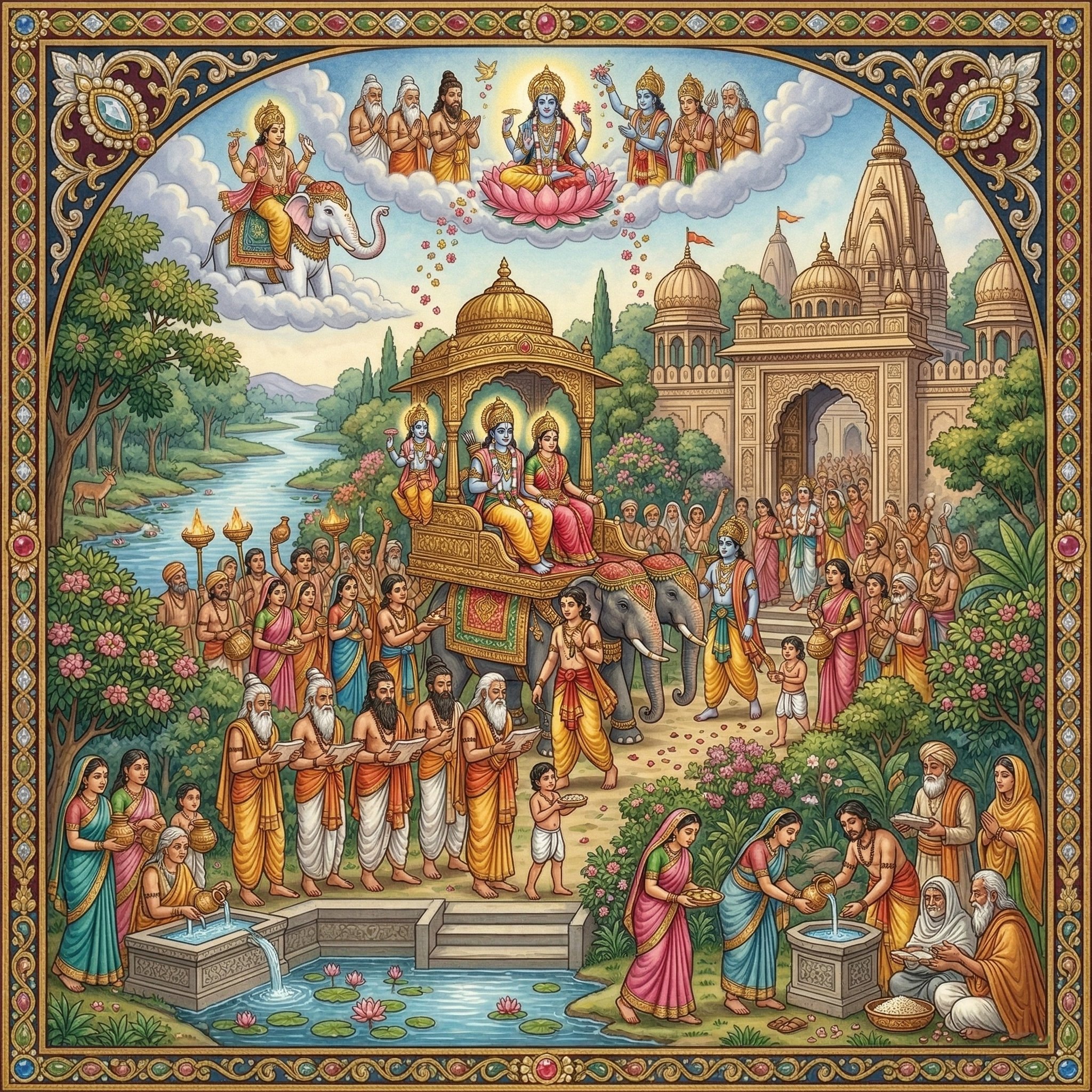
This section is anchored in the sacral topography of Ayodhyā on the banks of the Sarayū river, a city represented as a paradigmatic Vaiṣṇava kṣetra. The narrative treats Ayodhyā as a ritually operative landscape: riverbanks, confluences, and named tīrthas become nodes for snāna (bathing), dāna (gifting), pitṛ rites, and deity-darśana. Ayodhyā is also linked to the Solar Dynasty (Sūryavaṃśa) and to Rāma as a theological exemplar, while the Sarayū is framed as a purifying river with cosmological origin motifs. The section’s geography is thus both historical-sacred (royal lineage, urban description) and liturgical (pilgrimage circuits and calendrical observances).
Adhyayas in Ayodhya Mahatmya
10 chapters to explore.
Adhyaya 1
अयोध्यामाहात्म्यप्रश्न-प्रारम्भः (Commencement of the Inquiry into Ayodhyā’s Sacred Greatness)
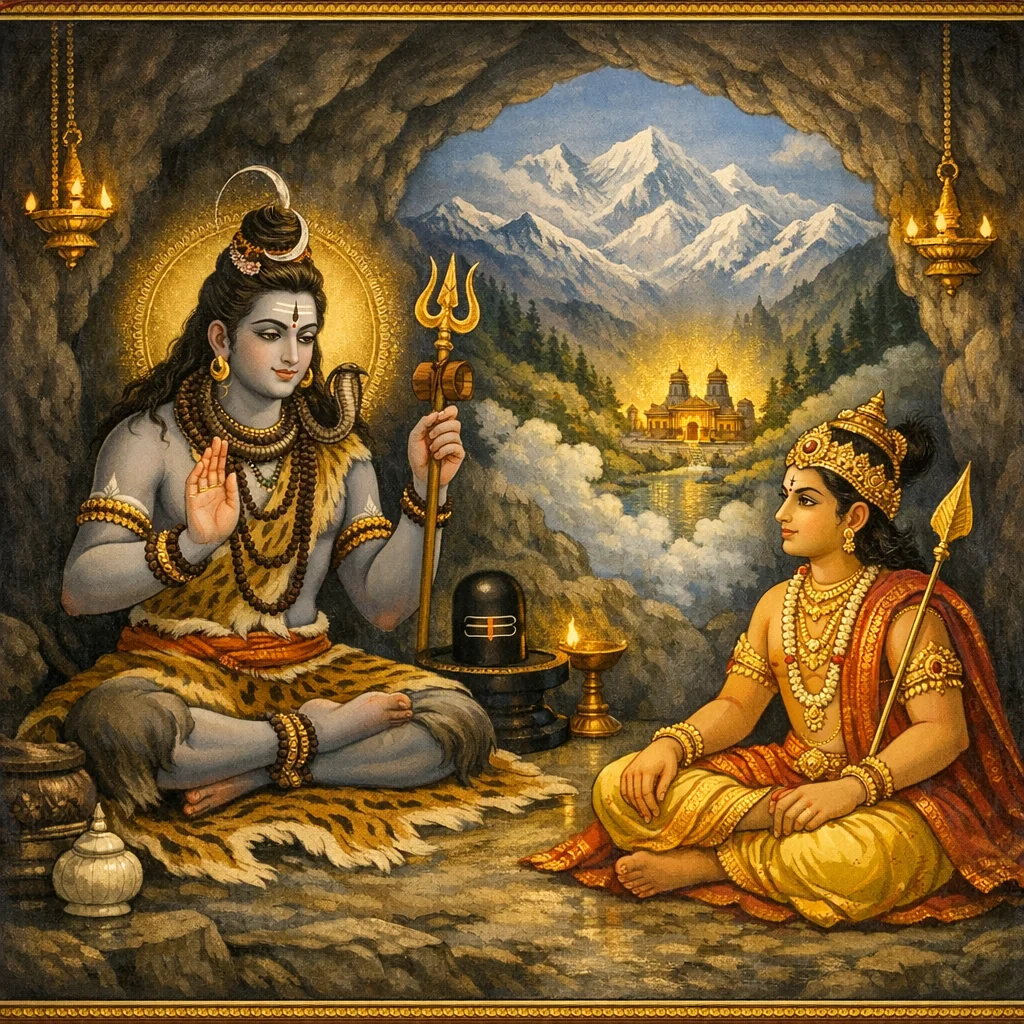
The chapter begins with benedictory verses and the customary Purāṇic invocation to Nārāyaṇa, Nara, and Sarasvatī. A great gathering of Veda-versed sages from many regions assembles at a long satra, and they invite Sūta (Romaharṣaṇa)—Vyāsa’s disciple and a knower of the Purāṇas—to speak. The sages request a systematic account of Ayodhyā: its holiness, layout, rulers, tīrthas, rivers and confluences, and the merits gained by visiting, bathing, and giving. Sūta agrees, relying on Vyāsa’s grace and citing the transmission lineage (Skanda → Nārada → Agastya → Vyāsa → Sūta). The narration then turns to Agastya’s report to Vyāsa after completing an Ayodhyā pilgrimage: Ayodhyā is praised as Viṣṇu’s primordial city, splendid and strongly fortified on the Sarayū, and connected with the Sūryavaṃśa. The Sarayū is sanctified through origin motifs and is paired with the Gaṅgā as supremely purifying. A key local sacred legend is introduced: the brāhmaṇa Viṣṇuśarman performs intense tapas in Ayodhyā, hymns Viṣṇu, and receives the boon of unwavering bhakti. Viṣṇu manifests Cakratīrtha by opening a holy water source and establishing the Viṣṇuhari presence. The annual pilgrimage window (from Śukla Daśamī to Pūrṇimā in Kārttika) is specified, along with phala statements for snāna, dāna, and pitṛ offerings at Cakratīrtha.
Adhyaya 2
Brahmakūṇḍa–Ṛṇamocana–Pāpamocana–Sahasradhārā Māhātmya (Ayodhyā–Sarayū Tīrtha-Nibandha)
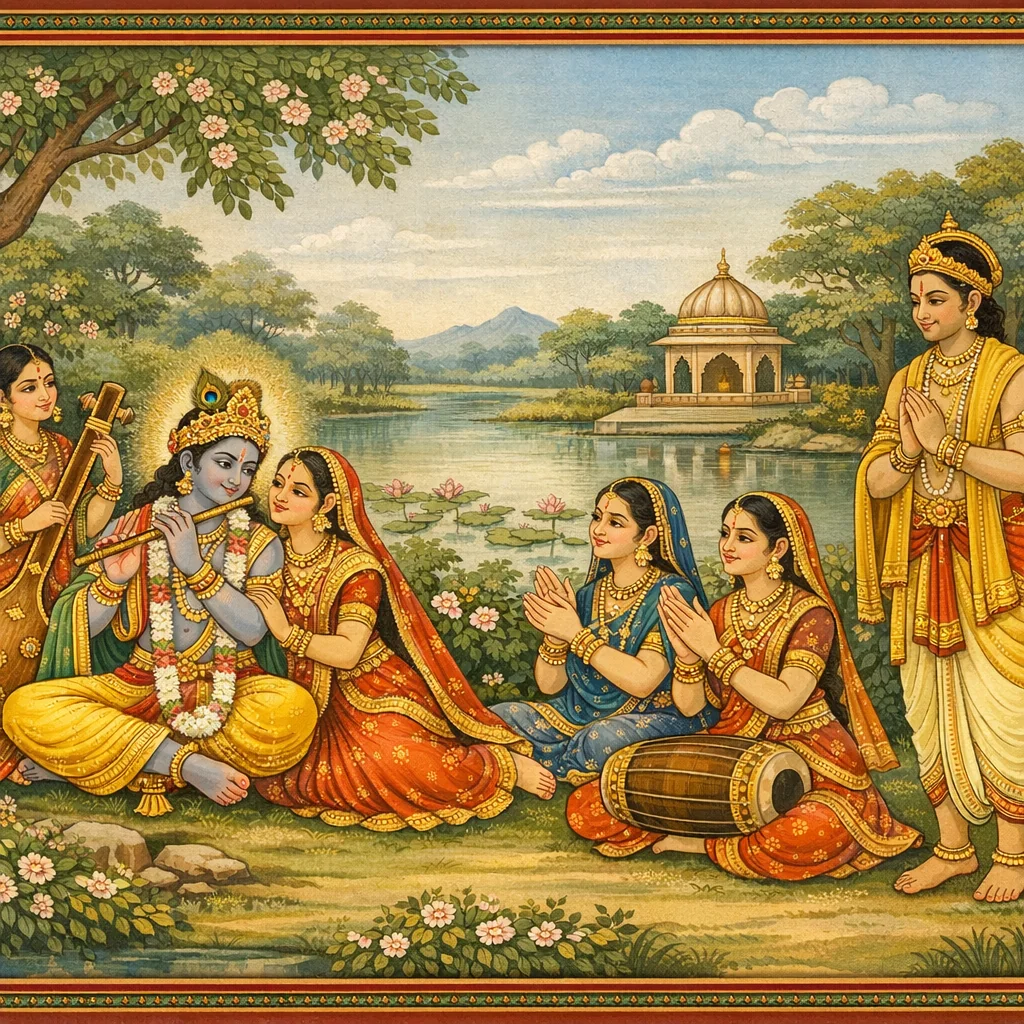
The chapter is conveyed through Sūta’s narration and Agastya’s authoritative teaching. It recounts how Brahmā, realizing that Hari (Viṣṇu) abides in Ayodhyā, performs the pilgrimage in proper sequence and establishes a great sacred reservoir called Brahmakūṇḍa, praised for purifying waters and auspicious flora-fauna imagery. Devas bathe there and are cleansed at once; Brahmā then proclaims the site’s māhātmya: snāna and allied acts—dāna, homa, japa—grant exalted merit, equal to major sacrifices, and he institutes an annual observance on Kārttika śukla caturdaśī with gifts of gold and garments and the ethical duty of satisfying brāhmaṇas. Agastya next locates further Sarayū tīrthas by measured distances and directions from Brahmakūṇḍa. Ṛṇamocana is introduced through Lomaśa’s testimony that bathing there instantly removes the “threefold debts” (obligations to devas, ṛṣis, and ancestors), encouraging continued snāna and dāna. Pāpamocana is taught through Narahari, a brāhmaṇa ruined by bad company and grave sins; through sat-saṅga and bathing he is immediately purified and attains Viṣṇuloka, affirming that reform and purification are possible within regulated tīrtha practice. Finally, Sahasradhārā is explained via a Rāmāyaṇa-linked episode: Rāma’s obligation to Kāla and Durvāsas’ arrival compel Lakṣmaṇa to uphold truth and dharma, leading to his yogic relinquishment in the Sarayū and manifestation as Śeṣa; the earth is said to be “pierced in a thousand ways,” giving the tīrtha its name. The chapter prescribes worship of Śeṣa, ritual bathing, gifts of gold, food, and garments, and festival observances—especially Śrāvaṇa śukla pañcamī (Nāga-focused) and Vaiśākha bathing—presenting the tīrtha as a lasting center of purification and desired attainments, including Viṣṇuloka, in a sober tone of ethical-ritual guidance.
Adhyaya 3
स्वर्गद्वार-माहात्म्य तथा चन्द्रहरेः उत्पत्तिः (Svargadvāra Māhātmya and the Origin of Candra-hari)
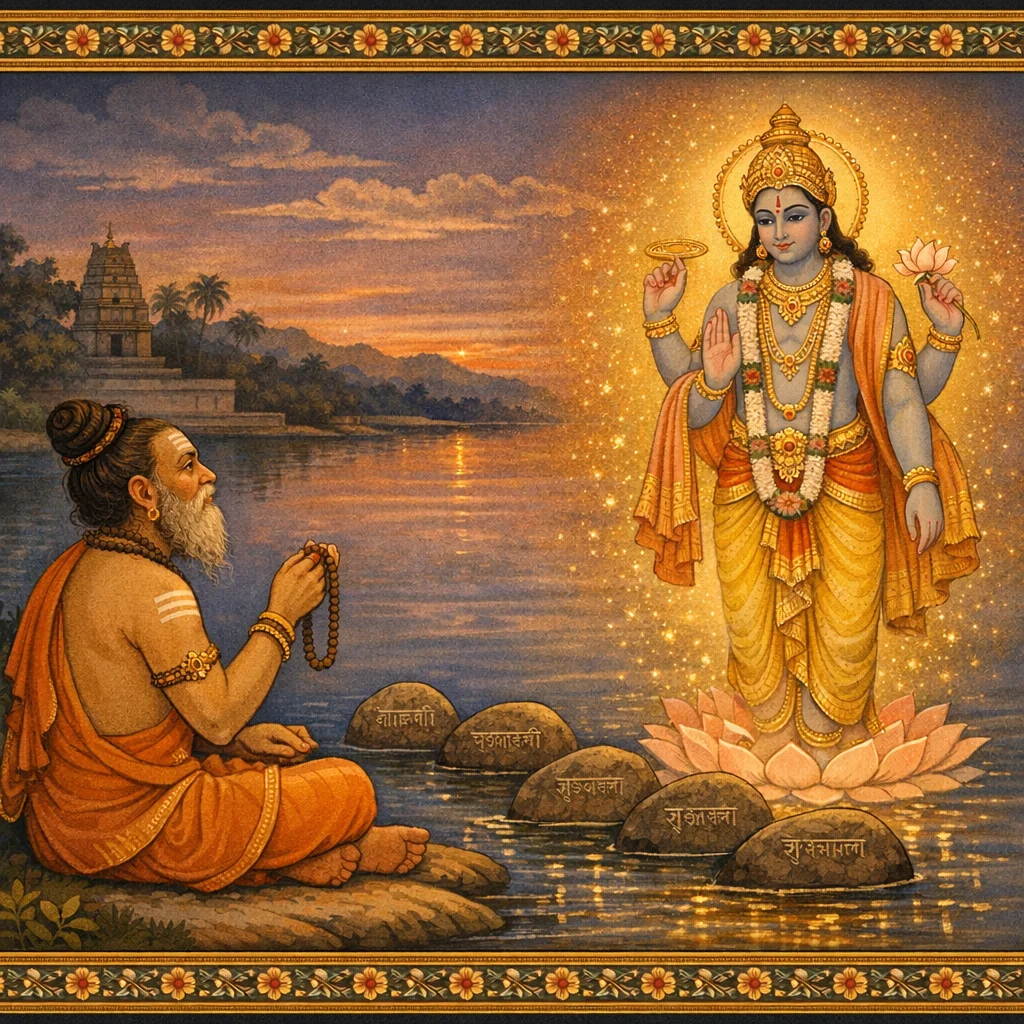
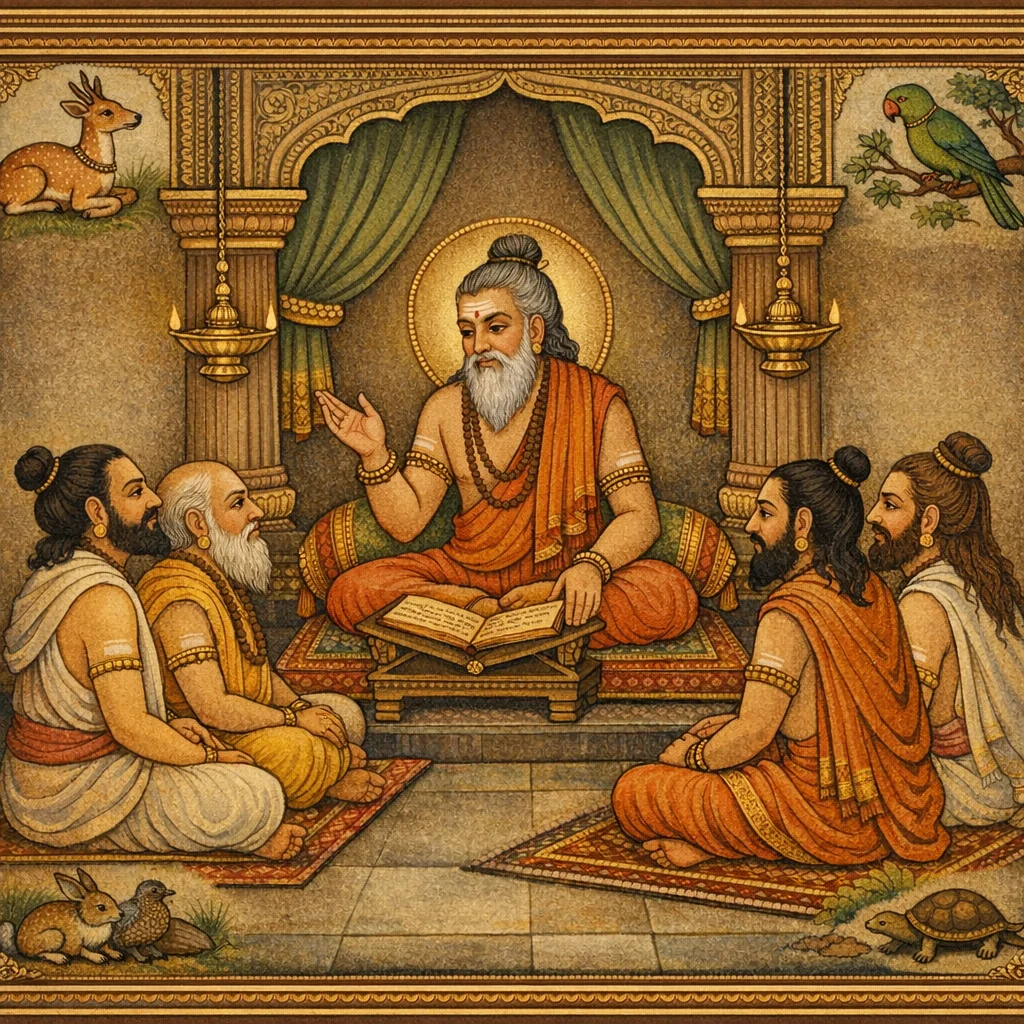
The chapter begins with Sūta framing a dialogue: Vyāsa, having heard earlier accounts of tīrtha-glories, asks Agastya for further teaching, stressing the seeker’s enduring thirst for tattva (true principle). Agastya introduces Svargadvāra, a tīrtha on the Sarayū that destroys sin and points toward liberation, marking its location and exalting it above other pilgrimage places. It then sets out the disciplines and their merits: bathing at dawn, bathing at midday because of divine nearness, fasting and month-long vows, and the gain of puṇya through gifts (food, land, cattle, cloth) and honoring brāhmaṇas with hospitality. A strong phala-teaching is stated: dying at Svargadvāra leads to Viṣṇu’s supreme abode; sins amassed “as great as Meru” dissolve upon reaching the site; and deeds done there become akṣaya (imperishable). The sacred landscape is further affirmed by linking Brahmā, Śiva, and Hari in enduring relation to the place, within a Vaiṣṇava frame. The latter portion turns to calendrical and ritual guidance for the “Candra-sahasra” observance and the auspicious “Candra-hara” setting: Candra comes to Ayodhyā, performs austerities, receives grace, and establishes Hari. Detailed lunar worship follows—purity rules, image/maṇḍala construction, praise with sixteen lunar names, arghya offering, homa with the Soma-mantra, kalaśa arrangements, satisfying priests, feeding brāhmaṇas, and properly concluding the vow. The chapter closes inclusively, declaring the tīrtha’s efficacy for all varṇas and even non-human beings, while maintaining a normative ritual-ethical order.
Adhyaya 4
धर्महरि-स्तवः, प्रायश्चित्त-विधानम्, स्वर्णवृष्टि-उत्पत्तिकथा (Dharmāhari Hymn, Expiatory Guidelines, and the Gold-Rain Origin Legend)
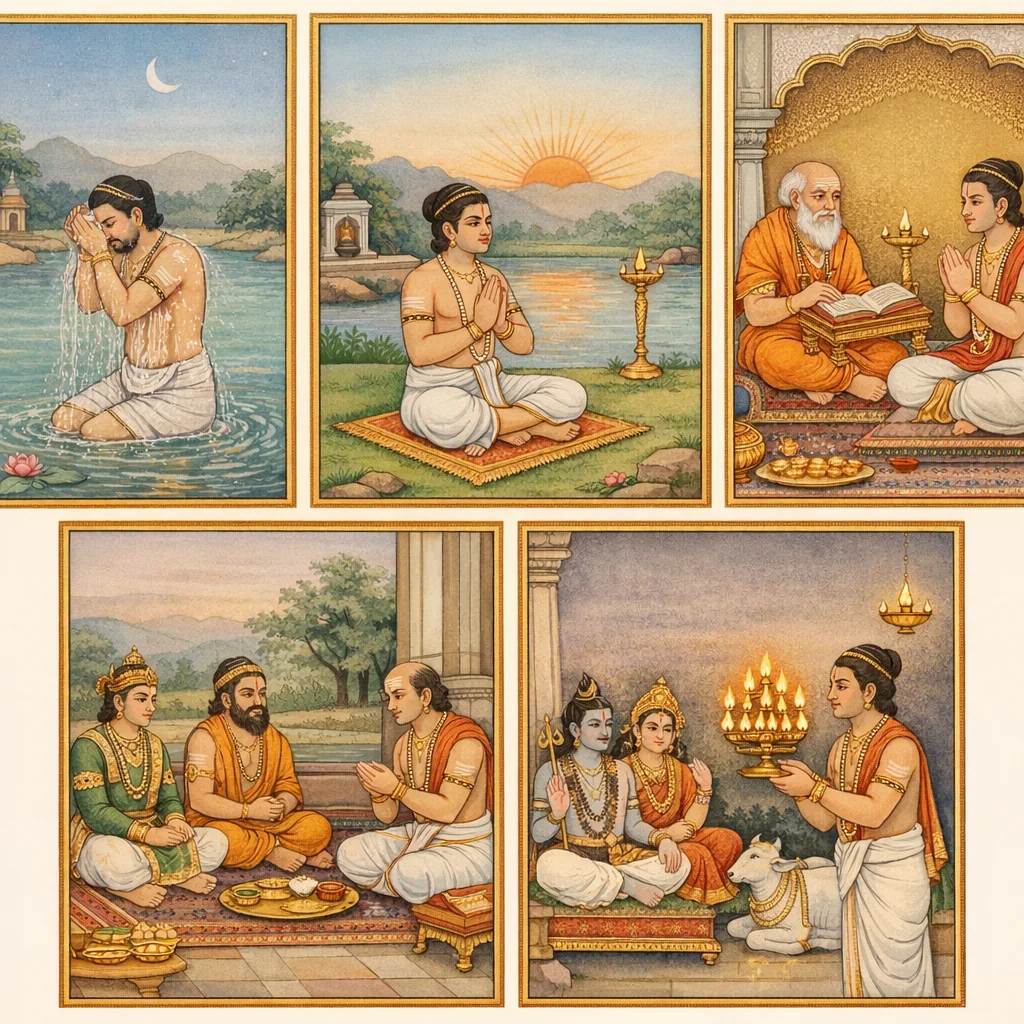
Adhyāya 4 unfolds in three linked movements. (1) Agastya relates how Dharma—learned in the Veda and Vedāṅga and steadfast in duty—arrives on pilgrimage and is astonished by Ayodhyā’s incomparable sanctity. In devotional rapture he praises the city as a tīrtha; Viṣṇu manifests as pītavāsā Hari, and Dharma offers an extended stotra, invoking epithets such as Kṣīrābdhivāsa, Yoga-nidrā, Śārṅgin, and Cakrin. (2) Pleased, Viṣṇu grants a boon and declares the phalaśruti: continual praise fulfills desired aims and bestows enduring prosperity. Dharma asks that the deity be installed as “Dharmāhari”; the text affirms liberation through remembrance and purification through Sarayū bathing and darśana, with rites performed there becoming akṣaya (imperishable). It then sets forth prāyaścitta regulations: whether wrongdoing is from ignorance or knowledge, expiation must be diligently performed, even when ordinary duties lapse due to coercion or circumstance; an annual pilgrimage on Āṣāḍha śukla ekādaśī is also enjoined. (3) The chapter concludes with an origin legend of a southern gold-site where Kubera caused a rain of gold. Asked by Vyāsa, Agastya recounts King Raghu’s conquests, his lavish Viśvajit sacrifice with total gifting, Kautsa’s request for vast gold as his guru’s dakṣiṇā, and Raghu’s resolve to obtain wealth despite having given all away. Kubera responds with a gold-rain and reveals a gold-mine; Kautsa blesses the king, consecrates the place as a sin-removing tīrtha, prescribes an annual yātrā on Vaiśākha śukla dvādaśī, and declares that bathing and giving there generates Lakṣmī (prosperity).
Adhyaya 5
कौत्स-विश्वामित्र-प्रसङ्गः तथा तिलोदकीसरयूसङ्गम-माहात्म्यम् (Kautsa–Viśvāmitra Episode and the Glory of the Tilodakī–Sarayū Confluence)
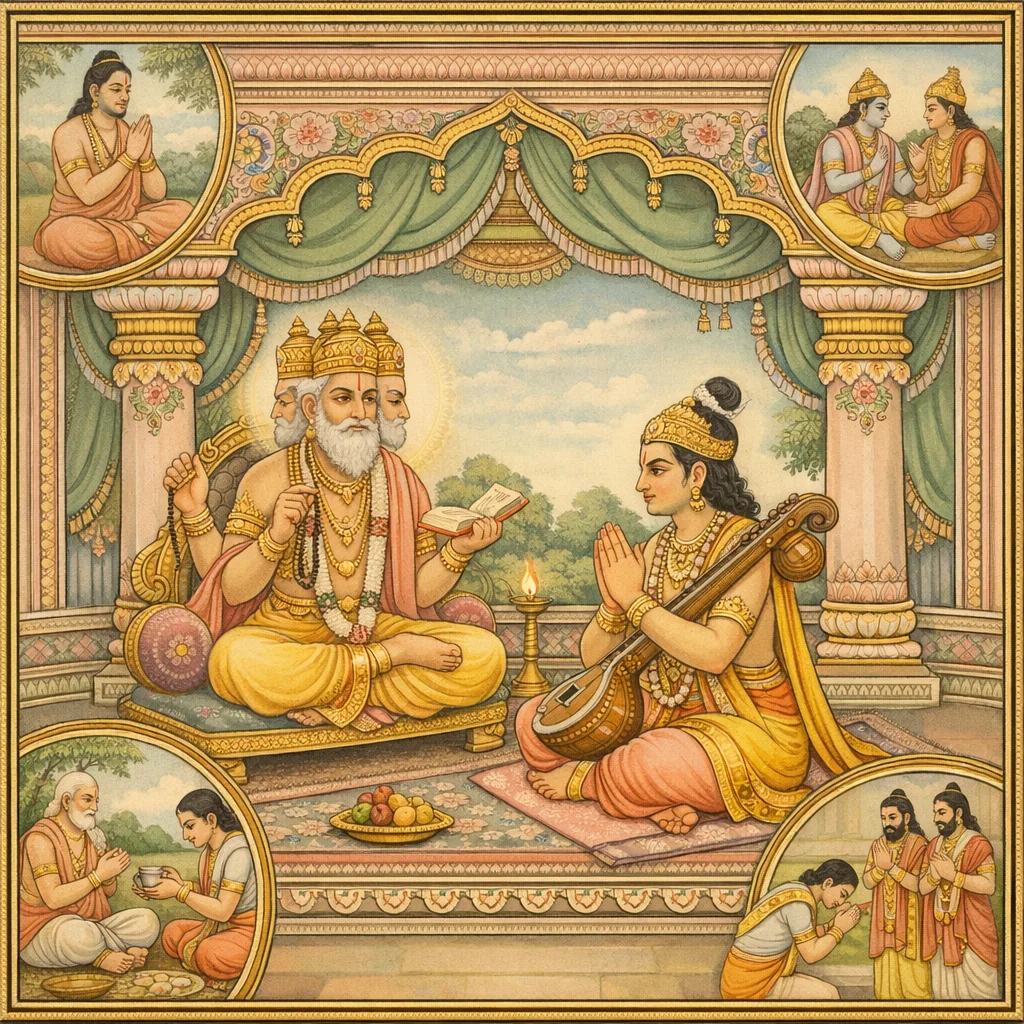
Chapter 5 proceeds through a question-and-answer chain: Vyāsa asks why the sage Viśvāmitra, seemingly beyond restraint, became angry with his disciple Kautsa and demanded an exceptionally hard guru-dakṣiṇā. Agastya explains through a hospitality episode: the hungry Durvāsas arrives at Viśvāmitra’s āśrama seeking hot, pure pāyasa; after being served, he tells Viśvāmitra to wait while he bathes. Viśvāmitra stands motionless in tapas for a thousand divine years, displaying supreme forbearance and self-control. Kautsa is portrayed as obedient, disciplined, and free from envy; when dismissed, he repeatedly requests permission to offer dakṣiṇā. Irritated by the insistence, Viśvāmitra demands fourteen krores of gold, and Kautsa approaches the royal patron Kākutstha to obtain it. The narration then turns to tīrtha teaching: Agastya praises the southern confluence of Tilodakī and Sarayū, served by siddhas and famed in the world. Bathing there yields merit like ten aśvamedhas; gifts to Veda-knowing brāhmaṇas bring auspicious destiny; food-giving and proper rites are said to end further rebirth; fasting and feeding brāhmaṇas grant the fruit of the Sautrāmaṇi; and a month of one-meal discipline destroys accumulated sin. An annual pilgrimage is noted on the new-moon of the dark fortnight in Bhādrapada; Tilodakī is described as ever-dark like sesame-water and named for enabling horses to drink. The chapter concludes that snāna, dāna, vrata, and homa become inexhaustible when done with devotion to Hari, leading—through the relinquishment of sin—toward the supreme abode.
Adhyaya 6
सीताकुण्ड–गुप्तहरि–चक्रहरि–गोप्रतार–संगममाहात्म्य (Sītākuṇḍa, Guptahari, Cakrahari, Gopratāra, and the Confluence Māhātmya)
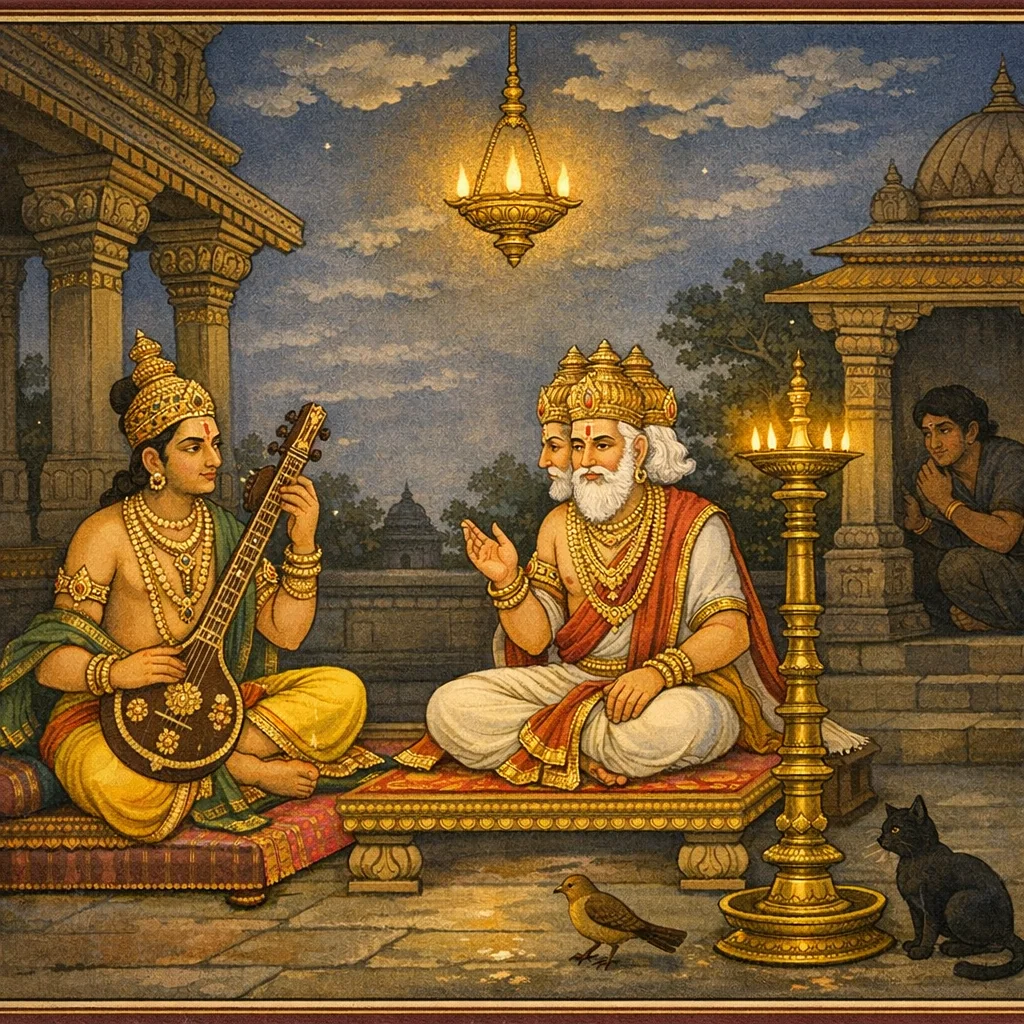
Adhyāya 6 unfolds a multi-nodal tīrtha map through dialogue and phala-centered instruction. Agastya points out Sītākuṇḍa on Ayodhyā’s western bank and praises its purifying power. Śrī Rāma explains the site’s merit: bathing, gifting, japa, homa, and tapas performed “according to rule” become imperishable, with special emphasis on Mārgaśīrṣa kṛṣṇa-caturdaśī and Mārgaśīrṣa bathing to avert adverse rebirth outcomes. Nearby sacred nodes are then named—Cakrahari, linked with the Sudarśana, and Harismṛti, a Viṣṇu-āyatana whose mere darśana dissolves sin. A cosmological backstory follows: the gods, defeated in a deva–asura conflict, take refuge in Kṣīrodaśāyī Viṣṇu; Śiva’s Īśvara-stuti extols Viṣṇu as the transcendent principle and saving power. Viṣṇu sends the gods to Ayodhyā, where he performs hidden tapas, gaining the epithet Guptahari; the shrine becomes a public center for worship, qualified gifting—especially the carefully described cow-gift to a worthy brāhmaṇa—and regulated pilgrimage. The chapter expands into the saṅgama māhātmya of Sarayū–Ghargharā and the nearby Gopratāra tīrtha, claiming merit surpassing many sacrifices and prescribing lamps, night-vigils, offerings, and annual observances (notably in Kārtika and Pauṣa), with salvific reach for men and women alike. It then transitions to Rāma’s “final journey”: his mahāprasthāna, the city’s collective following, arrival at the Sarayū, and the theological framing of ascent, culminating in Gopratāra as a paradigmatic liberation-site within Ayodhyā’s ritual geography.
Adhyaya 7
तीर्थसंग्रहः—क्षीरोदकादिकुण्डमाहात्म्यम् (Tīrtha Compendium: The Glories of Kṣīrodaka and Associated Kundas)
This chapter unfolds as a sequential catalogue of tīrthas within Ayodhyā, spoken with ṛṣi authority. It opens at Kṣīrodaka near Sītākuṇḍa, grounding the site’s holiness in Daśaratha’s putreṣṭi-yajña: a divine vessel of havis appears, and its Vaiṣṇava potency becomes the cause of the name and the kunda’s power to purify sin. The discourse then turns to Bṛhaspati’s kunda, praising its sin-destroying merit, prescribing worship of Bṛhaspati and Viṣṇu, and detailing remedies for Guru-related planetary affliction, including homa and immersion of a golden image of Guru. Next comes Rukmiṇīkuṇḍa, founded by Rukmiṇī, with Viṣṇu abiding in its waters; the annual pilgrimage time (Ūrja kṛṣṇa navamī) is emphasized, along with Lakṣmī-oriented giving and honoring of Brahmins. The origin of Dhanayakṣa tīrtha is then narrated: Harīścandra’s treasure, the guarding Yakṣa Pramanthura, and Viśvāmitra’s consecration that removes foulness and grants fragrance—recasting the place as beauty-conferring and materially auspicious, with stated donation norms and worship of Nidhi-Lakṣmī. The chapter continues through Vasiṣṭhakuṇḍa (with Arundhatī and Vāmadeva), Sāgara-kuṇḍa (merit equal to ocean-bathing on full-moon days), Yoginīkuṇḍa (the 64 yoginīs; aṣṭamī observance), Urvaśīkuṇḍa (a legend of restored beauty after Raibhya’s curse and instruction), and concludes at Ghoṣārka-kuṇḍa, where a king is healed by bathing and a solar hymn; Sūrya grants boons, establishes the tīrtha’s fame, and promises its fruits.
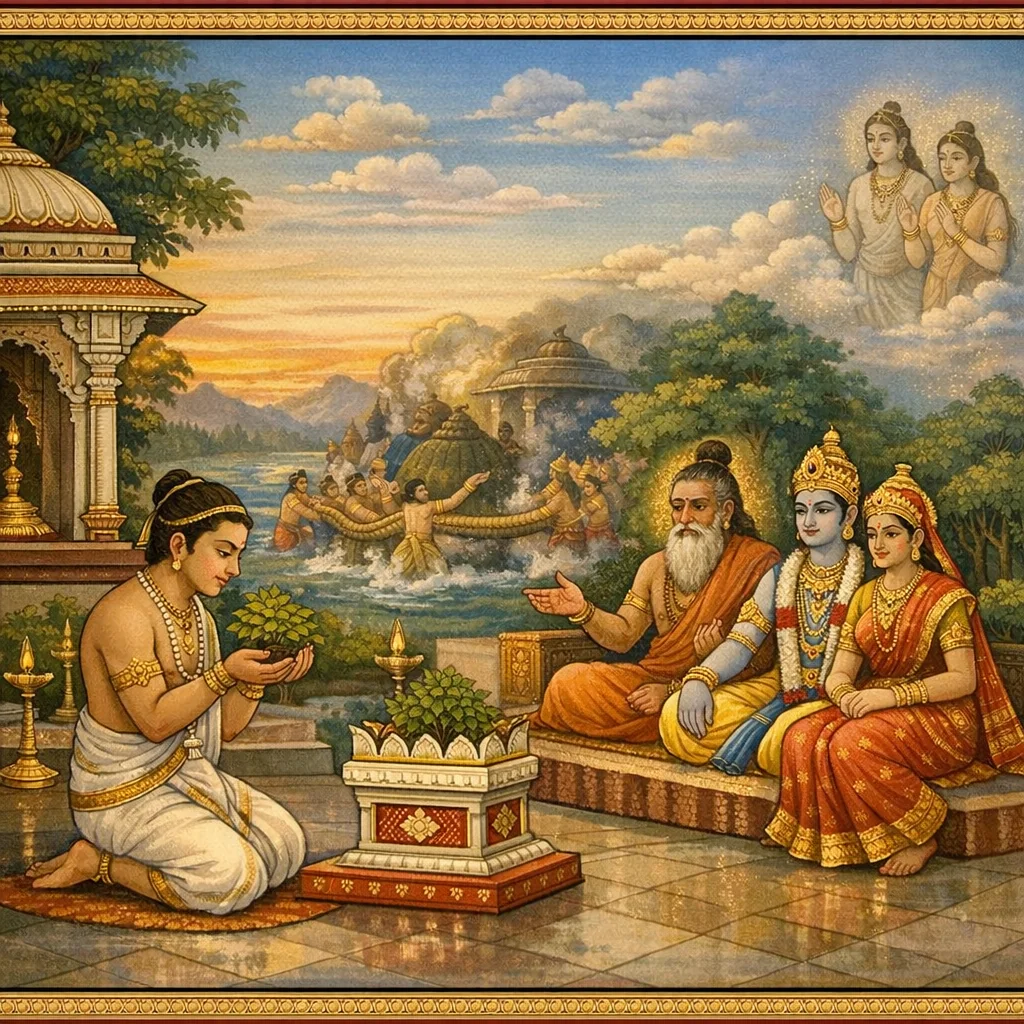
Adhyaya 8
रतिकुण्ड–कुसुमायुधकुण्ड–मन्त्रेश्वरादि तीर्थविधानम् (Ratikunda, Kusumāyudha-kunda, Mantreśvara and allied tīrthas: rites and merits)
This chapter unfolds as a sacred itinerary. Agastya first describes the western tīrthas Ratikunda and Kusumāyudha-kunda, prescribing paired snāna and charitable gifts for well-being and for the attainment of beauty and auspiciousness; on Māgha śukla pañcamī, a married couple is enjoined to worship with perfumes, garments, flowers, and offerings. The narrative then turns to Mantreśvara, a rare liṅga-site linked with Rāma’s ritual act and a disciplined preparation for spiritual ascent, proclaiming that snāna and darśana there lead to non-return to saṃsāra. Moving north, it marks further stations: Śītalā (Monday worship, protection from disease and fear), Devī Bandī (release from bondage and royal fetters through remembrance and Tuesday-focused yātrā), and Devī Cuḍakī (success in doubtful undertakings through lamp-offering and caturdaśī visitation). It also lists Mahāratna tīrtha (annual Bhādrapada kṛṣṇa caturdaśī yātrā with gifts and vigil), Durbharā/Mahābhara saras (Śiva worship and Bhādrapada observances), and Mahāvidyā/Siddhapīṭha (monthly aṣṭamī/navamī yātrā, mantra-japa across traditions, homa and dāna, and Navarātri purification). A Rāma-centered legend explains the rise of Dugdhēśvara at Kṣīra-kuṇḍ and the naming of Sītā-kuṇḍ, promising purification and imperishable merit through snāna, japa, homa, and worship of Sītā–Rāma–Lakṣmaṇa. The chapter closes with Vasiṣṭha’s praise of Ayodhyā as the supreme mokṣa-kṣetra and a disciplined multi-day pilgrimage regimen of fasting, sequential snānas, deity darśanas, śrāddha, Brāhmaṇa worship, gifts, and orderly completion of the yātrā.
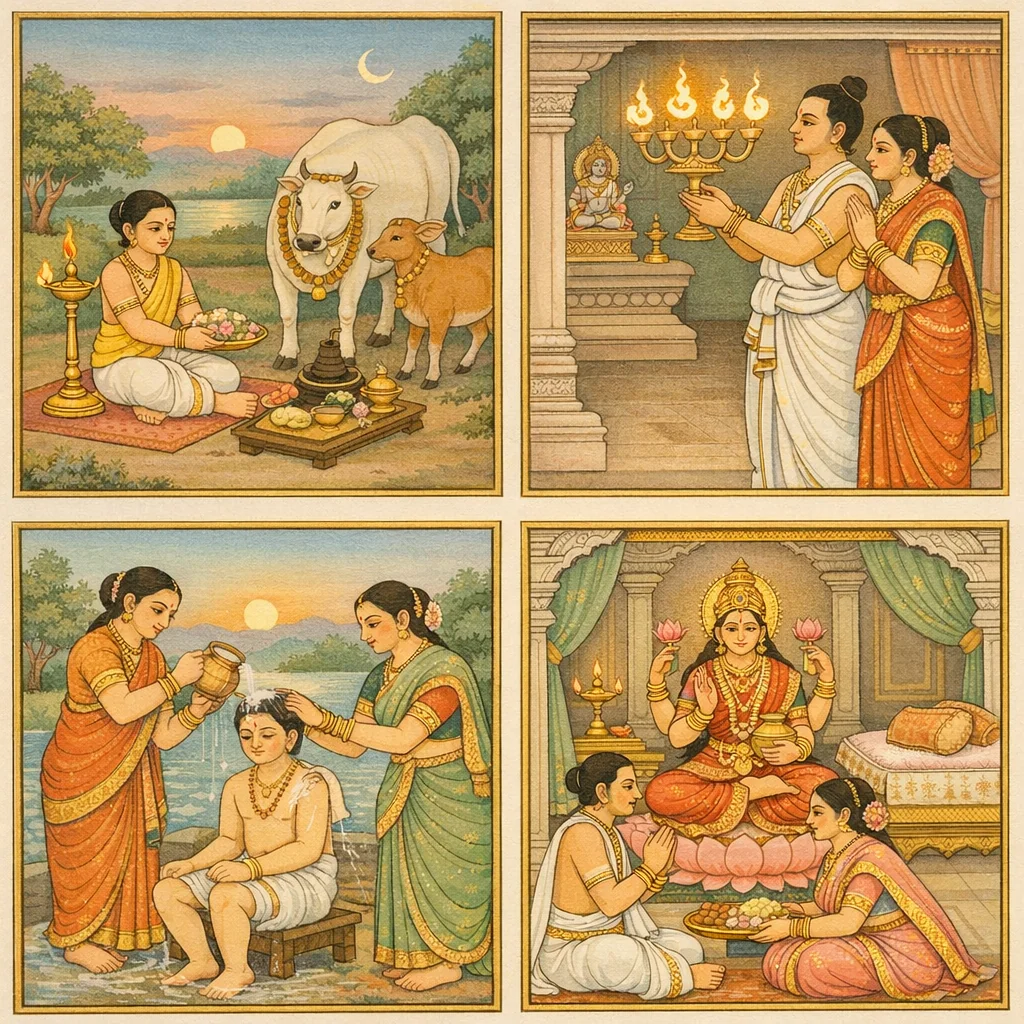
Adhyaya 9
गयाकूप-तमसा-तीर्थप्रशंसा (Gayākūpa, Tamasā, and Kuṇḍa-Ritual Topography)
Agastya sets out a sequence of tīrthas in the Ayodhyā region and prescribes their ritual application. The chapter opens with Gayākūpa (near Jaṭākuṇḍa, in the agneya direction) as a highly fruitful locus for śrāddha: one should bathe, give charity according to capacity, and perform śrāddha with piṇḍadāna—using sesame and payasa, or substitutes such as piṇyāka and guḍa—thereby satisfying the ancestors and, through them, the devas; the phalaśruti declares the ancestors’ uplift to Viṣṇuloka. A calendrical enhancer is added: amāvāsyā joined with Monday yields “endless” fruit, and Monday śrāddha there is said to remain efficacious. The discourse then maps nearby tīrthas. Piśācamocana in the eastern quarter is praised for preventing and relieving piśāca-affliction through snāna–dāna–śrāddha, with a special observance on Mārgaśīrṣa śukla caturdaśī. Mānasatīrtha is lauded as a purifier of faults of mind, body, and speech, with yātrā recommended in Prauṣṭhapadī, especially at the full moon. The narrative turns south to the Tamasā river, portrayed as a destroyer of great sins, its forested banks and ṛṣi-āśrama world (Māṇḍavya and earlier sages) described in rich devotional imagery; the ritual triad is reiterated as granting kāma-artha-siddhi, with an observance on Mārgaśīrṣa śukla pañcadaśī. Finally, further nodes are listed: Sītākuṇḍa near Śrī Dugdhēśvara with a Bhādrapada śukla caturthī yātrā; Bhairava as kṣetra-rakṣaka with an annual Mārgaśīrṣa kṛṣṇa aṣṭamī festival and offerings; Bharatakuṇḍa, where Bharata practiced Rāma-dhyāna and made an installation, emphasizing bathing and ancestor-directed śrāddha; and Jaṭākuṇḍa, where Rāma and his companions are worshipped, with an annual Caitra kṛṣṇa caturdaśī yātrā. The chapter closes with a structured itinerary: worship Rāma–Sītā, then at Bharatakuṇḍa worship Lakṣmaṇa, and proceed through the prescribed bathing rites as an ordered pilgrimage program.
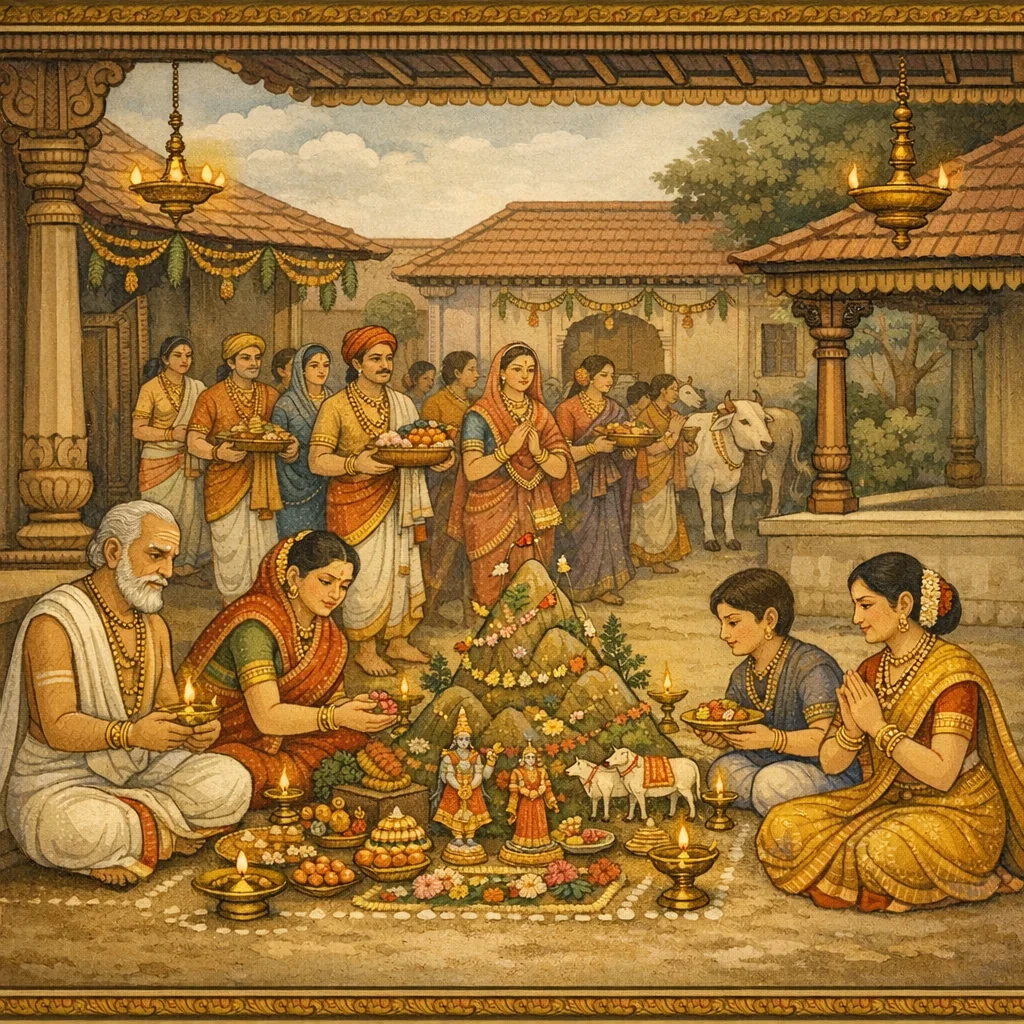
Adhyaya 10
Ayodhyā-yātrākrama, Sarayū-māhātmya, and Mānasatīrtha Teaching (अयोध्यायात्राक्रमः सरयू-माहात्म्यं च मानसतीर्थोपदेशः)
This chapter is taught through a dialogue chiefly between Agastya and Vyāsa, framed by Sūta’s narration. It opens with rules for worship and festival observance (utsava) in Ayodhyā connected with protective and wish-fulfilling deities and sacred spots, mentioning the guardian-hero “Ayodhyā-rakṣaka” and Surasā, a rākṣasī portrayed as a Viṣṇu-bhakta and installed in Ayodhyā for protection. It then points to western sites such as Piṇḍāraka and prescribes worship of Vighneśvara for the removal of obstacles. The text marks out a “Janmasthāna” by directional boundaries and exalts its saving power: mere sight is said to surpass the fruits of great gifts and austerities. A vrata-holder on the ninth day is declared freed from “birth-bondage” through snāna (sacred bathing) and dāna (giving). A substantial section praises the Sarayū: its darśana equals long residence and famed rites elsewhere, and remembrance of Ayodhyā is presented as a potent liberative practice; Sarayū is described as brahman in watery form and as ever bestowing mokṣa. The teaching then turns to “mānasatīrthas” (inner pilgrimage-sites)—truth, forgiveness, sense-restraint, compassion, truth-speaking, knowledge, and austerity—insisting that purity of mind is the true measure of bathing, and that outward rites without inward cleansing are ineffective. The chapter ends with a structured yātrā-krama: rising early, bathing at key kuṇḍas, sequential darśanas of specified deities and stations, with timing notes (ekādaśī, aṣṭamī/caturdaśī, aṅgāraka-caturthī), concluding that regular performance brings auspicious results and prevents return (punarāvṛtti).
FAQs about Ayodhya Mahatmya
Ayodhyā is portrayed as a uniquely sanctified city where divine presence is narratively and ritually localized—especially through Viṣṇu/Rāma-centered memory, the Sarayū’s purificatory status, and named tīrthas that operationalize merit through prescribed acts.
Merits are framed as pāpa-kṣaya (diminution of demerit), elevation to higher worlds (svarga/Vaiṣṇava loka), stabilization of devotion, and efficacy for ancestral rites—particularly through Sarayū-related bathing, tīrtha-dāna, and deity-darśana at specific sites.
Key legends include the narrative relay from Skanda → Nārada → Agastya → Vyāsa → Sūta, the depiction of Ayodhyā’s urban-sacred splendor, the origin framing of Sarayū, and the establishment of Cakratīrtha and the Viṣṇuhari mūrti through the tapas of the brāhmaṇa Viṣṇuśarman.