Adhyaya 3
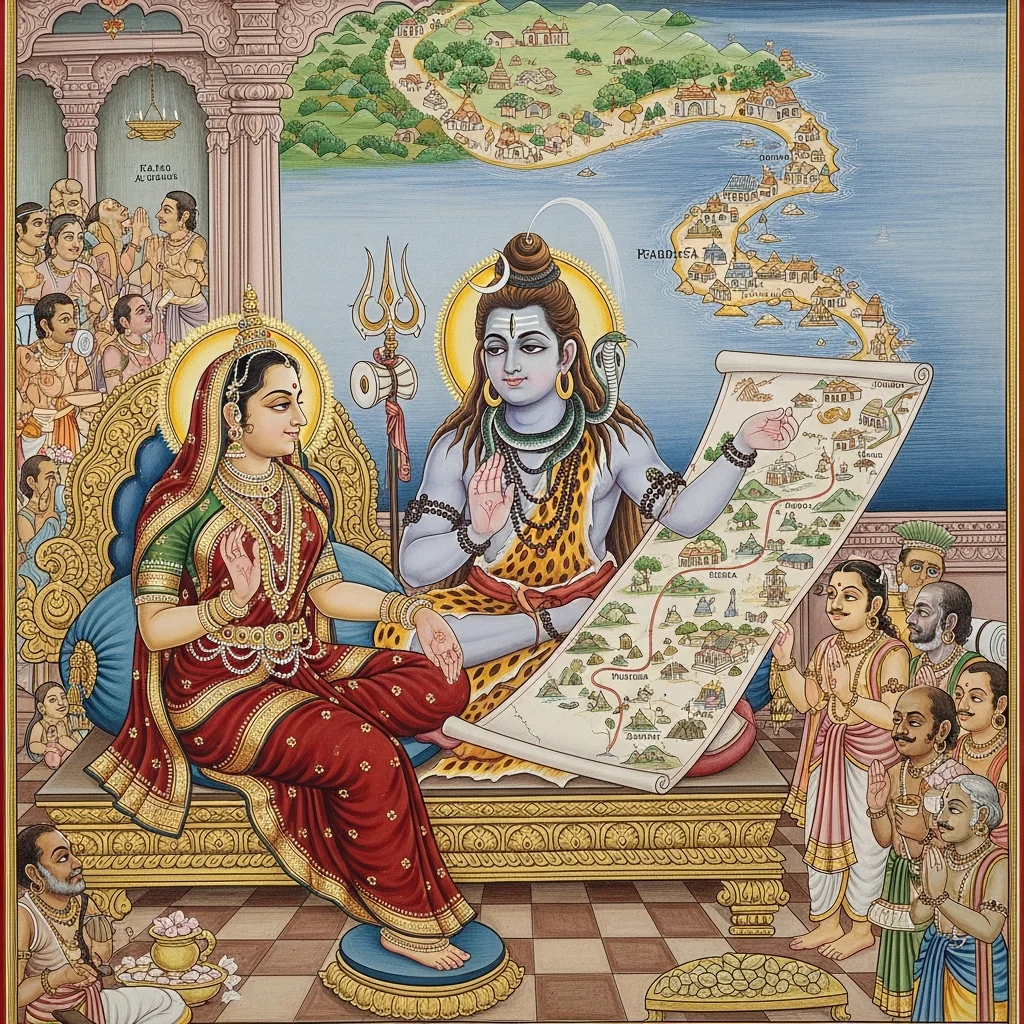
Chapter 3 opens with the sages asking Sūta for a systematic account of tīrthas, following the earlier cosmological discussions. Sūta recalls a former dialogue on Kailāsa, where Devī beholds a magnificent divine assembly and praises Śiva in an extended stotra. Śiva replies by affirming the radical non-separation of Śiva and Śakti through a sweeping litany of identity, spanning ritual roles, cosmic functions, measures of time, and forces of nature. Devī then requests a practical teaching for beings afflicted in Kali Yuga: a single tīrtha whose darśana grants the fruit of all tīrthas. Śiva lists the great pilgrimage sites across India and then exalts Prabhāsa as a hidden, supreme kṣetra. The chapter adds an ethical warning: hypocritical, violent, or nihilistic travelers do not obtain the promised results, for the kṣetra’s power is deliberately guarded. It culminates in the revelation of the divine liṅga Someśvara and its cosmogonic role, as three śaktis—icchā, jñāna, and kriyā—arise for the world’s functioning. A concluding phala statement promises purification and heavenly attainment to those who listen attentively with reverence.
Shlokas
Verse 1
ऋषय ऊचुः । कथितो भवता सर्गः प्रतिसर्गस्तथैव च । वंशानुवंशचरितं पुराणानामनुक्रमः
The sages said: You have explained creation (sarga) and re-creation (pratisarga), as well as the histories of dynasties and sub-dynasties, and the sequence of the Purāṇas.
Verse 2
मन्वन्तरप्रमाणं च ब्रह्मांडस्य च विस्तरः । ज्योतिश्चक्रस्वरूपं च यथावदनुवर्णितम् । श्रोतुमिच्छामहे त्वत्तः सांप्रतं तीर्थविस्तरम्
You have rightly described the measures of the Manvantaras, the vast extent of the Brahmāṇḍa (cosmic egg), and the true nature of the wheel of luminaries. Now we long to hear from you a detailed account of the tīrthas.
Verse 3
पृथिव्यां यानि तीर्थानि पापघ्नानि शुभानि च । तानि सूतज कार्त्स्न्येन यथावद्वक्तुमर्हसि
Upon the earth are tīrthas that destroy sin and bestow auspiciousness. O son of Sūta, please recount them in full, and in proper order.
Verse 4
सूत उवाच । इदं पृष्टं पुरा देव्या कैलासशिखरोत्तमे । नानाधातुविचित्रांगे नानारत्नसमन्विते
Sūta said: This was once asked by the Goddess upon the most excellent peak of Kailāsa, whose slopes were variegated with many minerals and adorned with many kinds of gems.
Verse 5
नानाद्रुमलताकीर्णे नानापुष्पोपशोभिते । यक्षविद्याधराकीर्णे ह्यप्सरोगणसेविते
It was filled with many kinds of trees and creepers, beautified by many flowers, thronged with Yakṣas and Vidyādharas, and attended by hosts of Apsarases.
Verse 6
तत्र ब्रहमा च विष्णुश्च स्कन्दनन्दिगणेश्वराः । चंद्रादित्यौ ग्रहैः सार्धं नक्षत्रध्रुवमण्डलम्
There were Brahmā and Viṣṇu, and Skanda, Nandin, and the Gaṇeśvaras; and the Moon and Sun with the planets, along with the circles of the constellations and Dhruva.
Verse 7
वायुश्च वरुणश्चैव कुबेरो धनदस्तथा । ईशानश्चाग्निरिंद्रश्च यमो निरृतिरेव च
There were Vāyu and Varuṇa, and Kubera, the bestower of wealth; and also Īśāna, Agni, Indra, Yama, and Nirṛti.
Verse 8
सरितः सागराः सर्वे पर्वता उरगास्तथा । ब्राह्म्याद्या मातरश्चैव ऋषयश्च तपोधनाः
All the rivers and oceans were there, as were the mountains and the serpents; and the Mothers beginning with Brāhmī, and the ṛṣis whose wealth was austerity.
Verse 10
मूर्तिमंति च तीर्थानि क्षेत्राण्यायतनानि च । दानवासुरदैत्याश्च पिशाचा भूतराक्षसाः
And the tīrthas themselves appeared embodied, as did the sacred kṣetras and sanctuaries; and there were Dānavas, Asuras, Daityas, Piśācas, Bhūtas, and Rākṣasas.
Verse 11
तत्र सिंहासनं दिव्यं शतयोजनविस्तृतम्
There stood a divine throne, spread across a hundred yojanas.
Verse 12
लक्षायुतसहस्रैश्च रुद्रकोटिभिरावृतम् । तन्मध्ये सर्वतोभद्रं सिंहद्वारैः सुतोरणैः
It was surrounded by hundreds of thousands and millions, and by crores of Rudras; and in its midst stood an all-auspicious pavilion on every side, with lion-gates and splendid archways.
Verse 13
स्वच्छमौक्तिकसंकाशं प्राकारशिखरावृतम् । नन्दीश्वरमहाकालद्वारपालगणैर्वृतम्
It shone like limpid pearls, encircled by ramparts and lofty turrets, and was guarded by hosts of gatekeepers such as Nandīśvara and Mahākāla.
Verse 14
किंकिणीजालमुखरैः सत्यताकैरलंकृतम् । वितानच्छत्रखंडैश्च मुक्तादामप्रलंबितैः
It was adorned with resonant nets of small bells and with splendid ornaments; and with canopies and parasols, from which hung strings of pearls.
Verse 15
घंटाचामरशोभाढयैर्दर्पणैश्चोपशोभितम् । कलशैर्द्वारविन्यस्तरत्नपल्लवसंयुतैः
It was further adorned with shining mirrors, beautified by bells and ceremonial fly-whisks (chāmara), and with auspicious pitchers (kalaśa) set at the doorway, decorated with jeweled sprigs and tender shoots.
Verse 16
चित्रितं चित्रशास्त्रज्ञै रत्नचूर्णैः समु्ज्वलैः । स्वस्तिकैः पत्रवल्याद्यैर्लिंगोद्भवलतादिभिः
It was artistically painted by those skilled in sacred design, made radiant with bright powders of gems—marked with svastikas, leafy creeper-patterns, and motifs such as Liṅgodbhava, the rising of the Liṅga, and other auspicious forms.
Verse 17
शतसिंहासनाकीर्णं वेदिकाभिश्च शोभितम् । आसीनै रुद्रवृन्दैश्च रुद्रकन्याकदम्बकैः
It was filled with hundreds of thrones and beautified with altars, and it was crowded with seated hosts of Rudras and clusters of the Rudra-maidens (Rudra-kanyās).
Verse 18
लक्षपत्रदलाढ्यैश्च श्वेतपद्मैश्च भूषितम् । अप्सरोभिः समाकीर्णं पुष्पप्रकरविस्तृतम्
It was adorned with abundant leaves and petals, and graced with white lotuses; thronged with Apsarases, it lay spread with heaps and many kinds of flowers.
Verse 19
धूपितं धूपवर्त्तीभिः कुंकुमोदकसेचितम् । वंशवीणामृदंगैश्च गोमुखैर्मुखवादनैः
It was perfumed with incense-wicks and sprinkled with kunkuma-scented water; it resounded with flutes, vīṇās, and mṛdaṅgas, along with gomukha horns and other wind-instruments.
Verse 20
शंखभेरीनिनादेन दुन्दुभिध्वनितेन च । गर्जद्भिर्गणवृन्दैश्च मेघस्वनितनिस्वनैः
With the blare of conches and kettledrums, with the booming of dundubhis, and with the roaring hosts of Gaṇas—its sound rolled like thunderclouds.
Verse 21
गणानां स्तोत्रशब्देन सामवेदरवेण च । प्रेक्षणीयैर्महानादैर्गेयहुङ्कारशोभितम्
It was beautified by the Gaṇas’ hymn-sounds and by the chanting resonance of the Sāma Veda—adorned with wondrous great cries and with musical huṅkāras in song.
Verse 22
वृषनर्दितशब्देन गजवाजिरवेण च । कांचीनूपुरशब्देन समाकीर्णदिगंतरम्
The horizons in every direction were filled with sound—by the bellowing of bulls, the cries of elephants and horses, and the jingling of waist-belts and anklets.
Verse 23
सर्वसंपत्करं श्रीमच्छंकरस्यैव मंदिरम् । वंश वीणामृदंगैश्च नादितं तत्र तत्र ह । ऋग्वेदो मूर्तिमांश्चैव शक्रनीलसमद्युतिः
That splendid temple of Śrī Śaṅkara, bestowing every prosperity, resounded here and there with flutes, vīṇās, and mṛdaṅgas. And the Ṛg Veda itself—embodied in form—stood forth, radiant like the deep blue of Indra’s sapphire.
Verse 24
दिव्यगन्धानुलिप्तांगो दिव्याभरणभूषितः । संस्थितः पूर्वतस्तस्य दीप्यमानः स्वतेजसा
Anointed with celestial fragrances and adorned with divine ornaments, he stood to the east of that shrine, shining by his own innate splendour.
Verse 25
उत्तरेण यजुर्वेदः शुद्धस्फटिकसन्निभः । दिव्यकुण्डलधारी च महाकायो महाभुजः
To the north stood the Yajurveda, radiant like pure crystal—wearing divine earrings, vast of form, and mighty-armed.
Verse 26
स्थितः पश्चिम दिग्भागे सामवेदः सनातनः । रक्तांबरधरः श्रीमान्पप्ररागसमप्रभः
In the western quarter stood the eternal Sāmaveda—splendid, clothed in red garments, glowing with the luster of ruby.
Verse 27
स्रग्दामधारी चित्रश्च गीतभूषणभूषितः । अथवांऽजनवच्छयामः स्थितो दक्षिणतस्तथा
Adorned with garlands and wondrously decorated, embellished with the ornaments of sacred song—dark as collyrium—he likewise stood to the south.
Verse 28
पिंगाक्षो लोहितग्रीवो हरिकेशो महातनुः । इतिहासषडंगानि पुराणान्यखिलानि च
With tawny eyes, a ruddy neck, and golden hair—of mighty stature—there were present the Itihāsas, the six Vedāṅgas, and all the Purāṇas as well.
Verse 29
वेदोपनिषदश्छन्दो मीमांसारण्यकं तथा । स्वाहाकारवषट्कारौ रहस्यानि तथैव च
The Upaniṣads of the Veda, the Vedic metres, Mīmāṃsā, and the Āraṇyakas were there; and also the utterances ‘svāhā’ and ‘vaṣaṭ’, and the sacred esoteric teachings as well.
Verse 30
एतैः समन्वितैश्चैव तत्र ब्रह्मा स्वयं स्थितः । शक्तिरूपधरैर्मन्त्रैर्योगैश्वर्यसमन्वितैः
Endowed with all these, Brahmā himself was stationed there—accompanied by mantras embodied as powers, and furnished with the sovereign attainments of yoga.
Verse 31
सहस्रपत्रकमलैरंकितैः सुरपूजितैः । पूजितैर्गणरुद्रैश्च ब्रह्मविष्विंद्रवंदितैः
Marked with thousand-petalled lotuses and worshipped by the gods; worshipped also by the Gaṇas and Rudras, and praised by Brahmā, Viṣṇu, and Indra.
Verse 32
चामराक्षेपव्यजनैर्वीजितैश्च समन्ततः । शोभितश्च सदा श्रीमांश्चंद्रकोटिसमप्रभः
Fanned on all sides with whisks and fans in motion, ever resplendent and glorious—shining with a brilliance equal to ten million moons.
Verse 33
ज्ञानामृतसुतृप्तात्मा योगैश्वर्यप्रसादकः । योगींद्रमानसांभोज राजहंसो द्विजोत्तमः
His very self is wholly satisfied by the nectar of knowledge; he bestows the grace of yogic sovereignty—like a royal swan upon the lotus-minds of the greatest yogins, the supreme among the twice-born.
Verse 34
अज्ञानतिमिरध्वंसी षट्त्रिंशत्तत्त्वभूषणः । सर्वसौख्यप्रदाता च तत्रास्ते चंद्रशेखरः
There abides Candraśekhara, the destroyer of the darkness of ignorance—adorned with the thirty-six tattvas, and the bestower of every happiness.
Verse 35
तस्योत्संगगता देवी तप्तकांचनसप्रभा । पूजितो योगिनीवृन्दैः साधकैः सुरकिन्नरैः
The Goddess, radiant like heated gold, sat upon his lap; and he was worshipped by hosts of Yoginīs, by accomplished practitioners, and by the gods and Kinnaras.
Verse 36
सर्वलक्षणसंपूर्णा सर्वाभरणभूषिता । योगसिद्धिप्रदा नित्यं मोक्षाभ्युदयदायिनीम्
She was perfect in every auspicious mark, adorned with every ornament—ever granting yogic attainments, bestowing both liberation and auspicious prosperity.
Verse 37
सौभाग्यकदलीकन्दमूलबीजं च पार्वती । देवस्य मुखमालोक्य विस्मिता चारुलोचना
Pārvatī—she who is the very root, bulb, and seed of the plantain of good fortune—gazed upon the Lord’s face, and the lovely-eyed Goddess stood amazed.
Verse 38
आनंदभावं संज्ञाय आनन्दास्राविलेक्षणम् । उवाच देवी मधुरं कृतांजलिपुटा सती
Recognizing his state of bliss and seeing his eyes brimming with tears of joy, the virtuous Goddess—hands joined in reverence—spoke sweetly.
Verse 39
देव्युवाच । जन्मकोटिसहस्राणि जन्मकोटिशतानि च । शोधितस्त्वं जगन्नाथ मया प्राणनचिंतया
The Goddess said: “Through thousands of crores of births, and through hundreds of crores as well, I have contemplated you, O Lord of the world, with the meditation of my very life-breath, seeking to fathom you.”
Verse 40
अर्द्धांग संस्थया वापि त्वद्वक्त्रध्यानकाम्यया । तथापि ते जगन्नाथ नांतो लब्ध्वो महेश्वर
“Even though I abide as your half-body, and even though I long to meditate upon your face, still, O Jagannātha—O Maheśvara—I have not attained your limit.”
Verse 41
अनन्तरूपिणे तुभ्यं देवदेव नमोऽस्तु ते । नमो वेदरहस्याय नमो वेदैः स्तुताय च
“Salutations to you of infinite forms, O God of gods. Salutations to the secret essence of the Vedas; salutations to the One praised by the Vedas.”
Verse 42
श्मशानरतिनित्याय नमो गगनचारिणे । ज्येष्ठसामरहस्याय शतरुद्रप्रियाय च
“Salutations to the One ever delighting in the cremation-ground; salutations to the sky-wanderer. Salutations to the secret of the Jyeṣṭha-Sāman; and to the One dear to the Śatarudrīya hymn.”
Verse 43
नमो वृषकृतांकाय यजुर्वेदधराय च । ब्रह्मांडकोटिसंलग्नमालिने गगनात्मने
Salutations to the One marked with the bull-emblem, and to the bearer of the Yajurveda. Salutations to the One garlanded with countless cosmic eggs (universes), and to the One whose very essence is the sky.
Verse 44
मणिचित्रितकन्दाय नमः सर्वार्थसिद्धये । नमो वेदस्वरूपाय द्विज सिद्धिप्रियाय च
Salutations to the One whose form is wondrously adorned like a jewel-ornamented treasure; salutations to the accomplisher of all aims. Salutations to the very embodiment of the Vedas, and to the One who delights in the siddhis of the twice-born.
Verse 45
पुंस्त्रीविकाररूपाय नमश्चंद्रार्द्धधारिणे । नमोग्नये सहोमाय आदित्यवरुणाय च
Salutations to You who appear in the transformations of male and female, and to You who bear the crescent-moon as an ornament. Salutations to You as Fire together with the sacrificial oblation, and as the Sun and Varuṇa as well.
Verse 46
पृथिव्यै चांतरिक्षाय वायवे दीक्षिताय च । संयोगाय वियोगाय धात्रे कर्त्रेऽपहारिणे
Salutations to You as Earth and as the Mid-region (Sky); salutations to You as Vāyu and as the consecrated Lord. Salutations to You as union and separation, and to You as the Sustainer, the Maker, and the Withdrawer.
Verse 47
प्रदीप्तशूलहस्ताय ब्रह्मदण्डधराय च । नमः पतीनां पतये महतां पतये नमः
Salutations to You whose hand holds the blazing trident, and to You who bear the staff of Brahmā. Salutations to the Lord of lords; salutations to the Lord of the great ones.
Verse 48
नमः कालाग्निरुद्राय सप्तलोकनिवासिने । त्वं गतिः सर्वभूतानां भूतानां पतये नमः
Salutations to Kālāgni-Rudra, who abides throughout the seven worlds. You are the final refuge of all beings; salutations to You, the Lord of beings.
Verse 49
नमस्ते भगवन्रुद्र नमस्ते भगवञ्छिव । नमस्ते परतः श्रेष्ठ नमस्ते परतः पर
Homage to You, O Lord Rudra; homage to You, O Lord Śiva. Homage to You, Supreme beyond all; homage to You, who are beyond even the beyond.
Verse 50
जिह्वाचापल्यभावेन खेदितोऽसि मया प्रभो । तत्क्षन्तव्यं महेशान ज्ञानदिव्य नमोऽस्तु ते
O Lord, by the fickleness of my tongue I have pained You. Please forgive that, O Maheśāna; homage be to You, whose knowledge is divine.
Verse 51
ईश्वर उवाच । ममोत्संगस्थिता देवि किं त्वं सास्राविलेक्षणा । अद्यापि किमपूर्णं ते तत्सर्वं करवाण्यहम्
Īśvara said: “O Devī, seated upon my lap—why are your eyes filled with tears? Even now, what remains unfulfilled for you? I shall accomplish all of that.”
Verse 52
वरं ब्रवीहि भद्रं ते स्तवेनानेन सुव्रते । ददामि ते न संदेहः शोकं त्यज महेश्वरि
“Speak your boon—may auspiciousness be yours, O virtuous one. By this hymn, I grant it to you without doubt; abandon your sorrow, O Maheśvarī.”
Verse 53
निष्कले सकले देवि स्थूले सूक्ष्मे चराचरे । न तत्पश्यामि देवेशि यत्त्वया रहितं भवेत्
O Devī—whether without parts or with parts, in the gross and in the subtle, in the moving and the unmoving—O Lady of the gods, I see nothing that could exist apart from You.
Verse 54
अहं ते हृदये गौरि त्वं च मे हृदि संस्थिता । अहं भ्राता च पुत्रश्च बंधुर्भर्ता तथैव च
O Gaurī, I am in your heart, and you are established in mine. I am also your brother and your son, your kinsman and your husband as well.
Verse 55
त्वं तु मे भगिनी भार्या दुहिता बांधवी स्नुषा । अहं यज्ञपतिर्यज्वा त्वं च श्रद्धा सदक्षिणा
To me you are as sister, wife, daughter, kinswoman, and daughter-in-law. I am the lord of the yajña and the sacrificer; and you are śraddhā, the faith that upholds it, together with the auspicious dakṣiṇā, the priestly fee.
Verse 56
ओंकारोऽहं वषट्कारः सामाहमृग्यजुस्तथा । अहमग्निश्च होता च यजमानस्तथैव च
I am the Oṃkāra; I am the Vaṣaṭ-call. I am the Sāman, and likewise the Ṛk and the Yajus. I am the sacred Fire, the Hotṛ priest, and the yajamāna, the patron of the rite, as well.
Verse 57
अध्वर्युरहमुद्गाता ब्रह्माहं ब्रह्मवित्तथा । त्वं तु देव्यरणी चैव पत्नी तु परिकीर्त्यसे
I am the Adhvaryu; I am the Udgātṛ; I am Brahmā, and also the knower of Brahman. But you, O Goddess, are the araṇī, the fire-kindling wood, and you are celebrated as patnī—the consecrated partner of the rite.
Verse 58
स्वाहा स्वधा च सुश्रोणि त्वयि सर्वं प्रतिष्ठितम् । अहमिष्टो महायज्ञः पूर्वो यज्ञस्त्वमुच्यसे
O fair-hipped one, you are Svāhā and Svadhā; in you all is established. I am the iṣṭi and the great yajña, and you are called the primordial sacrifice itself.
Verse 59
पुरुषोऽहं वरारोहे प्रकृतिस्त्वं निगद्यसे । अहं विष्णुर्महावीर्यस्त्वं लक्ष्मीर्लोकभाविनी
O noble lady, I am Puruṣa, and you are proclaimed as Prakṛti. I am Viṣṇu of great might, and you are Lakṣmī, the benefactress who brings prosperity to the worlds.
Verse 60
अहमिन्द्रो महातेजाः प्राची त्वं परमेश्वरी । प्रजापतीनां रूपेण सर्वमाहं व्यवस्थितः
I am Indra of great splendor; you, O Supreme Goddess, are the East. In the form of the Prajāpatis, I stand established as all that is.
Verse 61
तेषां या नायिकास्तास्त्वं रूपैस्तैस्तैरवस्थिता । दिवसोऽहं महादेवि रजनी त्वं निगद्यसे
Among them, whatever presiding queens or leading powers there are—you are those, abiding in manifold forms. I am the day, O Great Goddess; you are declared to be the night.
Verse 62
निमेषोऽहं मुहूर्तश्च त्वं कला सिद्धिरेव च । अहं तेजोऽधिकः सूर्यस्त्वं तु संध्या प्रकीर्त्त्यसे
I am the blink of time and the muhūrta; you are the kalā and indeed siddhi, accomplishment. I am the Sun, surpassing in radiance; and you are renowned as saṃdhyā, the twilight junction.
Verse 63
अहं बीजधरः श्रेष्ठस्त्वं तु क्षेत्रं वरानने । अहं वनस्पतिः प्लक्षस्त्वं वनस्पतिरुच्यसे
I am the excellent bearer of seed; but you, O beautiful-faced one, are the field. I am the lordly tree—the plakṣa; and you too are called the sustaining tree of life.
Verse 64
शेषरूपधरो नित्ये फणामणिविभूषितः । रेवती त्वं विशालाक्षि मदविभ्रमलोचना
Ever bearing the form of Śeṣa, adorned with jewels upon his hoods—so am I. But you, O wide-eyed one of enchanting, playful glances, are Revatī.
Verse 65
मोक्षोऽहं सर्वदुःखानां त्वं तु देवि परा गतिः । अपां पतिरहं भद्रे त्वं तु देवि सरिद्वरा
I am liberation from every sorrow; but you, O Goddess, are the supreme refuge and final course. I am the lord of waters, O auspicious one; but you, O Goddess, are the most excellent of rivers.
Verse 66
वडवाग्निरहं भद्रे त्वं तु दीप्तिः प्रकीर्तिता । प्रजापतिरहं कर्त्ता त्वं प्रजा प्रकृतिस्तथा
I am the submarine fire, O auspicious one; but you are proclaimed as its radiance. I am Prajāpati, the maker; and you are the beings—indeed, their very Prakṛti (primordial nature).
Verse 67
नागानामधिपश्चाहं पातालतलवासिनाम् । त्वं नागी नागराजोऽहं सहस्रफणभूषितः
I am the overlord of the Nāgas who dwell in the netherworld realms. You are the Nāgī (serpent-queen); I am the Nāga-king, adorned with a thousand hoods.
Verse 68
निशाकरवरश्चाहं श्रेष्ठा त्वं रजनीकरी । कामोऽहं कामदो देवि त्वं रतिः स्मृतिरेव च
I am the foremost among the bearers of the moon; you are the most excellent maker of night. I am Kāma, the bestower of desire; and you, O Goddess, are Rati—and also Smṛti, Memory itself.
Verse 69
दुर्वासाश्चाप्यहं भद्रे त्वं क्षमा समचारिणी । लोभमोहतपश्चाहं त्वं तृष्णा तामसी स्मृता
I am also Durvāsā, O auspicious one; while you are Kṣamā, forbearance that ever moves in harmony. I am greed, delusion, and even austerity; you are Tṛṣṇā, remembered as the tamasic force.
Verse 70
ककुद्मान्वृषभश्चाहं योगमाता तपस्विनी । वायुरप्यहमव्यक्तस्त्वं गतिर्मनसूदनी
I am the humped bull as well; you are Yogamātā, the ascetic mother. I am also the unmanifest wind (avyakta); and you are its movement—O subduer of the mind.
Verse 71
अहं मोचयिता लोभे निर्ममा त्वं यशस्विनि । नयोऽहं सर्वकार्येषु नीतिस्त्वं कमलेक्षणा
I am the liberator from greed; you are without possessiveness, O glorious one. I am sound judgment in all undertakings; you are Nīti—right policy and moral order, O lotus-eyed one.
Verse 72
अहमन्नं च भोक्ता च ओषधी त्वं निगद्यसे । अहमग्निश्च धूमश्च त्वमूष्मा ज्वालमेव च
I am food, and I am the eater; you are called Oṣadhī, the healing herb. I am Agni, and I am also smoke; you are Uṣmā, the heat—and Jvālā, the flame itself.
Verse 73
अहं संवर्त्तको मेघस्त्वं च धारा ह्यनेकशः । अहं मुनीनां रूपेण त्वं तत्पत्नी प्रकीर्तिता
I am the Saṃvartaka cloud; you are the streams of rain in many forms. I abide in the forms of sages; you are proclaimed as their wives.
Verse 74
अहं संसारकर्त्ता वै त्वं तु सृष्टिर्वरानने । अहं शुक्रास्थिरोमाणि त्वं मज्जा बलमेव च
I am indeed the maker of saṃsāra; but you, O beautiful-faced one, are creation itself. I am semen, bones, and hairs; you are marrow—and strength itself as well.
Verse 75
पर्जन्योऽहं महाभागे त्वं वृष्टिः परमेश्वरि । अहं संवत्सरो देवि त्वमृतुः परिकीर्त्तिता
O most fortunate one, I am Parjanya, the rain-bearing cloud, and you, O Supreme Goddess, are the rainfall itself. I am the year, O Devī, and you are proclaimed to be the seasons.
Verse 76
अहं कृतयुगो देवि त्वं तु त्रेता निगद्यसे । युगोऽहं द्वापरः श्रीमांस्त्वं कलिः परमेश्वरि
O Devī, I am the Kṛta-yuga, while you are called the Tretā. I am the auspicious Dvāpara age, and you, O Supreme Lady, are the Kali age.
Verse 77
आकाशश्चाप्यहं भद्रे पृथिवी त्वमिहोच्यसे । अहमदृश्यमूर्तिश्च दृश्यमूर्तिस्त्वमुच्यसे
O gentle one, I am also the sky, and here you are spoken of as the earth. I am the form beyond sight, and you are said to be the visible form.
Verse 78
वरदोऽहं वरारोहे मंत्रस्त्वमिति चोच्यसे । अहं द्रष्टा च श्रोता च त्वं दृश्या श्रुतिरेव च
O fair-hipped one, I am the giver of boons, and you are called the Mantra. I am the seer and the hearer; you are the seen and the sacred Śruti itself—through our oneness arise grace and revelation.
Verse 79
अहं वक्ता रमयिता त्वं वाच्या परमेश्वरि । अहं श्रोता च गाता च त्वं गीतिर्गेयमेव च
I am the speaker and the one who delights, O Supreme Lady, and you are what is spoken. I am the listener and the singer; you are the song and that which is to be sung—thus all expression and devotion abide in you and me together.
Verse 80
अहं त्राता च गन्धश्च त्वं तु निघ्राणमेव च । अहं स्पर्शयिता कर्ता स्पर्श्यस्त्वं सृष्टमेव च
I am the protector and also fragrance; you are indeed the act of smelling. I am the toucher and the doer; you are what is touched and the created world itself—showing that even the senses and their objects are pervaded by the divine pair.
Verse 81
अहं सर्वमिदं भूतं त्वं तु देवि न संशयः । स्रष्टाऽहं तव देवेशि त्वं सृजस्यखिलं जगत्
I am all this that has come to be—and you too, O Devi, without doubt. In relation to you I am called the creator, O Lady of the gods, and you bring forth the entire universe—affirming the inseparable co-agency of Śiva and Śakti in creation.
Verse 82
त्वया मया च देवेशि ओतप्रोतमिदं जगत् । एकधा दशधा चैव तथा शतसहस्रधा
O Lady of the gods, by you and by me this universe is woven through and through. It is arranged as one, as tenfold, and likewise as hundreds and thousands—according to the many ways the One reality manifests.
Verse 83
ऐश्वर्येण तु संयुक्तौ सर्वप्राणि व्यवस्थितौ । अहं त्वं च विशालाक्षि सततं संप्रतिष्ठितौ
United in sovereign power, we are established within all beings. O wide-eyed one, you and I remain ever firmly present, as the indwelling majesty that upholds life from within.
Verse 84
क्रीडामि क्रीडया देवि त्वया सार्द्धं वरानने । त्वं धृतिर्धारिणी लक्ष्मीः कांता मत्प्रकृतिर्ध्रुवम्
O Devī, fair-faced one, I sport in divine play (līlā) together with you. You are Dhṛti, steadfastness; the sustaining power; Lakṣmī, my beloved—and surely my own primordial Prakṛti, by whom the world is borne and sacred order becomes delightful.
Verse 85
रतिः स्मृतिः कामचारी मम चांगनिवासिनी । देवि किं बहुनोक्तेन प्राणेभ्योऽपि गरीयसी
Rati, Smṛti, and Kāmacārī dwell within my own household. Yet, O Devī—why say more? You are dearer to me even than my very life-breaths.
Verse 86
वरं वरय देवशि यत्किंचिन्मनसि स्थितम् । तत्ते ददामि तुष्टोऽहं यद्यपि स्यात्सुदुर्ल्लभम्
Ask for a boon, O divine lady—whatever is held within your mind. Being pleased, I grant it to you, even if it be exceedingly hard to obtain.
Verse 87
देव्युवाच । धन्याहं कृतपुण्याहं तपः सुचरितं मया । यत्त्वयाऽहं जगन्नाथ हर्षदृष्ट्याऽवलोकिता
The Goddess said: Blessed am I; surely have I gained merit; well-performed has my austerity been—since you, O Lord of the worlds, have looked upon me with a gaze of joy.
Verse 88
यदि तुष्टोऽसि मे देव वरं दातुं ममेच्छसि । तन्मे कथय देवेश सांप्रतं तीर्थविस्तरम्
If you are pleased with me, O God, and wish to grant me a boon, then tell me now, O Lord of the gods, the full expanse of the sacred tīrthas.
Verse 89
पृथिव्यां यानि तीर्थानि पापघ्नानि शिवानि च । तानि देवेश कार्त्स्न्येन यथावद्वक्तुमर्हसि
All the tīrthas upon the earth—those that destroy sin and those that are auspicious—O Lord of gods, you should rightly describe them to me in their entirety.
Verse 90
ईश्वर उवाच । शृणु देवि प्रवक्ष्यामि तीर्थमाहात्म्यमुत्तमम् । सर्वपापहरं नृणां पुण्यं देवर्षिसत्कृतम्
Īśvara said: Listen, O Devī; I shall declare the supreme greatness of the tīrthas—holy, honoured by gods and sages, and for human beings the remover of every sin.
Verse 91
तीर्थानां दर्शनं श्रेष्ठं स्नानं चैव सुरेश्वरि । श्रवणं च प्रशंसंति सदैव ऋषिसत्तमाः
Among the tīrthas, their very sight is best; bathing there too, O Lady of the gods. And the foremost sages ever praise also the hearing of their glories.
Verse 92
पृथिव्यां नैमिषं तीर्थमंतरिक्षे च पुष्करम् । केदारं च प्रयागं च विपाशा चोर्मिला तथा
On earth is the tīrtha of Naimiṣa; and in the mid-region is Puṣkara. Also are Kedāra and Prayāga, and likewise Vipāśā and Urmilā.
Verse 93
कर्णवेणा महादेवी चंद्रभागा सरस्वती । गंगासागरसंभेदस्तथा वाराणसी शुभा
Karṇaveṇā, Mahādevī, Caṃdrabhāgā, and Sarasvatī; also the holy confluence where the Gaṅgā meets the ocean, and auspicious Vārāṇasī.
Verse 94
अर्घतीर्थं समाख्यातं गंगाद्वारं तथैव च । हिमस्थानं महातीर्थं तथा मायापुरी शुभा
So too are the famed Arghatīrtha and likewise Gaṅgādvāra; Himāsthāna, the great tīrtha; and also auspicious Māyāpurī.
Verse 95
शतभद्रा महाभागा सिन्धुश्चैव महा नदी । ऐरावती च कपिला शोणश्चैव महानदः
The blessed Śatabhadrā, and also the great river Sindhu; likewise Airāvatī and Kapilā, and the mighty river Śoṇa—these are renowned sacred streams.
Verse 96
पयोधिः कौशिकी तद्वत्तथा गोदावरी शुभा । देवखातं गया चैव तथा द्वारावती शुभा
Likewise the Ocean, the Kauśikī, and the auspicious Godāvarī; also Devakhāta, Gayā, and the auspicious Dvārāvatī.
Verse 97
प्रभासं च महातीर्थं सर्वपातकनाशनम्
And Prabhāsa is the great tīrtha—the destroyer of all sins.
Verse 98
एवमादीनि तीर्थानि यानि संति महीतले । तानि दृष्ट्वा तु देवेशि पुनर्जन्म न विन्दते
Such and other tīrthas that exist upon the face of the earth—having beheld them, O Goddess, one does not attain rebirth again.
Verse 99
तिस्रः कोट्योऽर्धकोटी च तीर्थानामिह भूतले । संजातानि पवित्राणि सर्वपापहराणि च
Here upon the earth have arisen three crores and a half-crore of tīrthas—pure and purifying, and removers of all sins.
Verse 100
गंतव्यानि महादेवि स्वधर्मस्य विवृद्धये । अशक्यानि शिवान्येवं गंतुं चैव सुरेश्वरि । मनसा तानि सर्वाणि गंतव्यानि समाहितैः
These tīrthas are to be visited, O Great Goddess, for the increase of one’s own dharma. Yet, O Śivā, O Queen of the gods, it is impossible to go to them all; therefore, with a collected mind, all of them are to be “visited” mentally.
Verse 101
।देव्युवाच । भगवन्प्राणिनः सर्वे सर्वोपद्रवसंकुलाः । अल्पायुषः सदा बद्धा व्यामोहैर्मंदिरोद्भवैः
The Goddess said: “O Blessed Lord, all living beings are beset with every kind of affliction. Short-lived and ever bound, they are deluded by confusions that arise from household life.”
Verse 102
त्रेतायां द्वापरे चैव किं नु वै दारुणे कलौ । तस्मात्तेषां हितार्थाय तत्तीर्थं त्वं प्रकीर्तय । येन दृष्टेन सर्वेषां तीर्थानां लभ्यते फलम्
“If this is so even in Tretā and Dvāpara, what then in dreadful Kali? Therefore, for their welfare, proclaim that tīrtha by whose mere darśana the fruit of all tīrthas is obtained.”
Verse 103
एवमुक्तस्तु पार्वत्या प्रहस्य परमेश्वरः । उवाच परया प्रीत्या वाचा मधुरया प्रभुः
Thus addressed by Pārvatī, the Supreme Lord smiled, and the Master spoke with deep affection in sweet words.
Verse 104
ईश्वर उवाच । त्वमेव हि चराः प्राणाः सर्वस्य जगतोरणिः । त्वया विरहितो देवि मुहूर्तमपि नोत्सहे
Īśvara said: “You alone are the moving life-breaths; you are the araṇi, the fire-kindling wood that generates the whole world. O Goddess, separated from you, I cannot endure even for a moment.”
Verse 105
शिवस्य च तथा शक्तेरंतरं नास्ति पार्वति । न तदस्ति महादेवि यन्न जानासि शोभने
O Pārvatī, there is no separation at all between Śiva and Śakti. O great goddess, O radiant one—there is nothing that you do not know.
Verse 106
त्वया विनाऽहं न क्वास्मि न त्वं देवि मया विना । चंद्रचंद्रिकयोर्यद्वदग्नेरुष्णत्वमेव हि
Without you I am nowhere—and without me, O goddess, you are nowhere. Just as the moon and its moonlight are inseparable, and as fire is inseparable from its heat—so indeed are we.
Verse 107
तव देवि ममापीह नास्ति चैवांतरं प्रिये । सर्वं चैव सुरेशानि यथावत्कथयाम्यहम्
O goddess, O beloved—between you and me there is no difference here at all. And so, O lady of the gods, I shall relate everything to you exactly as it is.
Verse 108
रहस्यानां रहस्यं तु गोपनीयं प्रयत्नतः । नास्तिकाय न दातव्यं न च पापरताय च
This is the secret among secrets, to be guarded with utmost care. It should not be given to an unbeliever, nor to one devoted to sin.
Verse 109
दातव्यं भक्ति युक्ताय स्वशिष्याय सुताय वा । पूर्वमेव मया ख्यातं सारात्सारतरं प्रिये
It should be given to one endowed with devotion—to one’s own disciple, or even to one’s son. O beloved, earlier I have already declared what is the very essence of the essence.
Verse 110
तीर्थोपनिषदः ख्याता लिंगोपनिषदस्तथा । योगोपनिषदो देवि पूर्वं वै कथितास्तव
The Tīrtha-Upaniṣad is well known, and likewise the Liṅga-Upaniṣad; and the Yoga-Upaniṣads too, O goddess—these were indeed explained to you earlier.
Verse 111
पार्वत्युवाच । लेशेनापि न सिद्ध्यंति कांक्षमाणाः परं पदम् । योनीर्भ्रमंतो दृश्यंते नरा नास्तिकवृत्तयः
Pārvatī said: Even in the slightest measure they do not attain success, though they long for the supreme state. Men of atheistic conduct are seen wandering through births, circling from womb to womb.
Verse 112
तीर्थव्रतानि सेवन्ते प्रत्ययो नैव जायते । मोहितं तु जगत्पूर्वं मिथ्याज्ञानेन शंकर
They practice pilgrimages and observances, yet true conviction does not arise. For formerly the world was deluded by false knowledge, O Śaṃkara.
Verse 113
किं ते फलं सुरश्रेष्ठ जगद्व्यामोहने कृते
O best among the gods, what gain is there for you in bringing the whole world into delusion?
Verse 114
सारात्सारतरं नाथ तव प्राणप्रियं हि यत् । तन्मे कथय देवेश प्रियाहं यदि ते प्रभो
O Lord, tell me the essence of all essences—what is dearer to you than your very life. O Lord of the gods, O Master: if I am dear to you, then reveal it to me.
Verse 115
इत्युक्तः स तया देव्या श्रीकंठः सुरनायकः । प्रहस्योवाच भगवान्गंभीरार्थमिदं वचः
Thus addressed by the Goddess, Śrīkaṇṭha—the Lord of the gods—smiled and spoke these words, profound in their inner meaning.
Verse 116
ईश्वर उवाच । शृणुष्वावहिता भूत्वा पृष्टोऽहं यस्त्वयाऽधुना । निष्फलं तत्प्रवक्ष्यामि वस्तुतत्त्वं यथास्थितम्
Īśvara said: Listen with full attention. Since you have questioned me now, I shall explain the true reality as it stands—and how it becomes fruitless when approached wrongly.
Verse 117
पूर्वमुक्तानि तीर्थानि यानि ते सुरसुंदरि । तिस्रः कोट्योऽर्द्धकोटी च ब्रह्मांडे सचराचरे
O divine beauty, the tīrthas I spoke of to you earlier, in this universe of the moving and the unmoving, are three crores and a further half-crore.
Verse 118
तेषां च गोपितं तीर्थं प्रभासं चैव सुव्रते
And among them, O noble-vowed one, the tīrtha called Prabhāsa is kept concealed—guarded and not easily revealed.
Verse 119
एवमुक्तं महादेवि प्रभासं क्षेत्रमुत्तमम् । दृष्ट्वा संस्काररहिताः कलौ पापेन मोहिताः
Thus, O Great Goddess, Prabhāsa is proclaimed the supreme holy kṣetra. Yet in the Kali age, people lacking refinement and sacred discipline behold it while deluded by sin.
Verse 120
राजसास्तामसाश्चैव पापोपहतचेतसः । परदारपरद्रव्यपरहिंसारता नराः
Driven by rajas and tamas, their minds wounded by sin, they are men devoted to others’ spouses, others’ wealth, and to harming others.
Verse 121
उद्वेगं च परं यांति प्रतप्यंति यतस्ततः । आत्मसंभाविता मूढा मिथ्याज्ञानेन मोहिताः । वर्णाश्रमविरुद्धं तु तीर्थे कु्र्वन्ति येऽधमाः
They fall into extreme agitation and wander, scorched by suffering on every side—self-conceited fools, deluded by false knowledge. Those lowest persons, acting against the duties of varṇa and āśrama, commit such violations even at the tīrtha.
Verse 122
तीर्थयात्रां प्रकुर्वंति दंभेन कपटेन च । तीर्थे मृता न सिध्यंति ते नरा वरवर्णिनि
They undertake pilgrimages with hypocrisy and deceit; even if they die at the tīrtha, such men do not attain fulfillment, O fair-complexioned one.
Verse 123
एतदर्थं मया देवि तीर्थानि विविधानि च । लिंगानि चैव सुश्रोणि गोपितानि प्रयत्नतः । न सिद्धिदानि देवेशि कलौ कल्मषकारिणाम्
For this very reason, O Goddess, I have carefully concealed various tīrthas and also liṅgas, O fair-hipped one—because in the Kali age they do not bestow accomplishment upon those who generate defilement, O Lady of the Lord of gods.
Verse 124
ये नरास्तु जितक्रोधा जितलोभा जितेंद्रियाः । ब्राह्मणाः क्षत्रिया वैश्याः शूद्राश्चादम्भमत्सराः
But those people who have conquered anger, conquered greed, and mastered their senses—whether brāhmaṇas, kṣatriyas, vaiśyas, or śūdras—free from hypocrisy and envy—(are fit for the tīrtha’s true fruit).
Verse 125
मद्भावभाविता देवि तीर्थं सेवंति सुव्रताः । तेषां चैव हितार्थाय कथयामि यशश्विनि
O Goddess, those of pure vows who are imbued with devotion to Me resort to and serve this sacred ford. For their very welfare, O illustrious one, I shall now speak.
Verse 126
प्रभासमिति विख्यातं क्षेत्रं त्रैलोक्यवंदितम् । तत्क्षेत्रं नैव जानंति मम मायाविमोहिताः
The sacred field known as Prabhāsa is renowned and revered in the three worlds. Yet those deluded by My māyā do not truly recognize that holy realm.
Verse 127
परोहं त्वेकचित्तैश्च बहुजन्मभिरर्चितः । ते विदंति परं क्षेत्रं प्रभासं पापनाशनम्
I am the Supreme, and I am worshipped by those single-minded ones through many births. They come to know that highest holy region—Prabhāsa, the destroyer of sin.
Verse 128
मद्भावभाविता देवि मम व्रतनिषेविणः । तेषां प्रभासिकं क्षेत्रं विदितं नात्र संशयः
O Goddess, those who are filled with devotion to Me and who observe My vows surely know the sacred region of Prabhāsa—of this there is no doubt.
Verse 129
यमैश्च नियमैर्युक्ता अहंकारविवर्ज्जिताः । तेषामर्थे वदिष्यामि तव प्रश्नं सुदुर्ल्लभम् । ब्रह्मविष्ण्विन्द्रदेवानां पुराणं कथितं मया
Endowed with yamas and niyamas and free from ego, for their sake I shall answer your exceedingly rare question. This Purāṇa I have already expounded even to Brahmā, Viṣṇu, Indra, and the gods.
Verse 130
सोऽहं देवि वदिष्यामि कर्णं देहि वरानने । पृथिव्यामपि सर्वेषां तीर्थानां सुरसुंदरि
Therefore, O Goddess, I shall speak—give ear, O fair-faced one. O heavenly beauty, I shall speak concerning all the tīrthas upon the earth.
Verse 131
एकं मे वल्लभं तत्र प्रभासं क्षेत्रमुत्तमम् । तस्मिंश्चैव महाक्षेत्रे तीर्थैः सोमेन पूजितः । वरांस्तस्मै प्रदायाथ सदैकांते स्थितो ह्यहम्
Among them, one supreme region is especially dear to Me—Prabhāsa-kṣetra. In that great holy field I was worshipped by Soma together with the tīrthas; and having granted him boons, I remain there ever in intimate presence.
Verse 132
तेन गुह्यं कृतं स्थानं तव देवि प्रकाशितम् । तत्र मे योगयुक्तस्य दिव्यं लिंगं बभूव ह
By him that place was made secret and has now been revealed to you, O Goddess. There, as I abided in yoga, a divine Liṅga manifested for Me.
Verse 133
दिव्यतेजस्समा युक्तं वह्निमेखलमंडितम् । लक्षमात्रस्थितं शांतं दुर्निरीक्ष्यं तु मानवैः
Endowed with divine splendor and adorned with a girdle of fire, it stood to the height of a lakh (in measure), tranquil—yet difficult for human beings to behold.
Verse 134
इच्छाज्ञानक्रियाख्याश्च तिस्रो वै शक्तयश्च याः । तस्माल्लिंगात्समुत्पन्ना जगत्कर्तृत्वहेतवे
The three powers known as Will, Knowledge, and Action indeed arose from that Liṅga, as the very cause enabling the creation and governance of the world.
Verse 135
तस्मिंल्लिंगे लयं याति जगदेतच्चराचरम् । पुनस्तेनैव संभूतं दृश्यते सचराचरम्
Into that very Liṅga this entire universe—moving and unmoving—dissolves. And again, from that same (Supreme) it is born anew and is seen once more as the world of the moving and the unmoving.
Verse 136
गुह्यं चैव तु संभूतं न कश्चिद्वेद तत्परम् । जन्माभ्यासेन तल्लिंगं ज्ञायते भुवि मानवैः
It is indeed a profound secret, and no one fully knows its highest truth. Only through practice carried over many births does that Liṅga become truly known to human beings on earth.
Verse 137
क्षेत्रं प्रभासिकं प्रोक्तं क्षेत्रज्ञोऽहं न संशयः । तत्र सोमेशनामाहमस्मिन्क्षेत्रं वरानने
This is declared to be the sacred field called Prabhāsa; and I am its Knower—of this there is no doubt. In this very holy place, O fair-faced one, I am known by the name Somēśa.
Verse 138
ममांशसंभवा ये च अस्मिन्क्षेत्रे समुद्भवाः । तेषां तु विदितं लिंगं पूर्वकल्पे तु भैरवम्
Those who arise in this sacred region as emanations of my own portion—to them this Liṅga is already known; for in a former kalpa it was revealed as Bhairava.
Verse 139
अन्यैरपि युगैर्देवि इदं लिंगं सुदुर्लभम् । घोरे कलियुगे पापे विशेषेण च दुर्लभम्
Even in other ages, O Goddess, this Liṅga is exceedingly hard to encounter and truly attain. In the dreadful, sinful Kali age, it is especially difficult to obtain.
Verse 140
अन्यन्निदर्शनं तत्र तत्प्रवक्ष्यामि पार्वति
Now I shall explain to you, O Pārvatī, another sign (and illustration) concerning that matter there.
Verse 141
कलौ युगे महाघोरे हेतुवादरता नराः । वदिष्यंति महापापाः सर्वे पाखण्डसंस्थिताः
In the most dreadful Kali age, people will delight in disputation and dry rationalism. Great sinners, all established in heretical hypocrisy, will proclaim their doctrines.
Verse 142
मिथ्या चैतत्कृतं सर्वं मूर्खैश्चापि प्रकीर्तितम् । क्व क्षेत्रं क्व प्रभावश्च कुत्र वै सन्ति देवताः
“All this is false—fabricated and spread by fools!” Thus they will say: “Where is the holy field, where is its power, and where indeed are the gods?”}]}
Verse 143
सर्वं चापि तथालीकं मूढैश्चापि प्रकीर्तितम्
And again, ‘All of it is just so—mere falsehood,’ will be proclaimed even by the deluded.
Verse 144
एवं मूर्खा वदिष्यंति प्रहसिष्यन्ति चापरे । नारका नास्तिका लोकाः पापोपहतचेतसः । सिद्धिं नैव प्रयास्यंति संप्राप्ते तु कलौ युगे
Thus will fools speak, and others will even mock. Hell-bound, atheistic people—whose minds are struck down by sin—will not strive for spiritual attainment once Kali-yuga has arrived.
Verse 145
तीर्थे चैव मृता ये तु शिवनिन्दापरायणाः । तिर्यग्योनिप्रसूताश्च दृश्यन्ते सर्वयोनिषु
But those who die at a holy ford while devoted to reviling Śiva are seen to be reborn in animal wombs, appearing across many lower births.
Verse 146
एतस्मात्कारणाद्देवि तीर्थे चैव सुदुःखिताः । दृश्यन्ते युगमाहात्म्यात्सत्यशौचविवर्जिताः
For this very reason, O Devī, even at a tīrtha people are seen to suffer greatly—because of the character of the age—being bereft of truthfulness and purity.
Verse 147
इदं हि कारणं प्रोक्तं क्षेत्राणां चैव गोपने । एतत्ते कथितं सर्वं सिद्धिर्येन सुदुर्ल्लभा
This, indeed, is declared to be the reason for safeguarding sacred kṣetras. I have told you all of this—by which the rare attainment (siddhi) is secured.
Verse 148
युगेयुगे तु तीर्थानि कीर्तितानि सुरेश्वरि । तेषां मे वल्लभं देवि प्रभासं क्षेत्रमेव च
In every age, O Lady of the gods, the tīrthas are praised; yet among them, O Devī, the kṣetra most beloved to me is this very Prabhāsa.
Verse 149
इत्येतत्कथितं देवि रहस्यं पापनाशनम् । क्षेत्रबीजं महादेवि किमन्यत्परिपृच्छसि
Thus, O Devī, I have declared this secret that destroys sin—the very “seed” (bīja) of the kṣetra. O Great Goddess, what else do you wish to ask?
Verse 150
इदं महापातकनाशनं ये श्रोष्यंति वै क्षेत्रमहाप्रभावम् । ते चापि यास्यन्ति मम प्रभावात्त्रिविष्टपं पुण्यजनाधिवासम्
Whoever truly listens to this account of the kṣetra’s great power—this destroyer of major sins—will, by my grace, attain Triviṣṭapa, the heavenly realm where the meritorious dwell.