Adhyaya 36
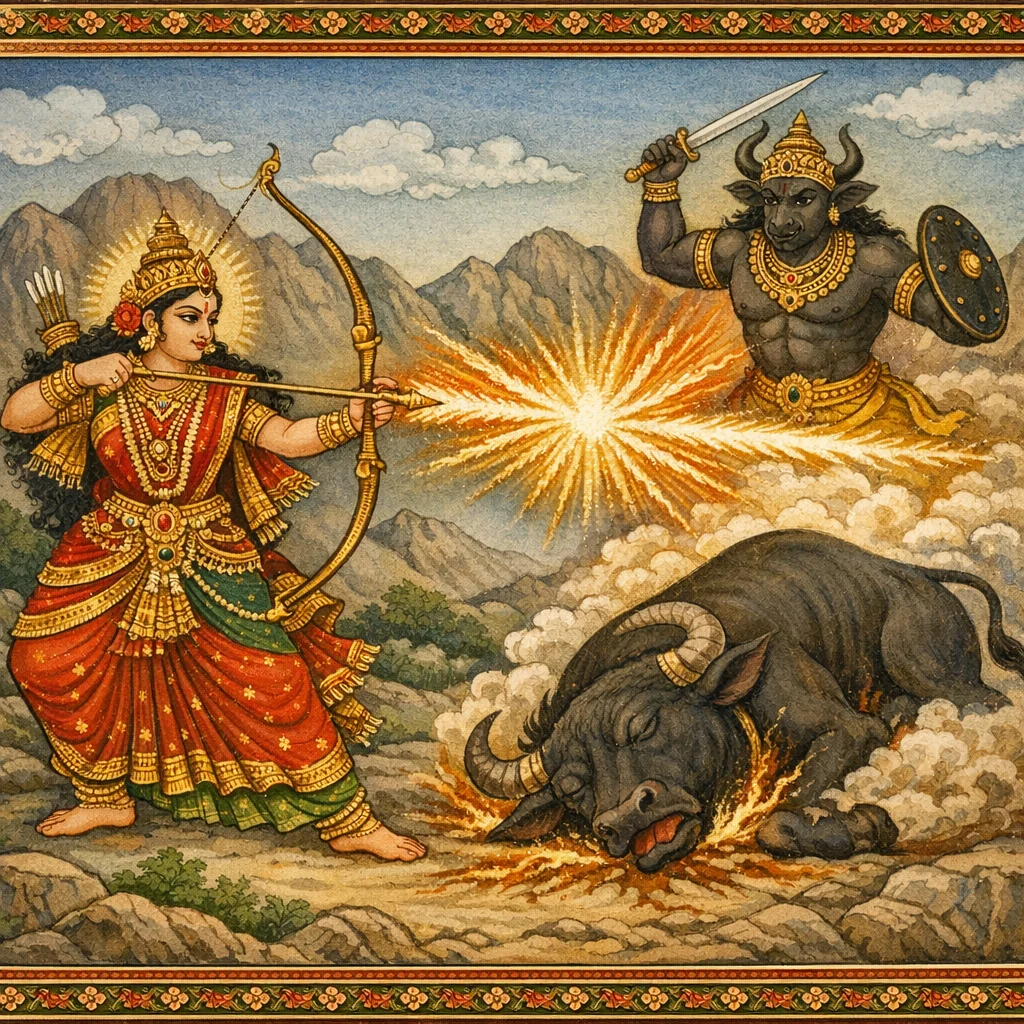
The chapter begins with Yayāti asking how Chandikā’s āśrama arose on Mount Arbuda, when it occurred, and what benefit humans gain by beholding it. Pulastya relates a sin-destroying account from an earlier deva-yuga: the daitya Mahīṣa, empowered by Brahmā’s boon (invulnerable except to a certain “woman”), subdues the devas, disrupts the proper shares of yajña, and forces cosmic functionaries to serve without ritual reciprocity. The devas consult Bṛhaspati, who sends them to Arbuda to perform tapas and worship the supreme Śakti as Chandikā through mantra, nyāsa, offerings, and sustained discipline. After months of practice, the devas’ gathered tejas is ritually consolidated into a maṇḍala, from which a radiant maiden—Chandikā—manifests. She receives divine weapons and is praised with many epithets (world-pervading, Mahāmāyā, protectress, fierce). Granting the devas’ plea, she vows to slay Mahīṣa at the proper time. Nārada, having seen her, describes her incomparable beauty to Mahīṣa, stirring desire; Mahīṣa sends envoys to obtain her, but Chandikā rejects the proposal, declaring it a deliberate prelude to his destruction. A great battle follows: omens and armies are described; Chandikā neutralizes many astras, counters even the Brahmāstra with her own power, defeats Mahīṣa’s transformations, and kills him decisively—beheading the buffalo-form and dispatching the warrior-form that emerges. The devas rejoice and restore Indra’s sovereignty. Chandikā then asks for a permanent, renowned āśrama on Arbuda where she will remain; those who behold her there attain elevated spiritual states and an orientation toward brahma-jñāna. The chapter concludes with an extensive phalaśruti: snāna, piṇḍa-dāna, śrāddha, gifts to brāhmaṇas, fasting for one or three nights, and cāturmāsya residence—especially in Āśvina on kṛṣṇa-caturdaśī—yield fruits ranging from Gayā-śrāddha equivalence and freedom from fear to health, wealth, progeny, restored kingship, and liberation. A cautionary epilogue notes that as people flock to the Goddess other rites decline, so Indra deploys personified distractions (kāma, krodha, etc.) to regulate conduct; yet Arbuda-darśana remains inherently purifying, and merit extends even to those who keep the written text at home or recite it with faith.
Shlokas
Verse 1
ययातिरुवाच । चंडिकाया द्विजश्रेष्ठ कथं तत्राश्रमोऽभवत् । कस्मिन्काले फलं तेन किं दृष्टेन भवेन्नृणाम्
Yayāti said: “O best of brāhmaṇas, how did Caṇḍikā’s hermitage come to be there? At what time did its fruit arise, and what benefit do people gain merely by beholding it?”
Verse 2
पुलस्त्य उवाच । शृणु राजन्प्रवक्ष्यामि कथां पापप्रणाशिनीम् । यां श्रुत्वा मानवः सम्यक्सर्वपापैः प्रमुच्यते
Pulastya said: “Listen, O king; I shall recount a sacred tale that destroys sin. Whoever hears it rightly is completely freed from all sins.”
Verse 3
पुरा देवयुगे राजन्महिषोनाम दानवः । पितामहवराद्दृप्तः सर्वदेवभयंकरः
O king, in a former age of the gods there was a Daitya named Mahiṣa. Swollen with pride by a boon from the Grandfather (Brahmā), he became a terror to all the devas.
Verse 4
तेन शक्रादयो देवा जिताः संख्ये सहस्रशः । भयात्तस्य दिवं हित्वा गतास्ते वै यथादिशम्
By him, Indra and the other gods were defeated in battle again and again, by the thousands. Out of fear of him, they abandoned heaven and fled in whatever directions they could.
Verse 5
त्रैलोक्यं स वशे कृत्वा स्वयमिन्द्रो बभूव ह
Having brought the three worlds under his control, he himself became “Indra”, usurping the lordship of heaven.
Verse 6
आदित्या वसवो रुद्रा नासत्यौ मरुतां गणाः । कृतास्तेन तथा दैत्या यथार्हं बलवत्तराः
The Ādityas, the Vasus, the Rudras, the twin Aśvins (Nāsatyas), and the hosts of the Maruts were appointed to serve him; and the Daityas too, according to their station under his rule, were made yet more mighty.
Verse 7
वह्निर्भयं समापन्नस्त्यक्त्वा देवगणांस्तदा । दानवेभ्यो हविर्भागं देवेभ्यो न प्रयच्छति
Agni (Vahni), seized by fear, then forsook the companies of the gods; he offered the share of the havis to the Dānavas and did not deliver it to the Devas.
Verse 8
उद्द्योतं कुरुते सूर्यो यादृक्तस्याभिसंमतः । यज्ञभागं विनाऽप्येष भयात्पार्थिवसत्तम
O best of kings, even Sūrya gives forth light only to the measure approved by him; and out of fear he continues his office, though deprived of his share in the yajña.
Verse 9
लोकपालास्तथा सर्वे तस्य कर्म प्रचक्रिरे । दासवत्पार्थिवश्रेष्ठ यज्ञभागं विनाकृताः
Likewise, all the Lokapālas, guardians of the worlds, carried out his works; O best of kings, they were made to act like servants, stripped of their shares in the yajña.
Verse 10
कस्यचित्त्वथ कालस्य सर्वे देवाः समेत्य तु । पप्रच्छुर्विनयोपेता विप्रश्रेष्ठं बृहस्पतिम्
After some time, all the gods assembled together and, with humility, questioned Bṛhaspati, the foremost among sages.
Verse 11
भगवान्किं वयं कुर्मः कुत्र यामो निराश्रयाः । तस्माद्ब्रूहि क्षयोपायं महिषस्य दुरात्मनः
O venerable one, what are we to do? Where shall we go, bereft of refuge? Therefore tell us the means to bring about the destruction of the wicked-souled Mahiṣa.
Verse 12
एवमुक्तो गुरुर्द्देवैर्ध्यात्वा कालं चिरं नृप । ततस्तांस्त्रिदशान्प्राह जीवयन्निव भूपतेः
Thus addressed by the gods, their guru pondered for a long while, O King. Then he spoke to those thirty (i.e., the gods), as though reviving them with hope, O lord of the earth.
Verse 13
बृहस्पतिरुवाच । ब्रह्मलब्धवरो दैत्यः पौरुषे च व्यवस्थितः । अवध्यः सर्वदेवानां मुक्त्वेकां योषितं सुराः । व्रजध्वं सहितास्तस्मादर्बुदं पर्वतोत्तमम्
Bṛhaspati said: “That Dānava, having obtained a boon from Brahmā and being firmly established in his manly might, is invulnerable to all the gods—except through a single woman. Therefore, O Devas, go together from here to the excellent mountain Arbuda.”
Verse 14
तपोऽर्थं तत्र संसिद्धिर्जायतामचिराद्धि वः । शक्तिरूपां परां देवीं चंडिकां कामरूपिणीम्
“For the sake of austerity, may swift accomplishment arise for you there. (Worship) the Supreme Goddess Caṇḍikā—She who is Śakti herself and who assumes forms at will.”
Verse 15
आराधयध्वमेकांते यया व्याप्तमिदं जगत् । सा तुष्टा वै वधार्थं तु महिषस्य दुरात्मनः
“Worship Her in solitude—Her by whom this entire world is pervaded. When She is pleased, it will be for the purpose of slaying that wicked Mahīṣa (demon).”
Verse 16
करिष्यति समुद्योगमवतारसमुद्भवम् । तस्या हस्तेन सोऽवश्यं वधं प्राप्स्यति दुर्मतिः
She will undertake the endeavor born of Her descent as an avatāra. By Her own hand, that evil-minded one will surely meet his death.
Verse 17
अहं वः कीर्तयिष्यामि शक्तियं मंत्रमुत्तमम् । पूजाविधानसंयुक्तं भुक्तिमुक्तिप्रदं शुभम्
I shall proclaim to you the excellent Śākta mantra—auspicious, joined with the proper procedures of worship, and granting both worldly enjoyment and liberation.
Verse 18
पुलस्त्य उवाच । एवमुक्ताः सुराः सर्वे हर्षेण महतान्विताः । तेनैव सहिता राजन्गताः पर्वतमर्बुदम्
Pulastya said: “Thus addressed, all the Devas—filled with great joy—went together with him, O King, to Mount Arbuda.”
Verse 19
तत्र स्नाताञ्छुचीन्सर्वान्दीक्षयामास गीष्पतिः । शक्तियैः परमैर्मंत्रैः सद्यःसिद्धिकरैर्नृप
There, after all had bathed and become pure, Gīṣpati (Bṛhaspati) initiated them, O King, with supreme Śākta mantras that grant immediate accomplishment.
Verse 20
सार्धयामत्रयं तत्र परिवारसमन्विताः । बलिपूजोपहारैश्च गंधं माल्यानुलेपनैः
There, accompanied by their attendants, they performed worship for three watches of the night and more—through bali offerings, pūjā and gifts of reverence, with fragrances, garlands, and unguents.
Verse 21
मंत्रेण विविधेनैव चारुस्तोत्रेण भक्तितः । प्रार्थयंतस्तथा नित्यं दीपज्योतिः समाहिताः
With manifold mantras and lovely hymns, in devotion they prayed each day without cease, their minds composed and fixed upon the lamp’s sacred light.
Verse 22
निर्ममा निरहंकारा गुरुभक्तिपरायणाः । अंगन्याससमायुक्ताः समदर्शित्वमागताः
Free from possessiveness and ego, steadfast in reverence for the Guru, and endowed with aṅga-nyāsa, they attained the state of even-sightedness.
Verse 23
एवं संतिष्ठमानानां तेषां पार्थिवसत्तम । सप्त मासा व्यतिक्रांतास्ततस्तुष्टा सुरेश्वरी
O best of kings, as they remained steadfast in that observance, seven months passed; then the Goddess, sovereign of the gods, was well pleased.
Verse 24
दीपज्योतिःसमावेशात्तेषां गात्रेषु पार्थिव । मंत्रेण परिपूतानां परं तेजो व्यवर्धत
O king, as the radiance of the lamp-flame suffused their limbs, and as they were purified by mantra, their supreme splendor increased exceedingly.
Verse 25
द्वादशार्कप्रभा जाताः षण्मासाभ्यंतरेण ते । अथ तांस्तेजसा युक्ताञ्ज्ञात्वा जीवो महीपते
Within six months they shone with the radiance of twelve suns. Then, O lord of the earth, Jīva, recognizing them as endowed with that splendor…
Verse 26
मंडलं रचयामास सर्वसिद्धिप्रदायकम् उपवेश्य ततः सर्वान्समस्तांस्त्रिदशालयान्
He then fashioned a maṇḍala that bestows every siddhi, and thereafter seated all the celestial dwellers together.
Verse 27
तेषां शरीरगं तेजः शक्तियैर्मंत्रसत्तमैः । आकृष्य न्यसयामास मंडले तत्र पार्थिव
O king, by potent śakti-forces and the finest mantras, he drew forth the radiance within their bodies and placed it there in the maṇḍala.
Verse 28
ततस्तेजोमयी कन्या तत्र जाता स्वरूपिणी । शक्तिरूपा महाकाया दिव्यलक्षणलक्षिता
Then there arose a maiden of pure radiance, manifest in her true form—an embodiment of Śakti, vast in presence, marked by divine signs.
Verse 29
इंद्रस्तस्यै ददौ वज्रं स्वपाशं च जलेश्वरः । शक्तिं च भगवानग्निः सिंहयानं धनाधिपः
Indra gave her the vajra; the Lord of the waters gave his own noose; the blessed Fire-god granted her the spear-like power of Śakti; and the Lord of wealth bestowed a lion as her mount.
Verse 30
अन्ये चैव गणाः सर्वे निजशस्त्राणि हर्षिताः । तस्यै ददुर्नृपश्रेष्ठ स्तुतिं चक्रुः समाहिताः
And all the other hosts as well, delighted, gave her their own weapons; and, O best of kings, with focused minds they offered her hymns of praise.
Verse 31
देवा ऊचुः । नमस्ते देवदेवेशि नमस्ते कांचनप्रभे । नमस्ते पद्मपत्राक्षि नमस्ते जगदम्बिके
The gods said: Salutations to You, O Sovereign Lady of the God of gods; salutations to You of golden splendor. Salutations to You, lotus‑petal‑eyed; salutations to You, Mother of the world.
Verse 32
नमस्ते विश्वरूपे च नमस्ते विश्वसंस्तुते । त्वं मतिस्त्वं धृतिः कांतिस्त्वं सुधा त्वं विभावरी
Salutations to You whose form is the universe; salutations to You, praised by the whole world. You are understanding, You are steadfastness, You are beauty; You are ambrosia, You are the night.
Verse 33
क्षमा ऋद्धिः प्रभा स्वाहा सावित्री कमला सती । त्वं गौरी त्वं महामाया चामुण्डा त्वं सरस्वती
You are Kṣamā (Forbearance), Ṛddhi (Prosperity), Prabhā (Radiance), and Svāhā; You are Sāvitrī, Kamalā, and Satī. You are Gaurī; You are Mahāmāyā; You are Cāmuṇḍā; You are Sarasvatī.
Verse 34
भैरवी भीषणाकारा चंडमुंडासिधारिणी । भूतप्रिया महाकाया घटाली विक्रमोत्कटा
You are Bhairavī, terrible in form, bearing the sword that struck down Caṇḍa and Muṇḍa. You are beloved of the bhūtas, vast-bodied, the bell-bearing One, and mighty in valour.
Verse 35
मद्यमांसप्रिया नित्यं भक्तत्राणपरायणा । त्वया व्याप्तमिदं सर्वं त्रैलोक्यं सचराचरम्
Ever delighting in offerings of wine and meat, You are wholly devoted to protecting Your devotees. By You this entire threefold world—moving and unmoving—is pervaded.
Verse 36
पुलस्त्य उवाच । एवं स्तुता सुरैः सर्वैस्ततो देवी प्रहर्षिता । तानब्रवीद्वरं सर्वा गृह्णंतु मम देवताः
Pulastya said: Thus praised by all the gods, the Goddess was filled with delight. Then the supreme Devī said to them, “Let my divine ones accept a boon from me.”
Verse 37
देवा ऊचुः । दानवो महिषो नाम पितामहवरान्वितः । अवध्यः सर्वभूतानां देवानां च तथा कृतः
The gods said: “There is a Dānava named Mahiṣa, endowed with boons from the Grandfather, Brahmā. He has been made unkillable by all beings—and likewise by the gods.”
Verse 38
मुक्त्वैकां योषितं देवि तस्मात्त्वं विनिपातय
Therefore, O Goddess, leaving aside only a woman, strike him down.
Verse 39
देव्युवाच । गच्छध्वं त्रिदशाः सर्वे स्वानि स्थानानि निर्वृताः
The Goddess said: “Go, all you Thirty gods; return to your own abodes, free from fear and content.”
Verse 40
अहं तं सूदयिष्यामि समये पर्युपस्थिते । एवमुक्ता गताः सर्वे देवाः स्थानानि हर्षिताः
“I shall slay him when the proper time has arrived.” Thus addressed, all the gods departed joyfully to their own abodes.
Verse 41
देवी तत्रैव संहृष्टा स्थिता पर्वतरोधसि । कस्यचित्त्वथकालस्य नारदो भगवान्मुनिः
The Goddess remained there itself, delighted, upon the mountain-slope. After some time, the blessed sage Nārada, the venerable muni, came there.
Verse 42
तत्र देवीं च संदृष्ट्वा तीर्थयात्रापरायणः । त्रिविष्टपमनुप्राप्तो महिषो यत्र तिष्ठति
There, having beheld the Goddess, he—devoted to pilgrimage—proceeded to Triviṣṭapa (heaven), to the place where Mahiṣa was staying.
Verse 43
तत्र दृष्ट्वा मुनिं प्राप्तं प्रणम्य महिषासुरः । विनयेन समायुक्तो ह्यभ्युत्थानमथाकरोत्
There, seeing the sage who had arrived, Mahiṣāsura bowed down; endowed with humility, he rose up respectfully in welcome.
Verse 44
ततस्तं पूजयामास मधुपर्कार्घविष्टरैः । सुखासीनं सुविश्रांतं ज्ञात्वा वाक्यमुवाच ह
Then he honored him with madhuparka, offerings of arghya, and a seat. Knowing the sage to be comfortably seated and well-rested, he spoke these words.
Verse 45
कुतो भवानितः प्राप्तः किमर्थं मुनिसत्तम । अमी पुत्रास्तथा राज्यं कलत्राणि धनानि च
“From where have you come here, O best of sages, and for what purpose? Here are sons, a kingdom, wives, and riches as well.”
Verse 46
अहं भृत्यसमायुक्तः किमनेन द्विजोत्तम । सर्वं तेऽहं प्रदास्यामि ब्रूहि येन प्रयोजनम्
I am attended by servants—what need is there of this, O best of the twice-born? I shall grant you all; tell me what your purpose is.
Verse 47
नारद उवाच । अभिनंदामि ते सर्वमेतत्त्वय्युपपद्यते । निःस्पृहा हि वयं नित्यं मुनिधर्मं समाश्रिताः
Nārada said: “I commend all that is yours—it is fitting in you. Yet we sages are ever without craving, firmly established in the dharma of the munis.”
Verse 48
कौतूहलादिह प्राप्तश्चिरात्ते दर्शनं गतः । मर्त्त्यलोकात्समायातो यास्यामि ब्रह्मणः पदम्
Out of curiosity I have come here; after a long time I have obtained your darśana. Having come from the mortal world, I shall now go to the abode of Brahmā.
Verse 49
महिषासुर उवाच । क्वचिद्दृष्टं त्वया किञ्चिदाश्चर्यं भूतले मुने । दैवं वा मानुषं वापि दानवा लंभिता विभो
Mahiṣāsura said: “O sage, have you seen anywhere upon the earth any marvel—divine or human—by which the Dānavas have been surpassed, O mighty one?”
Verse 50
नारद उवाच । अत्याश्चर्यं मया दृष्टं दानवेन्द्र धरातले । यत्र दृष्टं क्वचित्पूर्वं त्रैलोक्ये सचराचरे
Nārada said: “O lord of the Dānavas, I have seen upon the earth a most astonishing marvel—such as was never seen before anywhere in the three worlds, with all that moves and does not move.”
Verse 51
सर्वर्तुपुष्पितैर्वृक्षैः शोभितः स्वर्गसन्निभः
Adorned with trees flowering in every season, it appeared like heaven itself.
Verse 52
बकुलैश्चंपकैश्चाम्रैरशोकैः कर्णिकारकैः । शालैस्तालैश्च खर्जूरैर्वटैर्भल्लातकैर्धवैः
It was filled with bakula and campaka, mango and aśoka, and karṇikāra trees; with śāla and palm, with date-palms, banyans, bhallātaka, and dhava as well.
Verse 53
सरलैः पनसैर्वृक्षैस्तिंदुकैः करवीरकैः । मंदारैः पारिजातैश्च मलयैश्चंदनैस्तथा
That mountain was adorned with śāla-like pines (sarala), jackfruit trees, tiṃduka trees, and karavīra shrubs; and also with celestial mandāra and pārijāta blossoms, as well as fragrant Malaya sandalwood.
Verse 54
पुष्पजातिविशेषैश्च सुगंधैरप्यनेककैः । खाद्यैः सर्वेस्तथा लेह्यैश्चोष्यैः फलवरैर्वृतः
It was encircled by many special varieties of flowers and countless fragrances, and likewise by every kind of food—things to be eaten, licked, sucked, and the finest fruits.
Verse 55
न स वृक्षो न सा वल्ली नौषधी सा धरातले । न तत्र याऽसुरज्येष्ठ पर्वते वीक्षिता मया
O foremost of Asuras, on the earth there is no tree, no creeper, and no medicinal herb that I did not see there upon that mountain.
Verse 56
पक्षिणो मधुरारावाश्चकोरशिखिचातकाः । कोकिला धार्तराष्ट्राश्च भ्रमराः श्वेतपत्रकाः
There were birds of honeyed song—cakoras, peacocks, and cātakas; cuckoos too, along with dhārtarāṣṭra birds, bees, and white-winged (or white-feathered) birds.
Verse 57
येषां शब्दं समाकर्ण्य मुनयोऽपि समाहिताः । क्षोभं यांति त्रिकालज्ञाः कंदर्पशरपीडिताः
Hearing their calls, even sages absorbed in samādhi—though knowing the three times—are stirred, pained as if struck by Kāma’s arrows.
Verse 58
निर्झराणि सुरम्याणि नद्यश्च विमलोदकाः । पद्मिनीखंडसंयुक्ता ह्रदाः शतसहस्रशः
There were exquisitely beautiful waterfalls and rivers with crystal-clear water, and hundreds of thousands of lakes adorned with stretches of lotus-ponds.
Verse 59
पद्मपत्रविशालाक्षा मध्यक्षामाः शुचिस्मिताः । विवेकिनो नरास्तत्र शास्त्रव्रतसमन्विताः
There dwelt discerning men—lotus-petal wide-eyed, slender at the waist, with pure smiles—endowed with learning and observances prescribed by the śāstras.
Verse 60
किं चात्र बहुनोक्तेन यत्किंचित्तत्र पर्वते । स्वेदजांडजसंज्ञेया उद्भिज्जाश्च जरायुजाः । सर्वलोकोत्तरास्तत्र दृश्यंते पर्वतोत्तमे
But why say more? Whatever exists upon that mountain—beings born of sweat, born from eggs, sprouting from the earth, and born from the womb—are all extraordinary, surpassing those found in other worlds, upon that best of mountains.
Verse 61
दशयोजनविस्तारो द्वाभ्यां संहितपर्वतः । उच्चैः पंच च स श्रीमान्मर्त्ये स्वर्गो व्यजायत
That glorious mountain spread for ten yojanas and rose to a height of five; in the mortal world it appeared as heaven itself.
Verse 62
तत्राऽहं कौतुकाविष्ट इतश्चेतश्च वीक्षयन् । सर्वाश्चर्यमयीं नारीमपश्यं लोकसुंदरीम्
There, filled with curiosity and looking this way and that, I saw a woman of wondrous beauty—truly an enchantress of the world.
Verse 63
न देवी नापि गंधर्वी नासुरी न च मानुषी । तादृग्रूपा मया दृष्टा न श्रुता च वरांगना
She was neither a goddess, nor a Gandharva-maiden, nor an Asurī, nor even a human woman. O fair-limbed one, such a form I had neither seen before nor even heard of.
Verse 64
रतिः प्रीतिरुमा लक्ष्मीः सावित्री च सरस्वती । तस्या रूपस्य लेशेन नैतास्तुल्याः स्त्रियोऽखिलाः
Rati, Prīti, Umā, Lakṣmī, Sāvitrī, and Sarasvatī—by even a mere fraction of her beauty, none of these women are comparable to her at all.
Verse 65
अहं दृष्ट्वा तथा रूपां नारीं कामेन पीडितः । तदा दानवशार्दूल वैक्लव्यं परमं गतः
Seeing a woman of such beauty, I was tormented by desire; and then, O tiger among the Dānavas, I fell into the utmost bewilderment and weakness.
Verse 66
ततो धैर्यमवष्टभ्य मया मनसि चिंतितम् । न करिष्ये समालापं तया सह च कर्हिचित्
Then, steadying myself with courage, I reflected within my mind: “Never shall I speak with her—at any time.”
Verse 67
यस्या दर्शनमात्रेण कामो मे हृदि वर्द्धितः । तस्याः संभाषणेनेव किं भविष्यति मे पुनः
By merely seeing her, desire has increased within my heart. If I were to speak with her, what would become of me then?
Verse 68
चिरकालं तपस्तप्तं ब्रह्मचर्येण वै मया । नाशं यास्यति तत्सर्वं विषयैर्निर्जितस्य च । तस्माद्गच्छामि चान्यत्र यावन्न विकृतिर्भवेत्
For a long time I have practiced austerity through brahmacarya. If I am conquered by sense-objects, all of it will be ruined. Therefore I shall go elsewhere, before any distortion of mind arises.
Verse 69
नारीनाम तपोविघ्नं पूर्वं सृष्टं स्वयंभुवा । अर्गला स्वर्गमार्गस्य सोपानं नरकस्य च
Woman, as an obstacle to austerity, was created long ago by Svayambhū (Brahmā): a bolt upon the path to heaven, and a staircase leading to hell.
Verse 70
तावद्धैर्यं तपः सत्यं तावत्स्थैर्यं कुलत्रपा । यावत्पश्यति नो नारीमैकांते च विशेषतः
Courage, austerity, truthfulness, steadiness, and even family honor—these endure only so long as one does not behold a woman, especially in solitude.
Verse 71
एतत्संचिंत्य बहुधा निमील्य नयने ततः । अप्रजल्प्य वरारोहां तामहं चात्र संस्थितः
Thinking thus again and again, I then closed my eyes. Without speaking to that fair-thighed lady, I remained standing there.
Verse 72
पुलस्त्य उवाच । नारदस्य वचः श्रुत्वा महिषः कामपीडितः । श्रवणादपि राजेंद्र पुनः पप्रच्छ तं मुनिम्
Pulastya said: Hearing Nārada’s words, Mahiṣa—afflicted by desire—O king, even from the mere hearing, questioned that sage once again.
Verse 73
महिषासुर उवाच । काऽसौ ब्राह्मणशार्दूल तादृग्रूपा वरांगना । यस्याः संदर्शनादेव भवानेव स्मरान्वितः
Mahīṣāsura said: “O tiger among brāhmaṇas, who is that supremely beautiful woman of such a form, by merely seeing whom even you have become stirred by Kāma (desire)?”
Verse 74
देवी वा मानुषी वापि यक्षिणी पन्नगी मुने । कुमारी वा सकांता वा ब्रूहि सर्वं सविस्तरम्
“O sage—tell me fully and in detail: is she a goddess, or a human woman, or a yakṣiṇī, or a serpent-maiden? Is she an unmarried maiden, or one with a husband/lover?”
Verse 76
नारद उवाच । न सा पृष्टा मया किंचिन्न जानामि तदन्वयम् । एतन्मे वर्त्तते वित्ते सा कुमारी यशस्विनी
Nārada said: “I did not ask her anything, so I do not know her full account. This much I hold in mind: she is a renowned maiden (kumārī).”
Verse 77
सोऽहं यास्यामि दैत्येश ब्रह्मलोकं सनातनम् । नोत्सहे तत्कथां कर्तुं कामबाणभयातुरः
Therefore, O lord of the Daityas, I shall depart for the eternal Brahmaloka. Distressed by fear of Kāma’s arrows, I do not dare to speak further about her.
Verse 78
एवमुक्त्वा ततो राजन्ब्रह्मलोकं गतो मुनिः । महिषोऽपि स्मराविष्टश्चरं तस्याः समादिशत्
Having spoken thus, O king, the sage went to Brahmaloka. Mahīṣa too, possessed by desire, ordered a spy to go and watch her.
Verse 79
गत्वा भवान्द्रुतं तत्र दृष्ट्वा तां च वरांगनाम् । किमर्थं सा तपस्तेपे को वै तस्याः परिग्रहः
“Go quickly there; after seeing that exquisite woman, find out: for what purpose did she undertake austerity, and who indeed is her spouse/consort (parigraha)?”
Verse 80
अथाऽसौ महिषादेशाद्दूतो गत्वार्बुदाचलम् । दृष्ट्वा तां पद्मगर्भाभां ज्ञात्वा सर्व विचेष्टितम्
Then, on Mahīṣa’s command, the messenger went to Arbudācala. Seeing her—radiant like the heart of a lotus—and learning all her activities,
Verse 81
तस्मै निवेदयामास महिषाय सविस्मयः । दृष्टा दैत्यवर स्त्री च सर्वलक्षणलक्षिता
With amazement he reported to Mahīṣa: “O best of Daityas, I have seen that woman—marked with every auspicious sign.”
Verse 82
देवतेजोभवा कन्या साऽद्यापि वरवर्णिनी । त्वद्वधार्थं तपस्तेपे कौमारव्रतमाश्रिता
She is a maiden born of divine radiance, and even now her complexion is most excellent. For the sake of your destruction she performed austerities, having undertaken the vow of maidenhood (kaumāravrata).
Verse 83
एवं तत्र भवंती स्म पृष्टाः सर्वे तपस्विनः । सत्यमेतन्महाभाग कुरुष्व यदनंतरम्
Thus, when all the ascetics there were questioned, they spoke accordingly. This is the truth, O greatly fortunate one—do now whatever should follow next.
Verse 84
तस्या रूपं वयः कांतिर्वर्णितुं नैव शक्यते । नालापं कुरुते बाला सा केनापि समं विभौ
Her beauty, youth, and radiance cannot truly be described. That maiden, O Lord, speaks with no one at all as an equal.
Verse 85
पुलस्त्य उवाच । तच्छ्रुत्वा महिषो वाक्यं भूयः कामनिपीडितः । दूतं संप्रेषयामास दानवं च विचक्षणम्
Pulastya said: Hearing those words, Mahiṣa—again tormented by desire—dispatched as a messenger the Dānava named Vicakṣaṇa, discerning and wise.
Verse 86
विचक्षण द्रुतं गत्वा मदर्थे तां तपस्विनीम् । सामभेदप्रदानेन दंडेनापि समानय
“Vicakṣaṇa, go quickly and, for my sake, bring that ascetic woman—by conciliation, by sowing division, by gifts, and even by force if needed.”
Verse 87
अथाऽसौ प्रययौ शीघ्रं प्रणिपत्य विचक्षणः । अर्बुदे पर्वतश्रेष्ठे यत्र सा परमेश्वरी । प्रणम्य विनयोपेतो वाक्यमेतदुवाच ताम्
Then Vicakṣaṇa set out swiftly and, bowing down, went to Arbuda—the best of mountains—where the Supreme Goddess dwelt. Having paid homage with courtesy and humility, he spoke these words to her.
Verse 88
महिषो नाम विख्यातस्त्रैलोक्याधिपतिर्बली । दनुवंशसमुद्भूतः कामरूपसमन्वितः
“There is one famed as Mahiṣa—powerful, claiming lordship over the three worlds; born of the Danu lineage and possessed of the power to assume forms at will.”
Verse 89
स त्वां वांछति कल्याणि धर्मपत्नीं स्वधर्मतः । तस्माद्वरय भद्रं ते सर्वकामप्रदं पतिम्
“O auspicious lady, he desires you as his lawful wife, according to what he claims as his own ‘dharma’. Therefore, choose him—may it be well with you—as a husband who can grant every desire.”
Verse 90
यदि स्यात्तव कांतोऽसौ त्वं च तस्य तथा प्रिया । तत्कृतार्थं द्वयोरेव यौवनं नात्र संशयः
“If he were to be your beloved, and you likewise dear to him, then the youth of you both would truly find its fulfillment—of this there is no doubt.”
Verse 91
एवमुक्ता ततस्तेन देवी वचनमब्रवीत् । किञ्चित्कोपसमायुक्ता मुहुः प्रस्फुरिताधरा
Thus addressed by him, the Goddess replied. Slightly filled with anger, her lips trembled again and again.
Verse 92
देव्युवाच । अवध्यः सर्वथा दूतः सर्वत्र परिकीर्तितः । अवस्थासु ततो न त्वं सहसा भस्मसात्कृतः
The Goddess said: “Everywhere it is proclaimed that a messenger must never be slain, in any circumstance. Therefore you have not been instantly reduced to ashes.”
Verse 93
गत्वा ब्रूहि दुराचारं महिषं दानवाधमम् । नाहं शक्या त्वया पाप लब्धुं नान्येन केनचित्
“Go and tell Mahiṣa, that evil-doer, the vilest of the Dānavas: ‘Sinner, you cannot obtain me—nor can anyone else at all.’”
Verse 94
वधार्थं ते समुद्योग एष सर्वो मया कृतः । तस्यास्तद्वचनं श्रुत्वा महिषं स पुनर्ययौ
“All this effort has been undertaken by me for your destruction.” Hearing her words, he went back again to Mahiṣa.
Verse 95
भयेन महताविष्टस्तस्या रूपेण विस्मितः । सर्वं निवेदयामास महिषाय विचेष्टितम् । तस्याश्चैव तथाऽलापानस्पृहत्वं च कृत्स्नशः
Overwhelmed by great fear and astonished at her form, he reported everything to Mahiṣa—her actions, her manner of speaking, and completely, her lack of any desire for him.
Verse 96
तच्छुत्वा महिषो राजन्कामबाणप्रपीडितः । सेनापतिं समाहूय वाक्यमेतदुवाच ह
Hearing that, O King, Mahiṣa—pierced and tormented by the arrows of desire—summoned his commander and spoke these words.
Verse 97
अर्बुदे पर्वते सेनां कल्पयस्व सुदुर्धराम् । हस्त्यश्वकल्पितां भीमां रथपत्तिसमाकुलाम्
On Mount Arbuda, assemble for me a most steadfast army—terrifying, arrayed with elephants and horses, thronged with chariots and infantry.
Verse 98
ततोऽसौ कल्पयामास चतुरंगां वरूथिनीम् । पताकाच्छत्रशबलां वादित्रारावभूषिताम्
Then he arranged a fourfold host—splashed with banners and parasols, and adorned with the roaring of drums and instruments.
Verse 99
ततो द्विपाश्च संनद्धा दृश्यंतेऽधिष्ठिता भटैः । इतश्चेतश्च धावन्तः सपक्षाः पर्वता इव
Then armoured elephants were seen, mounted by warriors, charging here and there—like mountains that had grown wings.
Verse 100
अश्वाश्चैवाप्यकल्माषा वायुवेगाः सुवर्चसः । अंगत्राणसमायुक्ताः शतशोऽथ सहस्रशः
And horses too—spotless, swift as the wind, radiant—fitted with protective armour, in hundreds and then in thousands.
Verse 101
विमानप्रतिमाकारा रथास्तेन प्रकल्पिताः । किंकिणीजालसद्घंटापताकाभिरलंकृताः
He had chariots prepared, shaped like aerial vimānas, adorned with nets of tinkling bells, resounding ornaments, and fluttering banners.
Verse 102
पत्तयश्च महाकाया महेष्वासा महाबलाः । असिचर्मधराश्चान्ये प्रासपट्टिशपाणयः
There were infantrymen of massive frame, great bowmen of mighty strength; others bore sword and shield, with spears and battle-axes in their hands.
Verse 103
लक्षमेकं मतंगानां रथानां त्रिगुणं ततः । अश्वा दशगुणा राजन्नसंख्याताः पदातयः
There were one lakh elephants; chariots three times that; horses ten times more, O King—and the foot-soldiers were beyond counting.
Verse 104
ततश्चार्बुदमासाद्य वेष्टयित्वा स दूरतः । संमितैः सचिवैः सार्धं तदंतिकमुपाद्रवत्
Then, having reached Arbuda, he surrounded the place from a distance; and together with his chosen ministers, he rushed toward her vicinity.
Verse 105
ध्यानस्थां वीक्ष्य तां देवीं कन्दर्पशरपीडितः । ततोऽब्रवीत्स तां वाक्यं विनयेन समन्वितः
Seeing that Goddess seated in meditation, tormented by Kāma’s arrows, he then addressed her with words, outwardly adorned with humility.
Verse 106
श्रुत्वा तवेदृशं रूपमहं प्राप्तो वरानने । गांधर्वेण विवाहेन तस्माद्वरय मां द्रुतम्
‘Hearing of your beauty such as this, O fair-faced one, I have come. Therefore choose me at once in a gāndharva marriage.’
Verse 107
षष्टिभार्यासहस्राणि मम संति शुचिस्मिते । कृत्वा मां दर्पितं कांतं तासां त्वं स्वामिनी भव
O you of pure smile, I have sixty thousand wives. Make me a proud and splendid beloved—become the mistress over them all.
Verse 108
अनर्हं ते तपो बाले भुंक्ष्व भोगान्यथेप्सितान् । त्रैलोक्यस्वामिनी भूत्वा मया सार्धमहर्निशम्
Austerity does not befit you, young girl. Enjoy pleasures as you desire—becoming the mistress of the three worlds, stay with me day and night.
Verse 109
एवमुक्ताऽपि सा तेन नोत्तरं प्रत्यभाषत । ततः कामसमाविष्टस्तदंतिकमुपाययौ
Though addressed in this way by him, she gave no reply. Then, seized by desire, he moved closer to her.
Verse 110
ततस्तं लोलुपं दृष्ट्वा सा देवी कोपसंयुता । अस्मरद्वाहनं सिंहं समायातः स साऽरुहत्
Then, seeing that greedy man, the Goddess—filled with anger—remembered her lion mount. When it came, she mounted it.
Verse 111
अब्रवीत्परुषं वाक्यं गच्छगच्छेति चासकृत् । नो चेत्त्वां च वधिष्यामि स्थानेऽस्मिन्दानवाधम
She spoke harsh words, repeatedly saying, “Go, go!” “If not, I shall slay you right here, O vilest of Dānavas.”
Verse 112
अथाऽसौ सचिवैः सार्द्धं समंतात्पर्यवेष्टयत् । प्रग्रहार्थं तु तां देवीं कामबाणप्रपीडितः
Then he, along with his ministers, encircled her on all sides—seeking to seize the Goddess, tormented by the arrows of desire.
Verse 113
ततो जहास सा देवी सशब्दं परमेश्वरी । तस्मादहर्निशं सार्द्धं निष्क्रांता पुरुषा घनाः
Then that Supreme Goddess laughed aloud; and from that laughter, day and night, dense masses of men issued forth together.
Verse 114
सुसन्नद्धाः सशस्त्राश्च रोषेण महताऽन्विताः । ततस्तानब्रवीद्देवी पापोऽयं वध्यतामिति
Fully armoured and bearing weapons, inflamed with great wrath, they stood ready. Then the Goddess addressed them: “This one is a sinner—let him be slain.”
Verse 115
ततस्ते सहिताः सर्वे महिषं समुपाद्रवन् । तिष्ठतिष्ठेति जल्पन्तो मुंचन्तोऽस्त्रणि भूरिशः
Then all of them together rushed at Mahiṣa, shouting, “Stand! Stand!” and repeatedly releasing many weapons.
Verse 116
ततः समभवद्युद्धं गणानां दानवैः सह । ततस्ते सचिवाः सर्वे वैवस्वतगृहं गताः
Then a battle arose between the Gaṇas and the Dānavas. Thereupon all his ministers went to the house of Vaivasvata (Yama).
Verse 117
अथाऽसौ महिषो रुष्टः सचिवैर्विंनिपातितैः । स्वसैन्यमानयामास तस्मिन्पर्वतरोधसि
Then that Mahiṣa, enraged that his ministers had been struck down, summoned his own army there at that mountain pass that formed a barrier.
Verse 118
रथप्रवरमारुह्य सारथिं समभाषत । नय मां सारथे तूर्णं यत्र साऽस्ते व्यवस्थिता
Mounting his excellent chariot, he spoke to the charioteer: “O charioteer, take me swiftly to where she stands stationed.”
Verse 119
हत्वैनामद्य यास्यामि पारं रोषस्य दुस्तरम् । एवमुक्तस्ततो राजन्प्रेरयामास सारथिः
“Having slain her today, I shall cross beyond this hard-to-cross ocean of wrath.” Thus spoken, O King, the charioteer then urged the chariot onward.
Verse 120
रथं तेनैव मार्गेण यत्र सा तिष्ठते ध्रुवम् । एतस्मिन्नेव काले तु तत्रोत्पाताः सुदारुणाः
Along that same road he drove the chariot to where she stood firmly. At that very time, dreadful portents arose there.
Verse 121
बहवस्तेन मार्गेण येनासौ प्रस्थितो नृप । सम्मुखः प्रववौ वातो रूक्षः कर्करसंयुतः
Many ill omens appeared on the very path by which he set out, O King. A harsh wind, dry and gritty, blew straight against him.
Verse 122
पपात महती चोल्का निहत्य रविमंडलम् । अपसव्यं मृगाश्चक्रुस्तस्य मार्गे नृपोत्तम
A great meteor fell, as though it struck the disk of the sun. And the beasts, in an inauspicious sign, moved to the left along his path, O best of kings.
Verse 123
उपविष्टास्तथा वांता बहुमूत्रं प्रसुस्रुवुः । रथध्वजे समाविष्टो गृध्रः शब्दमथाकरोत्
Seated there, they vomited and passed much urine. And a vulture, alighting upon the chariot’s banner, then let out a cry.
Verse 124
स तान्सर्वाननादृत्य महोत्पातान्सुदारुणान् । प्रययौ सम्मुखस्तस्या देव्याः कोपपरायणः
Disregarding all those dreadful, terrible portents, he advanced straight toward that Goddess, intent on wrath and confrontation.
Verse 125
विमुंचंश्च शरान्नादांस्तिष्ठतिष्ठेति च ब्रुवन् । न कश्चिद्दृश्यते तत्र तेषां मध्ये नृपोत्तम
Loosing arrows with loud cries and shouting, “Stand! Stand!”, the excellent king saw no one there—no opponent visible among them.
Verse 126
महिषं रोषसंयुक्तं यो वारयति संगरे । तेन हत्वा गणगणान्कृतं रुधिरकर्दमम्
Who can restrain the buffalo-demon when joined with fury in battle? By him, after slaughtering hosts upon hosts, the ground was turned into mire with blood.
Verse 127
ततो देवी समासाद्य प्रोक्ता गर्वेण पार्थिव । न त्वया संगरो भीरु नूनं कर्तुं ममोचितः
Then the Goddess drew near and spoke in pride: “O king, you are timid—surely you are not fit to wage war with me.”
Verse 128
न च बालिशि मे वीर्यं न सौभाग्यं न वा धनम् । न करोषि हि तेन त्वं मम वाक्यं कथञ्चन
“And you, simpleton, you do not regard my power, my good fortune, or my wealth; therefore you do not follow my command in any way.”
Verse 129
नूनं तत्त्वेन जानामि अवलिप्तासि भामिनि । कुरुष्वाद्यापि मे वाक्यं भार्या भव मम प्रिया
He said: “Now I truly understand—you are arrogant, O passionate woman. Even now, do as I say: become my beloved wife.”
Verse 130
स्त्रियं त्वां नोत्सहे हंतुं पौरुषे च व्यवस्थितः । असकृन्निर्जितः संख्ये मया शक्रः सुरैः सह
“Because you are a woman, I do not wish to kill you—though I stand firm in manly valor. Many times in battle I have defeated Śakra (Indra) together with the gods.”
Verse 131
त्रैलोक्ये नास्ति मत्तुल्यः पुमान्कश्चिच्च बालिशि । एवमुक्ता ततो देवी कोपेन महताऽन्विता
“In the three worlds there is no man equal to me, you fool!” When she was addressed thus, the Goddess became filled with great anger.
Verse 132
प्रगृह्य सशरं चापं वाक्यमेतदुवाच ह । नालापो युज्यते पाप कर्तुं सह मम त्वया
Taking up her bow with its arrows, she spoke: “O sinner, speech is not fitting between you and me—only deeds upon the field of battle.”
Verse 133
कुमार्याः कामयुक्तेन तथापि शृणु मे वचः । न त्वया निर्जितः शक्रः स्ववीर्येण रणाजिरे
“Though lust drives you toward a maiden, still heed my words: upon the battlefield you did not defeat Śakra (Indra) by your own valor.”
Verse 134
पितामह वरं देवा मन्यंते दानवाधम । गौरवात्तस्य तेन त्वमात्मानं मन्यसेऽधिकम्
“O vilest of the Dānavas! Because the gods revere the Grandsire (Brahmā) as supreme, and out of that reverence, you imagine yourself superior.”
Verse 135
मुक्त्वैकां कामिनीं पाप त्वं कृतः पद्मयोनिना । अवध्यः सर्वसत्त्वानां पुंसः जातौ धरातले
“O sinner! Save for a single woman, the Lotus-born (Brahmā) fashioned you to be invulnerable to all beings—among the race of men upon the earth.”
Verse 136
पितामहवरः सोऽत्र जयशीलोऽसि दानव । यदि ते पौरुषं चास्ति तच्छीघ्रं संप्रदर्शय
“Here stands the Grandsire’s boon; you boast of victory, O Dānava. If you truly possess manly prowess, then show it at once.”
Verse 137
एषा त्वामिषुभिस्तीक्ष्णैर्नयामि यमसादनम् । एवमुक्त्वा ततो देवी शरानष्टौ मुमोच ह
Now with these sharp arrows I shall send you to Yama’s abode. Having spoken thus, the Goddess then released eight arrows.
Verse 138
चतुर्भिश्चतुरो वाहाननयद्यमसादनम् । सारथेश्च शिरः कायाच्छरेणैकेन चाक्षिपत्
With four arrows she sent the four steeds to Yama’s abode; and with a single arrow she severed and cast down the charioteer’s head from his body.
Verse 139
ध्वजं चिच्छेद चैकेन ततोऽन्येन हृदि क्षतः । स गात्रविद्धो व्यथितो ध्वजयष्टिं समाश्रितः
With one arrow she cut down his banner; with another she wounded him in the heart. Pierced in his limbs and tormented with pain, he clung to the banner-pole for support.
Verse 140
मूर्छया सहितो राजन्किंचित्कालमधोमुखः । ततः स चेतनो भूत्वा मुमोच निशिताञ्छरान्
O King, seized by swoon he remained face-down for a while. Then, regaining consciousness, he discharged sharp arrows.
Verse 141
देवी सखीसमायुक्ता सर्वदेशेष्वताडयत् । ततः क्षुरप्रबाणेन धनुस्तस्य द्विधाऽकरोत्
The Goddess, accompanied by her companion(s), struck him in every part. Then, with a razor-edged arrow, she split his bow in two.
Verse 142
छिन्नधन्वा ततो दैत्यश्चर्मखङ्गसमन्वितः । विद्राव्य सहसा देवीं तिष्ठतिष्ठेति चाब्रवीत्
Then the Daitya, his bow cut, took up shield and sword, rushed suddenly at the Goddess, and cried, “Stand! Stand!”
Verse 143
तस्य चापततस्तूर्णं खड्गं द्वाभ्यां ह्यकृन्तयत् । शराभ्यामर्धबाणेन प्रहस्य प्रासमेव च
As he rushed in swiftly, she cut his sword with two arrows; laughing, she also struck down his spear with arrows and a half-arrow.
Verse 144
विशस्त्रो विरथो राजन्स तदा दानवाधमः । ततोऽस्मरच्छरान्भूप शस्त्राणि विविधानि च
O King, at that moment the vilest of the Dānavas stood without weapons and without a chariot. Then, O ruler of the earth, he called to mind arrows and many kinds of weapons.
Verse 145
ब्रह्मास्त्रं मनसि ध्यायंस्तृणं तस्यै मुमोच सः । मुक्तेनास्त्रेण तस्मिंस्तु धूमवर्तिर्व्यजायत
Meditating in his mind upon the Brahmā-weapon, he released it toward her as though it were a mere blade of grass. But when that astra was discharged, a swirling coil of smoke arose.
Verse 146
एतस्मिन्नेव काले तु स ब्रह्मास्ते दिवौकसः । परं भयमनुप्राप्ता दृष्ट्वा तस्य पराक्रमम्
At that very time, the gods in heaven—together with Brahmā—were seized by great fear on seeing his prowess.
Verse 147
ततो देवी क्षणं ध्यात्वा तदस्त्रं पार्थिवोत्तम । ब्रह्मास्त्रेणाहनत्तूर्णं ततो व्यर्थं व्यजायत
Then the Devī, after contemplating for a moment, O best of kings, swiftly struck down that weapon with the Brahmā-weapon, and thus it became futile.
Verse 148
ब्रह्मास्त्रे विफले जाते ह्याग्नेयं दानवोत्तमः । प्रेषयामास तां क्रुद्धो ह्यहनद्वारुणेन सा
When the Brahmā-weapon proved ineffective, the foremost of Dānavas, enraged, hurled the Agni-weapon. She struck it down with the Vāruṇa-weapon.
Verse 149
एवं नानाप्रकाराणि तेन मुक्तानि सा तदा । अस्त्राणि विफलान्येव चक्रे देवी सहस्रशः
In this way, the Devī rendered fruitless—by the thousand—those many kinds of weapons that he released at that time.
Verse 150
एवं निःशेषितास्त्रोऽसौ दानवो बलवत्तरः । चकार परमां मायां दिव्यैरस्त्रैः सुरेश्वरी
Thus, when that mighty Dānava had exhausted his weapons, the Sovereign Goddess employed the supreme illusion—supported by divine astras.
Verse 151
व्यक्षिपच्च महाकायं महिषं पर्वताकृतिम् । दीर्घतीक्ष्णविषाणाभ्यां युक्तमंजनसंनिभम्
And she cast forth a huge buffalo, mountain-like in form, black as collyrium, furnished with long and sharp horns.
Verse 152
सिंहस्कंधं च सा देवी ततस्तमध्यरोहत । खड्गेन तीक्ष्णेन शिरो देवी तस्य न्यकृंतत
Then the Devī mounted it in heroic bearing, lion-shouldered, and with a keen sword the Goddess cut off its head.
Verse 153
शूलेन भेदयामास पृष्ठदेशे सुरेश्वरी । ततः कलेवरात्तस्मान्निश्चक्राम महान्पुमान्
The Sovereign Goddess pierced its back with her trident. Then, from that body, a great person emerged.
Verse 154
चर्मखड्गधरो रौद्रस्तिष्ठतिष्ठेति चाब्रवीत् । तमप्येवं गृहीत्वा तत्केशपाशे सुरेश्वरी
A fierce one, bearing a hide-shield and sword, cried, “Stand! Stand!” Yet the Sovereign Goddess seized him likewise, catching him by the lock of his hair.
Verse 155
निस्त्रिंशेनाहनत्प्रोच्चैः स च प्राणैर्व्ययुज्यत । दानवः पार्थिवश्रेष्ठ पार्श्वे सिंहविदारिते
She struck him mightily with her sword, and he was severed from his life-breaths. O best of kings, that Dānava fell—his side torn open as though ripped by a lion.
Verse 156
ततो जघान भूयोऽपि दानवान्सा रुषान्विता । हतशेषाश्च ये दैत्या निर्भिद्य धरणीतलम्
Then, filled with wrath, she again struck down the Dānavas. And the remaining Daityas—those left alive after the slaughter—broke through the earth’s surface and fled below.
Verse 157
प्रविष्टा भयसंत्रस्ताः पातालं जीवितैषिणः । ततो देव गणाः सर्वे वसवो मरुतोऽश्विनौ
Terrified and longing only to live, they entered Pātāla. Then all the hosts of gods—the Vasus, the Maruts, and the two Aśvins—gathered together.
Verse 158
विश्वेदेवास्तथा साध्या रुद्रा गुह्यककिन्नराः । आदित्याः शक्रसंयुक्ताः समेत्य परमेश्वरीम्
The Viśvedevas and the Sādhyas, the Rudras, the Guhyakas and Kinnaras, and the Ādityas together with Śakra—all assembled before the Supreme Goddess.
Verse 159
समंताद्दिव्यपुष्पैश्च तां देवीं समवाकिरन् । स्तुवंतो विविधैः स्तोत्रैर्नमंतो भक्तितत्पराः
From all sides they showered that Goddess with heavenly flowers, praising her with many hymns and bowing down—wholly intent on devotion.
Verse 160
युक्तं कृतं महेशानि यद्धतः पापकृत्तमः । त्रैलोक्यं सकलं ध्वस्तं पापेनानेन सुंदरि
“It is fitting, O Maheśānī, that this worst-doer of sins has been slain. By his wickedness, O fair one, the entire three worlds were being brought to ruin.”
Verse 161
त्वया दत्तं पुना राज्यं वासवस्य त्रिविष्टपे । तस्माद्वरय भद्रं ते वरं यन्मनसीप्सितम् । सर्वे देवाः प्रसन्नास्ते प्रदास्यंति न संशयः
“You have restored again the sovereignty of Vāsava in Triviṣṭapa (heaven). Therefore, choose—may it be well with you—a boon that your heart desires. All the gods are pleased with you and will grant it, without doubt.”
Verse 162
देव्युवाच । यदि देवाः प्रसन्ना मे यदि देयो वरो मम । आश्रमोऽत्रैव मे पुण्यो जायतां ख्यातिसंयुतः
The Goddess said: “If the gods are pleased with me, and if a boon is to be granted to me, then let my holy hermitage arise right here—endowed with renown.”
Verse 163
अस्मिंश्चाहं सदा देवाः स्थास्यामि वरपर्वते
“And here, O gods, I shall dwell forever—upon this excellent mountain (Varaparvata).”
Verse 164
रूपेणानेन देवेशि ये त्वां द्रक्ष्यंति मानवाः । आश्रमेऽत्र महापुण्ये ते यास्यंति परां गतिम्
O Goddess, those people who behold you in this very form, here in this supremely meritorious hermitage, will attain the highest state.
Verse 165
ब्रह्मज्ञानसमायुक्तास्ते भविष्यंति मानवाः
Those people will become endowed with the knowledge of Brahman.
Verse 166
यस्माच्चंडं कृतं कर्म त्वया दानवसूदनात् । तस्मात्त्वं चंडिकानाम लोके ख्यातिं गमिष्यसि
Since you performed a fierce deed—slaying the demon—therefore you will become renowned in the world by the name ‘Caṇḍikā’.
Verse 167
तव नाम्ना तथा ख्यात आश्रमोऽयं भविष्यति
This hermitage too shall become renowned by your very sacred name.
Verse 168
येऽत्र कृष्ण चतुर्द्दश्यामाश्विने मासि शोभने पिंडदानं करिष्यंति स्नानं कृत्वा समाहिताः
Those who, here—on the fourteenth day of the dark fortnight in the auspicious month of Āśvina—after bathing, with minds composed, perform the piṇḍa-offering,
Verse 169
गयाश्राद्धफलं कृत्यं तेषां देवि भविष्यति त्वद्दर्शनात्तथा मुक्तिः पातकस्य भविष्यति
O Goddess, their rite shall yield the very fruit of a Gayā-śrāddha; and by your darśana there shall also be liberation from sin.
Verse 170
कृष्ण उवाच । एकरात्रिं भविष्यंति येऽत्र श्रद्धासमन्विताः । उपवासपरास्तेषां पापं यास्यति संक्षयम्
Kṛṣṇa said: Those who stay here for a single night with faith, devoted to fasting, shall have their sin brought to destruction.
Verse 171
पुत्रहीनश्च यो मर्त्यो नारी वापि समाहिता । तन्मनाः पिंडदानं वै तथा स्नानं करिष्यति । अपुत्रो लभते शीघ्रं सुपुत्रं नात्र संशयः
Any man without a son—or a woman likewise composed—who, with intent mind, performs the piṇḍa-offering and bathing here: the childless one quickly gains a worthy son; of this there is no doubt.
Verse 172
इन्द्र उवाच । भ्रष्टराज्यो नृपो योऽत्र स्नानं दानं करिष्यति । सर्वशत्रुक्षयस्तस्य राज्यावाप्तिर्भविष्यति
Indra said: A king fallen from his realm, if he bathes here and gives in charity, shall see all enemies destroyed and shall regain sovereignty.
Verse 173
अग्निरुवाच । अत्रागत्य शुचिः श्राद्धं यः करिष्यति मानवः । आत्मवित्तानुसारेण तस्य यज्ञफलं भवेत्
Agni said: Whoever comes here purified and performs śrāddha according to his means shall obtain the fruit of a yajña.
Verse 174
यम उवाच । अत्र स्नात्वा तिलान्यस्तु ब्राह्मणेभ्यः प्रदास्यति । अल्पमृत्युभयं तस्य न कदाचिद्भविष्यति
Yama said: Whoever bathes here and then gives sesame seeds to the Brāhmaṇas shall never be seized by fear of untimely death.
Verse 175
राक्षसा ऊचुः । पिंडदानं नरा येऽत्र करिष्यंति तवाऽश्रमे । प्रेतोत्थं न भयं तस्य देवि क्वापि भविष्यति
The Rākṣasas said: O Goddess, those men who here in your hermitage perform the offering of piṇḍas shall nowhere be afflicted by fear arising from pretas, the restless spirits.
Verse 176
वरुण उवाच । स्नानार्थं ब्राह्मणेंद्राणां योऽत्र तोयं प्रदास्यति । विमलस्तु सदा भावि इह लोके परत्र च
Varuṇa said: Whoever here provides water for the bathing of eminent Brāhmaṇas becomes ever pure, in this world and in the world beyond.
Verse 177
वायुरुवाच । विलेपनानि शुभ्राणि सुगंधानि विशेषतः । योत्र दास्यति विप्रेभ्यो नीरोगः स भविष्यति
Vāyu said: Whoever here gives to the Brāhmaṇas pure, white, and especially fragrant unguents shall become free from disease.
Verse 178
धनद उवाच । योऽत्र वित्तं यथाशक्त्या ब्राह्मणेभ्यः प्रदास्यति । न भविष्यति लोके स वित्तहीनः कथंचन
Dhanada said: Whoever here, according to his ability, donates wealth to the Brāhmaṇas will never become destitute in this world.
Verse 179
ईश्वर उवाच । योऽत्र व्रतपरो भूत्वा चातुर्मास्यं वसिष्यति । इह लोके परे चैव तस्य भावि सदा सुखम्
Īśvara said: Whoever lives here for the Cāturmāsya period, devoted to vows, will enjoy unbroken happiness—both in this world and in the next.
Verse 180
वसव ऊचुः । त्रिरात्रं यो नरः सम्यगुपवासं करिष्यति । आजन्ममरणात्पापान्मुक्तः स च भविष्यति
The Vasus said: The man who properly undertakes a three-night fast will be freed from sins accumulated from birth until death.
Verse 181
आदित्य उवाच । अत्राश्रमपदे पुण्ये ये नरा भक्तिसंयुताः । छत्रोपानत्प्रदातारस्तेषां लोकाः सनातनाः
Āditya said: In this holy hermitage-ground, those devoted people who donate umbrellas and footwear attain eternal worlds.
Verse 182
अश्विनावूचतुः । मिष्टान्नं श्रद्धयोपेतो ब्राह्मणाय प्रदास्यति । योऽत्र तस्य परा प्रीतिर्भविष्यत्यविनाशिनी १
The Aśvins said: Whoever here, with faith, offers sweet food to a Brāhmaṇa shall attain a supreme delight that never perishes.
Verse 183
तीर्थान्यूचुः । अद्यप्रभृति सर्वेषां तीर्थानामिह संस्थितिः । भविष्यति विशेषेण ह्याश्रमे लोकविश्रुते
The Tīrthas said: From today onward, the presence of all holy fords shall abide here—most especially in this hermitage renowned throughout the world.
Verse 185
गंधर्वा ऊचुः । गीतवाद्यानि यश्चात्र प्रकरिष्यति मानवः । सप्तजन्मांतराण्येव रूपवान्स भविष्यति
The Gandharvas said: Whoever, as a human, performs singing and instrumental music here shall indeed become handsome and radiant for seven successive births.
Verse 186
ऋषय ऊचुः । आश्रमेऽस्मिंस्त्रिरात्रं य उपवासं करिष्यति । चांद्रायणसहस्रस्य फलं तस्य भविष्यति
The sages said: Whoever observes a three-night fast in this hermitage shall obtain merit equal to a thousand Cāndrāyaṇa vows.
Verse 187
पुलस्त्य उवाच । एवं सर्वे वरान्दत्त्वा देव्यै देवा नृपोत्तम । तदाज्ञया दिवं जग्मुर्देवी तत्रैव संस्थिता
Pulastya said: Thus, O best of kings, after all the gods had granted boons to the Goddess, they departed for heaven by her command, while the Goddess remained established there itself.
Verse 188
अथ मर्त्त्या दिवं जग्मुर्दृष्ट्वा देवीं तदाश्रमे । अनायासेन संपूर्णास्ततो मर्त्यैस्त्रिविष्टपः
Then mortals, beholding the Goddess in that hermitage, went up to heaven; thus, without hardship, Svarga became filled with human beings.
Verse 189
अग्निष्टोमादिकाः सर्वाः क्रिया नष्टा धरातले । धर्मक्रियास्तथा चान्या मुक्त्वा देव्याः प्रपूजनम्
All rites beginning with the Agniṣṭoma sacrifice vanished from the earth, and other religious observances as well—except for the devoted worship of the Goddess.
Verse 190
ततो भीतः सहस्राक्षः संमंत्र्य गुरुणा सह । आह्वयामास वेगेन कामं क्रोधं भयं मदम्
Then Sahasrākṣa (Indra), frightened, consulted with his preceptor and swiftly summoned Desire, Anger, Fear, and Intoxication.
Verse 191
व्यामोहं गृहपुत्रोत्थं तृष्णामायासमन्वितम् । गत्वा यूयं द्रुतं मर्त्ये स्थातुकामान्नरान्स्त्रियः
Along with delusion born of home and children—together with craving and weariness—go quickly to the human world and seize men and women who wish to remain there, bound to worldly life.
Verse 192
चंडिकायतने पुण्ये सेवध्वं हि ममाज्ञया । विशेषेणाश्विने मासि कृष्णपक्षेंऽत्यवासरे
By my command, attend and serve the holy sanctuary of Caṇḍikā—especially in the month of Āśvina, on the final day of the dark fortnight (kṛṣṇa-pakṣa).
Verse 193
एवमुक्तास्ततः सर्वे कामाद्यास्ते द्रुतं ययुः । मर्त्यलोके महाराज रक्षां चक्रुश्च सर्वशः
Thus addressed, all those beginning with Kāma (Desire) hastened away. In the mortal world, O great king, they set up their “guard” everywhere, spreading their influence on all sides.
Verse 194
एवं ज्ञात्वा द्रुतं गच्छ तत्र पार्थिवसत्तम । यदीच्छसि परं श्रेय इह लोके परत्र च
Knowing this, go there quickly, O best of kings—if you desire the highest welfare, both in this world and in the next.
Verse 195
यो याति चंडिकां द्रष्टुमबुर्दं प्रति पार्थिव । नृत्यंति पितरस्तस्य गर्जंति च पितामहाः
O king, he who goes to Arbuda to behold Caṇḍikā—his ancestors rejoice and dance, and even the forefathers exult with triumphant acclaim.
Verse 196
तारयिष्यति नः सर्वान्स पुत्रो य इहाश्रमे । चंडिकायाः प्रगत्वाऽथ कुर्याच्छ्राद्धं समाहितः
“That son will deliver us all: in this sacred hermitage he goes to Caṇḍikā and then, with collected mind, performs Śrāddha.”
Verse 197
एकया लभ्यते राज्यं स्वर्गश्चैव द्वितीयया । तृतीयया भवेन्मोक्षो यात्रया तत्र पार्थिव
O king, by one pilgrimage there one attains sovereignty; by a second, heaven (svarga); and by a third pilgrimage, liberation (mokṣa) is attained.
Verse 198
तस्मात्सर्वप्रयत्नेन यात्रां तत्र समाचरेत् । अर्बुदे पर्वतश्रेष्ठे सर्वतीर्थमये शुभे
Therefore, with every effort one should undertake pilgrimage there—to Arbuda, the best of mountains, auspicious and embodying the merit of all tīrthas.
Verse 200
पुनंत्येवान्यतीर्थानि स्नानदानैरसंशयम् । अर्बुदालोकनादेव विपाप्मा तत्र जायते
Other holy places surely purify through bathing and gifts; but by merely beholding Arbuda, one becomes free from sin there.
Verse 201
यः शृणोति सदाख्यानमेत च्छ्रद्धासमन्वितः । स प्राप्नोति नरश्रेष्ठ कामान्मनसि वांछितान्
Whoever hears this sacred account with faith, O best of men, attains the desires cherished in the heart.
Verse 202
यस्यैतत्तिष्ठते गेहे लिखितं पुस्तकं नृप । तस्यापि वांछिताः कामाः संपद्यते दिनेदिने
O king, in whose house this written book is kept—his wished-for aims also come to fruition day by day.
Verse 203
पठति श्रद्धयोपेतो यो वा भूमिपते नरः । सोऽपि यात्राफलं राजंल्लभते पुरुषोत्तमः
O lord of the earth, the man who reads this with faith—he too, O king, gains the fruit of pilgrimage; such a one is an excellent person.