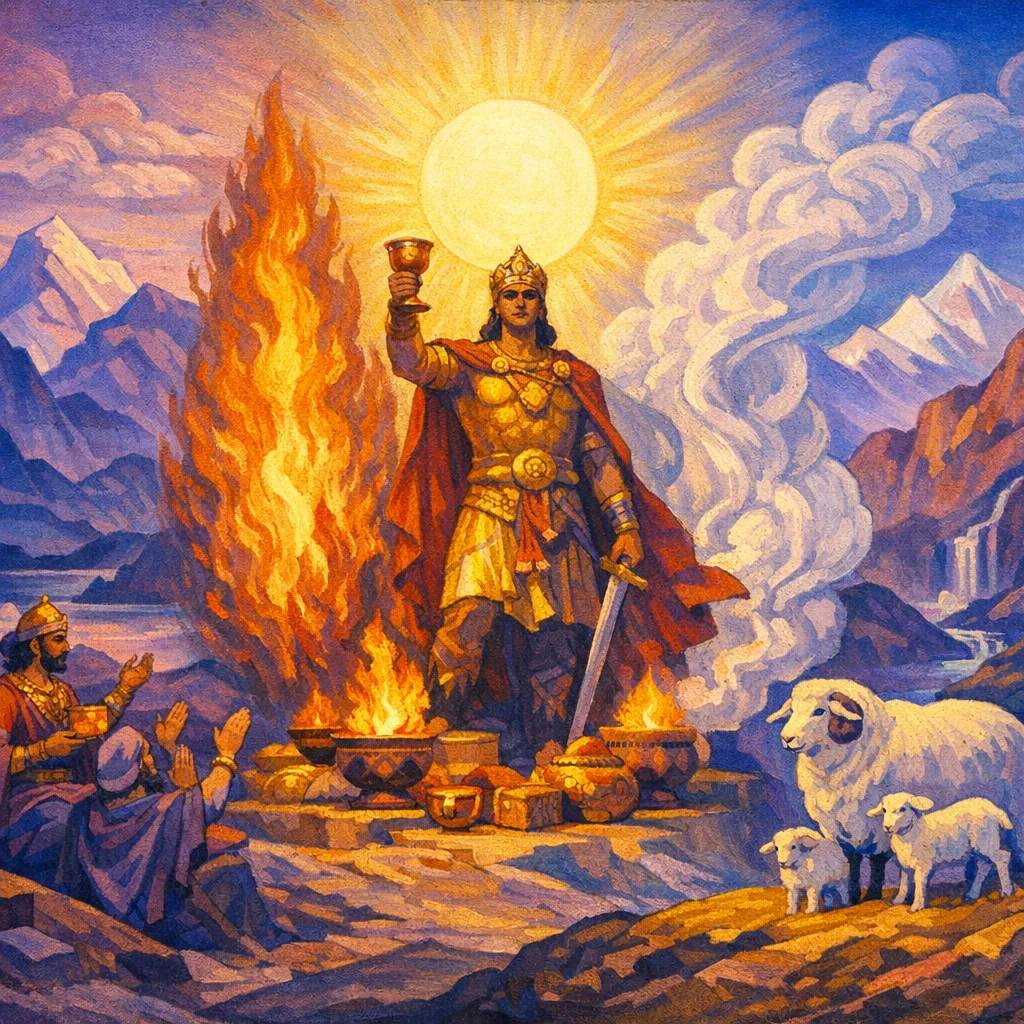
Sukta 126
Sukta 1.126
Kakṣīvān Dairghatamasa (traditionally associated with RV 1.126)
Dānastuti to a royal patron (human king as vehicle of divine plenitude); praised power expressed through the ‘unconquered king’ who measures out Soma-pressings
Triṣṭubh (probable for RV 1.126.1)
RV 1.126 is a dānastuti in which Kakṣīvān celebrates the generosity and fame-seeking munificence of a royal patron dwelling by the Sindhu, who “measures out” lavish Soma-pressings and wealth. The hymn blends public praise (to secure and circulate śravas, enduring renown) with vivid gift-catalog imagery—horses, ranks, abundance—and ends with a playful, self-referential boast that the poet’s recompense is no small thing.
Mantras
Mantra 1
अमन्दान्त्स्तोमान्प्र भरे मनीषा सिन्धावधि क्षियतो भाव्यस्य । यो मे सहस्रममिमीत सवानतूर्तो राजा श्रव इच्छमानः ॥
With a glad mind I bring forward the hymns of praise for the one who dwells upon the Sindhu, the lord of a future that is to be. He who measured out for me a thousand pressings of the Soma—an unconquered king desiring the luminous fame (śravas) that endures.
Mantra 2
शतं राज्ञो नाधमानस्य निष्काञ्छतमश्वान्प्रयतान्त्सद्य आदम् । शतं कक्षीवाँ असुरस्य गोनां दिवि श्रवोऽजरमा ततान ॥
A hundred gold-ornaments from King Nādhamāna, a hundred well-yoked horses he gave at once. Kakṣīvān spread abroad in heaven an undecaying śravas—through the Asura’s (lordly) herds of light.
Mantra 3
उप मा श्यावाः स्वनयेन दत्ता वधूमन्तो दश रथासो अस्थुः । षष्टिः सहस्रमनु गव्यमागात्सनत्कक्षीवाँ अभिपित्वे अह्नाम् ॥
Near to me came the dark-brown gifts, given with their own sounding; ten chariots stood, rich with bride-like fullness. Sixty thousand followed as radiant ‘cattle’—and Kakṣīvān won enduringly the companionship of the days (the stable rhythm of time).
Mantra 4
चत्वारिंशद्दशरथस्य शोणाः सहस्रस्याग्रे श्रेणिं नयन्ति । मदच्युतः कृशनावतो अत्यान्कक्षीवन्त उदमृक्षन्त पज्राः ॥
Forty red ones of Daśaratha lead the foremost ranks of the thousand. Intoxication-pouring, swift-running steeds—these the Pajras, with Kakṣīvān, brushed upward into shining readiness.
Mantra 5
पूर्वामनु प्रयतिमा ददे वस्त्रीन्युक्ताँ अष्टावरिधायसो गाः । सुबन्धवो ये विश्या इव व्रा अनस्वन्तः श्रव ऐषन्त पज्राः ॥
Following the former giving, he gave you a new advance: three yoked (forces) and eight cows rich in unfailing yield. Well-knit in union, like clans within their enclosure, the Pajras—though without wagons—sought the śravas, the inner renown of truth.
Mantra 6
आगधिता परिगधिता या कशीकेव जङ्गहे । ददाति मह्यं यादुरी याशूनां भोज्या शता ॥
Bound fast and bound all around, she who moves like a dancer’s swift step—Yādurī gives to me: among the Yāśus, a hundred enjoyments, a hundred nourishing shares.
Mantra 7
उपोप मे परा मृश मा मे दभ्राणि मन्यथाः । सर्वाहमस्मि रोमशा गन्धारीणामिवाविका ॥
Touch me again and again, stroke me fully—do not think my gifts are small. I am wholly rich and woolly, like a Gandhārī ewe: complete in substance, complete in yield.
Frequently Asked Questions
It is a praise-hymn where the poet Kakṣīvān thanks and celebrates a generous king/patron, highlighting extraordinary gifts—especially abundant Soma-pressings—and the lasting fame such giving creates.
Because the scale of the Soma offering signals royal power and generosity. By publicly naming the number, the poet turns the gift into enduring reputation (śravas) for the patron.
It is a witty way of saying: “Do not think the gift is small.” Like a well-fleeced ewe that is full and productive, the recompense is portrayed as complete, substantial, and richly yielding.