Adhyaya 95
Agastya–Lopāmudrā: Marriage, Austerity, and Conditions for Conjugal Union (लोमशकथितम्)
Upa-parva: Tīrtha-yātrā Upaparvan (Lomāśa’s Pilgrimage Narratives; Agastya–Lopāmudrā Episode Context)
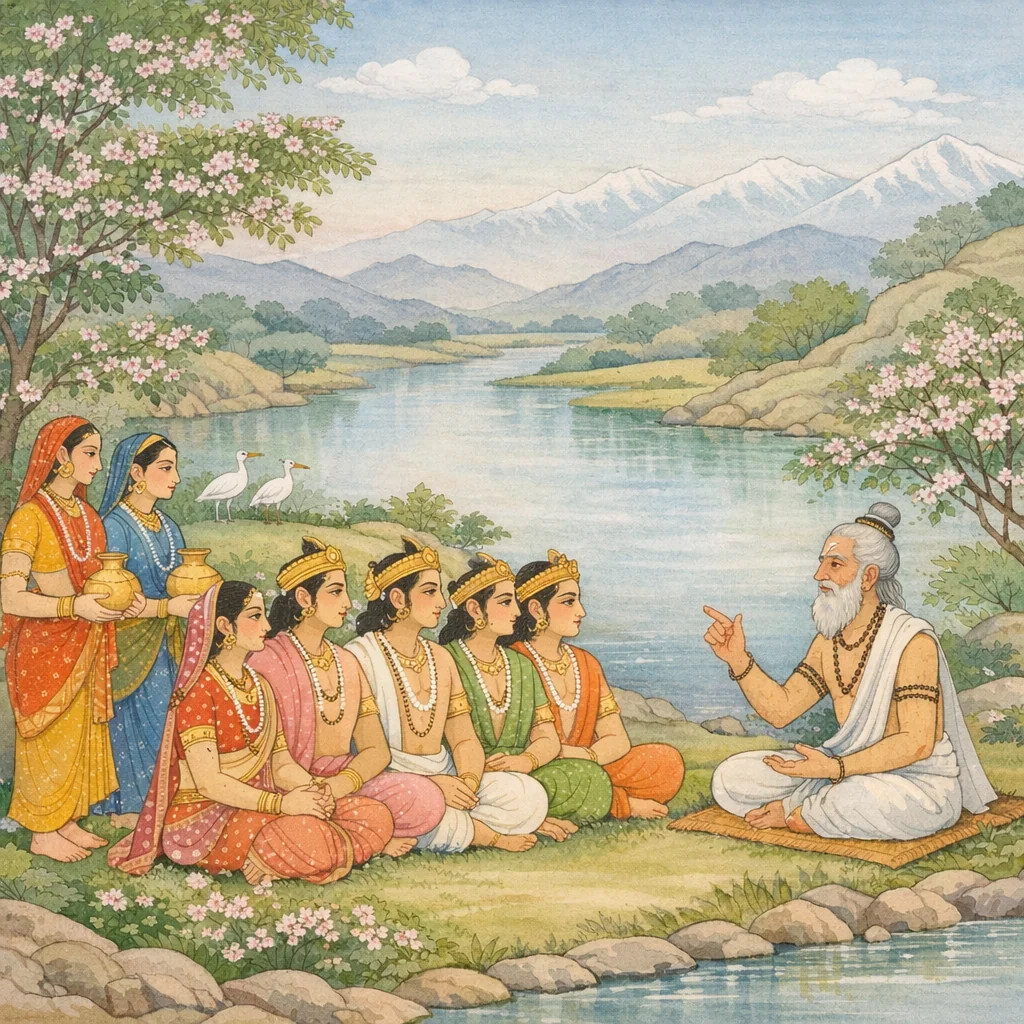
Lomāśa recounts how Agastya, desiring household life for progeny, approaches the Vidarbha king and requests Lopāmudrā (1–2). The king is stunned and unable either to refuse or to consent freely, fearing the consequences of opposing a powerful ṛṣi (3–4). Seeing her father’s distress, Lopāmudrā intervenes and asks to be given to Agastya, presenting the act as protective of her father and consistent with duty (5–6). The king then gives her in proper form (7). After marriage, Agastya instructs her to abandon luxurious garments and ornaments; she complies, adopting ascetic attire and matching observances (8–10). They proceed to Gaṅgādvāra, where Agastya undertakes severe tapas with Lopāmudrā’s supportive participation; mutual esteem develops through service, purity, and restraint (11–13). When Agastya invites conjugal union, Lopāmudrā responds with deference but sets explicit conditions: she seeks a dignified setting and adornment comparable to her former royal life, and implies a timely approach aligned with her season (14–18, 22). Agastya notes his lack of wealth; Lopāmudrā argues that his tapas grants capacity to obtain resources, while also stating she does not wish to diminish his dharma or austerity (19–23). Agastya accepts her position and departs to secure what is required, instructing her to remain (24).
Chapter Arc: वनवास के तप्त दिनों में पाण्डव लोमश के साथ पुण्यतीर्थों की शरण लेते हैं—गोमती के तट पर स्नान, अभिषेक और दान से यात्रा का नया चरण आरम्भ होता है। → तीर्थ-तीर्थ की क्रमिक यात्रा में वे देव, पितृ और ब्राह्मणों का बार-बार तर्पण करते हुए अनेक विशिष्ट स्थलों (कन्यातीर्थ, अश्वतीर्थ, गवांतीर्थ, कालकोयट्या, वृषप्रस्थ, गिरावुष्य आदि) की महिमा सुनते-समझते आगे बढ़ते हैं; युधिष्ठिर के भीतर ‘किस तीर्थ में कौन-सा फल?’ का जिज्ञासु दबाव बढ़ता जाता है। → लोमश गय-क्षेत्र और ‘गययज्ञ’ की अद्भुत कथा उठाते हैं—राजर्षि गय की यज्ञ-दक्षिणा इतनी असंख्य बताई जाती है कि उसकी गणना बालुकणों, ताराओं और वर्षा-धाराओं के समान असम्भव ठहरती है; तीर्थ की महिमा चरम पर पहुँचती है। → गय के पवित्र कर्मों का वर्णन सुनकर युधिष्ठिर का तीर्थ-विश्वास दृढ़ होता है और यात्रा का उद्देश्य—शुद्धि, पुण्य-संचय, तथा धर्म-स्थैर्य—स्पष्ट हो उठता है। → गय-क्षेत्र के दृश्य-वैभव और वहाँ के विशेष तीर्थ-चिह्नों (गयशिर, नदी-तट, अक्षयवट, महादेव का नित्य सान्निध्य) की ओर कथा संकेत करती है—अगले अध्याय में पाण्डवों का वहाँ ठहराव और व्रत-ग्रहण विस्तार पाता है।
Shlokas
Verse 1
(दाक्षिणात्य अधिक पाठका १ श्लोक मिलाकर कुल २३ श्लोक हैं) हि आय न (0) हि २ 7 पञ्चनवतितमो< ध्याय: पाण्डवोंका नैमिषारण्य आदि तीर्थोमें जाकर प्रयाग तथा गयातीर्थमें जाना और गय राजाके महान् यज्ञोंकी महिमा सुनना वैशग्पायन उवाच ते तथा सहिता वीरा वसन्तस्तत्र तत्र ह | क्रमेण पृथिवीपाल नैमिषारण्यमागता:,वैशम्पायनजी कहते हैं--राजन्! इस प्रकार वे वीर पाण्डव विभिन्न स्थानोंमें निवास करते हुए क्रमश: नैमिषारण्यतीर्थमें आये
Vaiśaṃpāyana said: “O king, those heroic Pāṇḍavas, staying together and dwelling from place to place, in due course arrived at the sacred forest of Naimiṣa.”
Verse 2
ततसस््तीर्थेषु पुण्येषु गोमत्या: पाण्डवा नृप । कृताभिषेका: प्रददुर्गाश्च॒ वित्त च भारत,भरतनन्दन! नरेश्वर! तदनन्तर गोमतीके पुण्य तीर्थोमें स्नान करके पाण्डवोंने वहाँ गोदान और धनदान किया
Then, O king, the Pāṇḍavas, having bathed and performed the prescribed ablutions at the sacred fords of the river Gomatī, made gifts there—cows and wealth, O Bhārata.
Verse 3
तत्र देवान् पितृन् विप्रांस्तर्पयित्वा पुन: पुनः । कन्यातीर्थे5श्वतीर्थे च गवां तीर्थेच भारत । कालकोयट्यां वृषप्रस्थे गिरावुष्य च पाण्डवा:,भारत! भूपाल! वहाँ देवताओं, पितरों तथा ब्राह्मणोंको बार-बार तृप्त करके कन््यातीर्थ, अश्वतीर्थ, गोतीर्थ, कालकोटि तथा वृषप्रस्थगिरिमें निवास करते हुए उन सब पाण्डवोंने बाहुदा नदीमें स्नान किया। पृथ्वीपते! तदनन्तर उन्होंने देवताओंकी यज्ञभूमि प्रयागमें पहुँचकर वहाँ गंगा-यमुनाके संगममें स्नान किया। सत्यप्रतिज्ञ पाण्डव वहाँ स्नान करके कुछ दिनोंतक उत्तम तपस्यामें लगे रहे
Vaiśaṃpāyana said: There, again and again satisfying the gods, the ancestors, and the brāhmaṇas with due offerings, the Pāṇḍavas stayed at the sacred fords known as Kanyātīrtha, Aśvatīrtha, and Gavāṃtīrtha, and also at Kālakotī and on the hill called Vṛṣaprastha, O Bhārata.
Verse 4
बाहुदायां महीपाल चक्र: सर्वेडभिषेचनम् । प्रयागे देवयजने देवानां पृथिवीपते,भारत! भूपाल! वहाँ देवताओं, पितरों तथा ब्राह्मणोंको बार-बार तृप्त करके कन््यातीर्थ, अश्वतीर्थ, गोतीर्थ, कालकोटि तथा वृषप्रस्थगिरिमें निवास करते हुए उन सब पाण्डवोंने बाहुदा नदीमें स्नान किया। पृथ्वीपते! तदनन्तर उन्होंने देवताओंकी यज्ञभूमि प्रयागमें पहुँचकर वहाँ गंगा-यमुनाके संगममें स्नान किया। सत्यप्रतिज्ञ पाण्डव वहाँ स्नान करके कुछ दिनोंतक उत्तम तपस्यामें लगे रहे
Vaiśaṃpāyana said: O king, all the Pāṇḍavas performed their ritual bath in the river Bāhudā. Then, O lord of the earth—O Bhārata—having repeatedly satisfied the gods, the ancestors, and the brāhmaṇas, they stayed at sacred spots such as Kanyātīrtha, Aśvatīrtha, Gotīrtha, Kālakōṭi, and the hill called Vṛṣaprastha, and bathed in the Bāhudā. Thereafter, O king, they went to Prayāga, the sacrificial ground of the gods, and bathed at the confluence of the Gaṅgā and Yamunā. True to their vows, after bathing there they remained for some days engaged in excellent austerity.
Verse 5
ऊषुराप्लुत्य गात्राणि तपश्चातस्थुरुत्तमम् । गड्ायमुनयोश्रैव संगमे सत्यसंगरा:,भारत! भूपाल! वहाँ देवताओं, पितरों तथा ब्राह्मणोंको बार-बार तृप्त करके कन््यातीर्थ, अश्वतीर्थ, गोतीर्थ, कालकोटि तथा वृषप्रस्थगिरिमें निवास करते हुए उन सब पाण्डवोंने बाहुदा नदीमें स्नान किया। पृथ्वीपते! तदनन्तर उन्होंने देवताओंकी यज्ञभूमि प्रयागमें पहुँचकर वहाँ गंगा-यमुनाके संगममें स्नान किया। सत्यप्रतिज्ञ पाण्डव वहाँ स्नान करके कुछ दिनोंतक उत्तम तपस्यामें लगे रहे
Vaiśaṃpāyana said: Having bathed and refreshed their limbs, the Pāṇḍavas undertook excellent austerities. O Bhārata, those steadfast in truth and firm in their vows stayed at the confluence of the Gaṅgā and Yamunā.
Verse 6
विपाप्मानो महात्मानो वित्रेभ्य: प्रददुर्वसु । तपस्विजनजुष्टां च ततो वेदीं प्रजापते:,संतर्पयन्त: सततं वन्येन हविषा द्विजान् | उन पापरहित महात्माओंने (त्रिवेणीतटपर) ब्राह्मणोंको धन दान किया। भरतनन्दन! तत्पश्चात् पाण्डव ब्राह्मणोंके साथ ब्रह्माजीकी वेदीपर गये, जो तपस्वीजनोंसे सेवित है। वहाँ उन वीरोंने उत्तम तपस्या करते हुए निवास किया। वे सदा कन्द-मूल-फल आदि वन्य हविष्यद्वारा ब्राह्मणोंको तृप्त करते रहते थे
Vaiśaṃpāyana said: Those sinless, great-souled men bestowed wealth upon the brāhmaṇas at the sacred confluence. Thereafter, the Pāṇḍavas went with the brāhmaṇas to the altar of Prajāpati, a place frequented by ascetics. Living there in disciplined austerity, they continually satisfied the twice-born with forest-offerings—roots, fruits, and other wild produce—thus upholding generosity and reverence for sacred duty even in exile.
Verse 7
जग्मु: पाण्डुसुता राजन् ब्राह्मणैः सह भारत । तत्र ते न््यवसन् वीरास्तपश्चातस्थुरुत्तमम्
Vaiśaṃpāyana said: “O king, the sons of Pāṇḍu, accompanied by brāhmaṇas, proceeded onward, O Bhārata. There the heroic brothers took up residence, and they also undertook the highest austerities.”
Verse 8
ततो महीधरं जम्मुर्थर्मज्षेनाभिसंस्कृतम्
Then he prepared and consecrated a mountain-like mass, shaped like a jambu (rose-apple), with expert knowledge and careful ritual refinement—signaling a deliberate, dharma-guided act rather than a casual or impulsive deed.
Verse 9
नगो गयशिरो यत्र पुण्या चैव महानदी
Vaiśaṃpāyana said: “There lies the mountain called Gayaśiras, and there too flows a great and sacred river.”
Verse 10
दिव्यं पवित्रकूटं च पवित्रं धरणीधरम्,वहाँ महर्षियोंसे सेवित, पावन शिखरोंवाला, दिव्य एवं पवित्र दूसरा पर्वत भी है जो अत्यन्त पुण्यदायक तीर्थ है। वहीं उत्तम ब्रह्मसरोवर है जहाँ भगवान् अगस्त्यमुनि वैवस्वत यमसे मिलनेके लिये पधारे थे
Vaiśaṃpāyana said: There is also a second mountain—divine, pure, and a true “bearer of the earth”—known as Pavitrakūṭa. Revered sages frequent it; its peaks are sanctifying, and the place itself is a supremely meritorious pilgrimage-site. There too lies the excellent Brahma-lake, where the venerable sage Agastya once arrived in order to meet Vaivasvata Yama.
Verse 11
ऋषिजुष्टं सुपुण्यं तत् तीर्थ ब्रह्मसरोत्तमम् । अगस्त्यो भगवान् यत्र गतो वैवस्वतं प्रति,वहाँ महर्षियोंसे सेवित, पावन शिखरोंवाला, दिव्य एवं पवित्र दूसरा पर्वत भी है जो अत्यन्त पुण्यदायक तीर्थ है। वहीं उत्तम ब्रह्मसरोवर है जहाँ भगवान् अगस्त्यमुनि वैवस्वत यमसे मिलनेके लिये पधारे थे
Vaiśaṃpāyana said: “That sacred ford is frequented by seers and is exceedingly meritorious. There lies the excellent Brahma-lake, a supreme holy place, where the venerable sage Agastya once went to meet Vaivasvata (Yama).”
Verse 12
उवास च स्वयं तत्र धर्मराज: सनातन: । सर्वासां सरितां चैव समुद्भेदो विशाम्पते
Vaiśaṃpāyana said: There, the eternal Dharmarāja (Yudhiṣṭhira) himself took up residence. O lord of men, that place was also known as the source from which all rivers arise—evoking a sacred landscape where righteous kingship aligns with the wellspring of purity and order.
Verse 13
क्योंकि सनातन धर्मराज वहाँ स्वयं निवास करते हैं। राजन! वहाँ सम्पूर्ण नदियोंका प्राकट्य हुआ है ।। यत्र संनिहितो नित्यं महादेव: पिनाकधृक् । तत्र ते पाण्डवा वीराश्षातुर्मास्यैस्तदेजिरे
Vaiśaṃpāyana said: “In that place Mahādeva, the eternal bearer of the bow Pināka, is ever present. There the heroic Pāṇḍavas performed the prescribed four-month observances, living in disciplined devotion at that sacred site.”
Verse 14
अक्षये देवयजने अक्षयं यत्र वै फलम्,देवताओंकी वह यज्ञभूमि अक्षय है और वहाँ किये हुए प्रत्येक सत्कर्मका फल अक्षय होता है
Vaiśaṃpāyana said: “This is an imperishable sacred ground for offerings to the gods; and whatever righteous act is performed there yields an imperishable reward.”
Verse 15
ते तु तत्रोपवासांस्तु चक्रु्निश्चितमानसा: । ब्राह्मणास्तत्र शतश: समाजग्मुस्तपोधना:,अविचल चित्तवाले पाण्डवोंने उस तीर्थमें कई उपवास किये। उस समय वहाँ सैकड़ों तपस्वी ब्राह्मण पधारे
There, with minds firmly resolved, they observed repeated fasts at that sacred place. At that time hundreds of Brahmin ascetics—rich in austerity—gathered there, drawn by the sanctity of the tīrtha and the disciplined conduct being practiced.
Verse 16
चातुर्मास्येनायजन्त आर्षेण विधिना तदा । तत्र विद्यातपोवृद्धा ब्राह्मणा वेदपारगा: । कथां प्रचक्रिरे पुण्यां सदसिस्था महात्मनाम्,उन्होंने शास्त्रोक्त विधिपूर्वक चातुर्मास्य यज्ञ किया। वहाँ आये हुए ब्राह्मण विद्या और तपस्यामें बढ़े-चढ़े तथा वेदोंके पारंगत विद्वान थे। उन्होंने परस्पर मिलकर सभामें बैठकर महात्मा पुरुषोंकी पवित्र कथाएँ कहीं
Vaiśaṃpāyana said: At that time they performed the Cāturmāsya sacrifice according to the seers’ prescribed rite. There, Brahmins—advanced in learning and austerity and fully versed in the Vedas—sat together in the assembly and began to recount sacred narratives about great-souled men, fostering a climate of dharma through remembered exemplars.
Verse 17
तत्र विद्याव्रतस्नात: कौमारं व्रतमास्थित: । शमठो5कथयद् राजजन्नामूर्तरयसं गयम्,उनमें शमठ नामक एक दिद्वान् ब्राह्मण थे जो विद्याध्ययनका व्रत समाप्त करके स्नातक हो चुके थे। उन्होंने आजीवन ब्रह्मचर्यपालनका व्रत ले रखा था। राजन्! शमठने वहाँ अमूर्तरयाके पुत्र महाराज गयकी कथा इस प्रकार कही
Vaiśaṃpāyana said: There was a learned brāhmaṇa named Śamaṭha who, having completed the vow of study and taken the graduate’s ritual bath, had undertaken the lifelong vow of brahmacarya. O King, Śamaṭha then recounted the tale of Gaya, the son of Amūrtaraya, as an exemplar of disciplined conduct and righteous tradition.
Verse 18
शमठ उवाच अमूर्तरयस: पुत्रो गयो राजर्षिसत्तम: । पुण्यानि यस्य कर्माणि तानि मे शूणु भारत
Śamaṭha said: “Listen, O Bhārata, to the meritorious deeds of Gaya, foremost among royal seers, the son of Amūrtarayas. I shall recount the virtuous actions for which he is renowned.”
Verse 19
शमठ बोले--भरतनन्दन युधिष्ठिर! अमूर्तरयाके पुत्र गय राजर्षियोंमें श्रेष्ठ थे। उनके कर्म बड़े ही पवित्र एवं पावन थे। मैं उनका वर्णन करता हूँ, सुनो-- ।। यस्य यज्ञो बभूवेह बद्धन्नो बहुदक्षिण: । यत्रान्नपर्वता राजन् शतशोडथ सहस्रश:,राजन! यहाँ राजा गयने बड़ा भारी यज्ञ किया था। उसमें बहुत अन्न खर्च हुआ था और असंख्य दक्षिणा बाँटी गयी थी। उस यज्ञमें अन्नके सैकड़ों और हजारों पर्वत लग गये थे। घीके कई सौ कुण्ड और दहीकी नदियाँ बहती थीं। सहस्रों प्रकारके उत्तमोत्तम व्यज्जनोंकी बाढ़-सी आ गयी थी
Śamaṭha said: “O Yudhiṣṭhira, delight of the Bharata line! Gaya, the son of Amūrtarayā, was foremost among royal seers. His deeds were exceedingly pure and sanctifying. I shall describe them—listen. Here he performed a mighty sacrifice, with food prepared in abundance and gifts given in profusion. In that rite, O king, there were mountains of food—by the hundreds and by the thousands.”
Verse 20
घृतकुल्याश्व दध्नश्न नद्यो बहुशतास्तथा । व्यज्जनानां प्रवाहाश्न महार्हाणां सहस्रश:,राजन! यहाँ राजा गयने बड़ा भारी यज्ञ किया था। उसमें बहुत अन्न खर्च हुआ था और असंख्य दक्षिणा बाँटी गयी थी। उस यज्ञमें अन्नके सैकड़ों और हजारों पर्वत लग गये थे। घीके कई सौ कुण्ड और दहीकी नदियाँ बहती थीं। सहस्रों प्रकारके उत्तमोत्तम व्यज्जनोंकी बाढ़-सी आ गयी थी
Śamaṭha said: “In that great royal sacrifice, provisions were poured out in astonishing abundance—hundreds of streams of ghee, rivers of curds, and torrents of costly delicacies in their thousands. The scene proclaimed the king’s vast generosity and the scale of his ritual merit.”
Verse 21
अहन्यहनि चाप्येवं याचतां सम्प्रदीयते । अन्ये च ब्राह्मणा राजन् भुज्जतेऊन्नं सुसंस्कृतम्,याचकोंको प्रतिदिन इसी प्रकार भोजन और दान दिया जाता था। राजन! अन्यान्य ब्राह्मण भी वहाँ उत्तम रीतिसे तैयारकी हुई रसोई जीमते थे
Śamaṭha said: “Day after day, in this very manner, food and gifts were given to those who came to beg. And, O King, other brāhmaṇas too would partake there of well-prepared, properly cooked food.”
Verse 22
तत्र वै दक्षिणाकाले ब्रह्म॒घोषो दिवं गत: । नच प्रज्ञायते किंचिद् ब्रह्मशब्देन भारत,भरतनन्दन! उस यज्ञमें दक्षिणा देते समय जो वेदमन्त्रोंकी ध्वनि होती थी वह स्वर्गलोकतक गूँज उठती थी। उस वेदध्वनिके सामने दूसरा कोई शब्द नहीं सुनायी पड़ता था
There, at the time of distributing the sacrificial fees (dakṣiṇā), the solemn Vedic chant rose up to the very heavens. O Bhārata, O scion of Bharata! Amid that reverberation of sacred recitation, no other sound could be discerned—so completely did the voice of the Brahman, the Veda, prevail.
Verse 23
पुण्येन चरता राजन् भूर्दिश: खं नभस्तथा | आपूर्णमासीच्छब्देन तदप्यासीन्महाद्भुतम्,राजन! वहाँ सब ओर फैले हुए पुण्यमय शब्दसे पृथ्वी, दिशाएँ, स्वर्ग और आकाश परिपूर्ण हो गये। यह बड़ी ही अद्भुत बात थी। भरतश्रेष्ठ) उस यज्ञमें सब मनुष्य यह गाथा गाते रहते थे कि “इस यज्ञमें देश-देशके अत्यन्त तेजस्वी पुरुष उत्तम अन्नपानसे तृप्त हो रहे हैं!
Śamaṭha said: “O King, as that meritorious rite proceeded, the earth, the quarters, the sky, and the heavens were filled on every side with auspicious sound. That too was a great wonder. In that sacrifice, people continually sang a refrain: ‘In this rite, supremely radiant men from many lands are being satisfied with excellent food and drink.’”
Verse 24
यत्र सम गाथा गायन्ति मनुष्या भरतर्षभ । अन्नपानै: शुभैस्तृप्ता देशे देशे सुवर्चस:,राजन! वहाँ सब ओर फैले हुए पुण्यमय शब्दसे पृथ्वी, दिशाएँ, स्वर्ग और आकाश परिपूर्ण हो गये। यह बड़ी ही अद्भुत बात थी। भरतश्रेष्ठ) उस यज्ञमें सब मनुष्य यह गाथा गाते रहते थे कि “इस यज्ञमें देश-देशके अत्यन्त तेजस्वी पुरुष उत्तम अन्नपानसे तृप्त हो रहे हैं!
O bull among the Bharatas, in that place people kept singing a common refrain: “In this sacrifice, in region after region, men of splendid radiance are being satisfied with excellent food and drink.” By those widely spreading, auspicious words, the earth, the quarters, heaven, and the sky seemed filled—an occurrence truly wondrous.
Verse 25
गयस्य यज्ञे के त्वद्य प्राणिनो भोक्तुमीप्सव: । तत्र भोजनशिष्टस्य पर्वता: पठचविंशति:,“गयके यज्ञमें लोग यही पूछते फिरते थे कि “कौन-कौन ऐसे प्राणी रह गये हैं जो अभी भोजन करना चाहते हैं?” वहाँ खानेसे बचे हुए अन्नके पचीस पर्वत शेष रह गये थे
At Gaya’s sacrificial rite, people kept asking, “Who among living beings still wishes to eat today?” Yet even after the feeding, twenty-five mountain-like heaps of leftover food remained.
Verse 26
न तत् पूर्वे जनाश्नक्रुर्न करिष्यन्ति चापरे । गयो यदकरोद् यज्ञे राजर्षिरमितद्युति:
Śamaṭha said: “What King Gaya—the royal sage of immeasurable splendor—accomplished in his sacrificial rite is something that people of former times did not do, nor will later people do. His act stands as an unsurpassed example, pointing to the rare height of selfless, dharma-guided giving and ritual integrity.”
Verse 27
“अमिततेजस्वी राजर्षि गयने अपने यज्ञमें जो व्यय किया था, वह पहलेके राजाओंने भी नहीं किया था और भविष्यमें भी कोई दूसरे कर सकेंगे, ऐसा सम्भव नहीं है ।। कथं तु देवा हविषा गयेन परितर्पिता: । पुन: शक्ष्यन्त्युपादातुमन्यैर्दत्तानि कानिचित्,“गयने सम्पूर्ण देवताओंको हविष्यसे भलीभाँति तृप्त कर दिया है, अब वे दूसरोंके दिये हुए हविष्यको कैसे ग्रहण कर सकेंगे?
Śamaṭha said: “The royal sage Gaya, radiant with immeasurable splendor, spent in his sacrifice such wealth and offerings as even the kings of old never spent—and it is hardly possible that anyone in the future will equal it. For if Gaya has already fully satisfied all the gods with sacrificial oblations, how could those gods then accept any further oblations offered by others?”
Verse 28
सिकता वा यथा लोके यथा वा दिवि तारका: । यथा वा वर्षतो धारा असंख्येया: सम केनचित् । तथा गणयितुं शक््या गययज्ञे न दक्षिणा:,'जैसे लोकमें बालूके कण, आकाशके तारे और बरसते हुए बादलोंकी जलधाराएँ किसीके द्वारा भी गिनी नहीं जा सकतीं, उसी प्रकार गयके यज्ञमें दी हुई दक्षिणाओंकी भी कोई गणना नहीं कर सकता था
Śamaṭha said: “Just as no one can count the grains of sand in the world, or the stars in the sky, or the streams of water pouring down in the rain, so too the priestly gifts (dakṣiṇās) given in the sacrifice at Gayā could not be reckoned.”
Verse 29
एवंविधा: सुबहवस्तस्य यज्ञा महीपते: । बभूवुरस्य सरस: समीपे कुरुनन्दन,कुरुनन्दन! महाराज गयके ऐसे ही बहुत-से यज्ञ इस ब्रह्मसरोवरके समीप सम्पन्न हुए हैं
O best of the Kurus, many sacrifices of this very kind were performed by that king, and they were completed near this sacred lake.
Verse 73
संतर्पयन्त: सततं वन्येन हविषा द्विजान् | उन पापरहित महात्माओंने (त्रिवेणीतटपर) ब्राह्मणोंको धन दान किया। भरतनन्दन! तत्पश्चात् पाण्डव ब्राह्मणोंके साथ ब्रह्माजीकी वेदीपर गये, जो तपस्वीजनोंसे सेवित है। वहाँ उन वीरोंने उत्तम तपस्या करते हुए निवास किया। वे सदा कन्द-मूल-फल आदि वन्य हविष्यद्वारा ब्राह्मणोंको तृप्त करते रहते थे
Vaiśaṃpāyana said: The Pāṇḍavas continually satisfied the twice-born with forest-offerings. Those sinless, great-souled men gave wealth in charity to the Brāhmaṇas dwelling on the bank of the Triveṇī. O best of the Bharatas, thereafter the Pāṇḍavas, together with the Brāhmaṇas, went to Brahmā’s altar—revered and attended by ascetics. There the heroes lived, practicing excellent austerities, and they kept the Brāhmaṇas content by regularly providing wild sacrificial fare—tubers, roots, fruits, and the like.
Verse 83
राजर्षिणा पुण्यकृता गयेनानुपमझ्ुते । अनुपम तेजस्वी जनमेजय! प्रयागसे चलकर पाण्डव पुण्यात्मा एवं धर्मज्ञ राजर्षि गयके द्वारा यज्ञ करके शुद्ध किये हुए उत्तम पर्वतसे उपलक्षित गयातीर्थमें गये
Vaiśaṃpāyana said: O Janamejaya of incomparable splendor, when the Pāṇḍavas set out from Prayāga, they went to the sacred ford of Gayā—distinguished by its excellent mountain—made holy and purified by the sacrificial rites of the righteous, dharma-knowing royal sage Gaya.
Verse 95
इति श्रीमहाभारते वनपर्वणि तीर्थयात्रापर्वणि लोमशतीर्थयात्रायां गययज्ञक थने पञ्चनवतितमो<ध्याय:
Thus, in the Śrī Mahābhārata, within the Vana Parva—specifically the section on pilgrimage—during Lomaśa’s narration of the sacred journeys, in the account concerning the sacrifice at Gayā, the ninety-fifth chapter comes to its close.
Verse 96
वानीरमालिनी रम्या नदी पुलिनशोभिता । जहाँ गयशिर नामक पर्वत और बेंतकी पंक्तियोंसे घिरी हुई रमणीय महानदी है, जो अपने दोनों तटोंसे विशेष शोभा पाती है
Vaiśaṃpāyana said: “There is a delightful great river, adorned with garlands of reeds and beautified by its sandy banks. There stands the mountain called Gayaśiras, and the charming river—encircled by rows of canes—shines with a special splendor on both its shores.”
Verse 136
ऋषियज्ञेन महता यत्राक्षयवटो महान् । पिनाकपाणि भगवान् महादेव उस तीर्थमें नित्य निवास करते हैं। वहाँ वीर पाण्डवोंने उन दिनों चातुर्मास्यव्रत ग्रहण करके महान् ऋषियज्ञ अर्थात् वेदादि सतशास्त्रोंके स्वाध्यायद्वारा भगवान्की आराधना की। वहीं महान् अक्षयवट है
Vaiśaṃpāyana said: In that sacred ford, where the great Akṣayavaṭa—the “imperishable banyan”—stands, the Blessed Lord Mahādeva, bearer of the Pināka bow, dwells perpetually. There, in those days, the heroic Pāṇḍavas undertook the Cāturmāsya vow and worshipped the Lord through a great ‘ṛṣi-yajña’—the disciplined study and recitation of the Vedas and other true scriptures—honouring sacred learning as an offering rather than seeking worldly gain.
Frequently Asked Questions
The Vidarbha king faces a conflict between paternal attachment and royal autonomy versus the perceived obligation to comply with a powerful ṛṣi’s request; Lopāmudrā then reframes the crisis by consenting to prevent harm and preserve dharmic order.
The chapter models role-integrity: ascetic power is not portrayed as license for disorder, and household aims are legitimate when pursued with restraint, mutual regard, and explicit conditions that protect dharma rather than undermine it.
No explicit phalaśruti appears in the provided passage; the meta-function is exemplificatory—using a sage-household narrative to illustrate how dharma is negotiated across sovereignty, ascetic authority, and marital life.