Adhyaya 79
Kāmyake Arjuna-viyogaḥ — The Pandavas’ despondency in Kāmyaka during Arjuna’s absence
Upa-parva: Kāmyaka-vana-vihāra (Episode of life in Kāmyaka Forest during Arjuna’s absence)
Janamejaya inquires how the Pandavas fared in Kāmyaka Forest once Arjuna (Savyasācin/Dhanaṃjaya), regarded as their chief martial support, had departed. Vaiśaṃpāyana replies that the brothers became sorrow-oriented and unsettled, likened to beads with a displaced thread or birds with clipped wings; even the forest appears diminished without him. Despite this emotional and strategic deficit, the Pandavas continue their responsibilities: they procure forest food and hunt suitable (medhya) animals with clean arrows, then present provisions to Brahmins on a regular basis. Draupadī, remembering her absent husband, states that the flowering forest and the land itself seem empty without Arjuna; she recalls his presence through the sound of his bow and his distinctive vigor. Bhīma responds by affirming her sentiments and describing Arjuna’s formidable arms as the basis of collective confidence. Nakula and Sahadeva add recollections of Arjuna’s achievements (including acquisition of horses and earlier exploits connected with the Rājasūya context), and Sahadeva notes his distress upon seeing Arjuna’s empty seat. The chapter closes with expressed preference for leaving the forest, since Kāmyaka no longer appears agreeable without Arjuna.
Chapter Arc: नलोपाख्यान के उपसंहार की उजली छाया में युधिष्ठिर के मन में एक नया प्रकाश उतरता है—द्यूतविद्या का रहस्य जानकर वे पहली बार भीतर से दृढ़ और प्रसन्न होते हैं। → अर्जुन-वियोग से दग्ध हृदय वाले युधिष्ठिर (पूर्व श्लोक-संदर्भ) ब्राह्मणों से विविध ज्ञान पूछते रहे थे; अब नल की कथा से उन्हें यह बोध मिलता है कि विपरीत दैव और अस्थिर पुरुषार्थ के बीच भी धैर्य, नीति और विद्या मनुष्य को पुनः उठाती है। यह सीख उनके वर्तमान वनवास-जीवन पर सीधे लागू होती है। → युधिष्ठिर का ‘प्रतिगृह्याक्षहृदयं’—अक्ष-हृदय (द्यूत का मर्म) को ग्रहण करना—कथा का निर्णायक क्षण बनता है: हार की स्मृति पर विजय का पहला आंतरिक संकेत, और भविष्य के लिए विवेकपूर्ण तैयारी। → भीमसेन आदि भाइयों के साथ युधिष्ठिर हृष्टमन होते हैं; नलोपाख्यान का ‘महत्त्व’ (कीर्तन-श्रवण से आश्वासन, धैर्य, और विद्या का फल) युधिष्ठिर के शोक को नीति में रूपांतरित करता है। → अर्जुन की तपस्या और उसके लक्ष्य की ओर कथा का ध्यान मुड़ने की भूमिका बनती है—अब प्रश्न यह है कि यह नव-प्राप्त धैर्य और ज्ञान पाण्डवों को किस अगले उपाय तक ले जाएगा।
Shlokas
Verse 1
हि आय ० (0) है 2 एकोनाशीतितमो< ध्याय: राजा नलके आख्यानके कीर्तनका महत्त्व, बृहदश्व मुनिका युधिषछ्तटिरको आश्वासन देना तथा द्यूतविद्या और अश्वविद्याका रहस्य बताकर जाना बृहदश्च उवाच प्रशान्ते तु पुरे हृष्टे सम्प्रवृत्ते महोत्सवे । महत्या सेनया राजा दमयन्तीमुपानयत्,बृहदश्च मुनि कहते हैं--युधिष्ठिर! जब नगरमें शान्ति छा गयी और सब लोग प्रसन्न हो गये, सर्वत्र महान् उत्सव होने लगा, उस समय राजा नल विशाल सेनाके साथ जाकर दमयन्तीको विदर्भदेशसे बुला लाये
Bṛhadaśva said: “O Yudhiṣṭhira, when peace had settled over the city and the people were joyful, and a great festival was underway everywhere, King Nala, accompanied by a large army, went and brought Damayantī from the land of Vidarbha.”
Verse 2
दमयन्तीमपि पिता सत्कृत्य परवीरहा । प्रास्थापयदमेयात्मा भीमो भीमपराक्रम:,दमयन्तीके पिता भयंकर पराक्रमी भीम अप्रमेय आत्मबलसे सम्पन्न थे, शत्रुपक्षके वीरोंका हनन करनेमें समर्थ थे। उन्होंने अपनी पुत्री दमयन्तीको बड़े सत्कारके साथ विदा किया
Bṛhadaśva said: Damayantī’s father—Bhīma, of immeasurable strength and terrible prowess, a slayer of the enemy’s champions—honoured her with due rites and gifts, and then formally sent his daughter forth.
Verse 3
आगतायां तु वैदर्भ्या सपुत्रायां नलो नृपः । वर्तयामास मुदितो देवराडिव नन्दने,पुत्र और पुत्रीसहित दमयन्तीके आ जानेपर राजा नल सब बर्ताव-व्यवहार बड़े आनन्दसे सम्पन्न करने लगे। जैसे नन््दनवनमें देवराज इन्द्र शोभा पाते हैं, उसी प्रकार वे जम्बूद्वीपके समस्त राजाओंमें प्रकाशमान हो रहे थे। वे महायशस्वी नरेश अपने राज्यको पुनः वापस लेकर उसका न्यायपूर्वक शासन करने लगे
When the princess of Vidarbha (Damayantī) arrived, together with her child, King Nala rejoiced. Delighted, he resumed the full conduct of royal life and hospitality, shining among kings like Indra in the Nandana grove. Having regained his kingdom, the illustrious ruler governed again with justice—restoring order, dignity, and dharma after adversity.
Verse 4
तथा प्रकाशतां यातो जम्बुद्वीपे स राजसु । पुन: शशास तदू् राज्यं प्रत्याहृत्य महायशा:,पुत्र और पुत्रीसहित दमयन्तीके आ जानेपर राजा नल सब बर्ताव-व्यवहार बड़े आनन्दसे सम्पन्न करने लगे। जैसे नन््दनवनमें देवराज इन्द्र शोभा पाते हैं, उसी प्रकार वे जम्बूद्वीपके समस्त राजाओंमें प्रकाशमान हो रहे थे। वे महायशस्वी नरेश अपने राज्यको पुनः वापस लेकर उसका न्यायपूर्वक शासन करने लगे
Thus did he attain conspicuous splendour among the kings of Jambūdvīpa. That highly renowned ruler, having recovered his kingdom, once again governed it with rightful order—restoring proper conduct and administration.
Verse 5
ईजे च विविधैर्यज्नैरविधिवच्चाप्तदक्षिणै: । तथा त्वमपि राजेन्द्र ससुह्दद् यक्ष्यसेडचिरात्,उन्होंने पर्याप्त दक्षिणासे युक्त विविध प्रकारके यज्ञोंद्वारा विधिपूर्वक भगवान्का यजन किया। राजेन्द्र! इसी प्रकार तुम भी पुनः अपना राज्य पाकर सुहृदोंसहित शीघ्र ही यज्ञका अनुष्ठान करोगे
Bṛhadaśva said: “He performed worship through many kinds of sacrifices, carried out in due rite and furnished with fitting sacrificial fees. In the same way, O best of kings, you too—together with your well-wishers—will before long perform sacrifices again, once you regain your kingdom.”
Verse 6
दुःखमेतादृशं प्राप्तो नल: परपुरंजय: । देवनेन नरश्रेष्ठ सभायों भरतर्षभ,भरतश्रेष्ठ! पुरुषोत्तम! शत्रुओंकी राजधानीपर विजय पानेवाले महाराज नल जूआ खेलनेके कारण अपनी पत्नीसहित इस प्रकारके महान् संकटमें पड़ गये थे
Bṛhadaśva said: “O best of men, O bull among the Bharatas—best of the Bharata line, foremost of persons—King Nala, conqueror of enemy cities, fell into just such misery. Because of gambling, in the royal assembly, he was plunged into a great calamity together with his wife.”
Verse 7
एकाकिनैव सुमहन्नलेन पृथिवीपते । दुःखमासादितं घोरें प्राप्तश्चाभ्युदय: पुन:,पृथ्वीपते! राजा नलने अकेले ही यह भयंकर और महान् दु:ख प्राप्त किया था; उन्हें पुनः अभ्युदयकी प्राप्ति हुई
Bṛhadaśva said: “O lord of the earth, King Nala, though all alone, fell into a dreadful and overwhelming misery; yet afterward he attained prosperity again.”
Verse 8
त्वं पुनर्भावृसहित:ः कृष्णया चैव पाण्डव । रमसे5स्मिन् महारण्ये धर्ममेवानुचिन्तयन्,पाण्डुनन्दन! तुम तो अपने सभी भाइयों और महारानी द्रौपदीके साथ इस महान् वनमें भ्रमण करते हो और निरन्तर धर्मके ही चिन्तनमें लगे रहते हो
Bṛhadaśva said: “But you, O Pāṇḍava—together with your brothers and with Kṛṣṇā (Draupadī)—move about in this vast forest, dwelling here while continually reflecting on dharma, O son of Pāṇḍu.”
Verse 9
ब्राह्मणैश्व महाभागैवेंदवेदाड़पारगै: | नित्यमन्वास्यसे राजंस्तत्र का परिदेवना,राजन! महान् भाग्यशाली वेद-वेदांगोंके पारंगत विद्वान् ब्राह्मण सदा तुम्हारे साथ रहते हैं; फिर तुम्हारे लिये इस परिस्थितिमें शोककी क्या बात है?
Bṛhadaśva said: “O King, you are constantly attended by highly fortunate Brahmins—learned men who have mastered the Vedas and their auxiliary disciplines. In such a situation, what cause is there for lamentation for you, O King?”
Verse 10
कर्कोटकस्य नागस्यथ दमयन्त्या नलस्य च । ऋतुपर्णस्य राजर्षे: कीर्तन॑ं कलिनाशनम्,कर्कोटक नाग, दमयन्ती, नल तथा राजर्षि ऋतुपर्णकी चर्चा कलियुगके दोषका नाश करनेवाली है
Bṛhadaśva said: “The recounting of Karkoṭaka the serpent, of Damayantī and Nala, and of the royal sage Ṛtuparṇa is a destroyer of Kali—its remembrance and narration dispel the taint of moral decline and restore steadiness in dharma.”
Verse 11
इतिहासमिमं चापि कलिनाशनमच्युत । शक्यमाश्चसितु श्रुत्वा त्वद्विधेन विशाम्पते,महाराज! तुम्हारे-जैसे लोगोंको यह कलिनाशक इतिहास सुनकर आश्वासन प्राप्त हो सकता है
Bṛhadaśva said: “O Acyuta, this too is an ancient tale that breaks the power of Kali. Hearing it, a man like you—lord among the people—can indeed gain reassurance and steadiness of heart.”
Verse 12
अस्थिरत्वं च संचिन्त्य पुरुषार्थस्य नित्यदा । तस्योदये व्यये चापि न चिन्तयितुमरहसि,पुरुषको प्राप्त होनेवाले सभी विषय सदा अस्थिर एवं विनाशशील हैं। यह सोचकर उनके मिलने या नष्ट होनेपर तुम्हें तनिक भी चिन्ता नहीं करनी चाहिये
Bṛhadaśva said: “Reflecting always on the instability of human gains, you should not give way to anxiety—whether those gains arise or whether they pass away. Since all objects attained through human effort are fickle and perishable, neither their acquisition nor their loss deserves your distress.”
Verse 13
श्रुत्वेतिहासं नृपते समाश्चवसिहि मा शुच: । व्यसने त्वं महाराज न विषीदितुमहसि,नरेश! इस इतिहासको सुनकर तुम धैर्य धारण करो, शोक न करो, महाराज! तुम्हें संकटमें पड़नेपर विषादग्रस्त नहीं होना चाहिये
Bṛhadaśva said: “O king, having heard this ancient tale, take refuge in composure and do not grieve. O great ruler, when adversity comes, you should not sink into despondency.”
Verse 14
विषमावस्थिते दैवे पौरुषेडफलतां गते । विषादयन्ति नात्मानं सत्त्वोपाश्रयिणो नरा:,जब दैव ([प्रारब्ध) प्रतिकूल हो और पुरुषार्थ निष्फल हो जाय, उस समय भी सत्त्वगगुणका आश्रय लेनेवाले मनुष्य अपने मनमें विषाद नहीं लाते
When fate (daiva) stands adverse and human effort bears no fruit, those who take refuge in sattva—steadfast, lucid goodness—do not let dejection arise within themselves.
Verse 15
ये चेद॑ कथयिष्यन्ति नलस्य चरितं महत् । श्रोष्यन्ति चाप्यभीक्ष्णं वै नालक्ष्मीस्तान् भजिष्यति
And those who will recount the great story of Nala—and those who will listen to it again and again—will not be visited by misfortune; adversity will not take hold of them.
Verse 16
अर्थास्तस्योपपत्स्यन्ते धन्यतां च गमिष्यति । जो राजा नलके इस महान् चरित्रका वर्णन करेंगे अथवा निरन्तर सुनेंगे, उन्हें दरिद्रता नहीं प्राप्त होगी। उनके सभी मनोरथ सिद्ध होंगे और वे संसारमें धन्य हो जायँगे ।। १५३ || इतिहासमिमं श्रुत्वा पुराणं शश्व॒दुत्तमम्,इस प्राचीन एवं उत्तम इतिहासका सदा ही श्रवण करके मनुष्य पुत्र, पौत्र, पशु तथा मानवोंमें श्रेष्ठता प्राप्त कर लेता है। साथ ही वह नीरोग और प्रसन्न होता है, इसमें संशय नहीं है
Bṛhadaśva said: “Wealth will come to him, and he will attain blessedness. Any king who recounts this great story of Nala, or who listens to it continually, will not fall into poverty. All his aims will be fulfilled, and he will be counted fortunate in the world. Having heard this ancient and ever-excellent sacred history, a person gains sons and grandsons, prosperity in cattle, and pre-eminence among people. He becomes healthy and cheerful—of this there is no doubt.”
Verse 17
पुत्रान् पौत्रान् पशूंश्चापि लभते नृषु चाग्र्यताम् । आरोग्यप्रीतिमांश्नेव भविष्यति न संशय:,इस प्राचीन एवं उत्तम इतिहासका सदा ही श्रवण करके मनुष्य पुत्र, पौत्र, पशु तथा मानवोंमें श्रेष्ठता प्राप्त कर लेता है। साथ ही वह नीरोग और प्रसन्न होता है, इसमें संशय नहीं है
Bṛhadaśva said: “By continually listening to this ancient and excellent sacred history, a person gains sons and grandsons, prosperity in cattle and wealth, and eminence among people. He will also enjoy health and inner gladness—of this there is no doubt.”
Verse 18
भयात् त्रस्यसि यच्च त्वमाह्नयिष्यति मां पुनः । अक्षज्ञ इति तत् ते5हं नाशयिष्यामि पार्थिव,राजन! तुम जो इस भयसे डर रहे हो कि कोई द्यूतविद्याका ज्ञाता मनुष्य पुनः मुझे जूएके लिये बुलायेगा (उस दशामें पुनः पराजयका कष्ट देखना पड़ेगा)। तुम्हारे उस भयको मैं दूर कर दूँगा
“O king, you tremble in fear, thinking that some master of the dice may again summon me to gamble, and that you would once more behold the anguish of defeat. That fear of yours I will dispel.”
Verse 19
वेदाक्षह्वदयं कृत्स्नमहं सत्यपराक्रम । उपपद्यस्व कौन्तेय प्रसन्नो5हं ब्रवीमि ते,सत्यपराक्रमी कुन्तीनन्दन! मैं ह्यूतविद्याके सम्पूर्ण हृदय (रहस्य)-को जानता हूँ, तुम उसे ग्रहण कर लो। मैं प्रसन्न होकर तुम्हें बतलाता हूँ
Bṛhadaśva said: “O truth-valiant son of Kuntī, I know in full the very heart—the inner secret—of the science of dice. Accept it, O Kaunteya; I am pleased, and I will tell it to you.”
Verse 20
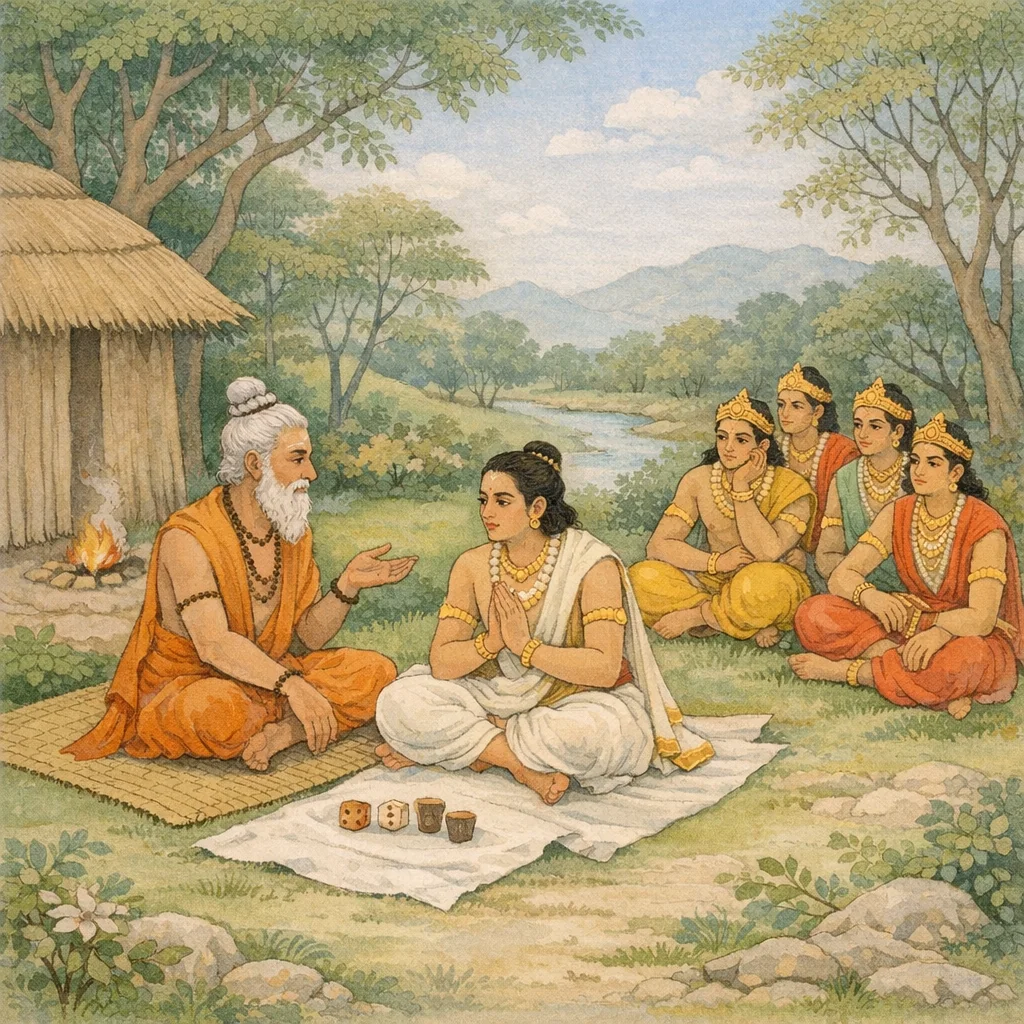
वैशम्पायन उवाच ततो ह्ृष्टमना राजा बृहदश्चमुवाच ह । भगवजन्नक्षहृदयं ज्ञातुमिच्छामि तत्त्वतः,वैशम्पायनजी कहते हैं--जनमेजय! तदनन्तर राजा युधिष्ठिरने प्रसन्नचित्त हो बृहदश्वसे कहा--'भगवन्! मैं द्यूतविद्याके रहस्यको यथार्थरूपसे जानना चाहता हूँ"
Vaiśampāyana said: Then King Yudhiṣṭhira, his mind gladdened, addressed Bṛhadaśva: “Revered sir, I wish to understand in truth the inner secret—the very heart—of the science of dice.”
Verse 21
ततो$क्षह्ददयं प्रादात् पाण्डवाय महात्मने । दत्त्वा चाश्वशिरो5गच्छदुपस्प्रष्ठं महातपा:
Then the great ascetic presented the “heart of the dice” to the noble Pāṇḍava. Having given it, that mighty man of austerity departed to perform his ritual ablutions—signaling a deliberate transfer of a potent object and a return to disciplined, purificatory conduct.
Verse 22
तब महातपस्वी मुनिने महात्मा पाण्डुनन्दनको द्यूतविद्याका रहस्य बताया और उन्हें अश्वविद्याका भी उपदेश देकर वे स्नान आदि करनेके लिये चले गये ।। बृहदश्ने गते पार्थमश्रौषीत् सव्यसाचिनम् | वर्तमान तपस्युग्रे वायुभक्षं मनीषिणम्,बृहदश्व मुनिके चले जानेपर दृढव्रती राजा युधिष्ठिरने इधर-उधरके तीर्थों, पर्वतों और वनोंसे आये हुए तपस्वी ब्राह्मणोंके मुखसे सव्यसाची अर्जुनका यह समाचार सुना कि “मनीषी अर्जुन वायुका आहार करके कठोर तपस्यामें लगे हैं। महाबाहु कुन्तीकुमार बड़ी दुष्कर तपस्यामें स्थित हैं। ऐसा कठोर तपस्वी आजसे पहले दूसरा कोई नहीं देखा गया है
Then the great ascetic sage instructed the noble son of Pāṇḍu in the hidden principles of the science of dice, and also taught him the lore of horses; having done so, the sage departed to perform his bathing and other rites. After Bṛhadaśva had gone, the steadfast king Yudhiṣṭhira heard from ascetic brāhmaṇas—arriving from various sacred fords, mountains, and forests—news about Savyasācin Arjuna: that the wise hero was sustaining himself on air alone and was engaged in severe austerities. They declared that the mighty-armed son of Kuntī was undertaking an exceptionally difficult penance, such as none had been seen before.
Verse 23
ब्राह्मणेभ्यस्तपस्वि भ्य: सम्पतद्धभधयस्ततस्तत: । तीर्थशैलवने भ्यश्व समेतेभ्यो दृढव्रत:,बृहदश्व मुनिके चले जानेपर दृढव्रती राजा युधिष्ठिरने इधर-उधरके तीर्थों, पर्वतों और वनोंसे आये हुए तपस्वी ब्राह्मणोंके मुखसे सव्यसाची अर्जुनका यह समाचार सुना कि “मनीषी अर्जुन वायुका आहार करके कठोर तपस्यामें लगे हैं। महाबाहु कुन्तीकुमार बड़ी दुष्कर तपस्यामें स्थित हैं। ऐसा कठोर तपस्वी आजसे पहले दूसरा कोई नहीं देखा गया है
Vaiśampāyana said: From ascetic brāhmaṇas who had arrived from various sacred fords, mountains, and forests, the firm-vowed King Yudhiṣṭhira heard this report about Arjuna, the ambidextrous archer: “The wise Arjuna is engaged in severe austerities, sustaining himself only on air. The mighty-armed son of Kuntī stands in a most difficult penance. Such a rigorous ascetic has not been seen before.”
Verse 24
इति पार्थों महाबाहुर्दुरापं तप आस्थित: । न तथा दुष्टपूर्वोडन्य: कश्रिदुग्रतपा इति,बृहदश्व मुनिके चले जानेपर दृढव्रती राजा युधिष्ठिरने इधर-उधरके तीर्थों, पर्वतों और वनोंसे आये हुए तपस्वी ब्राह्मणोंके मुखसे सव्यसाची अर्जुनका यह समाचार सुना कि “मनीषी अर्जुन वायुका आहार करके कठोर तपस्यामें लगे हैं। महाबाहु कुन्तीकुमार बड़ी दुष्कर तपस्यामें स्थित हैं। ऐसा कठोर तपस्वी आजसे पहले दूसरा कोई नहीं देखा गया है
Vaiśampāyana said: “Thus Pārtha (Arjuna), the mighty-armed one, undertook an austerity that is exceedingly hard to accomplish. Indeed, no other person of such fierce ascetic power had ever been seen before.”
Verse 25
यथा धनंजय: पार्थस्तपस्वी नियतव्रतः । मुनिरेकचर: श्रीमान् धर्मो विग्रहवानिव
Vaiśampāyana said: “Just as Dhanañjaya, the son of Pṛthā, lived like an ascetic—self-disciplined and bound by strict vows—so did he move about alone, radiant in conduct, as though Dharma itself had taken bodily form.”
Verse 26
“कुन्तीकुमार धनंजय जिस प्रकार नियम और व्रतका पालन करते हुए तपस्यामें संलग्न हैं, वह अद्भुत है। वे मौनभावसे रहते और अकेले ही विचरते हैं। श्रीमान् अर्जुन धर्मके मूर्तिमान् स्वरूप जान पड़ते हैं" ।। त॑ श्रुत्वा पाण्डवो राजंस्तप्यमानं महावने । अन्वशोचत कौन्तेय: प्रियं वै भ्रातरं जयम्,राजन! उस महान् वनमें अपने प्रिय भाई अर्जुनको तपस्या करते सुनकर पाण्डुनन्दन युधिष्ठिर उनके लिये बार-बार शोक करने लगे
Vaiśampāyana said: O King, hearing that his beloved brother Arjuna was engaged in austerities in the great forest, the son of Pāṇḍu—Yudhiṣṭhira—grieved for him again and again. The report of Arjuna’s strict discipline and solitary, silent practice highlights the ethical weight of self-restraint and duty: even righteous resolve can become a cause of sorrow for those bound by love and responsibility.
Verse 27
दहामानेन तु हृदा शरणार्थी महावने । ब्राह्मणान् विविधज्ञानान् पर्यपृच्छद् युधिष्ठिर:,अर्जुनके वियोगमें संतप्त हृदयवाले वे युधिष्ठिर निर्भय आश्रयकी इच्छा रखते हुए उस महान् वनमें रहते थे और अनेक प्रकारके ज्ञानसे सम्पन्न ब्राह्मणोंस अपना मनोगत अभिप्राय पूछा करते थे
Vaiśampāyana said: With his heart burning in anguish, Yudhiṣṭhira—seeking refuge and reassurance—dwelt in that vast forest. There he repeatedly questioned learned brāhmaṇas, men of varied knowledge, voicing the concerns that weighed upon his mind. The scene frames a king in exile turning from power to counsel, seeking dharmic clarity amid personal loss and uncertainty.
Verse 78
इस प्रकार श्रीमह्याभारत वनपर्वके अन्तर्गत नलोपाख्यानपर्वमें पुष्करको हराकर राजा नलके अपने नगरमें आनेसे सम्बन्ध रखनेवाला अठठ्ठत्तरवाँ अध्याय पूरा हुआ
Thus ends the seventy-eighth chapter of the Nala episode within the Vana Parva of the Śrī Mahābhārata, describing how King Nala defeated Puṣkara and the events connected with Nala’s return to his own city. The closing signals the restoration of rightful order after a trial: perseverance, self-mastery, and adherence to dharma culminate in the recovery of kingship and stability.
Verse 79
(प्रतिगृह्माक्षह्ददयं कुन्तीपुत्रो युधिष्ठिर: । आसीद्धृष्टमना राजन् भीमसेनादिभिरय्युत: ।। राजन! द्यूतविद्याका रहस्य जानकर कुन्तीनन्दन युधिष्ठिर भीमसेन आदिके साथ मन- ही-मन बड़े प्रसन्न हुए ।। स्वभ्रातृन् सहितान् पश्यन् कुन्तीपुत्रों युधिष्ठिर: । अपश्यन्नर्जुनं तत्र बभूवाश्रुपरिप्लुत: । संतप्यमान: कौन्तेयो भीमसेनमुवाच ह ।। उन्होंने एक साथ बैठे हुए सब भाइयोंकी ओर देखा, उस समय वहाँ अर्जुनको न देखकर उनके नेत्रोंमें आँसू भर आये और वे अत्यन्त संतप्त हो भीमसेनसे बोले ।। युधिछ्िर उवाच कदा द्रक्ष्यामि वै भीम पार्थमत्र तवानुजम् । मत्कृते हि कुरुश्रेष्ठस्तप्यते दुश्चवर॑ तप: ।। युधिष्ठिरने कहा--भीमसेन! मैं तुम्हारे छोटे भाई अर्जुनको कब देखूँगा? कुरुश्रेष्ठ अर्जुन मेरे ही लिये अत्यन्त कठोर तपस्या करते हैं ।। तस्याक्षहृदयज्ञानमाख्यास्यामि कदा न्वहम् | स हि श्रुत्वाक्षह्दयं समुपात्तं मया विभो ।। प्रहष्ट: पुरुषव्याप्रो भविष्यति न संशय: ।) मैं उन्हें अक्षहृदय (द्यूतविद्याके रहस्य)-का ज्ञान कब कराऊँगा। भीम! मेरे द्वारा ग्रहण किये हुए अक्षह्ृदयको सुनकर पुरुषसिंह अर्जुन बहुत प्रसन्न होंगे, इसमें संशय नहीं है। इति श्रीमहाभारते वनपर्वणि नलोपाख्यानपर्वणि बृहदश्वगमने एकोनाशीतितमो<ध्याय:
Yudhiṣṭhira, Kuntī’s son, having received the secret of the ‘Heart of the Dice’ (the inner science of play), felt a quiet gladness, O king, as he sat together with Bhīmasena and the others. Then, looking upon his brothers seated there, Yudhiṣṭhira did not see Arjuna. His eyes filled with tears; burning with grief, the son of Kuntī spoke to Bhīma: “Bhīma, when shall I see Pārtha—your younger brother—here again? For my sake that best of the Kurus is enduring a harsh and difficult austerity. And when shall I teach him this knowledge of the Heart of the Dice? For when that tiger among men hears the ‘Heart of the Dice’ that I have obtained, he will surely rejoice—of this there is no doubt.”
Frequently Asked Questions
The dilemma is how to maintain communal duty and stability when the group’s principal protector is absent: emotional loss and reduced perceived security must be managed without abandoning obligations to dependents.
The chapter presents disciplined continuity: even amid grief and uncertainty, ethical action persists through structured service, regulated resource procurement, and truthful acknowledgement of vulnerability.
No explicit phalaśruti appears in this adhyāya; its significance is contextual, documenting exile ethics and the narrative function of Arjuna’s absence in shaping morale, planning, and later strategic orientation.