Adhyaya 176
Bhīmasena’s Capture by the Serpent and Nahūṣa’s Self-Disclosure (भीमसेन-भुजङ्गग्रहणं नहुषोपाख्यानप्रस्तावः)
Upa-parva: Nahūṣa-Śāpa–Bhīma-Grahaṇa Episode (Nāga-Encounter within Āraṇyaka-parva)
Vaiśaṃpāyana narrates Bhīmasena’s astonishment at being subdued by a serpent despite his known martial prowess, prompting him to question whether the serpent’s dominance arises from vidyā, boon, or other extraordinary power. The serpent tightens his coils, then speaks: Bhīma is presented as providential prey, and the serpent explains his own condition—he is King Nahūṣa, fallen into nāga-birth due to Agastya’s curse incurred through contempt toward brahmins. The serpent reports a compassionate prognostication: release will come after a temporal interval and through a knowledgeable respondent to questions, implying that dialogic correctness is the instrument of liberation. Bhīma responds without hostility, articulating a reflective stance on daiva versus puruṣakāra: he regards fate as overriding individual effort, and redirects his sorrow toward the potential impact of his loss on his brothers and mother. Concurrently, Yudhiṣṭhira experiences inauspicious omens (cries, abnormal animal signs, bodily tremors), questions Draupadī about Bhīma’s absence, and proceeds with Dhaumya, instructing Arjuna and the twins regarding protection and coordination. Following Bhīma’s physical trail—disturbed trees and marks of pursuit—Yudhiṣṭhira reaches a mountain gorge and sees Bhīma held motionless by the serpent king, establishing the immediate crisis that will require interpretive speech rather than force.
Chapter Arc: रात्रि बीतते ही धर्मराज युधिष्ठिर, भाई-बंधुओं के हित में, अर्जुन से आग्रह करते हैं—“कौन्तेय, वे दिव्यास्त्र दिखाओ जिनसे तुमने दानवों को जीता है।” → अर्जुन देवदत्त शंख और गाण्डीव धारण कर, विधिपूर्वक शुद्ध होकर, देवताओं से प्राप्त दिव्यास्त्रों का प्रदर्शन आरम्भ करते हैं—यह दृश्य विस्मय जगाता है, पर साथ ही यह भय भी कि ऐसी शक्ति का अनावश्यक उद्घाटन अनिष्ट को बुला सकता है। → देवताओं के कहने पर देवर्षि नारद प्रकट होकर अर्जुन को रोकते हैं और कठोर चेतावनी देते हैं—लक्ष्य मिल भी जाए तो भी इन अस्त्रों का प्रयोग/प्रदर्शन यूँ ही न हो; प्रयोगों में महान दोष है, और शास्त्रानुसार सुरक्षित रखने पर ही ये अस्त्र बलवान और सुखदायक रहते हैं। → अर्जुन नारद की आज्ञा स्वीकार कर दिव्यास्त्रों का प्रदर्शन रोक देते हैं; देवता और अन्य प्राणी जैसे आए थे वैसे ही लौट जाते हैं, और अध्याय ‘अस्त्रदर्शन-निषेध’ के संकेत के साथ पूर्ण होता है। → अर्जुन के पास अपार शक्ति है, पर उसे कब, किस धर्मसंगत प्रयोजन के लिए, और किस सीमा तक प्रकट करना चाहिए—यह प्रश्न आगे की कथा पर छाया डाल देता है।
Shlokas
Verse 1
अप: आर (0) है ० पज्चसप्तरत्याधेकशततमो< ध्याय: नारद आदिका अर्जुनको दिव्यास्त्रोंके प्रदर्शनसे रोकना वैशम्पायन उवाच तस्यां रात्र्यां व्यतीतायां धर्मराजो युधिष्ठिर: उत्थायावश्यकार्याणि कृतवान् भ्रातृभि: सह,वैशम्पायनजी कहते हैं--जनमेजय! जब वह रात बीत गयी तब धर्मराज युधिष्ठिरने भाइयोंसहित उठकर आवश्यक नित्यकर्म पूरे किये
Vaiśampāyana said: When that night had passed, Dharmarāja Yudhiṣṭhira rose and, together with his brothers, duly completed the necessary daily duties—an image of disciplined kingship, where right conduct is maintained even amid hardship and impending conflict.
Verse 2
ततः: संचोदयामास सोडर्जुनं भ्रातृनन्दनम् दर्शयास्त्राणि कौन्तेय यैर्जिता दानवास्त्वया,तत्पश्चात् उन्होंने भाइयोंको सुख पहुँचानेवाले अर्जुनको आज्ञा दी--'कुन्तीनन्दन! अब तुम उन दिव्यास्त्रोंका दर्शन कराओ जिनसे तुमने दानवोंपर विजय पायी है”
Then he urged Arjuna, the delight of his brothers: “O son of Kuntī, now display those celestial weapons by which you overcame the Dānavas.” The request frames martial power as an entrusted force, to be shown and borne with responsibility for one’s kin.
Verse 3
ततो धनंजयो राजन देवैर्दत्तानि पाण्डव: अस्त्राणि तानि दिव्यानि दर्शयामास भारत,राजन! तब पाण्डुनन्दन अर्जुनने देवताओंके दिये हुए उन दिव्य अस्त्रोंको दिखानेका आयोजन किया
Then Dhanañjaya (Arjuna), O King, the son of Pāṇḍu, displayed those celestial weapons that had been bestowed upon him by the gods—underscoring the divine sanction behind his prowess and the duty to wield such power with restraint, in accordance with dharma.
Verse 4
यथान्यायं महातेजा: शौच परममास्थित: (नमस्कृत्य त्रिनेत्राय वासवाय च पाण्डव: ।) गिरिकूबरपादाक्ष शुभवेणु त्रिवेणुमत्,महातेजस्वी अर्जुन पहले तो विधिपूर्वक स्नान करके शुद्ध हुए। फिर न्रिनेत्रधारी भगवान् शंकर और इन्द्रको नमस्कार करके उन्होंने वह अत्यन्त तेजस्वी दिव्य कवच धारण किया। तत्पश्चात् वे पृथ्वीरूपी रथपर आरूढ़ हो बड़ी शोभा पाने लगे। पर्वत ही उस रथका कूबर था, दोनों पैर ही पहिये थे और सुन्दर बाँसोंका वन ही त्रिवेणु (रथके अंगविशेष)-का काम देता था। तदनन्तर महाबाहु कुन्तीनन्दन अर्जुनने एक हाथमें गाण्डीव धनुष और दूसरेमें देवदत्त शंख ले लिया। इस प्रकार वीरोचित वेशसे सुशोभित हो उन्होंने क्रमश: उन दिव्यास्त्रोंको दिखाना आरम्भ किया। जिस समय उन दिव्यास्त्रोंका प्रयोग प्रारम्भ होने जा रहा था, उसी समय अर्जुनके पैरोंसे दबी हुई पृथ्वी वृक्षोंसहित काँपने लगी। नदियों और समुद्रोंमें उफान आ गया
Vaiśaṃpāyana said: In due observance of rule, the mighty Arjuna first purified himself with a bath and stood in the highest cleanliness. Then, bowing to the Three-eyed Lord Śaṅkara and to Vāsava (Indra), he donned that exceedingly radiant divine armor. Thereafter he shone forth as though he mounted the earth itself as his chariot—its pole like a mountain, its wheels like his two feet, and lovely bamboo-groves serving as its fittings. Thus in heroic guise, he took the Gāṇḍīva bow in one hand and the Devadatta conch in the other, and began to display his celestial weapons in proper order. At the very moment he was about to set those divine missiles in motion, the earth beneath his feet trembled with its trees, and rivers and the ocean surged in upheaval.
Verse 5
पार्थिवं रथमास्थाय शोभमानो धनंजय: दिव्येन संवृतस्तेन कवचेन सुवर्चसा,महातेजस्वी अर्जुन पहले तो विधिपूर्वक स्नान करके शुद्ध हुए। फिर न्रिनेत्रधारी भगवान् शंकर और इन्द्रको नमस्कार करके उन्होंने वह अत्यन्त तेजस्वी दिव्य कवच धारण किया। तत्पश्चात् वे पृथ्वीरूपी रथपर आरूढ़ हो बड़ी शोभा पाने लगे। पर्वत ही उस रथका कूबर था, दोनों पैर ही पहिये थे और सुन्दर बाँसोंका वन ही त्रिवेणु (रथके अंगविशेष)-का काम देता था। तदनन्तर महाबाहु कुन्तीनन्दन अर्जुनने एक हाथमें गाण्डीव धनुष और दूसरेमें देवदत्त शंख ले लिया। इस प्रकार वीरोचित वेशसे सुशोभित हो उन्होंने क्रमश: उन दिव्यास्त्रोंको दिखाना आरम्भ किया। जिस समय उन दिव्यास्त्रोंका प्रयोग प्रारम्भ होने जा रहा था, उसी समय अर्जुनके पैरोंसे दबी हुई पृथ्वी वृक्षोंसहित काँपने लगी। नदियों और समुद्रोंमें उफान आ गया
Vaiśaṃpāyana said: Dhanañjaya (Arjuna), radiant in appearance, mounted the earthly chariot and shone forth, covered in that divine cuirass of splendid luster. The scene underscores a warrior’s disciplined readiness: power is not mere aggression, but a consecrated strength—armed after reverence and purification—meant to be exercised under dharma rather than vanity.
Verse 6
धनुरादाय गाण्डीवं देवदत्तं स वारिजम् शोशुभ्यमान: कौन्तेय आनुपूर्व्यान्महाभूज:,महातेजस्वी अर्जुन पहले तो विधिपूर्वक स्नान करके शुद्ध हुए। फिर न्रिनेत्रधारी भगवान् शंकर और इन्द्रको नमस्कार करके उन्होंने वह अत्यन्त तेजस्वी दिव्य कवच धारण किया। तत्पश्चात् वे पृथ्वीरूपी रथपर आरूढ़ हो बड़ी शोभा पाने लगे। पर्वत ही उस रथका कूबर था, दोनों पैर ही पहिये थे और सुन्दर बाँसोंका वन ही त्रिवेणु (रथके अंगविशेष)-का काम देता था। तदनन्तर महाबाहु कुन्तीनन्दन अर्जुनने एक हाथमें गाण्डीव धनुष और दूसरेमें देवदत्त शंख ले लिया। इस प्रकार वीरोचित वेशसे सुशोभित हो उन्होंने क्रमश: उन दिव्यास्त्रोंको दिखाना आरम्भ किया। जिस समय उन दिव्यास्त्रोंका प्रयोग प्रारम्भ होने जा रहा था, उसी समय अर्जुनके पैरोंसे दबी हुई पृथ्वी वृक्षोंसहित काँपने लगी। नदियों और समुद्रोंमें उफान आ गया
Vaiśampāyana said: The mighty-armed son of Kuntī, Arjuna, radiant in heroic splendor, took up the Gāṇḍīva bow and the Devadatta conch, lotus-born in purity. Thus adorned in a warrior’s bearing, he began—step by step—to display the divine weapons entrusted to him. As the use of those celestial missiles was about to commence, the earth pressed beneath his feet trembled with its trees, and the rivers and the ocean surged, as if nature itself acknowledged the gravity of power being awakened.
Verse 7
अस्त्राणि तानि दिव्यानि दर्शनायोपचक्रमे अथ प्रयोक्ष्यमाणेषु दिव्येष्वस्त्रेषु तेषु वै,महातेजस्वी अर्जुन पहले तो विधिपूर्वक स्नान करके शुद्ध हुए। फिर न्रिनेत्रधारी भगवान् शंकर और इन्द्रको नमस्कार करके उन्होंने वह अत्यन्त तेजस्वी दिव्य कवच धारण किया। तत्पश्चात् वे पृथ्वीरूपी रथपर आरूढ़ हो बड़ी शोभा पाने लगे। पर्वत ही उस रथका कूबर था, दोनों पैर ही पहिये थे और सुन्दर बाँसोंका वन ही त्रिवेणु (रथके अंगविशेष)-का काम देता था। तदनन्तर महाबाहु कुन्तीनन्दन अर्जुनने एक हाथमें गाण्डीव धनुष और दूसरेमें देवदत्त शंख ले लिया। इस प्रकार वीरोचित वेशसे सुशोभित हो उन्होंने क्रमश: उन दिव्यास्त्रोंको दिखाना आरम्भ किया। जिस समय उन दिव्यास्त्रोंका प्रयोग प्रारम्भ होने जा रहा था, उसी समय अर्जुनके पैरोंसे दबी हुई पृथ्वी वृक्षोंसहित काँपने लगी। नदियों और समुद्रोंमें उफान आ गया
Vaiśaṃpāyana said: Arjuna then began to display those celestial weapons, making them visible in due order. And when he was just about to set those divine missiles into actual use, the very earth—pressed beneath his feet—trembled along with its trees, while rivers and the ocean surged in upheaval. The passage underscores that divine power, even in the hands of a righteous hero, is not to be handled lightly: its exercise shakes the world and therefore demands restraint, purity, and reverence.
Verse 8
समाक्रान्ता मही पद्धयां समकम्पत सद्रुमा क्षुभिता: सरितश्वैव तथैव च महोदधि:,महातेजस्वी अर्जुन पहले तो विधिपूर्वक स्नान करके शुद्ध हुए। फिर न्रिनेत्रधारी भगवान् शंकर और इन्द्रको नमस्कार करके उन्होंने वह अत्यन्त तेजस्वी दिव्य कवच धारण किया। तत्पश्चात् वे पृथ्वीरूपी रथपर आरूढ़ हो बड़ी शोभा पाने लगे। पर्वत ही उस रथका कूबर था, दोनों पैर ही पहिये थे और सुन्दर बाँसोंका वन ही त्रिवेणु (रथके अंगविशेष)-का काम देता था। तदनन्तर महाबाहु कुन्तीनन्दन अर्जुनने एक हाथमें गाण्डीव धनुष और दूसरेमें देवदत्त शंख ले लिया। इस प्रकार वीरोचित वेशसे सुशोभित हो उन्होंने क्रमश: उन दिव्यास्त्रोंको दिखाना आरम्भ किया। जिस समय उन दिव्यास्त्रोंका प्रयोग प्रारम्भ होने जा रहा था, उसी समय अर्जुनके पैरोंसे दबी हुई पृथ्वी वृक्षोंसहित काँपने लगी। नदियों और समुद्रोंमें उफान आ गया
Vaiśampāyana said: As Arjuna set his feet upon the earth, the ground trembled along with its trees; the rivers surged in agitation, and even the great ocean heaved likewise. The scene underscores the awe-inspiring, world-shaking potency of divinely sanctioned power when a disciplined hero is about to employ celestial weapons—power that must be governed by restraint and right purpose.
Verse 9
शैलाक्षापि व्यदीर्यन्त न ववी च समीरण: न बभासे सहस्रांशुर्न जज्वाल च पावक:,पर्वत विदीर्ण होने लगे और हवाकी गति रुक गयी। सूर्यकी प्रभा फीकी पड़ गयी और आगका जलना बंद हो गया
Vaiśaṃpāyana said: Even the rocky mountains began to split apart; the wind ceased to blow. The thousand-rayed sun lost its radiance, and fire no longer blazed—signs that the very order of nature was shaken by the dreadful turn of events.
Verse 10
न वेदा: प्रतिभान्ति सम द्विजातीनां कथंचन अन्तर्भूमिगता ये च प्राणिनो जनमेजय,द्विजातियोंको किसी प्रकार भी वेदोंका भान नहीं हो पाता था। जनमेजय! भूमिके भीतर जो प्राणी निवास करते थे, वे भी पीड़ित हो उठे और अर्जुनको सब ओरसे घेरकर खड़े हो गये। उन सबके मुखपर विकृति आ गयी थी। वे हाथ जोड़े हुए थर-थर काँप रहे थे और अस्त्रोंके तेजसे संतप्त हो धनंजयसे प्राणोंकी भिक्षा माँग रहे थे। इसी समय ब्रह्मर्षि, सिद्ध महर्षि, समस्त जंगम प्राणी, श्रेष्ठ देवर्षि, देवता, यक्ष, राक्षस, गन्धर्व, पक्षी तथा आकाशचारी प्राणी सभी वहाँ आकर उपस्थित हो गये
Vaiśampāyana said: “O Janamejaya, the Vedas no longer shone forth in the awareness of the twice-born in any way; and the living beings who dwelt beneath the earth were also afflicted.” The passage marks a moment of cosmic disturbance: when sacred knowledge fails to illumine the minds of the learned and even subterranean creatures suffer, it is a sign that the balance of dharma has been shaken and that extraordinary forces are at work in the world.
Verse 11
पीड्यमाना: समुत्थाय पाण्डवं पर्यवारयन् वेपमाना: प्राउ्जलयस्ते सर्वे विकृतानना:,द्विजातियोंको किसी प्रकार भी वेदोंका भान नहीं हो पाता था। जनमेजय! भूमिके भीतर जो प्राणी निवास करते थे, वे भी पीड़ित हो उठे और अर्जुनको सब ओरसे घेरकर खड़े हो गये। उन सबके मुखपर विकृति आ गयी थी। वे हाथ जोड़े हुए थर-थर काँप रहे थे और अस्त्रोंके तेजसे संतप्त हो धनंजयसे प्राणोंकी भिक्षा माँग रहे थे। इसी समय ब्रह्मर्षि, सिद्ध महर्षि, समस्त जंगम प्राणी, श्रेष्ठ देवर्षि, देवता, यक्ष, राक्षस, गन्धर्व, पक्षी तथा आकाशचारी प्राणी सभी वहाँ आकर उपस्थित हो गये
Vaiśaṃpāyana said: Tormented, they rose up and surrounded the Pāṇḍava on every side. Trembling, with palms joined in supplication, all of them stood there with faces distorted by fear and suffering—overwhelmed by the blazing power of his weapons—and begged Dhanañjaya (Arjuna) for their very lives. At that moment, brahmarṣis and siddha-sages, all moving creatures, foremost devarṣis, the gods, yakṣas, rākṣasas, gandharvas, birds, and other sky-ranging beings also arrived there and became present.
Verse 12
दहामानास्तदास्त्रैस्ते याचन्ति सम धनंजयम् ततो ब्रह्र्षयश्चैव सिद्धा ये च महर्षय:,द्विजातियोंको किसी प्रकार भी वेदोंका भान नहीं हो पाता था। जनमेजय! भूमिके भीतर जो प्राणी निवास करते थे, वे भी पीड़ित हो उठे और अर्जुनको सब ओरसे घेरकर खड़े हो गये। उन सबके मुखपर विकृति आ गयी थी। वे हाथ जोड़े हुए थर-थर काँप रहे थे और अस्त्रोंके तेजसे संतप्त हो धनंजयसे प्राणोंकी भिक्षा माँग रहे थे। इसी समय ब्रह्मर्षि, सिद्ध महर्षि, समस्त जंगम प्राणी, श्रेष्ठ देवर्षि, देवता, यक्ष, राक्षस, गन्धर्व, पक्षी तथा आकाशचारी प्राणी सभी वहाँ आकर उपस्थित हो गये
Vaiśampāyana said: Scorched by those weapons, they then implored Dhanañjaya (Arjuna) for mercy and for their very lives. At that moment, Brahmarṣis, Siddhas, and great seers also arrived there—drawn by the overwhelming force of the event—so that the devastation might be witnessed and restrained in accordance with dharma.
Verse 13
जड़मानि च भूतानि सर्वाण्येवावतस्थिरे देवर्षयक्ष प्रवरास्तथैव च दिवौकस:,द्विजातियोंको किसी प्रकार भी वेदोंका भान नहीं हो पाता था। जनमेजय! भूमिके भीतर जो प्राणी निवास करते थे, वे भी पीड़ित हो उठे और अर्जुनको सब ओरसे घेरकर खड़े हो गये। उन सबके मुखपर विकृति आ गयी थी। वे हाथ जोड़े हुए थर-थर काँप रहे थे और अस्त्रोंके तेजसे संतप्त हो धनंजयसे प्राणोंकी भिक्षा माँग रहे थे। इसी समय ब्रह्मर्षि, सिद्ध महर्षि, समस्त जंगम प्राणी, श्रेष्ठ देवर्षि, देवता, यक्ष, राक्षस, गन्धर्व, पक्षी तथा आकाशचारी प्राणी सभी वहाँ आकर उपस्थित हो गये
Vaiśampāyana said: All beings, even those rendered inert and stupefied, stood still. The foremost among the divine seers and the Yakṣas, and likewise the dwellers of heaven, were present there as well—drawn together by the overwhelming force of the moment, as if the very order of the worlds had been arrested.
Verse 14
यक्षराक्षसगन्धर्वास्तथैव च पतत्त्रिण: खेचराणि च भूतानि सर्वाण्येवावतस्थिरे,द्विजातियोंको किसी प्रकार भी वेदोंका भान नहीं हो पाता था। जनमेजय! भूमिके भीतर जो प्राणी निवास करते थे, वे भी पीड़ित हो उठे और अर्जुनको सब ओरसे घेरकर खड़े हो गये। उन सबके मुखपर विकृति आ गयी थी। वे हाथ जोड़े हुए थर-थर काँप रहे थे और अस्त्रोंके तेजसे संतप्त हो धनंजयसे प्राणोंकी भिक्षा माँग रहे थे। इसी समय ब्रह्मर्षि, सिद्ध महर्षि, समस्त जंगम प्राणी, श्रेष्ठ देवर्षि, देवता, यक्ष, राक्षस, गन्धर्व, पक्षी तथा आकाशचारी प्राणी सभी वहाँ आकर उपस्थित हो गये
Vaiśampāyana said: Yakṣas, Rākṣasas, and Gandharvas—along with birds and other sky-ranging beings—came there and stood assembled on every side. The scene conveys a moment when the boundaries between worlds thin: diverse orders of beings gather as witnesses to an overwhelming display of power, and the narrative underscores the ethical pressure that such power places upon all who behold it—prompting fear, supplication, and a recognition of human (and non-human) vulnerability before divine or superhuman force.
Verse 15
ततः पितामहश्नैव लोकपालाश्ष सर्वशः भगवांश्र महादेव: सगणो<5भ्याययौ तदा,इसके बाद ब्रह्माजी, समस्त लोकपाल तथा भगवान् महादेव अपने गणोंसहित वहाँ आये
Then the Grandsire Brahmā arrived, together with all the guardians of the worlds; and the Blessed Great God Śiva also came there, attended by his hosts of gaṇas. The scene proclaims that the matter was of cosmic and moral gravity, drawing the gaze of the highest divine powers.
Verse 16
ततो वायुर्महाराज दिव्यैर्माल्यै: सुगन्धिभि: अभित: पाण्डवं चित्रैरवचक्रे समन्ततः,महाराज! तदनन्तर वायुदेव पाण्डुनन्दन अर्जुनपर सब ओरसे विचित्र सुगन्धित दिव्य मालाओंकी वृष्टि करने लगे
Vaiśampāyana said: Then, O great king, Vāyu encompassed the Pāṇḍava on every side and showered him all around with wondrous, fragrant, divine garlands. It was a sign of heavenly approval and protection, as though Arjuna’s disciplined striving—aligned with dharma—were being witnessed and honored by higher powers.
Verse 17
जगुश्न गाथा विविधा गन्धर्वा: सुरचोदिता: ननृतुः सड्घशश्चैव राजन्नप्सरसां गणा:,राजन! देवप्रेरित गन्धर्व नाना प्रकारकी गाथाएँ गाने लगे और झुंड-की-झुंड अप्सराएँ नृत्य करने लगीं
Vaiśampāyana said: Urged on by the gods, the Gandharvas began to sing many kinds of songs; and, O king, the companies of Apsarases, gathered in groups, began to dance. Thus did celestial beings, under divine prompting, transform the air with art—song and dance—heralding auspiciousness and the presence of higher powers.
Verse 18
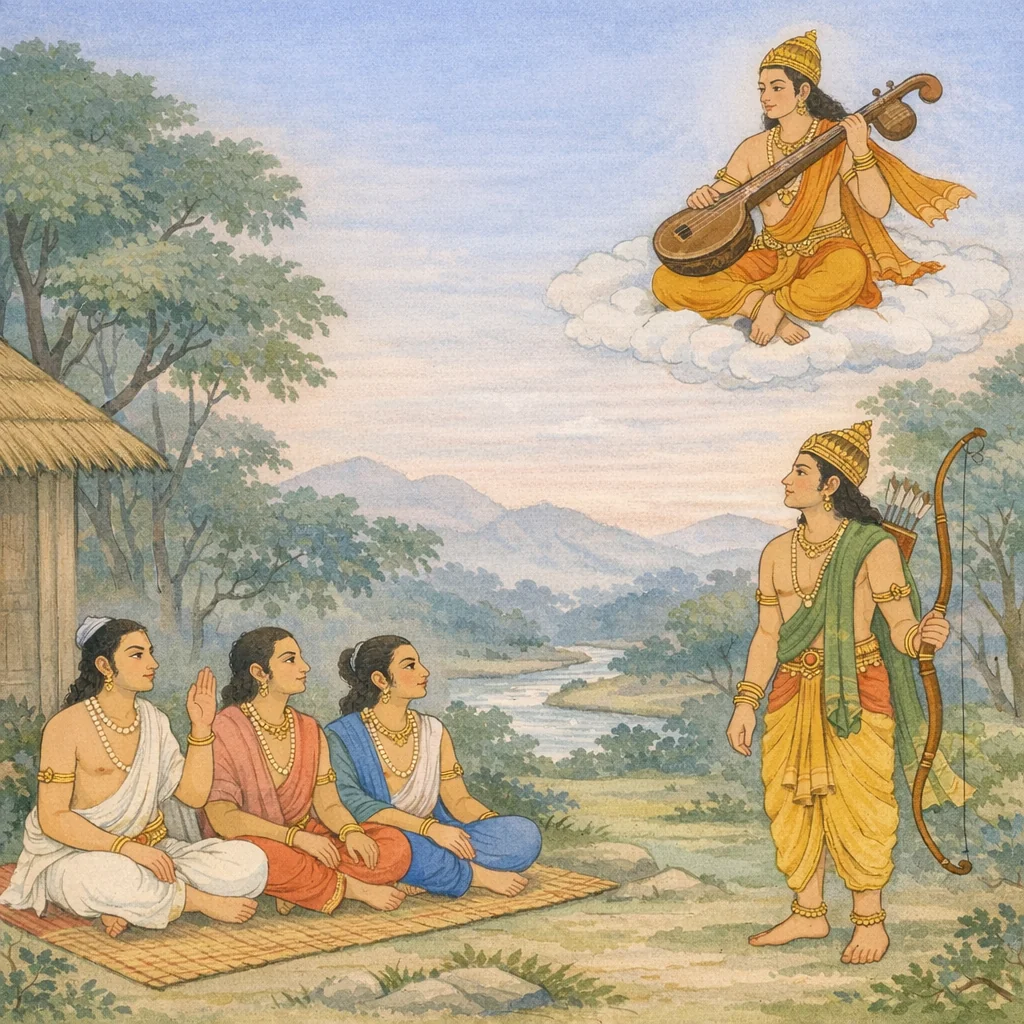
तस्मिंश्न॒ तादृशे काले नारदश्नोदित: सुरै: आगगम्याह वच: पार्थ श्रवणीयमिदं नूप,नराधिप! उस समय देवताओंके कहनेसे देवर्षि नारद अर्जुनके पास आये और उनसे यह सुननेयोग्य बात कहने लगे--'अर्जुन! अर्जुन! इस समय दिव्यास्त्रोंका प्रयोग न करो। भारत! ये दिव्य अस्त्र किसी लक्ष्यके बिना कदापि नहीं छोड़े जाते
Vaiśampāyana said: At that critical time the sage Nārada, urged by the gods, came to Arjuna and spoke words worthy of careful hearing: “Arjuna, Arjuna—do not employ the divine weapons now. O descendant of Bharata, such celestial missiles are never to be released without a definite target.” The passage teaches restraint: extraordinary power must be governed by discernment and responsibility, not impulse.
Verse 19
अर्जुनार्जुन मा युड्क्ष्व दिव्यान्यस्त्राणि भारत नैतानि निरधिष्ठाने प्रयुज्यन्ते कथंचन,नराधिप! उस समय देवताओंके कहनेसे देवर्षि नारद अर्जुनके पास आये और उनसे यह सुननेयोग्य बात कहने लगे--'अर्जुन! अर्जुन! इस समय दिव्यास्त्रोंका प्रयोग न करो। भारत! ये दिव्य अस्त्र किसी लक्ष्यके बिना कदापि नहीं छोड़े जाते
“Arjuna, Arjuna—do not enter into battle by releasing the divine weapons now. O Bhārata, these celestial missiles are never employed without a fixed and rightful target.” Here restraint is cast as an ethical necessity: sacred power must not be used impulsively or without proper occasion, even by a hero who can wield it.
Verse 20
अधिष्ठाने न वाअनार्त: प्रयुजुजीत कदाचन प्रयोगेषु महान् दोषो ह्ुस्त्राणां कुरुनन्दन,“कोई लक्ष्य मिल जाय तो भी ऐसा मनुष्य कभी इनका प्रयोग न करे, जो स्वयं संकटमें न पड़ा हो। कुरुनन्दन! इन दिव्यास्त्रोंका अनुचितरूपमें प्रयोग करनेपर महान् दोष प्राप्त होता है
“O Kurunandana, even if one can attain the target, a man who is not himself in peril should never employ these divine weapons. For to use them improperly brings a great fault.”
Verse 21
एतानि रक्ष्यमाणानि धनंजय यथागमम् बलवन्ति सुखाहाणि भविष्यन्ति न संशय:,“धनंजय! शास्त्रके अनुसार सुरक्षित रखे जानेपर ही ये अस्त्र सबल और सुखदायक होते हैं, इसमें संशय नहीं है
Vaiśampāyana said: “O Dhanañjaya, when these weapons are guarded and maintained in accordance with the scriptural injunctions and traditional procedure, they will surely remain powerful and become sources of well-being and ease; of this there is no doubt.”
Verse 22
अरक्ष्यमाणान्येतानि त्रैलोक्यस्पापि पाण्डव भवन्ति सम विनाशाय मैव॑ भूय: कृथा: क्वचित्,'पाण्डुपुत्र! इनकी समुचित रक्षा न होनेपर ये दिव्यास्त्र तीनों लोकोंके विनाशके कारण बन जाते हैं। अतः फिर कभी इस तरह इनके प्रदर्शनका साहस न करना। अजातशण्रु युधिष्ठटि! (आप भी इस समय इन्हें देखनेका आग्रह छोड़ दें।) जब रणक्षेत्रमें शत्रुओंके संहारका अवसर आयगा, उस समय अर्जुनके द्वारा प्रयोगमें लाये जानेपर इन दिव्यास्त्रोंका दर्शन कीजियेगा'
Vaiśampāyana said: “O Pāṇḍava, if these divine weapons are not properly guarded, they can become the cause of the destruction of even the three worlds. Therefore, never again dare to display them in this manner. O Yudhiṣṭhira, who has no enemies, give up for now your insistence on seeing them. When the time comes on the battlefield for the destruction of foes, then behold these celestial weapons as Arjuna employs them.”
Verse 23
अजाततशत्रो त्वं चैव द्रक्ष्यसे तानि संयुगे योज्यमानानि पार्थेन द्विषतामवमर्दने,'पाण्डुपुत्र! इनकी समुचित रक्षा न होनेपर ये दिव्यास्त्र तीनों लोकोंके विनाशके कारण बन जाते हैं। अतः फिर कभी इस तरह इनके प्रदर्शनका साहस न करना। अजातशण्रु युधिष्ठटि! (आप भी इस समय इन्हें देखनेका आग्रह छोड़ दें।) जब रणक्षेत्रमें शत्रुओंके संहारका अवसर आयगा, उस समय अर्जुनके द्वारा प्रयोगमें लाये जानेपर इन दिव्यास्त्रोंका दर्शन कीजियेगा'
Vaiśampāyana said: “O Ajātaśatru, you too will behold those divine weapons when they are actually deployed in battle by Pārtha (Arjuna), the crusher of foes. Such powers are not to be displayed lightly; if not guarded and restrained with due care, they can become the cause of ruin for the three worlds. Therefore, do not again dare to exhibit them in this manner. And you, Yudhiṣṭhira—set aside your insistence on seeing them now; when the time comes for the destruction of enemies on the battlefield, then witness them as Arjuna employs them.”
Verse 24
वैशग्पायन उवाच निवार्याथ ततः पार्थ सर्वे देवा यथागतम् जम्मुरन्ये च ये तत्र समाजम्मुर्नरर्षभ
Vaiśaṃpāyana said: Then, having restrained Pārtha, O Pārtha, all the gods departed, returning as they had come. And the others who were assembled there also went away, O bull among men.
Verse 25
वैशम्पायनजी कहते हैं--नरश्रेष्ठ! इस प्रकार अर्जुनको दिव्यास्त्रोंके प्रदर्शनसे रोककर सम्पूर्ण देवता तथा अन्य सभी प्राणी जैसे आये थे वैसे लौट गये ।। तेषु सर्वेषु कौरव्य प्रतियातेषु पाण्डवा: तस्मिन्नेव वने हृकास्त ऊषु: सह कृष्णया,कुरुनन्दन! उन सबके चले जानेपर सब पाण्डव द्रौपदीके साथ बड़े हर्षपूर्वक उसी वनमें रहने लगे
Vaiśampāyana said: “O best of men! Having thus restrained Arjuna from displaying the celestial weapons, all the gods and the other beings returned just as they had come. When they had all departed, O Kauravya, the Pāṇḍavas—gladdened at heart—continued to dwell in that very forest together with Kṛṣṇā (Draupadī). O joy of the Kurus! After everyone had gone, the Pāṇḍavas, with Draupadī, lived on in the same forest in great happiness.”
Verse 174
इस प्रकार श्रीमह्याभारत वनपर्वके अन्तर्गत निवातकवचयुद्धपर्वमें अस्रदर्शनके लिये संकेतविषयक एक सौ चौह्तत्तरवाँ अध्याय पूरा हुआ
Thus ends the one hundred and seventy-fourth chapter of the Mahābhārata’s Vana Parva, within the Nivātakavaca-yuddha section, dealing with the agreed signal given for the purpose of revealing the celestial weapons. The narrator marks the formal close of this unit, emphasizing orderly procedure and disciplined communication amid preparations for conflict.
Verse 175
इति श्रीमहाभारते वनपर्वणि निवातकवचयुद्धपर्वणि अस्त्रदर्शने पजञ्चसप्तत्यधिकशततमो<ध्याय:
Thus, in the Śrī Mahābhārata, within the Vana Parva, in the sub-episode concerning the battle with the Nivātakavacas, in the section on the revelation and demonstration of celestial weapons, ends the one-hundred-and-seventy-sixth chapter. The line functions as a formal colophon, marking the close of a narrative unit that emphasizes disciplined acquisition of power (astra-knowledge) and its ethical containment within dharma.
Frequently Asked Questions
Bhīma confronts the collapse of strength-based self-understanding: whether to interpret defeat as personal insufficiency or as karmic/daivic constraint, and how to respond ethically—through inquiry, restraint, and concern for dependents rather than rage.
The chapter models that crises may demand epistemic and ethical competence over force: fate and prior actions can delimit agency, while clear speech, humility before higher orders, and responsibility toward others remain actionable duties.
No explicit phalāśruti is stated here; instead, the chapter’s meta-function is structural—preparing the condition that liberation occurs through correct answers and discerning speech, integrating the episode into the epic’s broader soteriological theme of knowledge-mediated release.