Adhyaya 175
Bhīmasena’s Himalayan Hunt and Seizure by the Ajagara (भीमसेनस्य अजगरग्रहणम्)
Upa-parva: Ajagara-upākhyāna (Episode of the Ajagara/Great Serpent)
Janamejaya questions how Bhīmasena—described as possessing the life-force of myriad nāgas and famed for challenging formidable beings—could experience acute fear from an ajagara. Vaiśaṃpāyana situates the event during the Pandavas’ forest residence near a royal seer’s āśrama and then follows Bhīma moving through a visually abundant Himalayan landscape: auspicious regions frequented by devas, gandharvas, siddhas, and apsarases; birdsong (cakora, cakravāka, kokila, etc.); trees bearing perennial flowers and fruits; gem-like cold waters with waterfowl; and forests of deodāra and sandal. While engaged in hunting across plains and arid stretches, Bhīma encounters an enormous, terrifying serpent occupying a mountain fastness and covering a cavern with its body. The ajagara is detailed with cave-like mouth, four fangs, blazing copper-red eyes, and a death-like presence amplified by hissing and heavy breath. It suddenly grips Bhīma by both arms; upon mere contact Bhīma’s consciousness becomes clouded due to the serpent’s boon-derived power. Despite Bhīma’s famed strength, he cannot maneuver or counteract the constriction; he struggles intensely to free himself but is unable to impede the serpent’s hold, establishing a crisis that requires resolution beyond straightforward force.
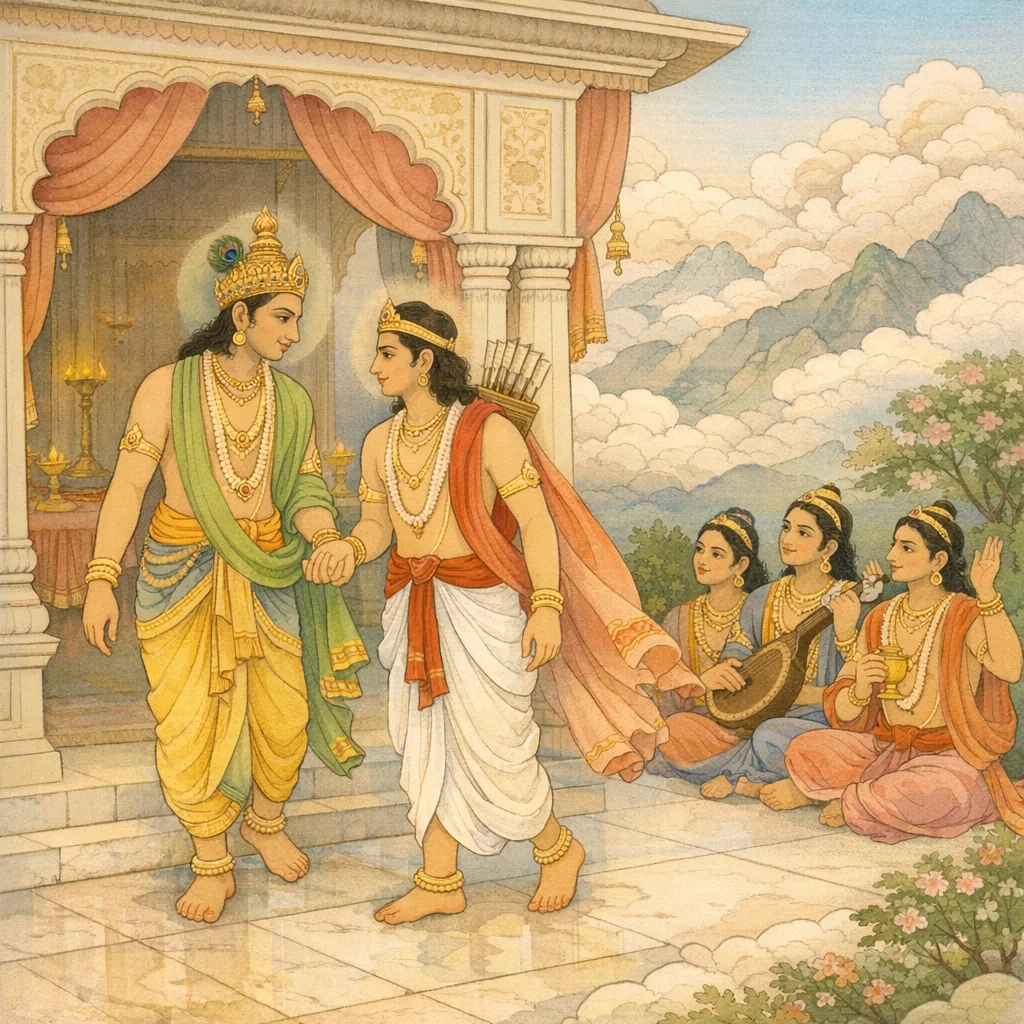
Chapter Arc: युधिष्ठिर के पूछने पर अर्जुन इन्द्रलोक-प्रवास का वृत्तान्त आगे बढ़ाता है—कैसे वह इन्द्र का विश्वासपात्र बना और दिव्य लोक की मर्यादा में धीरे-धीरे स्थिर हुआ। → अर्जुन के घाव भरते हैं; इन्द्र उसे स्नेहपूर्वक हाथ पकड़कर निकट लाते हैं, दिव्य वस्त्र-आभूषण प्रदान करते हैं और गन्धर्वकुमारों के साथ रहने का सौभाग्य देते हैं। इसी सम्मान के बीच अर्जुन के भीतर एक तीव्र आकांक्षा जागती है—उन दिव्यास्त्रों को देखने/पाने की, जिनसे निवातकवच जैसे अजेय शत्रु भी मारे जा सकें। → अर्जुन का स्पष्ट निवेदन—‘भारत! मैं उन दिव्यास्त्रों को देखना चाहता हूँ जिनसे निवीतकवच (निवातकवच) मारे गये’—यह क्षण उसके तप-पराक्रम को लक्ष्य में बदल देता है: अब उसका इन्द्रलोक-प्रवास केवल आतिथ्य नहीं, अस्त्र-प्राप्ति की निर्णायक यात्रा है। → इन्द्र के भवन में अर्जुन का सम्मानित, सुखपूर्वक निवास स्थापित होता है; कथा-धारा ‘अस्त्रदर्शन/अस्त्र-प्राप्ति’ की दिशा में व्यवस्थित हो जाती है। वैशम्पायन संकेत करते हैं कि अर्जुन ने यह वृत्तान्त कहकर उस रात्रि भाइयों के साथ विश्राम किया। → इन्द्र अर्जुन की इच्छा पर क्या उत्तर देंगे—क्या, कब और किन शर्तों पर दिव्यास्त्रों का दर्शन/उपदेश होगा?
Shlokas
Verse 1
(दाक्षिणात्य अधिक पाठका २३ श्लोक मिलाकर कुल ७७३ श्लोक हैं) छः #&< (9) #प्टज 2४ चतुःसप्तरत्यांधेकशततमो< ध्याय: 80: कक कं यात्राका वृत्तान्त सुनकर युधिष्ठिरद्वारा उनका और दिव्यास्त्रदर्शनकी इच्छा प्रकट करना अजुन उवाच ततो मामतिविश्वस्तं संरूढशरविक्षतम् देवराजो विगृहोदं काले वचनमब्रवीत्
Arjuna said: “Then, when I had become fully confident, though my body was still pierced and wounded by embedded arrows, the Lord of the gods spoke to me at the proper moment—his words firm and resolute.”
Verse 2
अर्जुन कहते हैं--राजन्! तदनन्तर मैं देवराजका अत्यन्त विश्वासपात्र बन गया। धीरे- धीरे मेरे शरीरके सब घाव भर गये। तब एक दिन देवराज इन्द्रने मेरा हाथ पकड़कर कहा -- १ ॥। दिव्यान्यस्त्राणि सर्वाणि त्वयि तिष्ठन्ति भारत न त्वाभिभवितुं शक्तो मानुषो भुवि कश्चन,“भरतनन्दन! तुममें सब दिव्यास्त्र विद्यमान हैं। भूमण्डलका कोई भी मनुष्य तुम्हें पराजित नहीं कर सकता
Arjuna said: “O King, after that I became a person in whom the lord of the gods placed complete trust. Gradually all the wounds on my body healed. Then one day Indra, king of the gods, took my hand and said: ‘O descendant of Bharata, all the divine weapons abide in you. No human anywhere on earth has the power to overcome you.’”
Verse 3
भीष्मो द्रोण: कृप: कर्ण: शकुनि: सह राजभि: संग्रामस्थस्य ते पुत्र कलां नाहन्ति षघोडशीम्,“बेटा! भीष्म, द्रोण, कृपाचार्य, कर्ण तथा राजाओंसहित शकुनि--ये सब-के-सब संग्राममें खड़े होनेपर तुम्हारी सोलहवीं कलाके बराबर भी नहीं हो सकते'
Arjuna said: “O son, even Bhīṣma, Droṇa, Kṛpa, Karṇa, and Śakuni together with the kings—though standing ready in battle—do not equal even a sixteenth part of your power.”
Verse 4
इदं च मे तनुत्राणं प्रायच्छन्मघवान प्रभु: अभेद्यं कवचं दिव्यं स्रजं चैव हिरण्मयीम्,महाराज! उन देवेश्वर इन्द्रने स्वयं मेरे शरीरकी रक्षा करनेवाला यह अभेद्य दिव्य कवच और यह सुवर्णमयी माला मुझे दी
Arjuna said: “And the mighty lord Maghavan (Indra) bestowed upon me this body-protecting armor—divine and impenetrable—and also a garland made of gold.”
Verse 5
देवदत्तं च मे शड्खं पुनः प्रादान्महारवम् दिव्यं चेदं किरीटं मे स्वयमिन्द्रो युयोज ह,फिर उन्होंने बड़े जोरकी आवाज करनेवाला यह देवदत्त नामक शंख प्रदान किया। स्वयं देवराज इन्द्रने ही यह दिव्य किरीट मेरे मस्तकपर रखा था
Arjuna said: “He again bestowed upon me my conch named Devadatta, whose roar is mighty; and this divine diadem too—Indra himself placed it upon my head.”
Verse 6
ततो दिव्यानि वस्त्राणि दिव्यान्याभरणानि च प्रादाच्छक्रो ममैतानि रुचिराणि बृहन्ति च,तत्पश्चात् देवराजने मुझे ये मनोहर एवं विशाल दिव्य वस्त्र तथा दिव्य आभूषण दिये
Then Śakra (Indra) bestowed upon me divine garments and divine ornaments—these splendid and ample gifts.
Verse 7
एवं सम्पूजितस्तत्र सुखमस्म्युषितो नृप इन्द्रस्य भवने पुण्ये गन्धर्वशिशुभि: सह
Arjuna said: “Thus honored there, O king, I dwelt happily in Indra’s holy celestial abode, in the company of the youthful Gandharvas.”
Verse 8
महाराज! इस प्रकार सम्मानित होकर मैं उस पवित्र इन्द्रभवनमें गन्धर्वकुमारोंके साथ सुखपूर्वक रहने लगा ।। ततो मामब्रवीच्छक्र: प्रीतिमानमरै: सह समयो.र्डजुन गन्तुं ते भ्रातरो हि स्मरन्ति ते,तदनन्तर देवताओंसहित इन्द्रने प्रसन्न होकर मुझसे कहा--'अर्जुन! अब तुम्हारे जानेका समय आ गया है; क्योंकि तुम्हारे भाई तुम्हें बहुत याद करते हैं”
O King, thus honored, I lived happily in that sacred palace of Indra in the company of the young Gandharvas. Then Śakra (Indra), pleased and accompanied by the gods, said to me: “Arjuna, the time has come for you to depart, for your brothers are longing for you and remember you constantly.”
Verse 9
एवमिन्द्रस्यथ भवने पञ्च वर्षाणि भारत उषितानि मया राजन् स्मरता द्यूतजं कलिम्,भारत! इस प्रकार द्यूतजनित कलहका स्मरण करते हुए मैंने इन्द्रभवनमें पाँच वर्ष व्यतीत किये हैं
Thus, O Bhārata, while dwelling in Indra’s celestial abode, I spent five years there, O King—continually recalling the strife that arose from the gambling. The memory of that dice-born discord remained a moral wound, reminding me how a single lapse can unleash enduring suffering and responsibility.
Verse 10
ततो भवन्न्तमद्राक्ष॑ं भ्रातृभि: परिवारितम् गन्धमादनपादस्य पर्वतस्यास्य मूर्थनि,इसके बाद इस गन्धमादनकी शाखाभूत इस पर्वतके शिखरपर भाइयोंसहित आपका दर्शन किया है
Then I beheld you, surrounded by my brothers, upon the summit of this mountain that rises as a spur from the foot of Gandhamādana. The sight marks a moment of recognition and reverent encounter in the wilderness, where kinship and duty converge amid hardship and pilgrimage-like striving.
Verse 11
युधिछ्िर उवाच दिष्ट्या धनंजयास्त्राणि त्वया प्राप्तानि भारत दिष्ट्या चाराधितो राजा देवानामीश्वर: प्रभु:,युधिष्ठिर बोले--धनंजय! बड़े सौभाग्यकी बात है कि तुमने दिव्यास्त्र प्राप्त कर लिये। भारत! यह भी भाग्यकी ही बात है कि तुमने देवताओंके स्वामी राजराजेश्वर इन्द्रको आराधनाद्दारा प्रसन्न कर लिया। निष्पाप परंतप! सबसे बड़ी सौभाग्यकी बात तो यह है कि तुमने देवी पार्वतीके साथ साक्षात् भगवान् शंकरका दर्शन किया और उन्हें अपनी युद्धकलासे संतुष्ट कर लिया
Yudhiṣṭhira said: “Fortunate indeed, O Dhanañjaya, that you have obtained the divine weapons. O Bhārata, fortunate too that by devoted worship you have pleased the king of the gods—Indra, the sovereign Lord. Such success is not mere power-seeking: it signals divine approval gained through discipline and reverence, meant to be used in the service of righteous duty rather than personal pride.”
Verse 12
दिष्ट्या च भगवान् स्थाणुर्देव्या सह परंतप साक्षाद् दृष्ट: स्वयुद्धेन तोषितश्न॒ त्वयानघ,युधिष्ठिर बोले--धनंजय! बड़े सौभाग्यकी बात है कि तुमने दिव्यास्त्र प्राप्त कर लिये। भारत! यह भी भाग्यकी ही बात है कि तुमने देवताओंके स्वामी राजराजेश्वर इन्द्रको आराधनाद्दारा प्रसन्न कर लिया। निष्पाप परंतप! सबसे बड़ी सौभाग्यकी बात तो यह है कि तुमने देवी पार्वतीके साथ साक्षात् भगवान् शंकरका दर्शन किया और उन्हें अपनी युद्धकलासे संतुष्ट कर लिया
Yudhiṣṭhira said: “Fortune indeed attends you, O scorcher of foes: you have beheld the Blessed Lord Sthāṇu (Śiva) directly, together with the Goddess. And, O sinless one, you have pleased him by your own prowess in battle. This is the highest auspiciousness—divine favor won not by arrogance, but by disciplined valor and reverent devotion.”
Verse 13
दिष्ट्या च लोकपालैस्त्वं समेतो भरतर्षभ दिष्ट्या वर्धामहे पार्थ दिष्ट्यासि पुनरागत:,भरतश्रेष्ठ] समस्त लोकपालोंके साथ तुम्हारी भेंट हुई, यह भी हमारे लिये सौभाग्यका सूचक है। हमारा अहोभाग्य है कि हम उन्नतिके पथपर अग्रसर हो रहे हैं। अर्जुन! हमारे भाग्यसे ही तुम पुनः हमारे पास लौट आये
Yudhiṣṭhira said: “It is truly auspicious, O bull among the Bharatas, that you have met with the guardians of the worlds. It is auspicious that we are advancing toward prosperity and strength. O Pārtha, by good fortune you have returned to us again.”
Verse 14
अद्य कृत्स्नां महीं देवीं विजितां पुरमालिनीम् मन्ये च धृतराष्ट्रस्य पुत्रानपि वशीकृतान्,आज मुझे यह विश्वास हो गया कि हम नगरोंसे सुशोभित समूची वसुधादेवीको जीत लेंगे। अब हम धृतराष्ट्रके पुत्रोंको भी अपने वशमें पड़ा हुआ ही मानते हैं
Yudhiṣṭhira said: “Today I am convinced that we shall conquer the entire earth—this goddess of the land, adorned with cities. I also deem that even Dhṛtarāṣṭra’s sons will be brought under our control.”
Verse 15
इच्छामि तानि चास्त्राणि द्रष्टें दिव्यानि भारत यैस्तथा वीर्यवन्तस्ते निवीतकवचा हत:,भारत! अब मेरी इच्छा उन दिव्यास्त्रोंको देखनेकी हो रही है, जिनके द्वारा तुमने उस प्रकारके उन महापराक्रमी निवातकवचोंका विनाश किया है
Yudhiṣṭhira said: “O Bhārata, I wish to see those divine weapons—by which you destroyed, in that manner, those mighty Nivātakavaca warriors.”
Verse 16
अजुन उवाच श्वः प्रभाते भवान् द्रष्टा दिव्यान्यस्त्राणि सर्वशः निवातकववचा घोरा यैर्मया विनिपातिता:,अर्जुन बोले--महाराज! कल सबेरे आप उन सब दिव्यास्त्रोंको देखियेगा जिनके द्वारा मैंने भयानक निवातकवचोंको मार गिराया है
Arjuna said: “Tomorrow at dawn, Your Majesty will behold, in full, the celestial weapons—those by which I struck down the dreadful Nivātakavacas.”
Verse 17
वैशम्पायन उवाच एवमागमनं तत्र कथयित्वा धनंजय: भ्रातृभि: सहित: सर्वे रजनीं तामुवास ह,वैशम्पायनजी कहते हैं--राजन्! इस प्रकार अपने आगमनका वृत्तान्त सुनाकर सब भाइयोंसहित अर्जुनने वहाँ वह रात व्यतीत की
Vaiśampāyana said: Having thus related there the account of his arrival, Dhanañjaya (Arjuna), together with all his brothers, spent that night in that place.
Verse 173
इस प्रकार श्रीमह्याभारत वनपर्वके अन्तर्गत निवातकवचयुद्धपर्वमें हिरण्यपुरवासी दैत्योंके वधसे सम्बन्ध रखनेवाला एक सौ तिहतत्तरवाँ अध्याय पूरा हुआ
Thus ends the one-hundred-and-seventy-third chapter of the Vana Parva of the Śrī Mahābhārata, within the section on the battle with the Nivātakavacas, concerning the slaying of the Daityas who dwelt in Hiraṇyapura.
Verse 174
इति श्रीमहाभारते वनपर्वणि निवातकवचयुद्धपर्वणि अस्त्रदर्शनसंकेते चतु:सप्तत्यधिकशततमो<ध्याय:
Thus, in the Śrī Mahābhārata, within the Forest Book (Vana Parva), in the sub-episode concerning the battle with the Nivātakavacas, in the section titled “The Signal for the Display of Weapons,” ends the one-hundred-and-seventy-fourth chapter.
Frequently Asked Questions
The chapter stages a dilemma of capability versus circumstance: a renowned strong figure is rendered ineffective by boon-enabled constraint, raising the question of what constitutes effective action when strength alone fails.
The setup implies that resilience in adversity requires adaptive intelligence and reliance on broader resources (companions, counsel, or dharmic means), not only immediate force.
No explicit phalaśruti appears within the provided verses; the meta-commentary functions indirectly through Janamejaya’s inquiry and Vaiśaṃpāyana’s framing of wonder, fear, and boon-mediated causality.