Adhyaya 141
गन्धमादन-हिमवत्प्रयाणे युधिष्ठिर-भीमसंवादः (Yudhiṣṭhira–Bhīma Dialogue on the Gandhamādana–Himavat Ascent)
Upa-parva: Gandhamādana–Himavat Journey Episode (Arjuna-darśana / Śvetavāhana-didṛkṣā context)
Yudhiṣṭhira assesses the approach to the mountain route as hazardous: beings may be concealed, rākṣasas are powerful, and the path is incompatible with a large, fatigue-prone entourage. He advises Bhīma to turn back with attendants and suggests that only a small, disciplined party proceed—Yudhiṣṭhira, Nakula, and the ascetic Lomāśa—while Bhīma stays to protect Draupadī at Gaṅgādvāra until their return. Bhīma counters that Draupadī is already burdened by hardship yet remains determined to proceed; he argues that separation would intensify distress. He permits vehicles and attendants to return if necessary but refuses to abandon Yudhiṣṭhira in dangerous terrain, offering to carry Draupadī and assist the twins through difficult passes. Yudhiṣṭhira endorses Bhīma’s resolve with blessings for strength, fame, and dharma. Draupadī states her willingness to go without causing concern. Lomāśa frames the journey as attainable through tapas and anticipates that the party will see Arjuna (associated with the Śvetavāhana motif). The narrative then shifts to travel logistics: the party reaches the prosperous domain of King Subāhu among the Kuṇindas, is welcomed and hosted, dismisses much of the retinue and equipment, and proceeds on foot with renewed purpose toward Himavat to seek Dhanaṃjaya.
Chapter Arc: गन्धमादन–हिमालय की ओर बढ़ते पाण्डवों के पथ में भूख-प्यास, दुर्गम मार्ग और द्रौपदी के लिए कैलास-यात्रा की कठिनता का प्रश्न उठता है—भीम का उत्साह और साथियों की चिंता आमने-सामने आती है। → भीम को समझाया जाता है कि पहले बल का आश्रय लेकर क्षुधा-तृषा शांत करे और फिर आगे बढ़े; साथ ही ऋषि-वचन स्मरण कराया जाता है कि कैलास का मार्ग साधारण नहीं—विशेषतः ‘कृष्णा’ (द्रौपदी) कैसे जाएगी? उधर अर्जुन के न दिखने से व्याकुलता बढ़ती है, क्योंकि वह संग्राम में कभी पीठ न दिखाने वाला ‘गुडाकेश’ है। → कुलिन्द-प्रदेश के सीमांत पर राजा सुबाहु का भव्य स्वागत—किरात, तङ्गण, पुलिन्द जनों से भरे हिमवत्-प्रदेश की झलक के बीच पाण्डवों का सम्मानपूर्वक आतिथ्य और फिर ‘निर्मल प्रभात’ में हिमवन्त की ओर प्रस्थान—यात्रा का निर्णायक मोड़ बनता है। → सुबाहु द्वारा पूजित होकर पाण्डव सुखपूर्वक विश्राम करते हैं; अगले दिन सेवकों (इन्द्रसेन आदि) सहित, द्रौपदी के साथ, धीरे-धीरे आगे बढ़ते हैं—लक्ष्य एक ही: धनंजय (अर्जुन) का दर्शन और कैलास-गन्धमादन की ओर प्रवेश। → हिमालय की ओर बढ़ते हुए भी प्रश्न बना रहता है—अर्जुन कहाँ है, और क्या द्रौपदी सहित यह दल कैलास की कठोर परीक्षा पार कर पाएगा?
Shlokas
Verse 1
हि >> आय न हुक है चत्वारिशर्दाधिकशततमोब ध्याय: भीमसेनका उत्साह तथा पाण्डवोंका कुलिन्दराज सुबाहुके राज्यमें होते हुए गन्धमादन और हिमालय पर्वतको प्रस्थान युधिछिर उवाच अन्तर्हितानि भूतानि बलवन्ति महान्ति च । अग्निना तपसा चैव शकक््यं गन्तुं वकोदर,युधिष्ठिर बोले--भीमसेन! यहाँ बहुत-से बलवान् और विशालकाय राक्षस छिपे रहते हैं; अतः अग्निहोत्र एवं तपस्याके प्रभावसे ही हमलोग यहाँसे आगे बढ़ सकते हैं
Yudhiṣṭhira said: “O Vṛkodara (Bhīma), many beings—powerful and of great size—remain hidden here. Therefore, it is only through the protective power of sacred fire and disciplined austerity that we can safely proceed from this place.”
Verse 2
संनिवर्तय कौन्तेय क्षुत्पिपासे बलाश्रयात् । ततो बलं च दाक्ष्यं च संश्रयस्व वृकोदर,वृकोदर! तुम बलका आश्रय लेकर अपनी भूख-प्यास मिटा दो। फिर शारीरिक शक्ति और चतुरताका सहारा लो
Yudhiṣṭhira said: “O son of Kuntī, first turn back from this strain and relieve your hunger and thirst by taking refuge in strength—by securing sustenance. Then, O Vṛkodara, rely upon bodily power and practical skill. Let endurance and wise effort follow nourishment, not precede it.”
Verse 3
ऋषेस्त्वया श्रुतं वाक््यं कैलासं पर्वत प्रति । बुद्धया प्रपश्य कौन्तेय कथं कृष्णा गमिष्यति,भैया! कैलास पर्वतके विषयमें महर्षिने जो बात कही है, वह तुमने भी सुना ही है; अब स्वयं अपनी बुद्धिसे विचार करके देखो, द्रौपदी इस दुर्गम प्रदेशमें कैसे चल सकेगी?
Yudhiṣṭhira said: “You have heard the sage’s words concerning Mount Kailāsa. Now, O son of Kuntī, reflect carefully with your own judgment—how will Kṛṣṇā (Draupadī) be able to proceed through this harsh and difficult region?”
Verse 4
अथवा सहदेवेन धौम्येन च सम॑ विभो । सूतै: पौरोगवैश्वैव सर्वैश्व॒ परिचारकै:,अथवा विशालनेत्रोंवाले भीम! तुम सहदेव, धौम्य, सारथि, रसोइये, समस्त सेवकगण, रथ, घोड़े तथा मार्गके कष्टको सहन न कर सकनेवाले जो अन्य ब्राह्मण हैं, उन सबके साथ यहींसे लौट जाओ
Yudhiṣṭhira said: “Or else, O mighty one, return from here together with Sahadeva and Dhaumya, along with the charioteers, the cooks, and all the attendants.”
Verse 5
रथैरश्वैश्व ये चान्ये विप्रा: क्लेशासहा: पथि । सर्वैस्त्वं सहितो भीम निवर्तस्वायतेक्षण,अथवा विशालनेत्रोंवाले भीम! तुम सहदेव, धौम्य, सारथि, रसोइये, समस्त सेवकगण, रथ, घोड़े तथा मार्गके कष्टको सहन न कर सकनेवाले जो अन्य ब्राह्मण हैं, उन सबके साथ यहींसे लौट जाओ
Yudhiṣṭhira said: “O Bhīma, return from here, accompanied by all of them—by the chariots and horses, and by those other brāhmaṇas who cannot endure the hardships of the road. Do not press onward with a party that would suffer.”
Verse 6
त्रयो वयं गमिष्यामो लघ्वाहारा यतव्रता: । अहं च नकुलश्चैव लोमशश्न महातपा:,केवल मैं, नकुल तथा महातपस्वी लोमशजी--ये तीन व्यक्ति ही संयम और व्रतका पालन करते हुए यहाँसे आगेकी यात्रा करेंगे। हम तीनों ही स्वल्पाहारसे जीवन-निर्वाह करेंगे। तुम गंगाद्वार (हरिद्वार)-में एकाग्रचित्त हो मेरे आगमनकी प्रतीक्षा करो और जबतक मैं लौटकर न आऊँ, तबतक द्रौपदीकी रक्षा करते हुए वहीं निवास करो
Yudhiṣṭhira said: “Three of us will proceed onward—living on scant food and observing restraint and vows: I, Nakula, and the great ascetic Lomāśa. You should remain at Gaṅgādvāra with a focused mind, waiting for my return; and until I come back, stay there protecting Draupadī.”
Verse 7
ममागमनमाकाड्क्षन् गड़ाद्वारे समाहित: । वसेह द्रौपदी रक्षन् यावदागमनं मम,केवल मैं, नकुल तथा महातपस्वी लोमशजी--ये तीन व्यक्ति ही संयम और व्रतका पालन करते हुए यहाँसे आगेकी यात्रा करेंगे। हम तीनों ही स्वल्पाहारसे जीवन-निर्वाह करेंगे। तुम गंगाद्वार (हरिद्वार)-में एकाग्रचित्त हो मेरे आगमनकी प्रतीक्षा करो और जबतक मैं लौटकर न आऊँ, तबतक द्रौपदीकी रक्षा करते हुए वहीं निवास करो
Yudhiṣṭhira said: “With your mind collected, wait at Gaṅgādvāra, expecting my return. Stay there, protecting Draupadī, until I come back.”
Verse 8
भीम उवाच राजपुत्री श्रमेणार्ता दुःखार्ता चैव भारत । ब्रजत्येव हि कल्याणी श्वेतवाहदिदृक्षया,भीमसेनने कहा--भारत! राजकुमारी द्रौपदी यद्यपि रास्तेकी थकावटसे और मानसिक दु:खसे भी पीड़ित है; तो भी यह कल्याणमयी देवी अर्जुनको देखनेकी इच्छासे उत्साहपूर्वक हमारे साथ चल ही रही है
Bhima said: “O Bharata, the princess Draupadi is afflicted both by the fatigue of the journey and by inner sorrow; yet that noble lady still goes on with us, sustained by her longing to behold Arjuna, the rider of the white steeds.”
Verse 9
तव चाप्यरतिस्तीव्रा वर्तते तमपश्यत: । गुडाकेशं महात्मान संग्रामेष्वपपलायिनम्,संग्राममें कभी पीठ न दिखानेवाले निद्राविजयी महात्मा अर्जुनको न देखनेके कारण आपके मनमें भी अत्यन्त खिन्नता हो रही है
And you too are seized by a sharp distress, because you do not see him—Guḍākeśa, the great-souled Arjuna, who never turns his back and flees in battles.
Verse 10
कि पुन: सहदेवं च मां च कृष्णां च भारत । द्विजा: काम॑ निवर्तन्तां सर्वे च परिचारका:,फिर सहदेवके, मेरे तथा द्रौपदीके लिये तो कहना ही क्या है? भारत! ये ब्राह्मणलोग चाहें तो यहाँसे लौट सकते हैं। समस्त सेवक, सारथि, रसोइये तथा हममेंसे और जिस- जिसको आप लौटाना उचित समझें-वे सभी जा सकते हैं। राक्षसोंसे भरे हुए इस पर्वतपर तथा ऊँचे-नीचे दुर्गम प्रदेशोंमें मैं आपको कदापि अकेला छोड़ना नहीं चाहता। नरश्रेष्ठ! यह परम सौभाग्यवती पतिव्रता राजकुमारी कृष्णा भी आपको छोड़कर लौटनेको कभी तैयार न होंगी। इसी प्रकार यह सहदेव भी आपमें सदा अनुराग रखनेवाला है, आपको छोड़कर कभी नहीं लौटेगा। मैं इसके मनकी बात जानता हूँ। महाराज! सव्यसाची अर्जुनको देखनेकी इच्छासे हम सभी लालायित हो रहे हैं; अत: सब साथ ही चलेंगे। राजन! अनेक कन्दराओंसे युक्त इस पर्वतपर यदि रथोंके द्वारा यात्रा सम्भव न हो तो हम पैदल ही चलेंगे। आप इसके लिये उदास न हों। जहाँ-जहाँ द्रौपदी नहीं चल सकेगी वहाँ-वहाँ मैं स्वयं इसे कंधेपर चढ़ाकर ले जाऊँगा
Bhīma said: “How much more so in the case of Sahadeva, of me, and of Kṛṣṇā (Draupadī), O Bhārata! Let the brāhmaṇas, if they wish, turn back—and all the attendants as well. But as for us, we will not leave you alone in these perilous regions. Our duty and affection bind us to accompany you, even if the path is harsh.”
Verse 11
सूता: पौरोगवाश्रैव यं च मन्येत नो भवान् | न हाहं हातुमिच्छामि भवन्तमिह कहिचित्,फिर सहदेवके, मेरे तथा द्रौपदीके लिये तो कहना ही क्या है? भारत! ये ब्राह्मणलोग चाहें तो यहाँसे लौट सकते हैं। समस्त सेवक, सारथि, रसोइये तथा हममेंसे और जिस- जिसको आप लौटाना उचित समझें-वे सभी जा सकते हैं। राक्षसोंसे भरे हुए इस पर्वतपर तथा ऊँचे-नीचे दुर्गम प्रदेशोंमें मैं आपको कदापि अकेला छोड़ना नहीं चाहता। नरश्रेष्ठ! यह परम सौभाग्यवती पतिव्रता राजकुमारी कृष्णा भी आपको छोड़कर लौटनेको कभी तैयार न होंगी। इसी प्रकार यह सहदेव भी आपमें सदा अनुराग रखनेवाला है, आपको छोड़कर कभी नहीं लौटेगा। मैं इसके मनकी बात जानता हूँ। महाराज! सव्यसाची अर्जुनको देखनेकी इच्छासे हम सभी लालायित हो रहे हैं; अत: सब साथ ही चलेंगे। राजन! अनेक कन्दराओंसे युक्त इस पर्वतपर यदि रथोंके द्वारा यात्रा सम्भव न हो तो हम पैदल ही चलेंगे। आप इसके लिये उदास न हों। जहाँ-जहाँ द्रौपदी नहीं चल सकेगी वहाँ-वहाँ मैं स्वयं इसे कंधेपर चढ़ाकर ले जाऊँगा
Bhīma said: “Let the charioteers, the attendants, and all others—whomever you deem fit—return if you so decide. But I do not wish, at any time, to abandon you here. On this mountain crowded with rākṣasas and across these rugged, uneven, hard-to-traverse regions, I will never leave you alone.”
Verse 12
शैले5स्मिन् राक्षसाकीर्णे दुर्गेषु विषमेषु च । इयं चापि महाभागा राजपुत्री पतिव्रता,फिर सहदेवके, मेरे तथा द्रौपदीके लिये तो कहना ही क्या है? भारत! ये ब्राह्मणलोग चाहें तो यहाँसे लौट सकते हैं। समस्त सेवक, सारथि, रसोइये तथा हममेंसे और जिस- जिसको आप लौटाना उचित समझें-वे सभी जा सकते हैं। राक्षसोंसे भरे हुए इस पर्वतपर तथा ऊँचे-नीचे दुर्गम प्रदेशोंमें मैं आपको कदापि अकेला छोड़ना नहीं चाहता। नरश्रेष्ठ! यह परम सौभाग्यवती पतिव्रता राजकुमारी कृष्णा भी आपको छोड़कर लौटनेको कभी तैयार न होंगी। इसी प्रकार यह सहदेव भी आपमें सदा अनुराग रखनेवाला है, आपको छोड़कर कभी नहीं लौटेगा। मैं इसके मनकी बात जानता हूँ। महाराज! सव्यसाची अर्जुनको देखनेकी इच्छासे हम सभी लालायित हो रहे हैं; अत: सब साथ ही चलेंगे। राजन! अनेक कन्दराओंसे युक्त इस पर्वतपर यदि रथोंके द्वारा यात्रा सम्भव न हो तो हम पैदल ही चलेंगे। आप इसके लिये उदास न हों। जहाँ-जहाँ द्रौपदी नहीं चल सकेगी वहाँ-वहाँ मैं स्वयं इसे कंधेपर चढ़ाकर ले जाऊँगा
Bhīma said: “On this mountain, crowded with rākṣasas, and in these rugged, uneven, hard-to-cross tracts, I will not leave you alone. And this most fortunate princess—noble-born and steadfast in wifely fidelity—will never consent to abandon you and return. Even if travel by chariot becomes impossible in these cave-filled heights, we will proceed on foot; and wherever Draupadī cannot go, I will carry her myself.”
Verse 13
त्वामृते पुरुषव्यात्र नोत्सहेद् विनिवर्तितुम् | तथैव सहदेवो<यं सतत त्वामनुव्रत:,फिर सहदेवके, मेरे तथा द्रौपदीके लिये तो कहना ही क्या है? भारत! ये ब्राह्मणलोग चाहें तो यहाँसे लौट सकते हैं। समस्त सेवक, सारथि, रसोइये तथा हममेंसे और जिस- जिसको आप लौटाना उचित समझें-वे सभी जा सकते हैं। राक्षसोंसे भरे हुए इस पर्वतपर तथा ऊँचे-नीचे दुर्गम प्रदेशोंमें मैं आपको कदापि अकेला छोड़ना नहीं चाहता। नरश्रेष्ठ! यह परम सौभाग्यवती पतिव्रता राजकुमारी कृष्णा भी आपको छोड़कर लौटनेको कभी तैयार न होंगी। इसी प्रकार यह सहदेव भी आपमें सदा अनुराग रखनेवाला है, आपको छोड़कर कभी नहीं लौटेगा। मैं इसके मनकी बात जानता हूँ। महाराज! सव्यसाची अर्जुनको देखनेकी इच्छासे हम सभी लालायित हो रहे हैं; अत: सब साथ ही चलेंगे। राजन! अनेक कन्दराओंसे युक्त इस पर्वतपर यदि रथोंके द्वारा यात्रा सम्भव न हो तो हम पैदल ही चलेंगे। आप इसके लिये उदास न हों। जहाँ-जहाँ द्रौपदी नहीं चल सकेगी वहाँ-वहाँ मैं स्वयं इसे कंधेपर चढ़ाकर ले जाऊँगा
Bhīma said: “O tiger among men, without you I would not have the heart to turn back. In the same way, this Sahadeva here is ever devoted to you and will not return leaving you behind. Indeed, for my sake, for Sahadeva’s, and what need to speak of Draupadī’s, none of us wishes to abandon you amid these rugged, perilous mountain paths. Our resolve is to go together—enduring whatever hardship is required—so that you are not left alone in danger and so that we may reach our goal with loyalty and steadfastness.”
Verse 14
न जातु विनिवर्तेत मनोज्ञो हाहमस्य वै । अपि चात्र महाराज सव्यसाचिदिदृक्षया,फिर सहदेवके, मेरे तथा द्रौपदीके लिये तो कहना ही क्या है? भारत! ये ब्राह्मणलोग चाहें तो यहाँसे लौट सकते हैं। समस्त सेवक, सारथि, रसोइये तथा हममेंसे और जिस- जिसको आप लौटाना उचित समझें-वे सभी जा सकते हैं। राक्षसोंसे भरे हुए इस पर्वतपर तथा ऊँचे-नीचे दुर्गम प्रदेशोंमें मैं आपको कदापि अकेला छोड़ना नहीं चाहता। नरश्रेष्ठ! यह परम सौभाग्यवती पतिव्रता राजकुमारी कृष्णा भी आपको छोड़कर लौटनेको कभी तैयार न होंगी। इसी प्रकार यह सहदेव भी आपमें सदा अनुराग रखनेवाला है, आपको छोड़कर कभी नहीं लौटेगा। मैं इसके मनकी बात जानता हूँ। महाराज! सव्यसाची अर्जुनको देखनेकी इच्छासे हम सभी लालायित हो रहे हैं; अत: सब साथ ही चलेंगे। राजन! अनेक कन्दराओंसे युक्त इस पर्वतपर यदि रथोंके द्वारा यात्रा सम्भव न हो तो हम पैदल ही चलेंगे। आप इसके लिये उदास न हों। जहाँ-जहाँ द्रौपदी नहीं चल सकेगी वहाँ-वहाँ मैं स्वयं इसे कंधेपर चढ़ाकर ले जाऊँगा
Bhīma said: “Never would I wish to turn back from this undertaking. Moreover, O great king, we are all eager here to behold Savyasācī (Arjuna). Therefore we shall go together. Let the brāhmaṇas return if they wish; and all attendants—servants, charioteers, cooks—and anyone else whom you deem fit to send back may go. But on this mountain filled with rākṣasas and across these rugged, uneven, hard-to-traverse regions, I do not want to leave you alone even for a moment. And this supremely fortunate, devoted princess Kṛṣṇā (Draupadī) will never consent to abandon you and return. So too Sahadeva, ever affectionate toward you, will not go back leaving you behind—I know his heart. If travel by chariots is not possible on this mountain with its many caves, we shall proceed on foot; do not be distressed. Wherever Draupadī cannot walk, I myself will carry her upon my shoulders.”
Verse 15
सर्वे लालसभूता: सम तस्माद् यास्यामहे सह । यद्यशक््यो रथैर्गन्तुं शैलो5यं बहुकन्दर:,फिर सहदेवके, मेरे तथा द्रौपदीके लिये तो कहना ही क्या है? भारत! ये ब्राह्मणलोग चाहें तो यहाँसे लौट सकते हैं। समस्त सेवक, सारथि, रसोइये तथा हममेंसे और जिस- जिसको आप लौटाना उचित समझें-वे सभी जा सकते हैं। राक्षसोंसे भरे हुए इस पर्वतपर तथा ऊँचे-नीचे दुर्गम प्रदेशोंमें मैं आपको कदापि अकेला छोड़ना नहीं चाहता। नरश्रेष्ठ! यह परम सौभाग्यवती पतिव्रता राजकुमारी कृष्णा भी आपको छोड़कर लौटनेको कभी तैयार न होंगी। इसी प्रकार यह सहदेव भी आपमें सदा अनुराग रखनेवाला है, आपको छोड़कर कभी नहीं लौटेगा। मैं इसके मनकी बात जानता हूँ। महाराज! सव्यसाची अर्जुनको देखनेकी इच्छासे हम सभी लालायित हो रहे हैं; अत: सब साथ ही चलेंगे। राजन! अनेक कन्दराओंसे युक्त इस पर्वतपर यदि रथोंके द्वारा यात्रा सम्भव न हो तो हम पैदल ही चलेंगे। आप इसके लिये उदास न हों। जहाँ-जहाँ द्रौपदी नहीं चल सकेगी वहाँ-वहाँ मैं स्वयं इसे कंधेपर चढ़ाकर ले जाऊँगा
Bhīma said: “All of us are filled with longing; therefore we shall go together. If this mountain, riddled with many caves, cannot be traversed by chariots, then we will proceed on foot. Do not be anxious about it. Wherever Draupadī is unable to walk, I myself will carry her upon my shoulder. I do not wish to leave you alone amid this rugged, uneven, hard-to-cross region, crowded with rākṣasas. Nor will Kṛṣṇā, that supremely fortunate and faithful princess, consent to return leaving you; and Sahadeva too, ever devoted to you, will not turn back. We all yearn to see Arjuna; hence we will travel together.”
Verse 16
पद्धिरेव गमिष्यामो मा राजन् विमना भव | अहं वहिष्ये पाञ्चालीं यत्र यत्र न शक्ष्यति,फिर सहदेवके, मेरे तथा द्रौपदीके लिये तो कहना ही क्या है? भारत! ये ब्राह्मणलोग चाहें तो यहाँसे लौट सकते हैं। समस्त सेवक, सारथि, रसोइये तथा हममेंसे और जिस- जिसको आप लौटाना उचित समझें-वे सभी जा सकते हैं। राक्षसोंसे भरे हुए इस पर्वतपर तथा ऊँचे-नीचे दुर्गम प्रदेशोंमें मैं आपको कदापि अकेला छोड़ना नहीं चाहता। नरश्रेष्ठ! यह परम सौभाग्यवती पतिव्रता राजकुमारी कृष्णा भी आपको छोड़कर लौटनेको कभी तैयार न होंगी। इसी प्रकार यह सहदेव भी आपमें सदा अनुराग रखनेवाला है, आपको छोड़कर कभी नहीं लौटेगा। मैं इसके मनकी बात जानता हूँ। महाराज! सव्यसाची अर्जुनको देखनेकी इच्छासे हम सभी लालायित हो रहे हैं; अत: सब साथ ही चलेंगे। राजन! अनेक कन्दराओंसे युक्त इस पर्वतपर यदि रथोंके द्वारा यात्रा सम्भव न हो तो हम पैदल ही चलेंगे। आप इसके लिये उदास न हों। जहाँ-जहाँ द्रौपदी नहीं चल सकेगी वहाँ-वहाँ मैं स्वयं इसे कंधेपर चढ़ाकर ले जाऊँगा
Bhima said: “We shall go on foot; do not be downcast, O King. Wherever Panchali is unable to proceed, there I myself will carry her. Do not think of being left alone amid these rugged, perilous mountain paths; our resolve is to stay together and press on, even if chariots cannot pass.”
Verse 17
इति मे वर्तते बुद्धिर्मा राजन् विमना भव | सुकुमारौ तथा वीरौ माद्रीनन्दिकरावुभौ । दुर्गे संतारयिष्यामि यत्राशक्तौ भविष्यत:,राजन! मेरा ऐसा ही विचार है, आप उदास न हों। वीर माद्रीकुमार नकुल और सहदेव दोनों सुकुमार हैं। जहाँ कहीं दुर्गम स्थानमें ये असमर्थ हो जायँगे वहाँ मैं इन्हें पार लगाऊँगा
“This is the resolve that stands in my mind; O King, do not be downcast. Nakula and Sahadeva, the two heroic sons of Mādrī, are also delicate by constitution. Wherever the path becomes perilous and they are unable to proceed, there I will carry them safely across.”
Verse 18
युधिछिर उवाच एवं ते भाषमाणस्य बल॑ भीमाभिवर्धताम् | यत् त्वमुत्सहसे वोढुं पाउ्चालीं च यशस्विनीम्,युधिष्ठिर बोले--भीमसेन! इस प्रकार (उत्साहपूर्ण) बातें करते हुए तुम्हारा बल बढ़े, क्योंकि तुम यशस्विनी द्रौपदी तथा नकुल-सहदेवको भी वहन करके ले चलनेका उत्साह रखते हो। तुम्हारा कल्याण हो। यह साहस तुम्हारे सिवा और किसीमें नहीं है। तुम्हारे बल, यश, धर्म और कीर्तिका विस्तार हो। महाबाहो! तुम द्रौपदीसहित दोनों भाई नकुल- सहदेवको भी स्वयं ही ले चलनेकी शक्ति रखते हो, इसलिये कभी तुम्हें ग्लानि न हो तथा किसीसे भी तुम्हें तिरस्कृत न होना पड़े
Yudhiṣṭhira said: “As you speak in this spirited way, may your strength—O Bhīma—grow ever greater. For you have the courage to carry along the illustrious Pāñcālī as well. Your resolve shows the power of steadfast duty: to protect and sustain those who depend on you, even when the path is harsh.”
Verse 19
यमजोौ चापि भद्रं ते नैतदन्यत्र विद्यते । बल॑ तव यशश्नैव धर्म: कीर्तिश्व वर्धताम्,युधिष्ठिर बोले--भीमसेन! इस प्रकार (उत्साहपूर्ण) बातें करते हुए तुम्हारा बल बढ़े, क्योंकि तुम यशस्विनी द्रौपदी तथा नकुल-सहदेवको भी वहन करके ले चलनेका उत्साह रखते हो। तुम्हारा कल्याण हो। यह साहस तुम्हारे सिवा और किसीमें नहीं है। तुम्हारे बल, यश, धर्म और कीर्तिका विस्तार हो। महाबाहो! तुम द्रौपदीसहित दोनों भाई नकुल- सहदेवको भी स्वयं ही ले चलनेकी शक्ति रखते हो, इसलिये कभी तुम्हें ग्लानि न हो तथा किसीसे भी तुम्हें तिरस्कृत न होना पड़े
Yudhiṣṭhira said: “Blessings upon you. Even with the twin brothers, this resolve is found in no one else. May your strength increase; may your fame increase; and may your dharma and renown grow ever greater.”
Verse 20
यत् त्वमुत्सहसे नेतुं भ्रातरौ सह कृष्णया । मा ते ग्लानिर्महाबाहो मा च ते<5स्तु पराभव:,युधिष्ठिर बोले--भीमसेन! इस प्रकार (उत्साहपूर्ण) बातें करते हुए तुम्हारा बल बढ़े, क्योंकि तुम यशस्विनी द्रौपदी तथा नकुल-सहदेवको भी वहन करके ले चलनेका उत्साह रखते हो। तुम्हारा कल्याण हो। यह साहस तुम्हारे सिवा और किसीमें नहीं है। तुम्हारे बल, यश, धर्म और कीर्तिका विस्तार हो। महाबाहो! तुम द्रौपदीसहित दोनों भाई नकुल- सहदेवको भी स्वयं ही ले चलनेकी शक्ति रखते हो, इसलिये कभी तुम्हें ग्लानि न हो तथा किसीसे भी तुम्हें तिरस्कृत न होना पड़े
Yudhiṣṭhira said: “Since you have the resolve to carry along the two brothers together with Kṛṣṇā (Draupadī), may your strength only increase through such spirited words and intent. O mighty-armed one, may you never fall into dejection, and may defeat never be yours.”
Verse 21
वैशम्पायनजी कहते हैं--जनमेजय! तब सुन्दरी द्रौपदीने हँसते हुए कहा--“भारत! मैं आपके साथ ही चलूँगी; आप मेरे लिये चिन्ता न करें”
Vaiśampāyana said: “O Janamejaya, then the lovely Draupadī, smiling, spoke: ‘O Bhārata, I will go with you; do not worry on my account.’”
Verse 22
लोगश उवाच तपसा शकक््यते गन्तुं पर्वतो गन्धमादन: । तपसा चैव कौन्तेय सर्वे योक्ष्यामहे वयम्,लोमशजीने कहा--कुन्तीनन्दन! गन्धमादन पर्वतपर तपस्याके बलसे ही जाया जा सकता है। हम सब लोगोंको तपःशक्तिका संचय करना होगा। महाराज! नकुल, सहदेव, भीमसेन, मैं और तुम सभी लोग तपोबलसे ही अर्जुनको देख सकेंगे
Lomaśa said: “O son of Kuntī, the mountain Gandhamādana can be reached only through the power of austerity (tapas). Therefore, O Kaunteya, we must all discipline ourselves through tapas and gather its strength. It is by accumulated ascetic power that Nakula, Sahadeva, Bhīmasena, I, and you will be able to behold Arjuna.”
Verse 23
वैशम्पायन उवाच ततः कृष्णाब्रवीद् वाक््य॑ं प्रहसन्ती मनोरमा । गमिष्यामि न संताप: कार्यो मां प्रति भारत,नकुलः सहदेवश्न भीमसेनश्च पार्थिव । अहं च त्वं च कौन्तेय द्रक्ष्याम: श्वेतवाहनम् लोमशजीने कहा--कुन्तीनन्दन! गन्धमादन पर्वतपर तपस्याके बलसे ही जाया जा सकता है। हम सब लोगोंको तपःशक्तिका संचय करना होगा। महाराज! नकुल, सहदेव, भीमसेन, मैं और तुम सभी लोग तपोबलसे ही अर्जुनको देख सकेंगे
Vaiśampāyana said: Then Kṛṣṇā (Draupadī), smiling charmingly, spoke these words: “I shall go; do not grieve on my account, O Bhārata. Nakula and Sahadeva, and Bhīmasena too, O king—and I and you as well, O son of Kuntī—shall behold the White-horsed one (Arjuna).”
Verse 24
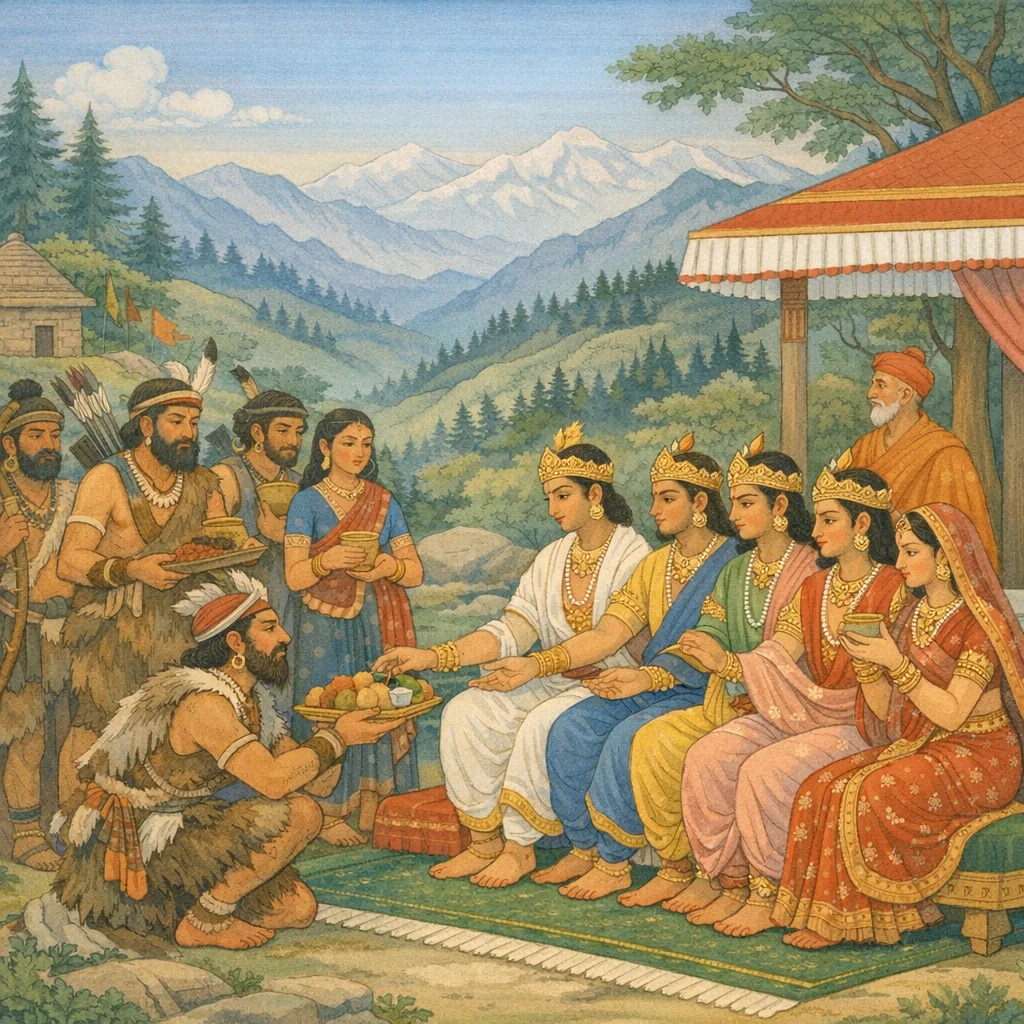
वैशम्पायन उवाच एवं सम्भाषमाणास्ते सुबाहुविषयं महत् । ददृशुर्मुदिता राजन् प्रभूतगजवाजिमत्,वैशम्पायनजी कहते हैं--जनमेजय! इस प्रकार बातचीत करते हुए वे सब लोग आगे बढ़े। कुछ दूर जानेपर उन्हें कुलिन्दराज सुबाहुका विशाल राज्य दिखायी दिया, जहाँ हाथी- घोड़ोंकी बहुतायत थी, और सैकड़ों किरात, तंगण एवं कुलिन्द आदि जंगली जातियोंके लोग निवास करते थे। वह देवताओंसे सेवित देश हिमालयके अत्यन्त समीप था। वहाँ अनेक प्रकारकी आश्चर्यजनक वस्तुएँ दिखायी देती थीं। सुबाहुका वह राज्य देखकर उन सबको बड़ी प्रसन्नता हुई। कुलिन्दोंके राजा सुबाहुको जब यह पता लगा कि मेरे राज्यमें पाण्डव आये हैं, तब उसने राज्यकी सीमापर जाकर बड़े आदर-सत्कारके साथ उन्हें अपनाया। उसके द्वारा प्रेमसे पूजित होकर वे सब लोग बड़े सुखसे वहाँ रहे
Vaiśampāyana said: “O King, as they went on, speaking thus among themselves, they beheld with joy the vast realm of Subāhu, abounding in elephants and horses.”
Verse 25
किराततड्गणाकीर्ण पुलिन्दशतसंकुलम् | हिमवत्यमरैर्जुष्टं बद्दाश्चर्यसमाकुलम् | सुबाहुश्चापि तान् दृष्टवा पूजया प्रत्यगृह्नत,वैशम्पायनजी कहते हैं--जनमेजय! इस प्रकार बातचीत करते हुए वे सब लोग आगे बढ़े। कुछ दूर जानेपर उन्हें कुलिन्दराज सुबाहुका विशाल राज्य दिखायी दिया, जहाँ हाथी- घोड़ोंकी बहुतायत थी, और सैकड़ों किरात, तंगण एवं कुलिन्द आदि जंगली जातियोंके लोग निवास करते थे। वह देवताओंसे सेवित देश हिमालयके अत्यन्त समीप था। वहाँ अनेक प्रकारकी आश्चर्यजनक वस्तुएँ दिखायी देती थीं। सुबाहुका वह राज्य देखकर उन सबको बड़ी प्रसन्नता हुई। कुलिन्दोंके राजा सुबाहुको जब यह पता लगा कि मेरे राज्यमें पाण्डव आये हैं, तब उसने राज्यकी सीमापर जाकर बड़े आदर-सत्कारके साथ उन्हें अपनाया। उसके द्वारा प्रेमसे पूजित होकर वे सब लोग बड़े सुखसे वहाँ रहे
Vaiśampāyana said: They went on while conversing, and after some distance they beheld the vast realm of Subāhu, king of the Kulindas—crowded with Kirātas and Taṅgaṇas and thronged with hundreds of Pulindas. Lying close to Himavat and frequented by the gods, that country was filled with wondrous sights. Seeing Subāhu’s kingdom, they were greatly delighted; and when Subāhu learned that the Pāṇḍavas had entered his domain, he went out to the frontier and received them with affectionate honor and hospitality, so that they stayed there in comfort.
Verse 26
विषयान्ते कुलिन्दानामी श्वर: प्रीतिपूर्वकम् । ततस्ते पूजितास्तेन सर्व एव सुखोषिता:,वैशम्पायनजी कहते हैं--जनमेजय! इस प्रकार बातचीत करते हुए वे सब लोग आगे बढ़े। कुछ दूर जानेपर उन्हें कुलिन्दराज सुबाहुका विशाल राज्य दिखायी दिया, जहाँ हाथी- घोड़ोंकी बहुतायत थी, और सैकड़ों किरात, तंगण एवं कुलिन्द आदि जंगली जातियोंके लोग निवास करते थे। वह देवताओंसे सेवित देश हिमालयके अत्यन्त समीप था। वहाँ अनेक प्रकारकी आश्चर्यजनक वस्तुएँ दिखायी देती थीं। सुबाहुका वह राज्य देखकर उन सबको बड़ी प्रसन्नता हुई। कुलिन्दोंके राजा सुबाहुको जब यह पता लगा कि मेरे राज्यमें पाण्डव आये हैं, तब उसने राज्यकी सीमापर जाकर बड़े आदर-सत्कारके साथ उन्हें अपनाया। उसके द्वारा प्रेमसे पूजित होकर वे सब लोग बड़े सुखसे वहाँ रहे
Vaiśampāyana said: At the frontier of the Kulindas’ territory, their ruler—moved by goodwill—received them with affectionate honor. Having been thus respectfully welcomed by him, all of them stayed there in comfort.
Verse 27
प्रतस्थुर्विमले सूर्ये हिमवन्तं गिरिं प्रति । इन्द्रसेनमुखां श्वापि भृत्यान् पौरोगवांस्तथा,दूसरे दिन निर्मल प्रभातकालमें सूर्योदय होनेपर उन सबने हिमालय पर्वतकी ओर प्रस्थान किया। जनमेजय! इन्द्रसेन आदि सेवकों, रसोइयों और पाक-शालाके अध्यक्षको तथा द्रौपदीके सारे सामानोंको कुलिन्दराज सुबाहुके यहाँ सौंपकर वे महापराक्रमी महारथी कुरुकुलनन्दन पाण्डव द्रौपदीके साथ धीरे-धीरे पैदल ही चल दिये। उनके मनमें अर्जुनको देखनेकी बड़ी उत्कण्ठा थी। अतः वे बड़े हर्ष और उलल्लासके साथ उस देशसे प्रस्थित हुए
Vaiśampāyana said: When the sun rose in a clear, spotless morning, they set out toward the Himavat mountain. They entrusted Indrasena and the other attendants—along with the cooks and the superintendent of the kitchen—and the rest of Draupadī’s belongings to King Subāhu of the Kulindas; then the mighty, great chariot-warriors, the Pāṇḍavas—scions of the Kuru line—departed with Draupadī, proceeding slowly on foot. Their hearts were eager to see Arjuna, and so they left that land with joy and high spirits.
Verse 28
सूदांश्व पारिबहश्चि द्रौपद्या: सर्वशो नृप । राज्ञ: कुलिन्दाधिपते: परिदाय महारथा:,दूसरे दिन निर्मल प्रभातकालमें सूर्योदय होनेपर उन सबने हिमालय पर्वतकी ओर प्रस्थान किया। जनमेजय! इन्द्रसेन आदि सेवकों, रसोइयों और पाक-शालाके अध्यक्षको तथा द्रौपदीके सारे सामानोंको कुलिन्दराज सुबाहुके यहाँ सौंपकर वे महापराक्रमी महारथी कुरुकुलनन्दन पाण्डव द्रौपदीके साथ धीरे-धीरे पैदल ही चल दिये। उनके मनमें अर्जुनको देखनेकी बड़ी उत्कण्ठा थी। अतः वे बड़े हर्ष और उलल्लासके साथ उस देशसे प्रस्थित हुए
Vaiśampāyana said: “O king, having entrusted to the Kulinda ruler the attendants, the bearers, and all of Draupadī’s belongings, those mighty warriors set out on foot, slowly, with Draupadī. Their hearts were eager to see Arjuna; therefore, at sunrise on the next clear morning, they departed that land with joy and exhilaration, heading toward the Himālaya.”
Verse 29
पद्धिरेव महावीर्या ययु: कौरवनन्दना: । ते शनै: प्राद्रवन् सर्वे कृष्णया सह पाण्डवा: । तस्माद् देशात् सुसंहृष्टा द्रष्टकामा धनंजयम्,दूसरे दिन निर्मल प्रभातकालमें सूर्योदय होनेपर उन सबने हिमालय पर्वतकी ओर प्रस्थान किया। जनमेजय! इन्द्रसेन आदि सेवकों, रसोइयों और पाक-शालाके अध्यक्षको तथा द्रौपदीके सारे सामानोंको कुलिन्दराज सुबाहुके यहाँ सौंपकर वे महापराक्रमी महारथी कुरुकुलनन्दन पाण्डव द्रौपदीके साथ धीरे-धीरे पैदल ही चल दिये। उनके मनमें अर्जुनको देखनेकी बड़ी उत्कण्ठा थी। अतः वे बड़े हर्ष और उलल्लासके साथ उस देशसे प्रस्थित हुए
Vaiśampāyana said: The mighty heroes, the beloved sons of the Kuru line, set out on foot. All the Pāṇḍavas, together with Kṛṣṇā (Draupadī), proceeded slowly from that place, filled with joy and eagerness to see Dhanañjaya (Arjuna). Their restrained pace reflects purposeful resolve rather than haste, as their minds are fixed on reunion and the larger dharmic aim that depends upon Arjuna’s return.
Verse 139
इस प्रकार श्रीमह्याभारत वनपर्वके अन्तर्गत तीर्थयात्रापर्वमें लोगशती र्थयात्राके प्रसंगमें पाण्डवॉका कैलास आदि पर्वतमालाओंगें प्रवेशविषयक एक सौ उनतालीसवाँ अध्याय पूरा हुआ
Thus, in the Śrī Mahābhārata’s Vana Parva—within the Tīrthayātrā Parva—on the occasion of the pilgrimage to the sacred places of the world, the one-hundred-and-thirty-ninth chapter, describing the Pāṇḍavas’ entry into the mountain ranges beginning with Kailāsa, is concluded.
Verse 140
इति श्रीमहा भारते वनपर्वणि तीर्थयात्रापर्वणि लोमशतीर्थयात्रायां गन्धमादनप्रवेशे चत्वारिंशदाधिकशततमो< ध्याय:,इस प्रकार श्रीमहाभारत वनपर्वके अन्तर्गत तीर्थयात्रापर्वमें लोमशती र्थयात्राके प्रसंगमें गन्धमादनप्रवेशविषयक एक सौ चालीसवाँ अध्याय पूरा हुआ
Thus, in the Śrī Mahābhārata’s Vana Parva—within the Tīrthayātrā Parva—on the occasion of Lomasa’s pilgrimage, the one-hundred-and-fortieth chapter, describing the entry into Gandhamādana, is concluded.
Frequently Asked Questions
Whether prudence demands reducing the party and separating for safety, or whether dharmic solidarity requires staying together despite risk—balancing protection, consent, and the burdens of leadership.
Endurance is not only physical: disciplined intent (tapas), clear judgment, and mutual responsibility allow difficult aims to be pursued without sacrificing care for companions.
No formal phalaśruti is stated; the meta-lesson is embedded in narrative validation—Yudhiṣṭhira’s benedictions and Lomāśa’s framing present ethical resolve and austerity as the chapter’s interpretive key.