Adhyaya 140
कैलास-श्वेतगिरि-प्रवेशवर्णनम् (Approach to Śveta Mountain and Kailāsa; Lomāśa’s Warnings and Protective Instructions)
Upa-parva: Tīrtha-yātrā Parva (Pilgrimage Catalogue and Sacred Geography Episode)
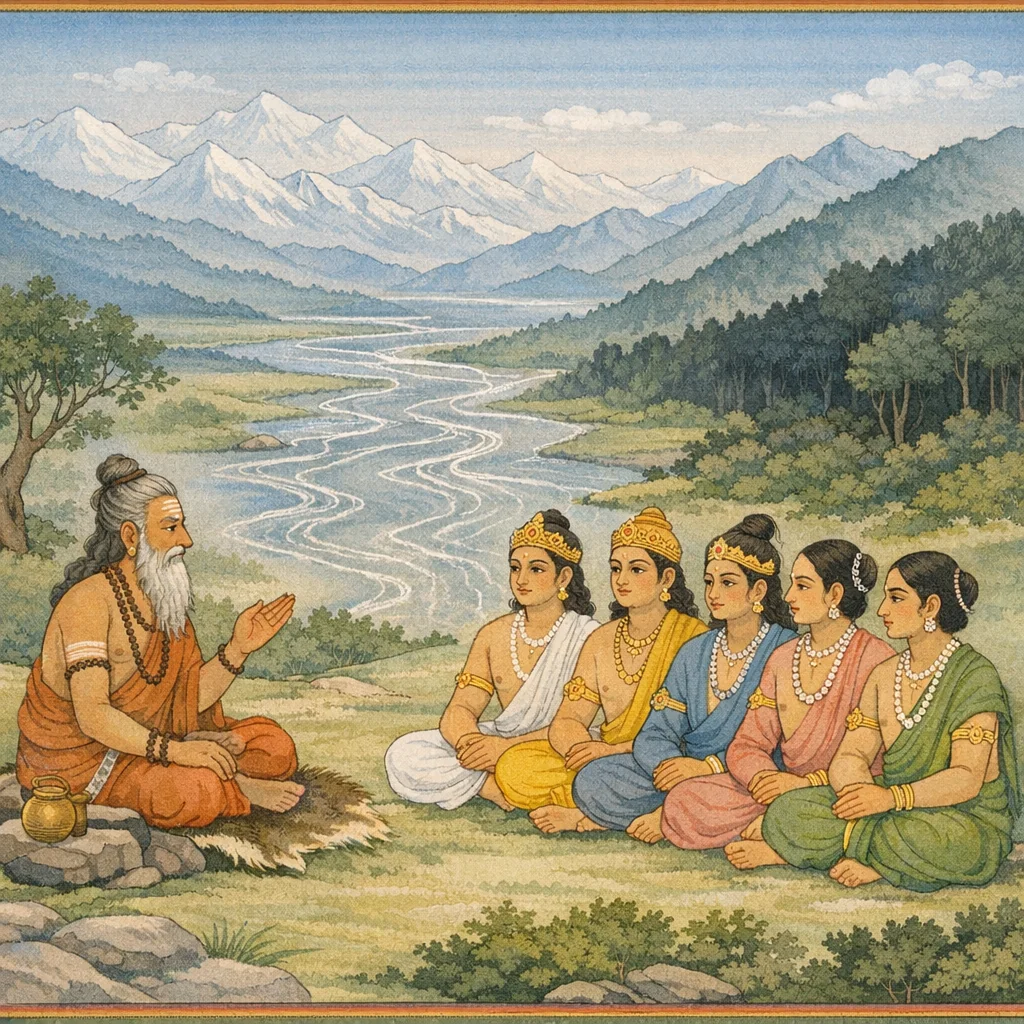
Lomāśa addresses the Pāṇḍavas, enumerating the mountains already traversed (including Maināka, Śveta, Kālaśaila) and pointing to a radiant, sevenfold manifestation of Gaṅgā associated with a pure (virajasa) sacred locale where fire is continuously kindled. He states that such sights are not readily accessible to ordinary perception and prescribes concentrated composure (samādhi) as a prerequisite for beholding these tīrthas. The party’s intended entry into Śveta mountain and Mandara is framed as passage into Kubera’s sphere, populated by vast numbers of swift gandharvas and multiplied hosts of yakṣas and kiṃpuruṣas, diverse in form and armament, devoted to the yakṣa-lord Māṇibhadra. Lomāśa stresses their power, speed, and the guarded, inaccessible nature of the mountains, including protection by formidable beings and rākṣasas aligned with Kubera. Kailāsa is described in grand measure and as a convergence point for devas and innumerable beings proceeding toward Kubera’s residence. The guidance culminates in an ethical-ritual protocol: proceed with tapas and self-restraint under protection, invoke auspicious guardianship (Varuṇa, Yama, Gaṅgā, Yamunā, the mountain), and maintain heightened care. Yudhiṣṭhira interprets Lomāśa’s unusual urgency as an indicator of exceptional danger, instructing the group to guard Kṛṣṇā (Draupadī) and practice increased purity. Vaiśaṃpāyana narrates a directive to Bhīma to protect Draupadī in Arjuna’s absence, and Yudhiṣṭhira reassures the twins (Nakula and Sahadeva) with restrained emotion, urging fearless, attentive movement.
Chapter Arc: लोमश ऋषि पाण्डवों को उत्तराखण्ड की ओर ले चलते हैं—उशीरबीज, मैनाक, श्वेत आदि पर्वत-प्रदेशों का नामोच्चार ही यात्रा की विराटता और दुर्गमता का संकेत देता है। → गंगा के सात धाराओं से सुशोभित, ‘विरज’ (रजोगुण-रहित) पुण्य-स्थान का वर्णन होते ही लोमश चेताते हैं कि यह अद्भुत तीर्थ साधारण मानुष-नेत्रों से सहज नहीं देखा जा सकता; संयम, समाधि और तप की आवश्यकता है। आगे कुबेर के सचिवों तथा रौद्र/मैत्र नामक राक्षसों के सामना होने की आशंका यात्रा को भय-छाया देती है। → लोमश पार्थ (युधिष्ठिर/अर्जुन-संदर्भित ‘कौन्तेय’) को आदेश देते हैं कि तप, दम और संयम से इन दुर्गम प्रदेशों में प्रवेश करो—मैं अपनी तपस्या से और भीमसेन अपने बल से तुम्हारी रक्षा करेंगे। फिर गंगा/शैलसुता से निवेदन कर पर्वत-मार्गों में प्रवेश हेतु ‘शर्म’ (अभय/कल्याण) माँगा जाता है—देवी-प्रार्थना और राक्षस-आशंका के बीच यात्रा का निर्णायक क्षण। → युधिष्ठिर भीम को द्रौपदी की रक्षा के लिए सावधान करते हैं—अर्जुन के दूर/अनुपस्थित होने पर भय के समय द्रौपदी का आश्रय भीम ही है। तत्पश्चात वे नकुल-सहदेव (यमौ) को साथ लेकर स्नेहपूर्वक ढाढ़स बँधाते हैं—‘मा भैष्टम्, अप्रमतौ आगच्छतम्’—और दल को अनुशासन व धैर्य में स्थिर करते हैं। → कुबेर-प्रदेश के राक्षसों से संभावित मुठभेड़ और कैलासादि गिरियों में वास्तविक प्रवेश का संकट अगले अध्यायों के लिए टलता हुआ भय बनकर रहता है।
Shlokas
Verse 1
हि >> न () है एकोनचत्वारिशर्दाधिकशततमो< ध्याय: पाण्डवोंकी उत्तराखण्ड-यात्रा और लोमशजीद्वारा उसकी दुर्गमताका कथन लोगश उवाच उशीरबीजं मैनाकं गिरिं श्वेतं च भारत । समतीतो5सि कौन्तेय कालशैलं च पार्थिव,लोमशजी कहते हैं--भरतनन्दन युधिष्ठिर! अब तुम उशीरबीज, मैनाक, श्वेत और कालशैल नामक पहाड़ोंको लाँघधकर आगे बढ़ आये
Lomaśa said: “O Bhārata, O Kaunteya—O king—having crossed beyond the mountains named Uśīrabīja, Maināka, Śveta, and Kālaśaila, you have now advanced further on your northern journey.”
Verse 2
एषा गड़ा सप्तविधा राजते भरतर्षभ । स्थानं विरजसं पुण्य यत्राग्निर्नित्यमिध्यते,भरतश्रेष्ठ। यह देखो गंगाजी सात धाराओंसे सुशोभित हो रही हैं। यह रजोगुणरहित पुण्यतीर्थ है, जहाँ सदा अग्निदेव प्रज्वलित रहते हैं
Lomaśa said: “O bull among the Bharatas, behold—here the Gaṅgā shines forth in sevenfold form. This is a pure and sacred place, free from the dust of passion, where the sacred fire is kindled continually.”
Verse 3
एतद् वै मानुषेणाद्य न शव्यं द्रष्टमद्भुतम् । समाधिं कुरुताव्यग्रास्तीर्थान्येतानि द्रक्ष्यथ,यह अद्भुत तीर्थ कोई मनुष्य नहीं देख सकता, अतः तुम सब लोग एकाग्रचित्त हो जाओ । व्यग्रताशून्य हृदयसे तुम इन सब तीर्थोंका दर्शन कर सकोगे
“Truly, this wondrous sight cannot be beheld today by an ordinary human in a distracted state. Therefore, become composed and one-pointed, free from agitation; then you will be able to behold these sacred fords (tīrthas).”
Verse 4
एतद् द्रक्ष्यसि देवानामाक्रीडं चरणाडुकितम् । अतिक्रान्तोडसि कौन्तेय कालशैलं च पर्वतम्
“You will now behold this playground of the gods, marked by the impressions of their feet. O son of Kuntī, you have already crossed beyond the Kālaśaila mountain.”
Verse 5
श्वेतं गिरिं प्रवेक्ष्यामो मन्दरं चैव पर्वतम् । यत्र माणिवरो यक्ष: कुबेरश्वैव यक्षराट्
Lomaśa said: “We shall enter the White Mountain and also Mount Mandara—where dwells the Yakṣa Māṇivara, and Kubera himself, the sovereign of the Yakṣas.”
Verse 6
यह देवताओंकी क्रीडास्थली है, जो उनके चरणचिह्नोंसे अंकित है। एकाग्रचित्त होनेपर तुम्हें इसका भी दर्शन होगा। कुन्तीकुमार! अब तुम कालशैल पर्वतको लाँघकर आगे बढ़ आये। इसके बाद हम श्वेतगिरि (कैलास) तथा मन्दराचल पर्वतमें प्रवेश करेंगे, जहाँ माणिवर यक्ष और यक्षराज कुबेर निवास करते हैं ।। अष्टाशीतिसहस््राणि गन्धर्वा: शीघ्रगामिन: । तथा किंपुरुषा राजन यक्षाश्वैव चतुर्गुणा:,राजन! वहाँ तीव्रगतिसे चलनेवाले अद्बासी हजार गन्धर्व और उनसे चौगुने किन्नर तथा यक्ष रहते हैं। उनके रूप एवं आकृति अनेक प्रकारकी हैं। वे भाँति-भाँतिके अस्त्र-शस्त्र धारण करते हैं और यक्षराज माणिभद्रकी उपासनामें संलग्न रहते हैं
Lomaśa said: “This is a playground of the gods, marked by their footprints. When your mind becomes one-pointed, you too will behold it. O son of Kuntī, you have now crossed Mount Kālaśaila and come forward. Next we shall enter Śvetagiri (Kailāsa) and Mount Mandara, where the Yakṣa Māṇivara and Kubera, king of the Yakṣas, dwell. There are eighty-eight thousand swift-moving Gandharvas there, and, O king, four times as many Kiṃpuruṣas and Yakṣas. Their forms and appearances are of many kinds; they bear diverse weapons, and remain devoted to the worship and service of the Yakṣa-lord Māṇibhadra.”
Verse 7
अनेकरूपसंस्थाना नानाप्रहरणाश्ष ते । यक्षेन्द्र मनुजश्रेष्ठ माणिभद्रमुपासते,राजन! वहाँ तीव्रगतिसे चलनेवाले अद्बासी हजार गन्धर्व और उनसे चौगुने किन्नर तथा यक्ष रहते हैं। उनके रूप एवं आकृति अनेक प्रकारकी हैं। वे भाँति-भाँतिके अस्त्र-शस्त्र धारण करते हैं और यक्षराज माणिभद्रकी उपासनामें संलग्न रहते हैं
O king of the Yakṣas, O best of men: they are established in many different forms and appearances, and they bear weapons of many kinds. They remain devoted to the worship and service of Māṇibhadra.
Verse 8
तेषामृद्धिरतीवात्र गतौ वायुसमाश्न ते । स्थानात् प्रच्यावयेयुयें देवराजमपि ध्रुवम्,यहाँ उनकी समृद्धि अतिशय बढ़ी हुई है। तीव्रगतिमें वे वायुकी समानता करते हैं। वे चाहें तो देवराज इन्द्रको भी निश्चय ही अपने स्थानसे हटा सकते हैं
Here their prosperity is exceedingly great. In swiftness of movement they rival the wind. Indeed, if they so wished, they could surely dislodge even Indra, the king of the gods, from his own station.
Verse 9
तैस्तात बलिभिर्गुप्ता यातुधानैश्व रक्षिता: । दुर्गमा: पर्वता: पार्थ समाधि परमं कुरु,तात युधिष्ठिर! उन बलवान् यक्ष और राक्षसोंसे सुरक्षित रहनेके कारण ये पर्वत बड़े दुर्गम हैं। अतः तुम विशेषरूपसे एकाग्रचित्त हो जाओ
“Dear child, these mountains are hard to traverse, for they are guarded by mighty beings and protected by yakṣas and rākṣasas. Therefore, O son of Pṛthā—dear Yudhiṣṭhira—establish yourself in the highest concentration of mind.”
Verse 10
कुबेरसचिवाश्रान्ये रौद्रा मैत्राश्न राक्षसा: । तै: समेष्याम कौन्तेय संयतो विक्रमेण च,कुबेरके सचिवगण तथा अन्य रौद्र और मैत्र नामक राक्षसोंका हमें सामना करना पड़ेगा; अतः तुम पराक्रमके लिये तैयार रहो
“Kubera’s attendants, and other rākṣasas named Raudra and Maitra, will confront us. Therefore, O son of Kuntī, brace yourself—be disciplined and ready to meet them with steadfast valor.”
Verse 11
कैलास: पर्वतो राजन् षड्योजनसमुच्छित: । यत्र देवा समायान्ति विशाला यत्र भारत,राजन्! उधर छ: योजन ऊँचा कैलासपर्वत दिखायी देता है जहाँ देवता आया करते हैं। भारत! उसीके निकट विशालापुरी (बदरिकाश्रमतीर्थ) है
Lomasa said: “O King, there stands Mount Kailāsa, rising to a height of six yojanas. It is a place where the gods assemble. And nearby, O Bhārata, lies the great city (Viśālā)—the sacred region associated with Badarikāśrama.”
Verse 12
असंख्येयास्तु कौन्तेय यक्षराक्षसकिन्नरा: । नागा: सुपर्णा गन्धर्वा: कुबेरसदनं प्रति,कुन्तीनन्दन! कुबेरके भवनमें अनेक यक्ष, राक्षस, किन्नर, नाग, सुपर्ण तथा गन्धर्व निवास करते हैं
Lomaśa said: “O son of Kuntī, innumerable Yakṣas, Rākṣasas, Kinnaras, Nāgas, Suparṇas, and Gandharvas dwell in and around the abode of Kubera.”
Verse 13
तान् विगाहस्व पार्थद्य तपसा च दमेन च । रक्ष्यमाणो मया राजन् भीमसेनबलेन च,महाराज कुन्तीनन्दन! तुम भीमसेनके बल और मेरी तपस्यासे सुरक्षित हो तप एवं इन्द्रियसंयमपूर्वक रहते हुए आज उन तीर्थोमें स्नान करो
“O son of Pṛthā, enter those sacred waters and bathe—living with austerity and self-restraint. O King, protected by my ascetic power and by the strength of Bhīmasena, perform your immersion in these tīrthas today.”
Verse 14
स्वस्ति ते वरुणो राजा यमश्षु समितिंजय: । गड़ा च यमुना चैव पर्वतश्न दधातु ते,राजा वरुण, युद्धविजयी यमराज, गंगा-यमुना तथा यह पर्वत तुम्हें कल्याण प्रदान करें
May auspiciousness attend you. May King Varuṇa, and Yama the conqueror in battle, and likewise the rivers Gaṅgā and Yamunā, and the mountain, grant you well-being.
Verse 15
मरुतश्न सहश्रि भ्यां सरितश्ष सरांसि च । स्वस्ति देवासुरेभ्यश्व वसुभ्यश्च महाद्युते,महाद्युते! मरुदगण, अश्विनीकुमार, सरिताएँ और सरोवर भी तुम्हारा मंगल करें। देवताओं, असुरों तथा वसुओंसे भी तुम्हें कल्याणकी प्राप्ति हो
Lomaśa said: “May the Maruts in their countless hosts, the rivers and the lakes, bring you well-being. May you also receive auspiciousness from the gods and the asuras, and from the Vasus, O radiant one.”
Verse 16
इन्द्रस्य जाम्बूनदपर्वताद् वै शृणोमि घोषं तव देवि गज्ले । गोपायैनं त्वं सुभगे गिरिभ्य: सर्वाजमीढापचितं नरेन्द्रम्,देवि गंगे। मैं इन्द्रके सुवर्णमय मेरुपर्वतसे तुम्हाशा कलकलनाद सुन रहा हूँ। सौभाग्यशालिनि! ये राजा युधिष्ठिर अजमीढवंशी क्षत्रियोंक लिये आदरणीय हैं। तुम पर्वतोंसे इनकी रक्षा कराओ
Lomaśa said: “O Goddess Gaṅgā, from Indra’s golden mountain I hear your rushing roar. O auspicious one, protect this king—Yudhiṣṭhira—honoured by all the descendants of Ajamiḍha. Keep him safe from the perils of these mountains.”
Verse 17
ददस्व शर्म प्रविविक्षतो 5स्य शैलानिमाञ्छैलसुते नृपस्य । उक्त्वा तथा सागरगां स विप्रो यत्तो भवस्वेति शशास पार्थम्,'शैलपुत्रि! ये इन पर्वतमालाओंमें प्रवेश करना चाहते हैं। तुम इन्हें कल्याण प्रदान करो।' समुद्रगामिनी गंगानदीसे ऐसा कहकर विप्रवर लोमशने कुन्तीकुमार युधिष्ठिरको यह आदेश दिया कि “अब तुम एकाग्रचित्त हो जाओ”
Lomaśa said: “O daughter of the mountain, grant well-being to this king as he seeks to enter these mountain ranges.” Having spoken thus to Gaṅgā, the river that flows to the ocean, that eminent brāhmaṇa then instructed Pārtha (Yudhiṣṭhira): “Now be composed and single-minded.”
Verse 18
युधिछिर उवाच अपूर्वोडयं सम्भ्रमो लोमशस्य कृष्णां च सर्वे रक्षत मा प्रमादम् | देशो हाय॑ दुर्गतमो मतो5स्य तस्मात् परं शौचमिहाचरध्वम्,युधिष्ठिर बोले--बन्धुओ! आज महर्षि लोमशको बड़ी घबराहट हो रही है। यह एक अभूतपूर्व घटना है। अतः तुम सब लोग सावधान होकर द्रौपदीकी रक्षा करो। प्रमाद न करना। लोमशजीका मत है कि यह प्रदेश अत्यन्त दुर्गम है। अतः यहाँ अत्यन्त शुद्ध आचार-विचारसे रहो
Yudhiṣṭhira said: “This sudden alarm of the sage Lomaśa is unprecedented. Therefore all of you stay vigilant and protect Kṛṣṇā (Draupadī); do not lapse into carelessness. He judges this region to be exceedingly difficult and perilous—so here, conduct yourselves with the utmost purity and disciplined restraint.”
Verse 19
वैशम्पायन उवाच ततो<ब्रवीद् भीममुदारवीर्य कृष्णां यत्त: पालय भीमसेन । शून्येडर्जुनेडसंनिहिते च तात त्वामेव कृष्णा भजते भयेषु,वैशम्पायनजी कहते हैं--जनमेजय! तदनन्तर राजा युधिष्ठिर महाबली भीमसे इस प्रकार बोले--“भैया भीमसेन! तुम सावधान रहकर द्रौपदीकी रक्षा करो। तात! किसी निर्जन प्रदेशमें जबकि अर्जुन हमारे समीप नहीं हैं भयका अवसर उपस्थित होनेपर द्रौपदी तुम्हारा ही आश्रय लेती है”
Vaiśampāyana said: Then the king of noble prowess addressed Bhīma: “Bhīmasena, be vigilant and protect Kṛṣṇā (Draupadī). Dear one, when we are in a lonely place and Arjuna is not nearby, it is you alone that Kṛṣṇā turns to for refuge in times of fear.”
Verse 20
ततो महात्मा स यमौ समेत्य मूर्थन्युपाप्राय विमृज्य गात्रे । उवाच तौ बाष्पकलं स राजा मा भैष्टमागच्छतमप्रमत्तौ,तत्पश्चात् महात्मा राजा युधिष्ठिरने नकुल-सहदेवके पास जाकर उनका मस्तक सूँघा और शरीरपर हाथ फेरा। फिर नेत्रोंसे आँसू बहाते हुए कहा--'भैया! तुम दोनों भय न करो और सावधान होकर आगे बढ़ो”
Then that great-souled king approached the twin brothers, drew close to their heads, affectionately smelling them and stroking their limbs. With tears welling in his eyes, he said, “Do not be afraid, brothers; come forward, but remain vigilant.”
Verse 139
इति श्रीमहाभारते वनपर्वणि तीर्थयात्रापर्वणि लोमशतीर्थयात्रायां कैलासादिगिरिप्रवेशे एकोनचत्वारिंशदधिकशततमो<ध्याय:
Thus, in the Śrī Mahābhārata, within the Vana Parva—specifically the section on pilgrimage—during Lomāśa’s guided pilgrimage, at the episode of entering the mountain region beginning with Kailāsa, ends the one-hundred-and-thirty-ninth chapter. This colophon marks a transition in the sacred travel narrative, framing the journey as a dharmic practice of purification and reverent approach to holy places.
Frequently Asked Questions
The tension lies between the impulse to advance into revered but hazardous sacred terrain and the obligation to minimize risk to companions—resolved by prioritizing restraint, vigilance, and delegated protection (notably Draupadī’s safeguarding).
Sacred vision is framed as discipline-dependent: access to tīrthas and higher geographies requires samādhi-like attentiveness, sustained tapas, and dama, rather than mere physical travel or curiosity.
No explicit phalaśruti is stated; the chapter instead functions as procedural meta-guidance, linking purity, restraint, and protective conduct to successful and safe engagement with sacred spaces and their custodial beings.