Adhyaya 14
Dyūta-doṣa-prakāśana — Kṛṣṇa’s Critique of Gambling and the Exile Crisis
Upa-parva: Dice-Consequences Discourse (Dyūta-nindā / Exile-Context Episode)
Chapter 14 presents Vāsudeva (Kṛṣṇa) addressing a Kuru prince in exile-context, stating that had he been present in Dvārakā’s earlier phase, he would have gone to the Kuru dice-match even uninvited. He outlines a planned intervention: to prohibit the game by demonstrating its many defects; to convene senior authorities (Bhīṣma, Droṇa, Kṛpa, and Bāhlīka) as institutional counterweights; and to assign responsibility to the instigators, notably Duryodhana, for corrupting the royal order. Kṛṣṇa enumerates gambling’s predictable consequences—rapid loss of wealth, unconsumed property destruction, escalation of harsh speech, and compulsive repetition. He situates gambling among four ‘vyasana’ driven by desire: women, dice, hunting, and drinking, with gambling singled out as especially requiring explicit censure. If persuasion failed, he claims he would have restrained the offender by force and fractured the coalition of deceptive sabhā-members who enabled the vice. The chapter closes with Kṛṣṇa’s acknowledgment that his absence in Ānarta allowed the calamity, and his urgent arrival after hearing of the Pandavas’ distress, expressing shared anguish at witnessing their suffering.
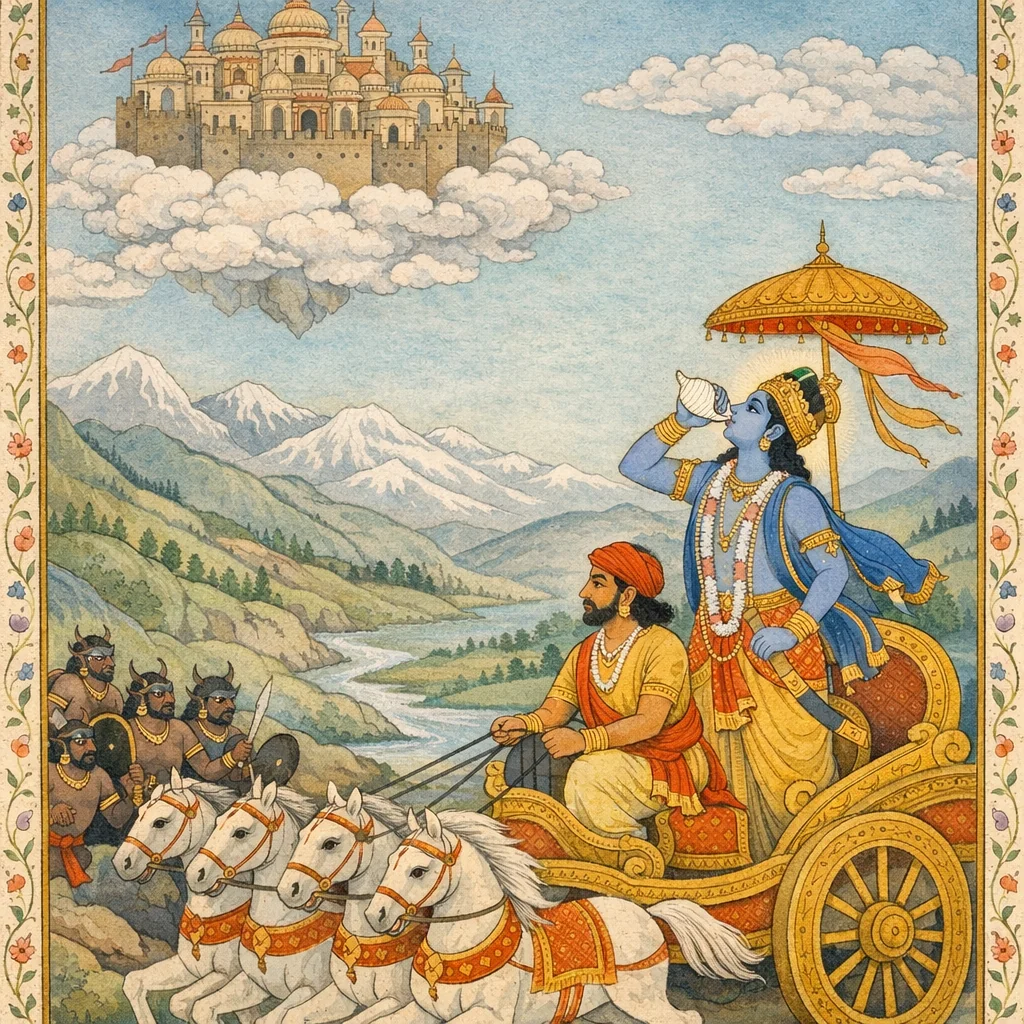
Chapter Arc: द्यूत-सभा में समय पर न पहुँच पाने का कारण पूछे जाने पर श्रीकृष्ण स्वयं अपनी अनुपस्थिति का रहस्य खोलते हैं—वे हस्तिनापुर से दूर, शाल्व के सौभ-नगर पर प्रलय-सम युद्ध में उलझे थे। → कृष्ण शिशुपाल-वध के बाद शाल्व के क्रोध और प्रतिशोध की पृष्ठभूमि बताते हैं; शाल्व का सौभ-विमान, दानवी सेना और उसकी धृष्ट प्रतिज्ञा द्वारका के लिए संकट बनती है। कृष्ण प्रतिज्ञा करते हैं कि शाल्व का गर्व चूर किए बिना वे लौटेंगे नहीं। → कृष्ण पाञ्चजन्य शंख फूँककर शाल्व को समर में ललकारते हैं; सौभ-निवासी दानवों सहित घोर युद्ध होता है और कृष्ण उन्हें वश में कर भूमि पर गिरा देते हैं—सौभ-युद्ध का निर्णायक क्षण। → शाल्व-सौभ का विनाश कर कृष्ण का उद्देश्य पूर्ण होता है; तभी उन्हें हस्तिनापुर में द्यूत से उपजा अनर्थ सुनाई देता है और वे दुखित होकर पाण्डवों को देखने के लिए शीघ्र लौट आते हैं—यही उनके विलंब का कारण था। → कृष्ण के लौटते ही द्यूत-जनित विपत्ति का भार सामने है—अब पाण्डवों के वन-गमन और आगे के धर्म-संकटों का मार्ग खुलता है।
Shlokas
Verse 1
हि ० आय न [हुक हि 7 आम चतुर्दशो 5 ध्याय: द्यूतके समय न पहुँचनेमें श्रीकृष्णके द्वारा शाल्वके साथ युद्ध करने और सौभविमानसहित उसे नष्ट करनेका संक्षिप्त वर्णन युधिछिर उवाच असांनिध्यं कथं कृष्ण तवासीदू वृष्णिनन्दन । क्व चासीदू विप्रवासस्ते कि चाकार्षी: प्रवासत:,युधिष्ठिरने कहा--वृष्णिकुलको आनन्दित करनेवाले श्रीकृष्ण! जब यहाँ द्यूतक्रीडाका आयोजन हो रहा था, उस समय तुम द्वारकामें क्यों अनुपस्थित रहे? उन दिनों तुम्हारा निवास कहाँ था और उस प्रवासके द्वारा तुमने कौन-सा कार्य सिद्ध किया?
Yudhiṣṭhira said: “O Kṛṣṇa, delight of the Vṛṣṇis—how was it that you were not present when the dice-game was being arranged here? Where were you living during that time of absence, and what purpose did you accomplish by that sojourn away?”
Verse 2
श्रीकृष्ण उवाच शाल्वस्य नगरं सौभं॑ गतो<5हं भरतर्षभ । निहन्तुं कौरवश्रेष्ठ तत्र मे शूणु कारणम्,श्रीकृष्णने कहा--भरतवंशशिरोमणे! कुरुकुलभूषण! मैं उन दिनों शाल्वके सौभ नामक नगराकार विमानको नष्ट करनेके लिये गया हुआ था। इसका क्या कारण था, वह बतलाता हूँ, सुनिये। भरतश्रेष्ठी आपके राजसूययज्ञमें अग्रपूजाके प्रश्नको लेकर जो क्रोधके वशीभूत हो इस कार्यको नहीं सह सका था और इसीलिये जिस दुरात्मा, महातेजस्वी, महाबाहु एवं महायशस्वी दमघोषनन्दन वीर राजा शिशुपालको मैंने मार डाला था; उसकी मृत्युका समाचार सुनकर शाल्व प्रचण्ड रोषसे भर गया। भारत! मैं तो यहाँ हस्तिनापुरमें था और वह हमलोगोंसे सूनी द्वारकापुरीमें जा पहुँचा
Śrī Kṛṣṇa said: “O bull among the Bharatas, O best of the Kurus, I went to destroy Śālva’s city called Saubha. Hear from me the reason for that.”
Verse 3
महातेजा महाबाहुर्यः स राजा महायशा: । दमघोषात्मजो वीर: शिशुपालो मया हतः,श्रीकृष्णने कहा--भरतवंशशिरोमणे! कुरुकुलभूषण! मैं उन दिनों शाल्वके सौभ नामक नगराकार विमानको नष्ट करनेके लिये गया हुआ था। इसका क्या कारण था, वह बतलाता हूँ, सुनिये। भरतश्रेष्ठी आपके राजसूययज्ञमें अग्रपूजाके प्रश्नको लेकर जो क्रोधके वशीभूत हो इस कार्यको नहीं सह सका था और इसीलिये जिस दुरात्मा, महातेजस्वी, महाबाहु एवं महायशस्वी दमघोषनन्दन वीर राजा शिशुपालको मैंने मार डाला था; उसकी मृत्युका समाचार सुनकर शाल्व प्रचण्ड रोषसे भर गया। भारत! मैं तो यहाँ हस्तिनापुरमें था और वह हमलोगोंसे सूनी द्वारकापुरीमें जा पहुँचा
Śrī Kṛṣṇa said: “That heroic king Śiśupāla—son of Damaghoṣa—was a man of great splendor, mighty arms, and wide renown; I slew him.”
Verse 4
यज्ञे ते भरतश्रेष्ठ राजसूये<र्हणां प्रति । स रोषवशमापन्नो नामृष्यत दुरात्मवान्,श्रीकृष्णने कहा--भरतवंशशिरोमणे! कुरुकुलभूषण! मैं उन दिनों शाल्वके सौभ नामक नगराकार विमानको नष्ट करनेके लिये गया हुआ था। इसका क्या कारण था, वह बतलाता हूँ, सुनिये। भरतश्रेष्ठी आपके राजसूययज्ञमें अग्रपूजाके प्रश्नको लेकर जो क्रोधके वशीभूत हो इस कार्यको नहीं सह सका था और इसीलिये जिस दुरात्मा, महातेजस्वी, महाबाहु एवं महायशस्वी दमघोषनन्दन वीर राजा शिशुपालको मैंने मार डाला था; उसकी मृत्युका समाचार सुनकर शाल्व प्रचण्ड रोषसे भर गया। भारत! मैं तो यहाँ हस्तिनापुरमें था और वह हमलोगोंसे सूनी द्वारकापुरीमें जा पहुँचा
Śrī Kṛṣṇa said: “O best of the Bharatas! At your Rājasūya sacrifice, when the question of the foremost honor (argha) arose, that wicked-minded man, overcome by anger, could not endure it.”
Verse 5
श्र॒त्वा तं निहतं शाल्वस्तीव्ररोषसमन्वित: । उपायाद् द्वारकां शून्यामिहस्थे मयि भारत,श्रीकृष्णने कहा--भरतवंशशिरोमणे! कुरुकुलभूषण! मैं उन दिनों शाल्वके सौभ नामक नगराकार विमानको नष्ट करनेके लिये गया हुआ था। इसका क्या कारण था, वह बतलाता हूँ, सुनिये। भरतश्रेष्ठी आपके राजसूययज्ञमें अग्रपूजाके प्रश्नको लेकर जो क्रोधके वशीभूत हो इस कार्यको नहीं सह सका था और इसीलिये जिस दुरात्मा, महातेजस्वी, महाबाहु एवं महायशस्वी दमघोषनन्दन वीर राजा शिशुपालको मैंने मार डाला था; उसकी मृत्युका समाचार सुनकर शाल्व प्रचण्ड रोषसे भर गया। भारत! मैं तो यहाँ हस्तिनापुरमें था और वह हमलोगोंसे सूनी द्वारकापुरीमें जा पहुँचा
Hearing that he had been slain, Śālva—seized by fierce wrath—advanced upon Dvārakā when it was left unguarded, O Bhārata, while I was staying here (away from it).
Verse 6
स तत्र योधितो राजन कुमारैर्वष्णिपुड्वै: । आगतः: कामगं सौभमारुहौव नृशंसवत्,राजन! वहाँ वृष्णिवंशके श्रेष्ठ कुमारोंने उसके साथ युद्ध किया। वह इच्छानुसार चलनेवाले सौभ नामक विमानपर बैठकर आया और क्रूर मनुष्यकी भाँति यादवोंकी हत्या करने लगा
O King, there he was confronted in battle by the foremost princes of the Vṛṣṇi line. Mounting the Saubha aerial city—able to move wherever its rider wished—he came and, like a ruthless man, began slaughtering the Yādavas.
Verse 7
ततो वृष्णिप्रवीरांस्तान् बालान् हत्वा बहुंस्तदा । पुरोद्यानानि सर्वाणि भेदयामास दुर्मति:,उस खोटी बुद्धिवाले शाल्वने वृष्णिवंशके बहुतेरे बालकोंका वध करके नगरके सब बगीचोंको उजाड़ डाला
Then that wicked-minded Śālva, having slain many of those young boys belonging to the foremost heroes of the Vṛṣṇi line, went on to devastate all the royal pleasure-gardens.
Verse 8
उक्तवांश्व महाबाहो क्वासौ वृष्णिकुलाधम: । वासुदेव: स मन्दात्मा वसुदेवसुतो गत:,महाबाहो! उसने यादवोंसे पूछा--“वह वृष्णिकुलका कलंक मन्दात्मा वसुदेवपुत्र वासुदेव कहाँ है?
He said, “O mighty-armed one, where is that disgrace of the Vṛṣṇi clan—Vāsudeva, that dull-souled son of Vasudeva? Where has he gone?”
Verse 9
तस्य युद्धार्थिनो दर्प युद्धे नाशयितास्म्यहम् । आनर्ता: सत्यमाख्यात तत्र गन्तास्मि यत्र सः,'उसे युद्धकी बड़ी इच्छा रहती है, आज उसके घमंडको मैं चूर कर दूँगा। आनर्तनिवासियो! सच-सच बतला दो। वह कहाँ है? जहाँ होगा, वहीं जाऊँगा और कंस तथा केशीका संहार करनेवाले उस कृष्णको मारकर ही लौटूँगा। मैं अपने अस्त्र-शस्त्रोंको छूकर सत्यकी सौगन्ध खाता हूँ कि अब कृष्णको मारे बिना नहीं लौटूँगा”
“In battle I shall crush the pride of that man who is so eager for war. O people of Ānarta, tell me the truth—where is he? Wherever he may be, there I shall go.”
Verse 10
त॑ हत्वा विनिवर्तिष्ये कंसकेशिनिषूदनम् | अहत्वा न निवर्तिष्ये सत्येनायुधभालभे,'उसे युद्धकी बड़ी इच्छा रहती है, आज उसके घमंडको मैं चूर कर दूँगा। आनर्तनिवासियो! सच-सच बतला दो। वह कहाँ है? जहाँ होगा, वहीं जाऊँगा और कंस तथा केशीका संहार करनेवाले उस कृष्णको मारकर ही लौटूँगा। मैं अपने अस्त्र-शस्त्रोंको छूकर सत्यकी सौगन्ध खाता हूँ कि अब कृष्णको मारे बिना नहीं लौटूँगा”
“Having slain him—Kṛṣṇa, the destroyer of Kaṁsa and Keśin—I shall return. If I do not slay him, I will not return. By truth, with my hand upon my weapons, I swear: I will not come back without killing Kṛṣṇa.”
Verse 11
क्वासौ क्वासाविति पुनस्तत्र तत्र प्रधावति । मया किल रणे योद्धुं काड्क्षमाण: स सौभराट्,सौभविमानका स्वामी शाल्व संग्रामभूमिमें मेरे साथ युद्धकी इच्छा रखकर चारों ओर दौड़ता और सबसे यही पूछता था कि “वह कहाँ है, कहाँ है?”
Again and again he rushed about here and there, crying, “Where is he, where is he?” Longing to fight with me in battle, Śālva—the lord of the Saubha aerial city—ran all around the battlefield, asking everyone the same question, driven on by warlike resolve and pride.
Verse 12
अद्य तं पापकर्माणि क्षुद्रें विश्वासघातिनम् । शिशुपालवधामर्षाद् गमयिष्ये यमक्षयम्,राजन! साथ ही वह यह भी कहता था कि “आज उस नीच पापाचारी और विश्वासघाती कृष्णको शिशुपालवधके अमर्षके कारण मैं यमलोक भेज दूँगा। उस पापीने मेरे भाई राजा शिशुपालको मार गिराया है, अतः मैं भी उसका वध करूँगा
He also declared, “Today, O king, I shall send Kṛṣṇa—that petty evil-doer, betrayer of trust—to Yama’s imperishable realm, driven by rage over the slaying of Śiśupāla.”
Verse 13
मम पापस्वभावेन भ्राता येन निपातित: । शिशुपालो महीपालस्तं वधिष्ये महीपते,राजन! साथ ही वह यह भी कहता था कि “आज उस नीच पापाचारी और विश्वासघाती कृष्णको शिशुपालवधके अमर्षके कारण मैं यमलोक भेज दूँगा। उस पापीने मेरे भाई राजा शिशुपालको मार गिराया है, अतः मैं भी उसका वध करूँगा
He said, “Because of my own sinful disposition, my brother—King Śiśupāla—was struck down by him. Therefore, O lord of the earth, I too shall kill that king.”
Verse 14
भ्राता बालश्न राजा च न च संग्राममूर्थनि । प्रमत्तश्न हतो वीरस्तं हनिष्ये जनार्दनम्,“मेरा भाई शिशुपाल अभी छोटी अवस्थाका था, दूसरे वह राजा था, तीसरे युद्धके मुहानेपर खड़ा नहीं था, चौथे असावधान था, ऐसी दशामें उस वीरकी जिसने हत्या की है, उस जनार्दनको मैं अवश्य मारूँगा” इति श्रीमहाभारते वनपर्वणि अर्जुनाभिगमनपर्वणि सौभवधोपाख्याने चतुर्दशो5ध्याय:
“He was my brother, still a child; moreover he was a king; he was not standing at the very front of battle; and he was off his guard. Since that hero was slain in such a condition, I shall surely kill Janārdana (Kṛṣṇa).”
Verse 15
एवमादि महाराज विलप्य दिवमास्थित: । कामगेन स सौभेन क्षिप्त्वा मां कुरुनन्दन,कुरुनन्दन! महाराज! इस प्रकार शिशुपालके लिये विलाप करके मुझपर आक्षेप करता हुआ वह इच्छानुसार चलनेवाले सौभ विमानद्वारा आकाशमें ठहरा हुआ था
O great king, after lamenting in such words and more, he remained stationed in the sky. Then, O delight of the Kurus, having hurled accusations at me, he stayed aloft by means of the Saubha aerial car, which could move wherever its rider wished.
Verse 16
तमश्रौषमहं गत्वा यथावृत्त: स दुर्मति: । मयि कौरव्य दुष्टात्मा मार्तिकावतको नृप:,कुरुश्रेष्ठ! यहाँसे द्वारका जानेपर मैंने, मार्तिकावतक देशके निवासी दुष्टात्मा एवं दुर्बुद्धि राजा शाल्वने मेरे प्रति जो दुष्टतापूर्ण बर्ताव किया था (आक्षेपपूर्ण बातें कही थीं), वह सब कुछ सुना
Śrī Kṛṣṇa said: “O best of the Kurus, after I went from here to Dvārakā, I heard in full what had occurred—how that wicked-souled, ill-minded king Śālva, the ruler from the land of Mārtikāvata, had behaved toward me with malice and spoke words of accusation.”
Verse 17
ततो5हमपि कौरव्य रोषव्याकुलमानस: । निश्चित्य मनसा राजन् वधायास्य मनो दधे,कुरुनन्दन! तब मेरा मन भी रोषसे व्याकुल हो उठा। राजन्! फिर मन-ही-मन कुछ निश्चय करके मैंने शाल्वके वधका विचार किया
Then, O scion of the Kurus, my mind too became agitated with wrath. O King, after resolving inwardly, I set my heart upon the slaying of him—determined to end the wrongdoing through decisive action.
Verse 18
आनर्तेषु विमर्द च क्षेपं चात्मनि कौरव । प्रवृद्धमवलेपं च तस्य दुष्कृतकर्मण:,कुरुप्रवर! पृथ्वीपते! उसने आनर्त देशमें जो महान् संहार मचा रखा था, वह मुझपर जो आक्षेप करता था तथा उस पापाचारीका घमंड जो बहुत बढ़ गया था, वह सब सोचकर मैं सौभनगरका नाश करनेके लिये प्रस्थित हुआ। मैंने सब ओर उसकी खोज की तो वह मुझे समुद्रके एक द्वीपमें दिखायी दिया
Śrī Kṛṣṇa said: “O Kaurava, when I reflected on the havoc he had wrought in the land of Ānarta, on the accusations he had hurled at me, and on the swelling arrogance of that man of wicked deeds, I set out to destroy Saubhanagara. Searching for him in every direction, I finally saw him on an island in the sea.”
Verse 19
ततः सौभवधायाह ूं प्रतस्थे पृथिवीपते । स मया सागरावरतें दृष्ट आसीत् परीप्सता,कुरुप्रवर! पृथ्वीपते! उसने आनर्त देशमें जो महान् संहार मचा रखा था, वह मुझपर जो आक्षेप करता था तथा उस पापाचारीका घमंड जो बहुत बढ़ गया था, वह सब सोचकर मैं सौभनगरका नाश करनेके लिये प्रस्थित हुआ। मैंने सब ओर उसकी खोज की तो वह मुझे समुद्रके एक द्वीपमें दिखायी दिया
Then, O king, I set out with the purpose of destroying Saubha. While I was searching for him, O foremost of the Kurus, he was seen by me in a whirl of the sea—on an island in the ocean. Reflecting on the great havoc he had caused in the Ānarta land, on the accusations he hurled at me, and on the swelling arrogance of that sinful wrongdoer, I resolved to bring down Saubha and end his violence.
Verse 20
ततः प्रध्माप्प जलजं पाउ्चजन्यमहं नृप । आहूय शाल्वं समरे युद्धाय समवस्थित:,नरेश्वर! तदनन्तर मैंने पाउचजन्य शंख बजाकर शाल्वको समरभूमिमें बुलाया और स्वयं भी युद्धके लिये उपस्थित हुआ
Then, O king, I blew my conch Pāñcajanya, born of the waters, and by that martial summons I called Śālva onto the battlefield. Having issued the challenge, I myself stood ready for combat—signaling that a righteous warrior does not evade a justly joined encounter, but meets aggression with steadfast resolve.
Verse 21
तन्मुहूर्तमभूद् युद्ध तत्र मे दानवै: सह । वशीभूताश्न मे सर्वे भूतले च निपातिता:,वहाँ सौभनिवासी दानवोंके साथ दो घड़ीतक मेरा युद्ध हुआ और मैंने सबको वशमें करके पृथ्वीपर मार गिराया
For that brief interval, I fought there with the Dānavas. I brought them all under control and struck them down upon the earth.
Verse 22
एतत् कार्य महाबाहो येनाहं नागमं तदा । श्रुत्वैव हास्तिनपुरं द्यूतं चाविनयोत्थितम् । ट्रुतमागतवान् युष्मान् द्रष्टकाम: सुदु:ःखितान्,महाबाहो! यही कार्य उपस्थित हो गया था, जिससे मैं उस समय न आ सका। लौटनेपर ज्यों ही सुना कि हस्तिनापुरमें दुर्योधनकी उद्दण्डताके कारण जूआ खेला गया (और पाण्डव उसमें सब कुछ हारकर वनको चले गये); तब अत्यन्त दुःखमें पड़े हुए आपलोगोंको देखनेके लिये मैं तुरंत यहाँ चला आया
O mighty-armed one, this was the pressing duty because of which I could not come at that time. But as soon as I heard that in Hāstinapura a dice-game had been set in motion, born of insolence, I hastened here—eager to see you, who had been plunged into deep sorrow.
Frequently Asked Questions
The dilemma is whether a leader should rely solely on persuasion and institutional elders to prevent a destructive practice, or employ coercive restraint when vice-driven actions threaten collective welfare and lawful order.
Unchecked desire-based habits generate cascading harms—economic loss, verbal aggression, and compulsive repetition—so dharma requires early restraint, truthful diagnosis of causes, and accountability for enablers as well as direct actors.
No explicit phalaśruti is stated; the meta-function is diagnostic and normative—positioning the dice disaster as a preventable governance failure and framing exile suffering as an ethical lesson in vice, complicity, and corrective action.