Adhyaya 134
Aṣṭāvakra–Bandi Vāda at Janaka’s Assembly (Numerical Cosmology and Restitution)
Upa-parva: Aṣṭāvakra–Bandi Vāda (Janaka-yajña episode)
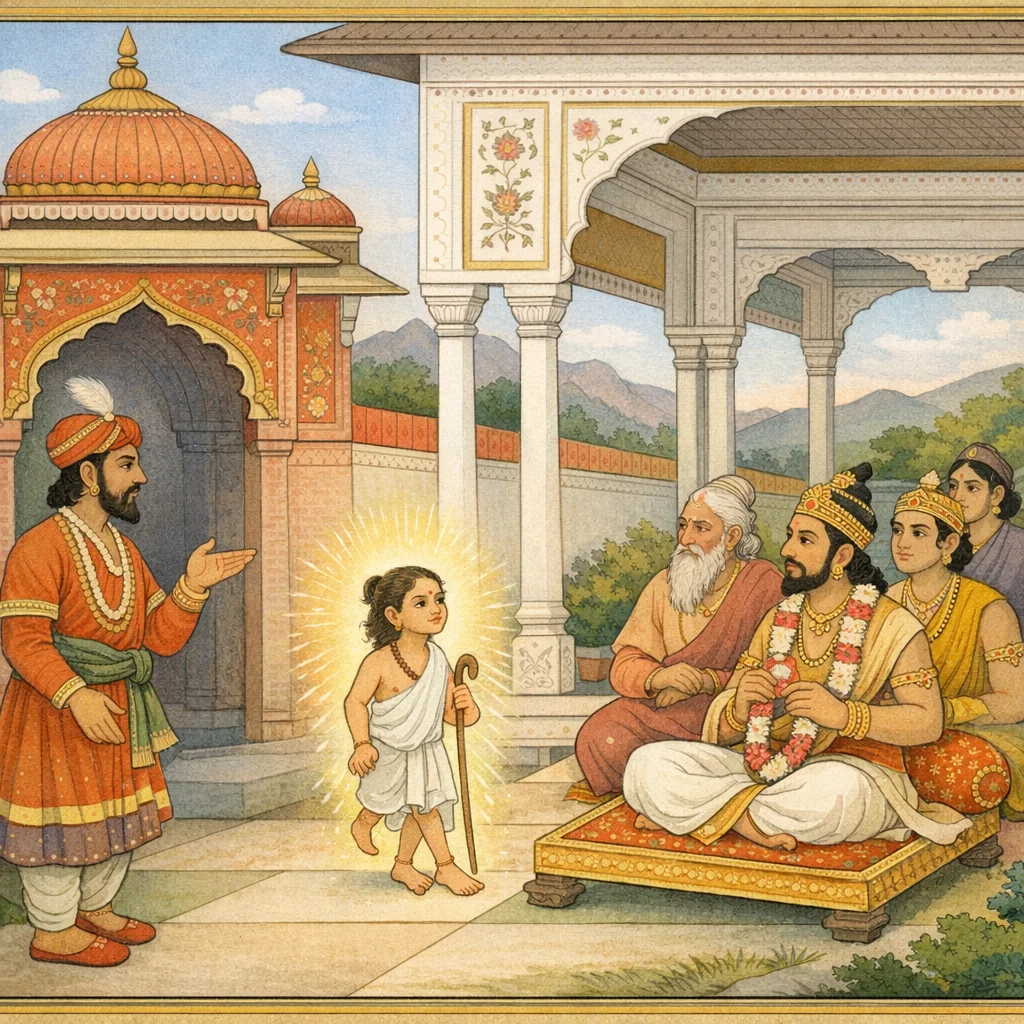
Chapter 134 stages a formal disputation at King Janaka’s assembly. Aṣṭāvakra challenges Bandi, who has previously defeated Brahmins and caused their submersion in water. The debate proceeds as an escalating sequence of numbered statements: Bandi asserts unity principles (one fire, one sun, one Yama), Aṣṭāvakra replies with dualities (Indra–Agni, Aśvins, wheels, husband–wife), and the exchange continues through triads, tetrads, and onward, each side citing Vedic-ritual and cosmological correspondences. At thirteen, Bandi falters; Aṣṭāvakra completes the meter/meaning, and the assembly recognizes Bandi’s defeat. Aṣṭāvakra demands that Bandi undergo the same consequence he imposed, but Bandi reveals he is Varuṇa’s son and that the Brahmins were taken for a Varuṇa rite; their return is imminent. The submerged Brahmins reappear, Kahoda speaks to Janaka about filial accomplishment, and Bandi enters the waters with royal permission. The chapter closes with Aṣṭāvakra honored and returning to the hermitage, the episode functioning as a model of accountable disputation and restorative conclusion.
Chapter Arc: पुष्करमालिन जनक की राजसभा के द्वार पर वक्राङ्ग किंतु तेजस्वी ब्राह्मण अष्टावक्र उपस्थित होता है—उसका लक्ष्य है राजसंसद में बैठे वाग्वीर ‘बन्दी’ से साक्षात् भेंट। → द्वारपाल और राजपरिषद् अष्टावक्र के बाल-से रूप और विकलांग देह को देखकर उसे रोकते हैं; अष्टावक्र आग्रह करता है कि वह अतिथि है और बन्दी को देखने आया है। चेतावनी दी जाती है कि बन्दी ने पहले भी अनेक विद्वान ब्राह्मणों को शास्त्रार्थ में पराजित किया है—अतः यह प्रवेश आत्मघाती होगा। → राजा स्वयं प्रश्नोत्तर की परीक्षा लेता है—‘सोते समय कौन नेत्र नहीं मूँदता? जन्मा हुआ क्या बढ़ता नहीं? किसका हृदय नहीं? क्या वेग से बढ़ता है?’ अष्टावक्र त्वरित, अचूक उत्तर देता है—‘मत्स्य, अण्डा, पत्थर, नदी।’ इस वाक्-प्रभुत्व से सभा स्तब्ध हो जाती है। → राजा स्वीकार करता है कि अष्टावक्र मानुष-सा नहीं, देवसत्त्व-सा है; वाणी में उसका तुल्य कोई नहीं। वह द्वार खोलने और बन्दी तक पहुँचाने की आज्ञा देता है—अतिथि का सत्कार और विद्वत्ता का सम्मान स्थापित होता है। → द्वार खुल चुका है—अब अष्टावक्र और बन्दी का निर्णायक शास्त्रार्थ निकट है, जिसका परिणाम अनेक ब्राह्मणों के भाग्य से जुड़ा है।
Shlokas
Verse 1
&5+ #+० ()) ४३ #< - किसी-किसी पुस्तकमें यहाँ एक श्लोक अधिक मिलता है, जो इस प्रकार है-- वेदान् साड़ान् सर्वशास्त्रैरुपेतानधीतवानस्मि तव प्रसादात् । इहैव गर्भे तेन पितर्ब्रवीमि नेद॑ त्वत्त: सम्यगिवोपवर्तते ।। त्रयस्त्रिंशर्दाधिकशततमो< ध्याय: अष्टावक्रका द्वारपाल तथा राजा जनकसे वार्तालाप अष्टावक्र उवाच अन्धस्य पन्था बधिरस्य पन्था: स्त्रिय: पन्था भारवाहस्य पन्था: । राज्ञ: पन्था ब्राह्मणेनासमेत्य समेत्य तु ब्राह्मणस्यैव पनथा:,अष्टावक्र बोले--राजन! जबतक ब्राह्मणसे सामना न हो तबतक अंधेका मार्ग, बहरेका मार्ग, स्त्रीका मार्ग, बोझ ढोनेवालेका मार्ग तथा राजाका मार्ग उस-उसके जानेके लिये छोड़ देना चाहिये; परंतु यदि ब्राह्मण सामने मिल जाय तो सबसे पहले उसीको मार्ग देना चाहिये
Aṣṭāvakra said: “O King, until a brāhmaṇa is encountered face to face, one should yield the way to those who are vulnerable or burdened—the unseeing man, the deaf man, the woman, and the load-bearer—and likewise make way for the king. But if a brāhmaṇa is met directly, then above all others the path should be given to the brāhmaṇa.”
Verse 2
राजोवाच पन्था अयं तेड्द्य मयातिदिष्टो येनेच्छसि तेन काम॑ व्रजस्व । न पावको विद्यते वै लघीया- निन्द्रोडपि नित्यं नमते ब्राह्मणानाम्,राजाने कहा--ब्राह्मणकुमार! लो मैंने तुम्हारे लिये आज यह मार्ग दे दिया है। तुम जिससे जाना चाहो उसी मार्गसे इच्छानुसार चले जाओ। आग कभी छोटी नहीं होती। देवराज इन्द्र भी सदा ब्राह्मणोंके आगे मस्तक झुकाते हैं
The king said: “Today I have shown you this path. Go, as you wish, by whichever way you choose. Fire is never ‘small’—never to be taken lightly; and even Indra, lord of the gods, continually bows his head before Brahmins.”
Verse 3
अष्टावक्र उवाच प्राप्तौ स्व यज्ञ नृप संदिदृक्षू कौतूहलं नौ बलवन्नरेन्द्र । प्राप्ताविहावामतिथी प्रवेशं काडक्षावहे द्वारपतेस्तवाज्ञाम्,अष्टावक्र बोले--राजन्! हम दोनों आपका यज्ञ देखनेके लिये आये हैं। नरेन्द्र! इसके लिये हम दोनोंके हृदयमें प्रबल उत्कण्ठा है। हम दोनों यहाँ अतिथिके रूपमें उपस्थित हैं और इस यज्ञमें प्रवेश करनेके लिये हम तुम्हारे द्वारपालकी आज्ञा चाहते हैं
Aṣṭāvakra said: “O King, we have come to see your sacrifice. O lord of men, a powerful curiosity and eagerness has arisen in us. We have arrived here as guests, and we seek your gatekeeper’s permission to enter this sacrificial rite.”
Verse 4
ऐन्द्रद्ुम्ने यज्ञद्शाविहावां विवक्षू वै जनकेन्द्रं दिदृक्षू । तौ वै क्रोधव्याधिना दहामाना- वयं च नौ द्वारपालो रुणद्धि,इन्द्रद्यममकुमार जनक! हम दोनों यहाँ यज्ञ देखनेके लिये आये हैं और आप जनकराजसे मिलना तथा बात करना चाहते हैं, परंतु यह द्वारपाल हमें रोकता है; अत: हम क्रोधरूप व्याधिसे दग्ध हो रहे हैं
Aṣṭāvakra said: “O son of Indradyumna, we have come here eager to see the sacrifice; and we also wish to see King Janaka and speak with him. Yet this gatekeeper is barring our entry. Because of this obstruction we are being scorched by the ‘disease’ of anger.”
Verse 5
दारपाल उवाच बन्दे: समादेशकरा वयं सम निबोध वाक््यं च मये्यमाणम् | न वै बाला: प्रविशन्त्यत्र विप्रा वृद्धा विदग्धा: प्रविशन्त्यत्र विप्रा:
The gatekeeper said: “We are servants who carry out orders. So listen carefully to the message I am to deliver. Young brāhmaṇas are not permitted to enter here; only brāhmaṇas who are aged and accomplished are allowed to enter.”
Verse 6
द्वारपाल बोला--ब्राह्मणकुमार! सुनो, हम बंदीके आज्ञापालक हैं। आप हमारी कही हुई बात सुनिये। इस यज्ञशालामें बालक ब्राह्मण नहीं प्रवेश करने पाते हैं। जो बूढ़े और बुद्धिमान ब्राह्मण हैं, उन्हींका यहाँ प्रवेश होता है ।। अष्टावक्र उवाच यद्यत्र वृद्धेषु कृत: प्रवेशो युक्त प्रवेष्ठं मम द्वारपाल । वयं हि वृद्धाश्नरितव्रताश्च वेदप्रभावेण समन्विताक्ष,अष्टावक्र बोले--द्वारपाल! यदि यहाँ वृद्ध ब्राह्मणोंके लिये प्रवेशका द्वार खुला है, तब तो हमारा प्रवेश होना भी उचित ही है; क्योंकि हमलोग वृद्ध ही हैं, हमने ब्रह्मचर्यव्रतका पालन किया है तथा हम वेदके प्रभावसे भी सम्पन्न हैं
Aṣṭāvakra said: “O gatekeeper, if entry here is granted to the aged Brahmins, then it is fitting that I too should enter. For we are ‘aged’ in the true sense—steadfast in our vows and disciplined conduct—and endowed with the power and authority that come from the Veda.”
Verse 7
शुश्रूषवश्चापि जितेन्द्रिया श्न ज्ञानागमे चापि गताः सम निष्ठाम् न बाल इत्यवमन्तव्यमाहु- बलि प्यन्निर्दहति स्पृश्यमान:,साथ ही, हम गुरुजनोंके सेवक, जितेन्द्रिय तथा ज्ञानशास्त्रमें परिनिष्ठित भी हैं। अवस्थामें बालक होनेके कारण ही किसी ब्राह्मणको अपमानित करना उचित नहीं बताया गया है; क्योंकि आगकी छोटी-सी चिनगारी भी यदि छू जाय तो वह जला डालती है
Aṣṭāvakra said: “We too are devoted attendants of our elders, self-controlled, and firmly established in the disciplines of sacred knowledge. Therefore, it is not right to slight a brāhmaṇa merely because he is a ‘child’ in age. Even a small spark of fire, when touched, burns.”
Verse 8
दारपाल उवाच सरस्वतीमीरय वेदजुष्टा- मेकाक्षरां बहुरूपां विराजम् । अज्जभात्मानं समवेक्षस्व बाल॑ कि शलाघसे दुर्लभो वै मनीषी,द्वारपालने कहा-ब्राह्मणकुमार! तुम वेद-प्रतिपादित, एकाक्षरत्रह्मयका बोध करानेवाली, अनेक रूपवाली, सुन्दर वाणीका उच्चारण करो और अपने-आपको बालक ही समझो, स्वयं ही अपनी प्रशंसा क्यों करते हो? इस जगत्में ज्ञानी दुर्लभ हैं
The gatekeeper said: “Utter Sarasvatī—speech honored by the Vedas—she who is the one-syllabled (Om), yet manifold in form, radiant and splendid. Look upon yourself as a mere child, lacking true understanding. Why do you praise yourself? In this world, a genuinely wise person is indeed rare.”
Verse 9
अष्टावक्र उवाच न ज्ञायते कायवृद्धया विवद्धि- ्यथाष्ठीला शाल्मले: सम्प्रवृद्धा हस्वो5ल्ल्पकाय: फलितो विवृद्धो यश्चाफलस्तस्य न वृद्धभाव:,अष्टावक्र बोले--द्वारपाल! केवल शरीर बढ़ जानेसे किसीकी बढ़ती नहीं समझी जाती है। जैसे सेमलके फलकी गाँठ बढ़नेपर भी सारहीन होनेके कारण वह व्यर्थ ही है। छोटा और दुबला-पतला वृक्ष भी यदि फलोंके भारसे लदा है तो उसे ही वृद्ध (बड़ा) जानना चाहिये। जिसमें फल नहीं लगते, उस वृक्षका बढ़ना भी नहीं के बराबर है
Aṣṭāvakra said: “O gatekeeper, true growth is not recognized merely by an increase of body. Just as the swelling of the śālmali’s fruit-knot grows yet remains hollow and thus useless, so too mere bulk is no measure of worth. Even a short, slender tree is to be regarded as truly ‘grown’ if it is laden with fruit; but for one that bears no fruit, its growth is as good as no growth at all.”
Verse 10
द्वारपाल उवाच वृद्धेभ्य एवेह मतिं सम बाला गृह्लन्ति कालेन भवन्ति वृद्धा: | न हि ज्ञानमल्पकालेन शक््यं कस्माद् बाल: स्थविर इव प्रभाषसे,द्वारपालने कहा--बालक बड़े-बूढ़ोंसे ही ज्ञान प्राप्त करते हैं और समयानुसार वे भी वृद्ध होते हैं। थोड़े समयमें ज्ञानकी प्राप्ति असम्भव है, अतः तुम बालक होकर भी क्यों वृद्धकी-सी बातें करते हो?
The gatekeeper said: “Here, children gain understanding only from the elders, and in time they themselves become old. Knowledge cannot be acquired in a short while. So why do you, though a child, speak like an aged man?”
Verse 11
अष्टावक्र उवाच न तेन स्थविरो भवति येनास्य पलितं शिर: । बालो<पि य: प्रजानाति त॑ देवा: स्थविरं विदु:,अष्टावक्र बोले--अमुक व्यक्तिके सिरके बाल पक गये हैं, इतने ही मात्रसे वह बूढ़ा नहीं होता है, अवस्थामें बालक होनेपर भी जो ज्ञानमें बढ़ा-चढ़ा है, उसीको देवगण वृद्ध मानते हैं
Aṣṭāvakra said: A man does not become truly old merely because his head has turned grey. Even if one is young in years, if he possesses clear understanding and discernment, the gods regard him as an elder. The measure of maturity is wisdom, not appearance.
Verse 12
न हायनैर्न पलितैर्न वित्तेन न बन्धुभि: । ऋषयश्षक्रिरे धर्म योडनूचान: स नो महान्,अधिक वर्षोकी अवस्था होनेसे, बाल पकनेसे, धन बढ़ जानेसे और अधिक भाई-बन्धु हो जानेसे भी कोई बड़ा हो नहीं सकता; ऋषियोंने ऐसा नियम बनाया है कि हम ब्राह्मणोंमें जो अंगोंसहित सम्पूर्ण वेदोंका स्वाध्याय करनेवाला तथा वक्ता है, वही बड़ा है
Aṣṭāvakra said: “Greatness is not attained by the passing of years, nor by grey hair, nor by wealth, nor by having many relatives. The seers established this rule of dharma: among us, the one who is truly learned—fully trained in Vedic study and able to teach and speak it—is the one who is to be regarded as great.”
Verse 13
दिदृक्षुरस्मि सम्प्राप्तो बन्दिनं राजसंसदि । निवेदयस्व मां द्वा:स्थ राज्ञे पुष्करमालिने,द्वारपाल! मैं राजसभामें बन्दीसे मिलनेके लिये आया हूँ। तुम कमलपुष्पकी माला धारण किये हुए महाराज जनकको मेरे आगमनकी सूचना दे दो
Aṣṭāvakra said: “I have come here, wishing to see the captive in the royal assembly. O doorkeeper, announce my arrival to King Janaka, who wears a garland of lotus-flowers.”
Verse 14
द्रष्टास्यद्य वदतो<स्मान् द्वारपाल मनीषिशभि: । सह वादे विवृद्धे तु बन्दिनं चापि निर्जितम्,द्वारपाल! आज तुम हमें विद्वानोंके साथ शास्त्रार्थ करते देखोगे, साथ ही विवाद बढ़ जानेपर बंदीको परास्त हुआ पाओगे
Aṣṭāvakra said: “Gatekeeper, today you will see us speaking in debate with learned sages; and when the disputation grows intense, you will also see Bandi defeated.”
Verse 15
पश्यन्तु विप्रा: परिपूर्णविद्या: सहैव राज्ञा सपुरोधमुख्या: । उताहो वाप्युच्चतां नीचतां वा तृष्णीं भूतेष्वेव सर्वेष्वथाद्य,आज सम्पूर्ण सभासद् चुपचाप बैठे रहें तथा राजा और उनके प्रधान पुरोहितोंके साथ पूर्णतः विद्वान् ब्राह्मण मेरी लघुता अथवा श्रेष्ठताको प्रत्यक्ष देखें
Aṣṭāvakra said: “Let the Brahmins, perfected in learning, together with the king and his foremost priests, witness directly today whether I am to be deemed low or exalted. And let all present remain silent, without partiality toward any being.”
Verse 16
द्वारपाल उवाच कथं यज्ञं दशवर्षो विशेस्त्व॑ विनीतानां विदुषां सम्प्रवेशम् । उपायत: प्रयतिष्ये तवाहं प्रवेशने कुरु यत्नं यथावत्,द्वारपालने कहा--जहाँ सुशिक्षित विद्वानोंका प्रवेश होता है; उस यज्ञमण्डपमें तुम- जैसे दस वर्षके बालकका प्रवेश होना कैसे सम्भव है। तथापि मैं किसी उपायसे तुम्हें उसके भीतर प्रवेश करानेका प्रयत्न करूँगा, तुम भी भीतर जानेके लिये यथोचित प्रयत्न करो
The gatekeeper said: “How could you—a mere ten-year-old—enter this sacrificial enclosure, a place meant for the entry of disciplined and learned men? Still, I will try by some means to get you admitted within. You too should make a proper effort, as is fitting, to gain entry.”
Verse 17
(एष राजा संश्रवणे स्थितस्ते स्तुहोनं त्वं वचसा संस्कृतेन । स चानुज्ञां दास्यति प्रीतियुक्तः प्रवेशने यच्च किंचित् तवेष्टम् ।।) ये नरेश तुम्हारी बात सुन सकें, इतनी ही दूरीपर यज्ञमण्डपमें स्थित हैं, तुम अपने शुद्ध वचनोंद्वारा इनकी स्तुति करो। इससे ये प्रसन्न होकर तुम्हें प्रवेश करनेकी आज्ञा दे देंगे तथा तुम्हारी और भी कोई कामना हो तो वे पूरी करेंगे ।। अष्टावक्र उवाच भो भो राजञ्जनकानां वरिष्ठ त्वं वै सम्राट् त्वयि सर्व समृद्धम् । त्वं वा कर्ता कर्मणां यज्ञियानां ययातिरेको नृपतिर्वा पुरस्तात्,अष्टावक्र बोले--राजन्! आप जनकवंशके श्रेष्ठ पुरुष हैं, सम्राट हैं। आपके यहाँ सभी प्रकारके ऐश्वर्य परिपूर्ण हैं, वर्तमान समयमें केवल आप ही उत्तम यज्ञकर्मोंका अनुष्ठान करनेवाले हैं; अथवा पूर्वकालमें एकमात्र राजा ययाति ऐसे हो चुके हैं
Aṣṭāvakra said: “O King—foremost among the Janakas—you are truly a sovereign; in you all prosperity is complete. In this present age you alone are the doer of sacrificial, righteous works; or else, in former times, only King Yayāti was such a ruler.”
Verse 18
वृद्धान् बन्दी वादविदो निगृहा वादे भग्नानप्रतिशड्कमान: । त्वयाभिसूष्टे: पुरुषैराप्तकृद्धि- जले सर्वान् मज्जयतीति न: श्रुतम्,हमने सुना है कि आपके यहाँ बन्दी नामसे प्रसिद्ध कोई विद्वान् हैं जो वाद-विवादके मर्मको जाननेवाले कितने ही वृद्ध ब्राह्मणोंको शास्त्रार्थमें हराकर वशमें कर लेते हैं और फिर आपके ही दिये हुए विश्वसनीय पुरुषोंद्वारा उन सबको निःशंक होकर पानीमें डुबवा देते हैं
Aṣṭāvakra said: “We have heard that here there is a scholar famed as Bandī, skilled in the subtleties of debate. After subduing many aged brāhmaṇas by defeating them in disputation, he has them—without any fear or suspicion—made to be drowned in the water, by men appointed by you and considered trustworthy. Such is the report that has reached us.”
Verse 19
सो ुहं श्रुत्वा ब्राह्मणानां सकाशाद् ब्रह्माद्वैतं कथयितुमागतो<स्मि । क्वासौ बन्दी यावदेनं समेत्य नक्षत्राणीव सविता नाशयामि,मैं ब्राह्णोंक समीप यह समाचार सुनकर अद्दैत ब्रह्मके विषयमें वर्णन करनेके लिये यहाँ आया हूँ। वे बन्दी कहाँ हैं? मैं उनसे मिलकर उनके तेजको उसी प्रकार शान्त कर दूँगा, जैसे सूर्य ताराओंकी ज्योतिको विलुप्त कर देते हैं
Having heard from the brāhmaṇas about the doctrine of non-dual Brahman, I have come here to expound it. Where is that disputant, Bandī? Let me meet him and quell his brilliance—just as the sun makes the stars’ light disappear.
Verse 20
राजोवाच आशंससे बन्दिनं वै विजेतु- मविज्ञाय त्वं वाक्यबलं परस्य । विज्ञातवीर्य: शक््यमेवं प्रवक्तुं दृष्टश्नासौ ब्राह्मणैवेंदशीलै:,राजा बोले--ब्राह्मणकुमार! तुम अपने विपक्षीकी प्रवचन-शक्तिको जाने बिना ही बन्दीको जीतनेकी इच्छा रखते हो। जो प्रतिवादीके बलको जानते हों वे ही ऐसी बातें कह सकते हैं। वेदोंका अनुशीलन करनेवाले बहुत-से ब्राह्मण बन्दीका प्रभाव देख चुके हैं
The king said: “You hope to defeat Bandi without even knowing the strength of his speech. Only one who has understood an opponent’s power can speak in such a way. Many Brahmins devoted to the study of the Vedas have already witnessed Bandi’s formidable influence.”
Verse 21
आशंससे त्वं बन्दिनं वै विजेतु- मविज्ञाय तु बल॑ बन्दिनो5स्य । समागता ब्राह्मणास्तेन पूर्व न शोभन्ते भास्करेणेव तारा:
Aṣṭāvakra said: “You hope to defeat Bandin, yet you do not understand Bandin’s strength. The brāhmaṇas who assembled there before, once overcome by him, no longer shine—like stars that lose their luster before the sun.”
Verse 22
तुम्हें इस बन्दीकी शक्तिका कुछ भी ज्ञान नहीं है। इसीलिये उसे जीतनेकी इच्छा कर रहे हो। आजसे पहले कितने ही दिद्वान् ब्राह्मण बन्दीसे मिले हैं और जैसे सूर्यके सामने ताराओंका प्रकाश फीका पड़ जाता है उसी प्रकार वे बन्दीके सामने हतप्रभ हो गये 2204. 4 ५॥ आशंसन्तो बन्दिनं जेतुकामा- स्तस्यान्तिकं प्राप्प विलुप्तशोभा: । विज्ञानमत्ता निःसृताश्चैव तात कथं सदस्यैर्वचनं विस्तरेयु:,तात! कितने ही ज्ञानोन्मत्त ब्राह्मण बन्दीको जीतनेकी अभिलाषा रखकर शास्त्रार्थकी घोषणा करते हुए आये हैं; किंतु उनके निकट पहुँचते ही उनका प्रभाव नष्ट हो गया है। इतना ही नहीं, वे पराजित एवं तिरस्कृत हो चुपचाप राजसभासे निकल गये हैं। फिर वे अन्य सदस्योंके साथ वार्तालाप ही कैसे कर सकते हैं
Aṣṭāvakra said: “Many learned brāhmaṇas, intoxicated with their own learning, have come proclaiming a debate, eager to defeat Bandi. But the moment they reached his presence, their brilliance was extinguished—like the light of stars before the sun. Defeated and humiliated, they slipped out of the royal assembly in silence. How, then, could they possibly stay and speak at length among the other members?”
Verse 23
अष्टावक्र उवाच विवादितो5सौ न हि मादशैहि सिंहीकृतस्तेन वदत्यभीत: । समेत्य मां निहतः शेष्यतेड्द्य मार्गे भग्नं शकटमिवाचलाक्षम्,अष्टावक्र बोले--महाराज! अभी बन्दीको हम-जैसोंके साथ शाम्त्रार्थ करनेका अवसर नहीं मिला है, इसीलिये वह सिंह बना हुआ है और निडर होकर बातें करता है। आज मुझसे जब उसकी भेंट होगी, उस समय वह पराजित होकर मुर्देकी भाँति सो जायगा। ठीक उसी तरह, जैसे रास्तेमें टूटा हुआ छकड़ा जहाँ-का-तहाँ पड़ा रह जाता है-- उसका पहिया एक पग भी आगे नहीं बढ़ता
Aṣṭāvakra said: “That man has never been challenged in debate by people like me; therefore he has grown lion-like and speaks without fear. But when he meets me today, he will be struck down and lie still—like a cart broken on the road, its wheel unmoving, unable to go even a step further.”
Verse 24
राजोवाच त्रिंशकद्धादशांशस्य चतुर्विशतिपर्वण: । यस्त्रिषष्टिशतारस्य वेदार्थ स पर: कवि:,तब राजाने परीक्षा लेनेके लिये कहा--जो पुरुष तीस अवयव, बारह अंश, चौबीस पर्व और तीन सौ साठ अरोंवाले पदार्थको जानता है--उसके प्रयोजनको समझता है, वह उच्चकोटिका ज्ञानी है
The king said: “He who truly understands that wondrous ‘wheel’—with thirty components, twelve divisions, twenty‑four joints, and three hundred and sixty spokes—and who grasps its Vedic purpose, is a supreme sage-poet.”
Verse 25
अद्टावक्र उवाच चतुर्विशतिपर्व त्वां षण्नाभि द्वादशप्रधि । तत् त्रिषष्टिशतारं वै चक्र पातु सदागति,अष्टावक्र बोले--राजन्! जिसमें बारह अमावास्या और बारह पूर्णिमारूपी चौबीस पर्व, ऋतुरूप छ: नाभि, मासरूप बारह अंश और दिनरूप तीन सौ साठ अरे हैं, वह निरन्तर घूमनेवाला संवत्सररूप कालचक्र आपकी रक्षा करे
Aṣṭāvakra said: “O King, may the ever-moving wheel of Time—manifest as the year—protect you: it has twenty-four joints in the form of the twelve new-moon and twelve full-moon days, six hubs as the seasons, twelve rims/segments as the months, and three hundred and sixty spokes as the days.”
Verse 26
राजोवाच वडवे इव संयुक्ते श्येनपाते दिवौकसाम् | कस्तयोर्गर्भमाधत्ते गर्भ सुषुवतुश्च कम्,राजाने पूछा--जो दो घोड़ियोंकी भाँति संयुक्त रहती हैं; एवं जो बाज पक्षीकी भाँति हठात् गिरनेवाली हैं उन दोनोंके गर्भको देवताओंमेंसे कौन धारण करता है तथा वे दोनों किस गर्भको उत्पन्न करती हैं?
The King said: “Like two mares yoked together, and like a hawk’s sudden downward swoop among the dwellers of heaven—who among the gods bears the embryo of those two, and what offspring do those two bring forth?”
Verse 27
अद्टावक्र उवाच मा स्म ते ते गृहे राजज्छात्रवाणामपि ध्रुवम् । वातसारथिरागन्ता गर्भ सुषुवतुश्चव॒ तम्,अष्टावक्र बोले--राजन्! वे दोनों तुम्हारे शत्रुओंके घरपर भी कभी न गिरें। वायु जिसका सारथि है वह मेघरूप देव ही इन दोनोंके गर्भको धारण करनेवाला है और ये दोनों उस मेघरूप गर्भको उत्पन्न करनेवाले हैं-
Aṣṭāvakra said: “O King, may these two never fall—certainly not even upon the houses of your enemies. The divine one who comes with the wind as his charioteer—indeed the god in the form of a cloud—bears the womb of these two; and these two, in turn, bring forth that cloud-like womb.”
Verse 28
राजोवाच किंस्वित् सुप्तं न निमिषति किंस्विज्जातं न चोपति | कस्य स्विद्धुदयं नास्ति किं स्विद् वेगेन वर्धते,राजाने पूछा--सोते समय कौन नेत्र नहीं मूँदता, जन्म लेनेके बाद किसमें गति नहीं होती, किसके हृदय नहीं होता और कौन वेगसे बढ़ता है?
The king asked: “What is it that, even when asleep, does not blink? What is it that, once born, does not move onward? Who is without a heart? And what is it that grows swiftly with speed?”
Verse 29
अष्टावक्र उवाच मत्स्य: सुप्तो न निमिषत्यण्डं जातं न चोपति । अश्मनो हृदयं नास्ति नदी वेगेन वर्धते,अष्टावक्र बोले--मछली सोते समय भी आँख नहीं मूँदती, अण्डा उत्पन्न होनेपर चेष्टा नहीं करता, पत्थरके हृदय नहीं होता और नदी वेगसे बढ़ती है
Aṣṭāvakra said: “Even when asleep, a fish does not blink; an egg, once produced, makes no effort; a stone has no heart; and a river swells by the force of its current.”
Verse 30
राजोवाच नत्वां मन्ये मानुषं देवसत्त्वं न त्वं बाल: स्थविर: सम्मतो मे । न ते तुल्यो विद्यते वाक्प्रलापे तस्मात् द्वारं वितराम्येष बन्दी,राजाने कहा--ब्रह्म! आपकी शक्ति तो देवताओंके समान है, मैं आपको मनुष्य नहीं मानता; आप बालक भी नहीं हैं। मैं तो आपको वृद्ध ही समझता हूँ। वाद-विवाद करनेमें आपके समान दूसरा कोई नहीं है, अतः आपको यज्ञ-मण्डपमें जानेके लिये द्वार प्रदान करता हूँ। यही बन्दी हैं (जिनसे आप मिलना चाहते थे)
The king said: “I do not regard you as a mere human; your power is like that of the gods. Nor do I consider you a child—I take you to be an elder. In debate and verbal contest no one equals you. Therefore I grant you passage through the gate into the sacrificial enclosure. And here is the captive bard (Bandin) whom you seek.”
Verse 133
इति श्रीमहाभारते वनपर्वणि तीर्थयात्रापर्वणि लोमशतीर्थयात्रायामष्टावक्रीये त्रयस्त्रिंयदधिकशततमो<ध्याय:
Thus ends, in the Śrī Mahābhārata, within the Vana Parva, in the section on pilgrimage (Tīrtha-yātrā Parva), in the account of Lomasa’s pilgrimage, in the episode concerning Aṣṭāvakra, the one-hundred-and-thirty-third chapter. This closing colophon places the teaching and the tale within the larger ethical frame of pilgrimage: learning through sacred travel, dialogue, and exemplary conduct.
Frequently Asked Questions
The chapter negotiates whether victory in public debate is sufficient, or whether dharma requires restitution for harm caused—Aṣṭāvakra frames the contest’s outcome as accountable to the prior injustice done to defeated Brahmins.
Knowledge is presented as ordered and tradition-linked: cosmology, ritual practice, and social norms are mutually reinforcing, and disciplined speech in debate should serve restoration of order rather than personal triumph.
No formal phalaśruti is stated; the meta-commentary is enacted narratively—public recognition of rightful speech, communal honoring of the victor, and the restorative return of the submerged Brahmins as the chapter’s validating consequence.