Adhyaya 133
अष्टावक्र-प्रवेशः तथा ब्रह्मोद्य-प्रारम्भः (Aṣṭāvakra’s Entry and the Opening of the Brahmodya)
Upa-parva: Aṣṭāvakra–Bandī Saṃvāda (Debate at Janaka’s sacrificial assembly)
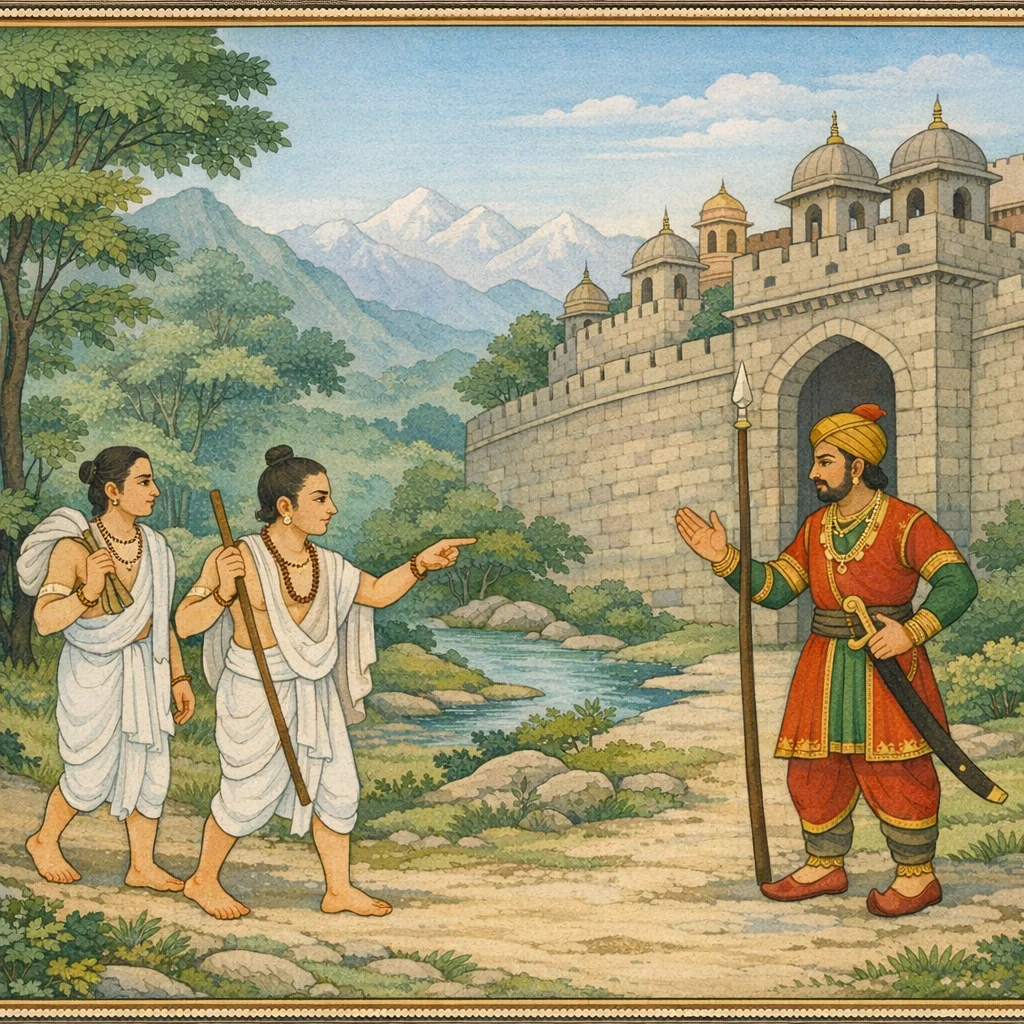
Chapter 133 presents a structured exchange among Aṣṭāvakra, a gatekeeper, and the presiding king (Janaka). The gatekeeper enforces a rule that only ‘elders’ may enter the sacrificial assembly; Aṣṭāvakra counters by arguing that bodily growth is not the measure of maturity, offering aphoristic criteria: true seniority is knowledge (prajñā), disciplined conduct, and Vedic competence. The dialogue escalates into a formal testing of speech-power through brahmodya riddles posed by the king and answered by Aṣṭāvakra, demonstrating mastery of symbolic Vedic imagery (e.g., wheel/cycle metaphors, categorical riddles about nature). Concluding the sequence, the king recognizes Aṣṭāvakra’s exceptional rhetorical and intellectual capacity and grants passage toward the confrontation with Bandī, establishing debate as a legitimate instrument for determining authority in the ritual court.
Chapter Arc: लोमश ऋषि अष्टावक्र के जन्म-वृत्तान्त का सूत्र उठाते हैं—एक ऐसे बालक का, जिसकी बुद्धि मन्त्रविद्-सी तीक्ष्ण है और जिसका भाग्य जनक के राजदरबार तक खिंचता है। → आश्रम-जीवन में श्वेतकेतु को सरस्वती का मानुष-रूप दर्शन होता है; उसी युग के श्रेष्ठ ब्रह्मकृत मुनियों में कहोड-पुत्र अष्टावक्र और उद्दालक-पुत्र श्वेतकेतु का निकट सम्बन्ध बनता है। गर्भवती सुजाता की व्यथा (दसवाँ महीना, साधनहीनता) और परिवार पर छाया संकट संकेत देता है कि विद्या और दरिद्रता, दोनों की परीक्षा निकट है। → बालक अष्टावक्र अपनी वाद-निपुणता से प्रतिवादियों को परास्त कर उन्हें नदी में डुबो देने तक की कठोर परिणति पहुँचा देता है—यह उसकी असाधारण प्रतिभा के साथ-साथ उसके भीतर पलते आक्रोश/प्रतिशोध का भी विस्फोट है। → सुजाता पुत्र के मन्त्र-रहस्य की रक्षा करती है; अष्टावक्र जन्म के बाद भी पिता-वियोग/अज्ञान की छाया में पलता है, उद्दालक को पिता-तुल्य और श्वेतकेतु को भ्राता-तुल्य मानता है। श्वेतकेतु अपने हृदय में चुभी कटूक्ति से व्याकुल होकर माता से पिता का समाचार पूछता है; दोनों (मामा-भानजा) जनक के यज्ञ-समृद्ध दरबार की ओर चल पड़ते हैं, जहाँ जाने से वाणी, प्रवचन-शक्ति और ब्रह्मघोष की मधुरता बढ़ने की आशा है। → मार्ग में अष्टावक्र का राजा से सामना होता है और उसे रोके/हटाए जाने की स्थिति बनती है—तभी वह तीखा वचन कहकर अपने अधिकार और उद्देश्य की घोषणा करता है; जनक के दरबार में होने वाला निर्णायक वाद अभी शेष है।
Shlokas
Verse 1
अपना स२ (0 अवज असल द्वात्रिशर्दाधिकशततमो< ध्याय: अष्टावक्रके जन्मका वृत्तान्त और उनका राजा जनकके दरबारमें जाना लोगमश उवाच यः कथ्यते मन्त्रविदग्थबुद्धि- रौद्दालकि: श्वेतकेतु: पृथिव्याम् । तस्याश्रमं पश्य नरेन्द्र पुण्यं सदाफलैरुपपन्न महीजै:,लोमशजी कहते हैं--युधिष्ठिर! उद्दालकके पुत्र श्वेतकेतु हो गये हैं, जो इस भूतलपर मन्त्र-शास्त्रमें अत्यन्त निपुण कहे जाते थे, देखो यह पवित्र आश्रम उन्हींका है। जो सदा फल देनेवाले वृक्षोंसे हरा-भरा दिखायी देता है
Lomaśa said: “O king, behold this holy hermitage of Śvetaketu, the son of Uddālaka—renowned on earth for a mind made keen through mastery of sacred mantras. See how pure this āśrama is, richly endowed with trees that bear fruit in every season.”
Verse 2
साक्षादत्र श्वेतकेतुर्ददर्श सरस्वती मानुषदेहरूपाम् | वेत्स्यामि वाणीमिति सम्प्रवृत्तां सरस्वती श्वेतकेतुर्बभाषे,इस आश्रममें श्वेतकेतुने मानवरूपधारिणी सरस्वती देवीका प्रत्यक्ष दर्शन किया था और अपने निकट आयी हुई उन सरस्वतीसे यह कहा था कि “मैं वाणीस्वरूपा आपके तत्त्वको यथार्थरूपसे जानना चाहता हूँ
Lomaśa said: Here, Śvetaketu directly beheld the goddess Sarasvatī, who had assumed a human form. As she approached, Śvetaketu addressed her, saying, “I wish to understand you in your true nature as Vāk—sacred speech—as you have come forth.”
Verse 3
तस्मिन् युगे ब्रह्मकृतां वरिष्ठा- वास्तां मुनी मातुलभागिनेयौ । अष्टावक्रश्वचैव कहोडसूनु- रौद्दालकि: श्वेतकेतु: पृथिव्याम्,उस युगमें कहोड मुनिके पुत्र अष्टावक्र और उद्दालकनन्दन श्वेतकेतु ये दोनों महर्षि समस्त भूमण्डलके वेदवेत्ताओंमें श्रेष्ठ थे। वे आपसमें मामा और भानजा लगते थे (इनमें श्वेतकेतु ही मामा था)
Lomaśa said: “In that age, two sages stood foremost among those versed in the Veda on earth—Aṣṭāvakra, the son of Kahōḍa, and Śvetaketu, the son of Uddālaka. They were related as maternal uncle and nephew, with Śvetaketu being the uncle.”
Verse 4
विदेहराजस्य महीपतेस्तौ विप्रावुभी मातुलभागिनेयौ । प्रविश्य यज्ञायतनं विवादे बर्न्दि निजग्राहतुरप्रमेयौ,एक समय वे दोनों मामा-भानजे विदेहराजके यज्ञमण्डपमें गये। दोनों ही ब्राह्मण अनुपम विद्दान् थे। वहाँ शास्त्रार्थ होनेपर उन दोनोंने अपने (विपक्षी) बन्दीको जीत लिया
Lomaśa said: Those two Brahmins—an uncle and his sister’s son—went into the sacrificial hall of the king of Videha. Both were incomparable in learning. When a debate arose there, they overcame and seized their opponent, Bandin, through the power of their knowledge—showing that true mastery of scripture is proved by disciplined reasoning rather than by force.
Verse 5
उपास्स्व कौन्तेय सहानुजस्त्व॑ तस्याश्रमं पुण्यतमं प्रविश्य । अष्टाकक्रं यस्य दौहित्रमाहु- यॉ5सौ बरन्दि जनकस्याथ यज्ञे,कुन्तीनन्दन! विप्रशिरोमणि अष्टावक्र वाद-विवादमें बड़े निपुण थे। उन्होंने बाल्यावस्थामें ही महाराज जनकके यज्ञमण्डपमें पधारकर अपने प्रतिवादी बन्दीको पराजित करके नदीमें डलवा दिया था। वे अष्टावक्र मुनि जिन महात्मा उद्दालकके दौहित्र (नाती) बताये जाते हैं, उन््हींका यह परम पवित्र आश्रम है। तुम अपने भाइयोंसहित इसमें प्रवेश करके कुछ देरतक उपासना (भगवच्चिन्तन) करो
Lomasa said: “O son of Kuntī, enter this most sacred hermitage with your younger brothers and spend some time in reverent contemplation. This is the holy retreat of the sage Aṣṭāvakra—whom people call the grandson of Uddālaka—the very one who, at King Janaka’s sacrifice, defeated the disputant Bandī in debate.”
Verse 6
वादी विप्राग्रयो बाल एवाभिगम्य वादे भड़कत्वा मज्जयामास नद्याम्,कुन्तीनन्दन! विप्रशिरोमणि अष्टावक्र वाद-विवादमें बड़े निपुण थे। उन्होंने बाल्यावस्थामें ही महाराज जनकके यज्ञमण्डपमें पधारकर अपने प्रतिवादी बन्दीको पराजित करके नदीमें डलवा दिया था। वे अष्टावक्र मुनि जिन महात्मा उद्दालकके दौहित्र (नाती) बताये जाते हैं, उन््हींका यह परम पवित्र आश्रम है। तुम अपने भाइयोंसहित इसमें प्रवेश करके कुछ देरतक उपासना (भगवच्चिन्तन) करो
Lomasha said: “O son of Kunti, that foremost of Brahmins, though still a mere boy, approached the arena of debate and, having bound his opponent in argument, had him cast into the river. The crown-jewel among sages, Ashtavakra, was supremely skilled in disputation. Even in childhood he came to King Janaka’s sacrificial hall, defeated his adversary Bandi, and had him thrown into the water. This very Ashtavakra—said to be the grandson of the great Udālaka—belongs to this supremely holy hermitage. Enter here with your brothers and, for a while, practice worship: steady the mind in remembrance of the Lord.”
Verse 7
युधिछिर उवाच कथ्थंप्रभाव: स बभूव विप्र- स्तथाभूतं यो निजग्राह बन्दिम् । अष्टावक्र: केन चासौ बभूव तत् सर्व मे लोमश शंस तत्त्वम्,युधिष्ठिरने पूछा--लोमशजी! उन ब्रह्मर्षिका कैसा प्रभाव था, जिन्होंने बन्दी-जैसे सुप्रसिद्ध विद्वानको भी जीत लिया। वे किस कारणसे अष्टावक्र (आठों अड्ोंसे टेढ़े-मेढ़े) हो गये। ये सब बातें मुझे यथार्थरूपसे बताइये
Yudhiṣṭhira said: “O Lomaśa, what extraordinary power and excellence did that brahmin possess, who overcame even Bandin, the famed disputant? And for what reason did he become Aṣṭāvakra—crooked in eight parts? Tell me all of this truthfully and in full.”
Verse 8
लोगश उवाच उद्दालकस्य नियत: शिष्य एको नाम्ना कहोड इति विश्लुतो5भूत् । शुश्रूषुराचार्यवशानुवर्ती दीर्घ कालं सो5ध्ययनं चकार,लोमशजीने कहा--राजन्! महर्षि उद्दालकका कहोड नामसे विख्यात एक शिष्य था जो बड़े संयम-नियमसे रहकर आचार्यकी सेवा किया करता था। उसने गुरुकी आज्ञाके अंदर रहकर दीर्घकालतक अध्ययन किया
Lomaśa said: Uddālaka had a disciplined disciple named Kahoda, who became well known. Eager to serve, obedient to his teacher’s authority, he pursued study for a long time—living under restraint and faithfully attending to his preceptor’s commands.
Verse 9
त॑ वै विप्र: पर्यचरत् सशिष्य- स््तां च ज्ञात्वा परिचर्या गुरु: सः । तस्मै प्रादात् सद्य एव श्रुतं च भार्या च वै दुहितरं स्वां सुजाताम्,विप्रवर “कहोड' एक विनीत शिष्यकी भाँति उद्दालक मुनिकी परिचर्यामें संलग्न रहते थे। गुरुने शिष्यकी उस सेवाके महत्त्वको समझकर शीघ्र ही उन्हें सम्पूर्ण वेद-शास्त्रोंका ज्ञान करा दिया और अपनी पुत्री सुजाताको भी उन्हें पत्नीरूपसे समर्पित कर दिया
That brahmin (Kahoda) served him (Uddālaka) attentively, like a disciplined pupil. Recognizing the worth of such devoted service, the teacher promptly imparted to him the learning he had heard (the Vedic instruction) and also gave him his own well-born daughter Sujātā as a wife.
Verse 10
तस्या गर्भ: समभवदग्निकल्प: सो<धीयानं पितरं चाप्युवाच । सर्वा रात्रिमध्ययनं करोषि नेदं पितः सम्यगिवोपवर्तते,< कुछ कालके बाद सुजाता गर्भवती हुई, उसका वह गर्भ अग्निके समान तेजस्वी था। एक दिन स्वाध्यायमें लगे हुए अपने पिता कहोड मुनिसे उस गर्भस्थ बालकने कहा, “पिताजी! आप रातभर वेदपाठ करते हैं तो भी आपका वह अध्ययन अच्छी प्रकारसे शुद्ध उच्चारणपूर्वक नहीं हो पाता”
In due course she conceived, and the child in her womb was radiant like fire. While his father was engaged in recitation, the unborn son addressed him: “Father, though you study throughout the night, your recitation does not seem to proceed correctly, with proper accuracy of utterance.”
Verse 11
उपालब्ध: शिष्यमध्ये महर्षि: स त॑ं कोपादुदरस्थं शशाप । यस्मात् कुक्षौ वर्तमानो ब्रवीषि तस्माद् वक्रो भवितास्यष्टकृत्व:,शिष्योंके बीचमें बैठे हुए महर्षि कहोड इस प्रकार उलाहना सुनकर अपमानका अनुभव करते हुए कुपित हो उठे और उस गर्भस्थ बालकको शाप देते हुए बोले, “अरे! तू अभी पेटमें रहकर ऐसी टेढ़ी बातें बोलता है, अतः तू आठों अंगोंसे टेढ़ा हो जायगा'
Rebuked in the midst of his disciples, the great sage—feeling dishonored—flared up in anger and cursed the child who was still in the womb: “Since, while abiding in the belly, you speak such crooked words, therefore you shall become crooked in eight ways, in all eight limbs.”
Verse 12
स वै तथा वक्र एवाभ्यजाय- दष्टावक्र: प्रथितो वै महर्षि: | अस्यासीद् वै मातुल: श्वेतकेतु: स तेन तुल्यो वयसा बभूव,उस शापके अनुसार वे महर्षि आठों अंगोंसे टेढ़े होकर पैदा हुए। इसलिये अष्टावक्र नामसे उनकी प्रसिद्धि हुई। श्वेतकेतु उनके मामा थे, परंतु अवस्थामें उन्हींके बराबर थे
In accordance with that curse, the great sage was indeed born with a crooked body; therefore he became renowned by the name ‘Aṣṭāvakra’ (the one with eight bends). His maternal uncle was Śvetaketu, yet Śvetaketu was of the same age as he.
Verse 13
सम्पीड्यमाना तु तदा सुजाता सा वर्धमानेन सुतेन कुक्षौ । उवाच भर्तारमिदं रहोगता प्रसाद्य हीनं वसुना धनार्थिनी,जब पेटमें गर्भ बढ़ रहा था, उस समय सुजाताने उससे पीड़ित होकर एकान्तमें अपने निर्धन पतिसे धनकी इच्छा रखकर कहा--
As the child in her womb continued to grow, Sujātā, distressed by the burden, went in private to her husband. Seeking wealth because they were poor, she tried to win his favor and spoke—
Verse 14
कथं करिष्याम्यधुना महर्षे मासक्षायं दशमो वर्तते मे । नैवास्ति ते वसु किंचित् प्रजाता येनाहमेतामापदं निस्तरेयम्,“महर्षे! यह मेरे गर्भका दसवाँ महीना चल रहा है। मैं धनहीन नारी खर्चकी कैसे व्यवस्था करूँगी। आपके पास थोड़ा-सा भी धन नहीं है जिससे मैं प्रसवकालके इस संकटसे पार हो सकूँ”
“O great sage, what am I to do now? My tenth month is running to its close. I am a woman without means—how can I manage the expenses? You have not even a little wealth, by which I might cross over this crisis at the time of childbirth.”
Verse 15
उक्तस्त्वेवं भार्यया वै कहोडो वित्तस्यार्थे जनकमथाभ्यगच्छत् । स वै तदा वादविदा निगृहा निमज्जितो बन्दिनेहाप्सु विप्र:,पत्नीके ऐसा कहनेपर कहोड मुनि धनके लिये राजा जनकके दरबारमें गये। उस समय शात्त्रार्थी पण्डित बन्दीने उन ब्रह्मर्षिको विवादमें हराकर जलमें डुबो दिया
Thus urged by his wife, Kahoda went to King Janaka to obtain wealth. There, in that assembly, the learned debater Bandi defeated the brāhmaṇa in disputation and, having subdued him, caused him to be plunged into the waters—showing how pride in learning and the misuse of royal power can turn scholarship into cruelty.
Verse 16
उद्दालकस्तं तु तदा निशम्य सूतेन वादे5प्सु निमज्जितं तथा । उवाच तां तत्र ततः सुजाता- मष्टावक्रे गृहितव्योड्यमर्थ:,जब उद्दालकको यह समाचार मिला कि “कहोड मुनि शात्त्रार्थमें पराजित होनेपर सूत (बन्दी)-के द्वारा जलमें डुबो दिये गये।” तब उन्होंने सुजातासे सब कुछ बता दिया और कहा, “बेटी! अपने बच्चेसे इस वृत्तान्तको सदा ही गुप्त रखना”
When Uddālaka heard that Kahoda, defeated in debate, had been plunged into the waters by the charioteer Bandi, he told Sujātā the whole matter and said: “Daughter, let Aṣṭāvakra hold this affair firmly in mind (and keep it secret).”
Verse 17
ररक्ष सा चापि तमस्य मन्त्र जातो>प्यसौ नैव शुश्राव विप्र: । उद्दालकं पितृवच्चापि मेने तथाष्टावक्रो भ्रातृवच्छवेतकेतुम्,सुजाताने भी अपने पुत्रसे उस गोपनीय समाचारको गुप्त ही रखा। इसीसे जन्म लेनेके बाद भी उस ब्राह्मण-बालकको इसके विषयमें कुछ भी पता न लगा। अष्टावक्र अपने नाना उद्दालकको ही पिताके समान मानते थे और श्वेतकेतुको अपने भाईके समान समझते थे
She kept that confidential matter hidden even from him. Therefore, though the boy was born from that sacred utterance, the young brāhmaṇa learned nothing of it. Aṣṭāvakra regarded his maternal grandfather Uddālaka as a father, and he considered Śvetaketu as a brother.
Verse 18
ततो वर्षे द्वादशे श्वेतकेतु- रष्टावक्रं पितुरड्के निषण्णम् | अपाकर्षद् गृह पाणौ रुदन्तं नायं तवाड्कः: पितुरित्युक्तवांश्व,तदनन्तर एक दिन, जब अष्टावक्रकी आयु बारह वर्षकी थी और वे पितृतुल्य उद्दालक मुनिकी गोदमें बैठे हुए थे, उसी समय श्वेतकेतु वहाँ आये और रोते हुए अष्टावक्रका हाथ पकड़कर उन्हें दूर खींच ले गये। इस प्रकार अष्टावक्रको दूर हटाकर श्वेतकेतुने कहा--'यह तेरे बापकी गोदी नहीं है!
Then, in his twelfth year, Śvetaketu saw Aṣṭāvakra seated in Uddālaka’s lap, whom he had taken for his father. Taking the weeping boy by the hand, he pulled him away and declared, “This is not your father’s lap.”
Verse 19
यत् तेनोक्तं दुरुक्त तत् तदानीं ह्ृदि स्थितं तस्य सुदुःखमासीत् | गृहं गत्वा मातरं सो5भिगम्य पप्रच्छेद॑ क्व नु तातो ममेति,ब्ेतकेतुकी उस कटूक्तिने उस समय अष्टावक्रके हृदयमें गहरी चोट पहुँचायी। इससे उन्हें बड़ा दुःख हुआ। उन्होंने घरमें माताके पास जाकर पूछा --'माँ! मेरे पिताजी कहाँ हैं?”
That harsh remark lodged in his heart at that very moment and filled him with grievous sorrow. Then he went home, approached his mother, and asked, “Mother, where is my father?”
Verse 20
ततः सुजाता परमार्तरूपा शापाद् भीता सर्वमेवाचचक्षे । तद् वै तत्त्वं सर्वमाज्ञाय रात्रा- वित्यब्रवीच्छवेतकेतुं स विप्र:,बालकके इस प्रश्नसे सुजाताके मनमें बड़ी व्यथा हुई, उसने शापके भयसे घबराकर सब बात बता दी। यह सब रहस्य जानकर उन्होंने रातमें श्वेतकेतुसे इस प्रकार कहा--'हम दोनों राजा जनकके यज्ञमें चलें। सुना जाता है, उस यजञ्ञमें बड़े आश्वर्यकी बातें देखनेमें आती हैं। हम दोनों वहाँ विद्वान ब्राह्मणोंका शास्त्रार्थ सुनेंगे और वहीं उत्तम पदार्थ भोजन करेंगे
Then Sujātā, stricken with profound anguish and frightened by the curse, disclosed everything. When that brāhmaṇa had grasped the whole truth, he spoke to Śvetaketu in the night: “Let us both go to King Janaka’s sacrifice. It is said that wondrous things are seen there. We shall listen to the learned brāhmaṇas’ debates on the śāstras, and there partake of excellent food.”
Verse 21
गच्छाव यज्ञ जनकस्य राज्ञो बन्दाश्चर्य: श्रूयते तस्य यज्ञ: । श्रोष्यावोजत्र ब्राह्मणानां विवाद- मर्थ चाग्रयं तत्र भोक्ष्यावहे च,बालकके इस प्रश्नसे सुजाताके मनमें बड़ी व्यथा हुई, उसने शापके भयसे घबराकर सब बात बता दी। यह सब रहस्य जानकर उन्होंने रातमें श्वेतकेतुसे इस प्रकार कहा--'हम दोनों राजा जनकके यज्ञमें चलें। सुना जाता है, उस यजञ्ञमें बड़े आश्वर्यकी बातें देखनेमें आती हैं। हम दोनों वहाँ विद्वान ब्राह्मणोंका शास्त्रार्थ सुनेंगे और वहीं उत्तम पदार्थ भोजन करेंगे
“Let us go to the sacrifice of King Janaka. It is said that his rite is filled with wondrous marvels. There we shall listen to the learned brāhmaṇas’ debate on sacred learning, and we shall also partake of the finest food there.”
Verse 22
विचक्षणत्वं च भविष्यते नौ शिवश्न सौम्यश्न हि ब्रह्मघोष:,“वहाँ जानेसे हमलोगोंकी प्रवचनशक्ति एवं जानकारी बढ़ेगी और हमें सुमधुर स्वरमें वेद-मन्त्रोंका कल्याणकारी घोष सुननेका अवसर मिलेगा”
“If we go there, our discernment and power of exposition will increase; and we shall have the opportunity to hear the auspicious, gentle chanting of Vedic mantras—beneficial in its very sound.”
Verse 23
तौ जम्मतुर्मातुलभागिनेयौ यज्ञ समृद्धं जनकस्य राज्ञ: । अष्टावक्र: पथि राज्ञा समेत्य प्रोत्सार्यमाणो वाक्यमिदं जगाद,ऐसा निश्चय करके वे दोनों मामा-भानजे राजा जनकके समृद्धिशाली यज्ञमें गये। अष्टावक्रकी यज्ञ-मण्डपके मार्ममें ही राजासे भेंट हो गयी। उस समय राजसेवक उन्हें रास्तेसे दूर हटाने लगे, तब वे इस प्रकार बोले
Having resolved thus, the maternal uncle and his sister’s son set out for King Janaka’s richly endowed sacrificial rite. On the way, Aṣṭāvakra encountered the king near the precincts of the sacrificial pavilion. When the king’s attendants tried to push him aside from the path, he spoke these words—signaling that true worth is not to be judged by outward appearance or social presumption, especially in a sacred setting devoted to truth and discernment.
Verse 132
इति श्रीमहाभारते वनपर्वणि तीर्थयात्रापर्वणि लोमशतीर्थयात्रायामष्टावक्रीये द्वात्रिशदधिकशततमो< ध्याय:,इस प्रकार श्रीमहाभारत वनपर्वके अन्तर्गत तीर्थयात्रापर्चमें लोमशतीर्थयात्राके प्रसंगें अष्टावक्रीयोपाख्यानविषयक एक सौ बत्तीसवाँ अध्याय पूरा हुआ
Thus, in the Śrī Mahābhārata, within the Vana Parva, in the Tīrthayātrā Parva, in the course of Lomasa’s pilgrimage, the one hundred and thirty-second chapter—concerning the Aṣṭāvakra episode—comes to its close.
Frequently Asked Questions
The dilemma concerns eligibility and authority: whether access to sacred/public deliberation should be determined by external markers (age/appearance) or by demonstrable knowledge, discipline, and truthful speech.
Maturity is not identical with years; ‘elderhood’ is defined by understanding (prajñā), self-control, and learning—thus evaluative standards should prioritize inner qualification over bodily or social indicators.
No explicit phalaśruti is stated in this unit; the chapter’s meta-point is implicit—public reasoning and Vedic debate serve as a method for validating authority and refining dharmic judgment.