Adhyaya 121
Gaya’s Seven Aśvamedhas, Payoṣṇī Snāna, and the Śaryāti Sacrifice Locale (Lomaśa–Yudhiṣṭhira Dialogue)
Upa-parva: Tīrtha-yātrā Upa-Parva (Lomaśa–Yudhiṣṭhira pilgrimage discourse)
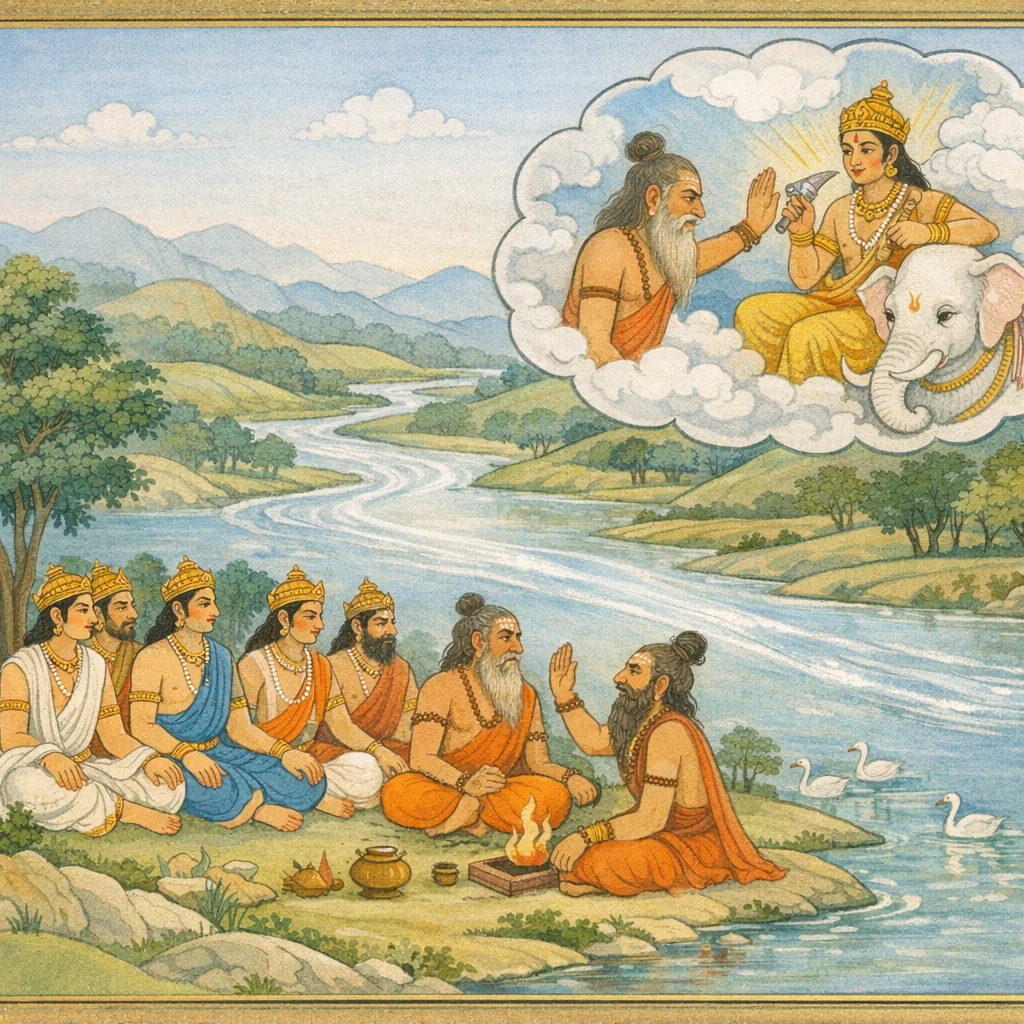
This chapter, narrated within the pilgrimage discourse, begins with Lomaśa recounting extraordinary sacrificial patronage associated with royal exemplars. Indra (Puraṃdara) is described as being gratified by Soma offerings connected to a yajamāna tradition (with the narrative focusing on King Gaya’s famed rites). Gaya is credited with seven Aśvamedha sacrifices in which ritual implements are portrayed as resplendent and golden; even the gods, ‘with Indra,’ are said to elevate the luminous golden yūpas. The scale of dakṣiṇā is emphasized through similes of innumerability (like sand grains, stars, and rain-streams), and brahmins from many regions are satisfied with gifts, including crafted golden cows attributed to Viśvakarman’s workmanship. The narrative then transitions from exemplum to instruction: Lomaśa states that Gaya attained Indra’s worlds by that karma, and that one who bathes at the Payoṣṇī tīrtha attains association with that realm; he urges Yudhiṣṭhira to bathe there with his brothers for purification. Vaiśaṃpāyana resumes the narration: Yudhiṣṭhira bathes at Payoṣṇī and proceeds with his brothers to Vaiḍūrya mountain and the Narmadā. Lomaśa points out a significant junction of yugas (Tretā–Dvāpara) and identifies the locale of Śaryāti’s sacrifice where Kauśika drank Soma with the Aśvins. The chapter closes with Yudhiṣṭhira’s inquiry into how Indra was ‘checked’ (viṣṭambhita) by Cyavana, why the Bhārgava became angry, and how the Nāsatyas came to drink Soma—setting up the subsequent explanatory narrative.
Chapter Arc: लोमश ऋषि पाण्डवों को एक ऐसे तीर्थ-प्रदेश में ले आते हैं जहाँ देवताओं और प्रजापतियों ने महान यज्ञ किए थे—भूमि स्वयं यज्ञ-ध्वनि और दान-धर्म की स्मृति से दीप्त है। → वैशम्पायन के वर्णन में पाण्डव पयोष्णी में स्नान कर वैदूर्य पर्वत और नर्मदा के पुण्य-स्थानों की ओर बढ़ते हैं; वे जहाँ-जहाँ जाते हैं, सहस्रों ब्राह्मणों को दान देते हैं। इसी यात्रा में शर्याति के यज्ञ-स्थल का संकेत मिलता है और कौशिक (च्यवन) के सोमपान का प्रसंग उठता है—यहाँ से एक पुराने विवाद की छाया फैलती है। → च्यवन भृगुवंशी महातपस्वी का क्रोध प्रकट होता है—वे इन्द्र (वज्रधर) को स्तम्भित कर देते हैं और सुकन्या को पत्नी रूप में प्राप्त करते हैं; साथ ही अश्विनीकुमारों (नासत्यौ) को सोमपान का अधिकारी बनाने का प्रश्न उभर आता है। → अध्याय का अंत ‘कथा-आरम्भ’ के रूप में होता है: जनमेजय/श्रोता की जिज्ञासा तीव्र हो उठती है कि अश्विनों को सोमपान कैसे मिला और च्यवन-सुकन्या का वृत्तांत क्या है—वर्णनकर्ता आगे विस्तार का आश्वासन देता है। → जनमेजय पूछते हैं—“हे ब्रह्मन्, नासत्यौ को सोमपीथिनौ कैसे बनाया गया? समस्त वृत्तांत यथावत कहिए।”
Shlokas
Verse 1
हि लय ० () है ० एकविशर्त्याधेकशततमो< ध्याय: राजा गयके यज्ञकी प्रशंसा, पयोष्णी, वैदूर्य पर्वत और नर्मदाके माहात्म्य तथा च्यवन-सुकन्याके चरित्रका आरम्भ लोगश उवाच नृगेण यजमानेन सोमेनेह पुरंदर: । तर्पित: श्रूयते राजन् स तृप्तो मुदमभ्यगात्,लोमशजी कहते हैं--युधिष्ठिर! सुना जाता है कि इस पयोष्णी नदीके तटपर राजा नृगने यज्ञ करके सोमरसके द्वारा देवराज इन्द्रको तृप्त किया था। उस समय इन्द्र पूर्णतः तृप्त होकर आनन्दमग्न हो गये थे
Lomaśa said: O King (Yudhiṣṭhira), it is heard that here, when King Nṛga was performing a Soma-sacrifice, Purandara (Indra) was satisfied by the Soma offering. Fully gratified, Indra attained joy. The verse underscores the ethical ideal that properly performed Vedic rites—done with due order and sincerity—are believed to sustain harmony between humans and the divine, yielding auspiciousness and gladness rather than mere personal gain.
Verse 2
इह देवै: सहेन्द्रैश्ष॒ प्रजापतिभिरेव च । इष्ट बहुविधेर्यज्ञैर्महद्धिभभूरिदक्षिणै:,यहीं इन्द्रसहित देवताओंने और प्रजापतियोंने भी प्रचुर दक्षिणासे युक्त अनेक प्रकारके बड़े-बड़े यज्ञोंद्वारा भगवानूका यजन किया है
Here, even the gods led by Indra, together with the Prajāpatis, have worshipped the Lord by performing many kinds of great sacrifices, richly endowed with abundant sacrificial gifts. The statement underscores that true reverence is shown through disciplined, generous, and properly ordered ritual action, upheld even by the highest beings.
Verse 3
आमूर्तरयसश्रेह राजा वज्रधरं प्रभुम् । तर्पयामास सोमेन हयमेथेषु सप्तसु,अमूर्तरयाके पुत्र राजा गयने भी यहाँ सात अश्वमेधयज्ञोंका अनुष्ठान करके उनमें सोमरसके द्वारा वज्रधारी इन्द्रको संतुष्ट किया था
Lomaśa said: King Amūrtaraya—renowned for his excellence—performed seven Aśvamedha sacrifices and, by offering Soma, satisfied the mighty Lord Indra, the wielder of the thunderbolt. The passage underscores the ideal of royal duty: a king seeks prosperity and stability not merely through power, but through disciplined ritual, generosity, and reverence toward the divine order.
Verse 4
तस्य सप्तसु यज्ञेषु सर्वमासीद्धिरण्मयम् । वानस्पत्यं च भौम॑ च यद् द्रव्यं नियतं मखे,यज्ञमें जो वस्तुएँ नियमितरूपसे काष्ठ और मिट्टीकी बनी हुई होती हैं, ये सब-की सब राजा गयके उक्त सातों यज्ञोंमें सुवर्णसे बनायी गयी थीं
In his seven sacrifices, everything was made of gold. Even those ritual materials that are ordinarily prescribed to be of wood or of earth were, in that king’s sacrificial rites, fashioned in gold—signifying extraordinary royal generosity and the intent to honor the sacrifice with unmatched splendor.
Verse 5
चषालयूपचमसा: स्थाल्य: पात्र्य: खुच: सख्रुवा: तेष्वेव चास्य यज्ञेषु प्रयोगा: सप्त विश्रुता:,प्राय: यज्ञोंमें चषाल, ->यूप, 3चमस, <स्थाली, “पात्री, “*सखुक् और »खुवा--ये सात साधन उपयोगमें लाये जाते हैं। राजा गयके पूर्वोक्त सातों यज्ञोंमें ये सभी उपकरण सुवर्णके ही थे, ऐसा सुना जाता है
It is heard that, in sacrifices, seven implements are commonly employed—cāṣāla, yūpa, camasa, sthālī, pātrī, sakhruva, and khuvā. And in those seven sacrifices of King Gaya mentioned above, all these instruments were, it is said, made of gold.
Verse 6
सप्तैकैकस्य यूपस्य चषालाश्लोपरि स्थिता: । तस्य सम यूपान् यज्ञेषु भ्राजमानान् हिरण्मयान्,सात यूपोंमेंसे प्रत्येकके ऊपर सात-सात चषाल थे। युधिष्ठिर! उन यज्ञोंमें जो चमकते हुए सुवर्णमय यूप थे, उन्हें इन्द्र आदि देवताओंने स्वयं खड़ा किया था। राजा गयके उन उत्तम यज्ञोंमें इन्द्र सोमपान करके और ब्राह्मण बहुत-सी दक्षिणा पाकर हर्षोन्मत्त हो गये थे। ब्राह्मणोंने दक्षिणामें जो बहुसंख्यक धनराशि प्राप्त की थी, उसकी गणना नहीं की जा सकती थी
Lomaśa said: “Upon each of the seven sacrificial posts there were seven caṣālas set at the top. In those sacrifices, the matching yūpas—radiant and made of gold—stood resplendent, established (as the tradition says) by the gods such as Indra themselves. At King Gaya’s excellent sacrifices, Indra, having drunk the Soma, and the Brahmins, having received abundant gifts, became exultant with joy; and the vast wealth obtained as dakṣiṇā was beyond counting.”
Verse 7
स्वयमुत्थापयामारसुर्देवा: सेन्द्रा युधिष्ठिर । तेषु तस्य मखाग्रयेषु गयस्य पृथिवीपते:,सात यूपोंमेंसे प्रत्येकके ऊपर सात-सात चषाल थे। युधिष्ठिर! उन यज्ञोंमें जो चमकते हुए सुवर्णमय यूप थे, उन्हें इन्द्र आदि देवताओंने स्वयं खड़ा किया था। राजा गयके उन उत्तम यज्ञोंमें इन्द्र सोमपान करके और ब्राह्मण बहुत-सी दक्षिणा पाकर हर्षोन्मत्त हो गये थे। ब्राह्मणोंने दक्षिणामें जो बहुसंख्यक धनराशि प्राप्त की थी, उसकी गणना नहीं की जा सकती थी
Lomaśa said: “O Yudhiṣṭhira, the gods—Indra at their head—raised the sacrificial posts themselves for King Gaya in his foremost sacrifices. On each of the seven posts there were seven caṣālas (the shining finials). In those rites the yūpas gleamed, made of gold, and were set up by the deities with their own hands. At King Gaya’s excellent sacrifices, Indra, having drunk the Soma, and the Brahmins, having received abundant gifts, became intoxicated with joy. The mass of wealth obtained as sacrificial fees was so vast that it could not even be counted.”
Verse 8
अमाद्यदिन्द्र: सोमेन दक्षिणाभिद्धिजातय: । प्रसंख्यानानसंख्येयान् प्रत्यगृह्लनन् द्विजातय:,सात यूपोंमेंसे प्रत्येकके ऊपर सात-सात चषाल थे। युधिष्ठिर! उन यज्ञोंमें जो चमकते हुए सुवर्णमय यूप थे, उन्हें इन्द्र आदि देवताओंने स्वयं खड़ा किया था। राजा गयके उन उत्तम यज्ञोंमें इन्द्र सोमपान करके और ब्राह्मण बहुत-सी दक्षिणा पाकर हर्षोन्मत्त हो गये थे। ब्राह्मणोंने दक्षिणामें जो बहुसंख्यक धनराशि प्राप्त की थी, उसकी गणना नहीं की जा सकती थी
Lomaśa said: “Indra became exhilarated by drinking Soma, and the twice-born Brahmins grew joyful through the gifts of dakṣiṇā. The wealth they received as sacrificial fees was so vast that it could not be counted.”
Verse 9
सिकता वा यथा लोके यथा वा दिवि तारका: । यथा वा वर्षतो धारा असंख्येया: सम केनचित्,महाराज! राजा गयने सातों यज्ञोंमें सदस्योंको, जो असंख्य धन प्रदान किया था, उसकी गणना उसी प्रकार नहीं हो सकती थी, जैसे इस जगत्में कोई बालूके कणों, आकाशके तारों और वर्षाकी धाराओंको नहीं गिन सकता
“As the grains of sand in the world, as the stars in the sky, as the streams of rain that fall—so are things beyond anyone’s counting. Even so, O great king, the wealth King Gaya bestowed upon the assembled officiants in his seven sacrifices could not be reckoned.”
Verse 10
तथैव तदसंख्येयं धनं यत् प्रददौ गय:ः । सदस्येभ्यो महाराज तेषु यज्ञेषु सप्तसु,महाराज! राजा गयने सातों यज्ञोंमें सदस्योंको, जो असंख्य धन प्रदान किया था, उसकी गणना उसी प्रकार नहीं हो सकती थी, जैसे इस जगत्में कोई बालूके कणों, आकाशके तारों और वर्षाकी धाराओंको नहीं गिन सकता
“So too, O great king, was the wealth beyond counting that Gaya bestowed upon the assembled participants in those seven sacrifices.”
Verse 11
भवेत् संख्येयमेतद्धि यदेतत् परिकीर्तितम् । न तस्य शक््या: संख्यातुं दक्षिणा दक्षिणावत:,उपर्युक्त बालूके कण आदि कदाचित् गिने भी जा सकते हैं, परंतु दक्षिणा देनेवाले राजा गयकी दक्षिणाकी गणना करना सम्भव नहीं है
What has been described could indeed be counted and measured. But the gifts (dakṣiṇā) of King Gaya—so boundless in generosity—cannot be enumerated. Ordinary quantities may be reckoned; the merit and magnitude of a truly charitable ruler’s giving surpass all calculation.
Verse 12
हिरण्मयीभिगें भिश्व कृताभिवविश्वकर्मणा । ब्राह्मणांस्तर्पयामास नानादिग्भ्य: समागतान्,उन्होंने विश्वकर्माकी बनायी हुई सुवर्णमयी गौएँ देकर विभिन्न दिशाओंसे आये हुए ब्राह्मणोंको संतुष्ट किया था। युधिष्ठिर! भिन्न-भिन्न स्थानोंमें यज्ञ करनेवाले महामना राजा गयके राज्यकी थोड़ी ही भूमि ऐसी बच गयी थी जहाँ यज्ञके मण्डप न हों
With golden cows fashioned by Viśvakarman, he satisfied the Brahmins who had gathered from many directions. O Yudhiṣṭhira, that high-minded King Gaya performed sacrifices in so many places that scarcely any land remained in his kingdom where sacrificial pavilions were not set up.
Verse 13
अल्पावशेषा पृथिवी चैत्यैरासीन्महात्मन: । गयस्य यजमानस्य तत्र तत्र विशाम्पते,उन्होंने विश्वकर्माकी बनायी हुई सुवर्णमयी गौएँ देकर विभिन्न दिशाओंसे आये हुए ब्राह्मणोंको संतुष्ट किया था। युधिष्ठिर! भिन्न-भिन्न स्थानोंमें यज्ञ करनेवाले महामना राजा गयके राज्यकी थोड़ी ही भूमि ऐसी बच गयी थी जहाँ यज्ञके मण्डप न हों
O lord of the people (Yudhiṣṭhira), so many sacred memorials and sacrificial structures stood everywhere that only a small portion of the earth remained unmarked by them. Such was the greatness of King Gaya, ever engaged as a sacrificer, in place after place.
Verse 14
स लोकान प्राप्तवानैन्द्रान् कर्मणा तेन भारत । सलोकतां तस्य गच्छेत् पयोष्ण्यां य उपस्पृशेत्,भारत! उस यज्ञकर्मके प्रभावसे गयने इन्द्रादि लोकोंको प्राप्त किया। जो इस पयोष्णी नदीमें स्नान करता है वह भी राजा गयके समान पुण्यलोकका भागी होता है
O Bhārata, by the power of that sacrificial act he attained the heavenly worlds belonging to Indra and the gods. Likewise, whoever ritually bathes in the river Payoṣṇī gains a share in the same meritorious realm as King Gaya.
Verse 15
तस्मात् त्वमत्र राजेन्द्र भ्रातृभि: सहितो<च्युत । उपस्पृश्य महीपाल धूतपाप्मा भविष्यसि,अतः राजेन्द्र! तुम भाइयोंसहित इसमें स्त्रान करके सब पापोंसे मुक्त हो जाओगे
Therefore, O king of kings, O unfallen one—here, together with your brothers, perform the purificatory bathing. O protector of the earth, by touching the sacred water and cleansing yourself, you will become free of sin.
Verse 16
वैशम्पायन उवाच स पयोष्ण्यां नरश्रेष्ठ: स्नात्वा वै भ्रातृभि: सह । वैदूर्यपर्वतं चैव नर्मदां च महानदीम्,वैशम्पायनजी कहते हैं--निष्पाप जनमेजय! पाण्डवप्रवर नरश्रेष्ठ राजा युधिष्छिर भाइयोंसहित पयोष्णी नदीमें स्नान करके वैदूर्यपर्वत और महानदी नर्मदाके तटपर जानेका उद्देश्य लेकर वहाँसे चल दिये और वे तेजस्वी नरेश सब भाइयोंको साथ लिये यथासमय अपने गन्तव्य स्थानपर पहुँच गये। वहाँ भगवान् लोमश मुनिने उनसे समस्त रमणीय तीथर्थों और पवित्र देवस्थानोंका परिचय कराया। तत्पश्चात् राजाने अपनी सुविधा और प्रसन्नताके अनुसार सहसौरों ब्राह्यगोंको धनका दान किया और भाइयोंसहित उन सब स्थानोंकी यात्रा की
Vaiśampāyana said: Having bathed in the river Payoṣṇī, that best of men set out with his brothers, intent on reaching Mount Vaidūrya and the great river Narmadā. The passage portrays the Pāṇḍavas’ disciplined pilgrimage—purifying themselves, moving in fraternal harmony, and turning their steps toward sacred landscapes that uphold restraint, gratitude, and dharmic conduct even in exile.
Verse 17
(उदिश्य पाण्डवश्रेष्ठ: स प्रतस्थे महीपति: ।) समागमत तेजस्वी भ्रातृभि: सहितोडनघ । तत्रास्य सर्वाण्याचख्यौ लोमशो भगवानृषि:,वैशम्पायनजी कहते हैं--निष्पाप जनमेजय! पाण्डवप्रवर नरश्रेष्ठ राजा युधिष्छिर भाइयोंसहित पयोष्णी नदीमें स्नान करके वैदूर्यपर्वत और महानदी नर्मदाके तटपर जानेका उद्देश्य लेकर वहाँसे चल दिये और वे तेजस्वी नरेश सब भाइयोंको साथ लिये यथासमय अपने गन्तव्य स्थानपर पहुँच गये। वहाँ भगवान् लोमश मुनिने उनसे समस्त रमणीय तीथर्थों और पवित्र देवस्थानोंका परिचय कराया। तत्पश्चात् राजाने अपनी सुविधा और प्रसन्नताके अनुसार सहसौरों ब्राह्यगोंको धनका दान किया और भाइयोंसहित उन सब स्थानोंकी यात्रा की
Vaiśampāyana said: O sinless Janamejaya, the best of the Pāṇḍavas—the lord of the earth—set out with a clear purpose. The radiant king, accompanied by his brothers, reached the appointed place in due course. There the venerable sage Lomaśa described to him all the delightful tīrthas and the pure holy shrines. The passage sets forth a dharmic way of travel: purposeful movement guided by a wise teacher, reverence for tīrthas, and royal generosity shown through gifts to worthy brāhmaṇas.
Verse 18
तीर्थानि रमणीयानि पुण्यान्यायतनानि च । यथायोगं यथाप्रीति प्रययौ भ्रातृभि: सह । तत्र तत्राददाद् वित्तं ब्राह्मणेभ्य: सहस्रश:,वैशम्पायनजी कहते हैं--निष्पाप जनमेजय! पाण्डवप्रवर नरश्रेष्ठ राजा युधिष्छिर भाइयोंसहित पयोष्णी नदीमें स्नान करके वैदूर्यपर्वत और महानदी नर्मदाके तटपर जानेका उद्देश्य लेकर वहाँसे चल दिये और वे तेजस्वी नरेश सब भाइयोंको साथ लिये यथासमय अपने गन्तव्य स्थानपर पहुँच गये। वहाँ भगवान् लोमश मुनिने उनसे समस्त रमणीय तीथर्थों और पवित्र देवस्थानोंका परिचय कराया। तत्पश्चात् राजाने अपनी सुविधा और प्रसन्नताके अनुसार सहसौरों ब्राह्यगोंको धनका दान किया और भाइयोंसहित उन सब स्थानोंकी यात्रा की
Vaiśampāyana said: Together with his brothers, he journeyed through delightful tīrthas and pure holy shrines, proceeding as suited the time and circumstance and according to his own inclination. At each place he distributed wealth in gifts—by the thousands—to the brāhmaṇas.
Verse 19
लोगश उवाच देवानामेति कौन्तेय तथा राज्ञां सलोकताम् | वैदूर्यपर्वतं दृष्टवा नर्मदामवतीर्य च,लोमशजीने कहा--कुन्तीनन्दन! वैदूर्यपर्वतका दर्शन करके नर्मदामें उतरनेसे मनुष्य देवताओं तथा पुण्यात्मा राजाओंके समान पवित्र लोकोंको प्राप्त कर लेता है
Lomaśa said: “O son of Kuntī, by beholding Mount Vaidūrya and then descending into the Narmadā, a person attains the same pure realms as the gods and as righteous kings.”
Verse 20
संधिरेष नरश्रेष्ठ त्रेताया द्वापरस्य च । एनमासाद्य कौन्तेय सर्वपापै: प्रमुच्यते,नरश्रेष्ठ! यह वैदूर्यपर्वत त्रेता और द्वापरकी सन्धिमें प्रकट हुआ है, इसके निकट जाकर मनुष्य सब पापोंसे मुक्त हो जाता है
Lomaśa said: “O best of men, O son of Kuntī, this is the sacred junction between the Tretā and Dvāpara ages. By coming into its presence, a person is released from all sins.” The statement frames the place as a moral and ritual threshold where contact with a sanctified locus is believed to cleanse wrongdoing and renew one’s ethical standing.
Verse 21
एष शर्यातियज्ञस्य देशस्तात प्रकाशते । साक्षाद् यत्रापिबत् सोममश्रिभ्यां सह कौशिक:,तात! यह राजा शर्यातिके यज्ञका स्थान प्रकाशित हो रहा है जहाँ साक्षात् इन्द्रने अश्विनीकुमारोंक साथ बैठकर सोमपान किया था
Lomaśa said: “Dear child, here the site of King Śaryāti’s sacrifice is clearly seen. It is the very place where Kauśika himself once drank the Soma together with the Aśvin twins.”
Verse 22
चुकोप भार्गवश्वापि महेन्द्रस्य महातपा: । संस्तम्भयामास च तं वासवं च्यवन: प्रभु: | सुकन्यां चापि भार्या स राजपुत्रीमवाप्तवान्,(नासत्यौ च महाभाग कृतवान् सोमपीथिनौ ।) महाभाग! यहीं महातपस्वी भृगुनन्दन भगवान् च्यवन देवराज इन्द्रपर कुपित हुए थे और यहीं उन्होंने इन्द्रको स्तम्भित भी कर दिया था। इतना ही नहीं, मुनिवर च्यवनने यहीं अश्विनीकुमारोंको यज्ञमें सोमपानका अधिकारी बनाया था। और इसी स्थानपर राजकुमारी सुकन्या उन्हें पत्नीरूपमें प्राप्त हुई थी
Lomaśa said: “Here, the mighty ascetic Cyavana, the Bhṛgu-descendant, became wrathful with great Indra. The powerful sage even immobilized Vāsava (Indra) on this very spot. Here too he obtained Sukanyā, the king’s daughter, as his wife; and, O noble one, he also made the Aśvin twins entitled to drink the Soma in the sacrifice.”
Verse 23
युधिछिर उवाच कथं विष्टम्भितस्तेन भगवान् पाकशासन: । किमर्थ भार्गवश्चलापि कोप॑ चक्रे महातपा:,युधिष्ठिरने पूछा--मुने! महातपस्वी भृगुपुत्र महर्षि च्यवनने भगवान् इन्द्रका स्तम्भन कैसे किया? उन्हें इन्द्रपर क्रोध किसलिये हुआ?
Yudhiṣṭhira said: “How was the blessed Pākaśāsana (Indra) checked and held back by him? And for what reason did the Bhārgava—Chyavana, that great ascetic—become angry and give way to wrath?”
Verse 24
नासत्यौ च कथं ब्रह्मन् कृतवान् सोमपीथिनौ । एतत् सर्व यथावृत्तमाख्यातु भगवान् मम,तथा ब्रह्मन! उन्होंने अश्विनीकुमारोंको यज्ञ़में सोमपानका अधिकारी किस प्रकार बनाया? ये सब बातें आप यथार्थरूपसे मुझे बतावें
Yudhiṣṭhira said: “O Brāhmaṇa, how did you make the two Nāsatyas (the Aśvin twins) entitled to drink Soma in the sacrifice? Please recount to me, exactly as it happened, the whole of this matter.”
Verse 120
इस प्रकार श्रीमहाभारत वनपर्वके अन्तर्गत तीर्थयात्रापर्वमें लोमशती थयात्राप्रसंगमें यादवगमनविषयक एक सौ बीसवाँ अध्याय पूरा हुआ
Thus ends the one hundred and twenty-first chapter of the Vana Parva of the Śrī Mahābhārata, within the Tīrtha-yātrā section, in the context of Lomaśa’s narration of the pilgrimage—specifically concerning the departure/journey of the Yādavas.
Verse 121
इति श्रीमहाभारते वनपर्वणि तीर्थयात्रापर्वणि लोमशतीर्थयात्रायां सौकन्ये एकविंशत्यधिकशततमो<ध्याय:
Thus ends the one hundred and twenty-first chapter of the Vana Parva of the Śrī Mahābhārata, within the Pilgrimage section (Tīrthayātrā Parva), in the account of Lomāśa’s pilgrimage, in the episode concerning Sukanyā. This is a closing colophon marking the end of the chapter, not a spoken verse of instruction.
Frequently Asked Questions
The chapter contrasts power with patronage: the ethical question is how kingship is validated—through coercive capacity or through dharmic expenditure (yajña, dakṣiṇā, and care for ritual specialists) that is framed as generating lasting merit.
Merit is presented as cumulative and transmissible through disciplined action: exemplary generosity and correct ritual intention are linked to ‘lokaprāpti,’ while tīrtha-bathing is framed as a practical, accessible purification aligned with karmic causality.
Yes. Lomaśa asserts that bathing at the Payoṣṇī tīrtha leads to attaining association with Gaya’s achieved realm (salokatā), functioning as a localized phalaśruti tied to the pilgrimage itinerary.