Adhyaya 98
हिरण्यपुरवर्णनम् (Description of Hiraṇyapura and the Nivātakavacas)
Upa-parva: Nārada–Hiraṇyapura Darśana (Episode on Hiraṇyapura and the Nivātakavacas)
The chapter opens with Nārada describing Hiraṇyapura as a celebrated, vast city of the Daityas and Dānavas, characterized by extensive māyā (artifice/illusion) and extraordinary engineering. Its construction is attributed to Viśvakarman’s effort and to Maya’s creative agency, and it is situated in a subterranean (pātāla) domain. Nārada characterizes the residents as powerful, boon-endowed Dānavas who deploy innumerable māyā-manifestations and are not easily brought under control even by major deities. The Nivātakavacas are named as a war-confident group whom even Śakra (Indra) cannot readily subdue, and the narrative recalls repeated setbacks involving Mātali and his son Gomukha alongside the Deva-king. The description then shifts to a detailed catalog of the city’s opulent structures—golden and silver edifices, jewel-like colors (vaidūrya, coral hues), crystal brightness, and forms resembling mountains, stars, and blazing fire—emphasizing that their qualities exceed easy enumeration. The chapter further depicts luxurious recreational grounds, beds, vessels, seats, cloud-like mountains with springs, and wish-fulfilling flora. A proposal is made to choose something desirable there or to travel elsewhere; in response, a speaker (framed as Kaṇva) reports Mātali’s refusal to do anything displeasing to the inhabitants of the heavenly realm, citing the perpetual enmity between Devas and Dānavas and rejecting ties with the adversarial side.
Chapter Arc: कथावाचक संकेत देता है कि यह अध्याय मातलि द्वारा वर-खोज (वरान्वेषण) की यात्रा का एक चरण है; नारदजी के वचन से नागलोक/पाताल के अद्भुत, भय-उत्पादक प्रदेश का द्वार खुलता है। → नारदजी मातलि को नागलोक के नाभिस्थान में स्थित विचित्र लोकों का वर्णन करते हैं—जहाँ ‘जलभोजी’ आसुरी अग्नि निरन्तर प्रज्वलित है, और पाताल-तल के जीव सूर्य-किरणों से दिन में मरकर रात में पुनर्जीवित हो उठते हैं; यह सब वर-चयन की साधारण खोज को ब्रह्माण्डीय रहस्य और भय के रंग में रंग देता है। → नारदजी प्रलय-काल की महाग्नि का संकेत करते हैं—कि अंत में एक प्रचण्ड अग्नि उठकर त्रैलोक्य को सचराचर भस्म कर देगी; उसी क्षण मातलि के लिए यह स्पष्ट हो जाता है कि यहाँ का वैभव और विचित्रता भी अंतिम सत्य के सामने क्षणभंगुर है। → नारद-वर्णित गज-वंश (ऐरावत, वामन, कुमुद, अंजन आदि) और ‘गुणतः वर’ चुनने की सलाह के बावजूद मातलि कह देता है कि उसे यहाँ कोई वर रुचिकर नहीं लगा; वह शीघ्र आगे बढ़ने का निश्चय करता है। → मातलि का ‘यहाँ नहीं’ कहना खोज को अगले लोक/अगले विकल्प की ओर धकेल देता है—अब प्रश्न यह है कि वह किस दिशा में जाएगा और किसे योग्य वर मानेगा।
Shlokas
Verse 1
इस प्रकार श्रीमहाभारत उद्योगपर्वके अन्तर्गत भगवद्यानपर्वमें मातलिके द्वारा वरका खोजविषयक अद्ठानबेवाँ अध्याय पूरा हुआ ॥/ ९८ ॥। एकोनशततमो<थध्याय: नारदजीके द्वारा पाताललोकका प्रदर्शण नारद उवाच एतत् तु नागलोकस्य नाभिस्थाने स्थितं पुरम् पातालमिति विख्यात॑ दैत्यदानवसेवितम्,नारदजी बोले--मातले! यह जो नागलोकके नाभिस्थान (मध्यभाग)-में स्थित नगर दिखायी देता है, इसे पाताल कहते हैं। इस नगरमें दैत्य और दानव निवास करते हैं। यहाँ जो कोई भूतलके जंगम प्राणी जलके साथ बहकर आ जाते हैं, वे इस पातालमें पहुँचनेपर भयसे पीड़ित हो बड़े जोरसे चीत्कार करने लगते हैं
Narada said: “O Mātali, this city that appears here, situated at the navel-like central region of the Nāga-world, is renowned as Pātāla. It is frequented and inhabited by Daityas and Dānavas.”
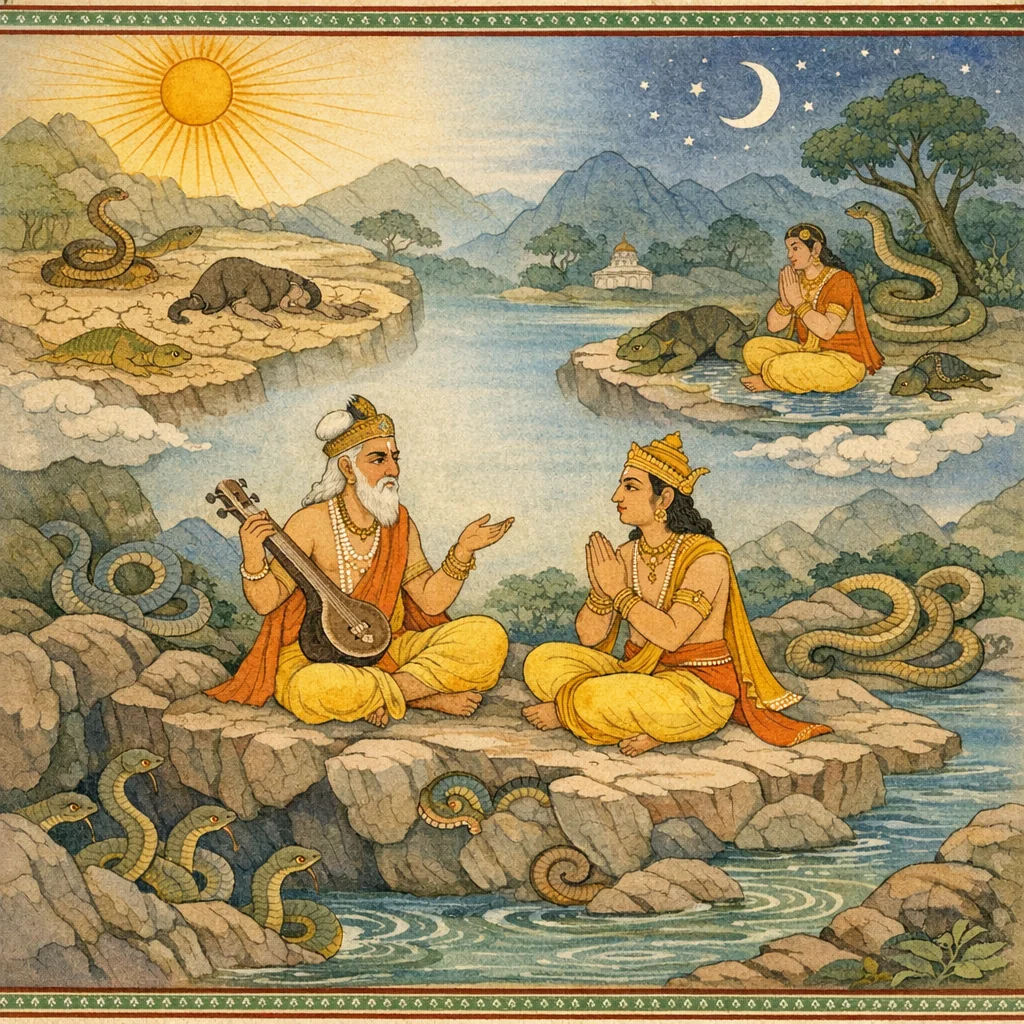
Verse 2
इदमद्धिः सम॑ प्राप्ता ये केचिद् भुवि जड़मा: । प्रविशन्तो महानादं नदन्ति भयपीडिता:,नारदजी बोले--मातले! यह जो नागलोकके नाभिस्थान (मध्यभाग)-में स्थित नगर दिखायी देता है, इसे पाताल कहते हैं। इस नगरमें दैत्य और दानव निवास करते हैं। यहाँ जो कोई भूतलके जंगम प्राणी जलके साथ बहकर आ जाते हैं, वे इस पातालमें पहुँचनेपर भयसे पीड़ित हो बड़े जोरसे चीत्कार करने लगते हैं
Nārada said: “Here, indeed, a common fate befalls whatever dull-witted creatures happen to be on the earth: when they are swept along and enter this region of great roaring sound, they cry out loudly, tormented by fear.”
Verse 3
अत्रासुरोडग्नि: सततं दीप्यते वारिभोजन: । व्यापारेण धृतात्मानं निबद्धं समबुध्यत,यहाँ जलका ही आहार करनेवाली आसुर अग्नि सदा उद्दीप्त रहती है। उसे यत्नपूर्वक मर्यादामें स्थापित किया गया है। वह अग्नि अपने-आपको देवताओं-द्वारा नियन्त्रित समझती है; इसलिये सब ओर फैल नहीं पाती
Here the Asura-fire, whose sustenance is water, blazes perpetually. By deliberate effort it has been bound and kept within its proper limits; knowing itself restrained by the gods, it cannot spread in every direction.
Verse 4
अत्रामृतं सुरै: पीत्वा निहित॑ निहतारिभि: । अत: सोमस्य हानिश्च वृद्धिश्वैव प्रदृश्यते,देवताओंने अपने शत्रुओंका संहार करके अमृत पीकर उसका अवशिष्ट भाग यहीं रख दिया था। इसीलिये अमृतमय सोमकी हानि और वृद्धि देखी जाती है
Nārada said: “Here, after the gods had slain their enemies, they drank the nectar and then deposited what remained in this very place. Therefore, in the case of Soma, one observes both diminution and increase—its waxing and waning—arising from that residual nectar.”
Verse 5
अत्रादित्यो हयशिरा: काले पर्वणि पर्वणि । उत्तिष्ठति सुवर्णाख्यो वाग्भिरापूरयञण्जगत्,यहाँ अदितिनन्दन हयग्रीव विष्णु सुवर्णमय कान्ति धारण करके प्रत्येक पर्वपर वेदध्वनिके द्वारा जगत्को परिपूर्ण करते हुए ऊपरको उठते हैं
Nārada said: “Here, at the proper times—at each sacred junction of the calendar—the Sun, famed as Hayaśiras, rises up in a golden radiance, filling the world with the power of sacred sound (Vedic utterance).”
Verse 6
यस्मादलं समस्तास्ता: पतन्ति जलमूर्तय: । तस्मात् पातालमित्येव ख्यायते पुरमुत्तमम्,जलस्वरूप जितनी भी वस्तुएँ हैं, वे सब वहाँ पर्याप्तरूपसे गिरती हैं, इसलिये ('पतन्ति अलम्” इस व्युत्पतिके अनुसार पात+अलम्--इन दोनों शब्दोंके योगसे) यह उत्तम नगर “पाताल” कहलाता है
“Because all things that are of the nature of water fall down there in full measure, that excellent city is famed as Pātāla—the place into which the waters descend.”
Verse 7
ऐरावणो<स्मात् सलिल॑ गृहीत्वा जगतो हित: । मेघेष्वामुज्चते शीतं यन्महेन्द्र: प्रवर्षति,जगत्का हित करनेवाला और समुद्रसे उत्पन्न होनेवाला वर्षाकालीन वायु यहींसे शीतल जल लेकर मेघोंमें स्थापित करता है, जिसे देवराज इन्द्र भूतलपर बरसाते हैं
Nārada said: “Airāvaṇa, acting for the welfare of the world, draws up water from here and places that cool water into the clouds; then Mahendra (Indra) sends it down as rain upon the earth.”
Verse 8
अत्र नानाविधाकारास्तिमयो नैकरूपिण: । अप्सु सोमप्रभां पीत्वा वसन्ति जलचारिण:,नाना प्रकारकी आकृति तथा भाँति-भाँतिके रूपवाले जलचारी तिमि (ह्लेल) मत्स्य चन्द्रमाकी किरणोंका पान करते हुए यहाँ जलमें निवास करते हैं
Here dwell aquatic beings—timis and other water-rovers—of many kinds and ever-changing forms. Drinking in the moon’s radiance upon the waters, they abide within this realm of the deep.
Verse 9
अत्र सूर्याशुभिर्भिन्ना: पातालतलमश्रिता: । मृता हि दिवसे सूत पुनर्जीवन्ति वै निशि,मातले! ये पातालनिवासी जीव-जन्तु यहाँ दिनमें सूर्यकी किरणोंसे संतप्त हो मृतप्राय अवस्थामें पहुँच जाते हैं; परंतु रात होनेपर अमृतमयी चन्द्ररश्मियोंके सम्पर्कसे पुनः जी उठते हैं
Here, the creatures who dwell in Pātāla, scorched and undone by the sun’s baleful rays, lie as though dead by day; but when night falls, by contact with the moonbeams—like amṛta—they rise to life again, O Mātale.
Verse 10
उदयन नित्यशकश्चात्र चन्द्रमा रश्मिबाहुभि: | अमृतं स्पृश्य संस्पर्शात् संजीवयति देहिन:,वहाँ प्रतिदिन उदय लेनेवाले चन्द्रमा अपनी किरणमयी भुजाओंसे अमृतका स्पर्श कराकर उसके द्वारा यहाँके मरणासन्न जीवोंको जीवन प्रदान करते हैं
Nārada said: “Here, the moon rises each day and, with arms made of rays, touches the nectar; by that contact it restores life to living beings who are near death.” The image underscores a dharmic vision of cosmic order: celestial rhythms are not merely decorative but sustain and protect embodied life.
Verse 11
अत्र ते<धर्मनिरता बद्धा: कालेन पीडिता: । दैतेया निवसन्ति सम वासवेन हतश्रिय:,इन्द्रने जिनकी सम्पत्ति हर ली है, वे अधर्मपरायण दैत्य कालसे बद्ध एवं पीड़ित होकर इसी स्थानमें निवास करते हैं
Here dwell those Daityas who are devoted to unrighteousness—bound and tormented by Time—whose splendor and prosperity have been struck down by Vāsava (Indra).
Verse 12
अत्र भूतपतिर्नाम सर्वभूतमहेश्वर: । भूतये सर्वभूतानामचरत् तप उत्तमम्,सर्वभूतमहेश्वर भगवान् भूतनाथने सम्पूर्ण प्राणियोंक कल्याणके लिये यहाँ उत्तम तपस्या की थी
Nārada said: “Here, the Lord known as Bhūtapati—the great sovereign of all beings—performed the highest austerity for the welfare and flourishing of every creature.”
Verse 13
अत्र गोव्रतिनो विप्रा: स्वाध्यायाम्नायकर्शिता: । त्यक्तप्राणा जितस्वर्गा निवसन्ति महर्षय:,वेदपाठसे दुर्बल हुए तथा प्राणोंकी परवा न करके तपस्याद्वारा स्वर्गलोकपर विजय पानेवाले गोव्रतधारी ब्राह्मण महर्षिगण यहाँ निवास करते हैं
Nārada said: “Here dwell great seers—Brahmin sages who observe the ‘cow-vow’. Worn down by constant recitation and disciplined study in the traditional line of sacred learning, they disregard even their own lives; through austerity they have conquered the attainment of heaven, and thus abide in this place.”
Verse 14
यत्रतत्रशयो नित्यं येन केनचिदाशित: । येन केनचिदाच्छन्न: स गोव्रत इहोच्यते,जो जहाँ कहीं भी सो लेता है, जिस किसी फल-मूल आदिसे भोजनका कार्य चला लेता है तथा वल्कल आदि जिस किसी वस्तुसे भी शरीरको ढक लेता है, वही यहाँ 'गोव्रतधारी” कहलाता है
Narada said: “He who habitually lies down wherever he happens to be, who sustains himself with whatever food he can obtain, and who covers his body with whatever is available—such a person is here described as one observing the ‘govrata’ (the vow of living like a cow), marked by simplicity, non-attachment, and contentment.”
Verse 15
ऐरावणो नागराजो वामन: कुमुदो55जन: । प्रसूता: सुप्रतीकस्य वंशे वारणसत्तमा:
Nārada said: “Airāvaṇa, the lord of serpents; Vāmana; Kumuda; and Jana—these foremost of elephants were born in the lineage of Supratīka.”
Verse 16
यहाँ नागराज ऐरावत, वामन, कुमुद और अंजन नामक श्रेष्ठ गज सुप्रतीकके वंशमें उत्पन्न हुए हैं ।। पश्य यद्यत्र ते कश्चिद् रोचते गुणतो वर: । वरयिष्यामि तं गत्वा यत्नमास्थाय मातले,मातले! देखो, यदि यहाँ तुम्हें कोई गुणवान् वर पसंद हो तो मैं चलकर यत्नपूर्वक उसका वरण करूँगा
Here are born, in the lineage of Supratīka, the foremost elephants—Airāvata, Vāmana, Kumuda, and the one named Añjana. Look: if among them any excellent one, superior in qualities, pleases you, then I shall go and, with careful effort, secure him for you, O Mātali.
Verse 17
अण्डमेतज्जले न्यस्तं दीप्पमानमिव श्रिया । आ प्रजानां निसर्गाद् वै नोद्धिद्यति न सर्पति,जलके भीतर यह एक अण्डा रखा हुआ है, जो यहाँ अपनी प्रभासे उद्धासित-सा हो रहा है। जबसे प्रजाजनोंकी सृष्टि आरम्भ हुई है, तबसे लेकर अबतक यह अण्डा न तो फूटता है और न अपने स्थानसे इधर-उधर जाता ही है
Nārada said: “This egg has been placed in the water, shining as though with splendor. From the very beginning of the creation of beings up to this day, it neither breaks open nor moves from its place.”
Verse 18
नास्य जातिं निसर्ग वा कथ्यमानं शृणोमि वै । पितरं मातरं चापि नास्य जानाति कश्नन,इसकी जाति अथवा स्वभावके विषयमें कभी किसीको कुछ कहते नहीं सुना है। इसके पिता और माताको भी कोई नहीं जानता है
Nārada said: “Truly, I have never heard him speak of his caste or his innate nature. No one knows his father or his mother either.”
Verse 19
अत: किल महानग्निरन्तकाले समुत्थित: । थक्ष्यते मातले सर्व त्रैलोक्यं सचराचरम्,मातले! कहते हैं, प्रलयकालमें इस अण्डेके भीतरसे बड़ी भारी आग प्रकट होगी, जो चराचर प्राणियोंसहित समस्त त्रिलोकीको भस्म कर डालेगी
Nārada said: “Therefore it is said that, at the time of the end, a vast fire will arise; O Mātali, it will burn up the entire threefold world—together with all that moves and all that is unmoving.” The saying proclaims cosmic impermanence, reminding the hearer that even the greatest worldly works must dissolve.
Verse 20
३2008 3842१ त्वा नारदस्याथ भाषितम् | न मेउत्र रोचते ब्रज माचिरम्,नारदजीका यह भाषण सुनकर मातलिने कहा--“यहाँ मुझे कोई भी वर पसंद नहीं आया; अत: शीघ्र ही अन्यत्र कहीं चलिये”
After hearing Nārada’s words, Mātali replied: “Nothing here appeals to me as a fitting choice. Therefore, let us go elsewhere without delay.”
Verse 99
इति श्रीमहाभारते उद्योगपर्वणि भगवद्यानपर्वणि मातलिवरान्वेषणे एकोनशततमो<ध्याय:
Thus ends the ninety-ninth chapter in the Udyoga Parva of the Śrī Mahābhārata, within the Bhagavad-yāna (divine mission) section—specifically, the episode of Mātali’s search for the excellent choice. This colophon marks the close of the chapter’s narrative unit and signals the transition to what follows amid the ethical and political tensions before war.
Frequently Asked Questions
The dilemma concerns whether admiration for power and abundance should translate into political association: the text records a refusal to affiliate with the Dānavas due to enduring Deva–Dānava hostility and the duty to avoid actions adverse to one’s established polity.
The passage advises disciplined discernment: impressive resources and engineered marvels do not by themselves justify alliance; ethical constraints, inherited obligations, and long-term consequences must govern strategic choices.
No explicit phalaśruti is stated in the provided verses; the chapter’s meta-function is primarily descriptive and deliberative, using vivid cataloging and refusal speech to reinforce prudent, duty-bound decision-making.