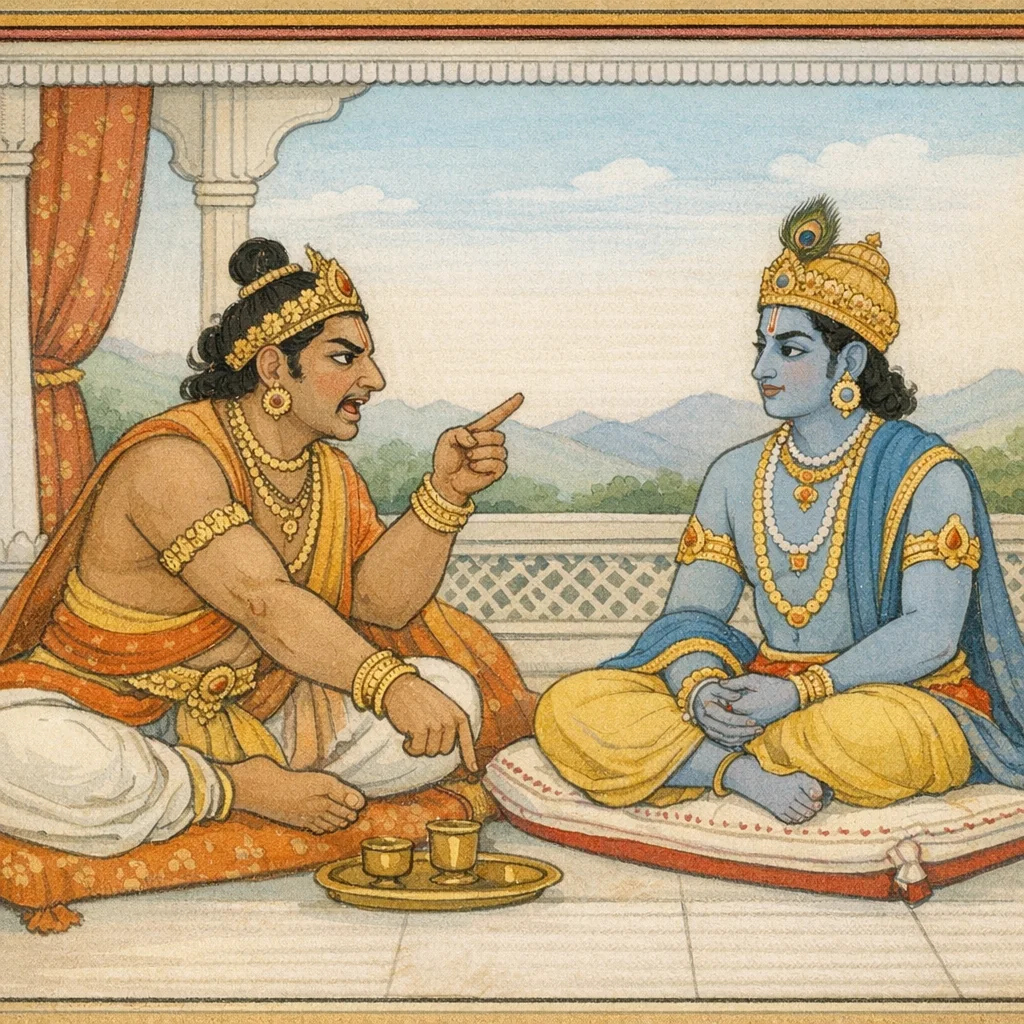
Adhyaya 75
अध्याय ७५ — दैव-पुरुषकार-समन्वयः (Reconciling Contingency and Human Effort)
Upa-parva: Krishna–Bhimasena Saṃvāda (Counsel on Daiva and Pauruṣa) — Udyoga Parva
Kṛṣṇa clarifies to Bhīmasena that his prior words were spoken from affection and inquiry into Bhīma’s intent, not from insult, pedantry, anger, or provocation (1). He affirms knowledge of Bhīma’s greatness, strength, and deeds, explicitly denying any intention to disparage him (2–4). The discourse then turns to a technical ethical-politico analysis: when dharma is uncertain, people struggle to determine the relative causal priority of daiva (circumstance/fate) and mānuṣa/pauruṣa (human effort) (5–7). Kṛṣṇa explains that the same factor may appear as the cause of success or ruin, and that even well-planned, well-governed, and rationally justified human action can be opposed by daiva, while adverse circumstance can be countered by effort (8–10). He recommends a cognitive stance in which one acts within karma (action) without disproportionate elation in success or distress in failure, recognizing outcomes as mixed-causal (11–12). The practical implication is preparatory: Kṛṣṇa intends to meet Dhṛtarāṣṭra the next day to attempt pacification for the Pāṇḍavas’ interests; if accepted, it yields reputational and welfare benefits for all parties, but if rejected, organized conflict becomes likely (15–17). Operational roles are assigned: Bhīma bears primary burden, Arjuna carries the main ‘load’ in execution, and Kṛṣṇa positions himself as Arjuna’s charioteer, emphasizing that war is not his preference but may become necessary if counsel is refused (18–20).
Chapter Arc: वासुदेव के उपदेश/संयम-वचन सुनकर भीमसेन का नित्य-अन्युर, अमर्षी स्वभाव और अधिक भड़क उठता है; वह तुरंत प्रत्युत्तर देता है—मानो युद्धभूमि अभी सामने हो। → भीम कृष्ण से कहता है कि तुम मुझे गलत समझ रहे हो—मैं ‘प्रणीतभाव’ (दबाया हुआ/विनीत) नहीं, सत्य-पराक्रमी और युद्ध के लिए तत्पर हूँ; वह अपने भीतर की अडिगता, निर्भयता और क्रोध की ज्वाला का वर्णन करता है, और समस्त लोकों को साक्षी बनाकर अपनी शक्ति का उद्घोष करता है। → भीम प्रतिज्ञा-स्वर में घोषणा करता है कि पाण्डवों के प्रति आततायी बने क्षत्रियों को वह पृथ्वी पर गिराकर पाँव तले रौंद देगा; घमासान में हाथियों, रथियों, अश्वारोहियों को उखाड़-फेंकने की अपनी उग्र छवि कृष्ण के सामने रखता है। → वह अपने पूर्व पराक्रमों का स्मरण कराता है—जिन राजाओं को उसने जीतकर वश में किया—और कृष्ण से कहता है कि युद्ध के ‘सम्बाध’ और ‘वैशस’ दिन में तुम स्वयं देखोगे कि मेरा मन न काँपता है, न मज्जा शिथिल होती है। → भीम की प्रतिज्ञा हवा में गूँजती रह जाती है—अब प्रश्न यह है कि कृष्ण इस उग्र संकल्प को नीति और धर्म की मर्यादा में कैसे बाँधेंगे, और क्या शान्ति का कोई मार्ग शेष है।
Shlokas
Verse 1
अ्र-क्ा् षट्सप्ततितमो< ध्याय: भीमसेनका उत्तर वैशम्पायन उवाच तथोक्तो वासुदेवेन नित्यमन्युरमर्षण: । सदश्ववत् समाधावद् बभाषे तदनन्तरम्,वैशम्पायनजी कहते हैं--जनमेजय! वसुदेवनन्दन भगवान् श्रीकृष्णके ऐसा कहनेपर सदा क्रोध और अमर्षमें भरे रहनेवाले भीमसेन पहले सुशिक्षित घोड़ेकी भाँति सरपट भागने लगे (जल्दी-जल्दी बोलने लगे); फिर धीरे-धीरे बोले
Vaiśampāyana said: Thus addressed by Vāsudeva, Bhīmasena—ever filled with anger and fierce impatience—at first burst forth like a well-trained horse rushing at full speed; then, immediately afterward, he spoke more steadily.
Verse 2
भीमसेन उवाच अन्यथा मां चिकीर्षन्तमन्यथा मन्यसे<च्युत । प्रणीतभावमत्यर्थ युधि सत्यपराक्रमम्
Bhīmasena said: “O Acyuta, you intend to deal with me in one way, yet you think of me in another. You regard me as overly compliant and easily led—though in battle my prowess is unfailing and true. Do not mistake my restraint for weakness.”
Verse 3
उत वा मां न जानासि प्लवन् हृद इवाप्लवे
Or do you not recognize me—like a swimmer in a river who, finding no ford, must still press on? Bhīma’s words carry a sharp moral challenge: in a crisis where no easy passage exists, one must not pretend ignorance or evade responsibility, but face the situation with courage and clarity.
Verse 4
तस्मादनभिरूपाभिरन्वाम्भिम्मा त्वं समर्च्छ॑सि । अथवा यह भी सम्भव है कि बिना नौकाके अगाध सरोवरमें तैरनेवाले पुरुषको जैसे उसकी गहराईका पता नहीं चलता, उसी तरह आप मुझे अच्छी तरह न जानते हों। इसीलिये आप अनुचित वचनोंद्वारा मुझपर आशक्षेप कर रहे हैं ।। ३ ई ।। कथं हि भीमसेनं मां जानन् कश्नन माधव
Therefore you assail me with words that do not befit the occasion. Or perhaps this too is possible: just as a man who swims in a deep lake without a boat does not truly know its depth, so you may not know me well. That is why you cast insinuations at me with improper speech. For how could anyone, knowing me—Bhīmasena—(speak thus), O Mādhava…?
Verse 5
तस्मादिदं प्रवक्ष्यामि वचन वृष्णिनन्दन
Therefore, O delight of the Vṛṣṇis, I shall now declare this statement—speaking plainly and with resolve about what ought to be done.
Verse 6
सर्वथानार्यकर्मतत् प्रशंसा स्वयमात्मन:
Bhīmasena condemns the conduct in question as wholly ignoble, adding that self-praise is itself a mark of unworthy behavior. In the ethical frame of the Udyoga Parva—where envoys, vows, and negotiations test character—he treats boasting as a symptom of adharma and a violation of noble restraint.
Verse 7
पश्येमे रोदसी कृष्ण ययोरासन्निमा: प्रजा:
Bhīmasena said: “Behold, O Kṛṣṇa, these two worlds—heaven and earth—within which all these beings dwell.” In context, Bhīma’s words underscore the vast moral arena in which human action unfolds: decisions taken in the coming conflict will reverberate across the entire order of life, not merely within a single kingdom.
Verse 8
यदीमे सहसा क्रुद्धे समेयातां शिले इव
If these men, suddenly inflamed with anger, were to rush together like two rocks colliding, the clash would be violent and ruinous—an outburst where wrath, not dharma, drives the outcome.
Verse 9
अहमेते निगृल्लीयां बाहुभ्यां सचराचरे । यदि ये दोनों लोक सहसा कुपित होकर दो शिलाओंकी भाँति परस्पर टकराने लगें, तो मैं चराचर प्राणियोंसहित इन्हें अपनी दोनों भुजाओंसे रोक सकता हूँ ।। ८ हू ।। पश्यैतदन्तरं बाद्वोर्महापरिघयोरिव
Bhīmasena declares his overwhelming strength: even if the two worlds, suddenly enraged, were to crash into each other like two massive rocks, he could hold them back with his own arms, along with all moving and unmoving beings. He urges the listeners to behold the space between his arms, like the gap between two great iron clubs—an image meant to intimidate opponents and rally allies in the tense pre-war deliberations.
Verse 10
हिमवांश्व समुद्रश्न वजी वा बलभित् स्वयम्
Bhīmasena declares that even the mighty Himālaya and the ocean, and even Indra himself—the slayer of Bala—are not beyond the reach of resolute strength. In the ethical tension of the Udyoga Parva, his words press the case for firm action when justice is obstructed and conciliation fails.
Verse 11
मयाभिपन्नं त्रायेरन् बलमास्थाय न त्रयः । जो मेरी पकड़में आ जायगा, उसे हिमालय पर्वत, विशाल महासागर तथा बल नामक दैत्यका विनाश करनेवाले साक्षात् वज्रधारी इन्द्र--ये तीनों अपनी पूरी शक्ति लगाकर भी बचा नहीं सकते ।। १० ह || युद्धाह्नि क्षत्रियान् सर्वान् पाण्डवेष्वाततायिन:
Bhīmasena declares with fierce certainty that anyone who falls into his grasp cannot be rescued—even if three mighty powers were to unite their full strength: the Himalaya mountain, the vast ocean, and Indra himself, the thunderbolt-bearing slayer of the demon Bala. He then turns the threat toward the coming battle, speaking of the Kṣatriyas who have become aggressors against the Pāṇḍavas, implying that such wrongdoers will not escape the consequences of their chosen violence.
Verse 12
न हि त्वं नाभिजानासि मम विक्रममच्युत
For you do not truly know the full measure of my prowess, O Acyuta. Bhīma asserts his strength and resolve, pressing that his capacity for decisive action should not be underestimated in the moral crisis leading toward war.
Verse 13
अथ चेन्मां न जानासि सूर्यस्येवोद्यत: प्रभाम्
If you still do not know me, then behold my radiance—rising, unmistakable—like the sun itself. The line proclaims rightful identity and dharmic resolve: my presence is not to be ignored or belittled, and my power stands as a warning against pride and injustice in the conflict now unfolding.
Verse 14
विगाढे युधि सम्बाधे वेत्स्यसे मां जनार्दन । जनार्दन! यदि कदाचित् आप मुझे या मेरे पराक्रमको न जानते हों तो जब भयंकर संहारकारी घमासान युद्ध प्रारम्भ होगा, उस समय उगते हुए सूर्यकी प्रभाके समान आप मुझे अवश्य जान लेंगे ।। १३ ह ।। परुषैराक्षिपसि किं व्रणं पूतिमिवोन्नयन्,पके हुए घावको चाकूसे चीरने या उकसानेवाले पुरुषके समान आप मुझे अपने कठोर वचनोंद्वारा तिरस्कृत क्यों कर रहे हैं?
Bhīma said: “In the thick press of battle, in the crush of close combat, you will truly know me, O Janārdana. If at any time you have not recognized me or my prowess, then when the dreadful, slaughtering melee begins, you will surely recognize me—like the radiance of the rising sun. Why do you provoke me with harsh words, as though prying open a festering wound—like a man who cuts into a ripened sore with a knife—stirring pain and anger without need?”
Verse 15
यथामति ब्रवीम्येतद् विद्धि मामधिकं ततः । द्रष्टासि युधि सम्बाधे प्रवृत्ते वैशसेडहनि,मैं अपनी बुद्धिके अनुसार यहाँ जो कुछ कह रहा हूँ, उससे भी बढ़-चढ़कर मुझे समझें। जिस समय योद्धाओंसे खचाखच भरे हुए युद्धमें भयानक मारकाट मचेगी, उस दिन मुझे देखियेगा
I speak this according to my present understanding; yet know me to be greater than these words suggest. When the battle is joined in crushing press and the day of dreadful slaughter begins, then you will truly see me.
Verse 16
मया प्रणुन्नान् मातड्रान् रथिन: सादिनस्तथा । तथा नरानभिक्रुद्ध॑ निष्नन्तं क्षत्रियर्षभान्
Bhīmasena said: “I have driven on and routed the elephants; likewise the chariot-warriors and the horsemen. I have also struck down men who had charged in fury—bulls among kṣatriyas.”
Verse 17
न मे सीदन्ति मज्जानो न ममोद्वेपते मन:,मेरी मज्जा शिथिल नहीं हो रही है और न मेरा हृदय ही काँप रहा है। मधुसूदन! यदि समस्त संसार अत्यन्त कुपित होकर मुझपर आक्रमण करे, तो भी उससे मुझे भय नहीं है; किंतु मैंने जो शान्तिका प्रस्ताव किया है, यह तो केवल मेरा सौहार्द ही है। मैं दयावश सारे क्लेश सह लेनेको तैयार हूँ और चाहता हूँ कि हमारे कारण भरतवंशियोंका नाश न हो
Bhīma declares that his courage has not faltered—his marrow does not sink and his mind does not recoil. Addressing Madhusūdana (Krishna), he says that even if the entire world, enraged, were to attack him, he would feel no fear. Yet the proposal for peace he has put forward is not born of weakness; it is only an expression of goodwill. Out of compassion he is ready to endure every hardship, wishing that the Bhāratas (kinsmen of the Kuru line) should not be destroyed because of the Pāṇḍavas.
Verse 18
सर्वलोकादभिक्रुद्धान्न भयं विद्यते मम । कि तु सौहृदमेवैतत् कृपया मधुसूदन । सर्वास्तितिक्षे संक्लेशान् मा सम नो भरता नशन्,मेरी मज्जा शिथिल नहीं हो रही है और न मेरा हृदय ही काँप रहा है। मधुसूदन! यदि समस्त संसार अत्यन्त कुपित होकर मुझपर आक्रमण करे, तो भी उससे मुझे भय नहीं है; किंतु मैंने जो शान्तिका प्रस्ताव किया है, यह तो केवल मेरा सौहार्द ही है। मैं दयावश सारे क्लेश सह लेनेको तैयार हूँ और चाहता हूँ कि हमारे कारण भरतवंशियोंका नाश न हो
Even if all the worlds, inflamed with wrath, were to fall upon me, I would feel no fear. Yet, O Madhusūdana, this offer of peace is only the token of my friendship. Out of compassion I am ready to endure every hardship, and I desire that the sons of Bharata not be destroyed because of us.
Verse 26
वेत्सि दाशार्ह सत्यं मे दीर्घकालं सहोषित: । भीमसेनने कहा--अच्युत! मैं करना तो कुछ और चाहता हूँ, परंतु आप समझ कुछ और ही रहे हैं। दशाहनन्दन! आप दीर्घकालतक मेरे साथ रहे हैं। अतः मेरे विषयमें यह सच्ची जानकारी रखते ही होंगे कि मेरा युद्धमें अत्यन्त अनुराग है और मेरा पराक्रम भी मिथ्या नहीं है
Bhīmasena said: “O Acyuta, I mean one thing, yet you take it for another. O descendant of the Dāśārhas, you have lived close beside me for a long time; therefore you surely know the truth about me—my deep love of battle, and that my prowess is no empty boast.”
Verse 46
ब्रूयादप्रतिरूपाणि यथा मां वक्तुमहसि । माधव! मुझ भीमसेनको अच्छी तरह जाननेवाला कोई भी मनुष्य मेरे प्रति ऐसे अयोग्य वचन, जैसे आप कह रहे हैं, कैसे कह सकता है?
Bhīmasena said: “How could anyone who truly knows me, O Mādhava, speak to me in such unfitting words as you are speaking?”
Verse 56
आत्मन: पौरुषं चैव बल॑ं च न सम॑ परै: । वृष्णिकुलनन्दन! इसीलिये मैं आपसे अपने उस पौरुष तथा बलका वर्णन करना चाहता हूँ, जिसकी समानता दूसरे लोग नहीं कर सकते
Bhīmasena said: “O delight of the Vṛṣṇi clan, for this reason I wish to describe to you my own manly prowess and strength—something that others cannot equal.”
Verse 66
अतिवादापविद्धस्तु वक्ष्यामि बलमात्मन: । यद्यपि स्वयं अपनी प्रशंसा करना सर्वथा नीच पुरुषोंका ही कार्य है, तथापि आपने जो मेरे सम्मानके विपरीत बातें कहकर मेरा तिरस्कार किया है, उससे पीड़ित होकर मैं अपने बलका बखान करता हूँ
Bhīmasena said: “Stung by your excessive and insulting speech, I will now speak of my own strength. Though self-praise is generally the conduct of the base, your words—spoken against my honor—have wounded me; therefore, compelled by that affront, I declare my power.”
Verse 76
अचले चाप्रतिष्ठे चाप्यनन्ते सर्वमातरौ । श्रीकृष्ण! आप इस भूतल और स्वर्गलोकपर दृष्टिपात करें। इन्हीं दोनोंके भीतर ये समस्त प्रजाजन निवास करते हैं। ये दोनों सबके माता-पिता हैं। इन्हें अचल एवं अनन्त माना गया है। ये दूसरोंके आधार होते हुए भी स्वयं आधारशून्य हैं,इति श्रीमहाभारते उद्योगपर्वणि भगवद्यानपर्वणि भीमसेनवाक्ये षट्सप्ततितमो<डध्याय:
Bhīmasena addressed Śrī Kṛṣṇa: “O Śrī Kṛṣṇa, cast your gaze upon the earth and the heavenly world. Within the compass of these two realms all beings dwell. They are spoken of as the universal parents—steadfast and without end—supporting others while themselves resting on no further support.”
Verse 93
य एतत् प्राप्य मुच्येत न त॑ पश्यामि पूरुषम् । लोहेके विशाल परिघोंकी भाँति मेरी इन मोटी भुजाओंका मध्यभाग कैसा है, यह देख लीजिये। मैं ऐसे किसी वीर पुरुषको नहीं देखता, जो इनके भीतर आकर फिर जीवित निकल जाय
Bhīmasena declared with fierce resolve: “Behold the meeting of my thick arms—like massive bars of iron. I see no man who could enter their grasp and then come out alive.”
Verse 113
अध: पादतलेनैतानधिष्ठास्यामि भूतले । पाण्डवोंके प्रति आततायी बने हुए इन समस्त क्षत्रियोंको, जो युद्धके लिये उद्यत हुए हैं, मैं नीचे पृथ्वीपर गिराकर पैरोंतले रौंद डालूँगा
Bhīmasena declared: “Those kṣatriyas who have become ātātāyins—aggressors—against the Pāṇḍavas and have readied themselves for war, I will cast down upon the earth and trample beneath my feet.”
Verse 126
यथा मया विनिर्जित्य राजानो वशगा: कृता: । अच्युत! मैंने राजाओंको जिस प्रकार युद्धमें जीतकर अपने अधीन किया था, मेरे उस पराक्रमसे आप अपरिचित नहीं हैं
Bhīmasena said: “Acyuta, you are not unaware of my prowess. Just as I once conquered kings in battle and brought them under my control, so you know well what my strength can accomplish.”
Verse 166
द्रष्टा मां त्वं च लोकश्न विकर्षन्तं वरान् वरान् जब (घमासान युद्धमें) मैं कुपित होकर मतवाले हाथियों, रथियों तथा घुड़सवारोंको धराशायी करना और फेंकना आरम्भ करूँगा एवं दूसरे श्रेष्ठ क्षत्रियवीरोंका वध करने लगूँगा, उस समय आप और दूसरे लोग भी मुझे देखेंगे कि मैं किस प्रकार चुन-चुनकर प्रधान-प्रधान वीरोंका संहार कर रहा हूँ
Bhīmasena said: “You, who know the ways of the world, will witness me as I drag down the foremost of warriors. When, in the fury of battle, I begin to strike down and hurl aside maddened elephants, chariot-fighters, and horsemen, and when I set about slaying other eminent kṣatriya heroes, then you and the rest of the people will see how I choose, one by one, the chief champions and destroy them.”
Frequently Asked Questions
The dilemma is how to act responsibly when dharma is ambiguous and outcomes are uncertain: whether to attribute results to contingency (daiva) or to human initiative (pauruṣa), and how to choose action without either fatalism or arrogance.
Undertake well-reasoned action with steadiness, recognizing mixed causality; avoid psychological extremes by focusing on duty and process rather than treating success or failure as absolute personal validation or condemnation.
No explicit phalaśruti is stated; the meta-commentary is pragmatic and ethical—framing composure, accountability, and diplomatic intent as the proper orientation for agents operating amid political risk and uncertain results.