Adhyaya 44
Sanatsujāta–Dhṛtarāṣṭra Saṃvāda: Brahmacarya and the Formless Brahman (Udyoga Parva 44)
Upa-parva: Sanatsujātīya (Sanatsujāta-Upākhyāna)
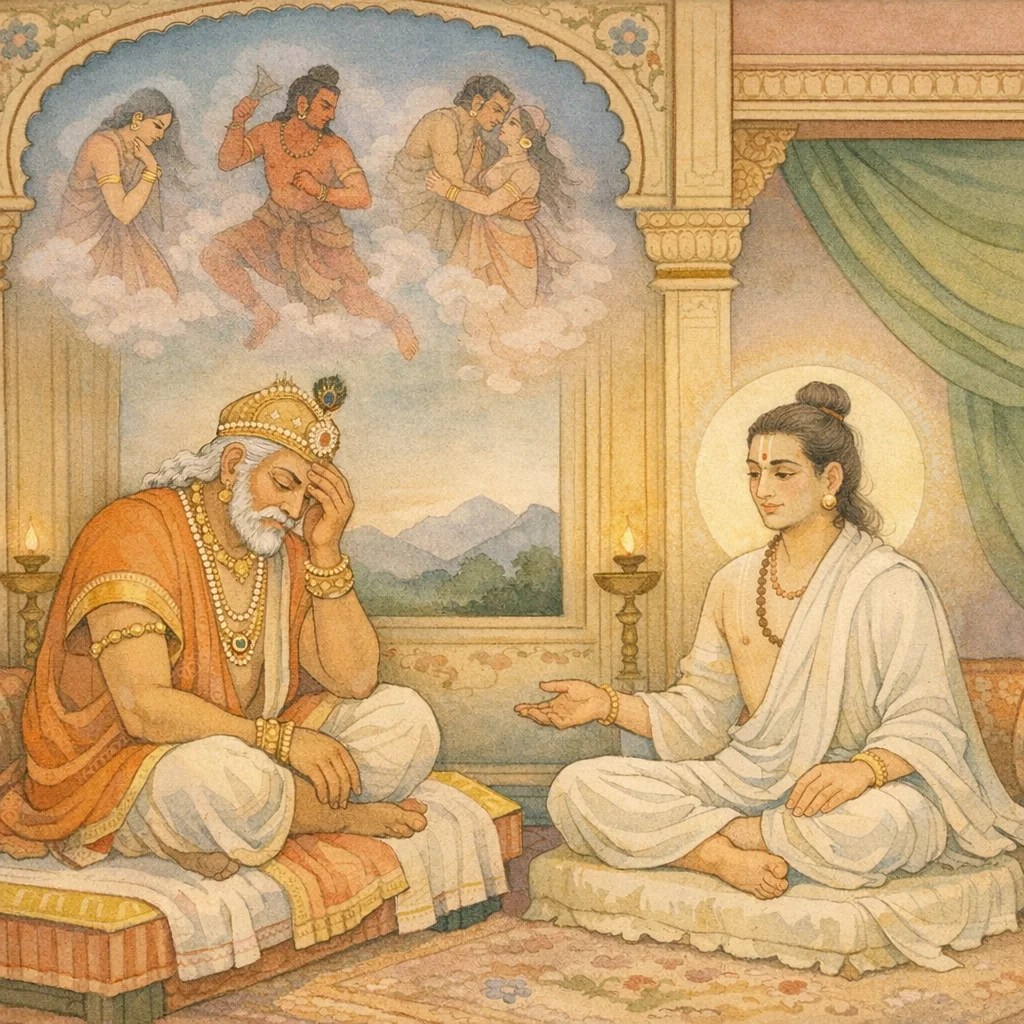
Chapter 44 presents a tightly argued dialogue in which Dhṛtarāṣṭra requests Sanatsujāta to articulate a “Brahmī” teaching that is rare amid worldly desires. Sanatsujāta cautions that Brahman is not attained through haste, and introduces an ancient, subtle (avyakta) knowledge perfected through intellect and brahmacarya. The discourse then operationalizes brahmacarya via normative duties toward the teacher: humility and vigilance in study; performing what is pleasing to the ācārya through deed, mind, and speech; equal propriety toward the guru’s spouse; and avoidance of self-advertising claims of service. The chapter elevates the ācārya as a true progenitor through instruction, contrasting bodily birth with the “immortal” birth conferred by teaching. It further states that conquering desire and enduring in the brāhmī condition enables liberation from embodiment. In response to Dhṛtarāṣṭra’s query about the ‘appearance’ of the imperishable, Sanatsujāta describes Brahman apophatically: not located in earth, sky, sea, stars, lightning, clouds, wind, deities, moon, sun, or Vedic meters; beyond darkness, subtler than a razor’s edge yet greater than mountains; the foundation from which beings arise and into which they dissolve. Knowing that reality yields ‘amṛtatva’ (deathlessness) in the chapter’s soteriological register.
Chapter Arc: धृतराष्ट्र के भीतर उठती आशंका और आत्म-भ्रम की भूमि पर सनत्सुजात वाणी का प्रवेश होता है—राजा के सामने प्रश्न है: मनुष्य को पतन में कौन-से दोष घसीट ले जाते हैं और उनसे पार कैसे हुआ जाए? → सनत्सुजात क्रमशः उन आन्तरिक शत्रुओं का निरूपण करते हैं जो एक-एक करके मनुष्य को घेर लेते हैं—शोक, क्रोध, लोभ, काम, मान, ईर्ष्या आदि; फिर वे पापशील स्वभावों की पहचान कराते हैं और मद/अहंकार के वशीभूत होने के खतरे को तीखा करते हैं। → उपदेश का शिखर तब आता है जब सनत्सुजात दोष-लक्षणों से आगे बढ़कर ब्रह्मविद्या की दिशा दिखाते हैं—साधन-सम्पन्न होकर भी यदि सत्त्व से च्युत हो जाएँ तो तप भी केवल संकल्प-मात्र रह जाता है; और जो साधन-क्रम से स्थित होता है वह यहीं ब्रह्म का साक्षात्कार कर सकता है। → अध्याय का निष्कर्ष यह है कि दोषों की पहचान, मद-त्याग, सौहृद/सद्गुणों का अभ्यास और विवेकयुक्त साधना—इनसे मनुष्य पाप-प्रवृत्तियों से हटकर ब्रह्ममार्ग में स्थिर हो सकता है।
Shlokas
Verse 1
अर पडठ्चचत्वारिशो< ध्याय: गुण-दोषोंके लक्षणोंका वर्णन और ब्रह्मविद्याका प्रतिपादन सनत्युजात उवाच शोक: क्रोधश्व॒ लोभश्व॒ कामो मान: परासुता | ईर्ष्या मोहो विधित्सा च कृपासूया जुगुप्सुता
Sanatjāta said: “Sorrow, anger, greed, desire, pride, and the urge to surpass others; envy, delusion, the will to injure, misplaced pity, malice, and disgust—these are the inner marks by which human faults are recognized.”
Verse 2
एकैकमेते राजेन्द्र मनुष्यान् पर्युपासते । यैराविष्टो नर: पाप॑ मूढसंज्ञो व्यवस्यति,राजेन्द्र! क्रमशः एकके पीछे दूसरा आकर ये सभी दोष मनुष्योंको प्राप्त होते जाते हैं, जिनके वशमें होकर मूढ़बुद्धि मानव पापकर्म करने लगता है
O king, these faults attend upon human beings one by one, in succession. When a man is seized by them, his understanding becomes deluded, and he resolves upon sinful action.
Verse 3
स्पृहयालुरुग्र: परुषो वा वदान्य: क्रोधं बिभ्रन्मनसा वै विकत्थी । नृशंसधर्मा: षडिमे जना वै प्राप्पाप्पयर्थ नोत सभाजयन्ते,लोलुप, क्रूर, कठोरभाषी, कृपण, मन-ही-मन क्रोध करनेवाले और अधिक आत्मप्रशंसा करनेवाले--ये छ: प्रकारके मनुष्य निश्चय ही क्रूर कर्म करनेवाले होते हैं। ये प्राप्त हुई सम्पत्तिका उचित उपयोग नहीं करते
Sanatsujāta said: “Whether one is greedy and fierce, harsh of speech, or even outwardly generous; whether one nurses anger in the mind, or boasts of oneself—these six kinds of people are truly of cruel disposition. Having obtained wealth or advantage, they do not honor it by putting it to rightful use.”
Verse 4
सम्भोगसंविद् विषमो5तिमानी दत्त्वा विकत्थी कृपणो दुर्बलश्न । बहुप्रशंसी वन्दितद्विट् सदैव सप्तैवोक्ता: पापशीला नृशंसा:,सम्भोगमें मन लगानेवाले, विषमता रखनेवाले, अत्यन्त अभिमानी, दान देकर आत्मश्लाघा करनेवाले, कृपण, असमर्थ होकर भी अपनी बहुत बड़ाई करनेवाले और सम्मान्य पुरुषोंसे सदा द्वेष रखनेवाले--ये सात प्रकारके मनुष्य ही पापी और क्रूर कहे गये हैं
Sanatsujāta said: Those who set their minds on sensual enjoyment, who are crooked and unequal in conduct, who are excessively proud, who give gifts only to boast of them, who are miserly, who—though weak—still brag loudly, and who always bear hatred toward the honored and worthy: these seven kinds of people are declared to be sinful in character and cruel at heart.
Verse 5
धर्मश्न॒ सत्यं च तपो दमश्न अमात्सरयय द्वीस्तितिक्षानसूया । दान॑ श्रुतं चैव धृति: क्षमा च महाव्रता द्वादश ब्राह्मणस्य,धर्म, सत्य, तप, इन्द्रियसंयम, डाह न करना, लज्जा, सहनशीलता, किसीके दोष न देखना, दान, शास्त्रज्ञान, धैर्य और क्षमा--ये ब्राह्मणके बारह महान् व्रत हैं
Sanatsujāta said: “Dharma and truthfulness, austerity and self-restraint; freedom from envy, modesty, forbearance, and the refusal to fault-find; generosity, sacred learning, steadfastness, and forgiveness—these twelve are the great vows that define a brāhmaṇa.”
Verse 6
यो नैतेभ्य: प्रच्यवेद् द्वादशभ्य: सर्वामपीमां पृथिवीं स शिष्यात् । त्रिभिद्धभ्यामेकतो वान्वितो यो नास्य स्वमस्तीति च वेदितव्यम्,जो इन बारह व्रतोंसे कभी च्युत नहीं होता, वह इस सम्पूर्ण पृथ्वीपर शासन कर सकता है। इनमेंसे तीन, दो या एक गुणसे भी जो युक्त है, उसका अपना कुछ भी नहीं होता--ऐसा समझना चाहिये (अर्थात् उसकी किसी भी वस्तुमें ममता नहीं होती)
He who never falls away from these twelve disciplines is fit to govern even this entire earth. But one who is endowed with only three, or two, or even one of them should be understood to have nothing as ‘his own’—that is, he is free from possessiveness and the sense of ownership.
Verse 7
दमस्त्यागो<थाप्रमाद इत्येतेष्वमृतं स्थितम् । एतानि ब्रद्ममुख्यानां ब्राह्मणानां मनीषिणाम्,इन्द्रियनिग्रह, त्याग और अप्रमाद--इनमें अमृतकी स्थिति है। ब्रह्म ही जिनका प्रधान लक्ष्य है, उन बुद्धिमान ब्राह्मणोंके ये ही मुख्य साधन हैं
Sanatsujāta said: “Immortality is established in these—self-restraint (dama), renunciation (tyāga), and freedom from heedlessness (apramāda). These are the chief disciplines of wise brāhmaṇas for whom Brahman is the foremost aim.”
Verse 8
सद् वासद् वा परीवादो ब्राह्मणस्य न शस्यते । नरकप्रतिष्ठास्ते वै स्युर्य एवं कुर्वते जना:,सच्ची हो या झूठी, दूसरोंकी निन््दा करना ब्राह्मणको शोभा नहीं देता। जो लोग दूसरोंकी निन््दा करते हैं, वे अवश्य ही नरकमें पड़ते हैं
Sanatsujāta teaches that whether a report is true or false, speaking ill of others is not befitting for a brāhmaṇa. Those who indulge in fault-finding and slander inevitably set themselves upon the road to hell.
Verse 9
मदो5ष्टादशदोष: स स्यात् पुरा यो<प्रकीर्तित: । लोवदेष्यं प्रातिकूल्यमभ्यसूया मृषा वच:,मदके अठारह दोष हैं, जो पहले सूचित करके भी स्पष्टरूपसे नहीं बताये गये थे-- लोकविरोधी कार्य करना, शास्त्रके प्रतिकूल आचरण करना, गुणियोंपर दोषारोपण, असत्यभाषण
Sanatsujāta explains that intoxication of pride (mada) manifests as a set of faults. Among these are: acting in ways that provoke society’s censure, behaving contrary to śāstra, fault-finding and envy toward the virtuous, and speaking falsehood.
Verse 10
कामक्रोधौ पारतन्त्रयं परिवादो5थ पैशुनम् | अर्थहानिर्विवादश्न मात्सर्य प्राणिपीडनम्,काम, क्रोध, पराधीनता, दूसरोंके दोष बताना, चुगली करना, धनका (दुरुपयोगसे) नाश, कलह, डाह, प्राणियोंको कष्ट पहुँचाना
Sanatsujāta said: “Desire and anger, dependence on others, fault-finding and slander, the wasting and loss of wealth, quarrelling, envy, and the harming of living beings—these are the ruinous vices that drag a person away from self-mastery and dharma.”
Verse 11
ईर्ष्या, हर्ष, बहुत बकवाद, विवेकशून्यता तथा गुणोंमें दोष देखनेका स्वभाव। इसलिये विद्वान् पुरुषको मदके वशीभूत नहीं होना चाहिये; क्योंकि सत्पुरुषोंने इस मदको सदा ही निन्दित बताया है
Sanatsujāta explains that intoxication of pride gives rise to envy, unrestrained elation, excessive and empty talk, loss of discernment, and a habit of spotting faults even in others’ virtues. Therefore a wise person should not fall under the sway of such pride, for the truly good have always condemned this kind of intoxication as blameworthy.
Verse 12
सौहदे वै षड् गुणा वेदितव्या: प्रिये हृष्यन्त्यप्रिये च व्यथन्ते । स्यादात्मन: सुचिरं याचते यो ददात्ययाच्यमपि देयं खलु स्यात् । इष्टान् पुत्रान् विभवान् स्वांश्षदारा- नभ्यर्थितश्चा्हति शुद्धभाव:,सौहार्द (मित्रता)-के छः: गुण हैं, जो अवश्य ही जाननेयोग्य हैं। सुह्ृदका प्रिय होनेपर हर्षित होना और अप्रिय होनेपर कष्टका अनुभव करना--ये दो गुण हैं। तीसरा गुण यह है कि अपना जो कुछ चिरसंचित धन है, उसे मित्रके माँगनेपर दे डाले। मित्रके लिये अयाच्य वस्तु भी अवश्य देनेयोग्य हो जाती है और तो क्या, सुहृदके माँगनेपर वह शुद्धभावसे अपने प्रिय पुत्र, वैभव तथा पत्नीको भी उसके हितके लिये निछावर कर देता है
Sanatsujāta said: “In true friendship there are six qualities that must be understood. One rejoices when a friend meets with what is dear, and one feels pain when what is undesired befalls him—these are two. A third is this: when the friend asks, one gives even one’s long-hoarded wealth. Indeed, for a friend even what ought not be asked becomes something that should be given. And when entreated, a person of pure intent will, for the friend’s welfare, even sacrifice what is most cherished—sons, prosperity, and one’s own wife.”
Verse 13
ईर्ष्या मोदो&तिवादश्न संज्ञानाशो5 भ्यसूयिता । तस्मात् प्राज्ञो न माद्येत सदा होतदू् विगर्हितम्,त्यक्तद्रव्य: संवसेन्नेह कामाद् भुड्क्ते कर्म स्वाशिषं बाधते च मित्रको धन देकर उसके यहाँ प्रत्युयकार पानेकी कामनासे निवास न करे--यह चौथा गुण है। अपने परिश्रमसे उपार्जित धनका उपभोग करे (मित्रकी कमाईपर अव-लम्बित न रहे)--यह पाँचवाँ गुण है तथा मित्रकी भलाईके लिये अपने भलेकी परवा न करे--यह छठा गुण है
Sanatsujāta said: “Envy, intoxicated elation, excessive wrangling, loss of clear awareness, and fault-finding jealousy—these arise from drunkenness. Therefore a wise person should never become intoxicated, for this is always condemned in ethical life.”
Verse 14
द्रव्यवान् गुणवानेवं त्यागी भवति सात््विक: । पज्च भूतानि पञ्चभ्यो निवर्तयति तादृश:,जो धनी गृहस्थ इस प्रकार गुणवान्, त्यागी और सात््विक होता है, वह अपनी पाँचों इन्द्रियोंसे पाँचों विषयोंको हटा देता है
Sanatsujāta said: “A householder who is endowed with wealth and virtues, and who lives in the spirit of renunciation, becomes sāttvika. Such a person restrains the five (sense-faculties), turning them back from their five objects, and thus keeps the mind from being dragged outward.”
Verse 15
एतत् समृद्धमप्यूर्थ्य तपो भवति केवलम् | सत्त्वात् प्रच्यवमानानां संकल्पेन समाहितम्,जो (वैराग्यकी कमीके कारण) सत्त्वसे भ्रष्ट हो गये हैं, ऐसे मनुष्योंके दिव्य लोकोंकी प्राप्तिके संकल्पसे संचित किया हुआ यह इन्द्रियनिग्रहरूप तप समृद्ध होनेपर भी केवल ऊर्ध्वलोकोंकी प्राप्तिका कारण होता है [मुक्तिका नहीं]
Sanatsujāta said: “Even when it becomes abundant and well-developed, this austerity—consisting in restraint of the senses—remains merely a means to attain higher worlds, if it is gathered and sustained by a deliberate resolve in those who have fallen away from sattva. Lacking dispassion, such practice yields heavenly ascent, not liberation.”
Verse 16
द्वादशैते महादोषा मनुष्यप्राणनाशना: । सनत्सुजातजी कहते हैं--राजन्! शोक, क्रोध, लोभ, काम, मान, अत्यन्त निद्रा, ईर्ष्या, मोह, तृष्णा, कायरता, गुणोंमें दोष देखना और निन्दा करना--ये बारह महान् दोष मनुष्योंके प्राणनाशक हैं,यतो यज्ञा: प्रवर्धन्ते सत्यस्यैवावरो धनात् । मनसान्यस्य भवति वाचान्यस्याथ कर्मणा क्योंकि सत्यस्वरूप ब्रह्मका बोध न होनेसे ही इन सकाम यज्ञोंकी वृद्धि होती है। किसीका यज्ञ मनसे, किसीका वाणीसे और किसीका क्रियाके द्वारा सम्पन्न होता है
Sanatsujāta said: “O King, there are twelve great faults that destroy human life: grief, anger, greed, desire, pride, excessive sleep, envy, delusion, craving, cowardice, the habit of finding fault in virtues, and slander. Because the true nature of Truth (Brahman) is not realized, desire-driven sacrifices proliferate; one person’s sacrifice is performed by the mind, another’s by speech, and another’s by bodily action.”
Verse 17
संकल्पसिद्धं पुरुषमसंकल्पो5धितिष्ठति । ब्राह्मणस्य विशेषण किज्चान्यदपि मे शृणु,संकल्पसिद्ध अर्थात् सकामपुरुषसे संकल्परहित यानी निष्कामपुरुषकी स्थिति ऊँची होती है; किंतु ब्रह्मवेत्ताकी स्थिति उससे भी विशिष्ट है। इसके सिवा एक बात और बताता हूँ, सुनो
The man perfected by resolve (saṅkalpa) is surpassed and ruled over by the man who is without resolve—the desireless (niṣkāma). O Brahmin, hear yet another word from me: the state of the desireless, free from self-seeking, is higher than that of the desire-driven (sakāma) man who succeeds by resolve; but the state of the knower of Brahman (brahmavid) is more excellent still.
Verse 18
अध्यापयेन्महदेतद् यशस्यं वाचो विकारा: कवयो वदन्ति । अस्मिन् योगे सर्वमिदं प्रतिछितं ये तद् विदुरमृतास्ते भवन्ति,यह महत्त्वपूर्ण शास्त्र परम यशरूप परमात्माकी प्राप्ति करानेवाला है, इसे शिष्योंको अवश्य पढ़ाना चाहिये। परमात्मासे भिन्न यह सारा दृश्य-प्रपंच वाणीका विकारमात्र है-- ऐसा विद्वान् लोग कहते हैं। इस योगशास्त्रमें यह परमात्मविषयक सम्पूर्ण ज्ञान प्रतिष्ठित है; इसे जो जान लेते हैं, वे अमर हो जाते हैं अर्थात् जन्म-मरणसे मुक्त हो जाते हैं
This great and glorious teaching, which leads to the highest renown—indeed to the attainment of the Supreme Self—should certainly be taught to worthy students. The learned declare that the entire world of appearances, insofar as it is taken as separate from the Supreme, is only a modification of speech—mere verbal construction. In this discipline of yoga, the whole of this knowledge concerning the Supreme is firmly established; those who truly know it become deathless, that is, they are freed from the cycle of birth and death.
Verse 19
न कर्मणा सुकृतेनैव राजन् सत्यं जयेज्जुहुयाद् वा यजेद् वा । नैतेन बालोअमृत्युम भ्येति राजन् रतिं चासौ न लभत्यन्तकाले,राजन! (निष्कामभावके बिना किये हुए) केवल पुण्यकर्मके द्वारा सत्यस्वरूप ब्रह्मको नहीं जीता जा सकता। अथवा जो हवन या यज्ञ किया जाता है, उससे भी अज्ञानी पुरुष अमरत्व--मुक्तिको नहीं पा सकता तथा अन्तकालनमें उसे शान्ति भी नहीं मिलती
O King, the Real—Brahman as Truth—is not won merely by meritorious action. Whether one offers oblations into the fire or performs sacrifices, by that alone an ignorant man does not attain deathlessness, that is, liberation. Nor does he gain inner peace at the final hour, O King.
Verse 20
तूष्णीमेक उपासीत चेष्टेत मनसापि न | तथा संस्तुतिनिन्दाभ्यां प्रीतिरोषौ विवर्जयेत्,इसलिये सब प्रकारकी चेष्टासे रहित होकर एकान्तमें उपासना करे, मनसे भी कोई चेष्टा न होने दे तथा स्तुतिमें राग और निन्दामें द्वेष न करे
Therefore let one dwell in silent, solitary contemplation, free from outward activity, and allow no agitation even in the mind. Likewise, one should abandon both attachment that arises from praise and anger that arises from blame.
Verse 21
अन्रैव तिष्ठन् क्षत्रिय ब्रह्माविशति पश्यति । वेदेषु चानुपूर्व्येण एतद् विद्वन् ब्रवीमि ते,राजन! उपर्युक्त साधन करनेसे मनुष्य यहाँ ही ब्रह्मका साक्षात्कार करके उसमें विलीन हो जाता है। विद्वन! वेदोंमें क्रमश: विचार करके जो मैंने जाना है, वही तुम्हें बता रहा हूँ
O Kṣatriya, by abiding in this very way one enters Brahman and directly beholds it. O King, what I have understood by a step-by-step inquiry into the Vedas—this, as one who knows, I now declare to you.
Verse 44
इस प्रकार श्रीमह्याभारत उद्योगपर्वके अन्तर्गत सनत्युजातपर्वमें सनत्युजातवाक्यविषयक चौवालीसवाँ अध्याय पूरा हुआ
Thus ends the forty-fourth chapter of the Udyoga Parva of the Śrī Mahābhārata, within the Sanatsujāta Parva, concerning the discourse of Sanatsujāta. This colophon marks the completion of the section and a pause in the teaching, before the narrative moves on to the preparations and moral deliberations surrounding the coming conflict.
Verse 45
इति श्रीमहाभारते उद्योगपर्वणि सनत्सुजातपर्वणि सनत्सुजातवाक्ये पज्चचत्वारिंशो5 ध्याय:,इस प्रकार श्रीमह्ााभारत उद्योगपर्वके अन्तर्गत सनत्युजातपर्वमें सनत्युजातवाक्यविषयक पैंतालीसवाँ अध्याय पूरा हुआ
Thus, in the Śrī Mahābhārata, within the Udyoga Parva, in the Sanatsujāta Parva, in the section containing Sanatsujāta’s discourse, the forty-fifth chapter concludes. This closing formula marks the completion of the chapter and frames the preceding teaching as an authoritative ethical instruction delivered in the tense pre-war setting of the Udyoga Parva.
Frequently Asked Questions
Dhṛtarāṣṭra’s dilemma is epistemic and ethical: how to access ‘immortality’ and true brāhmaṇya while remaining embedded in worldly urgency and desire-driven concerns.
Realization is portrayed as discipline-dependent: conquering desire, practicing structured brahmacarya, and honoring the teacher’s role enable access to subtle knowledge of Brahman, which is beyond sensory predicates.
Rather than a formal phalaśruti, the chapter embeds its payoff as a doctrinal claim: those who know that foundational reality (Brahman) become ‘amṛta’ (deathless) in the soteriological sense.