Adhyaya 180
Bhīṣma–Jāmadagnya-saṃvādaḥ (Bhishma’s account of the encounter with Rāma Jāmadagnya)
Upa-parva: Bhīṣma–Paraśurāma Yuddha-smṛti (Retrospective on the Bhīṣma–Jāmadagnya encounter)
Bhīṣma narrates a remembered engagement with Rāma Jāmadagnya. He begins by addressing the impropriety of fighting a chariot-mounted opponent while one is on the ground, instructing Rāma to mount a chariot and don armor if he seeks a formal contest. Rāma replies with a cosmological self-description—earth as chariot, Vedas as steeds, wind as charioteer, and the Veda-mothers as armor—asserting ascetic-spiritual preparedness translated into martial idiom. Bhīṣma then observes a divine, mind-constructed chariot and accoutrements, and the engagement proceeds over many days with mutual competitive intent. After exchanges of volleys, Bhīṣma demonstrates force by damaging Rāma’s bow and striking him with numerous arrows, describing visible injury. Rāma retaliates fiercely; Bhīṣma responds in kind, but then experiences remorse and self-reproach for harming a revered dvija figure. Recognizing the ethical breach implied by continued assault on Jāmadagnya, Bhīṣma ceases further striking; at day’s end, the engagement pauses with sunset, emphasizing restraint and the boundary between kṣātra duty and reverence for spiritual authority.
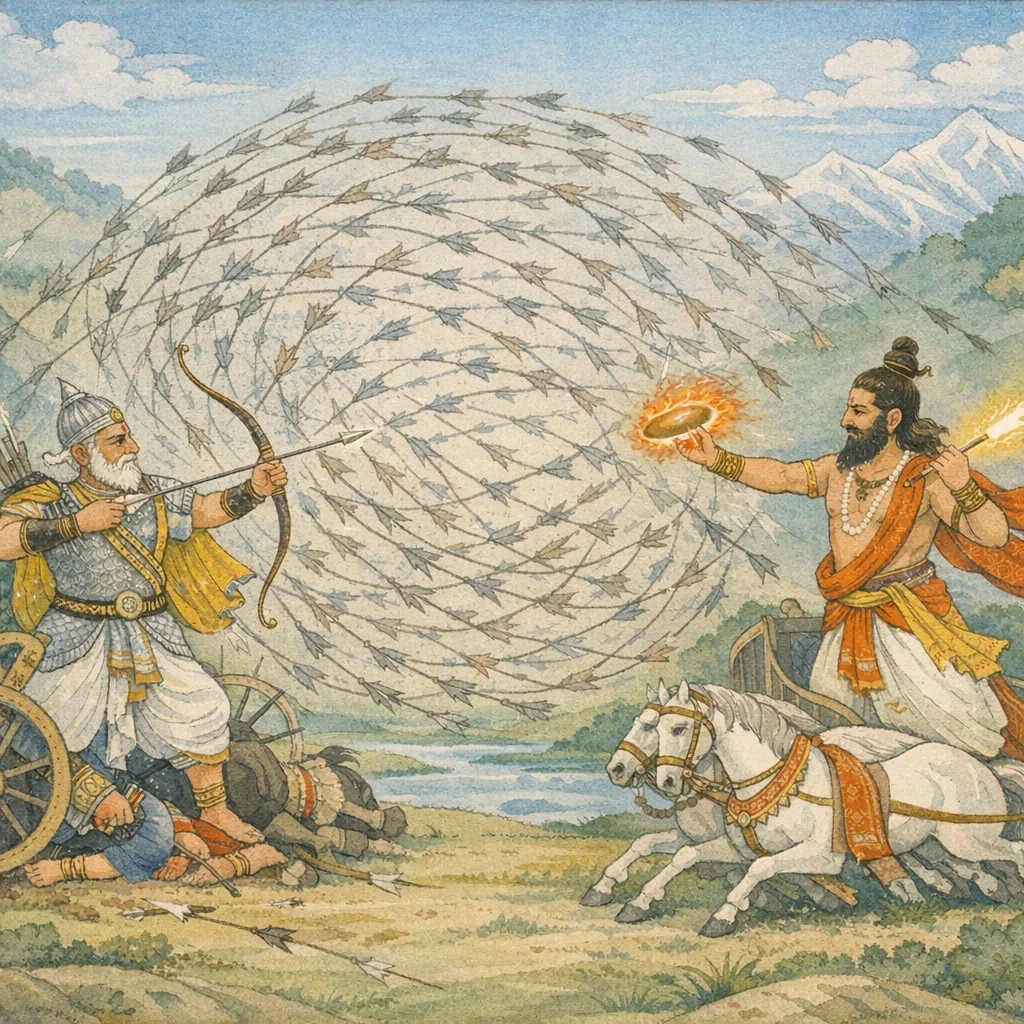
Chapter Arc: भीष्म स्मरण करते हैं कि परशुराम के पुनः आगमन के साथ ही अगले दिन एक और ‘अतिदारुण’ संग्राम निश्चित हो गया—गुरु और शिष्य का सामना अब टल नहीं सकता। → दोनों महावीर दिव्यास्त्रों की वर्षा करते हैं; परशुराम अनेक दिव्यास्त्रों का प्रयोग करते हैं और भीष्म प्रतिघातक अस्त्रों से एक-एक को काटते/निष्फल करते जाते हैं। बाण-जाल, शक्तियाँ, और घोर आयुधों की परत-दर-परत टक्कर से रणभूमि घनीभूत हो उठती है; भीष्म का रथ, वाहक, सारथि, युग, चक्र और अक्ष तक शर-प्रहारों से विदीर्ण/भंग होने लगते हैं। → परशुराम की सुवर्णजटित विचित्र शक्तियाँ सर्प-सी आकृति लिए प्रचण्ड वेग से आती हैं; भीष्म उन्हें शरजाल से भेदकर काटते हैं, फिर द्वादश बाण छोड़ते हैं और प्रत्युत्तर में घोर शक्तियों को भी ध्वस्त करते हैं—दिव्यास्त्र-युद्ध अपने चरम पर पहुँचता है। → बाण-वर्षा थमती है; दोनों पक्ष गहरे घायल हैं—परशुराम भी बाणजाल से तप्त, भीष्म भी गाढ़े विद्ध। रक्त बहता है, पर संध्या निकट आने पर युद्ध अपराह्न में विराम लेता है। → अगले दिवस यह गुरु-शिष्य संग्राम किस निर्णायक अस्त्र/प्रतिज्ञा तक पहुँचेगा—यह अनिश्चितता बनी रहती है।
Shlokas
Verse 1
/ भीकम (2 अमान एकाशीकरत्याधिकशततमो< ध्याय: भीष्म और परशुरामका युद्ध भीष्म उवाच समागतस्य रामेण पुनरेवातिदारुणम् । अन्येद्युस्तुमुलं युद्ध तदा भरतसत्तम,भीष्मजी कहते हैं--भरतश्रेष्ठ। दूसरे दिन परशुरामजीके साथ भेंट होनेपर पुनः अत्यन्त भयंकर युद्ध प्रारम्भ हुआ
Bhīṣma said: “O best of the Bharatas, the next day, upon meeting Rāma (Paraśurāma) again, a most dreadful battle began anew.”
Verse 2
ततो दिव्यास्त्रविच्छूरो दिव्यान्यस्त्राण्यनेकश: । अयोजयत् स धर्मात्मा दिवसे दिवसे विभु:,फिर तो दिव्यास्त्रोंके ज्ञाता, शूरवीर एवं धर्मात्मा भगवान् परशुरामजी प्रतिदिन अनेक प्रकारके अलौकिक अस्त्रोंका प्रयोग करने लगे
Then Paraśurāma—the mighty, righteous hero, skilled in the science of celestial weapons—began, day after day, to deploy many kinds of divine missiles.
Verse 3
तान्यहं तत्प्रतीघातैरस्त्रैरस्त्राणि भारत । व्यधमं तुमुले युद्धे प्राणांस्त्यक्त्वा सुदुस्त्यजान्,भारत! उस तुमुल युद्धमें अपने दुस्त्यज प्राणोंकी परवा न करके मैंने उनके सभी अस्त्रोंका विघातक अस्त्रोंद्वारा संहार कर डाला
Bhīṣma said: “O Bhārata, in that tumultuous battle, disregarding even my own life—so hard to relinquish—I shattered their weapons with counter-weapons, meeting each missile with its proper antidote in war.”
Verse 4
अस्त्रैरस्त्रेषु बहुधा हतेष्वेव च भारत । अक्रुध्यत महातेजास्त्यक्तप्राण: स संयुगे,भरतनन्दन! इस प्रकार बार-बार मेरे अस्त्रोंद्रार अपने अस्त्रोंके विनष्ट होनेपर महातेजस्वी परशुरामजी उस युद्धमें प्राणोंका मोह छोड़कर अत्यन्त कुपित हो उठे
Bhīṣma said: “O Bhārata, when my weapons repeatedly destroyed his weapons in that battle, the mighty and radiant Paraśurāma—casting aside all concern for his own life—became fiercely enraged.”
Verse 5
ततः शक्ति प्राहिणोद् घोररूपा- मस्त्रे रुद्धे जामदग्न्यो महात्मा । कालोत्सृष्टां प्रजवबलितामिवोल्कां संदीप्ताग्रां तेजसा व्याप्प लोकम्,इस प्रकार अपने अस्त्रोंका अवरोध होनेपर जमदग्निनन्दन महात्मा परशुरामने कालकी छोड़ी हुई प्रज्वलित उल्काके समान एक भयंकर शक्ति छोड़ी, जिसका अग्रभाग उद्दीप्त हो रहा था। वह शक्ति अपने तेजसे सम्पूर्ण लोकको व्याप्त किये हुए थी
Then, when his missiles were checked, the great-souled Jāmadagnya (Paraśurāma) hurled a dreadful śakti-weapon. It blazed like a meteor released by Time itself, driven by irresistible force; its flaming tip shone fiercely, and by its radiance it seemed to pervade the whole world.
Verse 6
ततोऊ5हं तामिषुभिरद्दीप्यमानां समायान्तीमन्तकालार्कदीप्ताम् । छित्त्वा त्रिधा पातयामास भूमौ ततो ववौ पवन: पुण्यगन्धि:,तब मैंने प्रलयकालके सूर्यकी भाँति प्रज्वलित होनेवाली उस देदीप्यमान शक्तिको अपनी ओर आती देख अनेक बाणोंद्वारा उसके तीन टुकड़े करके उसे भूमिपर गिरा दिया। फिर तो पवित्र सुगन्धसे युक्त मन्द-मन्द वायु चलने लगी
Then I saw that blazing śakti-weapon, radiant like the sun at the time of cosmic dissolution, rushing toward me. With a volley of arrows I cut it into three parts and brought it down upon the earth. After that, a gentle wind began to blow, carrying a pure and auspicious fragrance.
Verse 7
तस्यां छिन्नायां क्रोधदीप्तो5थ राम: शक्तीर्घोरा: प्राहिणोद् द्वादशान्या: । तासां रूपं भारत नोत शक््यं तेजस्वित्वाल्लाघवाच्चैव वक्तुम्,उस शक्तिके कट जानेपर परशुरामजी क्रोधसे जल उठे तथा उन्होंने दूसरी-दूसरी भयंकर बारह शक्तियाँ और छोड़ीं। भारत! वे इतनी तेजस्विनी तथा शीघ्रगामिनी थीं कि उनके स्वरूपका वर्णन करना असम्भव है
When that weapon was cut down, Rāma (Paraśurāma), blazing with anger, hurled twelve other dreadful śaktis. O Bhārata, their form could not be described, for they were radiant with terrible power and moved with such swift force that words could not capture them.
Verse 8
कि त्वेवाहं विह्नल: सम्प्रदृश्य दिग्भ्य: सर्वास्ता महोल्का इवाग्ने: । नानारूपास्तेजसोग्रेण दीप्ता यथा<55दित्या द्वादश लोकसंक्षये,प्रलयकालके बारह सूर्योके समान भयंकर तेजसे प्रज्वलित अनेक रूपवाली तथा अग्निकी प्रचण्ड ज्वालाओंके समान धधकती हुई उन शक्तियोंको सब ओरसे आती देख मैं अत्यन्त विह्वल हो गया
Bhishma said: “But when I beheld those powers rushing in from every direction—blazing like great firebrands from a raging fire, aflame with fierce radiance in many forms, terrible like the twelve suns that appear at the world’s dissolution—I was utterly shaken and overwhelmed.”
Verse 9
ततो जाल॑ बाणमयं विवृत्तं संदृश्य भित्त्वा शरजालेन राजन् | द्वादशेषून् प्राहिणवं रणेडहं ततः शक्तीरप्यधमं घोररूपा:
Then, O King, seeing a whirling net made of arrows, I shattered it with a counter-net of shafts. In that battle I then discharged twelve arrows; after that I hurled dreadful śaktis—missile-spears—of terrifying form, to press the fight forward with relentless force.
Verse 10
राजन! तत्पश्चात् वहाँ फैले हुए बाणमय जालको देखकर मैंने अपने बाणसमूहोंसे उसे छिन्न-भिन्न कर डाला और उस रणभूमिमें बारह सायकोंका प्रयोग किया, जिनसे उन भयंकर शक्तियोंको भी व्यर्थ कर दिया ।। ततो राजज्जामदग्न्यो महात्मा शक्तीर्घोरा व्याक्षिपद्धेमदण्डा: । विचित्रिता: काउ्चनपट्टनद्धा यथा महोलल्का ज्वलितास्तथा ता:,राजन! तत्पश्चात् महात्मा जमदग्निनन्दम परशुरामने स्वर्णमय दण्डसे विभूषित और भी बहुत-सी भयानक शक्तियाँ चलायीं, जो विचित्र दिखायी देती थीं, उनके ऊपर सोनेके पत्र जड़े हुए थे और वे जलती हुई बड़ी-बड़ी उल्काओंके समान प्रतीत होती थीं
Bhīṣma said: “Then, O King, seeing that net of missiles spread out, I shattered it with volleys of my own arrows and, on that battlefield, employed twelve shafts by which I rendered even those fearsome weapons futile. Then the great-souled Jāmadagnya (Paraśurāma) hurled terrible śaktis—missile-spears—fitted with golden shafts. They appeared wondrous, inlaid with plates of gold, and blazed like great flaming meteors.”
Verse 11
ताक्षाप्युग्राश्चर्मणा वारयित्वा खड्गेनाजौ पातयित्वा नरेन्द्र । बाणैर्दिव्यैर्जामदग्न्यस्य संख्ये दिव्यानश्वानभ्यवर्ष ससूतान्,नरेन्द्र! उन भयंकर शक्तियोंको भी मैंने ढालसे रोककर तलवारसे रणभूमिमें काट गिराया। तत्पश्चात् परशुरामजीके दिव्य घोड़ों तथा सारथिपर मैंने दिव्य बाणोंकी वर्षा आरम्भ कर दी
Bhīṣma said: “O king, I checked those fierce missiles with my shield and, in the thick of battle, struck them down with my sword. Then, in the combat against Rāma Jāmadagnya (Paraśurāma), I began to shower divine arrows upon his divine horses and their charioteer.”
Verse 12
निर्मुक्तानां पन्नगानां सरूपा दृष्टवा शक्तीहेंमचित्रा निकृत्ता: । प्रादुश्चक्रे दिव्यमस्त्रं महात्मा क्रोधाविष्टो हैहयेशप्रमाथी
Bhishma said: Seeing the severed, gold-adorned śaktis—shining with varied designs—lying about like snakes that have cast off their skins, the great-souled warrior, inflamed with anger and a crusher of the Haihaya lord, brought forth a divine weapon.
Verse 13
केंचुलिसे छूटकर निकले हुए सर्पोके समान आकृतिवाली उन सुवर्णजटित विचित्र शक्तियोंको कटी हुई देख हैहयराजका विनाश करनेवाले महात्मा परशुरामजीने कुपित होकर पुनः अपना दिव्य अस्त्र प्रकट किया ।। ततः श्रेण्य: शलभानामिवोग्रा: समापेतुर्विशिखानां प्रदीप्ता: । समाचिनोच्चापि भृशं शरीरं हयान् सूतं सरथं चैव महाम्,फिर तो टिड्डियोंकी पंक्तियोंके समान प्रज्वलित एवं भयंकर बाणोंके समूह प्रकट होने लगे। इस प्रकार उन्होंने मेरे शरीर, रथ, सारथि और घोड़ोंकों सर्वथा आच्छादित कर दिया
Bhīṣma said: “Then, like dense swarms of locusts, blazing and terrible flights of arrows rushed in. They completely covered my body, my chariot, my charioteer, and my horses. Thus, enraged at seeing his golden, wondrous spears severed—like serpents slipping out of their sloughed skins—the great-souled Paraśurāma again manifested his divine weapon.”
Verse 14
रथ: शरैमें निचितः सर्वतो&भूत् तथा वाहा: सारथिश्वैव राजन् । युगं रथेषां च तथैव चक्रे तथैवाक्ष: शरकृत्तोडथ भग्न:,राजन! मेरा रथ चारों ओरसे उनके बाणोंद्वारा व्याप्त हो रहा था। घोड़ों और सारथिकी भी यही दशा थी। युग तथा ईषादण्डको भी उन्होंने उसी प्रकार बाणविद्धु कर रखा था और रथका धुरा उनके बाणोंसे कटकर टूक-टूक हो गया था
Bhīṣma said: “O King, my chariot was completely covered on every side with arrows; the horses and the charioteer were in the same condition. The yoke and the other fittings, and even the wheels, were likewise pierced; and then the axle, cut through by arrows, broke apart. Thus I witnessed the overwhelming force of the attack in the midst of battle.”
Verse 15
ततस्तस्मिन् बाणवर्षे व्यतीते शरीौघेण प्रत्यवर्ष गुरुं तम् । स विक्षतो मार्गणैर््रह्यराशि- देहादसक्तं मुमुचे भूरि रक्तम्,जब उनकी बाण-वर्षा समाप्त हुई, तब मैंने भी बदलेमें गुरुदेवपर बाणसमूहोंकी बौछार आरम्भ कर दी। वे ब्रह्मराशि महात्मा मेरे बाणोंसे क्षत-विक्षत होकर अपने शरीरसे अधिकाधिक रक्तकी धारा बहाने लगे
When that shower of arrows had passed, I in turn rained dense volleys of shafts upon that revered preceptor. Struck and torn by my missiles, that great ascetic—whose body was but a vessel for spiritual power—let forth copious streams of blood from his wounded frame.
Verse 16
यथा रामो बाणजालाभितप्त- स्तथैवाहं सुभृशं गाढविद्ध: । ततो युद्ध व्यरमच्चापराह्ने भानावस्तं प्रति याते मही ध्रम्ू,जिस प्रकार परशुरामजी मेरे सायकसमूहोंसे संतप्त थे, उसी प्रकार मैं भी उनके बाणोंसे अत्यन्त घायल हो रहा था। तदनन्तर सायंकालमें जब सूर्यदेव अस्ताचलको चले गये, तब युद्ध बंद हो गया
Bhīṣma said: “Just as Rāma (Paraśurāma) was scorched by my dense volleys of arrows, so too was I grievously and deeply pierced by his shafts. Then, in the late afternoon, when the Sun moved toward setting behind the mountain, the fighting ceased.”
Verse 180
इस प्रकार श्रीमहाभारत उद्योगपर्वके अन्तर्गत अग्बोपाख्यानपर्वमें परशुराम- भीष्मयुद्धविषयक एक सौ असीवाँ अध्याय पूरा हुआ
Thus ends the one hundred and eightieth chapter of the Udyoga Parva of the Śrī Mahābhārata, within the Āmba-upākhyāna section, describing the battle between Paraśurāma and Bhīṣma. This closing colophon marks the completion of the episode, framing the conflict as a consequential test of duty, vows, and the moral weight of martial resolve.
Verse 181
इति श्रीमहाभारते उद्योगपर्वणि अम्बोपाख्यानपर्वणि एकाशीत्यधिकशततमो<ध्याय:
Thus, in the Śrī Mahābhārata, within the Udyoga Parvan, in the section known as the Ambā-upākhyāna (the episode of Ambā), ends the one-hundred-and-eighty-first chapter. This is a colophon marking the close of the chapter, situating the narrative within the larger ethical and historical frame of the epic.
Frequently Asked Questions
Bhīṣma confronts the dilemma of pursuing victory under warrior duty while recognizing that continued harm to a revered dvija/ācārya-like figure violates maryādā and undermines dharmic restraint.
The chapter teaches that correct procedure and power are not sufficient criteria for action; legitimate conduct requires aligning martial capacity with hierarchy of reverence, proportionality, and the ethical limits imposed by tapas and guru-status.
No explicit phalaśruti is stated; the meta-commentary is implicit in Bhīṣma’s self-critique and cessation of further strikes, modeling how narrative remembrance functions as ethical instruction within the epic’s dharma discourse.