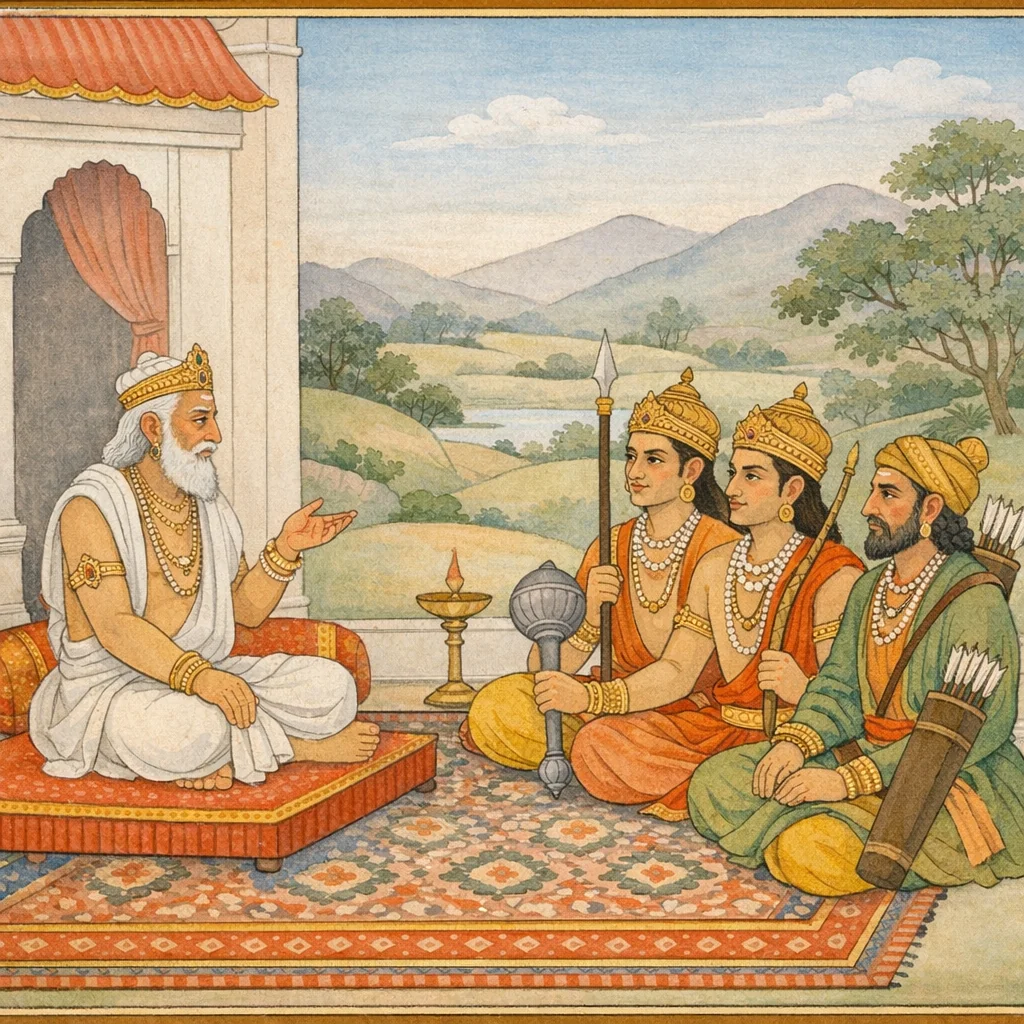
Adhyaya 165
Udyoga-parva Adhyāya 165 — Bhīṣma’s Appraisal and Karṇa’s Rebuttal (भीष्म–कर्ण विवादः)
Upa-parva: Bhīṣma–Karna Saṃvāda (Court Evaluation of Warriors) — Udyoga-parva
Bhīṣma addresses the Kuru ruler, noting formidable allied brothers (Acala and Vṛṣaka) and then turns to Karṇa, describing him as harsh in speech, boastful, and elevated in self-regard. Bhīṣma argues that Karṇa is not a “complete chariot-warrior,” citing the loss of innate armor and divine earrings, and constraints arising from curses and prior conditions; he therefore labels Karṇa “ardha-ratha” (half-qualified) and predicts limits to his recovery of former advantages. Saṃjaya reports Droṇa’s intervention: Droṇa validates Bhīṣma’s statement and adds that Karṇa’s overconfidence and occasional wavering in combat support the same conclusion. Hearing this, Karṇa responds with anger, accusing Bhīṣma of persistent hostility and reputational injury; he counters by calling Bhīṣma “ardha-ratha” in his own estimation and warns that such speech damages Kuru interests by dividing the force. Karṇa asserts he alone can check the Pāṇḍava coalition and disparages Bhīṣma’s age and judgment. He concludes with a decisive political-military stance: he will not fight while Bhīṣma lives/commands, but will engage fully after Bhīṣma is removed, thereby formalizing a leadership conflict within the Kuru command structure.
Chapter Arc: भीष्म धृतराष्ट्र/दुर्योधन के पक्ष को आश्वस्त करते हुए कौरव-सेना के प्रमुख रथियों का परिचय आरम्भ करते हैं—कम्बोजराज सुदक्षिण को ‘एकगुण रथी’ कहकर, मानो युद्ध की गणना-तालिका पर पहला भारी नाम रख देते हैं। → एक-एक कर भीष्म उन योद्धाओं की क्षमता, वंश-पराक्रम और रण-प्रवृत्ति का चित्र खींचते हैं—सुदक्षिण के रथवंश की तीव्रता, अवन्ति के विन्द-अनुविन्द की दृढ़ वीर्य-पराक्रम, और फिर धृतराष्ट्रहित में रत उग्रायुध महेष्वासों का संकेत; शस्त्रों की सूची (गदा, प्रास, खड्ग, नाराच, तोमर) युद्ध को निकट और अनिवार्य बना देती है। → कृपाचार्य का उत्कर्ष-घोष: ‘रथयूथपयूथप’ कृप शारद्वत, प्रिय प्राणों का परित्याग कर शत्रुओं को दग्ध करेंगे—उनकी उत्पत्ति (शरस्तम्ब से, कार्तिकेय-सदृश अजेयता) और ‘अग्निवत्’ सेना को विनिर्दहन् चलने का वर्णन अध्याय का शिखर बनता है। → भीष्म का निष्कर्ष यह कि कौरव-पक्ष के पास ऐसे रथसिंह और यूथपतियों की बहुलता है जो दुर्योधन के ‘अर्थसिद्धि’ हेतु युद्ध में सर्वस्व लगाने को तत्पर हैं; यह परिचय-परंपरा कौरव-आत्मविश्वास को औपचारिक रूप से स्थापित करती है। → अगले अध्यायों में शेष रथियों/अतिरथों की गणना और उनके सम्मुख पाण्डव-पक्ष की प्रतिगणना—युद्ध-तुला किस ओर झुकेगी—यह प्रश्न खुला रह जाता है।
Shlokas
Verse 1
ऑपन-माज बक। डे षट्षष्ट्यधिकशततमोड< ध्याय: कौरवपक्षके रथियोंका परिचय भीष्म उवाच सुदक्षिणस्तु काम्बोजो रथ एकगुणो मतः । तवार्थसिद्धिमाकाड्क्षन् योत्स्यते समरे परै:,भीष्मने कहा--राजन्! काम्बोजदेशके राजा सुदक्षिण एक रथी माने गये हैं। ये तुम्हारे कार्यकी सिद्धि चाहते हुए समरांगणमें शत्रुओंके साथ युद्ध करेंगे
Bhishma said: “O King, Sudakshina of Kamboja is regarded as a warrior of single-ratha rank. Seeking the fulfillment of your purpose, he will fight the enemy in battle.”
Verse 2
एतस्य रथसिंहस्य तवार्थे राजसत्तम । पराक्रम यथेन्द्रस्य द्रक्ष्यन्ति कुरवो युधि,नृपश्रेष्ठ! रथियोंमें सिंहके समान पराक्रमी ये काम्बोजराज तुम्हारे लिये युद्धमें इन्द्रके समान पराक्रम प्रकट करेंगे और समस्त कौरव इनके पराक्रमको देखेंगे
Bhishma said: “O best of kings, for your sake the Kuru warriors will witness in battle the might of this lion among chariot-fighters—this Kamboja king—displaying valor like that of Indra. His prowess will be made manifest on the field, and the Kauravas will behold it.”
Verse 3
एतस्य रथवंशे हि तिग्मवेगप्रहारिण: । काम्बोजानां महाराज शलभानामिवायति:
Bhishma said: “O great king, in this warrior’s chariot-lineage there is indeed a fierce, swift-striking power; the onset of the Kambojas comes upon the foe like a sudden swarm of locusts—overwhelming, rapid, and hard to withstand.”
Verse 4
महाराज! प्रचण्ड वेगसे प्रहार करनेवाले इन काम्बोजनरेशके रथियोंके समुदायमें काम्बोजदेशीय सैनिकोंकी श्रेणी टिड्डियोंके दल-सी दृष्टिगोचर होती है ।। नीलो माहिष्मतीवासी नीलवर्मा रथस्तव । रथवंशेन कदन शत्रूणां वै करिष्यति
Bhishma said: “O great king, among these companies of chariot-warriors of the Kamboja ruler—men who strike with furious speed—the ranks of Kamboja soldiers appear like a swarm of locusts. And Nīla, the dweller of Māhiṣmatī, clad in blue armour, is your chariot-warrior; by the might of his chariot-lineage he will indeed bring slaughter upon the enemies.”
Verse 5
माहिष्मतीपुरीके निवासी राजा नील भी तुम्हारे दलके एक रथी हैं। इन्होंने नीले रंगका कवच पहन रखा है। ये अपने रथसमूहद्वारा शत्रुओंका संहार कर डालेंगे ।। कृतवैर: पुरा चैव सहदेवेन मारिष | योत्स्यते सततं राजंस्तवार्थे कुरुनन्दन,कुरुनन्दन! पूर्वकालमें सहदेवके साथ इनकी शत्रुता हो गयी थी। राजन! ये सदा तुम्हारे शत्रुओंके साथ युद्ध करेंगे
Bhishma said: “King Nila, who dwells in the city of Mahishmati, is also one of the chariot-warriors in your host. Clad in blue armor, he will, with his companies of chariots, bring about the destruction of the enemy. In former times, O dear one, he incurred enmity with Sahadeva; therefore, O king, this delight of the Kurus will fight constantly for your cause against your foes.”
Verse 6
विन्दानुविन्दावावन्त्यौ संमतौ रथसत्तमौ । कृतिनौ समरे तात दृढवीर्यपराक्रमौ,अवन्तीदेशके दोनों वीर राजकुमार विन्द और अनुविन्द श्रेष्ठ रथी माने गये हैं। तात! वे युद्धकलाके पण्डित तथा सुदृढ़ बल एवं पराक्रमसे सम्पन्न हैं
Bhishma said: “Vindā and Anuvindā, the princes of Avanti, are acknowledged as foremost among chariot-warriors. Dear one, they are accomplished in battle—skilled in the arts of war and endowed with steadfast strength and valor.”
Verse 7
एतौ तौ पुरुषव्याप्रौ रिपुसैन्यं प्रधक्ष्यतः । गदाप्रासासिनाराचैस्तोमरैश्व करच्युतै:,ये दोनों पुरुषसिंह अपने हाथसे छूटे हुए गदा, प्रास, खड़्ग, नाराच तथा तोमरोंद्वारा शत्रुसेनाको दग्ध कर डालेंगे
Bhīṣma said: “These two tiger-like heroes will burn down the enemy host, striking with weapons hurled from their hands—maces, spears, swords, iron arrows, and javelins.”
Verse 8
युद्धाभिकामौ समरे क्रीडन्ताविव यूथपौ । यूथमध्ये महाराज विचरन्तौ कृतान्तवत्,महाराज! जैसे दो यूथपति गजराज हाथियोंके झुंडमें खेल-सा करते हुए विचरते हैं, उसी प्रकार युद्धकी अभिलाषा रखनेवाले विन्द और अनुविन्द समरांगणमें यमराजके समान विचरण करते हैं
Bhishma said: “O great king, Vindā and Anuvindā—eager for battle—move about the battlefield like two leading bull-elephants sporting amid their herd; in the midst of the host they range like Death itself, striking terror and bringing inevitable destruction.”
Verse 9
त्रिगर्ता भ्रातर: पजच रथोदारा मता मम | कृतवैराश्न पार्थस्ते विराटनगरे तदा,त्रिगर्तदेशीय पाँचों भ्राताओंको मैं उदार रथी मानता हूँ। विराटनगरमें दक्षिणगोग्रहके युद्धके समय चार पाण्डवोंके साथ इनका वैर बढ़ गया था
Bhishma said: “The five Trigarta brothers are, in my judgment, noble and capable chariot-warriors. Yet at that time in the city of Virata they became sworn enemies of the sons of Pritha, for their hostility intensified during the battle connected with the southern cattle-raid.”
Verse 10
मकरा इव राजेन्द्र समुद्धततरड्धिणीम् । गड्जां विक्षो भयिष्यन्ति पार्थानां युधि वाहिनीम्,राजेन्द्र! जैसे ग्राहगण उत्ताल तरंगोंवाली गंगाको मथ डालते हैं, उसी प्रकार ये त्रिगर्तदेशीय पाँचों क्षत्रिय वीर पाण्डवोंकी सेनामें हलचल मचा देंगे
Bhishma said: “O king, just as crocodiles churn and violently agitate the Ganga when her waves rise in tumult, so will these five Kshatriya heroes of Trigarta throw the Pandavas’ army into confusion on the battlefield.”
Verse 11
ते रथा: पञ्च राजेन्द्र येषां सत्यरथो मुखम् | एते योत्स्यन्ति संग्रामे संस्मरन्त: पुराकृतम्,महाराज! ये पाँचों भाई रथी हैं और सत्यरथ उनमें प्रधान है। भारत! भीमसेनके छोटे भाई श्वेत घोड़ोंवाले पाण्डुनन्दन अर्जुनने दिग्विजयके समय जो त्रिगर्तोंका अप्रिय किया था, उस पहलेके वैरको याद रखते हुए ये पाँचों वीर संग्रामभूमिमें मन लगाकर युद्ध करेंगे
Bhishma said: “O king, there are five great chariot-warriors, with Satyaratha foremost among them. Remembering what was done in the past—the earlier offence and the enmity it created—they will fight with full intent on the battlefield, O great king.”
Verse 12
व्यलीकं पाण्डवेयेन भीमसेनानुजेन ह । दिशो विजयता राजन् श्वेतवाहेन भारत,महाराज! ये पाँचों भाई रथी हैं और सत्यरथ उनमें प्रधान है। भारत! भीमसेनके छोटे भाई श्वेत घोड़ोंवाले पाण्डुनन्दन अर्जुनने दिग्विजयके समय जो त्रिगर्तोंका अप्रिय किया था, उस पहलेके वैरको याद रखते हुए ये पाँचों वीर संग्रामभूमिमें मन लगाकर युद्ध करेंगे
Bhīṣma said: “O King, O Bhārata, Arjuna—the Pāṇḍava, Bhīmasena’s younger brother, the chariot-warrior of the white steeds—once, during his conquest of the quarters, dealt the Trigartas a bitter affront. Remembering that old enmity, those warriors will enter the battlefield with steadfast purpose and fight in earnest.”
Verse 13
ते हनिष्यन्ति पार्थानां तानासाद्य महारथान् । वरान् वरान् महेष्वासान् क्षत्रियाणां धुरन्धरान्
Bhīṣma said: “Closing in upon those great chariot-warriors of the sons of Pṛthā, they will strike them down—those foremost heroes, mighty bowmen, the very standard-bearers and pillars of the kṣatriya order.”
Verse 14
ये पाण्डवोंके बड़े-बड़े महारथियोंके पास जा उन महाथनुर्धर क्षत्रियशिरोमणि वीरोंका संहार कर डालेंगे ।। लक्ष्मणस्तव पुत्रश्न तथा दुःशासनस्य च । उभौ तौ पुरुषव्याप्रौ संग्रामेष्वपलायिनौ,तुम्हारा पुत्र लक्ष्मण और दुःशासनका पुत्र-ये दोनों पुरुषसिंह युद्धसे पलायन करनेवाले नहीं हैं
Bhīṣma said: “They will press up to the mighty chariot-warriors of the Pāṇḍavas and slaughter those heroes—great bowmen, the very crest-jewels of the kṣatriyas. And your son Lakṣmaṇa, as well as Duḥśāsana’s son—both of these tiger-like men do not flee from battles.”
Verse 15
तरुणौ सुकुमारौ च राजपुत्रौ तरस्विनौ | युद्धानां च विशेषज्ञौ प्रणेतारी च सर्वश:,ये दोनों तरुण और सुकुमार राजपुत्र बड़े वेगशाली हैं, अनेक युद्धोंके विशेषज्ञ हैं और सब प्रकारसे सेनानायक होनेयोग्य हैं
Bhīṣma said: “These two princes are young and delicate in appearance, yet full of vigor. They are skilled specialists in the arts of warfare and, in every respect, fit to serve as commanders who can lead an army.”
Verse 16
रथौ तौ कुरुशार्दटूल मतौ मे रथसत्तमौ । क्षत्रधर्मरतौ वीरौ महत् कर्म करिष्यत:,कुरुश्रेष्ठ! ये दोनों वीर रथी तो हैं ही, रथियोंमें श्रेष्ठ भी हैं। ये क्षत्रियधर्ममें तत्पर होकर युद्धमें महान् पराक्रम करेंगे
Bhīṣma said: “O tiger among the Kurus, in my judgment those two are true chariot-warriors—indeed, the finest among charioteers. Devoted to the kṣatriya code, those heroes will perform great deeds of valor in battle.”
Verse 17
दण्डधारो महाराज रथ एको नरर्षभ | योत्स्यते तव संग्रामे स्वेन सैन्येन पालित:,महाराज! नरश्रेष्ठ) अपनी सेनामें दण्डधार भी एक रथी हैं, जो तुम्हारे लिये संग्राममें अपनी सेनासे सुरक्षित होकर लड़ेंगे
Bhīṣma said: “O great king, there is one chariot-warrior—Daṇḍadhāra, a bull among men—who will fight in your battle, protected and supported by his own troops. He stands as one of your assured defenders in the coming war.”
Verse 18
बृहद्धलस्तथा राजा कौसल्यो रथसत्तम: । रथो मम मतस्तात महावेगपराक्रम:,तात! महान् वेग और पराक्रमसे सम्पन्न कोसलदेशके राजा बृहद्बल भी मेरी दृष्टिमें एक रथी हैं और रथियोंमें इनका स्थान बहुत ऊँचा है
Bhīṣma said: “So too, Bṛhaddhala, the king of Kosala—an excellent charioteer—should, my son, be counted by me among the foremost rathas. He is endowed with great speed and heroic prowess.”
Verse 19
एष योत्स्यति संग्रामे स्वान् बन्धून् सम्प्रहर्षयन् । उग्रायुधो महेष्वासो धार्तराष्ट्रहिते रत:,ये धृतराष्ट्रपुत्रोंके हितमें तत्पर हो भयंकर अस्त्र-शस्त्र तथा महान् धनुष धारण किये अपने बन्धुओंका हर्ष बढ़ाते हुए समरांगणमें बड़े उत्साहसे युद्ध करेंगे
“He will fight in the battle, gladdening and heartening his own kinsmen. Bearing fearsome weapons, a mighty archer, devoted to the cause of the Dhārtarāṣṭras, he will wage war with great ardor upon the field.”
Verse 20
कृप: शारद्वतो राजन् रथयूथपयूथप: । प्रियान् प्राणान् परित्यज्य प्रधक्ष्यति रिपूंस्तव,राजन! शरद्वानके पुत्र कृपाचार्य तो रथयूथपतियोंके भी यूथपति हैं। ये अपने प्यारे प्राणोंकी परवा न करके तुम्हारे शत्रुओंकोी जला डालेंगे
Bhīṣma said: “O King, Kṛpa, the son of Śaradvat, a leader even among the leaders of chariot-squadrons, will cast aside concern for his own dear life and burn down your enemies in battle.”
Verse 21
गौतमस्य महर्षेर्य आचार्यस्य शरद्वत: । कार्तिकेय इवाजेय: शरस्तम्बात् सुतो&भवत्,गौतमवंशी महर्षि आचार्य शरद्वानके पुत्र कृपाचार्य कार्तिकेयकी भाँति सरकण्डोंसे उत्पन्न हुए हैं और उन्हींकी भाँति अजेय भी हैं
Bhīṣma said: “From the lineage of the great sage Gautama, that revered teacher Śaradvat begot a son who arose from a clump of reeds—invincible like Kārtikeya. Thus is Kṛpa’s extraordinary, almost divine origin and formidable prowess made known.”
Verse 22
एष सेना: सुबहुला विविधायुधकार्मुका: । अग्निवत् समरे तात चरिष्यति विनिर्दहन्,तात! ये नाना प्रकारके अस्त्र-शस्त्र एवं धनुष धारण करनेवाली बहुत-सी सेनाओंको अग्निके समान दग्ध करते हुए समरभूमिमें विचरण करेंगे
Bhīṣma said: “This host is vast, furnished with many kinds of weapons and bows. Upon the battlefield, dear child, it will range like fire, burning and consuming all that stands before it.”
Verse 166
इति श्रीमहाभारते उद्योगपर्वणि रथातिरथसंख्यानपर्वणि षट्षष्टयधिकशततमो<ध्याय:
Thus, in the Śrī Mahābhārata, within the Udyoga Parva, in the section entitled “The Enumeration of Chariot-warriors and Great Chariot-warriors,” the one hundred and sixty-sixth chapter comes to its close.
Frequently Asked Questions
The dilemma is whether truthful capability-assessment (necessary for collective safety) should be stated publicly when it risks humiliating a key ally and fracturing unity; the chapter stages the conflict between candid counsel and coalition management.
Effective governance requires disciplined speech and receptivity to critique: reputational sensitivity can override prudential judgment, and when honor becomes the primary metric, institutions lose the capacity to coordinate rationally under stress.
No explicit phalaśruti appears in this unit; its meta-function is structural—documenting how pre-war discourse and status contests generate strategic constraints that shape later events in the Kurukṣetra sequence.