Adhyaya 158
Ulūka’s Provocative Envoy-Speech in the Pāṇḍava Camp (Ulūka-dūta-vākya)
Upa-parva: Ulūka-Dūta Parva (Envoy Episode of Ulūka)
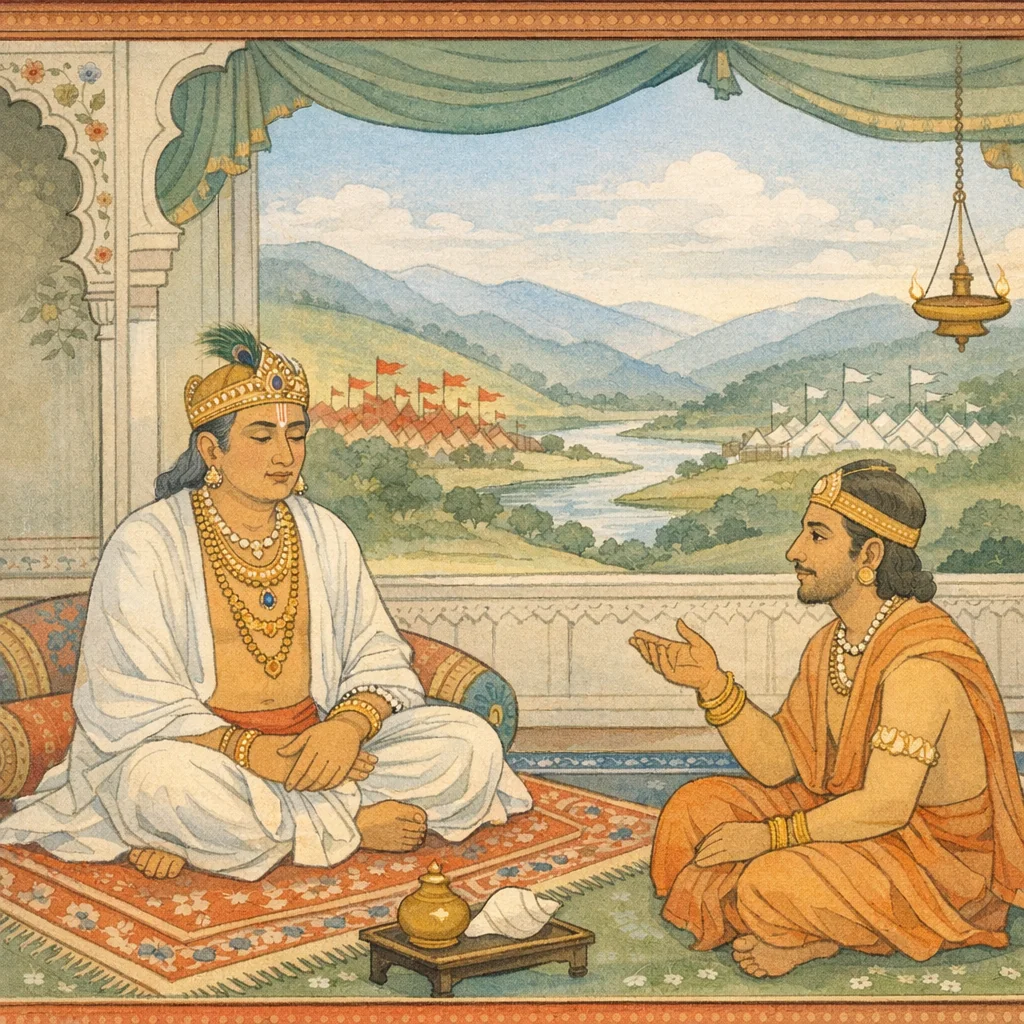
Saṃjaya reports that Ulūka reaches the Pāṇḍava military encampment and addresses Yudhiṣṭhira in the presence of the Pāṇḍavas, the Sṛñjayas, Kṛṣṇa, Drupada with his sons, Virāṭa, and other rulers. Ulūka prefaces his delivery by advising Yudhiṣṭhira not to respond with anger to the message as conveyed. He then recites Duryodhana’s taunting claims: the Pāṇḍavas were defeated in dice, Draupadī was brought to the assembly, and the exile and incognito year were endured; Yudhiṣṭhira is urged to remember these injuries as a stimulus to action. The speech escalates into martial rhetoric, asserting preparedness of Kurukṣetra and urging immediate engagement. Ulūka belittles the prospect of overcoming Bhīṣma and Droṇa, using hyperbolic comparisons to natural impossibilities to depict their invincibility. He expands the threat by describing the Kaurava host as vast, multi-regional, and difficult to resist. Turning to Arjuna, Ulūka criticizes boasting and frames success as dependent on action rather than speech, while reiterating that the kingdom will not be returned. He further invokes the earlier crisis of servitude and presents these recollections as evidence against Pāṇḍava confidence. The chapter culminates in a sustained attempt at psychological destabilization: projecting future loss, exhaustion, and regret should Arjuna enter the ‘ocean’ of weapons and forces. Throughout, the unit functions as a case study in adversarial diplomatic rhetoric within a formal envoy setting.
Chapter Arc: सेनाओं के व्यूह और पड़ाव जम जाने के बाद अंधे महाराज धृतराष्ट्र संजय को बुलाते हैं—“एहि संजय… सेनानिवेशे यद् वृत्तं कुरुपाण्डवसेनयोः”—और युद्ध के मुहाने पर खड़े संसार का समाचार मांगते हैं। → धृतराष्ट्र भविष्य की अनिवार्यता स्वीकारते हुए भी उसे शब्दों में टटोलते हैं—“यद् भावि तद् भविष्यति”—और क्षत्रधर्म के नाम पर रण में देह-त्याग की प्रतिष्ठा का स्मरण करते हैं; संजय उत्तर देते हुए प्रश्न का विस्तार स्वीकारते हैं, पर दोषारोपण की दिशा को रोकते हैं—दुर्योधन पर एकांगी दोष न धरा जाए। → संजय का निर्णायक कथन: पाण्डवों ने द्यूत-सभा में छल, अपमान और निकृति सहकर भी धैर्य रखा; अब वे प्रतीक्षा की सीमा पार कर चुके हैं। युद्ध में घोड़े-हाथी-राजाओं का संहार अवश्यंभावी है—और यह विनाश तीन कारणों से घटता दिखता है: ईश्वर-निर्देश, यदृच्छा, और पूर्वकर्म। इसी त्रिविध दृष्टि से संजय धृतराष्ट्र को स्थिर होकर सुनने का आग्रह करते हैं। → अध्याय का निष्कर्ष युद्ध-समाचार की भूमिका रचता है: दोष-निर्णय से अधिक, कारण-चक्र (दैव/संयोग/कर्म) और पाण्डवों के संचित क्षोभ की वास्तविकता सामने रखकर संजय धृतराष्ट्र को आने वाले रक्तपात के लिए मानसिक रूप से तैयार करते हैं। → संजय संकेत देते हैं कि अब वे ‘समरे वृत्तं’—युद्ध-प्रसंग में होने वाले व्यापक विनाश का क्रमवार वर्णन करेंगे; अगले अध्याय में वास्तविक सैन्य-स्थितियाँ और घटनाएँ अधिक स्पष्ट होंगी।
Shlokas
Verse 1
[दाक्षिणात्य अधिक पाठका इ श्लोक मिलाकर कुल ४० ३ “लोक हैं] ४-32 श््यु हि कम एकोनषष्टर्याधेकशततमो< ध्याय: धृतराष्ट्र और संजयका संवाद जनमेजय उवाच तथा व्यूढेष्वनीकेषु कुरुक्षेत्रे द्विजर्षभ । किमकुर्वश्न॒ कुरव: कालेनाभिप्रचोदिता:,जनमेजयने पूछा--द्विजश्रेष्ठट जब इस प्रकार कुरुक्षेत्रमें सेनाएँ मोर्चा बाँधकर खड़ी हो गयीं, तब कालप्रेरित कौरवोंने क्या किया?
Janamejaya said: “O best of twice-born sages, when the battle-formations had thus been arrayed on Kurukṣetra, what did the Kurus do, driven onward by Time itself?”
Verse 2
वैशम्पायन उवाच तथा व्यूढेष्वनीकेषु यत्तेषु भरतर्षभ । धृतराष्ट्री महाराज संजयं वाक्यमत्रवीत्,वैशम्पायनजीने कहा--भरतकुलभूषण महाराज! जब वे सभी सेनाएँ कुरुक्षेत्रमें व्यूहरचनापूर्वक डट गयीं, तब धृतराष्ट्रने संजयसे कहा--
Vaiśampāyana said: O bull among the Bharatas, when those armies had been arrayed in battle-formation and stood ready, Queen Dhṛtarāṣṭrī addressed Sañjaya with words—at the very moment when the machinery of war had been set in motion and the moral weight of impending violence pressed upon the royal house.
Verse 3
एहि संजय सर्व मे आचक्ष्वानवशेषत: । सेनानिवेशे यद् वृत्तं कुरुपाण्डवसेनयो:,“संजय! यहाँ आओ और कौरवों तथा पाण्डवोंकी सेनाके पड़ाव पड़ जानेपर वहाँ जो कुछ हुआ हो, वह सब मुझे पूर्णरूपसे बताओ
“Come here, Sañjaya, and tell me everything without leaving anything out—what occurred when the armies of the Kurus and the Pāṇḍavas had taken up their encampments.”
Verse 4
दिष्टमेव परं मन्ये पौरुषं चाप्यनर्थकम् । यदहं बुद्ध्यमानो5पि युद्धदोषान् क्षयोदयान्,“मैं तो समझता हूँ” दैव ही प्रबल है। उसके सामने पुरुषार्थ व्यर्थ है; क्योंकि मैं युद्धके दोषोंको अच्छी तरह जानता हूँ। वे दोष भयंकर संहार उपस्थित करनेवाले हैं, इस बातको भी समझता हूँ, तथापि ठगवि द्याके पण्डित तथा कपटटद्यूत करनेवाले अपने पुत्रको न तो रोक सकता हूँ और न अपना हित-साधन ही कर सकता हूँ
“I deem fate alone to be supreme, and human effort, too, to be futile. For though I clearly understand the faults of war and the rise of ruin it brings, I still cannot restrain my own son—skilled in deceitful play and crooked dice—nor can I secure what is truly beneficial for myself.”
Verse 5
तथापि निकृतिप्रज्ं पुत्र दुर्दूतदेविनम् । न शवक््नोमि नियमन्तुं वा कर्तु वा हितमात्मन:,“मैं तो समझता हूँ” दैव ही प्रबल है। उसके सामने पुरुषार्थ व्यर्थ है; क्योंकि मैं युद्धके दोषोंको अच्छी तरह जानता हूँ। वे दोष भयंकर संहार उपस्थित करनेवाले हैं, इस बातको भी समझता हूँ, तथापि ठगवि द्याके पण्डित तथा कपटटद्यूत करनेवाले अपने पुत्रको न तो रोक सकता हूँ और न अपना हित-साधन ही कर सकता हूँ
“Even so, my son—clever in deceit and given to wicked gambling—I am unable either to restrain him or to secure what is truly beneficial for myself.”
Verse 6
भवत्येव हि मे सूत बुद्धिर्दोषानुदर्शिनी । दुर्योधनं समासाद्य पुन: सा परिवर्तते,'सूत! मेरी बुद्धि उपर्युक्त दोषोंको बारंबार देखती और समझती है तो भी दुर्योधनसे मिलनेपर पुन: बदल जाती है
“Indeed, O Sūta, my understanding is one that repeatedly notices and recognizes these faults; yet, on meeting Duryodhana, that very judgment turns back again.”
Verse 7
एवं गते वै यद् भावि तद् भविष्यति संजय । क्षत्रधर्म: किल रणे तनुत्यागो हि पूजित:,“संजय! ऐसी दशामें अब जो कुछ होनेवाला है, वह होकर ही रहेगा। कहते हैं, युद्धमें शरीरका त्याग करना निश्चय ही सबके द्वारा सम्मानित क्षत्रियधर्म है”
Vaiśampāyana said: “Since matters have come to this pass, O Saṃjaya, whatever is destined to occur will indeed occur. For it is said that, in battle, the warrior’s dharma is precisely this: the offering up of one’s body—death accepted in combat—is held in honor.”
Verse 8
संजय उवाच त्वद्युक्तोडयमनुप्रश्नो महाराज यथेच्छसि । नतु दुर्योधने दोषमिममाधातुमरहसि,संजयने कहा--महाराज! आपने जो कुछ पूछा है और आप जैसा चाहते हैं, वह सब आपके योग्य है; परंतु आपको युद्धका दोष दुर्योधनके माथेपर नहीं मढ़ना चाहिये
Sanjaya said: “O great king, this follow-up question of yours is fitting, and you may inquire as you wish. Yet you ought not to lay the blame for this war upon Duryodhana alone.”
Verse 9
शृणुष्वानवशेषेण वदतो मम पार्थिव । य आत्मनो दुश्चरितादशुभं प्राप्त॒ुयान्नर: । नस कालं न वा देवानेनसा गन्तुमहति,भूपाल! मैं सारी बातें बता रहा हूँ, आप सुनिये। जो मनुष्य अपने बुरे आचरणसे अशुभ फल पाता है, वह काल अथवा देवताओंपर दोषारोपण करनेका अधिकारी नहीं है
Sanjaya said: “O king, listen to me fully as I speak. A man who, through his own wicked conduct, comes to an inauspicious result has no right to lay the blame on Time or on the gods for his sin, O ruler of the earth.”
Verse 10
महाराज मनुष्येषु निन्द्यं यः सर्वमाचरेत् । स वध्य: सर्वलोकस्य निन्दितानि समाचरन्,महाराज! जो पुरुष दूसरे मनुष्योंके साथ सर्वथा निन्दनीय व्यवहार करता है, वह निन्दित आचरण करनेवाला पापात्मा सब लोगोंके लिये वध्य है
Sañjaya said: “O King, a man who, in his dealings with other people, habitually commits what is wholly blameworthy—one who persists in disgraceful conduct—becomes, in the eyes of all, fit to be punished (even put to death), for he lives by actions condemned by society and dharma.”
Verse 11
निकारा मनुजश्रेष्ठ पाण्डवैस्त्वत्प्रतीक्षया | अनुभूता: सहामात्यैर्निकृतैरधिदेवने,नरश्रेष्ठ) जूएके समय जो बारंबार छल-कपट और अपमानके शिकार हुए थे, अपने मन्त्रियोंसहित उन पाण्डवोंने केवल आपका ही मुँह देखकर सब तरहके तिरस्कार सहन किये हैं
Sañjaya said: “O best of men, those Pandavas—waiting only upon you—have, together with their ministers, endured repeated humiliations and deceit at the gambling match. They bore every insult, keeping their restraint in the hope of your just intervention.”
Verse 12
हयानां च गजानां च राज्ञां चामिततेजसाम् । वैशसं समरे वृत्तं यत् तन्मे शूणु सर्वश:,इस समय युद्धके कारण घोड़ों, हाथियों तथा अमिततेजस्वी राजाओंका जो विनाश प्राप्त हुआ है, उसका सम्पूर्ण वृत्तान्त आप मुझसे सुनिये
Sañjaya said: “Hear from me in full the account of the slaughter that occurred in battle—the destruction of horses and elephants, and of kings of immeasurable splendor—brought about by the war.”
Verse 13
स्थिरो भूत्वा महाप्राज्ञ सर्वलोकक्षयोदयम् | यथाभूतं महायुद्धे श्रुव्वा चैकमना भव,महामते! इस महायुद्धमें सम्पूर्ण लोकोंके विनाशको सूचित करनेवाला जो-जो वृत्तान्त जैसे-जैसे घटित हुआ है, वह सब स्थिर होकर सुनिये और सुनकर एकचित्त बने रहिये (व्याकुल न होइये)
Sañjaya said: “O greatly wise one, be steady. Hear with a single, undistracted mind the true account of what has occurred in this great war—events that signal the rise of destruction for all worlds. Do not be shaken as you listen.”
Verse 14
न होव कर्ता पुरुष: कर्मणो: शुभपापयो: । अस्वतन्त्रो हि पुरुष: कार्यते दारुयन्त्रवत्,क्योंकि मनुष्य पुण्य और पापके फलभोगकी प्रक्रियामें स्वतन्त्र कर्ता नहीं है; क्योंकि मनुष्य प्रारब्धके अधीन है, उसे तो कठपुतलीकी भाँति उस कार्यमें प्रवृत्त होना पड़ता है
For a man is not an independent doer in the working out of the fruits of virtue and sin; a man is subject to his ripened destiny (prārabdha) and is made to act like a puppet moved by a wooden contrivance.
Verse 15
केचिदीश्वरनिर्दिष्टा: केचिदेव यदृच्छया । पूर्वकर्मभिरप्यन्ये त्रैधमेतत् प्रदृश्यते । तस्मादनर्थमापतन्न: स्थिरो भूत्वा निशामय,कोई ईश्वरकी प्रेरणासे कार्य करते हैं, कुछ लोग आकस्मिक संयोगवश कर्मामें प्रवृत्त होते हैं तथा दूसरे बहुत-से लोग अपने पूर्वकर्मोंकी प्रेरणासे कार्य करते हैं। इस प्रकार ये कार्यकी त्रिविध अवस्थाएँ देखी जाती हैं, इसलिये इस महान् संकटमें पड़कर आप स्थिरभावसे (स्वस्थ चित्त होकर) सारा वृत्तान्त सुनिये
Sañjaya said: “Some act under the direction of the Lord; some act by sheer chance; and many others act under the impulse of their former deeds. Thus, this threefold pattern of human action is seen. Therefore, now that we have fallen into this grave calamity, be steady—listen with a composed mind to the whole account.”
Verse 158
इस प्रकार श्रीमह्ाभारत उद्योगपर्वके अन्तर्गत यैन्यनिर्याणपर्वमें रक्मीप्रत्याख्यानविषयक एक सौ अद्ठावनवाँ अध्याय पूरा हुआ
Thus ends the one hundred and fifty-eighth chapter of the Udyoga Parva of the Śrī Mahābhārata, within the section called the Yānya-niryāṇa Parva, dealing with the episode of Rukmī’s rejection. The narrator marks the close of this unit, signaling a transition in the unfolding preparations and moral tensions that lead toward war.
Verse 159
इति श्रीमहाभारते उद्योगपर्वणि सैन्यनिर्याणपर्वणि संजयवाक्ये एकोनषष्ट्यधिकशततमो<ध्याय:
Thus, in the revered Mahābhārata, within the Udyoga Parva—specifically the section on the marching forth of the armies—ends the one-hundred-and-fifty-ninth chapter, consisting of Sañjaya’s narration. The colophon marks the close of a narrative unit, underscoring the formal transition as the conflict moves from counsel and preparation toward open war.
Frequently Asked Questions
The chapter dramatizes the tension between maintaining diplomatic restraint in an envoy audience and responding to provocations that invoke past injustice—testing whether composure and procedural dharma can be preserved under public insult.
Speech is shown as a strategic instrument: recipients must separate message-content from manipulative intent, sustaining disciplined judgment (viveka) and restraint (kṣānti) even when honor-based provocations are staged before allies and witnesses.
No explicit phalaśruti is presented here; the chapter’s function is primarily narrative and political, serving as a documented specimen of hostile envoy discourse that escalates the pre-conflict atmosphere.