Adhyaya 1
Virāṭa-sabhāyāṃ Saṃniveśaḥ — Assembly at Virāṭa’s Hall and Kṛṣṇa’s Diplomatic Counsel
Upa-parva: Udyoga Parva – Sabha-saṃvāda (Virāṭa-sabhā Council Episode)
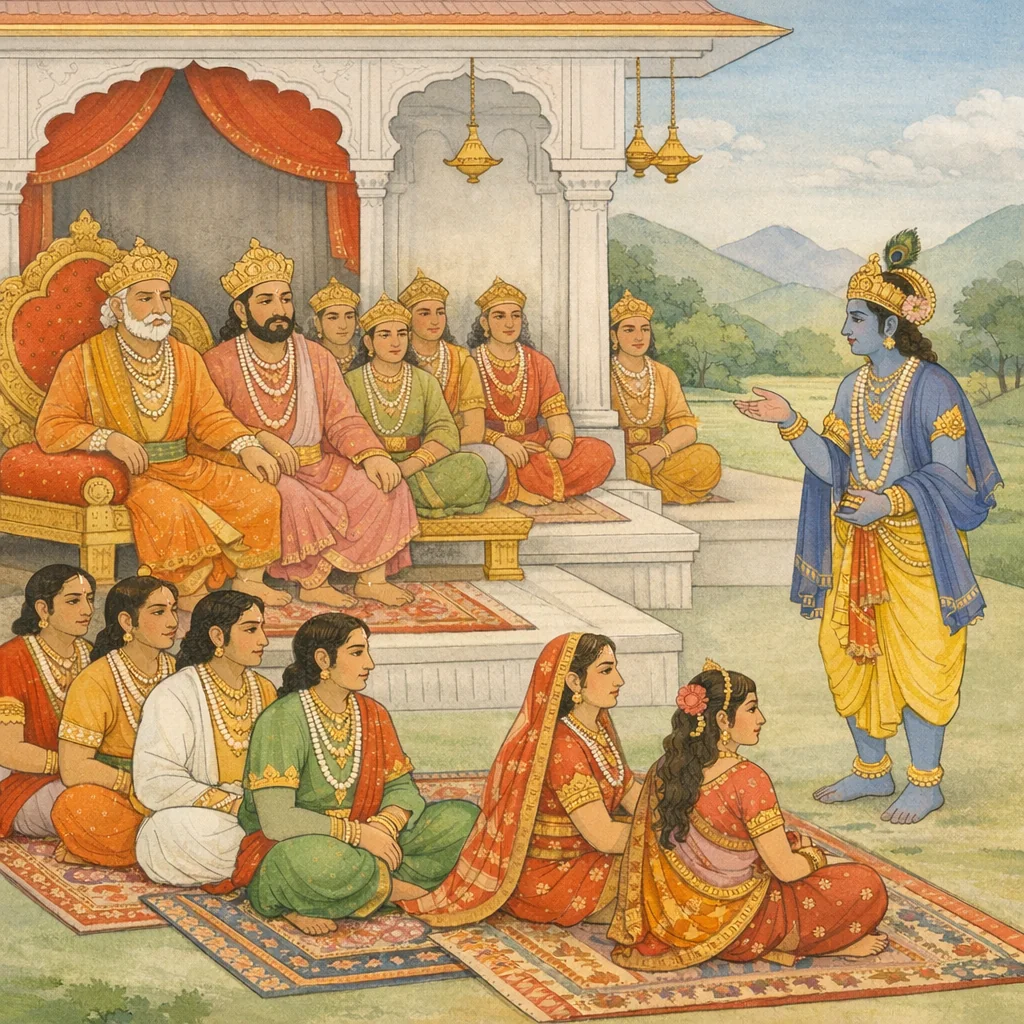
Vaiśaṃpāyana describes the post-marriage political convergence: the Kuru-Pāṇḍava party and allies enter Virāṭa’s opulent sabhā adorned with gems, garlands, and fragrance. Key rulers and elders take their seats—Virāṭa and Drupada preside; Balarāma and Kṛṣṇa are honored; Yudhiṣṭhira sits near Virāṭa; the Pāṇḍavas, Draupadeyas, Pradyumna, Sāmba, Abhimanyu, and Virāṭa’s son are present, portrayed as martial equals to their fathers. After preliminary conversation, attention turns to Kṛṣṇa. Kṛṣṇa articulates the legal-ethical record: Yudhiṣṭhira was defeated by Śakuni’s deception at dice; the kingdom was taken; the exile and concealment terms have been fulfilled; the Pāṇḍavas, though capable of conquest, maintained truth and endured hardship. He urges deliberation on what benefits both parties while preserving dharma and public repute, emphasizing that Yudhiṣṭhira does not desire adharma-based kingship even if offered. Noting uncertainty about Duryodhana’s intentions and the risk of provocation leading to coalition response, Kṛṣṇa recommends sending a pure, competent, vigilant envoy to seek pacification and propose granting half the kingdom to Yudhiṣṭhira. The senior ally (Balarāma as Kṛṣṇa’s elder) receives and honors this counsel, signaling collective endorsement of a diplomatic first step.
Chapter Arc: नारायण-वन्दना के साथ ‘जय’ का मंगलारम्भ होता है—और उसी पवित्र ध्वनि के भीतर एक नई आँधी का संकेत: वनवास-काल पूरा हो चुका है, अब न्याय के लिए सभा जुटेगी। → मत्स्यराज विराट की समृद्ध सभा में विराट, द्रुपद, बलराम-जनार्दन, द्रौपदेय, पाण्डव-पक्ष के महारथी और वृद्ध नरेश एकत्र होते हैं। चमकते आभूषणों और सुवर्णासनों के बीच असली विषय चमकता है—युधिष्ठिर का छल से हरण किया गया राज्य, और अब उसका न्यायोचित प्रत्यावर्तन। सबकी दृष्टि कृष्ण पर टिकती है: नीति किस दिशा में जाएगी? → कृष्ण का धर्मार्थयुक्त, मधुर और समदर्शी भाषण—वे स्मरण कराते हैं कि युधिष्ठिर को सौबल (शकुनि) ने अक्षवती सभा में निकृष्ट छल से हराया; समय-समझौता पूरा हो चुका है; अब शान्ति-प्रयास भी नीति के साथ होना चाहिए। यहीं से अध्याय का केन्द्र बनता है: ‘दूत’ कैसा हो—जो क्रोध शान्त कर सके और युधिष्ठिर के लिए राज्यार्ध तक का मार्ग प्रशस्त कर सके। → सभा कृष्ण-वचन का सम्मान करती है; अग्रज (युधिष्ठिर) उस नीति-वाक्य को ग्रहण करने की ओर बढ़ते हैं। निर्णय का स्वर स्पष्ट होता है—पहले दूत-नीति, फिर परिणाम के अनुसार आगे का पथ। → दूत कौन बनेगा, क्या धृतराष्ट्र-दुर्योधन पक्ष राज्यार्ध/न्याय स्वीकार करेगा, या शान्ति-प्रयास विफल होकर युद्ध की ओर धकेलेगा?
Shlokas
Verse 1
नारायणं नमस्कृत्य नरं चैव नरोत्तमम् | देवीं सरस्वतीं व्यासं ततो जयमुदीरयेत् ।। अन्तर्यामी नारायण स्वरूप भगवान् श्रीकृष्ण, (उनके नित्य सखा) नरस्वरूप नरश्रेष्ठ अर्जुन, (उनकी लीला प्रकट करनेवाली) भगवती सरस्वती और (उन लीलाओंका संकलन करनेवाले) महर्षि वेदव्यासको नमस्कार करके जय (महाभारत)-का पाठ करना चाहिये। वैशम्पायन उवाच कृत्वा विवाहं तु कुरुप्रवीरा- स्तदाभिमन्योर्मुदिता: स्वपक्षा: । विश्रम्य रात्रावुषसि प्रतीता: सभां विराटस्य ततो5$भिजग्मु:,वैशम्पायनजी कहते हैं--जनमेजय! उस समय अभिमन्युका विवाह करके कुरुवीर पाण्डव तथा उनके अपने पक्षके लोग (यादव पांचाल आदि) अत्यन्त आनन्दित हुए। रात्रिमें विश्राम करके वे प्रातःकाल जो और ([नित्यकर्म करके) विराटकी सभामें उपस्थित हुए इति श्रीमहा भारते उद्योगपर्वणि सेनोद्योगपर्वणि पुरोहितयाने प्रथमो5ध्याय:
Having bowed to Nārāyaṇa, and also to Nara—the best of men—along with the goddess Sarasvatī and Vyāsa, one should then recite “Jaya” (the Mahābhārata). The verse frames the epic as a sacred, ethically charged narration: right speech and right remembrance begin with reverence to the divine source, the exemplary human, the power of inspired learning, and the seer who compiles and transmits the tradition.
Verse 2
सभा तु सा मत्स्यपते: समृद्धा मणिप्रवेकोत्तमरत्नचित्रा । न्यस्तासना माल्यवती सुगन्धा तामभ्ययुस्ते नरराजवृद्धा:,मत्स्यदेशके अधिपति विराटकी वह सभा अत्यन्त समृद्धिशालिनी थी। उसमें मणियों (मोती-मूँगे आदि)-की खिड़कियाँ और झालरें लगी थीं। उसके फर्श और दीवारों में उत्तम- उत्तम रत्नों (हीरे-पन्ने आदि)-की पच्चीकारी की गयी थी। इन सबके कारण उसकी विचित्र शोभा हो रही थी। उस सभाभवनमें यथायोग्य स्थानोंपर आसन लगे हुए थे, जगह-जगह मालाएँ लटक रही थीं और सब ओर सुगन्ध फैल रही थी। वे श्रेष्ठ नरपतिगण उसी सभामें एकत्र हुए
Vaiśaṃpāyana said: That royal assembly-hall of the lord of Matsya was exceedingly prosperous—adorned with jewel-work and inlaid with the finest gems. Seats had been set out in due order; garlands hung about, and fragrance pervaded the space. Into that splendid hall came the elder and foremost kings, gathering there in dignity and state.
Verse 3
अथासनान्याविशतां पुरस्ता- दुभौ विराटट्रुपदौ नरेन््द्रौ । वृद्धौ च मान्यौ पृथिवीपतीनां पित्रा समं रामजनार्दनौ च,वहाँ सबसे पहले राजा विराट और द्रुपद आसनपर विराजमान हुए; क्योंकि वे दोनों समस्त भूपतियोंमें वृद्ध और माननीय थे। तत्पश्चात् अपने पिता वसुदेवके साथ बलराम और श्रीकृष्णने भी आसन ग्रहण किये
Then, in the foremost seats, the two kings Virāṭa and Drupada took their places first, for among the assembled rulers they were elders and worthy of special honor. After them, Balarāma and Janārdana (Kṛṣṇa) also sat down together with their father, Vasudeva—marking the gathering’s order by age, status, and due respect.
Verse 4
पाञज्चालराजस्य समीपततस्तु शिनिप्रवीर: सहरौहिणेय: । मत्स्यस्य राज्ञस्तु सुसंनिकृष्टो जनार्दनश्वैव युधिष्ठिरश्ष,पांचालराज द्रुपदके पास शिनिवंशके श्रेष्ठ वीर सात्यकि तथा रोहिणीनन्दन बलरामजी बैठे थे और मत्स्यराज विराटके अत्यन्त निकट श्रीकृष्ण तथा युधिष्ठिर विराजमान थे
Vaiśampāyana said: Near the king of the Pāñcālas sat the foremost hero of the Śini line, Sātyaki, together with Rauhiṇeya (Balarāma). Very close to the king of the Matsyas sat Janārdana (Kṛṣṇa) and Yudhiṣṭhira. The verse quietly maps the alliances and moral stakes: the righteous Pāṇḍavas are shown supported by eminent Yādava leaders, indicating both political solidarity and the ethical weight gathering around the coming conflict.
Verse 5
सुताश्च सर्वे द्रुपदस्य राज्ञो भीमार्जुनौ माद्रवतीसुतौ च । प्रद्युम्नसाम्बौ च युधि प्रवीरौ विराटपुत्रैश्न सहाभिमन्यु:,राजा ट्रुपदके सब पुत्र, भीमसेन, अर्जुन, नकुल, सहदेव, युद्ध॒वीर प्रद्युम्म और साम्ब, विराटके पुत्रोंसहित अभिमन्यु तथा द्रौपदीके सभी पुत्र सुवर्णजटित सुन्दर सिंहासनोंपर आसपास ही बैठे थे। द्रौपदीके पाँचों पुत्र पराक्रम, सौन्दर्य और बलमें अपने पिता पाण्डवोंके ही समान थे। वे सब-के-सब शूरवीर थे
Vaiśaṃpāyana said: All the sons of King Drupada, Bhīma and Arjuna, and the two sons of Mādrī as well; Pradyumna and Sāmba—heroes in battle—and Abhimanyu together with the sons of Virāṭa were present. The passage emphasizes the gathering of the foremost allies and heirs on the eve of conflict, highlighting the righteous coalition’s strength, lineage, and readiness for the coming war.
Verse 6
सर्वे च शूरा: पितृभि: समाना वीर्येण रूपेण बलेन चैव । उपाविशन् द्रौपदेया: कुमारा: सुवर्णचित्रेषु वरासनेषु,राजा ट्रुपदके सब पुत्र, भीमसेन, अर्जुन, नकुल, सहदेव, युद्ध॒वीर प्रद्युम्म और साम्ब, विराटके पुत्रोंसहित अभिमन्यु तथा द्रौपदीके सभी पुत्र सुवर्णजटित सुन्दर सिंहासनोंपर आसपास ही बैठे थे। द्रौपदीके पाँचों पुत्र पराक्रम, सौन्दर्य और बलमें अपने पिता पाण्डवोंके ही समान थे। वे सब-के-सब शूरवीर थे
Vaiśampāyana said: All those princes—the sons of Draupadī—were heroes, equal to their fathers in valor, beauty, and strength. They took their seats on splendid thrones inlaid with gold, presenting a courtly scene of disciplined readiness and inherited martial excellence, befitting the grave deliberations that precede war.
Verse 7
तथोपविष्टेषु महारथेषु विराजमानाभरणाम्बरेषु । रराज सा राजवती समृद्धा ग्रहैरिव द्यौर्विमलैरुपेता,इस प्रकार चमकीले आभूषणों तथा सुन्दर वस्त्रोंसे विभूषित उन समस्त महारथियोंके बैठ जानेपर राजाओंसे भरी हुई वह समृद्धिशालिनी सभा ऐसी शोभा पा रही थी, मानो उज्ज्वल ग्रह-नक्षत्रोंस भरा आकाश जगमगा रहा हो
When all those great chariot-warriors had taken their seats, resplendent in shining ornaments and fine garments, that prosperous royal assembly—filled with kings—shone with grandeur, like the clear sky adorned with bright planets and stars.
Verse 8
ततः कथास्ते समवाययुक्ता: कृत्वा विचित्रा: पुरुषप्रवीरा: । तस्थुर्मुहूर्त परिचिन्तयन्तः कृष्णं नृपास्ते समुदीक्षमाणा:,तदनन्तर उन शूरवीर पुरुषोंने समाजमें जैसी बातचीत करनी उचित है, वैसी ही विविध प्रकारकी विचित्र बातें कीं। फिर वे सब नरेश भगवान् श्रीकृष्णकी ओर देखते हुए दो घड़ीतक कुछ सोचते हुए चुप बैठे रहे
Then those foremost of men, having engaged in fitting assembly-talk and exchanged various striking remarks, fell silent for a while. As they sat reflecting, all those kings kept their eyes fixed upon Kṛṣṇa—waiting for what he would say and do next.
Verse 9
कथान्तमासाद्य च माधवेन संघट्टिता: पाण्डवकार्यहेतो: । ते राजसिंहा: सहिता हाशृण्वन् वाक््यं महार्थ सुमहोदयं च,भगवान् श्रीकृष्णने पाण्डवोंके कार्यके लिये ही उन श्रेष्ठ राजाओंको संगठित किया था। जब उन सब लोगोंकी बातचीत बंद हो गयी, तब वे सिंहके समान पराक्रमी नरेश एक साथ श्रीकृष्णके सारगर्भित तथा श्रेष्ठ फल देनेवाले वचन सुनने लगे
Vaiśampāyana said: Having brought their discussion to a close, those kings—lion-like in valor—who had been rallied by Mādhava for the sake of the Pāṇḍavas’ cause, sat together and began to listen to Śrī Kṛṣṇa’s words, weighty in meaning and rich in auspicious consequence.
Verse 10
श्रीकृष्ण उवाच सर्वेर्भवद्धिर्विंदितं यथायं युधिष्ठिर: सौबलेनाक्षवत्याम् । जितो निकृत्यापद्वतं च राज्यं वनप्रवासे समय: कृतश्न,श्रीकृष्णने भाषण देना प्रारम्भ किया--उपस्थित सुहृद्गण! आप सब लोगोंको यह मालूम ही है कि सुबलपुत्र शकुनिने द्यूतसभामें किस प्रकार कपट करके धर्मात्मा युधिष्ठिरको परास्त किया और इनका राज्य छीन लिया है। उस जूएमें यह शर्त रख दी गयी थी कि जो हारे, वह बारह वर्षोतक वनवास और एक वर्षतक अज्ञातवास करे
Śrī Kṛṣṇa said: “All of you well know how this Yudhiṣṭhira, in the gambling hall, was defeated by Saubala (Śakuni) through deceit, and how his kingdom was taken away. You also know that a binding condition was fixed for exile to the forest (as the consequence of that loss).”
Verse 11
शक्तैविंजेतुं तरसा महीं च सत्ये स्थितै: सत्यरथैर्यथावत् । पाण्डो: सुतैस्तद् व्रतमुग्ररूप॑ं वर्षाणि षट् सप्त च चीर्णमग्रयै:,पाण्डव सदा सत्यपर आरूढ़ रहते हैं। सत्य ही इनका रथ (आश्रय) है। इनमें वेगपूर्वक समस्त भूमण्डल-को जीत लेनेकी शक्ति है तथापि इन वीराग्रगण्य पाण्डु-कुमारोंने सत्यका खयाल करके तेरह वर्षोोतक वनवास और अज्ञातवासके उस कठोर व्रतका धैर्यपूर्वक पालन किया है, जिसका स्वरूप बड़ा ही उग्र है
Firmly established in truth—truth itself being their chariot and refuge—the sons of Pāṇḍu had the power to conquer the whole earth swiftly and in full measure. Yet those foremost of heroes, mindful of truth, endured and completed that fierce vow in its harsh form: six years and seven besides—thirteen years of exile and concealment—without wavering.
Verse 12
त्रयोदशश्वैव सुदुस्तरो5य- मज्ञायमानैर्भवतां समीपे | क्लेशानसह्ा[ान् विविधान् सहद्धि- महात्मभिश्नापि वने निविष्टम्,इस तेरहवें वर्षको पार करना बहुत ही कठिन था, परंतु इन महात्माओंने आपके पास ही अज्ञातरूपसे रहकर भाँति-भाँतिके असहा क्लेश सहते हुए यह वर्ष बिताया है, इसके अतिरिक्त बारह वर्षोतक ये वनमें भी रह चुके हैं
This thirteenth year was indeed extremely hard to pass through. Yet these noble men, remaining unrecognized in your very vicinity, endured many kinds of unbearable hardships and completed it. Moreover, they had already lived in the forest for twelve years as well.
Verse 13
एतै: परप्रेष्पनियोगयुक्ति- रिच्छद्धिराप्तं स्वकुलेन राज्यम् । एवंगते धर्मसुतस्य राज्ञो दुर्योधनस्यापि च यद्धितं स्थात्,अपनी कुलपरम्परासे प्राप्त हुए राज्यकी अभिलाषासे ही इन वीरोंने अबतक अज्ञातावस्थामें दूसरोंकी सेवामें संलग्न रहकर तेरहवाँ वर्ष पूरा किया है। ऐसी परिस्थितिमें जिस उपायसे धर्मपुत्र युधिष्ठिर तथा राजा दुर्योधनका भी हित हो, उसका आपलोग विचार करें। आप कोई ऐसा मार्ग ढूँढ़ निकालें, जो इन कुरुश्रेष्ठ वीरोंके लिये धर्मानुकूल, न्यायोचित तथा यशकी वृद्धि करनेवाला हो। धर्मराज युधिष्ठिर यदि धर्मके विरुद्ध देवताओंका भी राज्य प्राप्त होता हो, तो उसे लेना नहीं चाहेंगे
Kṛṣṇa said: “Driven by the desire to regain the kingdom that rightly belongs to them by ancestral succession, these heroes have, until now, lived in concealment and completed the thirteenth year by taking service under others. Now that matters have come to this pass, you should deliberate on a course by which the welfare of King Yudhiṣṭhira, the son of Dharma, and also that of King Duryodhana may be secured. Find a path that is in harmony with dharma, just, and conducive to the increase of good fame for these foremost of the Kurus. For Dharmarāja Yudhiṣṭhira would not accept even the sovereignty of the gods if it were to be obtained by violating dharma.”
Verse 14
तच्चिन्तयध्वं कुरुपुड़॒वानां धर्म्य च युक्ते च यशस्करं च । अधर्मयुक्तं न च कामयेत राज्यं सुराणामपि धर्मराज:,अपनी कुलपरम्परासे प्राप्त हुए राज्यकी अभिलाषासे ही इन वीरोंने अबतक अज्ञातावस्थामें दूसरोंकी सेवामें संलग्न रहकर तेरहवाँ वर्ष पूरा किया है। ऐसी परिस्थितिमें जिस उपायसे धर्मपुत्र युधिष्ठिर तथा राजा दुर्योधनका भी हित हो, उसका आपलोग विचार करें। आप कोई ऐसा मार्ग ढूँढ़ निकालें, जो इन कुरुश्रेष्ठ वीरोंके लिये धर्मानुकूल, न्यायोचित तथा यशकी वृद्धि करनेवाला हो। धर्मराज युधिष्ठिर यदि धर्मके विरुद्ध देवताओंका भी राज्य प्राप्त होता हो, तो उसे लेना नहीं चाहेंगे
“Deliberate on a course of action for these foremost of the Kurus—one that is in harmony with dharma, grounded in justice, and conducive to lasting honor. A kingdom gained through unrighteous means should not be desired; Dharmarāja Yudhiṣṭhira would not wish to accept sovereignty obtained in violation of dharma, even if it were the very realm of the gods.”
Verse 15
धर्मार्थयुक्त तु महीपतित्वं॑ ग्रामेडपि कस्मिंश्वचिदयं बुभूषेत् । पित्र्यं हि राज्यं विदितं नृपाणां यथापकृष्टं धृतराष्ट्रपुत्रै:,किसी छोटेसे गाँवका राज्य भी यदि धर्म और अर्थके अनुकूल प्राप्त होता हो, तो ये उसे लेनेकी इच्छा कर सकते हैं। आप सभी नरेशोंको यह विदित ही है कि धृतराष्ट्रके पुत्रोंने पाण्डवोंके पैतृक राज्यका किस प्रकार अपहरण किया है
Even the lordship of some small village—if it were obtained in a way consistent with dharma and material propriety—he could be willing to accept. For it is well known to you kings that the ancestral kingdom of the Pāṇḍavas was seized away, in a wrongful manner, by the sons of Dhṛtarāṣṭra.
Verse 16
मिथ्योपचारेण यथा हाुनेन कृच्छं महत् प्राप्तमसहा[रूपम् | न चापि पार्थो विजितो रणे तैः स्वतेजसा धृतराष्ट्रस्य पुत्र:,कौरवोंके इस मिथ्या व्यवहार तथा छल-कपटके कारण पाण्डवोंको कितना महान् और असहा कष्ट भोगना पड़ा है, यह भी आपलोगोंसे छिपा नहीं है। धृतराष्ट्रके उन पुत्रोंने अपने बल और पराक्रमसे कुन्तीपुत्र युधिष्ठिरको किसी युद्धमें पराजित नहीं किया था (छलसे ही इनका राज्य छीना)
By false dealings and deceitful stratagems, the Pāṇḍavas were made to suffer a great and unbearable calamity—this is not hidden from you. Nor was Pārtha (the son of Kuntī) ever defeated in battle by Dhṛtarāṣṭra’s sons through their own prowess; it was by fraud that his kingdom was taken.
Verse 17
तथापि राजा सहित: सुहृद्धि- रभीप्सतेडनामयमेव तेषाम् | यत् तु स्वयं पाण्डुसुतैर्विजित्य समादह्वतं भूमिपतीन् प्रपीड्य
Even so, the king—surrounded by his well-wishers—professes that he seeks only the welfare and security of those men. Yet it was after the Pāṇḍu-sons had themselves conquered and subdued the other rulers by force that they were summoned and challenged.
Verse 18
तत् प्रार्थयन्ते पुरुषप्रवीरा: कुन्तीसुता माद्रवतीसुतौ च । बालास्त्विमे तैर्विविधैरुपायै: सम्प्रार्थिता हन्तुममित्रसंघै:
Those foremost of men—the sons of Kuntī and the sons of Mādrī—are being sought after. These youths, by the enemy hosts, have been repeatedly solicited through various stratagems, with the aim of having them slain.
Verse 19
राज्यं जिहीर्षटद्धिरसद्धिरुग्रै: सर्व च तद् वो विदितं यथावत् | तथापि सुहृदोंसहित राजा युधिष्ठिर उनकी भलाई ही चाहते हैं। पाण्डवोंने दूसरे-दूसरे राजाओंको युद्धमें जीतकर उन्हें पीड़ित करके जो धन स्वयं प्राप्त किया था, उसीको कुन्ती और माद्रीके ये वीर पुत्र माँग रहे हैं। जब पाण्डव बालक थे--अपना हित-अहित कुछ नहीं समझते थे, तभी इनके राज्यको हर लेनेकी इच्छासे उन उग्र प्रकृतिके दुष्ट शत्रुओंने संघबद्ध होकर भाँति-भाँतिके षड़यन्त्रोंद्वारा इन्हें मार डालनेकी पूरी चेष्टा की थी; ये सब बातें आपलोग अच्छी तरह जानते होंगे ।। १७-१८ है ।। तेषां च लोभ॑ प्रसमीक्ष्य वृद्ध धर्मज्ञतां चापि युधिष्ठिरस्थ,अतः सभी सभासद् कौरवोंके बढ़े हुए लोभको, युधिष्ठिरकी धर्मज्ञताको तथा इन दोनोंके पारस्परिक सम्बन्धको देखते हुए अलग-अलग तथा एक रायसे भी कुछ निश्चय करें। ये पाण्डवगण सदा ही सत्यपरायण होनेके कारण पहले की हुई प्रतिज्ञाका यथावत् पालन करके हमारे सामने उपस्थित हैं
You all know well, in full detail, how those fierce and unrighteous men, driven by the desire to seize the kingdom, banded together and tried by many conspiracies to destroy the Pāṇḍavas when they were still children, unable to discern their own good and harm. Yet King Yudhiṣṭhira, together with well-wishers, continues to seek only their welfare. The sons of Kuntī and Mādrī now ask only for what they themselves had formerly won as wealth by conquering other kings in battle. Therefore, having observed the elders’ swelling greed, and also Yudhiṣṭhira’s knowledge of dharma—and considering the relationship between these two—let the members of this assembly arrive at a decision, individually and also in consensus. The Pāṇḍavas, ever devoted to truth, stand before us to uphold exactly the pledge made earlier.
Verse 20
सम्बन्धितां चापि समीक्ष्य तेषां मतिं कुरुध्वं सहिता: पृथक् च | इमे च सत्येडभिरता: सदैव त॑ पालयित्वा समयं यथावत्,अतः सभी सभासद् कौरवोंके बढ़े हुए लोभको, युधिष्ठिरकी धर्मज्ञताको तथा इन दोनोंके पारस्परिक सम्बन्धको देखते हुए अलग-अलग तथा एक रायसे भी कुछ निश्चय करें। ये पाण्डवगण सदा ही सत्यपरायण होनेके कारण पहले की हुई प्रतिज्ञाका यथावत् पालन करके हमारे सामने उपस्थित हैं
Having also considered their mutual relationship, deliberate upon their intention—both collectively and individually. These Pāṇḍavas, ever devoted to truth, have duly upheld the agreed covenant and now stand before us in accordance with it. Therefore, O members of the Kaurava court, weigh the swelling greed on one side and Yudhiṣṭhira’s dharma-guided integrity on the other, and decide what is right.
Verse 21
अतोडन्यथा तैरुपचर्यमाणा हन्यु: समेतान् धृतराष्ट्रपुत्रान् | तैर्विप्रकारं च निशम्य कार्य सुहृज्जनास्तान् परिवारयेयु:,यदि अब भी धृतराष्ट्रके पुत्र इनके साथ विपरीत व्यवहार ही करते रहेंगे--इनका राज्य नहीं लौटायेंगे, तो पाण्डव उन सबको मार डालेंगे। कौरवलोग पाण्डवोंके कार्यमें विघध्न डाल रहे हैं और उनकी बुराईपर ही तुले हुए हैं; यह बात निश्चितरूपसे जान लेनेपर सुहृदों और सम्बन्धियोंको उचित है कि वे उन दुष्ट कौरवोंको (इस प्रकार अत्याचार करनेसे) रोकें
If, even now, the sons of Dhṛtarāṣṭra persist in hostility and refuse to restore the kingdom that is rightfully theirs, then the Pāṇḍavas—driven to the last resort—will slay the assembled Kauravas. Knowing for certain that the Kauravas are set on obstructing the Pāṇḍavas’ rightful course and intent on harming them, it is the duty of well-wishers and kinsmen to restrain those wrongdoers from further oppression, so that ruin is averted and dharma is protected.
Verse 22
युद्धेन बाधेयुरिमांस्तथैव तैर्बाध्यमाना युधि तांश्व हन्यु: । तथापि नेमेडल्पतया समर्था- स्तेषां जयायेति भवेन्मतं व:,यदि धृतराष्ट्रके पुत्र इस प्रकार युद्ध छेड़कर इन पाण्डवोंको सतायेंगे, तो उनके बाध्य करनेपर ये भी डटकर युद्धमें उनका सामना करेंगे और उन्हें मार गिरायेंगे। सम्भव है, आपलोग यह सोचते हों कि ये पाण्डव अल्पसंख्यक होनेके कारण उनपर विजय पानेमें समर्थ नहीं हैं
Śrī Kṛṣṇa said: “If Dhṛtarāṣṭra’s sons provoke this conflict and harass these Pāṇḍavas through war, then, when pressed, the Pāṇḍavas will stand firm in battle, confront them, and strike them down. Yet perhaps this is what you are thinking: that because these men are fewer in number, they are not capable of winning victory over them.”
Verse 23
समेत्य सर्वे सहिता: सुहद्धि- स्तेषां विनाशाय यतेयुरेव । दुर्योधनस्थापि मतं यथाव- न्न ज्ञायते कि नु करिष्यतीति,तथापि ये सब लोग अपने हितैषी सुहृदोंके साथ मिलकर शत्रुओंके विनाशके लिये प्रयत्न तो करेंगे ही। (अतः इन्हें आपलोग दुर्बल न समझें) युद्धका भी निश्चय कैसे किया जाय; क्योंकि दुर्योधनके भी मतका अभी ठीक-ठीक पता नहीं है कि वह क्या करेगा?
Kṛṣṇa says that, once all have assembled together with their well-wishing allies, they will certainly strive for the destruction of their enemies; therefore they should not be dismissed as weak. Yet a firm decision for war cannot be made at once, because even Duryodhana’s intention is not yet clearly known—what, in fact, he will choose to do.
Verse 24
अज्ञायमाने च मते परस्य कि स्यात् समारभ्यतमं मतं व: । तस्मादितो गच्छतु धर्मशील: शुचि: कुलीन: पुरुषो5प्रमत्त:,शत्रुपक्षका विचार जाने बिना आपलोग कोई ऐसा निश्चय कैसे कर सकते हैं? जिसे अवश्य ही कार्यरूपमें परिणत किया जा सके। अतः मेरा विचार है कि यहाँसे कोई धर्मशील, पवित्रात्मा, कुलीन और सावधान पुरुष दूत बनकर वहाँ जाय
Krishna says: “When the other side’s intention is still unknown, how can you arrive at any resolution that is truly fit to be undertaken and carried through into action? Therefore, my view is this: let a man of dharma—pure in conduct, of noble lineage, and vigilant—go from here as an envoy to them.”
Verse 25
निशम्य वाक््यं तु जनार्दनस्य धर्मार्थयुक्त मधुरं समं च,राजन! भगवान् श्रीकृष्णका धर्म और अर्थसे युक्त, मधुर एवं उभयपक्षके लिये समानरूपसे हितकर वचन सुनकर उनके बड़े भाई बलरामजीने उस भाषणकी भूरि-भूरि प्रशंसा करके अपना वक्तव्य आरम्भ किया
Having heard Janārdana’s words—sweet in tone, grounded in dharma and practical welfare, and impartially beneficial to both sides—O King, Balarāma, the elder brother of Lord Śrī Kṛṣṇa, praised that speech again and again and then began to state his own view.
Verse 26
समाददे वाक्यमथाग्रजो<5स्य सम्पूज्य वाक्यं तदतीव राजन्,राजन! भगवान् श्रीकृष्णका धर्म और अर्थसे युक्त, मधुर एवं उभयपक्षके लिये समानरूपसे हितकर वचन सुनकर उनके बड़े भाई बलरामजीने उस भाषणकी भूरि-भूरि प्रशंसा करके अपना वक्तव्य आरम्भ किया
Then his elder brother, after honoring and highly commending that speech, began to speak, O King. For when Lord Kṛṣṇa’s words—grounded in dharma and in prudent statecraft, sweet in tone, and impartially beneficial to both sides—were heard, Balarāma praised that address again and again and then commenced his own statement.
Verse 246
दूत: समर्थ: प्रशमाय तेषां राज्यार्धदानाय युधिष्ठिरस्य । वह दूत ऐसा होना चाहिये, जो उनके जोश तथा रोषको शान्त करनेमें समर्थ हो और उन्हें युधिष्ठिरको इनका आधा राज्य दे देनेके लिये विवश कर सके
Śrī Kṛṣṇa said: “A messenger should be capable of pacifying their ardor and anger, and of compelling them to grant Yudhiṣṭhira half the kingdom.” The verse frames diplomacy as a dharmic instrument: the envoy’s duty is not mere delivery of words, but the ethical prevention of war through calming hostility and securing a just settlement.
Frequently Asked Questions
How to pursue restoration of rightful rule without adopting adharma: whether to prioritize negotiated settlement (even a reduced share) versus immediate coercive escalation after enduring deception and exile.
Political action should be constrained by dharma and truth: even when capable of force, one should seek lawful, reputation-preserving conciliation first, using competent mediation to reduce harm.
No explicit phalaśruti appears here; the chapter functions as strategic-ethical framing, positioning diplomatic process and vow-fulfillment as interpretive keys for the subsequent narrative.