Adhyaya 93
Book 12, Chapter 93 — Vāmadeva’s Counsel to King Vasumanā on Dharmic Kingship (धर्मप्रधान-राजधर्मोपदेशः)
Upa-parva: Rājadharmānuśāsana (Instruction on Kingly Duty) — Vāmadeva-Itihāsa Episode
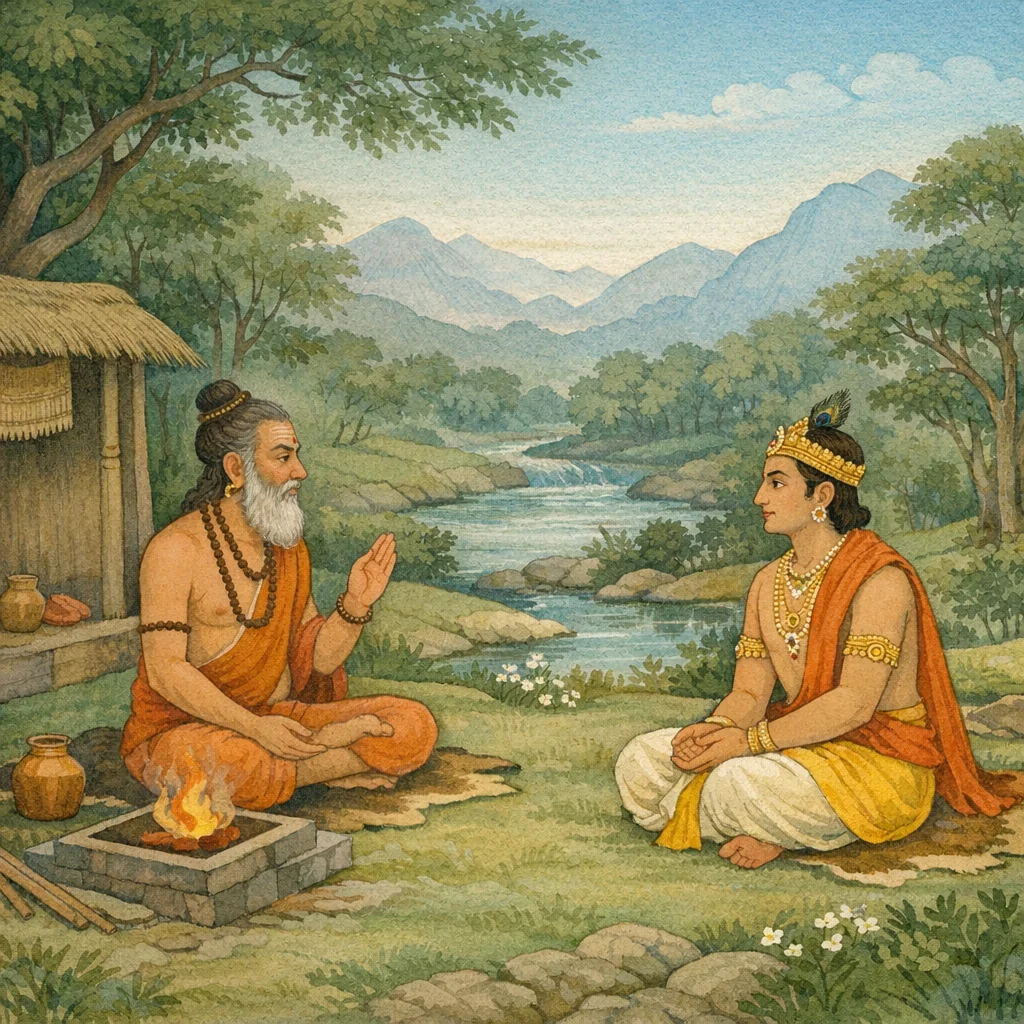
Yudhiṣṭhira asks Bhīṣma how a king who wishes to remain established in dharma should behave. Bhīṣma responds by introducing an ancient itihāsa recited by the sage Vāmadeva. In that precedent, King Vasumanā of Kosala approaches Vāmadeva seeking instruction that integrates dharma and artha so that he may not deviate from his svadharma. Vāmadeva’s central thesis is hierarchical: dharma is the supreme regulator, and kings who remain grounded in dharma secure stable sovereignty. He contrasts this with rapid decline for rulers who act from adharmic perception, coercion, uncontrolled desire, boastfulness, or corrupt counsel; such patterns lead to loss of legitimacy and ruin. The discourse also outlines positive governance traits—self-restraint, non-envy, beneficence, thoughtful assessment of resources, and continual recognition of incompleteness across dharma, kāma, artha, intellect, and alliances—arguing that social order depends on these integrated domains. The chapter culminates in a governance model where guidance in dharma (guru-pradhāna) and dharma-prioritized policy yields enduring prosperity and reputation.
Chapter Arc: भीष्म युधिष्ठिर से कहते हैं—राजधर्म के इस सूक्ष्म विषय पर एक प्राचीन इतिहास सुनो, जिसे तत्त्वदर्शी महर्षि वामदेव ने गाया था। → धर्मनिष्ठ, धैर्यवान और शुचि राजा वसुमना वामदेव से पूछते हैं कि राजा का स्वभाव कैसा हो—कहाँ दण्ड, कहाँ दया, और किस प्रकार अधर्म की ओर झुकाव राज्य को भीतर से खोखला कर देता है। → वामदेव का निर्णायक उपदेश: जो राजा अधर्म को देखकर भी बलपूर्वक उसी में प्रवृत्त होता है, उसका पतन शीघ्र होता है; और जिसके पास धर्म में गुरु नहीं, जो किसी से पूछता नहीं, वह लाभ पाकर भी स्थायी सुख नहीं पाता—जबकि गुरु-प्रधान धर्माचरण और धर्म-प्रधान लाभ-नीति दीर्घकालिक कल्याण देती है। → राजधर्म का संतुलित सूत्र स्थापित होता है—दुष्टों पर दण्ड राजा का स्वभाव-धर्म है, पर दीन-दुखियों और साधुओं पर करुणा व सहानुभूति भी उतनी ही अनिवार्य; नीति का आधार ‘गुरु-उपदेश’ और ‘धर्म-प्रधानता’ है, न कि स्वेच्छाचार।
Shlokas
Verse 1
अफ्-८#-"रू- $. दुष्टोंको दण्ड देनेका स्वभाव। २. दीन-दुखियों तथा साधु पुरुषोंके प्रति दया एवं सहानुभूति। - उतथ्यने राजा मान्धाताकों उपदेश दिया है और मान्धाता सूर्यवंशी नरेश थे, इसलिये उनके उद्देश्यसे 'भारत' सम्बोधन पद यद्यपि उचित नहीं है तथापि यह प्रसंग भीष्मजी युधिष्ठिरको सुनाते हैं; अतः यह समझना चाहिये कि युधिष्ठिरके उद्देश्यसे उन्होंने यहाँ 'भारत' विशेषणका प्रयोग किया है। द्विनवतितमो<ध्याय: राजाके धर्मपूर्वक आचारके विषयमें वामदेवजीका वसुमनाको उपदेश युधिछिर उवाच कथं धर्मे स्थातुमिच्छन् राजा वर्तेत धार्मिक: । पृच्छामि त्वां कुरुश्रेष्ठ तन्मे ब्रूहि पितामह,युधिष्ठटिरने पूछा--कुरुश्रेष्ठ पितामह! धर्मात्मा राजा यदि धर्ममें स्थित रहना चाहे तो उसे किस प्रकार बर्ताव करना चाहिये? यह मैं आपसे पूछता हूँ; आप मुझे बताइये
Yudhiṣṭhira said: “O best of the Kurus, revered Grandsire, if a righteous king wishes to remain firmly established in dharma, how should he conduct himself? I ask you—please tell me.”
Verse 2
भीष्म उवाच अत्राप्युदाहरन्तीममितिहासं पुरातनम् । गीत॑ दृष्टार्थतत्त्वेन वामदेवेन धीमता,भीष्मजीने कहा--राजन्! इस विषयमें लोग तत्त्वज्ञानी महात्मा वामदेवजीद्वारा दिये हुए उपदेशरूप एक प्राचीन इतिहासका उदाहरण दिया करते हैं
Bhishma said: “Here too, O king, people cite an ancient traditional account as an illustration—an instructive teaching-song once uttered by the wise Vāmadeva, who had directly realized the true meaning and reality of the matter.”
Verse 3
राजा वसुमना नाम ज्ञानवान् धृतिमान् शुचि: । महर्षि परिपप्रच्छ वामदेवं तपस्विनम्
Bhishma said: There was a king named Vasumanas—wise, steadfast in resolve, and pure in conduct. Seeking clarity on righteous living, he respectfully questioned the great sage Vāmadeva, a master of austerity.
Verse 4
वसुमना नामक एक प्रसिद्ध राजा हो गये हैं, जो ज्ञानवान, धैर्यवान् और पवित्र आचार- विचारवाले थे। उन्होंने एक दिन तपस्वी महर्षि वामदेवजीसे पूछा-- ।। धर्मार्थसहितैर्वाक्यैर्भगवन्ननुशाधि माम् | येन वृत्तेन वै तिष्ठन् न हीयेय॑ं स्वधर्मत:,'भगवन्! मैं किस बर्तावका पालन करता रहूँ, जिससे अपने धर्मसे कभी न गिरूँ। आप अपने अर्थ और धर्मयुक्त वचनोंद्वारा मुझे इसी बातका उपदेश दीजिये”
Bhishma said: There once arose a renowned king named Vasumana—wise, steadfast, and pure in conduct and thought. One day he approached the ascetic great seer Vāmadeva and asked: “O Blessed One, instruct me with words grounded in dharma and sound purpose. By what manner of living, if I remain established in it, will I never fall away from my own rightful duty? Teach me this with counsel that upholds both righteousness and true welfare.”
Verse 5
तमब्रवीद् वामदेवस्तेजस्वी तपतां वर: । हेमवर्ण सुखासीनं ययातिमिव नाहुषम्,तब तपस्वी पुरुषोंमें श्रेष्ठ तेजस्वी महर्षि वामदेवने नहुषपुत्र ययातिके समान सुखपूर्वक बैठे हुए सुवर्णकी-सी कान्तिवाले राजा वसुमनासे कहा
Bhīṣma said: Then the radiant sage Vāmadeva, foremost among ascetics, addressed King Vasumanas—who sat at ease, golden-hued in splendor, resembling Yayāti, the son of Nahuṣa.
Verse 6
वामदेव उवाच धर्ममेवानुवर्तस्व न धर्माद् विद्यते परम् धर्मे स्थिता हि राजानो जयन्ति पृथिवीमिमाम्,वामदेवजी बोले--राजन्! तुम धर्मका ही अनुसरण करो। धर्मसे बढ़कर दूसरी कोई वस्तु नहीं है; क्योंकि धर्ममें स्थित रहनेवाले राजा इस सारी पृथ्वीको जीत लेते हैं
Vāmadeva said: “O King, follow dharma alone. Nothing higher than dharma is known. For kings who remain established in dharma are the ones who truly conquer this entire earth.”
Verse 7
अर्थसिद्धि: पर धर्म मन््यते यो महीपति: । वृद्धयां च कुरुते बुद्धिं स धर्मेण विराजते,जो भूपाल धर्मको अर्थ-सिद्धिकी अपेक्षा भी बड़ा मानता है और उसीको बढ़ानेमें अपने मन और बुद्धिका उपयोग करता है, वह धर्मके कारण बड़ी शोभा पाता है
Vāmadeva said: That king who regards the accomplishment of prosperity as secondary to dharma, and who directs his mind and discernment toward the increase of dharma, shines with true splendor because of righteousness itself.
Verse 8
अधर्मदर्शी यो राजा बलादेव प्रवर्तते । क्षिप्रमेवापयातो5स्मादुभौ प्रथममध्यमौ,इसके विपरीत जो राजा अधर्मपर ही दृष्टि रखकर बलपूर्वक उसमें प्रवृत्त होता है, उसे धर्म और अर्थ दोनों पुरुषार्थ शीघ्र छोड़कर चल देते हैं
Vāmadeva said: “A king who fixes his gaze on adharma and, by sheer force, sets himself upon it—swiftly, from such a ruler, the two aims of life that stand first and in the middle, namely dharma and artha, depart.”
Verse 9
असत्पापिष्ठसचिवो वध्यो लोकस्य धर्महा । सहैव परिवारेण क्षिप्रमेवावसीदति
A man whose counsellors are wicked and most sinful—one who is fit to be punished and who destroys the dharma of the people—quickly falls into ruin, together with his entire retinue.
Verse 10
जो दुष्ट एवं पापिष्ठ मन्त्रियोंकी सहायतासे धर्मको हानि पहुँचाता है, वह सब लोगोंका वध्य हो जाता है और अपने परिवारके साथ ही शीघ्र संकटमें पड़ जाता है ।। अर्थानामननुष्ठाता कामचारी विकत्थन: । अपि सर्वा महीं लब्ध्वा क्षिप्रमेव विनश्यति,जो राजा अर्थ-सिद्धिकी चेष्टा नहीं करता और स्वेच्छाचारी हो बढ़-बढ़कर बातें बनाता है, वह सारी पृथ्वीका राज्य पाकर भी शीघ्र ही नष्ट हो जाता है
Vāmadeva declares that a ruler who, with the support of wicked and most sinful ministers, injures and undermines dharma becomes fit to be slain in the eyes of all people, and he quickly falls into calamity together with his family. Likewise, a king who does not actively pursue the proper accomplishment of resources and governance, but instead acts by mere whim and boasts arrogantly, perishes swiftly—even if he has obtained sovereignty over the entire earth.
Verse 11
अथाददान: कल्याणमनसूयुर्जितिन्द्रिय: । वर्धते मतिमान् राजा स्रोतोभिरिव सागर:,परंतु जो कल्याणकारी गुणोंको ग्रहण करनेवाला, अनिन्दक, जितेन्द्रिय और बुद्धिमान् होता है, वह राजा उसी प्रकार वृद्धिको प्राप्त होता है, जैसे नदियोंके प्रवाहसे समुद्र
Vāmadeva said: A king who takes up what is truly beneficial, who is free from fault-finding and envy, who has mastered his senses, and who is wise—such a ruler grows in prosperity and stature, just as the ocean swells when fed by the many currents of rivers.
Verse 12
न पूर्णोडस्मीति मन्येत धर्मत: कामतो<र्थत: । बुद्धितो मित्रतश्नापि सततं वसुधाधिप:,राजाको चाहिये कि वह सदा धर्म, अर्थ, काम, बुद्धि और मित्रोंसे सम्पन्न होनेपर भी कभी अपनेको पूर्ण न माने--सदा उन सबके संग्रहको बढ़ानेकी ही चेष्टा करे
Vāmadeva said: “A king, lord of the earth, should never think, ‘I am complete.’ Even if he is endowed with dharma, artha, kāma, sound judgment, and loyal friends, he must remain vigilant and continually strive to strengthen and increase these supports of rule. For complacency in kingship becomes the doorway to decline.”
Verse 13
एतेष्वेव हि सर्वेषु लोकयात्रा प्रतिष्ठिता । एतानि शृण्वँल्लभते यश: कीर्ति श्रियं प्रजा:,राजाकी जीवनयात्रा इन्हीं सबोंपर अवलम्बित है। इन सबको सुनने और ग्रहण करनेसे राजाको यश, कीर्ति, लक्ष्मी और प्रजाकी प्राप्ति होती है
For upon these very principles the whole course of worldly life is firmly established. A king who listens to them and accepts them as guidance gains renown and good fame, prosperity, and the well-being and support of his subjects.
Verse 14
एवं यो धर्मसंरम्भी धर्मार्थपरिचिन्तक: । अर्थान् समीक्ष्य भजते स ध्रुवं महदश्षुते,जो इस प्रकार धर्मके प्रति आग्रह रखनेवाला एवं धर्म और अर्थका चिन्तन करनेवाला है तथा अर्थपर भलीभाँति विचार करके उसका सेवन करता है, वह निश्चय ही महान् फलका भागी होता है
Vāmadeva said: One who is steadfastly committed to dharma, who reflects carefully on both dharma and artha, and who—after examining material means with discernment—makes use of them in the right way, surely attains a great and lasting result.
Verse 15
अदाता हानतिस्नेहो दण्डेनावर्तयन् प्रजा: । साहसप्रकृती राजा क्षिप्रमेव विनश्यति,जो दुःसाहसी, दान न देनेवाला और स्नेहशून्य तथा दण्डके द्वारा प्रजाको बार-बार सताता है, वह राजा शीघ्र ही नष्ट हो जाता है
Vāmadeva said: A king who does not give (in charity or support), who is devoid of humane affection, and who repeatedly harasses his subjects by the rod of punishment—being by nature rash and violent—quickly comes to ruin.
Verse 16
अथ पापकृतं बुद्धया न च पश्यत्यबुद्धिमान् । अकीर्याभिसमायुक्तो भूयो नरकमश्ञुते,जो बुद्धिहीन राजा पाप करके भी अपनी बुद्धिके द्वारा अपनेको पापी नहीं समझता, वह इस लोकमें अपकीर्तिसे कलंकित हो परलोकमें नरकका भागी होता है
Then, an unintelligent man does not recognize—by the light of his own discernment—the evil he has done. Stained by disgrace in this world, he again becomes a share-taker of hell in the next.
Verse 17
अथ मानयितुर्दाम्न: श्लक्षणस्य वशवर्तिन: । व्यसन स्वमिवोत्पन्नं विजिघांसन्ति मानवा:,जो सबका मान करनेवाला, दानी, स्नेहयुक्त तथा दूसरोंके वशवर्ती होकर रहता है, उसपर यदि कोई संकट आ जाय तो सब लोग उसे अपना ही संकट मानकर उसको मिटानेकी चेष्टा करते हैं
Now, when a person is one who honors everyone, is generous, gentle in conduct, and lives in a spirit of compliance and consideration toward others, if some calamity befalls him, people regard it as though it were their own misfortune and strive to remove it.
Verse 18
यस्य नास्ति गुरुर्थर्मे न चान्यानपि पृच्छति । सुखतलन्त्रो$र्थलाभेषु न चिरं सुखमश्लुते,जिसको धर्मके विषयमें शिक्षा देनेवाला कोई गुरु नहीं है और जो दूसरोंसे भी कुछ नहीं पूछता है तथा धन मिल जानेपर सुखभोगमें आसक्त हो जाता है, वह दीर्घकालतक सुख नहीं भोग पाता है
He who has no teacher to instruct him in dharma, and who does not question others either; and who, upon gaining wealth, becomes attached to indulgence in pleasures—such a man does not enjoy happiness for long.
Verse 19
गुरुप्रधानो धर्मेषु स्वयमर्थानवेक्षिता | धर्मप्रधानो लाभेषु स चिरं सुखमश्षुते,जो धर्मके विषयमें गुरुको प्रधान मानकर उनके उपदेशके अनुसार चलता है, जो स्वयं ही अर्थ-सम्बन्धी सारे कार्योंको देखता है तथा सब प्रकारके लाभोंमें धर्मको ही प्रधान लाभ समझता है, वह चिरकालतक सुखका उपभोग करता है
Vāmadeva said: One who, in matters of dharma, places the teacher foremost and lives according to the guru’s instruction; who personally oversees the affairs of wealth and practical needs; and who, among all gains, regards dharma itself as the highest gain—such a person enjoys lasting happiness for a long time.
Verse 91
इस प्रकार श्रीमह्याभारत शान्तिपर्वके अन्तर्गत राजधमनुशासनपर्वमें उतथ्यगीताविषयक इक्यानबेवाँ अध्याय पूरा हुआ
Thus ends the ninety-first chapter of the Śānti Parvan of the Śrī Mahābhārata, within the section on the instruction of royal duties, dealing with the Utathya-gītā.
Verse 92
इति श्रीमहाभारते शान्तिपर्वणि राजधर्मानुशासनपर्वणि वामदेवगीतासु द्विनवतितमो<5ध्याय:
Thus, in the Śrī Mahābhārata, within the Śānti Parva—specifically in the section on the instruction of royal dharma—ends the ninety-second chapter of the Vāmadeva Gītā.
Frequently Asked Questions
How a ruler can pursue effective governance and material success (artha) without deviating from dharma—especially when power enables coercion and expediency.
Dharma functions as the highest ordering principle: kings prosper when artha and policy are subordinated to ethical restraint, sound counsel, and beneficent administration.
No explicit phalaśruti formula is given; the chapter instead embeds its meta-claim in pragmatic outcomes—reputation, stability, prosperity, and social order—presented as the fruits of dharma-prioritized rule.