Adhyaya 71
राज्ञो वृत्त-गुण-संग्रहः (Conduct and the Thirty-Six Virtues of a King) / The King’s Code of Conduct
Upa-parva: Rājadharmānuśāsana Upa-Parva (Instruction on Royal Conduct)
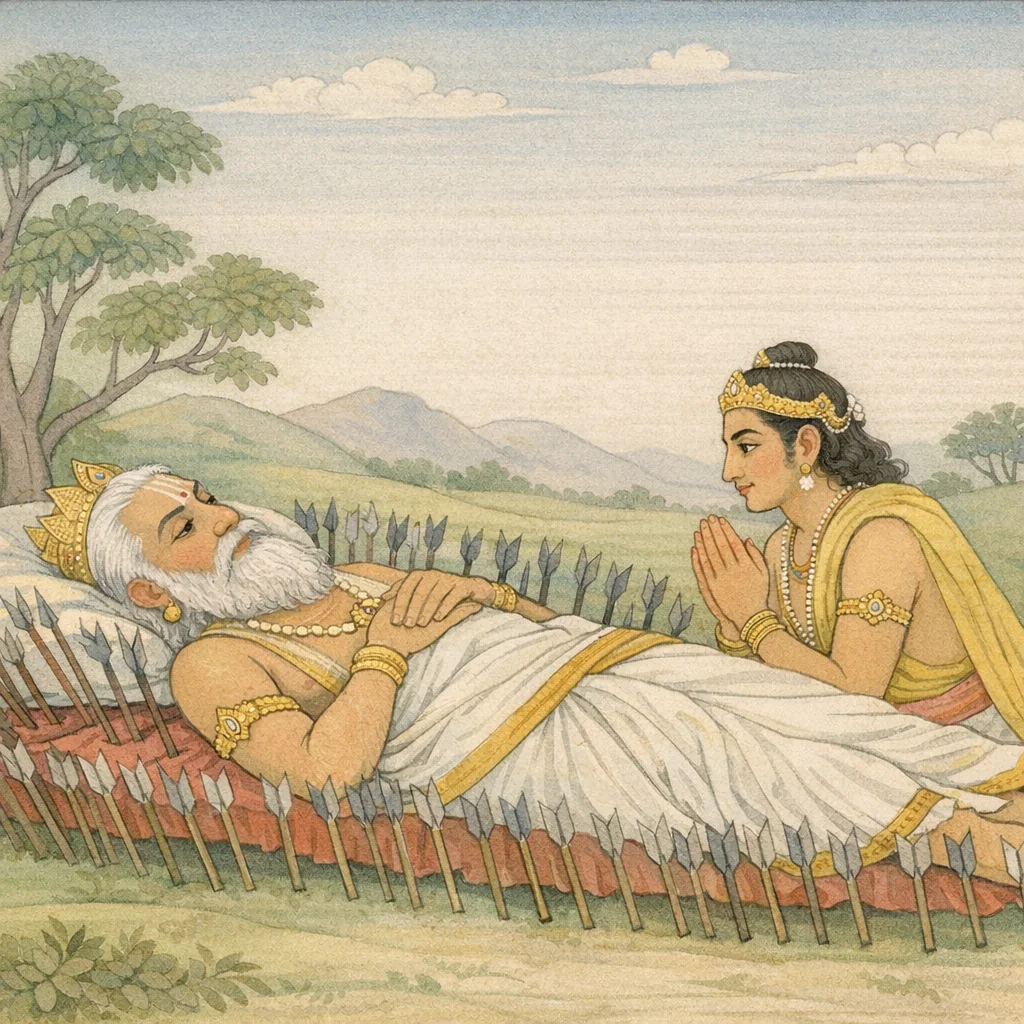
Yudhiṣṭhira asks by what mode of conduct (vṛtta) an informed king can attain beneficial aims with ease, both in this world and after death. Bhīṣma answers by presenting a compact catalogue described as a set of thirty-six virtues, articulated through paired prescriptions and prohibitions. The chapter emphasizes: non-harsh dharmic practice; balanced pursuit of artha and kāma without arrogance; pleasant but non-impoverishing speech; courage without boasting; generosity without indiscriminate giving; alliance-making without dependence on ignoble agents; avoidance of conflict with kin; operational efficiency without oppression; truth and discretion in counsel; careful administration of punishment only after examination; secrecy of strategic deliberation; non-naïve trust (especially toward harmful actors); disciplined domestic conduct; moderation in sensuality and consumption; honoring elders and teachers without deceit; worship without ostentation; competence with awareness of timing; pacification and beneficence without ulterior exploitation; controlled force applied with understanding; decisive neutralization of threats; anger regulated rather than impulsive; and firmness toward aggressors without misplaced softness. The unit closes with Bhīṣma’s warning that deviation produces severe insecurity, and Vaiśaṃpāyana notes Yudhiṣṭhira’s acceptance and enactment of the instruction.
Chapter Arc: भीष्म युधिष्ठिर के सामने राजधर्म का कठोर यथार्थ खोलते हैं—राजा को अपराधियों के भेद जानने होंगे, क्योंकि दण्ड का अज्ञान ही राज्य को भीतर से खा जाता है। → वह अपराधियों के प्रकार (मत्त, उन्मत्त, दस्यु आदि) और शासन-व्यवहार की सूक्ष्मता की ओर बढ़ते हैं; फिर राजा के लिए गुणों की दीर्घ सूची रखते हैं—धर्म, अर्थ, काम—तीनों का संतुलन, पर साथ ही संयम, विनय, दया, उदारता, सत्य, और व्यवहार-कौशल। → भीष्म का निर्णायक उपदेश: ‘षट्त्रिंशत् गुणों’ से युक्त राजा ही प्रजा का रक्षक बनता है—धर्म का आचरण करे पर कटु न बने; अर्थ साधे पर लोभी न हो; काम भोगे पर उन्मत्त न हो; दान दे पर अपात्र को नहीं; शूर हो पर डींग नहीं; साहसी हो पर निष्ठुर नहीं; ईर्ष्या-रहित होकर गृह-रक्षा करे और स्त्रियों/भोगों में अति न करे। → उपदेश को आचरण-निर्देश में बाँधकर भीष्म निष्कर्ष देते हैं: राज्य में स्थित रहकर यदि राजा इन गुणों का पालन करे तो इसी लोक में कल्याण पाता है और परलोक में स्वर्ग-प्रतिष्ठा।
Shlokas
Verse 1
(दाक्षिणात्य अधिक पाठके १३१६ श्लोक मिलाकर कुल ११६६ “लोक हैं।) > मत्त, उन्मत्त आदि दस प्रकारके अपराधियोंके नाम इस प्रकार हैं--१-मत्त, २-उन्मत्त, ३-दस्यु, ४-तस्कर, ५-प्रतारक, ६-शठ, ७-लम्पट, ८-जुआरी, ९-कृत्रिम लेखक (जालिया) और १०-घूसखोर। ३. काम, क्रोध, लोभ, मोह, मद और मात्सर्य--इन छ: आन्तरिक शत्रुओंके समुदायको षड्वर्ग कहते हैं। इनको पूर्णरूपसे जीत लेनेवाला नरेश ही सर्वत्र विजयी होता है। २. श्रोत्र, त्वचा, नेत्र, रसना और प्राण--इन पाँच इन्द्रियोंके समूहको ही पञ्चवर्ग कहते हैं। इन सबको क्रमशः शब्द, स्पर्श, रूप, रस और गन्ध--इन विषयोंमें आसक्त न होने देना ही इनपर विजय पाना है। ३. आखेट, जूआ, दिनमें सोना, दूसरोंकी निन््दा करना, स्त्रियोंमें आसक्त होना, मद्य पीना, नाचना, गाना, बाजा बजाना और व्यर्थ घूमना--से कामजनित दस दोष हैं, जिनपर राजाको विजय पाना चाहिये। इनको सर्वथा त्याग देना ही इनपर विजय पाना है। ४. चुगली, साहस, द्रोह, ईर्ष्या, दोषदर्शन, अर्थदूषण, वाणीकी कठोरता और दण्डकी कठोरता--ये क्रोधसे उत्पन्न होनेवाले आठ दोष राजाके लिए त्याज्य हैं। ५, धर्म, अर्थ और कामको अथवा उत्साहशक्ति, प्रभुशक्ति और मन्त्रशक्तिको त्रिवर्ग कहते हैं। ६. मन््त्री, राष्ट्र, दुरग, कोष और दण्ड--ये पाँच ही अपने और शत्रुवर्गके मिलाकर दस वर्ग कहलाते हैं। इनकी पूरी जानकारी रखनेपर राजाको अपने और शत्रुपक्षके बलाबलका पूर्ण ज्ञान होता है। सप्ततितमो< ध्याय: राजाको इहलोक और परलोकमें सुखकी प्राप्ति करानेवाले छत्तीस गुणोंका वर्णन युधिछिर उवाच केन वृत्तेन वृत्तज्ञ वर्तमानो महीपति: । सुखेनार्थान् सुखोदर्कानिह च प्रेत्य चाप्तुयात्,युधिष्ठिरने पूछा--आचारके ज्ञाता पितामह! किस प्रकारका आचरण करनेसे राजा इहलोक और परलोकमें भी भविष्यमें सुख देनेवाले पदार्थोको सुगमतापूर्वक प्राप्त कर सकता है?
Yudhiṣṭhira said: “O grandsire, knower of right conduct—by what manner of living and disciplined behavior can a king, abiding in proper conduct, readily obtain those aims that yield happiness here in this world and also after death in the next?”
Verse 2
भीष्म उवाच अयं गुणानां षट्त्रिंशत्षट्त्रिंशद्गुणसंयुत: । यान् गुणांस्तु गुणोपेत: कुर्वन् गुणमवाप्रुयात्,भीष्मजीने कहा--राजन्! दया और उदारता आदि गुणोंसे युक्त राजा जिन गुणोंको आचरणमें लाकर उत्कर्ष लाभ कर सकता है, वे छत्तीस प्रकारके गुण हैं। राजाको चाहिये कि वह इन छत्तीस गुणोंसे सम्पन्न होनेकी चेष्टा करे
Bhishma said: O King, these are the thirty-six virtues—thirty-six qualities with which one should be endowed. A ruler who is himself furnished with virtue, and who puts these virtues into practice, attains excellence and true merit through them.
Verse 3
चरेद् धर्मानकटुको मुज्चेत् स्नेह न चास्तिक: । अनुशंसश्चरेदर्थ चरेत् काममनुद्धत:,(अब मैं क्रमश: उन गुणोंका वर्णन करता हूँ) १-धर्मका आचरण करे, किंतु कटुता न आने दे। २-आस्तिक रहते हुए दूसरोंके साथ प्रेमका बर्ताव न छोड़े। ३-क्रूरताका आश्रय लिये बिना ही अर्थ-संग्रह करे। ४-मर्यादाका अतिक्रमण न करते हुए ही विषयोंको भोगे
Bhishma said: One should practice dharma without letting harshness enter one’s conduct. While remaining a believer in the sacred order, one should not abandon affectionate dealings with others. One should pursue wealth without resorting to cruelty, and enjoy legitimate pleasures without overstepping propriety—thus keeping one’s life balanced by restraint and goodwill.
Verse 4
प्रियं ब्रयादकृपण: शूर: स्यादविकत्थन: । दाता नापात्रवर्षी स्यात् प्रगल्भ: स्यादनिष्ठर:
Bhīṣma said: “A noble person should speak what is pleasing and be free from miserly narrowness. He should be courageous yet not boastful. He should be generous, but not one who pours gifts upon the unworthy. He should be confident and capable in action, yet never harsh or cruel.”
Verse 5
५-दीनता न लाते हुए ही प्रिय भाषण करे। ६-शूरवीर बने, किंतु बढ़-बढ़कर बातें न बनावे। ७-दान दे, परंतु अपात्रको नहीं। ८-साहसी हो, किंतु निष्ठर न हो ।। संदधीत न चानार्यविंगृह्नीयान्न बन्धुभि: । नाभक्तं चारयेच्चारं कुर्यात् कार्यमपीडया,९-दुष्टोंके साथ मेल न करे। १०-बन्धुओंके साथ लड़ाई-झगड़ा न ठाने। ११-जो राजभक्त न हो, ऐसे गुप्तचरसे काम न ले। १२-किसीको कष्ट पहुँचाये बिना ही अपना कार्य करे
Bhishma said: “Let him speak what is pleasing without sinking into abjectness. Let him be a hero, yet not given to boastful talk. Let him give in charity, but not to the unworthy. Let him be bold, yet not hard-hearted. Let him form alliances, but never with the ignoble. Let him not pick quarrels with his own kinsmen. Let him not employ as a spy one who is not devoted to the king. And let him accomplish his aims without causing distress—carrying out necessary work without oppressing others.”
Verse 6
अर्थ ब्रूयान्न चासत्सु गुणान् ब्रूयान्न चात्मन: । आदद्यान्न च साधुभ्यो नासत्पुरुषमाश्रयेत्
Bhīṣma said: “One should speak what is meaningful and true, and should not praise virtues where they do not exist—nor indulge in self-glorification. One should not take from the good and righteous, and one should never seek support or refuge in a wicked person.”
Verse 7
१३-दुष्टोंस अपना अभीष्ट कार्य न कहे। १४-अपने गुणोंका स्वयं ही वर्णन न करे। १५- श्रेष्ठ पुरुषोंस उनका धन न छीने। १६-नीच पुरुषोंका आश्रय न ले ।। नापरीक्ष्य नयेद् दण्डं न च मन्त्र प्रकाशयेत् । विसूजेन्न च लुब्धेभ्यो विश्वसेन्नापकारिषु,१७-अपराधकी अच्छी तरह जाँच पड़ताल किये बिना ही किसीको दण्ड न दे। १८- गुप्त मन्त्रणाको प्रकट न करे। १९-लोभियोंको धन न दे। २०-जिन्होंने कभी अपकार किया हो, उनपर विश्वास न करे
Bhishma said: One should not impose punishment without first conducting a careful examination. Nor should one disclose confidential counsel. One should not hand over resources to the greedy, and one should not place trust in those who have previously done harm. These are practical restraints that protect dharma by preventing rash justice, political ruin through leaked strategy, and self-destruction through misplaced generosity and trust.
Verse 8
अर्नीर्षर्गुप्तदार: स्याच्चोक्ष: स्थादघृणी नृप: । स्त्रिय: सेवेत नात्यर्थ मृष्ट भुज्जीत नाहितम्,२१-ईर्ष्यारहित होकर अपनी स्त्रीकी रक्षा करे। २२-राजा शुद्ध रहे; किंतु किसीसे घृणा न करे। २३-स्त्रियोंका अधिक सेवन न करे। २४-शुद्ध और स्वादिष्ट भोजन करे, परंतु अहितकर भोजन न करे
Bhīṣma said: “A king should be free from jealousy and should protect and guard his wife. He should remain pure in conduct, yet bear no hatred toward anyone. He should not indulge excessively in the company of women. He should eat clean and wholesome, pleasant food, but never what is harmful.”
Verse 9
अस्तब्ध: पूजयेन्मान्यान् गुरून् सेवेदमायया । अर्चेद् देवानदम्भेन श्रियमिच्छेदकुत्सिताम्,२५-उद्दण्डता छोड़कर विनीतभावसे माननीय पुरुषोंका आदर-सत्कार करे। २६- निष्कपटभावसे गुरु-जनोंकी सेवा करे। २७-दम्भहीन होकर देवताओंकी पूजा करे। २८- अनिन्दित उपायसे धन-सम्पत्ति पानेकी इच्छा करे
Bhīṣma teaches that one should abandon arrogance and, with humility, honor those worthy of respect. One should serve one’s teachers without deceit, worship the gods without ostentation, and seek prosperity only through blameless, untainted means. In this way, social conduct, spiritual practice, and material aspiration are all brought under the discipline of dharma.
Verse 10
सेवेत प्रणयं हित्वा दक्ष: स्यान्न त्वकालवित् । सान्त्वयेन्न च मोक्षाय अनुगह्नन्न चाक्षिपेत्,२९-हठ5 छोड़कर प्रीतिका पालन करे। ३०-कार्य-कुशल हो, किंतु अवसरके ज्ञानसे शून्य न हो। ३१-केवल पिण्ड छुड़ानेके लिये किसीको सान्त्वना या भरोसा न दे। ३२- किसीपर कृपा करते समय आक्षेप न करे
Bhishma said: One should maintain proper relations without becoming enslaved by personal attachment. Let him be competent in action, yet not ignorant of the right moment. He should not offer consolation or assurances merely to rid himself of an obligation. And when showing favor or granting help, he should not do so with reproach or insulting insinuation.
Verse 11
प्रहरेन्न त्वविज्ञाय हत्वा शत्रूनू न शोचयेत् । क्रोधं कुर्यान्न चाकस्मान्मृदुः स्यान्नापकारिषु,३३-बिना जाने किसीपर प्रहार न करे। ३४-शत्रुओंको मारकर शोक न करे। ३५- अकस्मात् किसीपर क्रोध न करे तथा ३६-कोमल हो, परंतु अपकार करनेवालोंके लिये नहीं
Bhīṣma said: One should not strike without first understanding the matter. Having slain enemies, one should not lapse into grief. One should not give way to sudden, unprovoked anger; and one should be gentle—yet not toward those who do harm.
Verse 12
एवं चरस्व राज्यस्थो यदि श्रेय इहेच्छसि । अतोडन्यथा नरपतिर्भयमृत्छत्यनुत्तमम्,युधिष्ठिर! यदि इस लोकमें कल्याण चाहते हो तो राज्यपर स्थित रहकर ऐसा ही बर्ताव करो; क्योंकि इसके विपरीत आचरण करनेवाला राजा बड़ी भारी विपत्ति या भयमें पड़ जाता है
Bhīṣma said: “If you desire welfare in this very world, then remain established in kingship and conduct yourself in this manner. For a king who acts otherwise falls into unsurpassed fear and great calamity, O Yudhiṣṭhira.”
Verse 13
इति सर्वान् गुणानेतान् यथोक्तान् यो<नुवर्तते । अनुभूयेह भद्राणि प्रेत्य स्वर्गे महीयते
Bhīṣma said: “Thus, whoever lives in accordance with all these virtues as they have been taught, enjoys auspicious blessings here in this very life; and after death, he is honored and exalted in heaven.”
Verse 14
जो राजा यथार्थरूपसे बताये गये इन सभी गुणोंका अनुवर्तन करता है, वह इस जगत्में कल्याणका अनुभव करके मृत्युके पश्चात् स्वर्गलोकमें प्रतिष्ठित होता है ।। वैशम्पायन उवाच इदं वच: शान्तनवस्य शुश्रुवान् युधिष्ठिर: पाण्डवमुख्यसंवृत: । तदा ववन्दे च पितामहं नृपो यथोक्तमेतच्च चकार बुद्धिमान्,वैशम्पायनजी कहते हैं--जनमेजय! पितामह शान्तनुनन्दन भीष्मका यह उपदेश सुनकर पाण्डवोंसे और प्रधान राजाओंसे घिरे हुए बुद्धिमान् राजा युधिष्ठिरने उन्हें प्रणाम किया और उन्होंने जैसा बताया था, वैसा ही किया
Vaiśampāyana said: Having heard these words of Śāntanu’s son (Bhīṣma), King Yudhiṣṭhira—surrounded by the foremost of the Pāṇḍavas and by leading kings—then bowed to the grandsire. Wise in judgment, he acted exactly as Bhīṣma had instructed. Thus, a ruler who follows the stated virtues experiences welfare in this world and, after death, attains a firm place in heaven.
Verse 69
इस प्रकार श्रीमह्याभारत शान्तिपर्वके अन्तर्गत राजधर्मानुशासनपर्वमें उनह्तत्तरवाँ अध्याय पूरा हुआ
Thus concludes the seventy-first chapter within the Rājadharmānuśāsana section of the Śānti Parva of the revered Mahābhārata. The narrative marker signals a pause in Bhīṣma’s instruction on the king’s duties—framing governance as a disciplined ethical practice grounded in dharma.
Verse 70
इति श्रीमहाभारते शान्तिपर्वणि राजधर्मानुशासनपर्वणि सप्ततितमो5ध्याय: ।। ७० || इस प्रकार श्रीमह्याभारत शान्तिपर्वके अन्तर्गत राजधमानुशासनपर्वमें सत्तरवाँ अध्याय पूरा हुआ
Vaiśampāyana said: “Thus, in the Śrī Mahābhārata, within the Śānti Parvan, in the section on the instruction of royal duties (Rājadharmānuśāsana Parvan), the seventieth chapter is concluded.”
Frequently Asked Questions
How a ruler can secure welfare and stability through conduct-based governance—balancing dharma, artha, and kāma—while avoiding administrative harms such as harshness, indiscretion, and naïve trust.
Rulership is sustained by disciplined virtues operationalized as procedures: examine before punishing, keep counsel confidential, give with discernment, speak pleasantly without self-deception, and apply firmness proportionately against aggressors.
Yes in functional form: Bhīṣma states that following these virtues yields prosperity here and honor in heaven after death, while deviation leads to severe fear and insecurity; Vaiśaṃpāyana adds that Yudhiṣṭhira accepted and implemented the counsel.