Adhyaya 55
Adhyāya 55 — Yudhiṣṭhira’s Hesitation and Bhīṣma’s Authorization of Inquiry (Rājadharma Prelude)
Upa-parva: Rājadarmānushāsana (Instruction on Royal Dharma) — Contextual Unit for Adhyāya 55
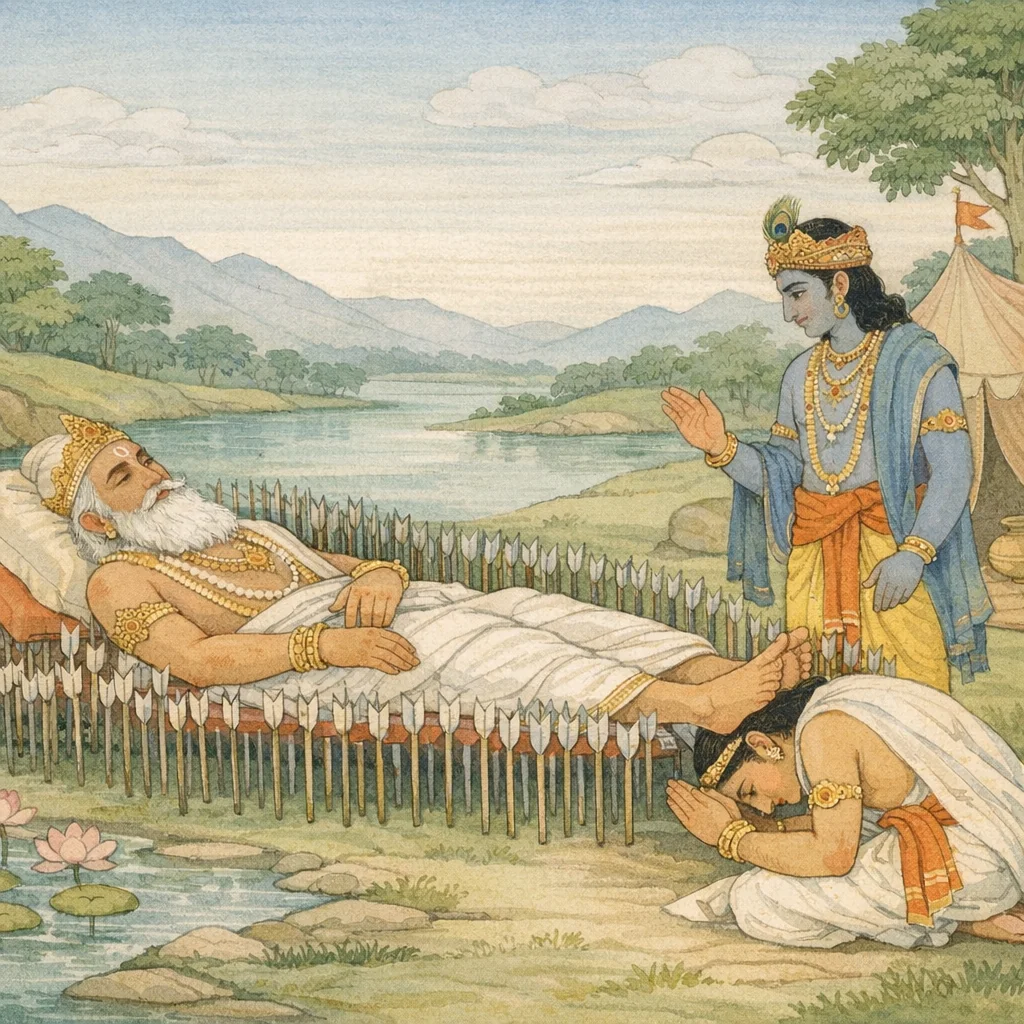
Vaiśaṃpāyana reports a transition into formal dharma instruction: Bhīṣma signals readiness to expound dharma, emphasizing steadiness of speech and mind and attributing the occasion to Govinda’s (Kṛṣṇa’s) grace. He repeatedly characterizes Yudhiṣṭhira as exemplary—truthful, restrained, devoted to learning and worship, hospitable, generous, and unwavering in righteousness even under desire, fear, anger, or material incentive—thereby establishing the student’s fitness for instruction. Kṛṣṇa then explains Yudhiṣṭhira’s reluctance as arising from shame and fear of condemnation due to the destructive consequences of the conflict, including the killing of revered elders and kin. Bhīṣma responds with a normative clarification: as brāhmaṇa-dharma emphasizes study, giving, and austerity, so kṣatriya-dharma includes risking the body in battle; even when opponents are relatives or teachers who have deviated into wrongful conduct, lawful engagement in a duly entered battle is presented as consistent with duty. The chapter closes with Yudhiṣṭhira approaching with humility, taking Bhīṣma’s feet; Bhīṣma blesses him, seats him, and invites questions without fear—formally opening the didactic sequence that follows.
Chapter Arc: शरशय्या पर पड़े भीष्म धर्म-उपदेश के लिए तत्पर हैं, पर धर्मराज युधिष्ठिर लज्जा और शाप-भय से समीप आने का साहस नहीं कर पा रहे—यह मौन ही अध्याय का पहला प्रश्न बन जाता है। → श्रीकृष्ण युधिष्ठिर की संकोचग्रस्त अवस्था को भीष्म के सामने रखते हैं और संकेत देते हैं कि धर्म-ज्ञान का द्वार तभी खुलेगा जब युधिष्ठिर स्वयं प्रश्न करेंगे; भीष्म भी युधिष्ठिर की धर्मनिष्ठा और राजर्षित्व का स्मरण कर उन्हें बुलाने का आग्रह करते हैं। → युधिष्ठिर आगे बढ़कर भीष्म के चरण पकड़ते हैं; भीष्म उन्हें मस्तक पर स्पर्श/आशीर्वाद देकर बैठने को कहते हैं और स्पष्ट आदेश देते हैं—‘निर्भय होकर, एक-एक करके धर्म पूछो; मैं अखिल धर्म कहूँगा।’ → भीष्म की स्वीकृति और श्रीकृष्ण की मध्यस्थता से युधिष्ठिर का भय ढलता है; संवाद की विधि तय होती है—प्रश्न-उत्तर के क्रम में धर्म का विस्तृत निरूपण आरम्भ होने को तैयार है। → भीष्म का अंतिम संकेत—‘मैं स्वस्थ हूँ, अब पूछो’—अगले अध्याय में युधिष्ठिर के प्रथम प्रश्न और शान्तिपर्व के दीर्घ धर्मोपदेश का द्वार खोल देता है।
Shlokas
Verse 1
/ अपन का छा | अफड-एक्रा् पञ्चपज्चाशत्तमो< ध्याय: भीष्मका युधिष्ठटिरके गुणकथनपूर्वक उनको प्रश्न करनेका आदेश देना, श्रीकृष्णका उनके लज्जित और भयभीत होनेका कारण बताना और भीष्मका आश्वासन पाकर युधिष्ठिरका उनके समीप जाना वैशम्पायन उवाच अथाब्रवीन्महातेजा वाक््यं कौरवनन्दन: । हन्त धर्मान् प्रवक्ष्यामि दृढे वाइमनसी मम
Vaiśampāyana said: Then the mighty one, the delight of the Kurus, spoke these words: “Come then—now I shall expound the principles of dharma, for my resolve in this matter is firm.”
Verse 2
युधिष्िरस्तु धर्मात्मा मां धर्माननुपच्छतु । एवं प्रीतो भविष्यामि धर्मान् वक्ष्यामि चाखिलान्,“धर्मात्मा युधिष्ठिर मुझसे एक-एक करके धर्मोंके विषयमें प्रश्न करें, इससे मुझे प्रसन्नता होगी और मैं सम्पूर्ण धर्मॉंका उपदेश कर सकूँगा
Vaiśaṃpāyana said: “Let the righteous-souled Yudhiṣṭhira question me, one dharma after another. Thus I shall be pleased, and I will expound the whole of dharma in its entirety.”
Verse 3
यस्मिन् राजर्षभे जाते धर्मात्मनि महात्मनि | अद्ृष्यन्नषय: सर्वे स मां पृच्छतु पाण्डव:,“जिन राजर्षिशिरोमणि धर्मपरायण महात्मा युधिष्ठिरका जन्म होनेपर सभी महर्षि हर्षसे खिल उठे थे, वे ही पाण्डुपुत्र मुझसे प्रश्न करें
Vaiśampāyana said: “When that bull among kings was born—that great-souled, righteous one—all the sages rejoiced. Let that son of Pāṇḍu now question me.”
Verse 4
सर्वेषां दीप्तपशसां कुरूणां धर्मचारिणाम् | यस्य नास्ति सम:कश्रित् स मां पृच्छतु पाण्डव:
Vaiśampāyana said: “Among all the Kuru men of blazing energy who walk in righteousness, let that Pāṇḍava who has no equal question me.”
Verse 5
“जिनके यशका प्रताप सर्वत्र छा रहा है, उन समस्त धर्माचारी कौरवोंमें जिनकी समानता करनेवाला कोई नहीं है, वे पाण्डुपुत्र युधिष्ठिर मुझसे प्रश्न करें ।। धृतिर्दमो ब्रह्मचर्य क्षमा धर्मश्न नित्यदा । यस्मिन्नोजश्न तेजश्व स मां पृच्छतु पाण्डव:,“जिनमें धैर्य, इन्द्रियसंयम, ब्रह्मचर्य, क्षमा, धर्म, ओज और तेज सदा विद्यमान रहते हैं, वे पाण्डुपुत्र युधिष्ठिर मुझसे प्रश्न करें
Vaiśampāyana said: “Let that Pāṇḍava—Yudhiṣṭhira—in whom steadfastness, self-restraint, celibate discipline, forbearance, and dharma are ever present, and in whom vigor and spiritual radiance abide, put his questions to me. His fame and moral power spread everywhere; among the righteous Kauravas none equals him—therefore let him inquire.”
Verse 6
सम्बन्धिनो5तिथीन् भृत्यान् संश्रितांश्वैव यो भृूशम् । सम्मानयति सत्कृत्य स मां पृच्छतु पाण्डव:,“जो सम्बन्धियों, अतिथियों, भृत्यों तथा शरणागतोंका सदा सत्कारपूर्वक विशेष सम्मान करते हैं, वे पाण्डुपुत्र युधिष्ठिर मुझसे प्रश्न करें
Vaiśampāyana said: “Let that Pāṇḍava—he who continually honors his kinsmen, guests, servants, and those who have sought refuge, showing them special respect with due hospitality—question me.”
Verse 7
सत्यं दानं तप: शौर्य शान्तिर्दाक्ष्यमसम्भ्रम: । यस्मिन्नेतानि सर्वाणि स मां पृच्छतु पाण्डव:,“जिनमें सत्य, दान, तप, शूरता, शान्ति, दक्षता तथा असम्भ्रम (स्थिरचित्तता)--ये समस्त सद्गुण सदा मौजूद रहते हैं, वे पाण्डुपुत्र युधिष्ठिर मुझसे प्रश्न करें
Vaiśampāyana said: “Let that Pāṇḍava question me—the one in whom truthfulness, generosity, austerity, valor, calmness, competence, and unshaken composure are all found together.”
Verse 8
यो न कामाज्न संरम्भान्न भयाज्नार्थकारणात् । कुर्यादधर्म धर्मात्मा स मां पृच्छतु पाण्डव:,“जो न तो कामनासे, न क्रोधसे, न भयसे और न किसी स्वार्थके ही लोभसे अधर्म करते हैं, वे धर्मात्मा पाण्डुपुत्र युधिष्ठिर मुझसे प्रश्न करें
Vaiśampāyana said: “Let that Pāṇḍava—steadfast in dharma—question me: the one who would not commit adharma out of desire, out of rash anger, out of fear, or for the sake of self-interest.”
Verse 9
सत्यनित्य: क्षमानित्यो ज्ञाननित्योडतिथिप्रिय: । यो ददाति सतां नित्यं स मां पृच्छतु पाण्डव:,“जिनमें सदा ही सत्य, सदा ही क्षमा और सदा ही ज्ञानकी स्थिति है, जो निरन्तर अतिथिसत्कारके प्रेमी हैं और सत्पुरुषोंको सदा दान देते रहते हैं, वे पाण्डुपुत्र युधिष्ठिर मुझसे प्रश्न करें
Vaiśampāyana said: “Let that Pāṇḍava question me—he in whom truth is ever present, in whom forgiveness is constant, in whom knowledge is steady; who delights in honoring guests, and who continually gives gifts to the virtuous.”
Verse 10
इज्याध्ययननित्यस्य धर्मे च निरत: सदा । क्षान्त: श्रुतरहस्यश्न स मां पृच्छतु पाण्डव:
Vaiśampāyana said: “Let that Pāṇḍava question me—he who is constant in worship and study, ever devoted to dharma, patient in temper, and one who understands the hidden purport of what he has heard.”
Verse 11
भगवान् श्रीकृष्ण बोले--प्रजानाथ! धर्मराज युधिष्ठिर बहुत लज्जित हैं, वे शापके भयसे डरे होनेके कारण आपके निकट नहीं आ रहे हैं
Bhagavān Śrī Kṛṣṇa said: “O lord of the people! King Yudhiṣṭhira, the upholder of dharma, is deeply ashamed. Fearing a curse, he is frightened and therefore does not come near you.”
Verse 12
लोकस्य कदनं कृत्वा लोकनाथो विशाम्पते । अभिशापभयादू् भीतो भवन्तं नोपसर्पति,प्रजापालक भीष्म! ये लोकनाथ युधिष्ठिर जगत्का संहार करके शापके भयसे त्रस्त हो उठे हैं; इसीलिये आपके निकट नहीं आते हैं
Vāyu said: “O lord of the people, having brought ruin upon the world, the ruler of the realm is now frightened by the fear of a curse; therefore he does not approach you. O Bhīṣma, protector of the subjects—King Yudhiṣṭhira, shaken by the dread of incurring a curse after the destruction wrought in the world, keeps away from your presence.”
Verse 13
“जिन्होंने शास्त्रोंके रहस्यका श्रवण किया है, जो सदा ही यज्ञ, स्वाध्याय और धर्ममें लगे रहनेवाले तथा क्षमाशील हैं, वे पाण्डुनन्दन युधिष्ठिर मुझसे प्रश्न करें” ।। वायुदेव उवाच लज्जया परयोपेतो धर्मराजो युधिष्ठिर: । अभिशापभयाद् भीतो भवन्तं नोपसर्पति,पूज्यान् मान्यांश्न भक्तांश्व॒ गुरून् सम्बन्धिबान्धवान् | अर्घहनिषुभिर्भित्त्वा भवन्तं नोपसर्पति पूजनीय, माननीय गुरुजनों, भक्तों तथा अर्घ्य आदिके द्वारा सत्कार करने योग्य सम्बन्धियों एवं बन्धु-बान्धवोंका बाणोंद्वारा भेदन करके भयके मारे ये आपके पास नहीं आ रहे हैं
Vāyudeva said: “Dharma-rāja Yudhiṣṭhira, overcome with deep shame, and frightened by the fear of a curse, does not approach you. Having pierced—by his arrows—those who deserve worship and honor: revered elders, devoted followers, teachers, and even kinsmen and relatives worthy of respectful offerings, he now, out of fear, does not come near you.”
Verse 14
भीष्म उवाच ब्राह्मणानां यथा धर्मो दानमध्ययनं तप: । क्षत्रियाणां तथा कृष्ण समरे देहपातनम्,भीष्मजीने कहा--श्रीकृष्ण! जैसे दान, अध्ययन और तप ब्राह्मणोंका धर्म है, उसी प्रकार समरभूमिमें शत्रुओंके शरीरको मार गिराना क्षत्रियोंका धर्म है
Bhishma said: “O Krishna, just as the dharma of Brahmins consists in giving, studying sacred knowledge, and practicing austerity, so too the dharma of Kshatriyas is, on the battlefield, to strike down the enemy—laying bodies low in war.”
Verse 15
पितृन् पितामहान् भ्रातृन् गुरून् सम्बन्धिबान्धवान् | मिथ्याप्रवृत्तान् यः संख्ये निहन्याद् धर्म एव सः,जो असत्यके मार्गपर चलनेवाले पिता (ताऊ-चाचा), बाबा, भाई, गुरुजन, सम्बन्धी तथा बन्धु-बान्धवोंको संग्राममें मार डालता है, उसका वह कार्य धर्म ही है
Bhishma said: Even if they are one’s own fathers and forefathers, brothers, teachers, and other relatives and kinsmen—when they have taken to a false and unrighteous course—whoever slays them in battle does, in that very act, what is truly dharma.
Verse 16
तव प्रसादाद् गोविन्द भूतात्मा हासि शाश्वतः । वैशम्पायनजी कहते हैं--राजन्! श्रीकृष्णकी बात सुनकर कुरुकुलका आनन्द बढ़ानेवाले महातेजस्वी भीष्मजीने कहा--“गोविन्द! आप सम्पूर्ण भूतोंके सनातन आत्मा हैं। आपके प्रसादसे मेरी वाक्शक्ति सुदृढ़ है और मन भी स्थिर हो गया है; अतः मैं समस्त धर्मोका प्रवचन करूँगा,समयत्यागिनो लुब्धान् गुरूनपि च केशव । निहन्ति समरे पापान् क्षत्रियो यः: स धर्मवित् केशव! जो क्षत्रिय लोभवश धर्ममर्यादाका उल्लंघन करनेवाले पापाचारी गुरुजनोंका भी समराड्रणमें वध कर डालता है, वह अवश्य ही धर्मका ज्ञाता है
Vaiśampāyana said: Hearing Kṛṣṇa’s words, Bhīṣma—radiant and a source of joy to the Kuru line—spoke: “Govinda, you are the eternal Self of all beings. By your grace my speech has become firm and my mind steady; therefore I shall expound the whole of dharma. O Keśava, that kṣatriya who, in battle, strikes down even teachers when they have fallen into sin—having abandoned right conduct and become driven by greed—is truly a knower of dharma.”
Verse 17
यो लोभान्न समीक्षेत धर्मसेतुं सनातनम् | निहन्ति यस्तं समरे क्षत्रियो वै स धर्मवित्,जो लोभवश सनातन धर्ममर्यादाकी ओर दृष्टिपात नहीं करता, उसे जो क्षत्रिय समरभूमिमें मार गिराता है, वह निश्चय ही धर्मज्ञ है
Bhishma said: He who, out of greed, does not even look toward the eternal bridge of dharma—when such a man is struck down on the battlefield by a Kshatriya, that Kshatriya is indeed to be regarded as a knower of dharma.
Verse 18
लोहितोदां केशतृणां गजशैलां ध्वजद्रुमाम् । महीं करोति युद्धेषु क्षत्रियो यः स धर्मवित्,जो क्षत्रिय युद्धभूमिमें रक्तरूपी जल, केशरूपी तृण, हाथीरूपी पर्वत और ध्वजरूपी वक्षोंसे युक्त खूनकी नदी बहा देता है, वह धर्मका ज्ञाता है
Bhishma said: The Kshatriya who, in battles, turns the earth into a dreadful landscape—where blood is like water, severed hair like grass, elephants like mountains, and banners like trees—such a warrior is called a knower of dharma.
Verse 19
आहूतेन रणे नित्यं योद्धव्यं क्षत्रबन्धुना । धर्म्य स्वर्ग्य च लोक्यं च युद्ध हि मनुरब्रवीत्,संग्राममें शत्रुके ललकारनेपर क्षत्रिय-बन्धुको सदा ही युद्धके लिये उद्यत रहना चाहिये। मनुजीने कहा है कि युद्ध क्षत्रियके लिये धर्मका पोषक, स्वर्गकी प्राप्ति करानेवाला और लोकमें यश फैलानेवाला है
Bhishma said: “When challenged in battle, a Kshatriya must always be ready to fight. Manu has declared that warfare, for a Kshatriya, is dharmic—upholding righteous duty—svargya—leading to heaven—and lokya—bringing honor and renown in this world.”
Verse 20
वैशम्पायन उवाच एवमुक्तस्तु भीष्मेण धर्मपुत्रो युधिष्ठिर: । विनीतवदुपागम्य तस्थौ संदर्शनेडग्रत:,वैशम्पायनजी कहते हैं--राजन्! भीष्मजीके ऐसा कहनेपर धर्मपुत्र युधिष्ठिर उनके पास जाकर एक विनीत पुरुषके समान उनकी दृष्टिके सामने खड़े हो गये
Vaiśampāyana said: Thus addressed by Bhishma, Dharma’s son Yudhiṣṭhira approached him with humility and stood before him within his sight.
Verse 21
अथास्य पादौ जग्राह भीष्मश्नापि ननन्द तम् | मूर्थ्नि चैनमुपाच्राय निषीदेत्यब्रवीत् तदा,फिर उन्होंने भीष्मजीके दोनों चरण पकड़ लिये। तब भीष्मजीने उन्हें आश्वासन देकर प्रसन्न किया और उनका मस्तक सूँघकर कहा--“बेटा! बैठ जाओ”
Then he clasped Bhishma’s feet in reverence. Bhishma, in turn, reassured him with affection; and, smelling his head as a gesture of paternal blessing, said at that moment, “Son, sit down.”
Verse 22
तमुवाचाथ गाड़ेयो वृषभ: सर्वधन्विनाम् । मां पृच्छ तात विश्रब्धं मा भैस्त्वं कुरुसत्तम
Then Gāḍeya—foremost among all archers—said to him: “Dear child, ask me freely and with confidence. Do not be afraid, O best of the Kurus.”
Verse 54
इस प्रकार श्रीमह्याभारत शान्तिपर्वके अन्तर्गत राजधमनुशासनपर्वमें श्रीकृष्ण- वाक्यविषयक चौवनवाँ अध्याय पूरा हुआ
Thus ends the fifty-fourth chapter, concerned with the words of Śrī Kṛṣṇa, within the Rājadharmānuśāsana section of the Śānti Parva of the revered Mahābhārata. This closing colophon signals the completion of a unit of instruction on righteous governance and conduct, framed through Kṛṣṇa’s counsel.
Verse 55
तत्पश्चात् सम्पूर्ण धनुर्धरोंमें श्रेष्ठ गड़ानन्दन भीष्मजीने उनसे कहा--“तात! मैं इस समय स्वस्थ हूँ, तुम मुझसे निर्भय होकर प्रश्न करो। कुरुश्रेष्ठी तुम भय न मानो” ।। इति श्रीमहाभारते शान्तिपर्वणि राजधर्मानुशासनपर्वणि युधिष्ठिरा श्वासने पञ्चपज्चाशत्तमो<ध्याय:
Thereafter, Bhishma—son of the Ganga and foremost among accomplished bowmen—addressed them: “Dear child, at this moment I am well. Question me without fear. O best of the Kurus, do not be afraid.” In the ethical setting of the Shanti Parva, this frames Bhishma’s readiness to instruct Yudhishthira in royal duty and righteous governance, urging fearless inquiry as the basis of dharmic learning.
Frequently Asked Questions
The dilemma is whether Yudhiṣṭhira, burdened by remorse for wartime destruction and the death of revered kin and teachers, can legitimately approach Bhīṣma for instruction—balancing personal shame against the ruler’s duty to seek dharma-guided governance.
The chapter teaches that disciplined inquiry into dharma is itself a royal obligation, and that kṣatriya duty—when lawfully undertaken—includes battle even under painful social entanglements, while still requiring humility, restraint, and accountability.
No explicit phalaśruti is stated in these verses; the meta-function is structural—legitimating the teacher-student setting and establishing interpretive authority for the larger Śānti-parva instruction on dharma and governance.