Adhyaya 51
Bhīṣma’s Hymn to Viṣṇu and Kṛṣṇa’s Criteria for Divine Self-Disclosure
Upa-parva: Rājadharmānuśāsana (Instruction on the Duties of Kings)
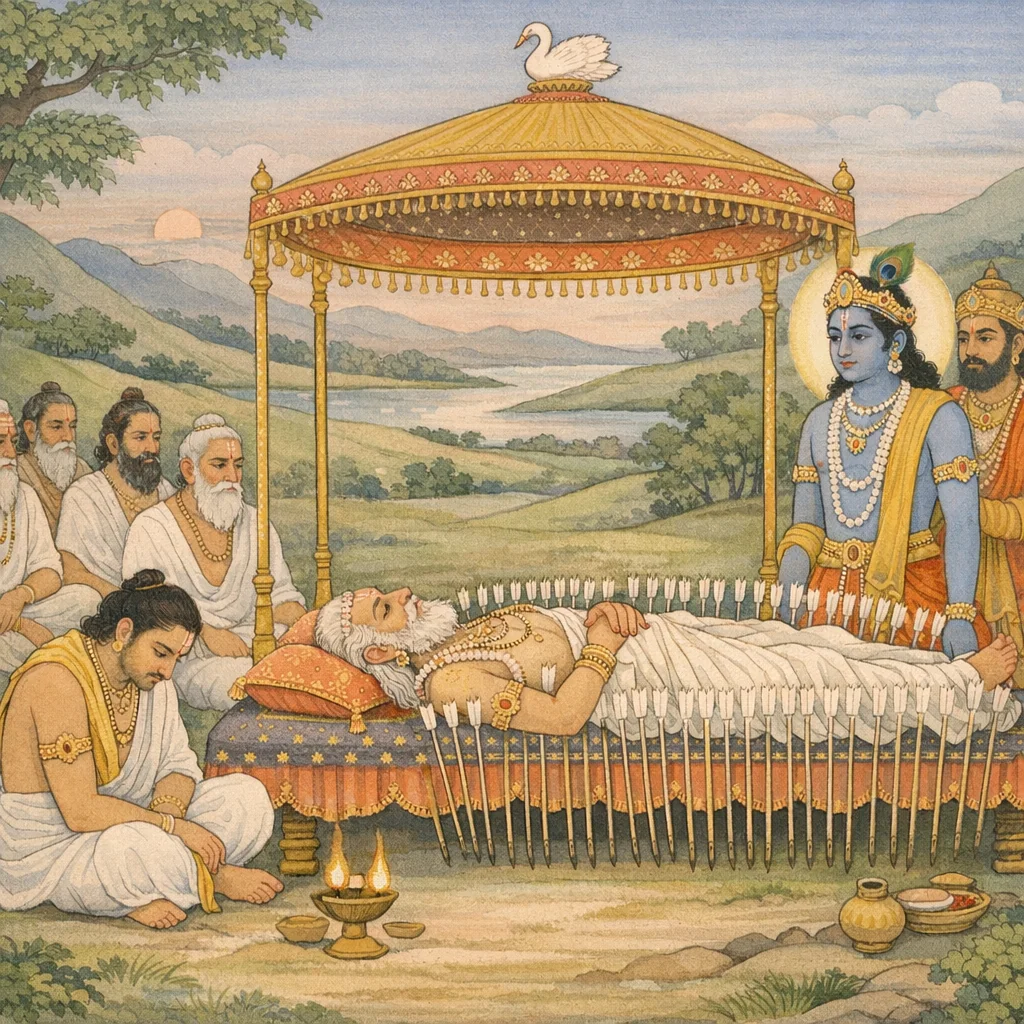
Vaiśaṃpāyana reports that Bhīṣma, after hearing Vāsudeva, raises his face and speaks with folded hands. Bhīṣma delivers a compact stotra identifying Viṣṇu/Kṛṣṇa as creator and dissolver, transcendent to the five elements, and the ultimate refuge across the three worlds. He describes a cosmic-body vision: heaven as the head, earth as the feet, directions as arms, the sun as the eye, and Indra established in prowess—an imagistic theology linking sovereignty and cosmic order. Bhīṣma then petitions the lotus-eyed deity to contemplate what is best for a surrendered devotee seeking an auspicious path. Kṛṣṇa replies that Bhīṣma’s supreme devotion is the cause of the revealed divine form and states a restriction: the self is not shown to the non-devotee, the insincere, the unrestrained, or the undisciplined. He affirms Bhīṣma’s qualifications—straightforwardness, restraint, austerity, truth, and generosity—and predicts Bhīṣma’s remaining lifespan and imminent ascent to non-returning realms when the sun turns northward. Kṛṣṇa adds that with Bhīṣma’s departure, knowledge would diminish; therefore all have gathered for dharma deliberation. He instructs Bhīṣma to speak to the grief-stricken Yudhiṣṭhira with discourse aligned to dharma, artha, and composed understanding, to remove sorrow and stabilize kingship.
Chapter Arc: शरशय्या पर पड़े भीष्म, युद्धोत्तर शोक से घिरे राजसभा के बीच, श्रीकृष्ण को साक्षात् परम कारण मानकर स्तुति आरम्भ करते हैं—मानो धर्म का द्वार खोलने से पहले देवत्व को प्रणाम। → भीष्म की वाणी में ब्रह्माण्ड-व्यापक कृष्ण का स्वरूप उभरता है—सृष्टि-प्रलय के अधिष्ठाता, विश्वकर्मा, अपवर्गदाता; साथ ही यह भी कि उनके सनातन रूप का दर्शन और उनकी शक्ति से वायु-मार्गों तक का निरोधन संभव है। स्तुति के भीतर एक आग्रह छिपा है: ‘मैं शरणागत भक्त हूँ—मुझे और जगत को कल्याण का मार्ग बताइए।’ → भीष्म का निवेदन निर्णायक रूप लेता है—वे स्वयं को कृष्ण-शरणागत भक्त घोषित कर, पुण्डरीकाक्ष से ‘श्रेय’ का आदेश/उपदेश माँगते हैं; और कृष्ण की ओर से प्रत्युत्तर में भीष्म की परा-भक्ति के कारण दिव्य-तत्त्व का प्रकाश/दर्शन स्वीकार किया जाता है, जिससे भीष्म की वाणी को धर्म-निर्णय का अधिकार मिलता है। → कृष्ण भीष्म की महत्ता स्थापित करते हैं—भीष्म के परलोकगमन के बाद ज्ञान-परम्परा का क्षय होगा; इसलिए वे आग्रह करते हैं कि भीष्म युधिष्ठिर को, जो स्वजन-शोक से आहत हैं, सत्य-संकल्पित, धर्मार्थ-समाधि-युक्त उपदेश दें ताकि उसका शोक शीघ्र दूर हो। → भीष्म को विधिवत ‘धर्मविवेचन’ का आदेश मिल चुका है—अब युधिष्ठिर के लिए राजधर्म का विस्तृत उपदेश आरम्भ होने वाला है।
Shlokas
Verse 1
/ अपना छा अकाल एकपज्चाशत्तमो<5 ध्याय: भीष्मके द्वारा श्रीकृष्णकी स्तुति तथा श्रीकृष्णका भीष्मकी प्रशंसा करते हुए उन्हें का लिये धर्मोपदेश करनेका आदेश वैशम्पायन उवाच श्रुत्वा तु वचनं भीष्मो वासुदेवस्य धीमतः । किंचिदुन्नाम्य वदनं प्राउ्जलिवॉाक्यमब्रवीत्,वैशम्पायनजी कहते हैं--राजन्! परम बुद्धिमान् वसुदेवनन्दन भगवान् श्रीकृष्णका वचन सुनकर भीष्मजीने अपना मुँह कुछ ऊपर उठाया और हाथ जोड़कर कहा--
Vaiśampāyana said: Having heard the words of the wise Vāsudeva, Bhīṣma slightly raised his face and, with hands joined in reverence, spoke. The scene underscores humility and disciplined attention: the elder warrior, though grievously wounded, receives counsel with devotion and readiness to be guided in dharma.
Verse 2
भीष्म उवाच नमस्ते भगवन् कृष्ण लोकानां प्रभवाप्यय । त्वं हि कर्ता हृषीकेश संहर्ता चापराजित:,भीष्मजी बोले--सम्पूर्ण लोकोंकी उत्पत्ति और प्रलयके अधिष्ठान भगवान् श्रीकृष्ण! आपको नमस्कार है। हृषीकेश! आप ही इस जगत्की सृष्टि और संहार करनेवाले हैं। आपकी कभी पराजय नहीं होती
Bhīṣma said: “Salutations to you, O Blessed Lord Kṛṣṇa—source and dissolution of all worlds. For you, O Hṛṣīkeśa, are indeed the maker and the destroyer; unconquered are you.”
Verse 3
विश्वकर्मन् नमस्ते<स्तु विश्वात्मन् विश्वसम्भव । अपवर्गोडसि भूतानां पञ्चानां परत: स्थित:,इस विश्वकी रचना करनेवाले परमेश्वर! आपको नमस्कार है। विश्वके आत्मा और विश्वकी उत्पत्तिके स्थान-भूत जगदीश्वर! आपको नमस्कार है। आप पाँचों भूतोंसे परे और सम्पूर्ण प्राणियोंके लिये मोक्षस्वरूप हैं
Bhishma said: “O Divine Architect of the universe (Vishvakarman), I bow to You. O Soul of the cosmos, O source from which the universe arises, I bow to You. You stand beyond the five great elements, and for all beings You are the very form of liberation (moksha)—freedom from bondage and the final good.”
Verse 4
नमस्ते त्रिषु लोकेषु नमस्ते परतस्त्रिषु । योगेश्वर नमस्ते<स्तु त्वं हि सर्वपरायण:,तीनों लोकोंमें व्याप्त हुए आपको नमस्कार है। तीनों गुणोंसे अतीत आपको प्रणाम है। योगेश्वर! आपको नमस्कार है। आप ही सबके परम आधार हैं
Bhishma offers reverent salutations: “I bow to You who pervade the three worlds; I bow to You who transcend the three guṇas. O Lord of Yoga (Yogeshvara), I bow to You. You alone are the supreme refuge and support of all beings.”
Verse 5
मत्संश्रितं यदा55त्थ त्वं वच: पुरुषसत्तम । तेन पश्यामि ते दिव्यान् भावान दि त्रिषु वर्त्मसु,पुरुषप्रवर! आपने मेरे सम्बन्धमें जो बात कही है, उससे मैं तीनों लोकोंमें व्याप्त हुए आपके दिव्य भावोंका साक्षात्कार कर रहा हूँ
Bhishma said: “O best of men, by the words you have spoken with reference to me, I now behold your divine dispositions and powers pervading the three courses—indeed, throughout the three worlds.”
Verse 6
तच्च पश्यामि गोविन्द यत् ते रूपं सनातनम् | सप्त मार्गा निरुद्धास्ते वायोरमिततेजस:,गोविन्द! आपका जो सनातन रूप है, उसे भी मैं देख रहा हूँ। आपने ही अत्यन्त तेजस्वी वायुका रूप धारण करके ऊपरके सातों लोकोंको व्याप्त कर रखा है
Bhishma said: “O Govinda, I behold that eternal form of Yours. And I see how, by assuming the form of the wind—of immeasurable radiance—you pervade and encompass the seven upper realms.”
Verse 7
दिवं ते शिरसा व्याप्तं पद्धयां देवी वसुन्धरा । दिशो भुजा रविश्वक्षुवीर्ये शुक्र: प्रतिष्ठित:,स्वर्गलोेक आपके मस्तकसे और वसुन्धरा देवी आपके पैरोंसे व्याप्त हैं। दिशाएँ आपकी भुजाएँ हैं। सूर्य नेत्र हैं और शुक्राचार्य आपके वीर्यमें प्रतिष्ठित हैं
Bhishma said: “Heaven is spread over Your head, and the goddess Earth (Vasundharā) extends beneath Your feet. The directions are Your arms; the Sun is Your eye; and Śukra is established in Your vital potency (vīrya).”
Verse 8
अतसीपुष्पसंकाशं पीतवाससमच्युतम् । वपुहनिमिमीमस्ते मेघस्येव सविद्युत:,आपका श्रीविग्रह तीसीके फ़ूलकी भाँति श्याम है। उसपर पीताम्बर शोभा दे रहा है, वह कभी अपनी महिमासे च्युत नहीं होता। उसे देखकर हम अनुमान करते हैं कि बिजलीसहित मेघ शोभा पा रहा है
Bhishma said: “Your form is dark-hued like the atāsī flower, and the yellow garment adorns You. You never fall away from Your own divine majesty. Seeing You, I infer that You are like a rain-cloud made splendid with lightning.”
Verse 9
त्वत्प्रपन्नाय भक्ताय गतिमिष्टां जिगीषवे । यच्छेय: पुण्डरीकाक्ष तद् ध्यायस्व सुरोत्तम,मैं आपकी शरणमें आया हुआ आपका भक्त हूँ, और अभीष्ट गतिको प्राप्त करना चाहता हूँ। कमलनयन! सुरश्रेष्ठ! मेरे लिये जो कल्याणकारी उपाय हो उसीका संकल्प कीजिये
Bhishma said: “I have taken refuge in you as your devoted servant, and I seek to attain the desired highest course (of welfare and liberation). O lotus-eyed one, O best of the gods—resolve in your mind what is truly beneficial for me, and grant that saving means.”
Verse 10
वायुदेव उवाच यत: खलु परा भक्तिर्मयि ते पुरुषर्षभ । ततो मया वर्षुर्दिव्यं त्वयि राजन् प्रदर्शितम्,श्रीकृष्ण बोले--राजन्! पुरुषप्रवर! मुझमें आपकी पराभक्ति है। इसीलिये मैंने आपको अपने दिव्य स्वरूपका दर्शन कराया है
Vāyudeva said: “Since you possess supreme devotion toward me, O best of men, therefore, O king, I have revealed to you this divine vision.”
Verse 11
भारत! राजेन्द्र! जो मेरा भक्त नहीं है अथवा भक्त होनेपर भी सरल स्वभावका नहीं है। जिसके मनमें शान्ति नहीं है, उसे मैं अपने स्वरूपका दर्शन नहीं कराता
“O descendant of Bharata, O best of kings: one who is not devoted to me—or even if devoted, lacks a straightforward and guileless nature—and one whose mind is not at peace, to such a person I do not grant the vision of my true form.”
Verse 12
भवांस्तु मम भक्तश्च नित्यं चार्जवमास्थित: । दमे तपसि सत्ये च दाने च निरत: शुचि:,आप मेरे भक्त तो हैं ही। आपका स्वभाव भी सरल है। आप इन्द्रिय-संयम, तपस्या, सत्य और दानमें तत्पर रहनेवाले तथा परम पवित्र हैं
Vāyu said: “You are indeed my devotee, and you ever abide in straightforwardness. You are disciplined in self-control, devoted to austerity, truthfulness, and generosity, and you are pure in conduct.”
Verse 13
न हाभक्ताय राजेन्द्र भक्तायानृजवे न च । दर्शयाम्यहमात्मानं न चाशान्ताय भारत,अर्हस्त्वं भीष्म मां द्रष्ट तपसा स्वेन पार्थिव । तव ह्ुपस्थिता लोका येभ्यो नावर्तते पुनः भूपाल! आप अपने तपोबलसे ही मेरा दर्शन करनेके योग्य हैं। आपके लिये वे दिव्य लोक प्रस्तुत हैं जहाँसे फिर इस लोकमें नहीं आना पड़ता
Vāyu said: “O king, I do not reveal myself to one who lacks devotion, nor to one who is devoted yet not straightforward; nor do I show myself to the unpeaceful, O Bhārata. But you, Bhīṣma, are worthy to behold me by the power of your own austerity, O ruler. For you, the worlds are already made ready—those divine realms from which one does not return again.”
Verse 14
पजञ्चाशतं षट् च कुरुप्रवीर शेष दिनानां तव जीवितस्य । तत: शुभै: कर्मफलोदयैस्त्व॑ समेष्यसे भीष्म विमुच्य देहम्,कुरुवीर भीष्म! अब आपके जीवनके कुल छप्पन दिन शेष हैं। तदनन्तर आप इस शरीरका त्याग करके अपने शुभ कर्मोंके फलस्वरूप उत्तम लोकोंमें जायँगे
Vāyu said: “O foremost hero of the Kurus, fifty-six days of your life still remain. After that, O Bhīṣma, casting off this body, you will attain auspicious realms, rising to them by the fruition of your noble deeds.”
Verse 15
एते हि देवा वसवो विमाना- न्यास्थाय सर्वे ज्वलिताग्निकल्पा: | अन्तर्हितास्त्वां प्रतिपालयन्ति काष्ठां प्रपद्यन्तमुदक्पतज्भम्,देखिये, ये प्रज्वलित अग्निके समान तेजस्वी देवता और वसु विमानोंमें बैठकर आकाशमें अदृश्यरूपसे रहते हुए सूर्य उत्तरायण होने और आपके आनेकी बाट जोहते हैं
For these gods—the Vasus—have all mounted their celestial cars, blazing like kindled fire. Remaining unseen in the sky, they keep watch for you as you proceed toward the northern course, awaiting your arrival at that destined quarter.
Verse 16
व्यावर्तमाने भगवत्युदीचीं सूर्ये दिशं कालवशात् प्रपन्ने । गन्तासि लोकान् पुरुषप्रवीर नावर्तते यानुपलभ्य विद्वान्,पुरुषोंमें प्रमुख वीर! जब भगवान् सूर्य कालवश दक्षिणायनसे लौटते हुए उत्तर दिशाके मार्गपर लौटेंगे, उस समय आप उन्हीं लोकोंमें जाइयेगा जहाँ जाकर ज्ञानी पुरुष फिर इस संसारमें नहीं लौटते हैं
Vāyu said: “O foremost hero among men, when the blessed Sun, compelled by Time, turns back and enters the northern course, then you shall depart to those worlds which, once attained, the wise do not return to this mortal realm.”
Verse 17
अमुं च लोकं त्वयि भीष्म याते ज्ञानानि नड्क्ष्यन्त्यखिलेन वीर । अतत्तु सर्वे त्वयि संनिकर्ष समागता धर्मविवेचनाय,वीर भीष्म! जब आप परलोकमें चले जाइयेगा उस समय सारे ज्ञान लुप्त हो जायूँगे; अतः ये सब लोग आपके पास धर्मका विवेचन करानेके लिये आये हैं
O hero Bhīṣma, when you depart from this world, all branches of knowledge will perish entirely. Therefore all these persons have gathered close to you, seeking a discerning exposition of dharma.
Verse 18
तज्ज्ञातिशोकोपहतश्रुताय सत्याभिसंधाय युधिष्ठिराय । प्रब्रूहि धर्मार्थसमाधियुक्तं सत्यं वचो5स्यापनुदाशु शोकम्,ये सत्यपरायण युधिष्छिर बन्धुजनोंके शोकसे अपना सारा शास्त्रज्ञान खो बैठे हैं; अतः आप इन्हें धर्म, अर्थ और योगसे युक्त यथार्थ बातें सुनाकर शीघ्र ही इनका शोक दूर कीजिये
Vāyu said: “To Yudhiṣṭhira—steadfast in his vow to truth—speak words that are true, endowed with dharma, artha, and contemplative steadiness; for his learning has been overwhelmed by grief for his kinsmen. By that truth, swiftly dispel his sorrow.”
Verse 50
इस प्रकार श्रीमह्याभारत शान्तिपर्वके अन्तर्गत राजधर्मानुशासनपर्वमें श्रीकृष्णवाक्यविषयक पचासवाँ अध्याय पूरा हुआ
Thus ends the fiftieth chapter of the instruction on royal duty (Rājadharmānuśāsana) within the Śānti Parva of the revered Mahābhārata, a chapter whose subject is the discourse of Śrī Kṛṣṇa. This closing colophon marks the completion of that unit of teaching on governance and dharma.
Verse 51
इति श्रीमहाभारते शान्तिपर्वणि राजधर्मानुशासनपर्वणि कृष्णवाक्ये एकपज्चाशत्तमो5ध्याय:
Thus, in the Śrī Mahābhārata, within the Śānti Parva—specifically the instruction on the dharma of kings—ends the fifty-first chapter, presented as “Kṛṣṇa’s discourse.” This colophon marks the close of a unit of teaching on righteous governance and ethical rule.
Frequently Asked Questions
The dilemma concerns authority and transmission: how to preserve and apply dharma-knowledge for governance when the principal teacher (Bhīṣma) is near death and the ruler (Yudhiṣṭhira) is impaired by grief and moral uncertainty.
Divine or higher insight is presented as conditional upon ethical formation—devotion joined with straightforwardness, restraint, austerity, truth, and generosity—implying that knowledge is inseparable from character discipline.
Yes. The chapter links devotional qualification to vision of the eternal form and frames Bhīṣma’s imminent ascent to non-returning realms, positioning the episode as both soteriological (mokṣa-oriented) and pedagogical (ensuring dharma instruction continues).