Adhyaya 42
Adhyāya 42 (Śānti Parva): Śrāddha, Aurdhvadaihika Rites, and Royal Welfare Measures
Upa-parva: Rājadharmānushāsana Upa-Parva (राजधर्मानुशासन उपपर्व) — Post-war rites and royal obligations (contextual unit for Adhyāya 42)
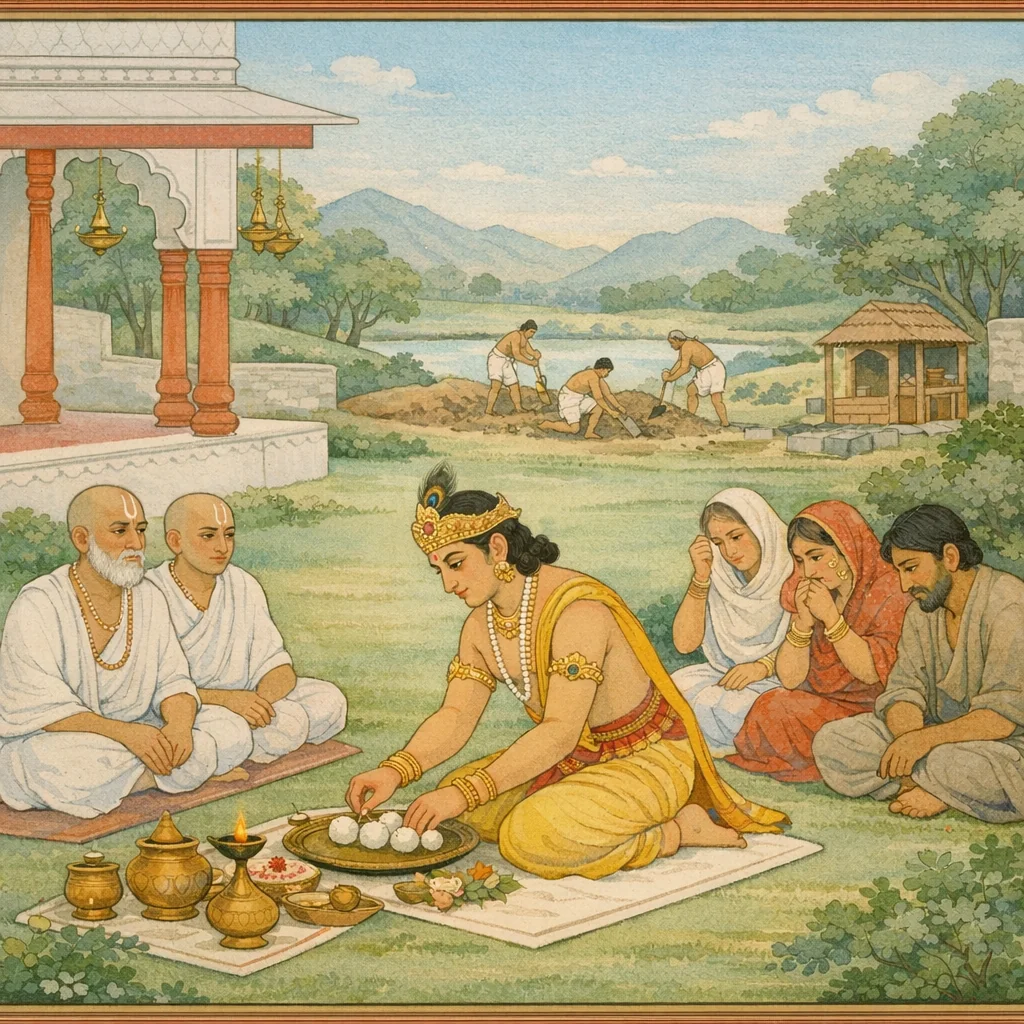
Vaiśaṃpāyana reports that King Yudhiṣṭhira, possessing deliberate and expansive judgment, commissions śrāddha rites for relatives and others slain in the strategic engagement, treating recipients and commemorations with specificity. Dhṛtarāṣṭra contributes to his sons’ aurdhvadaihika rites by providing food endowed with desired qualities, cattle, wealth, and valuable ornaments. Yudhiṣṭhira performs commemorative and charitable acts for major figures—explicitly including Karṇa, Droṇa, Dhṛṣṭadyumna, Abhimanyu, and the rākṣasa Haiḍimba—along with Virāṭa and other allies and benefactors, as well as Drupada and the Draupadeyas, with Draupadī present. He satisfies thousands of Brahmins by naming individuals and distributing wealth, garments, jewels, and cattle. He also performs rites for other rulers who lack surviving friends to act on their behalf, indicating an ethic of universalized remembrance. The chapter adds civic benefactions—assembly halls, water stations, and ponds—linked to posthumous merit and public welfare. Having discharged debts through these acts, Yudhiṣṭhira is described as accomplished in duty, governing subjects by dharma, maintaining honor toward Dhṛtarāṣṭra, Gāndhārī, Vidura, ministers, and servants, and extending protection to bereaved women, the poor, the blind, and the destitute through housing, clothing, and food. The close frames his condition as secure sovereignty and contentment after achieving ānṛṇya and social stabilization.
Chapter Arc: युद्ध की धूल बैठ चुकी है, पर शोक का धुआँ अभी उठ रहा है—वैशम्पायन बताते हैं कि राजा युधिष्ठिर और धृतराष्ट्र अपने-अपने प्रियजनों तथा अन्य राजाओं के और्ध्वदेहिक कर्म (श्राद्ध) का विधान करते हैं। → कुरुक्षेत्र में मरे असंख्य राजाओं और वीरों के लिए कर्तव्य-भार बढ़ता जाता है: धृतराष्ट्र अपने पुत्रों का श्राद्ध करते हैं, युधिष्ठिर द्रोण, कर्ण और अन्य महात्माओं का; धृष्टद्युम्न, अभिमन्यु, घटोत्कच, विराट आदि मित्र-उपकारियों का भी। जिनका कोई सुहृद नहीं, उनके लिए भी कर्म कराए जाते हैं—राजधर्म का करुण विस्तार। → युधिष्ठिर का निर्णायक संकल्प—‘स तेषामनृणो भूत्वा’—सबके प्रति ऋण-मुक्त होने हेतु, मित्र-शत्रु, अपने-पराये, अनाथ-परित्यक्त सभी के लिए और्ध्वदेहिक कर्म और दान-व्यवस्था; साथ ही धर्मशालाएँ, प्याऊ, पोखरे जैसे लोक-हितकारी निर्माण। → श्राद्ध, अन्न-दान, गौ-धन-दान और सेवाभाव से शोक का रूपांतरण होता है: युधिष्ठिर धृतराष्ट्र, गान्धारी, विदुर तथा मान्य कौरवों की पूर्ववत सेवा करते हैं; भृत्यों का सम्मान करते हैं; दीन-दुखियों और अंधों के लिए घर, भोजन, वस्त्र की व्यवस्था कर ‘आनृशंस्य’ (करुणा) को राज्य-नीति बनाते हैं।
Shlokas
Verse 1
ऑपन-आक्राा बछ। अर: द्विचत्वारिशोड ध्याय: राजा युधिष्ठिर तथा धृतराष्ट्रका शेख मारे गये सगे- सम्बन्धियों तथा अन्य राजाओंके श्राद्धकर्म करना वैशम्पायन उवाच ततो युधिष्छिरो राजा ज्ञातीनां ये हता युधि । श्राद्धानि कारयामास तेषां पृथगुदारधी:,वैशम्पायनजी कहते हैं--राजन्! तदनन्तर उदार बुद्धि राजा युधिष्ठिरने जाति, भाई और कुटु॒म्बीजनोंमेंसे जो लोग युद्धमें मारे गये थे, उन सबके अलग-अलग श्राद्ध करवाये
Vaiśampāyana said: Thereafter King Yudhiṣṭhira, broad-minded and conscientious, arranged the śrāddha rites separately for each of his kinsmen who had been slain in the war—an act of dharma that honors the dead, acknowledges the moral weight of loss, and seeks to restore order after the devastation of conflict.
Verse 2
धृतराष्ट्रो ददौ राजा पुत्राणामौर्ध्वदेहिकम् । सर्वकामगुणोपेतमन्नं गाश्न धनानि च
Vaiśampāyana said: King Dhṛtarāṣṭra provided the post-funeral rites offerings for his sons—food endowed with every desirable quality, along with cows and wealth. In the wake of loss, the narrative underscores the king’s attempt to fulfill prescribed duties toward the departed through proper gifts and sustenance, aligning grief with ritual responsibility.
Verse 3
युधिष्ठिरस्तु द्रोणस्य कर्णस्य च महात्मन:
Vaiśampāyana said: Yudhiṣṭhira, reflecting upon Droṇa and the great-souled Karṇa, was moved in mind—his thoughts turning to the weight of their deaths and the moral burden borne after the war.
Verse 4
धृष्टद्युम्नाभिमन्युभ्यां हैडिम्बस्य च रक्षस: । विराटप्रभृतीनां च सुहददामुपकारिणाम्
Vaiśampāyana said: (He spoke of) Dhṛṣṭadyumna and Abhimanyu, and also of the rākṣasa Haiḍimba; and of Virāṭa and others—friends and benefactors who had rendered help.
Verse 5
ट्रुपदद्रौपदेयानां द्रौपद्या सहितो ददौ । युधिष्ठिरने द्रौधदीको साथ लेकर आचार्य द्रोण, महामना कर्ण, धृष्टद्युम्न, अभिमन्यु, राक्षस घटोत्कच, विराट आदि उपकारी सुहृद, द्रुपद तथा द्रौपदीकुमारोंका श्राद्ध किया ।। ३ -+४३ || ब्राह्मणानां सहस्राणि पृथगेकैकमुद्दिशन्
Vaiśampāyana said: Yudhiṣṭhira, accompanied by Draupadī, performed the prescribed śrāddha offerings for Drupada and the sons of Draupadī, dedicating them separately, one by one, to thousands of Brāhmaṇas.
Verse 6
ये चान्ये पृथिवीपाला येषां नास्ति सुहज्जन:
Vaiśaṃpāyana said: “And those other rulers of the earth as well—those who have no true well-wishers at their side.”
Verse 7
सभा: प्रपाश्न विविधास्तटाकानि च पाण्डव:
Vaiśampāyana said: The Pāṇḍava caused assembly-halls to be built, along with drinking-water stations and many kinds of tanks and reservoirs—public works meant to sustain people and embody righteous kingship.
Verse 8
स तेषामनृणो भूत्वा गत्वा लोकेष्ववाच्यताम्
Having thus become free of debt to them—his obligations duly discharged—he departed and passed into those worlds where one is no longer spoken of, beyond the reach of ordinary report and remembrance.
Verse 9
कृतकृत्यो5भवद् राजा प्रजा धर्मेण पालयन् | उन सबके ऋणसे मुक्त हो वे लोकमें किसीकी निन्दा या आक्षेपके पात्र नहीं रह गये। राजा युधिष्ठिर धर्मपूर्वक प्रजाका पालन करते हुए कृतकृत्यताका अनुभव करने लगे ।। ८३ || धृतराष्ट्र यथापूर्व गान्धारीं विदुरं तथा
Vaiśampāyana said: The king became one who felt his duties fulfilled, protecting his subjects in accordance with dharma. Freed from obligations and beyond the reach of blame or reproach in the world, King Yudhiṣṭhira, while governing righteously, came to experience a sense of accomplished responsibility. Meanwhile, Dhṛtarāṣṭra, as before, remained with Gāndhārī and likewise with Vidura.
Verse 10
याश्च तत्र स्त्रिय: काश्चिद् हतवीरा हतात्मजा:
Vaiśampāyana said: And there, some women—bereft of their heroes and deprived of their sons—were present, marked by the grief that follows the destruction of war and the collapse of family lines.
Verse 11
सर्वास्ता: कौरवो राजा सम्पूज्यापालयद् घृणी । वहाँ जो कोई भी स्त्रियाँ थीं, जिनके पति और पुत्र मारे गये थे, उन सबका कृपालु कुरुवंशी राजा युधिष्ठिर बड़े आदरके साथ पालन-पोषण करते थे ।। दीनान्धकृपणानां च गृहाच्छादनभोजनै:
Vaiśampāyana said: The compassionate Kuru king, Yudhiṣṭhira, having duly honored all those women, protected and maintained them. And he also provided for the poor, the blind, and the destitute—supplying them with shelter, clothing, and food—thus embodying royal duty after the devastation of war.
Verse 12
स विजित्य महीं कृत्स्नामानृण्यं प्राप्य वैरिषु । नि:ःसपत्न: सुखी राजा विजहार युधिष्ठिर:
Vaiśampāyana said: Having conquered the entire earth and having discharged his obligations toward his enemies, King Yudhiṣṭhira—now without rivals and at ease—passed his time in peaceful enjoyment. The verse frames his post-war sovereignty not merely as power, but as a condition achieved after settling accounts and restoring moral balance.
Verse 26
रत्नानि च विचित्राणि महाहाणि महायशा: । महायशस्वी राजा धुृतराष्ट्रने अपने पुत्रोंके श्राद्धमें समस्त कमनीय गुणोंसे युक्त अन्न, गो, धन और बहुमूल्य विचित्र रत्न प्रदान किये
Vaiśampāyana said: The illustrious King Dhṛtarāṣṭra, renowned for his fame, offered at the śrāddha rites for his sons food endowed with every pleasing quality, along with cows, wealth, and many costly, exquisite gems. The narrative underscores the king’s attempt to fulfill his duty to the departed through generous gifts, seeking merit and propriety after the devastation of his lineage.
Verse 41
इस प्रकार श्रीमह्याभारत शान्तिपर्वके अन्तर्गत राजधमानुशासनपर्वमें भीमसेन आदिकी भिन्न-भिन्न कार्योनें नियुक्तिविषयक इकतालीसवाँ अध्याय पूरा हुआ
Thus, in the Śrī Mahābhārata, within the Śānti Parva—specifically in the section on the instruction of royal duty (Rājadharmānuśāsana)—the forty-first chapter concludes, setting forth the principle of appointing Bhīmasena and others to their several and varied tasks. The closing note affirms an ethical ideal of governance: duties are to be distributed according to office, capacity, and the needs of the realm, so that order and dharma are upheld through fitting appointment and responsibility.
Verse 42
इस सारी पृथ्वीको जीतकर शत्रुओंसे उऋ्ण हो शत्रुहीन राजा युधिष्ठिर सुखपूर्वक विहार करने लगे ।। इति श्रीमहाभारते शान्तिपर्वणि राजधर्मानुशासनपर्वणि श्राद्धक्रियायां द्विचत्वारिंशोडध्याय:
Vaiśampāyana said: Having conquered the whole earth and thereby discharged his debt to his enemies, King Yudhiṣṭhira—now free of foes—began to dwell and move about in ease. Thus ends the forty-second chapter on the rites of śrāddha, within the Rājadharmānuśāsana section of the Śānti Parva of the Śrī Mahābhārata.
Verse 56
धनै रत्नैश्व गोभिश्व वस्त्रैश्न समतर्पयत् । उन्होंने प्रत्येकके उद्देश्यसे हजारों ब्राह्मगोंको अलग-अलग धन, रत्न, गौ और वस्त्र देकर संतुष्ट किया
Vaiśampāyana said: He gratified them with gifts—wealth, jewels, cows, and garments. Intending each recipient in turn, he satisfied thousands of brāhmaṇas by distributing to them, separately and appropriately, money, precious items, cattle, and clothing—an act presented as righteous generosity and social duty.
Verse 66
उद्दिश्योद्दिश्य तेषां च चक्रे राजौर्ध्वदेहिकम् । इनके सिवा जो दूसरे भूपाल थे, जिनके सुहृद् या सम्बन्धी जीवित नहीं थे, उन सबके उद्देश्यसे राजा युधिष्ठिरने श्राद्ध-कर्म किया
Vaiśampāyana said: Recalling them one by one, King Yudhiṣṭhira performed the post-funeral rites (śrāddha) for them as well—especially for those other kings who had fallen and had no surviving friends or relatives to carry out the offerings. In this way, the king extended dharmic responsibility beyond his own side, honoring the dead impartially after the devastation of war.
Verse 76
सुहृदां कारयामास सर्वेषामौर्ध्वदेहिकम् । साथ ही उनके निमित्त पाण्डुपुत्र युधिष्ठिरने धर्मशालाएँ, प्याऊ-चर और पोखरे बनवाये। इस प्रकार उन्होंने सभी सुहृदोंके श्राद्ध-कर्म सम्पन्न कराये
Vaiśampāyana said: Yudhiṣṭhira, the son of Pāṇḍu, caused the post-funeral rites (śrāddha and related ceremonies) to be duly performed for all his well-wishers. Moreover, for their sake he had works of public welfare established—rest-houses, water-stations, and ponds—thus completing the memorial rites in a manner aligned with dharma, gratitude, and compassion after the devastation of war.
Verse 96
सर्वाश्न॒ कौरवान् मान्यान् भृत्यांश्रु समपूजयत् । धृतराष्ट्र, गान्धारी, विदुर तथा अन्य आदरणीय कौरवोंकी वे पहलेकी ही भाँति सेवा करते और भृत्यजनोंका भी आदर-सत्कार करते थे
Vaiśampāyana said: He continued, as before, to serve and honor all the respected Kaurava elders—Dhṛtarāṣṭra, Gāndhārī, Vidura, and the other venerable members of the Kuru house—and he also treated the household servants with due regard and courteous hospitality.
Verse 116
आनृशंस्यपरो राजा चकारानुग्रहं प्रभु: । दीन-दुखियों और अन्धोंके लिये घर एवं भोजन-वस्त्रकी व्यवस्था करके सबके प्रति कोमलताका बर्ताव करनेवाले सामर्थ्यशाली राजा युधिष्ठिर उनपर बड़ी कृपा रखते थे
Vaiśampāyana said: The mighty king, devoted to compassion, extended his gracious favor. King Yudhiṣṭhira—gentle in conduct toward all—made arrangements of shelter and of food and clothing for the poor, the afflicted, and the blind, showing them sustained kindness and protection as an expression of righteous kingship.
Frequently Asked Questions
The chapter addresses how a ruler converts grief and political aftermath into accountable action: honoring the dead, compensating social rupture through giving, and restoring legitimacy via dharma-governed welfare.
Rulership is measured by reparative duty: individualized remembrance, impartial rites even for those without supporters, and material support for society’s vulnerable as a continuous obligation of statecraft.
No explicit phalaśruti is stated; the functional equivalent is the narrative evaluation that Yudhiṣṭhira becomes ‘kṛtakṛtya’ (duty-complete) and ‘anṛṇa’ (debt-discharged), indicating normative approval and ethical closure.