Adhyaya 352
Adhyāya 352: Brāhmaṇa–Nāga Saṃvāda — Uñchavrata-niścaya (Dialogue and the Resolve to Practice Uñchavrata)
Upa-parva: Mokṣa-dharma (Mokṣadharma Parva) — Dialogue of the Brāhmaṇa and the Nāga
This chapter presents a tightly structured exchange between a brāhmaṇa and a nāga. The brāhmaṇa opens by affirming that the nāga’s counsel is “anvarthopagata” (aptly meaningful) and that a clear path has been shown; he offers auspicious blessing and announces his intention to depart, requesting to be remembered through future communications or errands. The nāga interrupts the departure, asking why the brāhmaṇa would leave without stating the task connected to the nāga and without declaring the purpose of the visit. The nāga further prescribes a protocol: after the matter is spoken and completed—whether previously stated or not—the brāhmaṇa should formally take leave; only then will the nāga grant permission. He frames this as a bond of affection and trust, asserting mutual reliance. In response, the brāhmaṇa acknowledges the nāga’s discernment and shifts to a metaphysical register, expressing a non-dual equivalence (“I am you; you are I”) and a universal pervasion of beings. He then discloses his prior doubt regarding the accumulation of merit (puṇya-saṃcaya) and resolves to undertake uñchavrata as a disciplined practice for ‘seeing the meaning’ (arthadarśana). The chapter closes with the brāhmaṇa’s settled determination and formal leave-taking, declaring his purpose fulfilled through the guidance received.
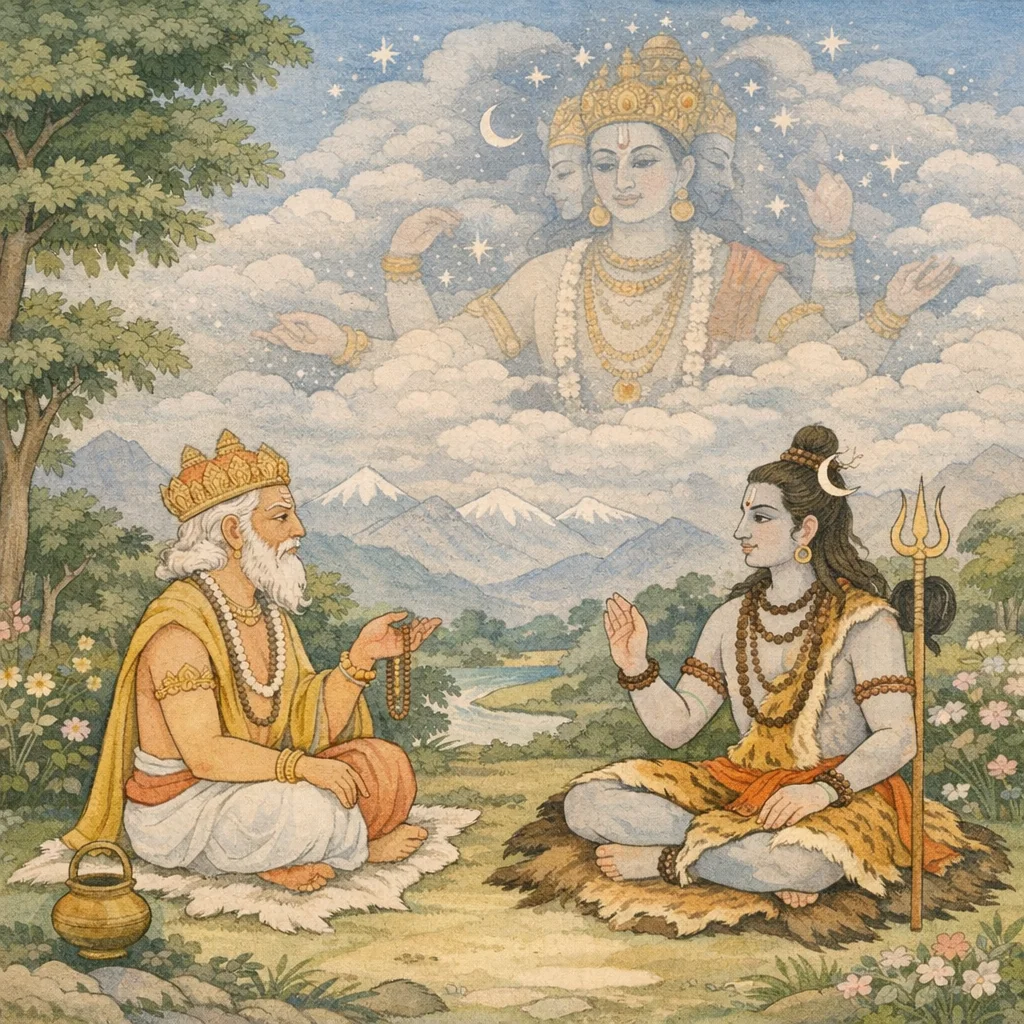
Chapter Arc: Janamejaya presses a subtle metaphysical doubt: are there many Purushas or only one—and who is truly supreme, the source of all? → Vaishampayana frames the answer through layered authority: first saluting Vyasa and the guru-lineage, then invoking an ancient Brahma–Rudra dialogue to resolve how multiplicity can arise from a single womb of being. → In the Brahma–Rudra samvada, Rudra articulates the paradox: many ‘purushas’ and many Brahmas appear in creation, yet the Virat Purusha is one; those who become nirguna enter that eternal, supreme Purusha beyond qualities. → The chapter reconciles plurality and unity: the world displays countless persons and creators in the field of guna, but the highest reality is the one, attributeless Purusha into whom the realized merge. → The discourse points forward to deeper elaboration of the nirguna state and the means by which seekers transcend guna to enter the Sanatana Purusha.
Shlokas
Verse 1
व बक। डे - १, नारायण, २. ब्रह्मा, ३. वसिष्ठ, ४. शक्ति, ५. पराशर, ६. व्यास--इस प्रकार व्यासजी छठी पीढ़ीमें उत्पन्न हुए हैं। पज्चाशर्दाधिकत्रिशततमो< ध्याय: वैजयन्त पर्वतपर ब्रह्मा और रुद्रका मिलन एवं ब्रह्माजीद्वारा परम पुरुष नारायणकी महिमाका वर्णन जनमेजय उवाच बहव: पुरुषा ब्रह्मन्नुताहो एक एव तु । को हद्वात्र पुरुष: श्रेष्ठ को वा योनिरिहोच्यते
Janamejaya said: “O Brahman, are there many ‘Persons’ (puruṣas), or is there truly only one? And here, which Person is the highest, and what is said to be the source (yoni) in this matter?”
Verse 2
जनमेजयने पूछा--ब्रह्मन! पुरुष अनेक हैं या एक? इस जगत्में कौन पुरुष सबसे श्रेष्ठ है? अथवा किसे यहाँ सबकी उत्पत्तिका स्थान बताया जाता है? ।। वैशम्पायन उवाच बहव: पुरुषा लोके सांख्ययोगविचारणे । नैतदिच्छन्ति पुरुषमेक॑ कुरुकुलोद्धह,वैशम्पायनजीने कहा--कुरुकुलका भार वहन करनेवाले नरेश! सांख्य और योगकी विचारधाराके अनुसार इस जगतमें पुरुष अनेक हैं। वे 'एकपुरुषवाद” नहीं स्वीकार करते हैं
Vaiśampāyana said: “O upholder of the Kuru line, in this world—according to the reflective traditions of Sāṅkhya and Yoga—there are many ‘puruṣas’ (selves). Those thinkers do not accept the doctrine that there is only one single Puruṣa.”
Verse 3
बहूनां पुरुषाणां च यथैका योनिरुच्यते । तथा त॑ पुरुष विश्व व्याख्यास्थामि गुणाधिकम्,बहुत-से पुरुषोंकी उत्पत्तिका स्थान एक ही पुरुष कैसे बताया जाता है? यह समझानेके लिये आत्मज्ञानी, तपस्वी, जितेन्द्रिय एवं वन्दनीय परमर्षि गुरु व्यासजीको नमस्कार करके मैं तुम्हारे सामने अधिक गुणशाली विश्वात्मा पुरुषकी व्याख्या करूँगा
Vaiśampāyana said: “Just as a single womb or source is spoken of as giving rise to many persons, so too I shall explain to you that all-pervading Person—the World-Self—who is said to be the origin of all and who surpasses all in excellence.”
Verse 4
नमस्कृत्वा च गुरवे व्यासाय विदितात्मने । तपोयुक्ताय दान्ताय वन्द्याय परमर्षये,बहुत-से पुरुषोंकी उत्पत्तिका स्थान एक ही पुरुष कैसे बताया जाता है? यह समझानेके लिये आत्मज्ञानी, तपस्वी, जितेन्द्रिय एवं वन्दनीय परमर्षि गुरु व्यासजीको नमस्कार करके मैं तुम्हारे सामने अधिक गुणशाली विश्वात्मा पुरुषकी व्याख्या करूँगा
Vaiśampāyana said: Having bowed to my teacher Vyāsa—self-knowing, devoted to austerity, self-restrained, worthy of reverence, the supreme seer—I shall explain to you the doctrine of the all-excellent Universal Self (Viśvātman Puruṣa), so that it may be understood how the origin of many beings is spoken of as resting in a single Person.
Verse 5
इदं पुरुषसूक्तं हि सर्ववेदेषु पार्थिव । ऋतं सत्यं च विख्यातमृषिसिंहेन चिन्तितम्,राजन! यह पुरुषसम्बन्धी सूक्त तथा ऋत और सत्य सम्पूर्ण वेदोंमें विख्यात है। ऋषिसिंह व्यासने इसका भलीभाँति चिन्तन किया है
Vaiśampāyana said: “O king, this hymn concerning the Cosmic Person (Puruṣa-sūkta) is renowned throughout all the Vedas; and so too are ṛta (the cosmic order) and satya (truth). It has been deeply contemplated and set forth by the lion among sages.”
Verse 6
उत्सगेणापवादेन ऋषिभि: कपिलादिभि: | अध्यात्मचिन्तामाश्रित्य शास्त्राण्युक्तानि भारत,भारत! कपिल आदि ऋषियोंने सामान्य और विशेषरूपमें अध्यात्म-तत्त्वका चिन्तन करके विभिन्न शास्त्रोंका प्रतिपादन किया है
Vaiśampāyana said: O Bhārata, relying on contemplation of the inner Self, sages such as Kapila have set forth the various śāstras—some as general teachings and others as specific exceptions—so that dharma may be understood with discernment rather than by rigid rule alone.
Verse 7
समासतत्तु यद् व्यास: पुरुषैकत्वमुक्तवान् | तत् ते5हं सम्प्रवक्ष्यामि प्रसादादमितौजस:,परंतु व्यासजीने संक्षेपसे पुरुषकी एकताका जिस तरह प्रतिपादन किया है, उसीको मैं भी उन अमिततेजस्वी गुरुके कृपा-प्रसादसे तुम्हें बताऊँगा
Vaiśampāyana said: “In brief, what Vyāsa has taught as the oneness of the Person (the single underlying Self)—that I shall now explain to you, by the gracious favor of that immeasurably radiant master.”
Verse 8
अत्राप्युदाहरन्तीममितिहासं पुरातनम् । ब्रह्मणा सह संवादं तयम्बकस्य विशाम्पते,प्रजानाथ! इस विषयमें जानकार मनुष्य ब्रह्माजीके साथ रुद्रके संवादरूप इस प्राचीन इतिहासका उदाहरण दिया करते हैं
Vaiśampāyana said: “Here too, O lord of the people, O ruler of men, the learned cite an ancient precedent: the old narrative of Tryambaka (Rudra) in dialogue with Brahmā. It is brought forward as an illustrative example to clarify this subject.”
Verse 9
क्षीरोदस्य समुद्रस्य मध्ये हाटकसप्रभ: । वैजयन्त इति ख्यात: पर्वतप्रवरो नृप,नरेश्वर! क्षीरसागरके मध्यभागमें वैजयन्त नामसे विख्यात एक श्रेष्ठ पर्वत है, जो सुवर्णकी-सी कान्तिसे प्रकाशित होता है
Vaiśampāyana said: “O king, in the midst of the Ocean of Milk there stands a foremost mountain, famed by the name Vaijayanta, shining with the radiance of refined gold.”
Verse 10
तत्राध्यात्मगतिं देव एकाकी प्रविचिन्तयन् | वैराजसदनान्नित्यं वैजयन्तं निषेवते,वहाँ एकाकी ब्रह्मा अध्यात्मगतिका चिन्तन करनेके लिये ब्रह्मलोकसे प्रतिदिन आते और उस वैजयन्त पर्वतका सेवन करते थे
There, the divine Brahmā, remaining alone and reflecting upon the inward path of the Self, would come each day from his Virāja-abode (Brahmaloka) and resort to the mountain Vaijayanta.
Verse 11
अथ तत्रासतस्तस्य चतुर्वक्त्रस्य धीमत: । ललाटप्रभव: पुत्र: शिव आगाद् यदृच्छया,पहले एक दिन बुद्धिमान् चतुर्मुख ब्रह्माजी जब वहाँ बैठे हुए थे, उसी समय उनके ललाटसे उत्पन्न हुए पुत्र महायोगी त्रिनेत्रधारी भगवान् शिव अनायास ही आकाशमार्गसे घूमते हुए वैजयन्तपर्वतके सामने आये और शीघ्र ही आकाशसे उस पर्वतशिखरपर उतर पड़े
Vaiśampāyana said: While the wise four-faced Brahmā was seated there, his son Śiva—born from his forehead—happened to arrive of his own accord.
Verse 12
आकाशेन महायोगी पुरा त्रिनयनः प्रभु: । ततः: खान्निपपाताशु धरणीधरमूर्थनि,पहले एक दिन बुद्धिमान् चतुर्मुख ब्रह्माजी जब वहाँ बैठे हुए थे, उसी समय उनके ललाटसे उत्पन्न हुए पुत्र महायोगी त्रिनेत्रधारी भगवान् शिव अनायास ही आकाशमार्गसे घूमते हुए वैजयन्तपर्वतके सामने आये और शीघ्र ही आकाशसे उस पर्वतशिखरपर उतर पड़े
Vaiśampāyana said: In former times, the Lord—Śiva, the great Yogin, the three-eyed one—moved through the sky. Then, swiftly descending from the heavens, he alighted upon the summit of a mountain, the very ‘head’ of the earth-bearer.
Verse 13
अग्रतश्नाभवत् प्रीतो ववन्दे चापि पादयो: । त॑ पादयोर्निपतितं दृष्टवा सव्येन पाणिना,सामने ब्रह्माजीको देखकर उन्हें बड़ी प्रसन्नता हुई और उन्होंने उनके दोनों चरणोंमें सिर झुकाकर प्रणाम किया। भगवान् शिवको अपने चरणोंमें पड़ा देख उस समय एकमात्र सर्वसमर्थ भगवान् प्रजापतिने दाहिने हाथसे उन्हें उठाया और दीर्घकालके पश्चात् अपने निकट आये हुए पुत्रसे इस प्रकार कहा
Vaiśaṃpāyana said: Seeing him before him, Prajāpati was filled with joy. Śiva bowed down and fell at his feet in reverence. When the all-powerful Lord (Prajāpati) saw Śiva prostrate at his feet, he raised him up with his right hand and, after a long time, addressed the son who had come near.
Verse 14
उत्थापयामास तदा प्रभुरेक: प्रजापति: । उवाच चैनं भगवांश्रविरस्यागतमात्मजम्,सामने ब्रह्माजीको देखकर उन्हें बड़ी प्रसन्नता हुई और उन्होंने उनके दोनों चरणोंमें सिर झुकाकर प्रणाम किया। भगवान् शिवको अपने चरणोंमें पड़ा देख उस समय एकमात्र सर्वसमर्थ भगवान् प्रजापतिने दाहिने हाथसे उन्हें उठाया और दीर्घकालके पश्चात् अपने निकट आये हुए पुत्रसे इस प्रकार कहा
Vaiśaṃpāyana said: Then the one sovereign Lord, Prajāpati, raised him up. And the Blessed One spoke to him—his own son, who had come after a long time. Seeing Śiva fallen at his feet in reverence, Prajāpati, moved with delight, lifted him with his right hand and addressed him with affectionate gravity, as a father receiving a returning child.
Verse 15
पितामह उवाच स्वागतं ते महाबाहो दिष्ट्या प्राप्तोडसि मेडन्तिकम् | कच्चित् ते कुशल पुत्र स्वाध्यायतपसो: सदा,ब्रह्माजी बोले--महाबाहो! तुम्हारा स्वागत है। सौभाग्यसे मेरे निकट आये हो। बेटा! तुम्हारा स्वाध्याय और तप सदा सकुशल चल रहा है न? तुम सर्वदा कठोर तपस्यामें ही लगे रहते हो; इसलिये मैं तुमसे बारंबार तपके विषयमें पूछता हूँ
The Grandsire said: “Welcome to you, mighty-armed one. By good fortune you have come to me here at Medāntika. Tell me, my son—are your studies of sacred lore and your austerities always proceeding well?”
Verse 16
नित्यमुग्रतपास्त्वं हि ततः पृच्छामि ते पुन:,ब्रह्माजी बोले--महाबाहो! तुम्हारा स्वागत है। सौभाग्यसे मेरे निकट आये हो। बेटा! तुम्हारा स्वाध्याय और तप सदा सकुशल चल रहा है न? तुम सर्वदा कठोर तपस्यामें ही लगे रहते हो; इसलिये मैं तुमसे बारंबार तपके विषयमें पूछता हूँ
“For you are ever engaged in fierce austerities; therefore I ask you again and again about your तपस्.”
Verse 17
रुद्र उ्वाच त्वत्प्रसादेन भगवन् स्वाध्यायतपसोर्मम । कुशल चाव्ययं चैव सर्वस्य जगतस्त्वथ,रुद्रने कहा--भगवन्! आपकी कृपासे मेरे स्वाध्याय और तप सकुशल चल रहे हैं; कभी भंग नहीं हुए हैं। सम्पूर्ण जगत् भी कुशल-क्षेमसे है
Rudra said: “O Blessed Lord, by your grace my study of the Veda and my austerities proceed in well-being and remain unbroken. And thus, too, the entire world abides in welfare and security.”
Verse 18
चिरदृष्टो हि भगवान् वैराजसदने मया । ततोऊहं पर्वत प्राप्तस्त्विमं त्वत्यादसेवितम्,प्रभो! बहुत दिन हुए, मैंने ब्रह्मलोकमें आपका दर्शन किया था। इसीलिये आज आपके चरणोंद्वारा सेवित इस पर्वतपर पुन: दर्शनके लिये आया हूँ
Bhīṣma said: “Indeed, long ago I beheld you, O Blessed Lord, in the palace of Virāja (Brahmā’s realm). Therefore I have now come to this mountain—made holy by the constant service of your feet—O Master, seeking once again the grace of your darśana.”
Verse 19
कौतूहलं चापि हि मे एकान्तगमनेन ते । नैतत् कारणमल्पं हि भविष्यति पितामह,पितामह! आपके एकान्तमें जानेसे मेरे मनमें बड़ा कौतूहल पैदा हुआ। मैंने सोचा, इसका कोई छोटा-मोटा कारण नहीं होगा
Bhīṣma said: “Your withdrawal into solitude has stirred great curiosity in me as well. I feel this cannot be for any trivial reason, O Grandfather; surely there is a weighty cause behind it.”
Verse 20
कि नु तत्सदन श्रेष्ठ क्षुत्पिपासाविवर्जितम् । सुरासुरैरध्युषितं ऋषिभिश्नामितप्रभै:,क्या कारण है कि क्षुधा-पिपासासे रहित उस श्रेष्ठ धामको, जहाँ निरन्तर देवता, असुर, अमिततेजस्वी ऋषि, गन्धर्व और अप्सराओंके समूह आपकी सेवामें उपस्थित रहते हैं, छोड़कर आप अकेले इस श्रेष्ठ पर्वतपर चले आये हैं?
Bhīṣma said: “O best of men, why have you abandoned that excellent abode—free from hunger and thirst—constantly inhabited by gods and asuras and by sages of immeasurable splendor, and come here alone to this noble mountain?”
Verse 21
गन्धर्वैरप्सरोभिश्व सततं संनिषेवितम् । उत्सृज्येमं गिरिवरमेकाकी प्राप्तवानसि,क्या कारण है कि क्षुधा-पिपासासे रहित उस श्रेष्ठ धामको, जहाँ निरन्तर देवता, असुर, अमिततेजस्वी ऋषि, गन्धर्व और अप्सराओंके समूह आपकी सेवामें उपस्थित रहते हैं, छोड़कर आप अकेले इस श्रेष्ठ पर्वतपर चले आये हैं?
Bhīṣma said: “This excellent mountain is ever attended by Gandharvas and Apsarases. Why have you abandoned that supreme abode—free from hunger and thirst—where gods, Asuras, and sages of immeasurable splendor continually stand ready in your service, and come here alone?”
Verse 22
ब्रह्मोवाच वैजयन्तो गिरिवर: सततं सेव्यते मया । अन्नैकाग्रेण मनसा पुरुषश्चिन्त्यते विराट्,ब्रह्माजीने कहा--वत्स! मैं इन दिनों गिरिवर वैजयन्तका जो निरन्तर सेवन कर रहा हूँ, इसका कारण यह है कि यहाँ एकाग्रचित्तसे विराट् पुरुषका चिन्तन किया करता हूँ
Brahmā said: “My child, I constantly resort to and dwell upon the excellent mountain Vaijayanta. The reason is this: with a mind made one-pointed, I contemplate the all-pervading Cosmic Person (Virāṭ) here.”
Verse 23
रुद्र ववाच बहव: पुरुषा ब्रह्मांस्त्वया सृष्टा: स्वयम्भुवा । सृज्यन्ते चापरे ब्रह्मनू स चैक: पुरुषो विराट्,रुद्र बोले--ब्रह्मन्! आप स्वयम्भू हैं। आपने बहुत-से पुरुषोंकी सृष्टि की है और अभी दूसरे-दूसरे पुरुषोंकी सृष्टि करते जा रहे हैं। वह विराट् भी तो एक पुरुष ही है, फिर उसमें क्या विशेषता है?
Rudra said: “O Brahman, you are self-born (Svayambhū). You have created many beings called ‘puruṣas,’ and you continue to bring forth other puruṣas as well. But that Virāṭ too is only a single puruṣa—what, then, is his special distinction?”
Verse 24
को हासौ चिन्त्यते ब्रद्वंस्त्वयैक: पुरुषोत्तम: । एतनमे संशयं ब्रूहि महत् कौतूहलं हि मे,प्रभो! आप जिन एक पुरुषोत्तमका चिन्तन करते हैं, वे कौन हैं? मेरे इस संशयका समाधान कीजिये। इस विषयको सुननेके लिये मेरे मनमें बड़ी उत्कण्ठा हो रही है
Bhīṣma said: “O venerable brāhmaṇa, who is that single Supreme Person (Puruṣottama) upon whom you meditate? Please resolve this doubt of mine. I feel a great eagerness to hear about this matter, O lord.”
Verse 25
ब्रह्मोवाच बहव: पुरुषा: पुत्र त्वया ये समुदाहता: । एवमेतदतिक्रान्तं द्रष्टव्यं नैवमित्यपि,ब्रह्माजीने कहा--बेटा! तुमने जिन बहुत-से पुरुषोंका उल्लेख किया है, उनके विषयमें तुम्हारा यह कथन ठीक ही है। जिनकी सृष्टि मैं करता हूँ, उनका चिन्तन मैं क्यों करूँगा?
Brahmā said: “Son, the many ‘persons’ you have spoken of are indeed as you have described. Yet this matter must be seen as something already transcended—one should not insist, ‘It is only thus and not otherwise.’”
Verse 26
आधार तु प्रवक्ष्यामि एकस्य पुरुषस्य ते । बहूनां पुरुषाणां स यथैका योनिरुच्यते,मैं तुम्हें उस एक पुरुषके सम्बन्धमें बताऊँगा, जो सबका आधार है और जिस प्रकार वह बहुत-से पुरुषोंका एकमात्र कारण बताया जाता है
Bhīṣma said: “I shall now explain to you the foundational support—the one Supreme Person—who upholds all. In what manner that single Reality is spoken of as the one source and womb from which the many individual persons arise, I will set forth.”
Verse 27
तथा तं॑ पुरुष विश्व परमं सुमहत्तमम् । निर्गुणं निर्गुणा भूत्वा प्रविशन्ति सनातनम्,जो लोग साधन करते-करते गुणातीत हो जाते हैं, वे ही उस विश्वरूप, अत्यन्त महान्, सनातन एवं निर्गुण परम पुरुषमें प्रवेश करते हैं
Bhīṣma said: “Thus, those who, through sustained spiritual discipline, rise beyond the binding qualities of nature become themselves free of qualities; and in that state they enter the eternal, attribute-less Supreme Person—the all-encompassing cosmic Being, the highest and most supremely great.”
Verse 349
इस प्रकार श्रीमहाभारत शान्तिपर्वके अन्तर्गत गोक्षधर्मपर्वमें द्ैपायनकी उत्पत्तिविषयक तीन सौ उनचासवाँ अध्याय पूरा हुआ
Thus ends the three hundred and forty-ninth chapter, within the Gokṣadharma section of the Śānti Parva of the Śrī Mahābhārata, dealing with the account of Dvaipāyana’s (Vyāsa’s) origin.
Verse 350
इति श्रीमहा भारते शान्तिपर्वणि मोक्षधर्मपर्वणि नारायणीये ब्रह्म॒रुद्रसंवादे पञ्चाशदधिकत्रिशततमो<ध्याय:
Thus, in the Śrī Mahābhārata, within the Śānti Parva—specifically the Mokṣadharma section, in the Nārāyaṇīya portion—ends the dialogue between Brahmā and Rudra, constituting the three-hundred-and-fiftieth chapter (350, counted as “three hundred plus fifty”).
Frequently Asked Questions
The brāhmaṇa discloses uncertainty about puṇya-saṃcaya (how merit is truly accrued) and must choose an ethically grounded practice; he resolves this by adopting uñchavrata as a disciplined method of conduct.
Ethical clarity requires both inner insight and outer procedure: one should state purpose transparently, complete obligations, and adopt self-regulation practices that convert abstract ideals into verifiable conduct.
No explicit phalaśruti appears in these verses; the chapter’s meta-emphasis is pragmatic—guidance is validated by the brāhmaṇa’s settled resolve and the restoration of confidence in a disciplined path.